
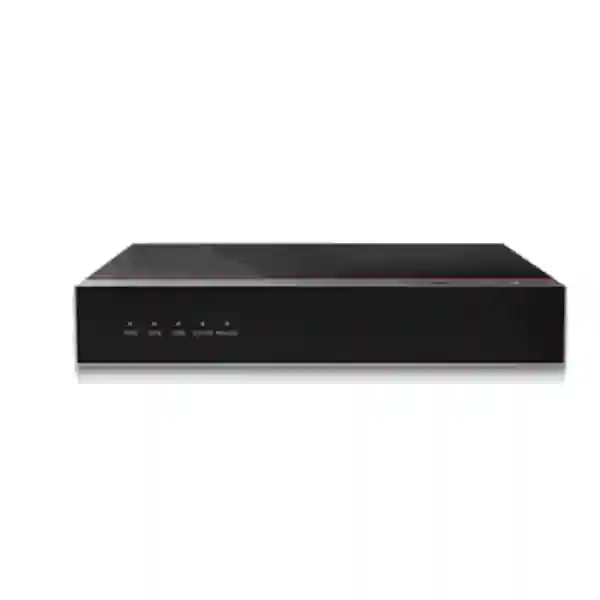
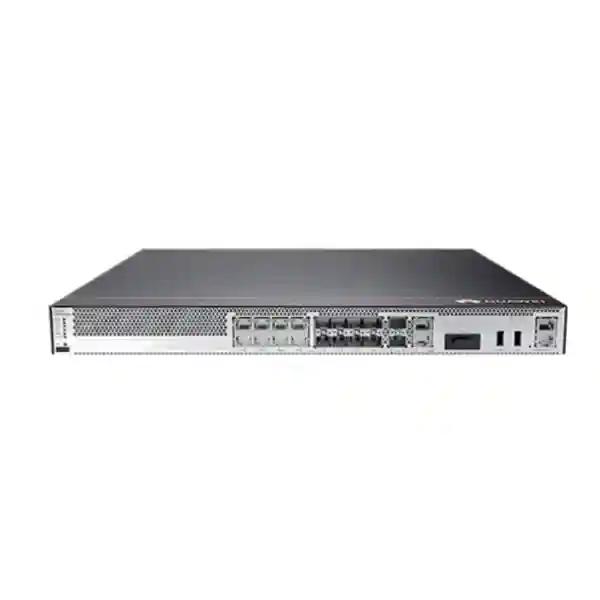
Enterprise Firewall • Dubai • UAE
Huawei HiSecEngine USG6550F Firewall for Secure UAE Enterprise Networks
The Huawei HiSecEngine USG6550F is presented here as an enterprise next-generation firewall procurement designation for organizations planning secure internet access, segmentation, application control, VPN connectivity, threat prevention, and centralized operations. FourTeck helps UAE customers translate the product family’s capabilities into a practical production design covering performance, ports, subscriptions, redundancy, security policy, logging, routing, remote access, and lifecycle management.
Important model and quotation verification note
Huawei’s current public HiSecEngine USG6500F family material confirms the family architecture, adaptive security engine approach, application identification, intrusion prevention, antivirus, URL filtering, VPN, bandwidth control, centralized management, and related security capabilities. However, the exact “USG6550F” suffix is not consistently exposed in the current public family listings available at the time this page was prepared. FourTeck therefore treats Huawei HiSecEngine USG6550F as the customer-requested procurement designation and does not invent model-specific throughput, port count, memory, power, or dimensional figures. The exact orderable SKU, hardware revision, interface map, software release, license bundle, transceivers, power option, and support entitlement should be confirmed on the final Huawei distributor or manufacturer quotation before purchase.
What the Huawei HiSecEngine USG6550F is designed to do
A modern firewall is no longer only a packet filter between the LAN and the internet. Enterprise security gateways must understand applications, users, sessions, destinations, encrypted traffic patterns, malware behavior, network zones, routing decisions, VPN tunnels, and policy context at the same time. The Huawei HiSecEngine USG6500F family is designed around this consolidated role. Huawei describes the platform as an AI firewall family for small and midsize enterprises, industry branches, campus environments, and distributed organizations. Its broader architectural objective is to combine network forwarding and multiple security functions in a single policy and operations framework so that administrators can reduce appliance sprawl and manage protection closer to the traffic path.
For a Dubai or UAE deployment, that translates into several common designs. The firewall may sit at the internet edge of a headquarters office, protect a branch connected to a private WAN, terminate site-to-site IPsec tunnels, separate user and server segments, provide controlled guest internet access, inspect traffic headed toward published services, or operate as part of an active/standby high-availability pair. In larger environments, it may work alongside core switches, wireless controllers, endpoint protection, SIEM platforms, directory services, cloud workloads, and centralized security management. The correct architecture depends less on a product label and more on the real traffic mix, connection rate, concurrent sessions, inspection depth, encrypted traffic ratio, WAN topology, and failover requirements.
FourTeck approaches the USG6550F as a security system rather than a standalone box. Before proposing a configuration, the design process should establish whether the device is protecting north-south internet traffic, east-west segmentation traffic, WAN traffic, published applications, remote users, or several of these flows simultaneously. The answer determines the interface plan, routing design, policy structure, subscription requirements, logging architecture, high-availability mode, and expected headroom. This is especially important when security features such as intrusion prevention, antivirus, application control, URL categorization, and VPN encryption are enabled together, because real-world inspected throughput is always more meaningful than a single headline forwarding number.
Internet Edge
Stateful inspection, NAT, application control, URL policy, intrusion prevention, malware defense, logging, and upstream routing for corporate internet access.
Branch Security
Secure site connectivity, local breakout, centralized policy, segmented user networks, VPN, and consistent enforcement across distributed offices.
Segmentation
Policy enforcement between VLANs, server zones, guest networks, operations networks, voice services, management segments, and sensitive applications.
VPN Gateway
Site-to-site IPsec, branch connectivity, secure partner links, and encrypted transport designs with policy and routing integrated into the security gateway.
Adaptive security architecture and acceleration
Huawei describes the USG6500F family as using a forwarding and control architecture designed to allocate resources dynamically across security services. The family’s Adaptive Security Engine, or ASE, is intended to improve the use of processing resources when multiple services are operating simultaneously. Huawei also references dedicated capabilities for network processing, pattern matching, and encryption or decryption. The practical value of this architecture is that different traffic types place very different demands on a firewall. Basic stateful forwarding, small-packet traffic, application identification, deep inspection, signature matching, and IPsec cryptography all stress different parts of the system. A platform that can offload or accelerate these workloads is better suited to mixed enterprise traffic than one that relies on a single general-purpose processing path for every task.
For a customer, architecture matters because performance must remain predictable after security is enabled. A branch firewall may begin with simple access control and NAT, then later add IPS, antivirus scanning, application-based policy, URL filtering, traffic shaping, VPN tunnels, and richer logging. If the appliance was selected only from a raw firewall-throughput figure, the environment can become constrained as inspection depth increases. FourTeck therefore sizes around the intended production profile: expected average throughput, peak throughput, packet size distribution, sessions per second, simultaneous sessions, encrypted traffic, number of tunnels, and the percentage of traffic that will be inspected by each security engine.
Latency also matters. Voice, video, virtual desktop traffic, transaction systems, and interactive SaaS applications are sensitive to delay and jitter. The objective is not simply to block threats but to do so without turning the security layer into a bottleneck. When designing a Huawei HiSecEngine deployment, interface capacity, firewall processing, uplink speed, upstream ISP capacity, routing, QoS, and inspection policies must be considered together. Security profiles can then be applied selectively according to risk rather than indiscriminately forcing the same inspection stack onto every flow. This creates a more sustainable balance between protection, user experience, and appliance headroom.
Performance sizing: the numbers that actually matter
Firewall datasheets commonly publish several performance metrics, and they are not interchangeable. Stateful firewall throughput measures a different workload from IPS throughput, threat-prevention throughput, application inspection, or VPN encryption. Session capacity is different from connection establishment rate. A device that can maintain a large number of existing sessions may still face pressure during bursts of new connections, while a device with high packet throughput may encounter constraints when inspecting many small packets or encrypted sessions. For that reason, the USG6550F should be sized against the application profile rather than chosen from a single marketing number.
A useful UAE sizing exercise starts with measured WAN and east-west traffic. Gather at least several weeks of interface utilization, preferably including month-end processing, backup windows, software distribution, major video meetings, cloud synchronization, and seasonal business peaks. Note how much traffic is internet-bound, inter-VLAN, server-bound, VPN-encrypted, or guest traffic. Then estimate growth for the expected service life. A firewall purchased at close to today’s peak load offers little room for security expansion, traffic growth, or failover conditions. Many organizations therefore design for substantial operational headroom rather than targeting sustained utilization near the platform limit.
Connection behavior is equally important. Offices with web browsing, collaboration suites, mobile applications, DNS-heavy traffic, software-as-a-service tools, and many endpoint agents can create high rates of short-lived sessions even when bandwidth is moderate. Public-facing services can produce a very different pattern with concentrated inbound connections. Data-center segmentation may involve extremely high east-west session counts. Remote-access and site-to-site VPNs add cryptographic overhead. These factors should be documented in the bill of materials and design assumptions so the proposed platform is traceable to real requirements.
Because the exact USG6550F hardware suffix is not consistently represented in current public Huawei listings, FourTeck does not publish an unverified throughput value here. Instead, the final quotation should identify the precise orderable code and its corresponding Huawei datasheet or release document. FourTeck can then map the manufacturer’s verified firewall, IPS, threat protection, VPN, connection-rate, and session figures to the customer’s traffic baseline and growth model. This method is more reliable than copying figures from a similarly named model or an older hardware generation.
Interface and port planning for production deployments
Port planning should begin with topology, not connector count. A security gateway may need separate physical or logical connections for one or more ISPs, core switching, server or DMZ networks, high-availability synchronization, management, out-of-band administration, logging, and dedicated service zones. Some designs use VLAN trunks to carry many security zones over a small number of high-speed links, while others prefer physically separated interfaces for operational clarity or compliance. Both approaches can be valid. The choice depends on failure domains, cabling, switch resilience, security boundaries, and the change-control model used by the organization.
Interface speed must also match the surrounding network. Connecting a high-capacity firewall to a core switch through an undersized uplink simply moves the bottleneck from the security engine to the physical link. Conversely, buying high-speed optical interfaces without confirming the switch ports, transceiver standards, fiber type, distance, and connector format can delay deployment. The final BOM should therefore list every required transceiver and cable, including spare optics where operational policy requires them. For dual-firewall HA deployments, the design must account for the total number of links across both appliances rather than only the active unit.
Logical interface design deserves the same attention. VLAN subinterfaces, security zones, routed links, link aggregation, and management interfaces should follow a documented naming convention. The purpose of each interface should be obvious to an engineer reading the configuration six months later. Security zones should represent trust boundaries and operational roles rather than being created arbitrarily. Common examples include WAN, corporate users, servers, voice, guest, management, partner, OT, backup, and DMZ zones. Policies then reference those zones in a way that mirrors the network architecture.
FourTeck’s deployment planning includes a port map before installation. The port map records the Huawei interface, connected switch or carrier device, remote port, media type, VLAN or subnet, security zone, routing role, and redundancy state. This reduces onsite ambiguity and makes acceptance testing easier. If the final Huawei order code differs from the assumed hardware revision, the port map can be adjusted before installation rather than discovering an interface mismatch during the maintenance window.
Physical checklist
WAN handoff type, copper or fiber, transceiver standard, core-switch speed, HA links, management path, rack position, power feeds, cable labeling, spare optics, and console access.
Logical checklist
VLAN IDs, routed subnets, zones, virtual interfaces, link aggregation, default route, dynamic routing neighbors, NAT role, VPN bindings, and logging source addresses.
Stateful firewalling, security zones, NAT, and policy design
The policy base is the foundation of any firewall deployment. A technically powerful appliance can still provide weak protection if access rules are broad, undocumented, or difficult to maintain. The Huawei platform supports security-policy decisions that can incorporate addressing, zones, services, applications, time ranges, and other context depending on the software release and licensed capabilities. Good policy design begins with least privilege: permit only the communications required for a defined business purpose, document the owner, and log the events needed for operations and audit. Rules should be organized so that specific business flows are easy to distinguish from shared infrastructure access and general internet traffic.
Network Address Translation should be designed alongside policy rather than as an afterthought. Outbound source NAT may be used for employee and guest internet access, while destination NAT or server mapping may publish selected services. Each inbound publication increases exposure and should be paired with strict source restrictions where feasible, appropriate security inspection, logging, and preferably application-level protections. If a web application is business-critical, the firewall may form one layer in a wider defense that also includes a reverse proxy, WAF, endpoint controls, server hardening, MFA, vulnerability management, and monitoring.
A migration project requires special care because rule behavior between firewall vendors may differ. Address objects, service groups, schedules, application signatures, NAT order, route selection, VPN selectors, object naming, and implicit behavior can all vary. FourTeck does not recommend blindly translating a legacy policy line for line. Instead, the migration should identify active rules, stale rules, shadowed rules, duplicate objects, temporary exceptions, and over-broad permits. The cleaned policy can then be implemented in a structured Huawei rule base with business ownership and rollback plans.
Policy review should continue after go-live. Traffic patterns reveal which rules are never hit, which services are broader than necessary, and where applications have changed. Huawei’s family documentation describes policy learning and more refined policy generation capabilities in newer software releases. Whether these features are used manually or through centralized management, the operational goal remains the same: make the rule base more precise over time without disrupting valid business traffic. A firewall should become easier to understand as it matures, not accumulate years of unexplained exceptions.
Application identification and control
Port-based access control is no longer enough for modern networks because many applications share HTTPS and dynamically use common protocols. Huawei’s current USG6500F family documentation describes application identification based on signatures, correlation, and behavior, with thousands of predefined applications organized into categories and risk labels. This allows policy to reflect what traffic actually represents rather than relying only on TCP or UDP port numbers.
Application awareness is useful for both security and traffic governance. Organizations may allow sanctioned collaboration platforms while restricting unapproved file-sharing tools, separate business SaaS from entertainment traffic, assign higher priority to latency-sensitive communications, or monitor risky application categories. The effectiveness of this control depends on signature currency and on how much traffic is encrypted. Where deep inspection is required, certificate management, endpoint trust, privacy policy, legal review, and application compatibility should be addressed before enabling broad encrypted-traffic inspection.
Application control should be introduced in stages. A practical method is to observe application usage first, compare discovered traffic against the organization’s approved software catalog, then move selected categories from monitor to restrict or block. This avoids unnecessary disruption and creates evidence for policy decisions. High-risk applications should not automatically be treated the same as unknown traffic; business context still matters. The firewall provides classification and enforcement, while the organization defines what is acceptable for each user group, device type, network segment, and business function.
Intrusion prevention and exploit defense
Intrusion Prevention System functionality analyzes traffic for known attack patterns, exploit techniques, protocol anomalies, and malicious behavior. Huawei positions IPS as an integrated capability of the HiSecEngine firewall family, allowing threat inspection to be applied within the same traffic path as stateful firewall policy and application identification. This integrated model simplifies the architecture compared with inserting a separate IPS appliance behind the firewall, but it also makes proper capacity planning essential because deeper inspection consumes processing resources.
IPS profiles should be matched to the protected assets. An employee browsing network, a public web server, a Windows application server, an industrial segment, and a database network do not have identical risks. Applying every possible signature to every flow can increase noise and may impose unnecessary overhead. A more disciplined approach maps protection to actual operating systems, services, applications, and exposure. High-confidence critical signatures can be configured for blocking, while lower-confidence detections may initially be monitored and tuned. Exceptions should be narrow, documented, and reviewed regularly.
Signature updates are a core dependency. An IPS engine is only as current as the intelligence and software feeding it. The final Huawei subscription package should therefore be checked for the required threat-prevention entitlements and update services. Operations teams should monitor update status, license expiry, and any failed synchronization. Change windows may also be needed for major software or signature behavior changes in sensitive environments. Where the organization has a SIEM or SOC, high-severity IPS events should be forwarded with enough context to support investigation.
IPS should complement, not replace, vulnerability management. Blocking an exploit attempt at the firewall does not remove the vulnerable application. Patch management, secure configuration, endpoint protection, EDR, vulnerability scanning, identity controls, backups, and segmentation remain necessary. The firewall is most effective when it reduces exposure, detects suspicious traffic, and blocks attack paths while the rest of the security program addresses weaknesses at the host, application, and identity layers.
Antivirus, malware inspection, and content-based detection
Huawei highlights a content-based detection engine, or CDE, within the USG6500F family and describes the platform as using large malware sample sets and AI-assisted detection techniques. The intent is to inspect transferred content for malicious files and suspicious characteristics while working alongside signature-based controls. Huawei also describes capabilities for handling deeply compressed content and multilayer hidden malware in the broader family. These functions are relevant where the firewall sees file transfers, web traffic, or other content that can be inspected before it reaches endpoints or servers.
Network malware inspection is strongest when it is part of layered defense. Some traffic may be encrypted end to end, some applications use certificate pinning, and some payloads may never traverse a path where the firewall can inspect their contents. Endpoint security and EDR remain critical because they can observe process behavior on the device itself. Email security, DNS protection, web filtering, and cloud security controls may provide additional context. The firewall contributes a network enforcement point where malicious content can be blocked before delivery when visibility allows.
A production design should define what happens when a file is detected, when inspection fails, when a content type cannot be scanned, or when a service is unavailable. Strict blocking can maximize security but may interrupt business if exceptions are not understood. Permissive fallback behavior can preserve availability but increases risk. There is no universal answer; the decision should reflect business criticality, risk tolerance, regulatory expectations, and the availability of alternative controls. Logging should make those outcomes visible so operations teams know when inspection is not functioning as intended.
The licensing scope should be validated on the exact quote. Threat databases, cloud intelligence, malware analysis, URL categorization, support, and software upgrades may be packaged differently by region, subscription bundle, and product generation. FourTeck reviews the requested security functions against the proposed license set so that the purchased appliance arrives with the services needed for the intended policy rather than requiring a last-minute subscription change during deployment.
URL filtering, web access policy, and acceptable-use enforcement
URL filtering allows organizations to make web-access decisions based on site classification, reputation, and business policy rather than maintaining endless lists of individual domains. In a corporate environment, this can be used to reduce access to known malicious sites, phishing infrastructure, newly risky destinations, or categories that do not align with the organization’s acceptable-use policy. It can also help separate business browsing from guest access and apply different rules to departments or user groups when identity integration is available.
Categorization should not be treated as infallible. Legitimate domains can be misclassified, new websites may be uncategorized, and compromised sites can change behavior quickly. A support process is therefore needed for review and exception handling. Exceptions should be specific and time-bound where possible. If a business unit needs access to a blocked category for legitimate work, the preferred approach is a scoped policy or allow-list for the relevant users or destination rather than disabling the category globally.
Encrypted web traffic complicates filtering because the firewall may see the destination domain and certificate information without full content visibility unless additional inspection is enabled. The organization should decide what level of TLS inspection is appropriate. Broad decryption can improve security visibility but introduces privacy, compatibility, certificate, and operational considerations. Financial sites, healthcare portals, personal services, and certificate-pinned applications may need special handling. The design should be documented and aligned with company policy and applicable law.
For schools, hospitality, retail, government, healthcare, professional services, and large offices in the UAE, URL control is often only one part of the internet-governance stack. DNS policy, endpoint controls, wireless segmentation, identity, bandwidth management, and logging may all contribute. The HiSecEngine firewall can provide the central enforcement point, while FourTeck helps structure the surrounding policy and escalation process so blocked access can be investigated without turning the firewall into a manual helpdesk bottleneck.
Bandwidth management and business-application prioritization
Huawei’s USG6500F family documentation describes bandwidth management tied to application identification, including the ability to control maximum bandwidth, guarantee minimum bandwidth, and influence forwarding priority. This can be valuable when internet capacity is shared by interactive business applications, cloud backup, software updates, guest browsing, video, and bulk file transfers. A bandwidth policy can stop one traffic class from consuming the entire WAN during congestion while protecting the experience of critical services.
Traffic shaping should be based on measured congestion, not arbitrary limits. If the WAN is never saturated, restrictive shaping may provide little benefit. When congestion does occur, the organization should identify which applications need guaranteed service and which can tolerate delay. Voice, video meetings, ERP transactions, call-center systems, or remote desktop may need predictable latency, while operating-system updates and cloud backups can often be scheduled or rate-limited. Guest traffic is commonly assigned a defined ceiling so it cannot interfere with corporate operations.
QoS on the firewall must also align with the carrier and LAN. Marking packets on one device does not guarantee end-to-end priority unless upstream and downstream systems preserve or honor the marking. For multi-site networks, the WAN provider’s class-of-service model should be reviewed. FourTeck can coordinate the firewall traffic policy with switch QoS, ISP capacity, and application requirements so the controls solve a real congestion problem instead of creating an isolated configuration that has no effect beyond the appliance.
IPsec VPN design for branches, partners, and hybrid environments
IPsec VPN remains a core requirement for organizations linking offices, data centers, cloud networks, and business partners over untrusted transport. Huawei positions VPN as an integrated function within the USG firewall family, allowing encryption, routing, security policy, and logging to be managed on the gateway. The design can range from a single tunnel between two offices to a hub-and-spoke architecture serving many branches. Some environments use dual ISPs and redundant tunnels so connectivity can survive a carrier failure.
A robust site-to-site VPN design documents encryption domains, routing, peer addresses, authentication method, proposals, key lifetimes, dead-peer detection, failover behavior, monitoring, and ownership at both ends. Interoperability must be checked when the remote peer is a different vendor or a cloud VPN service. Route-based VPN designs can simplify complex networks by treating the tunnel as a logical interface and using static or dynamic routing where supported, but the final method should be aligned with the software release and the peer platform.
VPN sizing is not only about aggregate encrypted throughput. The number of concurrent tunnels, rekey activity, traffic distribution, packet sizes, routing convergence, and high-availability state can affect operations. If a firewall pair fails over, the design should specify what happens to active tunnels and how quickly peers re-establish connectivity. Critical applications should be tested rather than assuming tunnel recovery is transparent. Monitoring should track tunnel state, packet loss, latency, and carrier reachability so operations teams can distinguish a firewall issue from an ISP or remote-peer problem.
For hybrid cloud deployments, the firewall may connect to environments in public cloud, colocation facilities, SaaS security services, or regional data centers. Address planning is essential because overlapping private networks can make routing and VPN policy difficult. FourTeck reviews the IP plan before migration, identifies overlaps, and designs NAT or renumbering where necessary. This avoids creating a tunnel that is technically up but cannot route the required applications due to conflicting address space or asymmetric paths.
Routing, multi-WAN connectivity, and resilient internet design
The firewall often becomes a routing participant at the network edge. It may hold the default route toward an ISP, advertise internal subnets to a core router, learn routes from multiple WAN paths, or steer traffic into VPN tunnels. The routing design should be deliberately simple where possible. Complexity at the edge can make troubleshooting difficult, particularly when NAT, security policy, VPN selectors, and dynamic routing interact. The architecture should clearly define where each subnet’s default gateway lives and which device owns the route decision.
Dual-ISP designs are common in Dubai and across the UAE for business continuity. Redundancy can be active/standby, active/active, or policy-based depending on carrier circuits and application needs. Simply connecting two ISPs does not create resilience; the firewall must have reliable path monitoring and a defined decision for route withdrawal or failover. Public services require additional planning because inbound reachability may depend on provider-specific addresses, DNS behavior, BGP, or upstream services. VPN peers may also need alternate public IP addresses when the primary carrier fails.
Asymmetric routing can break stateful inspection because return traffic may bypass the firewall path that created the session. This issue appears frequently in networks with multiple cores, multiple WAN links, parallel firewalls, policy-based routing, or complex cloud connectivity. FourTeck validates forward and return paths during design and testing. Packet captures, session tables, route lookups, and interface counters should be used together when troubleshooting rather than assuming that a security rule is responsible for every failed connection.
Routing change control is especially important during firewall replacement. A cutover may require moving default routes, changing next hops, updating NAT addresses, altering BGP neighbors, or modifying static routes on adjacent switches. The migration plan should list each network device involved, the exact change, the validation command, and the rollback step. This is one reason FourTeck treats firewall deployment as a network project rather than merely a security-appliance installation.
High availability and failure-domain engineering
A high-availability firewall pair can reduce the impact of appliance failure, but availability depends on the complete path. If both firewalls connect to a single switch, single power circuit, single ISP router, or single fiber path, the environment still has a major single point of failure. A production HA design should examine device redundancy, switch redundancy, carrier diversity, power feeds, rack placement, transceivers, cabling, and routing behavior. The firewall pair is one part of that chain.
Active/standby designs are often preferred because they provide predictable forwarding behavior and simplify operations. The standby unit monitors the active unit and takes over according to configured conditions. The specific Huawei HA capabilities, synchronization scope, supported link monitoring, and stateful failover behavior should be validated against the exact software release and model ordered. Critical applications should be tested during a controlled failover to measure session behavior, VPN recovery, routing convergence, and any impact on voice or real-time traffic.
HA links themselves deserve protection. They should be cabled correctly, labeled clearly, and connected according to vendor guidance. If the design uses switches between cluster members for heartbeat or synchronization, those switches become dependencies and should be included in the failure analysis. Management access should remain possible even if a production interface fails, ideally through an independent administrative path. Logs from both cluster members should be collected so events around a failover can be reconstructed.
Maintenance procedures must also respect the cluster. Software upgrades, subscription changes, certificate replacement, interface work, and policy pushes can affect both members. A documented method should define how to verify synchronization, which unit is active, how to move traffic if needed, and how to confirm stable service after maintenance. FourTeck includes HA validation in deployment acceptance because a pair that has never been failover-tested is only theoretically redundant.
Centralized management, SecoManager, and operational visibility
Huawei positions SecoManager as a centralized security management platform for firewall policy and operations. Central management becomes increasingly valuable as the number of gateways grows because local configuration on every appliance creates inconsistency and slows change control. A centralized platform can help standardize object naming, policy templates, software management, alarms, and reporting. It can also provide a broader view of security events across branches rather than requiring engineers to log in to each firewall independently.
Centralization does not remove the need for governance. Administrators still require role-based access, approval workflows, configuration backups, audit trails, and separation of duties. Changes should be attributable to a person or automation process, with enough context to understand why they were made. Emergency changes should be reviewed afterward. Service accounts and API credentials should be protected carefully because a management platform can control many devices at once and therefore represents a high-value administrative asset.
The local firewall interface is also important for troubleshooting. Huawei’s current family materials emphasize a newer web UI that visualizes device status, alarms, traffic, and threat events. This can speed diagnosis when a site reports an outage or performance issue. Engineers still need command-line and packet-level troubleshooting skills, but dashboards can help identify where to start: interface errors, CPU pressure, session spikes, security events, route changes, license warnings, or failed updates.
FourTeck can design either standalone management or centralized operations depending on the number of sites and the customer’s support model. A single office may not need the same orchestration layer as a multi-branch enterprise. The important point is to define ownership: who approves policy changes, who monitors alerts, who maintains subscriptions, who performs upgrades, who holds backup configurations, and who can contact support. Technology works best when those operational responsibilities are explicit.
Logging, SIEM integration, and incident response readiness
Firewall logs are valuable only if they can be retained, searched, interpreted, and correlated. A security gateway may produce traffic logs, threat events, authentication events, VPN logs, system alarms, configuration changes, routing messages, and administrative audit records. The organization should decide which events must be retained locally and which should be forwarded to a central log platform or SIEM. Retention requirements may come from internal policy, contractual obligations, compliance standards, or incident-response needs.
Logging everything at maximum detail can consume storage and generate operational noise, while logging too little can make investigations impossible. A balanced design captures denies, critical allows, published-service access, administrative changes, authentication events, VPN activity, high-severity threat detections, and other events required by the security team. High-volume general internet traffic may need aggregation or tiered retention depending on the SIEM architecture. Accurate time synchronization is essential so firewall events line up with server, endpoint, application, and identity logs.
Incident response procedures should identify how analysts pivot from an alert to the relevant firewall context. They may need source and destination IP addresses, NAT translations, application identification, user identity, security profile, rule name, interface, session action, and timestamp. If the firewall blocks malware or an exploit, the SOC should know whether the event requires endpoint isolation, credential reset, vulnerability remediation, or additional hunting. A network control can stop one flow, but the organization still needs to determine whether the endpoint was already compromised.
FourTeck can coordinate log forwarding with the customer’s monitoring stack and validate that events arrive with expected fields. Acceptance testing should include a controlled deny, a VPN event, an administrative change, and a representative security alert so the operations team can confirm visibility end to end. This is more effective than discovering during an incident that logs were never being received or timestamps were inconsistent.
Identity-aware policy and zero-trust alignment
Traditional firewall rules often identify traffic only by IP address, but modern environments benefit from adding user, device, and application context where integrations permit it. Identity-aware policy can distinguish employee groups, contractors, guests, administrators, and service accounts even when they share address ranges. This improves policy readability and reduces dependence on static endpoint addressing. The exact identity integrations available should be checked for the selected Huawei software release and surrounding directory environment.
Zero trust is broader than a firewall feature. It is an architectural approach that reduces implicit trust, verifies access based on context, limits privileges, and continuously monitors behavior. A HiSecEngine firewall can support that strategy by enforcing segmentation, restricting applications, controlling network paths, logging access, and integrating with centralized security systems. It does not replace identity governance, MFA, endpoint posture, application authorization, privileged-access management, or data protection. Those controls must work together.
Segmentation is often the most immediate zero-trust improvement available in existing networks. Many organizations still have broad internal VLANs where user devices can reach servers, printers, management interfaces, and other endpoints with little restriction. Moving high-value systems into dedicated zones and permitting only required flows reduces the blast radius of a compromised endpoint. The firewall can then apply more stringent inspection to traffic crossing sensitive boundaries without necessarily inspecting every local packet.
A practical project begins by mapping business applications and dependencies. Before blocking lateral traffic, engineers must understand authentication flows, DNS, NTP, management tools, backup traffic, monitoring, patching, file services, database connections, and application tiers. FourTeck uses staged policy deployment and logging to identify legitimate dependencies before enforcing tighter controls. This approach reduces disruption while still moving the environment toward more explicit trust boundaries.
Data-center and server-segmentation use cases
In a data-center or server environment, the firewall may protect application tiers rather than only the internet edge. Web, application, database, management, backup, virtualization, and storage networks can be separated so a compromise in one zone does not automatically grant broad access to another. This design must be balanced against throughput and latency because east-west traffic can be substantially larger than internet traffic. Firewall placement should follow the flows that actually require inspection rather than forcing all server traffic through a security gateway by default.
Published services require careful north-south policy. An external request may pass through an upstream edge, NAT, a DMZ, reverse proxy or load balancer, then application servers and databases. Each hop should have a clear trust boundary and logging strategy. Administrative access should be separated from user traffic, preferably using dedicated management networks, bastion hosts, MFA, and restricted source addresses. Direct management exposure to the public internet should be avoided wherever practical.
Server segmentation policies should be based on application dependency maps. For example, a front-end service may require HTTPS to an application tier, while the application tier needs a specific database port. The database may need backup traffic to a backup network and monitoring to an operations platform. Everything else can be denied. This approach turns the firewall into a control that reflects the application architecture. When an application changes, the policy change can be reviewed against a known dependency rather than adding broad network access.
If the required east-west throughput is high, the exact Huawei platform must be validated for the expected inspected traffic and port density. A model suitable for a branch may not be appropriate for a busy data center even if it supports the same features. FourTeck’s sizing process therefore separates feature suitability from capacity suitability. Both must be correct for the design to succeed.
Branch-office and distributed-enterprise design
Distributed organizations need consistency more than complexity. A branch firewall should provide a repeatable architecture for internet access, corporate WAN connectivity, guest separation, local infrastructure, and security policy. Standard templates simplify support because engineers know how zones, objects, routes, and VPNs are organized at every site. Exceptions can then be documented site by site rather than each branch becoming a unique design.
The WAN strategy depends on the business. Some sites may backhaul all traffic to a head office or data center for inspection, while others use local internet breakout for SaaS performance. Hybrid models can send corporate application traffic through VPN while allowing approved internet services to exit locally under branch security policy. The firewall therefore needs to coordinate routing, VPN, application control, and security enforcement. Central management becomes increasingly useful as branch count grows.
Availability requirements vary by site. A critical operations center may justify two firewalls and two ISP links, while a small office may accept a single appliance with a backup WAN. The design should be based on business impact rather than applying the same redundancy everywhere. Power quality, UPS capacity, rack space, environmental conditions, and local technical support should also be considered because a reliable firewall still depends on the physical site.
FourTeck can create a branch standard covering interface mapping, VLANs, addressing, zone names, tunnel naming, logging, policy templates, and monitoring. New sites can then be deployed against that standard. This reduces configuration drift and makes future replacement easier because the logical design is documented independently of a single hardware model.
UAE procurement, sizing, and deployment considerations
Firewall procurement in the UAE should account for more than appliance price. The final solution may include the base hardware, security subscriptions, software support, transceivers, power accessories, rack components, centralized management licenses, spare units, implementation services, migration work, and ongoing support. A low initial quote can become expensive if essential security services or optics are missing. FourTeck structures the BOM so the customer can see which capabilities are hardware, which depend on subscriptions, and which require separate services.
Lead time and lifecycle status also matter. Network-security hardware changes generation over time, and a model name that appears in an older design may no longer be the current orderable equivalent. Because the requested USG6550F designation is not consistently present in current public Huawei USG6500F family listings, the procurement team should validate the exact replacement or current SKU with an authorized distribution channel. The goal is to avoid purchasing an ambiguous or legacy part without understanding support dates, software availability, or license compatibility.
Regional support requirements should be defined in advance. Some organizations require next-business-day hardware replacement, others require 24×7 vendor support, and some rely on a systems integrator for first-line troubleshooting. The support contract should reflect the business impact of firewall downtime. For an HA pair, the organization should also decide whether a failed standby can wait for standard replacement or whether rapid hardware service is required to restore redundancy immediately.
For organizations comparing broader network and security services, FourTeck provides related information through the Firewall Dubai resource, the FourTeck UAE site, FourTeck IT Services UAE, and the FourTeck global site. These links can support wider planning for deployment, infrastructure integration, and managed technical services without changing the product-specific validation required for the Huawei BOM.
Licensing and subscription planning
Security functionality frequently depends on active subscriptions. Intrusion-prevention signatures, antivirus intelligence, URL categorization, reputation services, cloud analysis, technical support, and software entitlement may be bundled or licensed separately depending on region and commercial package. The firewall can still route traffic without every subscription, but the intended security posture may depend on those services remaining active. Procurement should therefore document not only the first-year cost but also renewal obligations over the expected lifecycle.
Licenses should be mapped to policies before ordering. If the design requires IPS on internet traffic, antivirus on selected downloads, URL categorization for users, centralized management, and advanced VPN features, each requirement should have a corresponding entitlement in the BOM. If a capability is optional or planned for phase two, that should also be clear. This prevents a situation where hardware is installed but a required feature cannot be enabled during the cutover because it was not licensed.
Renewal management should be operationalized. Expiry dates can be recorded in a central asset system, with reminders well before termination. Security teams should know what functional impact to expect if a subscription expires. Some services may stop updating while the base firewall continues to forward traffic. That can create a hidden reduction in protection rather than an obvious outage. Monitoring and procurement coordination are therefore important elements of firewall security.
Support entitlement should also be tied to software strategy. Major upgrades may require an active support contract, and access to vendor technical assistance can be critical during complex incidents. FourTeck can review the proposed subscription term and support level against business requirements so the security service does not depend on informal renewal processes or assumptions about what the base appliance includes.
Migration from an existing firewall
Replacing an existing firewall is not a simple export-and-import exercise when the platforms are from different vendors or generations. The migration should start with discovery. Collect the current interface configuration, routes, NAT rules, security rules, VPN definitions, address objects, services, certificates, authentication dependencies, DHCP settings if used, routing protocols, logging destinations, monitoring settings, and administrative access controls. Record which features are actually active and which are remnants of earlier designs.
Policy cleanup before migration can significantly reduce risk. Old firewalls often contain unused objects, disabled rules, temporary permits, overlapping NAT entries, and broad “any” policies added during urgent incidents. Translating those directly preserves technical debt. Instead, rule-hit data and business-owner review should identify what is still required. Critical rules can be prioritized, and nonessential legacy entries can be retired. The resulting Huawei policy is easier to test and maintain.
A cutover plan should have pre-checks, implementation steps, validation tests, and rollback criteria. Pre-checks confirm backups, management access, cabling, optics, license status, software version, HA synchronization, route readiness, and VPN peer coordination. Validation tests should cover internet browsing, DNS, critical SaaS, published services, business applications, VPN tunnels, partner connections, voice, monitoring, and logging. Each test should have a responsible owner who can confirm application behavior rather than relying only on network-layer ping tests.
Rollback must be possible within the maintenance window. That means the previous firewall configuration and physical connectivity need to be understood, and changes on adjacent devices must be reversible. A successful migration is not one where the firewall powers on; it is one where required business services operate, security controls are active, monitoring is visible, and the organization knows how to support the new platform after the project team leaves.
Hardening and secure administration
The management plane of the firewall should be treated as a privileged system. Administrative access should be limited to dedicated management networks or trusted source ranges, protected with strong authentication, and exposed only through required protocols. Default credentials must be changed immediately. Named administrator accounts are preferable to shared accounts because they improve accountability. Role-based privileges should give users only the access needed for their responsibilities.
Management services should not be reachable from the public internet unless there is a well-justified architecture with strong controls. A VPN, bastion host, or dedicated out-of-band path is generally safer for remote administration. Unused services should be disabled. Certificates should be managed intentionally so administrators can verify they are connecting to the correct device and browsers do not normalize certificate warnings as routine behavior.
Configuration backups are essential. Backups should be taken before and after major changes, stored securely, and tested for recoverability. Sensitive data in configurations may include keys, hashes, shared secrets, addressing, and policy details, so backup files should not be left on unsecured shared drives. Access to them should follow the same least-privilege principles as access to the live firewall.
Software updates should follow a maintenance process. Review release notes, supported upgrade paths, known issues, interoperability notes, and security advisories. In HA environments, understand the vendor-recommended upgrade sequence. After an upgrade, validate interfaces, routing, policy, VPN, logging, subscriptions, and cluster status. A firewall is a critical infrastructure component; treating upgrades as routine but controlled changes reduces both security exposure and operational risk.
Operational monitoring and capacity management
A firewall should be monitored for both security and health. Important indicators include CPU utilization, memory pressure, session count, new-session rate, interface utilization, packet drops, errors, VPN state, HA state, storage utilization, subscription status, signature-update status, temperature or hardware alarms, and routing changes. Thresholds should be tuned to the environment rather than copied from generic templates. A short spike may be harmless, while sustained utilization during business hours can indicate a capacity problem.
Capacity trends should be reviewed before they become incidents. WAN upgrades, new branches, cloud migrations, increased video use, large software deployments, and new inspection features can all change firewall load. If a 1 Gbps internet link is upgraded to 5 Gbps, the security gateway must be re-evaluated for the new target throughput under the actual inspection stack. Similarly, a company adding hundreds of users may see session and connection-rate growth even if bandwidth increases modestly.
Monitoring should distinguish network congestion from security-engine load. Interface saturation may require a faster link or better traffic management. CPU pressure during specific inspection profiles may require policy tuning or a higher-capacity appliance. Session-table growth may point to application behavior, attacks, or architecture changes. Packet loss may originate from the ISP, switch, transceiver, or firewall. Effective troubleshooting correlates multiple signals rather than assuming every symptom is caused by the same component.
FourTeck can include baseline measurements after go-live so future engineers know what normal operation looks like. Baselines record typical CPU, session counts, throughput, top applications, and tunnel behavior during known business periods. When performance changes, the team can compare against a factual starting point rather than relying on memory.
Representative deployment patterns
HQ Internet Edge
Dual ISP links feed an HA firewall pair. Corporate users, servers, guest networks, and DMZ services use separate zones. Security profiles protect outbound traffic, inbound publications, and VPN connections. Logs feed the SIEM while management uses a dedicated administrative network.
Branch with Local Breakout
The firewall terminates an IPsec tunnel to headquarters while selected SaaS and internet traffic exits locally under application, URL, and threat policies. Guest traffic is isolated and rate-limited. Central management maintains consistent templates across sites.
Server Segmentation
Application tiers are separated into zones with least-privilege access. Management, backup, monitoring, and database flows are explicitly permitted. Security inspection focuses on risk-bearing inter-zone traffic while high-volume trusted flows are engineered appropriately.
Partner Connectivity
Dedicated VPN and partner zones isolate third-party access from general corporate networks. Routes and policies limit connectivity to approved applications. Logging and expiration dates are attached to partner rules so temporary access does not become permanent technical debt.
How FourTeck sizes the Huawei HiSecEngine USG6550F request
The first step is requirements capture. We identify current and planned WAN bandwidth, number of sites, user count, critical applications, concurrent sessions, public services, server segments, VPN requirements, inspection features, retention needs, HA expectations, and lifecycle horizon. Existing diagrams and firewall configurations are reviewed where available. The objective is to establish measurable design inputs rather than selecting hardware based only on user count.
The second step is traffic characterization. Internet bandwidth is only one component. We ask whether large amounts of inter-VLAN or data-center traffic will cross the firewall, how much traffic is encrypted, whether file inspection is required, and whether the environment creates many short-lived sessions. Cloud applications and browser-heavy workplaces may have moderate Mbps usage but large connection counts. Backup and replication can create high throughput with fewer long-lived flows. Each profile stresses the platform differently.
The third step is feature mapping. We connect each required security outcome to a firewall capability and license. This includes stateful policy, NAT, application control, IPS, antivirus, URL filtering, VPN, centralized management, bandwidth control, and logging. Optional future requirements are documented separately so the appliance has headroom without unnecessarily licensing services the customer will not use.
The fourth step is physical design. We map every interface, switch connection, ISP handoff, optic, cable, and HA link. Power and rack requirements are checked against the actual orderable SKU. If the Huawei model uses modular or selectable interfaces, the BOM reflects the needed modules. If a transceiver is required at both ends of a fiber link, both ends are verified for compatibility.
The final step is validation against the manufacturer’s current documentation. Because product families evolve, we confirm that the quoted order code matches the required release, capacity, subscriptions, and lifecycle. In the specific case of the requested USG6550F designation, this step is essential because the current public USG6500F family listings do not consistently show that exact suffix. FourTeck will not substitute a similarly named appliance’s performance figures without confirming the actual Huawei SKU.
Security-policy implementation methodology
A maintainable firewall policy starts with a naming standard. Address objects should identify their business purpose, service groups should represent applications rather than vague port ranges, and rules should include descriptions or ticket references. Zones should reflect trust boundaries. Temporary rules should have owners and expiry dates. This structure makes future audits faster and reduces the risk of engineers adding duplicate or conflicting rules.
Rules are then grouped by use case. Administrative access can be separated from application traffic, user internet access from server publishing, partner connectivity from site-to-site corporate traffic, and guest access from employee networks. This organization helps reviewers understand the policy without scanning hundreds of unrelated entries. Broad rules are placed carefully and justified because an early catch-all permit can shadow more specific controls below it.
Security profiles are attached according to risk. User web traffic may receive application control, URL filtering, IPS, and malware inspection. A tightly defined database flow between known servers may need stateful policy and logging but not the same content scanning. Published web services may require IPS plus application-specific protections elsewhere in the stack. The goal is meaningful inspection rather than enabling every feature on every flow for the sake of a checklist.
After deployment, rule hits and logs are reviewed. Unused migration rules can be removed, temporary exceptions can expire, and broad services can be narrowed. Policy hygiene is an ongoing operational activity. FourTeck can support periodic review cycles so the firewall configuration remains aligned with the actual environment rather than becoming a historical record of every change ever requested.
Encrypted traffic and TLS inspection considerations
A large portion of modern traffic is encrypted, which protects confidentiality but can also hide malicious payloads from network security devices. TLS inspection can restore visibility by decrypting traffic on the firewall, applying security controls, and then re-encrypting it. This capability can improve detection, but it changes the trust model and must be deployed thoughtfully. Endpoints need to trust the inspection certificate, applications must tolerate interception, and privacy requirements must be respected.
Not all traffic should necessarily be decrypted. Financial services, healthcare portals, personal communications, and applications with certificate pinning may require bypass rules. The organization should establish categories where inspection is permitted and categories where it is excluded. Legal, HR, privacy, and security stakeholders may need to agree on the policy. The firewall configuration then enforces the documented decision rather than leaving decryption behavior to ad hoc technical judgment.
TLS inspection can be computationally intensive, so it must be included in capacity planning. The relevant metric is not ordinary firewall throughput but the platform’s performance under the intended encrypted-inspection workload. Certificate key size, cipher selection, session reuse, application behavior, and the number of concurrent HTTPS sessions can all matter. Because the exact USG6550F order code needs validation, TLS performance should be confirmed from the matching Huawei documentation before a final sizing commitment.
Deployment should be phased. A pilot user group can reveal certificate errors, application incompatibilities, mobile-device issues, and performance effects before the policy expands company-wide. Bypass rules should be documented and reviewed, because excessive exceptions can undermine the original security objective. Monitoring should show how much traffic is actually inspected versus bypassed so stakeholders can evaluate coverage.
Lifecycle planning and upgrade strategy
A firewall purchase should be planned across its lifecycle, not only the installation date. The organization should know the hardware support horizon, software maintenance path, subscription renewal cycle, certificate expiry dates, spare strategy, and expected replacement period. Capacity should be reviewed annually or when major network changes occur. This avoids running a business-critical gateway beyond its supported life or discovering that an upgrade path requires unplanned hardware replacement.
Software upgrades should be selected based on stability, security fixes, required features, and vendor guidance. The newest release is not automatically the best target for every production environment, especially when interoperability with routing peers, VPN partners, centralized management, or third-party monitoring is involved. Release notes should be reviewed for known issues and upgrade-path requirements. Lab or staged testing is valuable when the firewall supports critical services.
Certificates and cryptographic settings have their own lifecycle. VPN pre-shared keys, administrator certificates, TLS inspection CAs, and public-service certificates should not be allowed to expire unexpectedly. Ownership must be clear because certificate renewal often involves security, network, application, and PKI teams. Monitoring dates in a central system is safer than relying on someone to remember a certificate created years earlier.
Asset records should include serial numbers, support IDs, license keys or entitlement references, rack location, management address, software version, HA role, and vendor contacts. For the USG6550F request, the record should also preserve the exact confirmed Huawei order code so future engineers can distinguish it from similarly named USG6500F family members. Precise asset data makes support cases and replacement planning significantly easier.
What should be confirmed before you request a final quote?
A precise quotation depends on design inputs. At minimum, confirm the expected internet or WAN speed today and in the next three to five years, whether the firewall will inspect inter-VLAN or server traffic, whether high availability is required, the number and type of WAN circuits, and the interface speeds of the core switches. Also identify whether fiber optics are required and whether transceivers should be included in the BOM.
Next, define the security stack: application control, intrusion prevention, antivirus, URL filtering, malware analysis, encrypted-traffic inspection, site-to-site VPN, remote access, centralized management, and log retention. Note which services are mandatory from day one and which may be enabled later. This helps select the correct subscription package and preserves performance headroom for future phases.
Finally, document operational requirements. Specify whether deployment must be after hours, whether the existing firewall configuration is available, how many VPN peers need migration, whether public services are being published, whether the customer has a SIEM, and what support response is expected after go-live. These details affect both professional-services effort and the recommended support contract.
For this product name specifically, request written confirmation of the manufacturer orderable code corresponding to “Huawei HiSecEngine USG6550F.” That confirmation should identify the hardware revision, interface configuration, included power supplies, software entitlement, subscription bundle, support term, and any required optical modules. This prevents ambiguity between current and prior USG6500F family naming.
Frequently asked technical questions
Is the Huawei HiSecEngine USG6550F a next-generation firewall?
The current Huawei USG6500F family is positioned as an AI-enabled next-generation firewall platform with stateful firewalling plus application identification, IPS, antivirus, URL filtering, VPN, bandwidth management, and centralized security operations capabilities. For the exact USG6550F designation, the orderable SKU and release-specific feature set should be confirmed on the final Huawei documentation.
Can it be deployed as a high-availability pair?
Huawei USG enterprise firewalls support high-availability deployment patterns across the family, but exact HA modes, synchronization behavior, interface requirements, and software dependencies should be validated for the confirmed model and release. FourTeck designs the surrounding switches, WAN links, power, and routing so the firewall pair is not the only redundant element in an otherwise single-path network.
Does it support site-to-site VPN?
VPN is a core capability in Huawei’s USG firewall portfolio and the USG6500F family documentation includes VPN functionality. The final design should validate tunnel count, encrypted throughput, routing model, proposals, authentication, and interoperability with the remote peer.
What throughput should I use for sizing?
Use the performance metric that matches the enabled security stack, not raw firewall throughput alone. IPS, application inspection, malware protection, TLS inspection, and VPN encryption can produce different performance profiles. FourTeck validates the exact Huawei datasheet for the confirmed SKU and then applies headroom based on measured traffic and growth.
Can FourTeck migrate policies from another firewall brand?
Yes. Migration can include interfaces, routes, objects, security policies, NAT, VPNs, logging, and surrounding network changes. FourTeck recommends policy cleanup and business validation instead of a blind rule-for-rule conversion, because vendor behavior and object models can differ.
Why is the exact SKU verification emphasized?
The requested USG6550F suffix does not appear consistently in the current public Huawei USG6500F family listings reviewed for this page. Rather than publish specifications from a different model, FourTeck validates the orderable code and its matching manufacturer documentation before confirming hardware figures or licensing.
Implementation and acceptance testing
Implementation should follow a written low-level design. The document records interfaces, VLANs, IP addresses, zones, routes, policy objects, NAT rules, VPN parameters, security profiles, logging destinations, administrator roles, HA settings, and monitoring. Each configuration item maps back to a requirement. This makes technical review easier and gives the operations team a reference after deployment.
Acceptance testing should cover both connectivity and control. A successful internet browse confirms only a small part of the design. Tests should verify allowed applications, blocked applications, URL categories, IPS event generation, malware policy where safe test methods are available, NAT translations, published services, VPN failover, route behavior, HA switchover, logging, SIEM ingestion, administrative access, and backup configuration. The precise test set depends on the customer’s features and risk profile.
Performance should be observed during the test period. Interface utilization, CPU, sessions, latency, and errors establish whether the device is operating comfortably. Large file transfers or approved test traffic may be used to validate expected paths. If the firewall is replacing an older device, application owners should test their systems rather than relying solely on network engineers. Real business workflows often expose dependencies that diagrams miss.
Project closure should include configuration backup, as-built documentation, license records, support contacts, known exceptions, change history, and a handover session. The operations team should know how to check device health, HA status, VPN state, logs, subscriptions, and interface counters. A firewall deployment is complete when the organization can operate it confidently, not simply when the maintenance window ends.
Why architecture matters more than a feature checklist
Most enterprise firewalls advertise broadly similar categories of features: application control, IPS, malware protection, web filtering, VPN, and centralized management. The difference between a successful deployment and a frustrating one is often the architecture surrounding those features. A well-sized appliance with clean policies, documented routing, resilient cabling, monitored subscriptions, proper logging, and trained administrators can deliver consistent value. The same appliance can underperform if it is undersized, poorly integrated, or managed through years of uncontrolled exceptions.
Security controls should also match business risk. A small branch with limited local services does not need the same topology as a headquarters data center. A guest network does not need the same access as a finance segment. A database flow between known servers does not need the same policy as general internet browsing. The Huawei HiSecEngine platform provides a toolset; the design determines where and how that toolset should be applied.
FourTeck’s role is to connect the product to the environment: confirm the exact SKU, understand the traffic, choose the security functions, design interfaces and HA, migrate policy, test applications, and hand over a supportable configuration. This approach avoids overpromising based on isolated datasheet values and creates a defensible technical design that can be reviewed by network, security, operations, and procurement teams.
For the Huawei HiSecEngine USG6550F request, the next technical milestone is therefore not guessing at a port count or throughput figure. It is validating the current Huawei orderable code, then matching that verified platform to the required UAE deployment profile. Once the SKU is fixed, every hardware-specific field in the BOM can be tied to official manufacturer documentation.
Decision recap for UAE buyers
Choose by inspected workload
Base the decision on IPS, application, malware, VPN, and TLS inspection needs under peak traffic, not only raw firewall throughput.
Verify the exact SKU
Confirm the current Huawei orderable code corresponding to the requested USG6550F name before publishing or accepting model-specific performance and port figures.
Design the failure path
HA appliances need redundant switching, WAN, power, cabling, and routing to deliver meaningful service continuity.
Plan operations from day one
Licensing, updates, logging, backups, monitoring, support entitlements, and policy review determine long-term security quality.
Quotation input checklist
Traffic & capacity
Current WAN speed, planned upgrade speed, peak utilization, user count, approximate session profile, inter-VLAN traffic, data-center traffic, expected encrypted traffic, growth horizon, and required inspection services.
Interfaces & resilience
Number of ISPs, copper or fiber handoffs, switch port speeds, transceiver types, HA requirement, power feeds, rack space, management network, branch links, DMZ requirements, and any out-of-band path.
Security & licensing
IPS, antivirus, URL filtering, application control, TLS inspection, VPN, centralized management, logging, SIEM integration, subscription term, support SLA, and software upgrade entitlement.
Migration scope
Existing firewall vendor and model, policy count, NAT rules, number of VPN peers, published services, routing protocols, certificates, cutover window, rollback constraints, application owners, and post-go-live support expectations.
FourTeck UAE Consultation
Plan the firewall as a complete security service
FourTeck can help validate the Huawei model code, produce the BOM, map interfaces, size performance, design HA, plan subscriptions, migrate policy, build VPNs, coordinate cutover, and document the final environment.
For the requested Huawei HiSecEngine USG6550F, the first procurement checkpoint is confirmation of the exact current Huawei orderable SKU and its matching datasheet. That keeps the proposal accurate and avoids mixing specifications from nearby family models.
Send these details with your enquiry
• Required WAN speed and expected growth
• HA or single-appliance preference
• Fiber or copper interface requirements
• Security subscriptions required
• Number of site-to-site VPNs
• Existing firewall migration scope
• Preferred support and implementation window

Reviews
There are no reviews yet.