
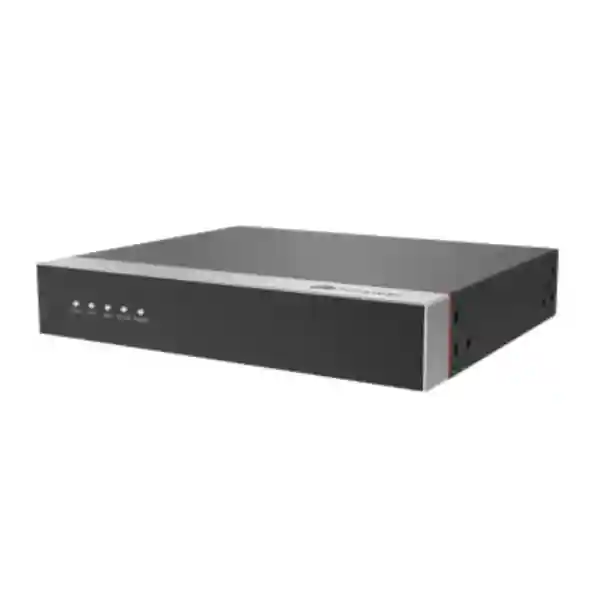
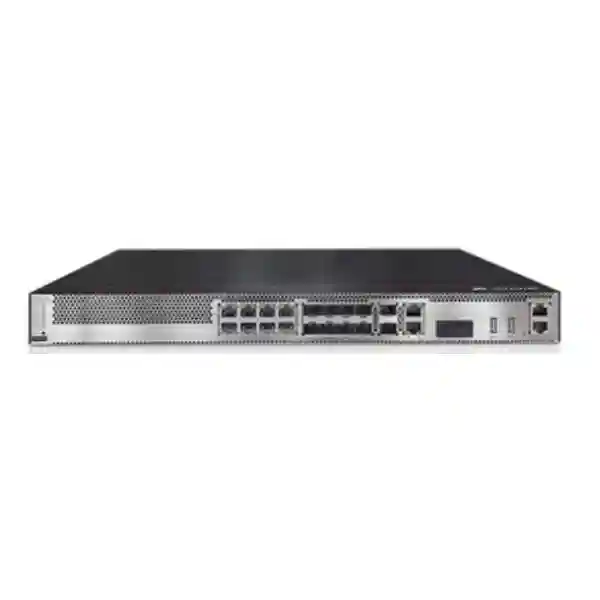
Huawei HiSecEngine USG6560F Firewall for Secure UAE Enterprise Networks
The Huawei HiSecEngine USG6560F belongs to Huawei’s enterprise firewall portfolio designed to combine high-performance packet forwarding with application-aware control, intrusion prevention, antivirus inspection, URL filtering, encrypted connectivity, bandwidth governance, and centralized security operations. For organizations in Dubai and across the UAE, the platform is relevant where the firewall must operate not simply as an Internet edge appliance, but as a policy enforcement point between users, applications, cloud services, partner networks, branch locations, data-center resources, and remote-access users.
Best-fit deployment goals
Use the USG6560F project framework when the requirement includes secure branch or campus Internet access, multi-WAN resilience, IPsec connectivity, granular application control, threat prevention, security policy consolidation, or centralized operational visibility.
Direct answer: what is the Huawei HiSecEngine USG6560F?
The Huawei HiSecEngine USG6560F is an enterprise firewall model associated with Huawei’s HiSecEngine USG6500F family. The family is built around integrated network security functions rather than a single packet-filtering feature. In practical deployment terms, that means administrators can use one policy platform to control routed traffic, user and application access, site-to-site VPN communication, remote connectivity, intrusion attempts, malicious files, web destinations, and bandwidth consumption. Huawei’s current public documentation for the USG6500F family highlights adaptive security processing, dedicated acceleration for forwarding, pattern matching, and encryption or decryption, together with threat detection and centralized operations capabilities.
A procurement detail matters here. Huawei’s current documentation set prominently lists a newer model called USG6560F-D. FourTeck therefore treats “USG6560F” as the requested commercial product reference but does not assume that every published USG6560F-D specification automatically applies to every earlier, regional, or differently bundled USG6560F unit. Before quotation or replacement, engineers should validate the complete Huawei part number, hardware revision, operating software release, included subscriptions, storage option, power configuration, transceiver requirements, and support entitlement. This protects the project from an apparently small model-name difference becoming an interface, throughput, license, or compatibility problem after delivery.
For buyers who need the current Huawei security portfolio integrated into a broader UAE infrastructure plan, FourTeck can coordinate firewall design with routing, switching, server, cloud, wireless, and operational requirements. Visit FourTeck UAE for enterprise technology coverage or the dedicated Firewall Dubai resource for firewall-focused planning and procurement.
Why this firewall class is relevant to Dubai and UAE networks
Multi-site connectivity
UAE organizations often combine headquarters, warehouses, retail branches, clinics, schools, construction offices, remote workers, and cloud workloads. A firewall at each edge can become the policy anchor for authenticated, encrypted communication between those locations.
Application-aware security
Modern traffic uses common web ports and encrypted protocols, so port-based rules alone provide limited context. Application identification allows policies to reflect business use cases more closely than simple source, destination, and service tuples.
Threat inspection at the edge
IPS, antivirus, URL controls, DNS-related filtering, and reputation or threat intelligence services can reduce exposure to malicious traffic before it reaches users or workloads, provided subscriptions and inspection profiles are correctly licensed and configured.
Operational consolidation
A consistent firewall platform can simplify change control, logging, policy review, VPN operations, and event investigation across distributed networks. Centralized management can be particularly useful when internal IT teams support many geographically separated sites.
Security architecture: forwarding, inspection, and adaptive resource use
Huawei describes the USG6500F family as using a hardware and software architecture that separates forwarding and control functions while allocating resources to security services through an Adaptive Security Engine. For network architects, the important implication is that firewall performance is not only a CPU clock-speed question. Different traffic classes place different loads on session setup, routing lookup, content decoding, pattern matching, encryption, logging, and advanced security engines. A platform that coordinates these resources is designed to preserve more predictable service behavior as security functions are enabled.
Huawei also documents network processor, pattern-matching, and encryption or decryption engines within the family. These are relevant to three common bottlenecks. First, small-packet workloads can stress packet-per-second capability even when measured bandwidth appears modest. Second, IPS and application identification depend on efficient content and signature processing. Third, IPsec VPN can consume substantial compute resources when many encrypted flows are active. Dedicated acceleration does not remove the need for sizing, but it changes the way the appliance handles mixed enterprise traffic compared with a general-purpose software-only gateway.
During design, FourTeck recommends separating four throughput concepts: raw firewall throughput, NGFW throughput with application and IPS functions, threat-protection throughput with additional malware inspection, and encrypted inspection performance where TLS traffic is decrypted for policy enforcement. These values are never interchangeable. Marketing bandwidth figures measured with large UDP packets represent a different workload from thousands of users opening short HTTPS sessions to SaaS platforms while IPS, antivirus, URL categorization, logging, and QoS are active. The sizing exercise should therefore begin with realistic user behavior and security profiles, not with the ISP circuit speed alone.
Session capacity is equally important. A company with a 1 Gbps Internet link can still create hundreds of thousands of concurrent sessions through web browsers, collaboration platforms, mobile devices, IoT endpoints, DNS resolvers, update services, cloud sync clients, and server-to-server API traffic. New-session rate also matters during business-hour bursts or when many devices reconnect after an outage. Firewall selection should consider bandwidth, session concurrency, new connections per second, security-service mix, VPN load, logging, and planned growth together.
Current Huawei USG6560F-D reference metrics — use for engineering context, not automatic substitution
Huawei’s current R25C10 datasheet publishes the following values for the USG6560F-D. They are useful when evaluating the modern equivalent within the family, but the exact USG6560F unit being quoted must still be verified by part number and release.
| Metric | Huawei-documented USG6560F-D reference | Why it matters |
|---|---|---|
| IPv4 firewall throughput | 12 / 12 / 3.6 Gbps for 1518 / 512 / 64-byte UDP | Shows packet-size sensitivity and reinforces why small-packet workloads need separate consideration. |
| NGFW throughput, enterprise mix | 1.3 Gbps | Closer to a mixed business workload with security services than raw forwarding throughput. |
| Threat protection, enterprise mix | 1.2 Gbps | Relevant when IPS and antivirus-style inspection are part of the policy set. |
| Concurrent sessions | 1,000,000 | Important for user-dense networks and highly connected cloud applications. |
| New sessions per second | 50,000/s for the documented HTTP 1.1 test | Helps characterize burst handling and high connection-turnover environments. |
| IPsec VPN throughput | 3.7 Gbps using the stated AES-256 + SHA256 test profile | Provides a reference for encrypted site-to-site design, subject to tunnel, packet, and feature conditions. |
| Maximum IPsec VPN tunnels | 2,000 | Useful for hub-and-spoke or distributed branch architectures. |
| SSL inspection throughput | 1.5 Gbps in Huawei’s stated test profile | Encrypted-traffic inspection can be more demanding than ordinary firewall forwarding. |
Integrated firewall and segmentation design
The foundational role of the USG6560F is stateful firewall policy enforcement. In a mature design, policies should not be limited to a single inside-to-outside allow rule. Networks are safer and easier to audit when traffic is segmented by business purpose. Common zones include corporate users, guest wireless, server networks, voice systems, CCTV, building management, development systems, payment environments, partner connections, remote-access users, and Internet-facing services. Each zone should have a defined trust assumption, routing path, permitted destinations, inspection profile, logging requirement, and owner.
Segmentation is particularly important in mixed-use buildings and multi-department environments because compromise of one endpoint should not automatically provide direct access to unrelated systems. A guest Wi-Fi subnet, for example, usually needs Internet access but no reachability to ERP servers, printers, management interfaces, or IP cameras. A CCTV network may require access only to recording servers, DNS, NTP, and specific management hosts. A finance application tier may permit database communication only from designated application servers. The firewall becomes the enforcement layer that makes those intended communication boundaries explicit.
Good policy design also reduces troubleshooting time. If rules are named by business function, grouped by source and destination zones, documented with change references, and reviewed periodically, an administrator can understand why traffic is allowed. Broad any-to-any objects may be convenient during an emergency but create long-term ambiguity. FourTeck’s recommended implementation process therefore includes object normalization, service review, least-privilege rule construction, logging decisions, and cleanup of temporary migration rules after acceptance testing.
Network address translation should be treated as a routing and service-publication function rather than a security strategy by itself. Source NAT is commonly used for Internet egress, while destination NAT or server mapping may publish specific services. Each inbound publication should be paired with narrowly scoped security policies, threat inspection where appropriate, and validation of the server’s own hardening. If a public service can be placed behind an application delivery or dedicated web security layer, the overall design may provide stronger protocol-specific protection than relying on a generic inbound firewall rule alone.
Application identification and policy control
Huawei’s USG6500F documentation states that the platform can identify thousands of applications and can apply access controls with finer granularity than simple port and protocol rules. This matters because many modern services share TCP 443. Without application awareness, a firewall may see approved SaaS collaboration, personal file sharing, anonymizers, remote-control tools, software updates, social platforms, and unsanctioned cloud storage as similar encrypted web traffic. Application classification gives administrators another policy dimension for separating business-required use from risky or unnecessary activity.
The most effective application-control policy is not necessarily the most restrictive one. Blocking every unfamiliar category can disrupt legitimate workflows and produce excessive help-desk incidents. A stronger operating model begins with visibility: identify high-volume applications, discover shadow IT, map critical SaaS services, understand remote-support tools, and determine which departments need exceptions. Policies can then be introduced in stages with business ownership and change control. This is especially valuable for organizations migrating from a basic router or legacy firewall where administrators previously had limited insight into application behavior.
Application identification also supports QoS and bandwidth management strategies. A company may want interactive voice, ERP traffic, virtual desktop sessions, and critical cloud applications to remain responsive during peak periods, while software downloads, streaming media, or non-business traffic receive lower priority. Bandwidth controls should reflect real service requirements and circuit characteristics. Overly aggressive shaping can cause latency, packet loss, and retransmissions, so FourTeck recommends using measured traffic profiles and clear priority tiers rather than arbitrary limits.
Where application control is combined with user identity, policy can become more meaningful. The design goal is to express rules in terms administrators and auditors understand: finance users may access specific financial services; IT administrators may use approved remote-management tools; guest users may receive Internet-only access; contractors may reach a limited application set during defined project periods. Exact identity integration capabilities depend on software version and deployment architecture, so directory, authentication, and logging requirements should be confirmed during solution design.
Intrusion prevention, web protection, and exploit defense
An intrusion prevention system examines traffic patterns and payload characteristics for activity associated with vulnerabilities, exploit attempts, command-and-control behavior, reconnaissance, and other malicious techniques. Huawei positions IPS as a core USG6500F security function and maintains updateable signature intelligence. In deployment, IPS should be tuned to the protected environment rather than enabled indiscriminately with maximum sensitivity on every flow. A policy protecting Internet-facing web servers, for example, may require a different profile from an outbound user browsing policy or a trusted site-to-site VPN carrying internal application traffic.
The value of IPS depends on several operational practices. Signatures need current updates. High-severity events need centralized monitoring. False positives should be investigated before exclusions are created. Protected server technologies should be known so irrelevant signatures can be reduced where the platform supports tuning. Most importantly, IPS is a compensating control and detection layer, not a substitute for patching vulnerable systems. If a critical application cannot be patched immediately, a validated IPS signature can reduce exposure, but remediation planning should continue until the root vulnerability is addressed.
Web-facing attacks such as SQL injection and cross-site scripting are examples of threats that network security platforms may detect based on signatures and protocol behavior. Protection quality varies by application, encryption state, traffic profile, and rule tuning. For high-value web applications, organizations should consider a layered approach that combines the firewall with application-specific protections, secure development, vulnerability management, strong identity controls, and server hardening. The firewall provides an important inspection boundary, but no single appliance can guarantee immunity from every application vulnerability.
DNS filtering and anti-phishing URL controls can also contribute to defense by restricting access to known malicious or inappropriate destinations. Because phishing campaigns frequently rotate domains and use legitimate cloud hosting, URL categorization should be combined with endpoint protection, secure email controls, user awareness, multi-factor authentication, and identity monitoring. The strongest architecture assumes that some malicious messages or links may bypass one control and relies on several independent layers to limit the impact.
Antivirus and content detection in transit
Huawei describes its Content-based Detection Engine and heuristic antivirus capabilities as part of the USG6500F security stack. The family is designed to inspect file content and detect malicious samples, including deeply compressed files under supported inspection conditions. This can help stop malware before it reaches endpoints when the firewall can see and analyze the transferred content.
However, modern malware defense requires realistic expectations about encrypted traffic, file sizes, protocols, password-protected archives, cloud application behavior, and endpoint execution. If a malicious payload travels inside encryption that the firewall does not decrypt, content scanning may have limited visibility. If TLS inspection is enabled, performance, certificate trust, privacy, legal considerations, unsupported applications, certificate pinning, and exception handling must all be addressed. Some services should be exempted for technical or policy reasons, and those exemptions should be documented.
FourTeck therefore recommends designing malware protection as a layered control. The firewall can inspect permitted network traffic, endpoint detection tools can observe execution behavior, email security can analyze attachments and links, DNS controls can block malicious destinations, identity systems can resist credential abuse, and backups can reduce ransomware impact. Each layer addresses different parts of the attack chain. The firewall’s value is strongest when its logs and events are integrated into the wider incident-response process rather than treated as isolated alerts.
Storage and logging should also be planned when content security is enabled. High-volume event generation can make local logs difficult to retain for long periods. Depending on the project, organizations may forward logs to Huawei management systems, syslog collectors, SIEM platforms, or other monitoring services. Retention requirements should be matched to security operations, regulatory obligations, investigation needs, and storage budgets.
URL filtering and acceptable-use controls
URL filtering gives administrators a category-based mechanism for managing web access. Huawei states that the USG6500F family can use a large cloud URL categorization database and can support anti-phishing functions. For a UAE enterprise, common policy goals include reducing access to known malicious websites, restricting categories that create legal or productivity concerns, and controlling high-risk destinations that facilitate anonymization, peer-to-peer transfer, or unapproved software distribution.
Category filtering should be implemented with governance. A block decision can affect legitimate research, marketing, development, or customer-support work, so exceptions need a transparent approval path. Administrators should know whether a policy is based on security risk, bandwidth management, acceptable-use rules, or regulatory requirements. The technical platform enforces the decision, but organizational policy determines what should be allowed.
Encrypted web traffic again affects visibility. Domain-level controls may still be possible without full decryption, but granular URL-path inspection can depend on TLS inspection and protocol behavior. Design decisions should therefore state what level of web visibility is expected. If the project requires detailed content inspection across encrypted sessions, the certificate deployment, client trust model, mobile-device handling, unmanaged BYOD policy, and performance impact should be part of the scope from the start.
Reporting is as important as enforcement. Trends in blocked categories, repeated access to suspicious domains, newly observed destinations, and user or device patterns can help security teams identify compromised endpoints or policy gaps. Rather than reading every event individually, organizations should build dashboards and alert thresholds around behaviors that require action.
IPsec VPN for branches, cloud connectivity, and partner networks
IPsec remains a common method for connecting offices over public Internet links. The USG6500F family supports IPsec VPN, making the platform suitable for site-to-site topologies where a Dubai headquarters connects to branches in Abu Dhabi, Sharjah, other Emirates, regional offices, cloud gateways, data-center locations, or selected partner networks. The core design questions are not limited to whether a tunnel can be created. Engineers need to define encryption standards, routing behavior, redundancy, tunnel monitoring, failover, address plans, overlapping networks, MTU, QoS, and operational ownership.
A hub-and-spoke topology is operationally simple for many branch networks because policy and Internet breakout can be centralized. However, it may create inefficient paths for branch-to-branch communication or cloud access. Local Internet breakout reduces backhaul but requires consistent security policy at every site. Dual hubs improve resilience but add routing and failover complexity. SD-WAN capabilities can introduce application-aware path selection, but the benefit depends on controller design, link diversity, operational maturity, and licensing. FourTeck sizes the firewall and WAN architecture together so tunnel design does not become an afterthought.
Encryption throughput should be evaluated against realistic packet sizes and algorithms. Huawei’s published IPsec figures use defined test conditions; production results depend on security settings, packet mix, NAT traversal, encapsulation, logging, other simultaneously enabled services, and the number of active flows. If a customer expects sustained multi-gigabit encrypted traffic, the design should include headroom and, where possible, validation against Huawei’s exact model and software release documentation.
VPN troubleshooting also benefits from disciplined monitoring. Useful telemetry includes tunnel state, IKE negotiation errors, phase-two selectors, routing tables, packet counters, dropped packets, latency, jitter, loss, and WAN circuit health. A stable VPN service requires both the firewall configuration and the underlying ISP links to be observable. Where business continuity is important, secondary circuits should use diverse physical paths or providers where feasible rather than two services sharing the same upstream failure domain.
SSL VPN and remote access planning
Huawei’s USG6500F platform supports SSL VPN functionality for remote users, subject to model capability and licensing. Remote access should be designed as an identity security service rather than simply a tunnel. The project should define who is allowed to connect, which devices are permitted, how users authenticate, whether multi-factor authentication is required, what internal resources are reachable, and how sessions are logged and terminated.
Least-privilege access is especially important for contractors and third parties. Instead of exposing an entire internal subnet, a remote-access policy can restrict users to specific applications, jump hosts, or management systems. Time-bound accounts and regular access reviews reduce the chance that old project credentials remain active. For privileged administrators, a dedicated management path and strong authentication can separate infrastructure administration from ordinary user VPN access.
Capacity planning should include the number of concurrent users, expected per-user bandwidth, video conferencing behavior, file-transfer requirements, and whether Internet traffic is tunneled through the corporate firewall or breaks out locally. Full-tunnel access gives central security policy more visibility but increases firewall and WAN load. Split tunneling reduces backhaul but places more trust in endpoint controls. The right choice depends on security policy, user location, application architecture, and bandwidth.
Remote access should also have an outage procedure. If the primary firewall or identity provider is unavailable, authorized administrators need a documented recovery path that does not bypass normal controls permanently. Emergency access accounts, configuration backups, secondary authentication methods, and tested restoration procedures can prevent a firewall incident from becoming an extended business interruption.
Multi-WAN, intelligent uplink selection, and resilient Internet design
Huawei documents intelligent uplink selection and policy-based routing capabilities within the USG6500F family. For UAE enterprises that depend on cloud applications, two independent WAN services can improve continuity when one carrier experiences an outage or degradation. The firewall can evaluate link state and, depending on the design, steer selected traffic across preferred paths.
True resilience requires more than plugging in two circuits. Engineers should verify whether the circuits enter the building through different routes, whether they terminate on independent provider infrastructure, whether DNS and public services can fail over, and whether VPN peers support multiple paths. A secondary link that shares the same last-mile duct or upstream aggregation point may not protect against the failure scenario the business cares about.
Application-aware path selection can prioritize latency-sensitive services such as voice, collaboration, or virtual desktops while moving bulk transfer to another circuit. Link quality measurements should use realistic probes and thresholds. If failover is too sensitive, traffic can flap between circuits; if it is too slow, users experience long application timeouts before recovery. Policies should therefore include hold-down timers, hysteresis, preferred-path logic, and return-to-primary behavior.
Public IP addressing can complicate failover. Outbound traffic usually adapts easily through source NAT, but inbound services and third-party allowlists may depend on a specific public address. DNS failover, provider-independent addressing, cloud-based front ends, reverse proxies, or application-level redundancy may be required. FourTeck’s WAN design process maps these dependencies before the firewall migration so connectivity is not treated as a purely local interface configuration.
Secure SD-WAN considerations
Huawei’s current USG6500F documentation includes secure SD-WAN functionality. SD-WAN can be useful when an organization operates many branches and wants centralized path policy, application-aware steering, automated provisioning, and encrypted overlays. The business objective is normally to improve application experience and operational consistency rather than simply replace MPLS with Internet connectivity.
A successful SD-WAN rollout starts with application mapping. Critical services should be identified by destination, application, latency sensitivity, loss sensitivity, and security requirement. The team can then define which WAN links are eligible for each traffic class and how the branch behaves when performance falls below thresholds. For example, a voice service may prefer the lowest-jitter circuit, while backup traffic may use the lowest-cost path. Security inspection must remain consistent regardless of path selection.
Controller architecture and management-plane security deserve equal attention. Administrators should understand how devices are onboarded, how templates are versioned, how policy changes are approved, and what happens if a controller becomes unreachable. Central automation can reduce repetitive configuration, but an incorrect template can also propagate a mistake quickly. Change control, staged deployment, rollback capability, and configuration backups remain essential.
Organizations migrating from traditional VPN should plan coexistence. Some branches may remain on static IPsec while others move to SD-WAN. Cloud providers and partner networks may use standard tunnels. Routing and security policies must therefore account for multiple overlay types during transition. A phased rollout with representative pilot sites can expose application dependencies before a full regional migration.
High availability and business continuity
For headquarters, data centers, hospitals, hotels, manufacturing sites, and other operations where Internet or private-network outages are costly, a single firewall can become an unacceptable point of failure. High-availability design should therefore be discussed even when the initial bill of materials contains one appliance. The design question is broader than whether two firewalls can form a cluster. Power, WAN circuits, upstream switches, downstream core switches, rack power distribution, cabling, optics, and management access must all avoid hidden single points of failure.
Active/standby architectures are common because they keep policy ownership clear while providing hardware redundancy. State synchronization can reduce session disruption during failover, subject to feature and protocol behavior. Administrators should test planned failover, unplanned power loss, WAN failure, interface failure, and software maintenance. A pair that has never been tested may not behave as expected during a real incident.
Configuration synchronization should not replace backup discipline. Organizations need independent, versioned configuration backups stored outside the appliance. Critical certificates, licenses, recovery credentials, routing information, and change records should be included in the disaster-recovery plan. Backup files should be protected because they can contain sensitive network information.
Maintenance planning should also consider software support and security advisories. Firmware upgrades may include vulnerability fixes, stability improvements, and feature changes. Before production deployment, administrators should review release notes, validate supported upgrade paths, back up configuration, schedule an outage or controlled failover window, and verify core services after the change.
Centralized management, visibility, and SecoManager integration
Huawei positions centralized security management as an important part of the USG6500F operating model and references SecoManager for policy and device management. Centralization is most valuable when an organization has multiple firewalls because administrators can standardize objects, policies, updates, configuration workflows, and event analysis. This reduces the chance that every branch evolves into a unique configuration that only one engineer understands.
Operational visibility should focus on questions that help teams act. Which sites are down? Which WAN links are degraded? Which users or devices generate the most denied traffic? Are IPS events increasing? Which destinations are repeatedly blocked? Is an internal host connecting to unusual domains? Are VPN tunnels flapping? Which policies are unused? A well-designed dashboard makes these patterns visible without forcing engineers to inspect raw logs continuously.
Log integration with a SIEM can extend correlation beyond the firewall. Authentication events, endpoint alerts, server logs, cloud audit records, DNS telemetry, and firewall detections can be combined to identify activity that would look harmless in isolation. For example, a failed-login burst followed by a successful remote connection and unusual outbound traffic becomes more meaningful when events from several systems are correlated by user and time.
Management access itself must be secured. Administrative interfaces should be restricted to dedicated management networks or trusted jump hosts, protected by strong authentication, and logged. Direct Internet exposure of management services should be avoided wherever possible. Role-based access can separate read-only monitoring, policy administration, network configuration, and security operations responsibilities according to the organization’s governance model.
Firewall sizing methodology for a real UAE project
Correct sizing starts with measurements and business forecasts. The first input is not the model name; it is the workload. Collect peak inbound and outbound Internet usage, private WAN traffic, the number of active users and devices, concurrent sessions, server-published traffic, VPN demand, branch count, SaaS usage, and expected growth. Then identify which security services will be enabled on which traffic flows. A firewall used only for routing and stateful filtering has a very different capacity profile from one performing IPS, antivirus, application control, URL filtering, TLS inspection, detailed logging, and IPsec simultaneously.
The second input is packet and session behavior. High-bandwidth backup traffic with large packets may be easy to forward, while a busy web environment with many small connections can stress session setup and content inspection. DNS, API traffic, microservices, cloud agents, and mobile applications can create high connection turnover. Packet-per-second and connection-per-second characteristics therefore matter even when average bandwidth is moderate.
The third input is resilience. If two firewalls operate as an HA pair, each unit may need to support the full production workload after failover. Running both units near maximum capacity defeats the purpose of redundancy. Similarly, if a secondary ISP is much slower than the primary link, failover testing should consider how congestion will affect business applications even though the firewall remains available.
The fourth input is lifecycle. Security traffic usually grows over time as more SaaS platforms, cameras, IoT devices, remote users, cloud workloads, and branch locations are added. Encryption usage also continues to rise. A model that barely satisfies today’s measured load can become constrained well before the expected refresh cycle. FourTeck therefore recommends practical headroom for traffic growth, feature expansion, and temporary bursts.
Finally, sizing should use the correct vendor benchmark. Raw firewall throughput should not be compared with full threat-protection throughput. Datasheet footnotes, packet sizes, enabled services, cipher suites, HTTP object sizes, and enterprise-mix definitions matter. When a specification is critical to an SLA, FourTeck validates the exact Huawei documentation for the proposed SKU and software release rather than relying on a generic reseller table.
Interface planning and physical network integration
Interface count is often underestimated during firewall procurement. The appliance may need links for primary WAN, backup WAN, LAN core, DMZ, management, HA heartbeat, dedicated server zones, partner circuits, and future expansion. Some logical networks can share a physical interface through VLAN tagging, but high-throughput or high-security zones may justify dedicated ports. Optic type, copper distance, fiber type, transceiver compatibility, and switch-side interfaces should be confirmed before delivery.
Huawei’s current USG6560F-D documentation lists a combination of GE copper or combo connectivity and 10GE SFP+ interfaces. That current model reference should not be assumed for every unit sold simply as USG6560F, so port maps must be checked against the exact device label and ordering code. This is especially important when a project expects 10-gigabit uplinks to a core switch or needs a particular optical module.
Link aggregation can improve bandwidth and resiliency to switching infrastructure when supported across the design. However, aggregate links do not protect against all failures if both member links terminate on the same switch. Multi-chassis link aggregation or redundant upstream switches may be needed for full device resilience. The firewall, switches, and spanning-tree or routing design should be reviewed as one system.
Rack planning includes power, cooling, airflow, depth, cable management, and serviceability. Even a 1U appliance needs accessible power feeds and enough space for fiber bend radius and transceiver removal. For critical sites, dual power sources should connect to independent UPS or PDU paths where the chosen hardware supports redundant power. Environmental requirements must be respected; a communications room without adequate cooling can undermine otherwise robust network design.
Migration from an existing firewall
Firewall replacement is primarily a policy and dependency migration project. The old configuration usually contains years of NAT rules, VPN peers, address objects, temporary exceptions, unused policies, undocumented services, and workarounds. Blindly translating every rule reproduces technical debt. A structured migration first extracts the current configuration, maps business owners, identifies unused entries, and separates required behavior from obsolete history.
Address objects should be normalized so the new platform has consistent naming. Rules should be grouped by zones and business purpose. NAT dependencies should be documented together with DNS records and third-party public-IP allowlists. VPN configurations need peer contacts, pre-shared keys or certificates, encryption parameters, protected networks, routing, and test procedures. Public services should have application owners available during cutover.
A pre-cutover test plan reduces risk. Engineers can validate interface addressing, default routing, VLANs, DHCP relay if used, DNS reachability, authentication, outbound browsing, critical SaaS applications, published services, site-to-site VPNs, remote access, voice traffic, monitoring, and logging. If the organization has a secondary site or lab, representative policies can be tested in advance.
The rollback plan should be simple enough to execute under pressure. It should define the decision point for rollback, cable mapping, old-device readiness, DNS considerations, and responsibility. A migration window should leave enough time not only to install the firewall but also to run business-level validation. The technical team may see packets flowing while users still face application-specific issues.
After cutover, the project enters a stabilization period. Logs are reviewed for unexpected denies, IPS events, application classifications, and resource utilization. Temporary migration rules are removed once the required traffic is understood. Documentation is updated to reflect the production state rather than the planned state.
Security policy lifecycle and rule hygiene
A firewall is not finished when the first configuration is installed. Policies change as applications move to cloud platforms, offices relocate, staff roles change, vendors are replaced, and new services are introduced. Without a lifecycle process, rulebases accumulate broad exceptions and stale objects. Periodic review keeps the configuration aligned with current business requirements.
Every significant rule should have a clear owner, purpose, source, destination, service or application, security profile, logging decision, and review date where appropriate. Temporary rules should expire. Emergency rules should be revisited after the incident. Rules with zero usage over a meaningful observation period may be candidates for removal, but administrators should confirm whether they protect seasonal or disaster-recovery systems before deleting them.
Policy order also matters. Specific rules should normally be evaluated before broad rules that would shadow them. Duplicated objects and overlapping address groups make audits harder. Naming standards help different engineers interpret the configuration consistently. FourTeck recommends documenting these standards during deployment so the rulebase remains maintainable after handover.
Changes should be tested and logged. For higher-risk environments, a second engineer can review planned changes before implementation. Configuration snapshots and rollback steps should accompany major changes. The objective is not bureaucracy; it is reducing the chance that a routine firewall change causes a widespread outage or unintentionally exposes a sensitive service.
Licensing and subscription planning
A complete firewall quotation includes more than hardware. Advanced threat services commonly depend on subscriptions or licenses, and support contracts affect access to software updates, technical assistance, and replacement services. The exact bundle can vary by region, campaign, hardware generation, and software release, so buyers should compare quotations at the license-function level rather than by appliance price alone.
Before order placement, list the required capabilities: IPS updates, antivirus, URL filtering, application control, sandbox integration if applicable, remote-access user count, centralized management, secure SD-WAN, logging retention, and vendor support. Then map each capability to the required Huawei entitlement. This avoids discovering after installation that a desired function is visible in the interface but not activated by the purchased license.
Subscription duration should align with budgeting and refresh plans. A one-year security bundle lowers initial commitment but requires annual renewal management. Multi-year terms can simplify continuity when procurement processes are slow. Regardless of duration, the organization should track expiration dates centrally because an expired threat subscription may continue basic forwarding while reducing the freshness or availability of security services.
Support-level selection should match business impact. A small branch with easy hardware replacement may accept standard service, while a critical headquarters may need faster response and replacement coverage. FourTeck can include licensing and support in the quotation checklist so hardware, subscriptions, and service expectations are reviewed together.
Deployment scenarios for the Huawei HiSecEngine USG6560F
Headquarters Internet edge
The firewall can sit between redundant ISP links and a core network, enforcing outbound access, publishing selected services, terminating VPNs, applying threat profiles, and forwarding logs to central monitoring. HA should be considered when Internet access is business-critical.
Regional branch hub
A UAE hub can aggregate IPsec or SD-WAN connections from regional branches, apply consistent application and threat policies, and provide controlled access to data-center or cloud resources. Tunnel scale and encrypted throughput must be sized against actual branch demand.
Campus segmentation gateway
The firewall can separate users, servers, guests, IoT, voice, cameras, and management networks. East-west policy requires careful throughput planning because internal traffic may exceed Internet bandwidth by a large margin.
Cloud and data-center interconnect
IPsec connectivity can link on-premises systems to cloud virtual networks. Route design, overlapping address space, cloud gateway limits, redundancy, and security ownership must be coordinated across both environments.
Partner or extranet boundary
Dedicated zones and tightly scoped policies can isolate partner connections from the internal network. Logging and explicit destination rules help reduce the risk that third-party access becomes a broad trust path.
Secure remote workforce
Remote-access VPN can provide authenticated access to selected corporate resources. User count, MFA integration, endpoint policy, split-tunnel decisions, and support workflow should be defined before rollout.
Integration with servers, switching, wireless, and IT operations
The firewall operates within a larger infrastructure. Core switches determine VLAN transport and gateway placement. Wireless systems map SSIDs to security zones. Servers depend on DNS, NTP, directory services, backup networks, storage, and monitoring. Cloud applications require reliable Internet paths and identity services. A successful firewall deployment therefore coordinates all these dependencies rather than treating the appliance as a standalone box.
FourTeck’s IT Services UAE capability can be used where the firewall project includes migration services, structured troubleshooting, operational support, or broader infrastructure changes. For on-premises compute and virtualization environments, the Server Dubai resource is relevant when firewall segmentation, backup, hypervisor, storage, or data-center requirements need to be planned together.
In multi-country deployments, policy templates should account for differences in WAN providers, local regulations, address schemes, branch size, and support logistics. Standardization should reduce operational complexity without forcing every site into an identical physical design. Regional teams may use a common policy model while selecting different appliance capacities for small branches and high-traffic hubs. FourTeck’s Africa technology coverage can support organizations extending a UAE-led architecture into African markets.
The integration plan should document interface ownership, VLAN IDs, IP addressing, routing protocols, DNS dependencies, authentication servers, NTP, syslog or SIEM destinations, SNMP or monitoring, backup locations, management access, and escalation contacts. These details are often what determine whether the solution remains supportable months after project completion.
TLS inspection: powerful visibility with important design tradeoffs
A large percentage of modern traffic is encrypted, which limits the ability of any firewall to inspect application payloads unless it participates in TLS decryption. Huawei publishes SSL inspection performance for current USG6500F models, showing that encrypted inspection is a distinct capacity domain. Organizations considering this feature should plan it as a separate workstream rather than toggling it on after deployment.
Outbound TLS inspection typically requires the firewall to present certificates that endpoints trust. That means enterprise-managed devices need the appropriate internal CA chain. Unmanaged devices, mobile applications, pinned certificates, financial services, healthcare portals, software update mechanisms, and privacy-sensitive destinations may require bypass rules. The organization should have an approved policy defining what is inspected and what is exempted.
Performance can change significantly because each inspected TLS session requires cryptographic operations and deeper content processing. Capacity should be tested using the expected number of users, cipher suites, object sizes, and security profiles. A firewall that has ample raw throughput may still become constrained when full decryption and threat inspection are enabled across high-volume SaaS traffic.
Certificates also create lifecycle responsibilities. The inspection CA must be protected, monitored, renewed before expiration, and deployed through endpoint-management systems. If the CA key is compromised, the trust model is compromised. Administrators therefore need documented certificate ownership and recovery procedures in addition to firewall configuration skills.
Monitoring KPIs after go-live
The first weeks after deployment should establish a performance baseline. Track CPU or processing utilization, memory usage, session count, new-session rate, WAN utilization, packet drops, VPN state, interface errors, temperature where exposed, and security-event volume. These values help distinguish normal behavior from future incidents.
Security KPIs should emphasize quality rather than raw alert count. Useful measures include high-severity IPS events investigated, malware blocks by endpoint, repeated command-and-control destinations, phishing URL hits, policy violations, and time to respond. An environment generating millions of low-value events but no actionable workflow is not necessarily better protected.
Policy KPIs can identify rulebase cleanup opportunities. Administrators may review unused rules, rules with unexpectedly high hit counts, top denied services, temporary exceptions approaching expiry, and shadowed rules. Regular review reduces complexity and makes future troubleshooting easier.
Availability KPIs include WAN uptime, failover frequency, tunnel stability, and recovery time. Frequent failover may indicate carrier degradation, bad thresholds, optical issues, or upstream routing instability. The firewall should be monitored as part of end-to-end service health rather than blamed for every connectivity event that passes through it.
Operational security and administrator hardening
Administrative access is one of the most sensitive parts of a firewall deployment. Management interfaces should use encrypted protocols, source restrictions, and dedicated management paths where possible. Default credentials must be replaced, accounts should be individual rather than shared, and privilege should match job responsibilities. Multi-factor authentication should be used where supported by the chosen management architecture.
Remote management from the public Internet should be minimized. If emergency access is necessary, use a VPN, trusted source restrictions, jump hosts, or out-of-band management rather than broadly exposing the administrative interface. Logging should record successful and failed administrator access as well as configuration changes.
Configuration backups need security because they reveal topology, addresses, objects, and potentially sensitive authentication material. Backups should be encrypted or stored in protected repositories with access controls. Retention should preserve enough history to recover from both accidental changes and delayed discovery of malicious modifications.
Time synchronization is essential for investigation. Firewall logs, authentication systems, servers, endpoints, and SIEM platforms should use reliable NTP sources so analysts can correlate events accurately. A few minutes of clock drift can complicate incident timelines and make automated correlation less reliable.
Common design mistakes to avoid
Sizing only by ISP bandwidth
A 1 Gbps circuit does not mean every 1 Gbps-class firewall is suitable. Threat inspection, TLS decryption, session rate, VPN, east-west traffic, and growth can require much more capacity.
Copying the old rulebase unchanged
Legacy rules often contain stale exceptions and broad objects. Migration is an opportunity to normalize and reduce policy debt.
Ignoring subscription requirements
Advanced security services may need active licenses. Confirm every required function and renewal term before comparing commercial offers.
Treating dual ISP as automatic HA
Two circuits can still share physical and upstream failure domains. Verify path diversity and public-service failover.
Turning on TLS inspection without planning
Certificate deployment, exceptions, privacy policy, pinned applications, and performance must be designed first.
No rollback procedure
A cutover should define when and how to revert. Troubleshooting under pressure is not a substitute for a rehearsed recovery path.
Procurement details to confirm before ordering in Dubai
A firewall quotation should identify the exact Huawei product code, not only the family name. Confirm whether the proposed device is explicitly USG6560F, USG6560F-D, or another current replacement. The suffix can affect chassis, interfaces, power, storage, performance, and software support. Ask for the complete bill of materials so optics, rack accessories, power modules, storage options, and cables are visible.
Confirm licensing as a separate line item. Determine which security subscriptions are included, their duration, their start date, and renewal requirements. Confirm remote-access user limits, centralized management entitlements, and any secure SD-WAN licensing. If a feature depends on a cloud service, confirm regional availability and support conditions.
Check support entitlement and hardware replacement terms. Procurement teams often compare only unit price, but response time becomes important during an outage. Confirm whether the offer includes vendor support, partner support, installation, migration, policy conversion, testing, documentation, training, and post-cutover stabilization. These are separate deliverables and should be explicit.
Lead time should be validated before scheduling a migration. Hardware availability, security-subscription activation, optics, and redundant units may have different delivery timelines. If a project has a fixed office-opening or compliance date, build contingency time into the plan.
Finally, confirm interoperability with the existing environment. Record core-switch interfaces, VLAN design, ISP handoffs, routing protocols, authentication systems, monitoring platforms, VPN peer types, and cloud gateways. A firewall is more likely to integrate smoothly when these details are known before the purchase order is issued.
Implementation approach FourTeck can use
1. Discovery and traffic assessment
Collect circuits, users, devices, applications, current firewall configuration, VPNs, public services, growth plans, compliance requirements, and support expectations.
2. Low-level design
Define interfaces, zones, VLANs, addressing, routing, NAT, security profiles, VPNs, HA, management, logging, DNS, NTP, and monitoring.
3. Build and staging
Load the approved software, apply baseline hardening, create objects and policies, configure management, prepare backups, and validate licenses.
4. Migration and test
Execute the cabling and routing change, verify business applications, test VPNs and published services, review logs, and keep a defined rollback point.
5. Stabilization
Tune policies, investigate unexpected denies, confirm resource utilization, remove temporary rules, and verify monitoring and backup jobs.
6. Handover and lifecycle
Deliver documentation, administrator guidance, support contacts, renewal records, configuration backups, and an agreed review schedule.
Frequently asked technical questions
Is the USG6560F a next-generation firewall?
The USG6500F family combines stateful firewalling with application identification, intrusion prevention, antivirus, URL filtering, VPN, bandwidth management, and other integrated security functions, which aligns with the practical capabilities organizations expect from an NGFW-class platform. Exact feature availability depends on software release and license.
Can it be used for IPsec site-to-site VPN?
Yes, Huawei documents IPsec VPN support across the family. Sizing should consider encrypted throughput, tunnel count, packet size, cipher profile, routing, and other security services enabled at the same time.
Does it support SSL VPN for remote users?
The family supports SSL VPN, but user limits and licensing vary. The project should confirm the required concurrent-user count, authentication method, split-tunnel policy, endpoint requirements, and exact entitlement.
Can it inspect HTTPS traffic?
Current USG6500F documentation includes SSL inspection metrics. Enabling inspection requires certificate planning, endpoint trust, application exceptions, privacy governance, and capacity validation.
Can it be used with dual ISP links?
Huawei documents intelligent uplink selection and policy-based routing functions. Dual-WAN design should include link monitoring, route behavior, VPN failover, inbound service strategy, and physical carrier diversity.
Why does this page mention USG6560F-D?
Because Huawei’s current public USG6500F documentation lists the USG6560F-D as a current model reference. The requested product name is USG6560F, so FourTeck does not silently substitute suffix-specific specifications. The exact ordered hardware must be validated before quotation and deployment.
Decision recap: when the USG6560F project is a strong fit
Consider the Huawei HiSecEngine USG6560F family position when your network needs consolidated edge security, application visibility, intrusion prevention, malware controls, URL filtering, site-to-site VPN, remote access, multi-WAN policy, and centralized operations in one enterprise security architecture. The platform is particularly relevant for distributed businesses that want consistent security policy across headquarters and branches.
Do not select the appliance from a single maximum-throughput number. Validate the exact hardware suffix, security-service throughput, session behavior, TLS inspection, VPN load, interface requirements, license bundle, HA design, and three-to-five-year growth forecast. This produces a defensible architecture and reduces the risk of buying either an undersized device or unnecessary excess capacity.
For UAE deployments, FourTeck can structure the engagement from product validation through low-level design, migration, policy tuning, testing, documentation, and operational handover.
Quotation input checklist
Providing the following information makes the Huawei firewall quotation more accurate and reduces change orders during implementation:
FourTeck consultation panel for Huawei HiSecEngine USG6560F Dubai projects
A firewall purchase is most successful when commercial selection, security policy, WAN architecture, migration, licensing, and operations are designed together. FourTeck can review the requested Huawei HiSecEngine USG6560F against the currently available Huawei model, verify the exact part number and feature bundle, and build a deployment plan around the customer’s real network.
For a meaningful proposal, share the existing topology, ISP bandwidth, user and device counts, required security services, VPN requirements, branch locations, public applications, HA expectations, and preferred support period. The resulting bill of materials can then distinguish the appliance, subscriptions, optics, accessories, installation services, migration scope, and support rather than hiding those items inside a single ambiguous line.
This page intentionally avoids assuming that current USG6560F-D specifications are identical to every product sold under the shorter USG6560F name. Final technical and commercial commitments should be based on the exact Huawei ordering code and the software release supported at the time of purchase.

Reviews
There are no reviews yet.