
Enterprise campus switching • modular scale • regional procurement guidance
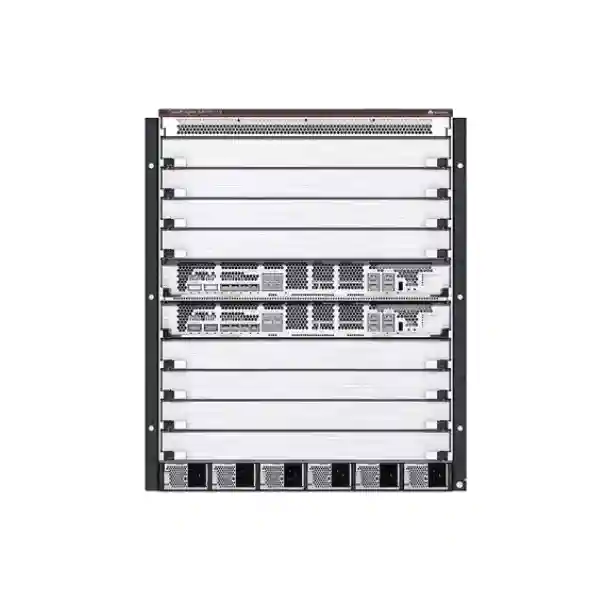
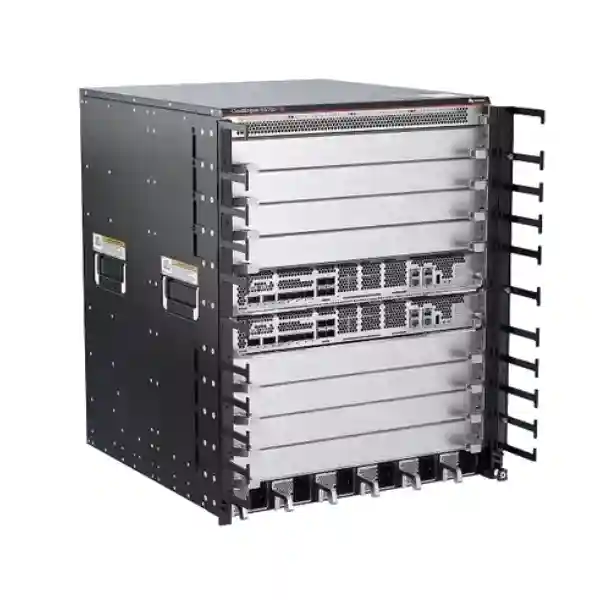
Huawei CloudEngine S8700-10
The Huawei CloudEngine S8700-10 is the largest chassis model in Huawei’s S8700 family and is positioned for high-capacity campus aggregation, access and core roles. It is built for organizations that need modular expansion, resilient control and power design, high-speed uplinks, policy-rich Layer 2/Layer 3 services, and a platform that can support modern wired and wireless campus architectures. This page is written for IT managers, network architects, procurement teams and system integrators comparing the S8700-10 for projects in Dubai, the wider UAE, Uganda, Kampala, Arua, Mbarara, Gulu, Kenya, Kuwait, Ghana, Nigeria and Seychelles.
Huawei identifies the S8700-10 as the 10-slot member of the S8700 family, with two main-control slots and eight service-card slots.
The S8700 platform supports GE, 10GE, 25GE, 40GE and 100GE access or uplink options according to the chosen boards and software support.
Key components such as control boards, power modules and fan modules are designed with redundancy options for higher service continuity.
Huawei lists VXLAN, BGP-EVPN, IPv4/IPv6, MACsec, QoS, NAC and policy capabilities among the S8700 family functions.
What the Huawei CloudEngine S8700-10 is designed to do
Buyers searching for “Huawei CloudEngine S8700-10 price,” “S8700-10 supplier,” “Huawei S8700-10 datasheet,” “S8700-10 configuration,” or “S8700-10 distributor” are usually not looking for a standalone fixed-port access switch. They are evaluating a modular platform that can sit at a significant point in the campus topology. The practical question is therefore not simply whether the chassis has enough ports today, but whether the full bill of materials supports the required fiber density, uplink speeds, control-board resilience, power budget, software functions, transceivers, cabling and growth plan.
Huawei positions the S8700 series as next-generation modular aggregation and access switching for premium campus networks, with the S8700-10 providing the largest service-card footprint in the family. Depending on the boards selected, the platform can support dense combinations of GE, 10GE, 25GE, 40GE and 100GE connectivity. Huawei also documents support for modern campus technologies such as VXLAN Layer 2 and Layer 3 gateways, BGP-EVPN, MACsec on supported ports, IPv4/IPv6 dual stack, NAC functions, QoS mechanisms and policy-based access capabilities. Actual feature support must always be checked against the intended software version, control board and service card combination before ordering.
The S8700-10 is particularly relevant when a project needs to consolidate many downstream access switches, wireless access infrastructure, server or service connections into a modular aggregation layer. It can also be considered as a core platform for certain small or midsize campus designs when the selected architecture and capacity requirements fit the model. This makes early design work important: count active and future access links, define required port speeds, document single-mode versus multimode fiber, confirm optic distances, calculate PoE requirements where applicable, define link redundancy, and decide whether high availability requires dual control boards and multiple power modules.
Verified platform facts buyers should confirm in a quotation
| Item | Huawei-published S8700-10 information | Buyer action |
|---|---|---|
| Main control board slots | 2 | Confirm the required control-board model and redundancy plan. |
| Service card slots | 8 | Map each slot to current and future interface requirements. |
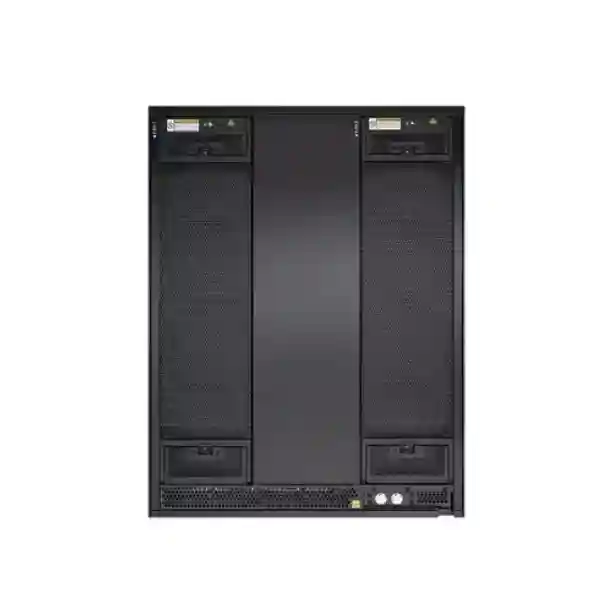
| Fan slots | 2 | Confirm airflow direction, rack environment and spare strategy. |
| System power-supply positions | 6 | Size installed power modules for boards, PoE demand and redundancy. |
| Interface families | GE, 10GE, 25GE, 40GE and 100GE options within the S8700 family | Confirm exact service cards, optics, cables and software compatibility. |
| Campus technologies | VXLAN, BGP-EVPN, IPv4/IPv6, MACsec, QoS and NAC capabilities are documented for the series | Validate licenses, versions, boards and design prerequisites. |
Important: Huawei’s regional product pages currently show different switching-capacity values for the S8700-10, so a procurement document should use the value tied to the exact hardware generation, control board, service cards and software version being quoted rather than copying a single figure from a generic web page.
Selection, configuration and deployment planning
A correct S8700-10 purchase starts with topology rather than with a chassis-only part number. Create a port matrix that lists every downstream switch, wireless controller or access layer connection, server-facing network, security appliance, WAN handoff, management connection and inter-building link. Record the speed, media type, optic reach, redundancy requirement and expected growth for each interface. This makes it possible to choose service cards based on real connectivity instead of filling slots with boards that later require adapters or replacement.
Power planning is equally important. If the project will use PoE-capable service cards, calculate the total endpoint demand and not only the number of powered ports. Wireless access points, IP phones, cameras and other devices can have different power classes. The power-supply configuration should be sized for the installed cards, PoE load, environmental conditions and required redundancy. A resilient campus design should also examine the electrical source, UPS capacity, PDU layout and whether redundant power feeds are actually independent.
For software design, define the routing and campus architecture before implementation. Decide whether the switch will operate as traditional Layer 2/Layer 3 aggregation, a routed core, or part of a VXLAN EVPN fabric. Document VLANs, gateways, routing protocols, multicast requirements, QoS treatment, authentication, management access, logging, NTP, SNMP or telemetry, AAA integration and configuration-backup procedures. Where MACsec, NAC or other security features are required, confirm support on the exact ports and boards involved.
The switch should also be evaluated as part of a complete security boundary. Campus switching, firewalling and access policy interact closely, especially when users, guests, servers, voice, CCTV, Wi-Fi and operational systems are segmented. FourTeck’s perimeter firewall planning resource explains the gateway side of segmentation, while the firewall deployment guidance is useful when the S8700-10 will connect to a new or redesigned security edge.
Huawei CloudEngine S8700-10 Dubai
Customers searching for Huawei CloudEngine S8700-10 Dubai usually have a commercial as well as a technical question: which chassis, control boards, service cards, optics, power modules and support items should be included in the quotation? Dubai projects commonly range from new office and hospitality campuses to education facilities, warehouses, logistics environments, multi-floor commercial buildings and enterprise headquarters. In each case, the S8700-10 should be specified from the network drawing outward. A buyer should share the number of access switches, desired uplink speeds, fiber type, building-to-building distances, wireless density, expected growth, redundancy target and whether the device will operate at aggregation or core. That information is more useful than asking only for a chassis price.
For a Dubai deployment, rack readiness deserves early attention. Confirm cabinet depth, airflow, cable-management space, independent power feeds, UPS capacity and the path for large fiber bundles. Modular platforms can concentrate many links into one rack position, so patch-panel planning and label discipline become important for future maintenance. If the design carries high-density wireless access, verify which service boards and downstream architecture will provide the required 10GE or multi-gigabit connectivity and how PoE will be delivered. If the switch is upstream of a firewall, document the VLAN or routed handoff, redundancy protocol, link speed and failure behavior before the change window.
Procurement teams looking for “Huawei S8700-10 price in Dubai” or “Huawei S8700-10 supplier Dubai” should request a bill of materials rather than a single line item. The commercial response should identify the exact chassis, SRUs, service cards, fans, power modules, optics or DACs, cables, software or support entitlements where applicable, installation scope and any spare components requested by the customer. FourTeck’s UAE IT solutions site provides broader infrastructure context, while the Firewall Dubai product collection can help security teams review adjacent gateway requirements. Availability, lead time and warranty terms should be confirmed in the formal quotation because these can vary by configuration and supply channel.
Huawei CloudEngine S8700-10 UAE
A UAE-wide Huawei CloudEngine S8700-10 requirement may involve one campus or a standardized design used across several emirates. The central procurement challenge is consistency: each site should use an approved architecture, known software baseline, compatible optics and documented spare strategy. Before requesting a UAE quotation, define whether the S8700-10 is intended for a head-office core, a large aggregation layer, a data-heavy campus, a university environment, healthcare network, hotel complex, industrial facility or a multi-building business site. That role determines the balance between port density, high-speed uplinks, redundancy and feature requirements.
For multi-site UAE projects, a common template can reduce operational complexity. Create standard naming for VLANs, routed links, loopback interfaces, management networks and uplink bundles. Decide how configuration backups are stored, how administrator access is controlled, which monitoring platform will collect alarms and performance data, and how software changes are approved. If one site needs different service cards because of a higher fiber count or a larger wireless estate, document that variation instead of allowing silent drift between deployments. This is especially useful when a central IT team supports locations in Dubai, Abu Dhabi, Sharjah, Ajman or other emirates from one operations model.
Buyers using search terms such as “Huawei CloudEngine S8700-10 UAE,” “S8700-10 distributor UAE,” “Huawei enterprise switch quotation” or “Huawei S8700 installation UAE” should ask suppliers to distinguish verified hardware specifications from design recommendations. The S8700-10 has two main-control slots, eight service-card slots, two fan slots and six power-supply positions, but the actual installed components depend on the project. Capacity figures, board support and software functions should be tied to the exact quoted generation and version. For projects that also need gateway security, FourTeck’s Firewall Dubai portal and network security services page provide practical planning material. Requesting a detailed bill of materials makes commercial comparison more accurate and reduces the risk of missing optics, power or support components.
Huawei CloudEngine S8700-10 Uganda
Organizations searching for Huawei CloudEngine S8700-10 Uganda are often planning a campus network where stable aggregation, fiber distribution and modular growth matter more than a small fixed switch. Potential environments include universities, financial institutions, government campuses, healthcare groups, hotels, logistics operations, utilities, industrial sites and larger corporate networks. The first design task is to map current connectivity and likely expansion. Count access switches by building, identify uplink speeds, document fiber distances and types, and decide which links need redundancy. Where remote buildings or outdoor pathways are involved, confirm the optical budget and transceiver selection rather than assuming all fiber links can use the same module.
Power and operations planning are also important in Uganda deployments. A modular chassis can become a concentration point for many users and services, so the surrounding power system should be treated as part of the network design. Confirm UPS sizing, power-feed redundancy, grounding, rack ventilation and maintenance access. If PoE is required for wireless access points or other powered devices, calculate the required budget using the actual endpoint mix and board configuration. For operational resilience, plan configuration backups, local console access, monitoring, alarm escalation and a spare strategy for critical components before the platform enters production.
Commercial searches such as “Huawei S8700-10 price Uganda,” “Huawei switch supplier Uganda,” “Huawei S8700 quotation Kampala” or “enterprise switch distributor Uganda” should be answered with configuration clarity. A useful quotation should specify the chassis, control boards, service cards, power modules, fans, optics, cables and required support scope. The regional FourTeck Uganda technology site covers networking and related IT solutions, and the FourTeck Africa platform can support broader regional infrastructure discussions. Buyers should avoid comparing two quotes only by chassis price if the board mix, optics, support term or redundancy design differs. A pre-sales port matrix and topology diagram will make the procurement discussion more precise.
Huawei CloudEngine S8700-10 Kampala
For Kampala buyers, the Huawei CloudEngine S8700-10 is most relevant when a business or institution is moving beyond a collection of independent access switches and needs a structured aggregation or core layer. A large office tower, university campus, hospital network, financial-services site, hotel complex, distribution operation or multi-building headquarters may have hundreds of copper and wireless endpoints feeding several access switches. The S8700-10 can provide a modular point for high-speed uplinks, but the value depends on how accurately the line cards and optics match the topology.
A Kampala design review should separate horizontal access from backbone transport. Document which links remain at GE, which should move to 10GE or 25GE, and where 40GE or 100GE uplinks are justified by traffic aggregation. If multiple buildings connect through campus fiber, record each route, fiber core count, connector type, distance and whether diverse physical paths exist. Redundancy at the chassis does not protect against a single cut in a shared fiber duct, so physical-path diversity may matter as much as dual control boards or redundant power. The same principle applies to internet and firewall connections: link resilience should be designed end to end.
Searches such as “Huawei CloudEngine S8700-10 Kampala,” “S8700-10 supplier Kampala,” and “Huawei enterprise switch price Kampala” indicate strong purchase intent, but the most useful next step is a scoped bill of materials. Provide the desired number of active uplinks, media type, PoE requirements, routing protocols, VLAN count, NAC or MACsec requirements, expected software release and maintenance preferences. FourTeck’s Uganda site is a relevant starting point for local networking inquiries, while the perimeter security guide is useful when the Kampala campus refresh also includes a new internet edge. The final quotation should confirm availability and commercial terms rather than assuming them from an online listing.
Huawei CloudEngine S8700-10 Arua
An Arua deployment may have different priorities from a dense metropolitan campus. Buyers evaluating Huawei CloudEngine S8700-10 Arua should pay particular attention to maintainability, spare planning, fiber reach and the ability of the local technical team to diagnose problems without depending on undocumented configurations. The platform is modular, which can be valuable when a site expects to add service cards over time, but expansion should be planned in advance so future boards, optics and power requirements fit the original design.
Start with a physical inventory. Record each access-switch location, rack condition, fiber path, patch panel, optic type and current uplink utilization. For a campus with separated buildings, check whether fiber is single-mode or multimode and verify actual distances. If the S8700-10 will aggregate surveillance, wireless, business systems and voice networks, use segmentation so these services are not placed into one broad trust zone. Document gateway placement, VLANs, ACL or policy requirements, routing adjacencies and management access. A modular core should simplify operations, not make them dependent on a single administrator’s memory.
Commercially, searches for “Huawei S8700-10 Arua price” or “Huawei switch supplier Arua” should lead to a specification review before purchase. Ask whether the quote includes one or two main control units, which service cards are proposed, how many power modules are installed, whether spare power or fan components are included, which transceivers are supplied and what support terms apply. For Uganda-wide networking guidance, buyers can use the FourTeck Uganda portal. If the project also includes a firewall at the WAN edge, review the deployment planning checklist to align switch VLANs, routed handoffs and security zones before installation. Clear documentation and a realistic spare strategy are especially useful for sites where replacement components may not be immediately available.
Huawei CloudEngine S8700-10 Mbarara
Customers researching Huawei CloudEngine S8700-10 Mbarara may be planning campus upgrades for education, healthcare, hospitality, distribution, agribusiness, public-sector or enterprise facilities that have grown beyond basic switching. The S8700-10 can form a modular aggregation point for many access switches, but design discipline is essential. A useful starting document is a one-page topology showing every building, access switch, fiber route, server or data-center connection, firewall handoff, wireless controller or management system and the expected traffic flow between them.
Mbarara projects should also consider growth in wireless and video traffic. If a campus is adding higher-speed Wi-Fi or more surveillance streams, yesterday’s 1GE uplink assumptions may become a bottleneck even when user counts appear unchanged. Measure current peak utilization where possible and reserve service-card capacity for future uplinks. The S8700 family supports a range of GE through 100GE interface options depending on boards, so the procurement team should not treat “S8700-10” as a complete configuration. The exact service-card mix determines what the chassis can connect to on day one.
When asking for “Huawei S8700-10 price Mbarara,” include the desired redundancy level. A chassis with one control board and minimum power is commercially different from a resilient configuration with dual control boards, additional power modules and spare components. Likewise, optics can materially affect the bill of materials. Specify link distances and fiber type so the quotation does not use generic transceivers. FourTeck’s Uganda technology site can be used for regional networking discussions, and the related security product collection is relevant when the Mbarara network refresh includes gateway segmentation. Before cutover, prepare backups, management addressing, test cases and rollback steps so the new aggregation platform can be introduced without guessing during the maintenance window.
Huawei CloudEngine S8700-10 Gulu
For Gulu, a Huawei CloudEngine S8700-10 project should be treated as a long-term infrastructure decision rather than a simple switch replacement. Organizations with several buildings, many access switches or growing wireless demand may benefit from a modular chassis because service cards can be selected for different interface densities and speeds. The network team should first decide whether the platform is replacing an existing core, adding an aggregation layer, or creating a new campus backbone. Each use case changes the required routing, redundancy, optics and migration sequence.
A practical Gulu assessment should include power and environmental checks as well as logical design. Verify rack space, airflow, grounding, UPS runtime, PDU capacity and cabling access. If the platform is expected to remain central to operations, consider how a failed optic, power module or fan would be handled and what spare items are reasonable for the site. For fiber links, record exact endpoints, distances and strand availability. A resilient switch chassis does not compensate for undocumented or damaged fiber paths, so backbone records should be updated as part of the project.
Search intent around “Huawei CloudEngine S8700-10 Gulu,” “Huawei switch supplier Gulu,” and “S8700-10 Uganda price” often reflects a need for a complete quote. The request should identify required port speeds, number of service cards, control-board redundancy, power configuration, optics, cables and deployment support. If the site uses NAC, 802.1X, MACsec, VXLAN or advanced routing, note these requirements so compatibility can be validated against the chosen software release and boards. The FourTeck Uganda site provides a regional inquiry path, while the Africa IT solutions site can support broader project discussions. Final availability, delivery arrangements and support terms should be confirmed in writing for the exact configuration instead of inferred from a general product page.
Huawei CloudEngine S8700-10 Kenya
Huawei CloudEngine S8700-10 Kenya searches typically come from buyers planning enterprise campus, education, hospitality, financial-services, healthcare, public-sector or large commercial networks that need modular aggregation and high-speed fiber connectivity. The strongest procurement brief will specify the network role, current access layer, number of buildings or closets, uplink utilization, desired routing design and expected growth period. For a large campus, it is often useful to model both the day-one configuration and the likely three-to-five-year interface requirement so service-card slots are reserved intelligently.
Kenya projects can include mixed legacy and modern infrastructure. One building may still use 1GE access uplinks while another is moving to 10GE, and server or wireless aggregation may require faster connections. The S8700 family can support multiple interface-speed families depending on service boards, making it suitable for phased migration, but only if the chosen card mix reflects the actual transition plan. Buyers should document which ports need copper, fiber, long reach, short reach, breakout or high-speed uplink connectivity. Where a firewall or WAN edge connects to the chassis, confirm the routing protocol, VLAN tagging, link aggregation and failover behavior before deployment.
Commercial search phrases such as “Huawei S8700-10 price Kenya,” “Huawei CloudEngine supplier Kenya,” “S8700-10 Nairobi quotation,” or “Huawei campus switch distributor Kenya” should be answered with a configuration-specific proposal. The FourTeck Kenya site covers enterprise networking and security solutions, while FourTeck Africa provides wider regional technology context. When comparing quotations, check that both proposals contain the same control-board count, service cards, power modules, optics, software or support items and installation scope. A lower headline price can simply mean that essential modules are missing. Request a line-by-line bill of materials and ask for compatibility confirmation against the target software release before issuing a purchase order.
Huawei CloudEngine S8700-10 Kuwait
For Kuwait organizations, the Huawei CloudEngine S8700-10 may fit large office campuses, education environments, hospitality groups, healthcare facilities, logistics operations or enterprise networks that need a modular aggregation or core layer. A request for “Huawei CloudEngine S8700-10 Kuwait” should include enough engineering context to distinguish a chassis quote from a deployable system. The switch has eight service-card slots and two main-control slots, but a functioning design also needs the correct control boards, power modules, fans, interface cards, optics, cabling and software compatibility.
Environmental planning matters for any high-density chassis. Confirm the data-room cooling strategy, front-to-rear airflow, rack placement and dust-management practices. Ensure that the power design includes suitable UPS capacity and that redundant feeds, if specified, are genuinely independent. High interface density also changes cable management: fiber trunks, patch cords and transceivers should be labeled consistently so a maintenance team can identify redundant paths without tracing live cables under pressure. These operational details are often more important to long-term availability than adding features that the site never uses.
Buyers searching “Huawei S8700-10 price Kuwait,” “Huawei enterprise switch Kuwait supplier,” or “S8700-10 quotation Kuwait” should request a detailed configuration and state whether installation, migration or post-deployment support is needed. If the campus uses separate voice, CCTV, guest Wi-Fi, server and staff networks, document how those segments will cross the firewall or routed core. FourTeck’s Kuwait IT solutions site is relevant for country-specific inquiries, while the perimeter firewall planning page helps security teams align edge segmentation with the campus switch design. Confirm commercial availability, lead times, warranty handling and support terms in the final quotation because these are supply-chain variables rather than fixed technical specifications.
Huawei CloudEngine S8700-10 Ghana
Organizations researching Huawei CloudEngine S8700-10 Ghana may be replacing an aging campus core, consolidating multiple distribution switches, building a new headquarters network or preparing for higher wireless and application traffic. The S8700-10 provides a modular chassis with eight service-card slots, which gives designers room to combine different interface densities and speeds. That flexibility is valuable only when the bill of materials is planned against the real topology. Start with a port and fiber audit that identifies every access switch, server segment, security appliance, inter-building link and management connection.
For Ghana projects, operational simplicity should be a formal design goal. Standardize interface descriptions, VLAN naming, routing conventions and management access. Define who can make configuration changes, where backups are stored and how alarms are monitored. If dual control boards or redundant uplinks are used, test failure scenarios during commissioning rather than assuming redundancy works because hardware is installed. The same applies to power: verify UPS runtime, feed separation and spare-module policy. Where long fiber runs connect buildings, transceiver selection must match distance and fiber type, and spare optics should be chosen deliberately.
Searches for “Huawei S8700-10 price Ghana,” “Huawei switch supplier Ghana,” or “CloudEngine S8700 Ghana quotation” should lead to a configuration review rather than an unsupported stock or delivery promise. The FourTeck Ghana site provides a country-focused technology inquiry path, and FourTeck Africa supports regional infrastructure discussions. For security integration, the network security services page explains how firewall policy, VPN and segmentation can interact with the switching layer. A useful commercial proposal should identify the exact modules and support scope so procurement teams can compare like for like.
Huawei CloudEngine S8700-10 Nigeria
Huawei CloudEngine S8700-10 Nigeria projects can range from corporate headquarters and financial networks to education, healthcare, hospitality, industrial and multi-building commercial campuses. In a large environment, the switch may become a central aggregation point for many access-layer devices, so sizing should account for both bandwidth and failure impact. Begin by listing every upstream and downstream dependency: firewalls, routers, server networks, wireless controllers, building links, access stacks, management systems and any external circuits that terminate near the core.
Power resilience and change control deserve particular attention in a central chassis deployment. The S8700-10 has multiple power-supply positions, but the correct installed quantity depends on the board population, PoE demand and redundancy design. The facility team should confirm UPS capacity, power-source separation, rack cooling and environmental monitoring. The network team should define a maintenance process covering software upgrades, configuration backups, console access, rollback files, spare optics and documented escalation contacts. These practices reduce the chance that a routine change turns into a prolonged outage.
Commercial queries such as “Huawei S8700-10 price Nigeria,” “Huawei CloudEngine distributor Nigeria,” “Huawei campus switch Lagos” or “S8700-10 supplier Nigeria” should be answered with a complete bill of materials. The FourTeck Nigeria site provides a regional route for IT project inquiries, while FourTeck Africa covers wider enterprise technology requirements. If the S8700-10 connects directly to perimeter security, review the firewall deployment guidance so VLANs, routed links and failover behavior are agreed before cutover. Availability, logistics and warranty handling should be confirmed in the quotation for the exact configuration and destination.
Huawei CloudEngine S8700-10 Seychelles
For Seychelles, a Huawei CloudEngine S8700-10 purchase should place extra emphasis on lifecycle planning and spares because a central modular chassis can serve a large share of a site’s users and services. Hotels, resorts, government sites, education environments, healthcare facilities and larger business campuses may need reliable switching across multiple buildings, wireless zones, voice networks, surveillance systems and back-office applications. The S8700-10 can aggregate these networks through high-speed service cards, but the deployment should be designed so a single missing optic or undocumented configuration does not become a long operational interruption.
Start by documenting the physical topology in detail. List each fiber run, connector type, distance, strand count and patch location. Identify which links need spare fibers or alternate paths. For every installed board, record its purpose and the spare capacity reserved for expansion. If the project uses redundant main control boards, redundant power and dual uplinks, include commissioning tests that prove failover behavior. Maintain offline copies of configuration backups, software information and the bill of materials so support teams can identify exact components without opening the chassis during an incident.
Searches such as “Huawei CloudEngine S8700-10 Seychelles,” “Huawei switch supplier Seychelles,” or “S8700-10 price Seychelles” should lead to a complete commercial and technical proposal. Buyers should ask for exact service-card models, optic types, power-module quantity, control-board configuration, warranty or support terms and any installation scope. The FourTeck Africa site is relevant for regional infrastructure discussions. Where the campus edge is also being upgraded, the perimeter security planning guide can help align firewall segmentation with switch VLANs and routed handoffs. The final decision should account for spare strategy, documentation and support access in addition to initial hardware price.
How to request an accurate S8700-10 quotation
A procurement request becomes much easier to price correctly when it includes technical inputs. Share the intended role of the switch, number and speed of access uplinks, number of high-speed core or firewall links, fiber type and distance, required routing protocols, VLAN count, desired control-board redundancy, power and PoE requirements, software features, monitoring method, rack environment and expected growth. If an existing core is being replaced, attach the current port map and identify which interfaces must be migrated during the first change window.
State whether the S8700-10 will be access, aggregation or campus core, and whether it replaces an existing platform.
List required GE, 10GE, 25GE, 40GE or 100GE links, media type and expected quantities.
Define control-board, power, uplink and path redundancy rather than assuming every quote includes the same level.
Provide fiber type, link distance, connector details and whether spare transceivers or cables are needed.
Identify VXLAN, BGP-EVPN, MACsec, NAC, IPv6, multicast, QoS or other features that must be validated.
State whether you need staging, configuration, migration, onsite work, remote assistance, documentation or post-cutover support.
Related network and security resources
Campus switching is normally deployed alongside routing, firewalling, WAN, wireless and security controls. The following verified FourTeck pages can help teams scope adjacent requirements without treating the S8700-10 as an isolated purchase.
Useful when the new campus core will connect to upgraded perimeter security appliances.
An enterprise firewall family reference for teams comparing campus-core handoff and segmentation requirements.
A compact branch firewall reference that can help multi-site teams separate branch-edge requirements from central-campus switching.
Useful for understanding branch firewall connectivity and PoE edge use cases in distributed environments.
A small-office and branch security reference for organizations standardizing both campus and remote-site designs.
Covers policy, VPN, deployment, migration and troubleshooting considerations around the switching environment.
Provides company and service context for buyers coordinating network infrastructure with cybersecurity requirements.
Frequently asked questions about Huawei CloudEngine S8700-10
Is the Huawei CloudEngine S8700-10 a fixed-port switch?
No. It is a modular chassis platform. Huawei lists two main-control-board slots and eight service-card slots for the S8700-10. Port density and interface speeds depend on the service cards and related components selected for the project.
What network role is the S8700-10 designed for?
Huawei positions the S8700 series for high-end campus aggregation and access and also describes use as a core in certain small and midsize campus networks. The correct role depends on topology, scale, performance, interface mix, resilience and software-feature requirements.
Which interface speeds can the S8700 family support?
Huawei documents GE, 10GE, 25GE, 40GE and 100GE interface options across the S8700 family. The exact ports available on an S8700-10 depend on installed service cards, control boards, optics and software support.
Does the S8700-10 support redundant control?
The chassis provides two main-control-board slots, and Huawei documents redundancy mechanisms for key components. A quotation should explicitly state whether one or two compatible control boards are included and how failover is intended to operate.
Can the S8700 series support VXLAN and EVPN?
Huawei lists VXLAN Layer 2 and Layer 3 gateway functions and BGP-EVPN for the S8700 series. Buyers should verify the exact software version, boards, feature prerequisites and licensing conditions for the planned design before procurement.
Does it support MACsec and NAC?
Huawei documents MACsec support on supported ports and NAC capabilities such as MAC authentication and 802.1X for the series. Exact port-level support and deployment prerequisites should be confirmed for the chosen service cards and software release.
How should I compare two S8700-10 quotations?
Compare the complete bill of materials, not only the chassis. Check control-board count and model, service cards, power modules, fan modules, optics, cables, software or support items, spare components and professional-services scope. Two offers labelled S8700-10 can represent very different deployable systems.
Why do published switching-capacity figures differ across Huawei pages?
Huawei regional pages currently show different capacity figures for the S8700-10, which may reflect hardware or documentation variations. For procurement, use the capacity stated for the exact hardware generation, control board, service cards and software version in the official quotation or current technical documentation.
What should I send FourTeck before asking for price?
Send the network topology, required port counts and speeds, fiber distances, desired redundancy, PoE demand if applicable, routing or VXLAN requirements, current switch model if this is a migration, destination country or city, quantity and whether configuration or installation support is needed. This helps build a more accurate quotation.
Decision recap: is the S8700-10 the right platform to evaluate?
The Huawei CloudEngine S8700-10 deserves consideration when a project needs a modular campus platform with substantial service-card capacity, high-speed interface options, redundant component design and support for modern Layer 2, Layer 3, IPv6, QoS, VXLAN, EVPN and access-control functions. It is not automatically the right choice for every network. A small site with limited uplinks may be better served by a fixed switch, while a large campus may require more extensive capacity modelling, fabric design or multi-chassis resilience. The decision should be based on topology, interface density, growth, resilience, software features, operations and total bill-of-material cost.
Quotation checklist
- Network role and topology diagram
- Required port speeds, quantities and media
- Control-board and power redundancy targets
- Service-card models and spare slot plan
- Optic types, distances, fiber type and spare transceivers
- PoE requirements where applicable
- Routing, VXLAN, EVPN, MACsec, NAC, IPv6 and QoS requirements
- Software version, support term and lifecycle requirements
- Installation, staging, migration, testing and documentation scope
Consult FourTeck about the Huawei CloudEngine S8700-10
Share your destination, required quantity, topology and port matrix to request a configuration-specific discussion. FourTeck can help structure the bill of materials and coordinate adjacent network-security requirements without presenting unverified price, stock or delivery claims. For UAE projects, visit FourTeck UAE. For regional projects, use the appropriate Kenya, Uganda, Kuwait, Ghana, Nigeria or Africa portals for relevant project context.
For the sales request itself, use the verified FourTeck contact page and include your port requirements, redundancy preference, optics, location and desired services.

Reviews
There are no reviews yet.