
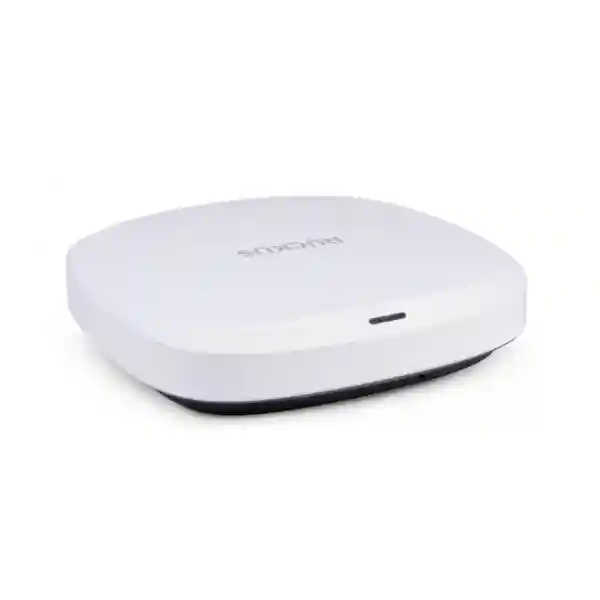
RUCKUS R676SN Indoor Access Point
The RUCKUS R676SN Indoor Access Point is built for indoor wireless projects that need more deliberate RF shaping than a conventional omnidirectional access point can provide. RUCKUS documents software-defined sector coverage for the R676sn, allowing the coverage pattern to be adapted through software for changing high-density or wide-area requirements. RUCKUS One added support for the model in February 2026, making it relevant for organizations planning next-generation Wi-Fi 7 estates with cloud-based operations. This page focuses on practical buying questions: where the model fits, what must be checked before ordering, how switching and PoE readiness affect the project, and how regional procurement changes across Dubai, the UAE, East Africa, West Africa, Kuwait and Seychelles.
Direct answer
Choose the RUCKUS R676SN when the wireless design calls for Wi-Fi 7 and controllable sector coverage in a demanding indoor venue. Final suitability depends on site survey results, client density, channel plan, mounting position, wired uplink, power budget, management platform and local radio regulations.
Best-fit projects
The model is especially relevant to high-density halls, auditoriums, conference spaces, transport environments, education facilities, hospitality venues, public areas and other indoor locations where targeted RF energy and interference control are important design concerns.
Before quotation
Share the floor plan, ceiling or wall constraints, expected simultaneous devices, application mix, existing switches, PoE capability, cabling category, management preference, destination country and installation scope. These details reduce guesswork in the bill of materials.
What the RUCKUS R676SN changes in an indoor Wi-Fi design
Many access points are selected mainly by radio generation, headline capacity and price. The RUCKUS R676SN adds another design question: how should RF energy be shaped for the actual space? RUCKUS describes the model with software-defined sector coverage and programmable sector antennas that can change beam width without physically replacing the antenna. In practical terms, the wireless designer can treat antenna behavior as part of the configuration strategy. That can be useful when a space alternates between dense seating and more dispersed use, when adjacent cells need tighter separation, or when the project requires a more directional coverage plan inside a large venue.
This does not remove the need for RF planning. A programmable pattern cannot correct every poor mounting position, blocked line of sight, excessive channel reuse, weak wired backhaul or inadequate PoE design. The project still needs a disciplined survey and a realistic capacity model. For Wi-Fi 7 in particular, planners should identify which client populations can use newer capabilities and which will remain on older 2.4 GHz or 5 GHz generations. Regional 6 GHz rules also vary, so the exact legal radio operation of a shipped SKU must be checked for the destination rather than assumed from a global product description.
RUCKUS One officially lists the R676SN among supported Wi-Fi 7 indoor access points. That makes cloud operations a clear management path, but a quotation should still state the chosen management architecture, required subscriptions, support term and firmware plan. Procurement teams should avoid treating the access point as a stand-alone line item until the wired network, power source, mounting hardware and management requirement have been reviewed together.
| Planning item | What is verified | What the buyer should confirm |
|---|---|---|
| Wireless generation | RUCKUS identifies the R676sn as a Wi-Fi 7 indoor access point. | Client mix, allowed bands, channel plan and local regulatory domain. |
| Antenna behavior | RUCKUS documents software-defined sector coverage with programmable sector behavior. | Required beam width, mounting orientation, neighboring-cell design and survey validation. |
| Cloud management | RUCKUS One supports the R676SN. | Subscription term, tenant design, onboarding, monitoring and operational ownership. |
| Power and wired network | The AP is intended for enterprise deployment where power and Ethernet design are integral to installation. | Exact PoE class, switch budget, uplink speed, cabling, surge protection and redundancy for the quoted regional SKU. |
Buyer checklist before ordering
RF and capacity
Document the usable area, ceiling height, wall materials, seating layout, expected concurrent devices, roaming paths and critical applications. Identify whether the goal is broad coverage, dense sectorization, voice mobility, real-time collaboration, guest internet or a mix of workloads.
Switching and PoE
Check every planned AP cable run, the access-switch port capability and the aggregate PoE budget. If the existing switch cannot supply the required power or uplink performance, include a switching change in the project rather than discovering it during installation.
Management and lifecycle
Decide who will own onboarding, firmware, monitoring, configuration backups, alert response and renewals. Verify the management entitlement, support coverage and software baseline for the exact hardware and region before the purchase order is released.
RUCKUS R676SN Indoor Access Point Dubai
Customers searching for the RUCKUS R676SN Indoor Access Point Dubai usually need more than a model number. The typical commercial questions are whether the AP suits a high-density indoor site, how the Wi-Fi 7 design connects to the existing switching layer, which management platform is planned, whether the installation location supports the intended sector pattern, and what must be included in a complete quotation. Dubai projects often involve offices, hospitality venues, event spaces, education sites, retail environments, transport facilities and mixed-use buildings, and each creates a different RF problem. A conference hall may need controlled coverage across changing seating plans, while a corporate floor may prioritize predictable roaming and separation from neighboring cells. The R676SN’s software-defined sector approach is most valuable when that RF behavior is deliberately planned rather than treated as an automatic substitute for a site survey.
For a Dubai quotation, provide floor plans, ceiling heights, mounting constraints, expected occupancy, device types, application mix and the location of existing network cabinets. Also identify the switch models feeding the APs and the available power budget. New Wi-Fi 7 access points can expose weaknesses in older access switching, so the wired side should be reviewed before purchase. If the project includes security redesign at the same time, FourTeck’s Firewall Dubai platform provides context for the gateway and segmentation layer, while the firewall deployment planning service explains how VLANs, routing, guest access and security policy should be coordinated with the rest of the network.
Buyers searching for RUCKUS R676SN price in Dubai should request a bill of materials rather than only a unit price. The commercial scope may need AP hardware, mounting accessories, management subscriptions, PoE or switching changes, cabling work, installation, configuration and post-deployment testing. Do not assume that a web listing confirms local stock or immediate delivery. Ask FourTeck to confirm current availability, exact regional SKU, project quantity and lead-time conditions when the quote is prepared. For a broader UAE technology discussion, the FourTeck UAE technology site covers networking and infrastructure requirements that may sit around the wireless project. This procurement approach keeps the R676SN decision connected to the complete site design instead of isolating the AP from the switch, security and management layers.
RUCKUS R676SN Indoor Access Point UAE
A RUCKUS R676SN Indoor Access Point UAE deployment should begin with two separate questions: is the model technically suitable for the venue, and is the exact radio configuration appropriate for the UAE regulatory domain? Wi-Fi 7 introduces new options, including use of newer spectrum where permitted, but frequency availability and power rules are country specific. Procurement teams should therefore avoid assuming that a specification seen on an overseas listing applies unchanged in the UAE. The quote should identify the regional hardware part number and supported firmware path, and the wireless design should use the frequencies and channels legally available for the installation. This is particularly important for multi-site organizations that standardize one AP model across the UAE and other countries.
For enterprise buyers in Abu Dhabi, Sharjah, Ajman, Dubai and other Emirates, the most useful pre-sales information includes the number of sites, floor plans, expected concurrent users, application types, roaming needs, guest access policy, switching platform and any requirement for centralized cloud operations. The R676SN is supported by RUCKUS One, so cloud management can be considered when organizations want common visibility across multiple venues. Management should still be treated as an architectural choice: define the subscription term, administrator roles, alerting responsibilities, firmware policy and what happens when the organization adds or relocates APs. If security segmentation is also being redesigned, review the perimeter firewall planning guidance so guest, corporate, IoT and operational networks are considered together instead of being attached to one flat WLAN.
UAE procurement teams commonly compare initial hardware cost with lifecycle effort. Ask whether the project includes survey, mounting, structured cabling, switch upgrades, PoE validation, configuration, documentation and support. The R676SN can be a strong candidate where controllable sector coverage is part of the RF strategy, but the AP should not be selected solely because it is a newer Wi-Fi generation. The desired outcome is reliable user experience in the target space. FourTeck can help convert the requirement into a quotation checklist covering quantities, installation locations, power, management and security dependencies. Current availability and commercial terms should be confirmed at quotation time rather than inferred from a product page.
RUCKUS R676SN Indoor Access Point Uganda
Organizations looking for the RUCKUS R676SN Indoor Access Point Uganda may be planning new business premises, education networks, hospitality coverage, public venues, healthcare facilities, warehouses or a refresh of an older WLAN. The decision should account for more than the access point. Site power, network cabinets, switch availability, structured cabling quality and the operating model for remote support can have as much impact on the result as the radio hardware. For multi-building deployments, document which locations have reliable wired backhaul and where there are limits on cable runs or switch placement. If the project expects cloud management through RUCKUS One, confirm internet reachability, account ownership and operational procedures for changes and alerts.
The R676SN’s software-defined sector coverage is particularly relevant when Ugandan buyers have a defined high-density indoor zone rather than a generic request for “strong Wi-Fi.” A training hall, auditorium, conference venue or public waiting area can behave very differently from a standard office. The deployment should model simultaneous users, application demand and movement patterns, then decide whether wide or tighter sector behavior supports the intended channel reuse. Where there are several adjoining spaces, RF containment may be just as important as raw signal strength. A professional design should also plan legacy client behavior and avoid assuming that every device will use the newest Wi-Fi 7 capabilities.
For RUCKUS R676SN price in Uganda or supplier enquiries, ask for the exact regional SKU, quantity, management requirement, mounting items, power method and delivery terms in the quotation. Availability, customs timing and warranty handling should be confirmed for the specific order rather than assumed. FourTeck’s Uganda IT solutions site provides a regional path for networking and infrastructure discussions. When requesting a quote, include the city, destination, project timeline, floor plans and whether the requirement is supply-only or includes survey, installation and configuration. That information allows the commercial team to distinguish a simple equipment request from a complete wireless project and helps avoid omissions in the bill of materials.
RUCKUS R676SN Indoor Access Point Kampala
A RUCKUS R676SN Indoor Access Point Kampala project is likely to be driven by venue density, business growth or the need to modernize wireless capacity in offices, schools, hotels, conference spaces, shopping environments and other indoor facilities. Kampala buildings can differ greatly in floor construction, ceiling access, room partitioning and available cabling, so a model choice should be tied to the actual site. Begin by identifying where people concentrate, how long they stay, which applications are sensitive to latency and whether users move between floors or zones during active sessions. This information matters more than a single coverage-radius estimate because high-density Wi-Fi is primarily a capacity and interference-management problem.
The R676SN gives designers another control point through software-defined sector coverage. In a Kampala conference facility, for example, a narrower pattern may help separate adjacent audience zones, while a different room layout may benefit from a wider pattern. The correct setting should come from survey measurements and channel planning rather than a fixed template. Mounting orientation, obstructions and reflective surfaces also affect the RF result. Network teams should capture the intended installation height and mounting surface in the project documentation so the final design can be reproduced and maintained.
Kampala buyers should also review the wired network before the APs arrive. Confirm cable condition, switch port speed, PoE capability, total power budget, uplink capacity and VLAN design. If guest access, staff access, IoT devices and operational systems share the same facility, define their logical separation before WLAN configuration. For regional coordination, the FourTeck Uganda networking portal can be used to discuss the wider requirement. A useful quotation request should include site name, floor count, approximate occupancy, quantities, management preference, current switch models and any installation constraints. Ask FourTeck to confirm current model availability and the appropriate regional ordering details at the time of quotation, especially for projects with deadlines or multiple locations.
RUCKUS R676SN Indoor Access Point Arua
Customers researching the RUCKUS R676SN Indoor Access Point Arua may be evaluating wireless modernization for education, administration, healthcare, hospitality, retail, logistics or other indoor business environments. In Arua, procurement planning should explicitly cover how the equipment will be powered, managed and supported after deployment. A technically capable AP will still produce a poor experience if the cable plant is unreliable, the PoE budget is insufficient or there is no documented process for configuration and troubleshooting. Before requesting pricing, capture the network cabinet locations, switch models, cable routes, expected user concentration and the business applications that must remain stable.
The R676SN’s programmable sector behavior can be useful when a site has distinct zones that need controlled indoor coverage. Consider a hall used for training during the day and events at other times: user density and seating pattern may change considerably. Software-defined sector coverage gives the wireless team a way to adapt the antenna behavior without physically swapping a sector antenna, but this flexibility must still be validated in the real building. A survey should examine neighboring wireless networks, wall losses, ceiling height, potential interference and the impact of older client devices. The objective is not maximum signal everywhere; it is sufficient signal, capacity and roaming behavior where users actually work.
For Arua procurement, clarify whether the order needs only AP hardware or a broader scope including installation, switching, configuration and remote support. Ask for confirmation of the exact regional SKU, management entitlement, mounting requirements and delivery terms. If the site will be managed centrally with other Ugandan locations, discuss how RUCKUS One roles, alarms, firmware policy and documentation will be handled across the estate. The FourTeck Uganda site can be used for regional enquiry routing. Include the deployment location and any logistical constraints in the request so the quotation can distinguish product supply from project services and avoid unsupported assumptions about immediate availability.
RUCKUS R676SN Indoor Access Point Mbarara
A RUCKUS R676SN Indoor Access Point Mbarara deployment should be approached as a complete WLAN project rather than a simple device replacement. Businesses, universities, healthcare organizations, hospitality properties and service environments may all have very different definitions of “good Wi-Fi.” Some need dense user capacity in lecture or meeting spaces, some prioritize mobile voice and collaboration, and others need predictable guest connectivity separated from internal business systems. The R676SN is most relevant when the design benefits from Wi-Fi 7 and controllable sector coverage, but the project should first define the service outcome and user population.
For Mbarara sites, perform a physical review of mounting locations and cable readiness. Large rooms, high ceilings, concrete partitions and metal fixtures can change the RF environment. A sector-capable AP must be aimed and configured according to the space, and the final channel plan should take neighboring cells into account. If the site contains several floors or detached buildings, map how each AP returns to the wired network and whether the switch layer can provide sufficient power and uplink capacity. The network design should also specify VLANs and access policies for staff, guests, voice devices, cameras or IoT systems where applicable.
When searching for RUCKUS R676SN supplier options in Mbarara, request a quote that separates hardware, subscriptions, accessories, installation and support. This makes proposals easier to compare and reduces the risk that a low initial unit price omits a required management or power component. If centralized RUCKUS One management is planned, confirm subscription duration, tenant ownership and who will perform monitoring after handover. FourTeck’s Uganda technology portal provides a route for regional networking enquiries. Share the destination, quantity, site count, deadline and installation scope so current availability and commercial terms can be checked for the actual project instead of inferred from a generic listing.
RUCKUS R676SN Indoor Access Point Gulu
For a RUCKUS R676SN Indoor Access Point Gulu project, start by identifying the spaces where wireless demand is concentrated. Education campuses, meeting facilities, healthcare sites, hospitality properties, offices and community or institutional buildings can all experience peaks that are invisible in a simple floor-area calculation. Record expected simultaneous devices, video and collaboration use, voice mobility, guest traffic and any operational applications that cannot tolerate unstable roaming. This demand profile gives the wireless designer a better basis for deciding AP count and placement than relying on a broad distance claim.
The R676SN’s software-defined sector coverage is useful when a Gulu site needs to shape RF energy toward a particular audience or reduce unnecessary overlap with another cell. That capability can simplify adaptation when room use changes, but it should be backed by survey data. Building materials, ceiling structure, neighboring WLANs and external interference all influence the outcome. If older 2.4 GHz-only devices remain in service, account for them separately instead of assuming all clients will use the newest Wi-Fi 7 features. A modern AP can support a mixed client environment, but capacity planning still needs to recognize the behavior of the slowest and most numerous devices.
Gulu buyers should confirm power and switching early. Check PoE capability, available power budget, switch software, port speed, cable quality and any need for backup power in critical sites. Also decide whether configuration will be centralized through RUCKUS One and who will own routine operations. The FourTeck Uganda site can support regional requirement discussions. For an accurate RUCKUS R676SN quotation, provide quantity, site address, desired management model, mounting constraints and whether services such as survey, installation or configuration are required. Ask for current ordering and delivery details in the formal quote; do not interpret the existence of a product page as a guarantee of local stock.
RUCKUS R676SN Indoor Access Point Kenya
The RUCKUS R676SN Indoor Access Point Kenya is relevant to organizations designing high-capacity indoor wireless for offices, universities, hospitality, healthcare, conference spaces, retail facilities and other dense user environments. Kenyan projects often span more than one type of site, so standardization should focus on operational consistency while still allowing the RF design to vary by building. A headquarters floor, an auditorium and a branch office may all use the same management platform but should not automatically use the same AP placement or antenna behavior. The R676SN’s software-defined sector coverage can help adapt the radio design, especially in large indoor spaces where directional control and interference management are important.
Before requesting RUCKUS R676SN price in Kenya, collect the information that drives the bill of materials: number of sites, user density, expected applications, existing switch models, PoE capacity, cable category, mounting options and internet connectivity for cloud operations. For organizations planning RUCKUS One, define whether each branch is managed under one tenant and how administrators will be separated by role. Firmware and alerting responsibilities should be documented, especially if internal IT and a service partner share operational work. If the network also needs a security refresh, keep wireless segmentation aligned with the gateway and access policy rather than building the WLAN as an isolated project.
FourTeck’s Kenya IT solutions portal covers enterprise networking and can be used for local requirement discussions. A procurement request should distinguish supply-only from survey, configuration, installation and ongoing support. It should also ask the seller to confirm the exact regional SKU and supported software path for the intended deployment. For larger multi-country rollouts, use the same template for every site: destination, quantity, regulatory domain, management model, switch readiness and acceptance criteria. That approach makes it easier to compare costs and keeps the Kenyan deployment technically consistent with other locations without pretending that local radio or logistics conditions are identical.
RUCKUS R676SN Indoor Access Point Kuwait
A RUCKUS R676SN Indoor Access Point Kuwait deployment may suit organizations modernizing enterprise Wi-Fi in corporate offices, hospitality properties, education facilities, conference environments and other high-density indoor spaces. The main design question is whether software-defined sector coverage adds useful control for the venue. In a large hall, the ability to shape a narrower or wider coverage pattern can support a deliberate cell design, but the final behavior depends on mounting, obstructions, client locations and channel planning. A site survey should validate the plan rather than treating antenna programmability as a guarantee of coverage.
Kuwait buyers should pay close attention to regional radio rules and the exact ordering SKU. Wi-Fi 7 equipment can support multiple bands, but local use of channels and spectrum is determined by regulatory settings and firmware support. The commercial proposal should therefore identify the region-appropriate hardware and management requirements. RUCKUS One support is documented for the R676SN, which gives organizations a cloud management path for multi-site estates. If cloud management is chosen, clarify tenant ownership, subscription term, administrator access and the process for firmware changes before handover.
The wired network should also be checked before the access points are ordered. Confirm switch PoE budget, port capability, cable routes and upstream capacity. Where the WLAN includes guest users, corporate endpoints and connected devices, define segmentation and security policy at the same time. FourTeck’s Kuwait IT solutions site includes networking and Wi-Fi procurement context for Kuwait-based buyers. For an accurate quotation, provide the site location, quantity, expected users, current switching platform and required service scope. Ask for current availability, delivery conditions and any regional support terms in writing. This avoids assuming that a global product listing automatically translates into the same commercial package for Kuwait.
RUCKUS R676SN Indoor Access Point Ghana
Organizations searching for the RUCKUS R676SN Indoor Access Point Ghana are often trying to solve a practical capacity or coverage challenge rather than simply replace an older access point. A new campus building, hotel, event space, education facility, corporate office or public venue may need a higher-density wireless design with better control over cell boundaries. The R676SN is notable because RUCKUS documents software-defined sector coverage that can be reconfigured without physically replacing the antenna. This can be useful when indoor spaces have changing occupancy patterns, but the design still needs measured RF data and a clear application profile.
For Ghana projects, build the requirement from the venue outward. Record expected concurrent users, device types, floor and ceiling construction, mounting locations, cabling paths and the existing access switches. Check power availability and switch PoE budget at every closet. If the organization expects centralized management, confirm whether RUCKUS One will be used and how subscriptions, administrator roles and firmware policy will be handled. A multi-site estate should have standard naming, VLAN and documentation conventions even when AP placement differs by building. The WLAN should also align with firewall policy so corporate, guest and device networks are separated according to business requirements.
For supplier and RUCKUS R676SN price enquiries in Ghana, request an itemized quotation that states hardware quantity, management licensing, mounting items, delivery terms and any installation services. Availability and logistics should be confirmed for the actual order. FourTeck’s Ghana IT product and solutions site provides a regional contact path for technology procurement. Larger regional projects can also reference the FourTeck Africa technology portal when coordinating requirements across more than one country. The key is to keep the quote tied to the site design, because a standalone access-point price does not reveal the switching, power, management and installation work required for a successful deployment.
RUCKUS R676SN Indoor Access Point Nigeria
The RUCKUS R676SN Indoor Access Point Nigeria can be considered for high-density indoor wireless projects in enterprise offices, hospitality, education, healthcare, financial services, event venues and other facilities where RF control is part of the design. Large Nigerian deployments often involve multiple floors or branches, so wireless standardization should include management, configuration templates and lifecycle processes, not only a common hardware model. The R676SN’s programmable sector concept can support different coverage patterns across sites while retaining one product family, but each building still requires its own survey and placement decisions.
Nigeria buyers should review power resilience, PoE switching and cabling as part of the WLAN bill of materials. If the site has backup power for network equipment, confirm that access switches powering the APs are included in that design. Check the aggregate PoE load, available ports and upstream connectivity instead of assuming the existing switch is ready for a Wi-Fi 7 refresh. For multi-site operations using RUCKUS One, define which team owns the cloud tenant, how roles are assigned, when firmware updates are scheduled and how alerts are escalated. This turns the WLAN into an operational service rather than a collection of individual radios.
A request for RUCKUS R676SN price in Nigeria should specify quantity, destination city, expected project date, regional SKU, management term and whether survey, installation and configuration are required. Ask for current availability and delivery terms in the formal quotation. FourTeck’s Nigeria IT service portal offers a regional route for procurement and infrastructure discussions, while the Africa solutions site is useful for organizations coordinating several countries. The strongest buying process compares complete project scope and lifecycle responsibility rather than selecting the access point from headline price alone.
RUCKUS R676SN Indoor Access Point Seychelles
A RUCKUS R676SN Indoor Access Point Seychelles project may be relevant to resorts, hotels, offices, education facilities, government environments, conference spaces and other indoor venues that require managed high-capacity wireless. Island logistics make procurement planning particularly important: equipment, mounting components, switching changes and management licensing should be identified together so the project is not delayed by a small missing item. Buyers should also distinguish indoor and outdoor requirements. The R676SN is an indoor access point, so any coverage needed around pools, gardens, exterior walkways or detached outdoor areas should be evaluated separately with equipment intended for those environmental conditions.
For indoor high-density spaces, software-defined sector coverage can help the designer shape cells around seating, meeting areas or guest zones. In hospitality, this may be useful where a ballroom changes between conference and banquet layouts or where adjacent meeting rooms create overlapping demand. The antenna setting should still be validated with a survey, and the WLAN should account for guest device diversity. Many users will arrive with different generations of phones, tablets and laptops, so the network needs to serve a mixed client population rather than assuming universal Wi-Fi 7 adoption.
Seychelles procurement should confirm the region-appropriate SKU, applicable radio operation, delivery terms and support arrangements. Check the existing switch infrastructure, PoE budget, cabling and backup-power strategy before ordering. If RUCKUS One will manage the APs, define subscription duration and operational ownership. For regional coordination, the FourTeck Africa portal can provide a wider technology enquiry path. A quotation request should include the island or site destination, number of buildings, expected AP quantity, target installation date and whether the requirement includes survey, configuration or installation. This gives the supplier enough context to prepare a realistic project proposal instead of treating Seychelles as a generic export destination.
Security, segmentation and adjacent network planning
Wireless access is only one layer of the business network. A new Wi-Fi 7 deployment should be connected to a clear segmentation model for staff, guests, voice, cameras, IoT and administrative systems where those groups exist. The AP can carry WLAN policy into the wired network, but upstream switching and firewall rules determine what each segment can reach. For organizations refreshing the security gateway at the same time, FourTeck’s Palo Alto Networks PA-Series overview explains firewall selection considerations without implying that any one firewall is automatically required for the R676SN.
Compact sites may also evaluate models such as the Palo Alto Networks PA-410, the Palo Alto Networks PA-415 where its interface and PoE characteristics suit the wider design, or the Sophos XGS 88 for a different security platform. These are related network-security options rather than stated RUCKUS dependencies. The correct gateway choice depends on inspected throughput, VPN, subscriptions, ports, resilience and organizational preference.
Frequently asked questions
Is the RUCKUS R676SN a Wi-Fi 7 access point?
Yes. RUCKUS identifies the R676sn as a Wi-Fi 7 indoor access point, and RUCKUS One lists it among supported Wi-Fi 7 indoor APs.
What is special about its antenna design?
RUCKUS documents software-defined sector coverage with programmable sector behavior. This allows the coverage pattern to be adjusted through software for different high-density or wide-area requirements.
Does it work with RUCKUS One?
RUCKUS One added support for the R676sn in its February 2026 release. Buyers should confirm the current subscription, firmware and onboarding requirements for the planned deployment.
Can I use one AP model in every country?
A common model family may be possible, but radio domains, allowed spectrum, ordering SKUs and support terms can differ by country. Verify the region-specific hardware and firmware before purchase.
How many access points do I need?
There is no reliable universal number based only on floor area. AP count depends on user density, client mix, applications, wall losses, ceiling height, channel plan, interference and the coverage pattern selected. A survey and capacity model are recommended.
What should I send for a quote?
Send the destination, quantity, site type, floor plan, estimated concurrent devices, existing switch models, management preference and whether you need survey, cabling, installation, configuration or support.
Decision recap
The RUCKUS R676SN Indoor Access Point is most compelling when a project needs Wi-Fi 7 and deliberately controllable indoor sector coverage. Its value is strongest when the RF design, wired switching, PoE capacity, management platform and security segmentation are planned as one system. Treat country-specific radio rules and regional SKU selection as procurement requirements, not afterthoughts.
FourTeck can help turn a product enquiry into a structured quotation request covering the AP quantity, destination, mounting, switching readiness, management, installation and support scope. Current availability, pricing, delivery and warranty conditions should always be confirmed in the formal quotation for the specific destination.
Quotation checklist
Country, city, building type, floor count, ceiling height and installation constraints.
Concurrent devices, guest traffic, voice, video, collaboration and critical applications.
Switch models, PoE budget, cable category, uplinks, VLANs and network cabinet locations.
AP quantity, management term, accessories, survey, installation, configuration and support.
Related infrastructure and consultation
A wireless refresh can expose bottlenecks elsewhere in the network. If the access switches cannot provide the required power or uplink capacity, include switching in the project. If guest and corporate traffic are not properly separated, include security policy design. If the building is undergoing a broader infrastructure change, document the cabling, rack, UPS and WAN dependencies together. FourTeck’s Dubai technology and security background page explains the wider project approach, and the FourTeck contact page is the verified route for a scoped sales discussion.
For multi-region projects, use the relevant FourTeck regional portal for context, but keep one normalized requirement document across all locations. That document should state the exact product name, destination, quantities, radio-domain expectations, management model, switch readiness, installation scope and acceptance criteria. Standardizing the questions makes it easier to identify where local differences require a different SKU, deployment method or logistical plan.

Reviews
There are no reviews yet.