
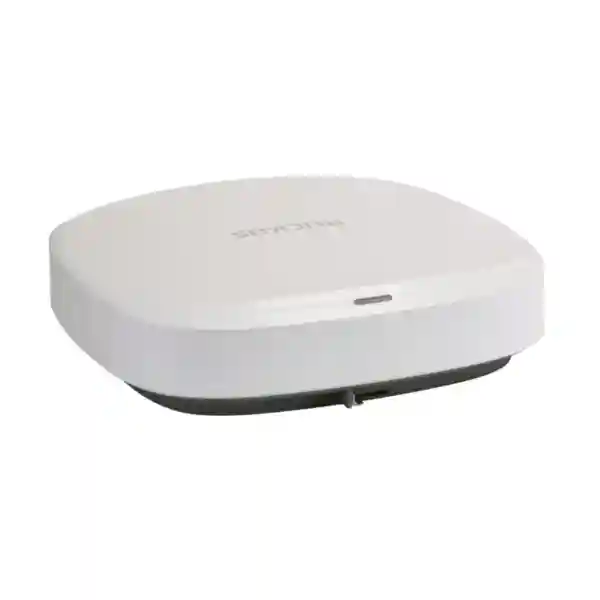
RUCKUS R770 Indoor Access Point
The RUCKUS R770 is built for organizations that need high-capacity indoor wireless connectivity in busy offices, education facilities, hotels, public venues, retail environments and other demanding spaces. It combines Wi-Fi 7 operation across 2.4 GHz, 5 GHz and 6 GHz with eight spatial streams, RUCKUS adaptive antenna technology, multi-gigabit wired connectivity and several management choices. A successful deployment depends on more than the access point itself: buyers should confirm local 6 GHz regulations, PoE budget, switch port speed, structured cabling, controller strategy, RF placement, client capability and expected application demand before ordering.
Choose the R770 when the wireless design calls for a premium indoor Wi-Fi 7 AP with tri-band capacity, 10 GbE-class uplink capability and RUCKUS enterprise management options. Do not select it only from the 12.22 Gbps headline PHY rate. Confirm switching, power, cabling, regulatory conditions, client mix and controller licensing so the complete network can use the AP effectively.
Wi-Fi 7 / IEEE 802.11be with backward support for earlier listed 802.11 generations.
Tri-radio operation: 2×2:2 at 2.4 GHz, 4×4:4 at 5 GHz and 2×2:2 at 6 GHz.
Vendor-published combined maximum of 12.22 Gbps; real application throughput is lower and design dependent.
RUCKUS One, RUCKUS SmartZone, RUCKUS Unleashed and standalone options are listed by the manufacturer.
What the RUCKUS R770 is designed to solve
Modern indoor wireless networks often struggle not because an access point is simply “too slow,” but because many different demands arrive at the same time. Video meetings, cloud applications, high-resolution streaming, collaboration tools, mobile devices, IoT endpoints and guest traffic can all compete for airtime. The R770 addresses this class of environment with three simultaneous Wi-Fi bands and a radio configuration that allocates four spatial streams to the heavily used 5 GHz band while providing two streams on 2.4 GHz and two on 6 GHz. Wi-Fi 7 capabilities such as Multi-Link Operation, 320 MHz channels, preamble puncturing and 4K QAM are designed to improve efficiency, capacity or peak performance when compatible clients and regulatory conditions allow them.
RUCKUS also brings its own wireless technologies into the platform. BeamFlex dynamically selects among many antenna patterns rather than relying on a fixed omnidirectional pattern, while ChannelFly helps choose channels by evaluating real network conditions. These functions are especially relevant in buildings where walls, neighboring networks, changing occupancy and non-Wi-Fi interference make a simple “one AP every few rooms” approach unreliable. The objective is not to promise a particular coverage radius; indoor coverage depends on construction materials, AP height, power settings, channel plan, client transmit capability, interference and the required performance at the edge of each cell.
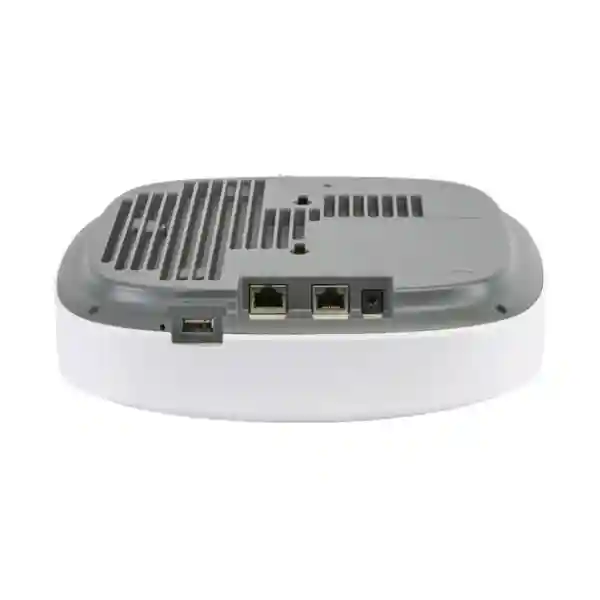
The wired side matters just as much. The R770 includes one multi-gigabit Ethernet interface that can operate up to 10 GbE and an auxiliary 1 GbE interface. A buyer planning a premium Wi-Fi 7 rollout should therefore evaluate multigig or 10 GbE access switching, PoE capacity and suitable cabling. Connecting a high-capacity AP to an older 1 GbE switch may still work for some projects, but it can constrain the value of the wireless investment. The same principle applies to internet bandwidth, firewall throughput and upstream switching: the AP is only one component in the end-to-end data path.
Verified RUCKUS R770 capability summary
2.4 GHz, 5 GHz and 6 GHz operation with IEEE 802.11a/b/g/n/ac/ax/be support. The availability and permitted operating modes of 6 GHz must be checked for the deployment country and regulatory domain.
Eight total spatial streams: 2×2:2 on 2.4 GHz, 4×4:4 on 5 GHz and 2×2:2 on 6 GHz. This mix is intended to give the 5 GHz band additional capacity while retaining tri-band operation.
Up to 689 Mb/s on 2.4 GHz, 5,765 Mb/s on 5 GHz and 5,765 Mb/s on 6 GHz, with a combined published maximum PHY rate of 12,220 Mb/s.
One 1/2.5/5/10 GbE interface plus one 1 GbE interface. Switch port capability and cabling should be confirmed as part of the bill of materials.
BeamFlex, ChannelFly, PD-MRC and SmartMesh are listed for the R770. Their practical benefit depends on design, software and the surrounding RF environment.
RUCKUS publishes support for up to 1,024 concurrent users. That is a platform limit, not a recommended design target for every application; airtime demand and per-client service expectations govern real sizing.
Deployment checklist before requesting a quotation
A useful R770 quotation starts with the wireless design rather than the unit quantity. Share the building type, floor plans, ceiling height, wall materials, expected users and devices, current AP model, existing controller, switch model, available PoE class, cable category, internet capacity, guest-access requirement and any application that has strict latency or roaming needs. This information helps determine whether the R770 is appropriate, how many APs may be required and which supporting components should be included.
Plan AP placement, channel reuse, transmit power and coverage thresholds from the building rather than from a generic distance figure.
Confirm a suitable multigig or 10 GbE switch port where the application requires it, plus adequate PoE and uplink capacity.
Review cable category, distance, termination quality and pathway. Higher Ethernet speeds place more importance on a clean physical layer.
Choose RUCKUS One, SmartZone, Unleashed or standalone operation according to estate size, control model and support expectations.
Confirm the correct regional hardware or software domain and whether 6 GHz operation is permitted for the intended deployment.
Define corporate, guest and IoT access, authentication, VLANs, firewall policy, segmentation and logging before installation.
RUCKUS R770 Indoor Access Point Dubai
Businesses searching for a RUCKUS R770 Indoor Access Point Dubai solution are usually looking for more than a single wireless device. In Dubai, premium offices, hotels, training facilities, schools, healthcare locations, retail developments and customer-facing venues often combine high device density with video conferencing, cloud applications, guest access, mobile working and a growing number of wireless IoT endpoints. The R770 can be a strong candidate for these indoor environments when a Wi-Fi 7 design is justified, but the project should begin with an RF and infrastructure review. Dubai buildings can include reinforced concrete, glass partitions, metal ceilings, high atriums, dense neighboring networks and multi-tenant interference, all of which affect cell size and AP placement. A floor plan and, for critical projects, a predictive or on-site survey are more useful than relying on an advertised coverage distance.
The switching layer deserves particular attention. The R770 can use Ethernet speeds up to 10 GbE, so buyers refreshing wireless infrastructure should check whether the access switch supports multigigabit or 10 GbE copper, whether its PoE budget is appropriate for the final configuration and whether existing horizontal cabling can support the planned link speed. Cat6A is often considered for new high-speed access-point cabling, but the correct choice depends on distance, pathway, electrical environment and the structured-cabling standard adopted for the site. The firewall and WAN edge should also be reviewed. A fast WLAN can still feel slow if internet bandwidth, security inspection, DNS, authentication or upstream switching is constrained.
For 6 GHz operation, procurement teams should confirm that the exact regional model and operating mode are permitted under current UAE rules. Do not assume that a US or another regional SKU is suitable simply because the hardware name says R770. The bill of materials should identify the approved regional variant, mounting hardware, management platform, support entitlement, switch requirements and any accessories. Organizations with multiple Dubai branches should also decide whether centralized management is preferable to independent AP administration. RUCKUS One and SmartZone may fit larger estates, while Unleashed can suit selected controllerless designs; the choice should be made from scale and operational requirements rather than brand familiarity alone.
FourTeck can help scope the wireless requirement alongside the secure network edge. Buyers can review broader UAE technology services at FourTeck UAE. When requesting a Dubai quotation, include quantity, floor plan, user estimate, existing switch and firewall models, controller status, preferred management model, expected rollout date and whether installation, configuration or post-deployment support is required. That produces a more useful commercial proposal than asking only for the R770 unit price.
RUCKUS R770 Indoor Access Point UAE
For a RUCKUS R770 Indoor Access Point UAE deployment, the main buying question is whether the organization needs a high-end Wi-Fi 7 AP as part of a coordinated wireless refresh or only needs improved coverage in isolated rooms. The R770 is most valuable when the wider network can support its capabilities. Enterprises operating across Dubai, Abu Dhabi, Sharjah, Ajman or other emirates may want a common AP family, common controller, standardized SSID and VLAN design, and a consistent support process. Centralized management can simplify configuration templates, firmware planning, policy consistency and troubleshooting across branches, but it also introduces licensing and platform decisions that should be agreed before purchase.
UAE projects frequently mix new and existing infrastructure. A company may have Wi-Fi 5 or Wi-Fi 6 access points, 1 GbE PoE+ switches, mixed Cat6 cabling and a firewall sized for an older internet circuit. Installing R770 access points without checking those dependencies can create an expensive bottleneck. Start by identifying which locations genuinely need Wi-Fi 7 capacity, whether client devices support 6 GHz and Wi-Fi 7, whether the switch can provide appropriate power, and whether uplinks from access to distribution can carry the added traffic. A phased deployment can sometimes provide better value: high-density floors, executive collaboration areas, training rooms or public spaces can be upgraded first, while lower-demand areas remain on existing APs until refresh cycles align.
Security design should be part of the wireless plan. Corporate laptops, guest users, phones, building systems and IoT devices should not automatically share one unrestricted network. Use the WLAN design to define authentication, role or VLAN assignment, guest isolation, management access and firewall policy. If roaming voice or real-time applications are important, test client behavior and roaming performance under the chosen settings instead of assuming every device responds identically. For branch networks, also verify WAN resilience and cloud-management reachability if the selected management model depends on external services.
A UAE quotation should distinguish hardware, support, management subscriptions where applicable, switches, optics or uplinks, cabling, installation, configuration and survey work. This makes commercial comparison clearer and avoids hidden dependencies after delivery. For buyers integrating Wi-Fi with security controls, FourTeck also provides a useful same-site reference on perimeter firewall planning in Dubai, which explains why guest, staff, server and IoT traffic should be considered together. Confirm current regional availability and 6 GHz regulatory requirements before finalizing the order.
RUCKUS R770 Indoor Access Point Uganda
Organizations researching a RUCKUS R770 Indoor Access Point Uganda deployment may include universities, private schools, hotels, financial institutions, healthcare groups, NGOs, corporate offices, government-related facilities and growing multi-site businesses. The R770 offers substantial radio capacity, but a Ugandan project should first establish where that capacity will create a practical benefit. A large lecture hall, conference area, hotel lobby, shared workspace or dense office floor has different requirements from a small branch with twenty users. High-capacity hardware cannot compensate for poor AP placement, weak backhaul, unstable power or an undersized internet connection, so the wireless design should be connected to the wider LAN and power environment.
Power and switching are important procurement items. The proposed access switch should be checked for PoE capability, available total power budget and the Ethernet speed needed by the deployment. If the existing switch is limited to 1 GbE, the R770 can still be evaluated, but the organization should understand where wired bottlenecks may appear and whether a switch refresh belongs in the same project. UPS protection for switches and network controllers can be valuable in sites where power interruptions would otherwise disable wireless service. For campuses and larger buildings, backbone links between access and core switching should also be reviewed so additional wireless capacity is not restricted upstream.
The 6 GHz band should never be assumed to be available in the same way in every country. Before importing or configuring a tri-band Wi-Fi 7 AP, confirm current Ugandan regulatory rules, permitted frequencies, power levels and the correct RUCKUS regional domain. Where 6 GHz use is limited or not yet appropriate for the project, the design should focus on the bands and features that can legally and practically be used. Client capability matters as well: many existing laptops and phones may continue to operate on 5 GHz or 2.4 GHz even when the AP supports Wi-Fi 7.
For procurement, request a complete bill of materials that separates AP hardware, management platform, support, mounting, switch requirements and services. Multi-site buyers should decide whether cloud or centralized management can simplify operations across Kampala and regional branches. FourTeck’s Uganda technology portal at FourTeck Uganda provides a regional path for networking and business IT discussions. Include site location, floor plans, expected users, internet service, current WLAN platform and support expectations when requesting an R770 quotation.
RUCKUS R770 Indoor Access Point Kampala
A RUCKUS R770 Indoor Access Point Kampala project often needs to solve density, roaming and building-layout problems rather than simply extend signal. Kampala offices, hotels, universities, hospitals, shopping environments and shared commercial buildings can contain reinforced walls, multiple floors, lift cores, glass partitions and neighboring wireless networks. These conditions create different RF behavior from an open-plan warehouse or a single-storey branch. The first planning step is therefore to map user concentrations and application demand. Reception areas may need guest access, meeting floors may carry heavy video traffic, lecture spaces may have hundreds of short-session clients, and back-office areas may prioritize stable roaming over peak speed.
The R770’s 5 GHz 4×4:4 radio is particularly relevant in environments where many current enterprise clients still rely primarily on 5 GHz, while the 6 GHz radio provides a path for compatible newer devices where local rules allow. Wi-Fi 7 features can improve efficiency with supported clients, but older Wi-Fi 5, Wi-Fi 6 and Wi-Fi 6E devices will remain part of most networks for years. A good Kampala design therefore plans for a mixed client population instead of assuming every device can use the newest band and modulation. SSID count should be controlled, because too many broadcast networks consume airtime. Corporate, guest and IoT services can often be separated through authentication and network policy without creating an excessive number of SSIDs.
Network closets should be assessed before AP installation. Check switch power, multigig port availability, uplink speed, rack space, cooling, UPS runtime and cable condition. In older buildings, replacing the AP may reveal weak terminations or cable routes that were adequate for 1 GbE but need testing for higher rates. Where internet service is the limiting factor, local application servers, caching or quality-of-service strategy may matter more than raw WLAN speed. Critical sites should also define what happens during WAN failure if cloud management is used and whether local wireless service continues according to the selected architecture.
For Kampala procurement, ask suppliers to state exactly what is included: regional AP variant, mounting parts, licenses or subscriptions, support term, controller compatibility, installation, survey, cabling, configuration and training. Do not accept an ambiguous “complete Wi-Fi” line item that hides dependencies. If the organization also needs a security review, FourTeck’s guide to structured firewall deployment is useful for understanding how WLAN segments should connect to the secure network edge. Final radio settings and 6 GHz use must follow current Ugandan requirements.
RUCKUS R770 Indoor Access Point Arua
For buyers searching for a RUCKUS R770 Indoor Access Point Arua solution, the most important question is whether a premium Wi-Fi 7 platform matches the actual site requirement and support model. Arua organizations may include healthcare facilities, education institutions, NGOs, regional offices, hospitality properties, trading businesses and public-service environments. Some sites have concentrated user demand in meeting or training areas, while others spread users across several low-density buildings. The R770 is best evaluated where high client counts, demanding applications, future device growth or a standardized RUCKUS estate justify its capabilities. A smaller AP may be more economical for low-density rooms, so the design should be based on measured requirements rather than selecting the highest model for every location.
Backhaul planning can be particularly important for regional sites. If the WAN or internet circuit is modest, the local network can still benefit from fast Wi-Fi for on-premises applications and file movement, but internet performance will remain tied to the available service. This makes it useful to separate WLAN capacity from WAN capacity in the design discussion. The R770’s 10 GbE-capable interface also raises a practical question: is the existing switch and cabling prepared for multigig access, or will the AP connect at a lower negotiated rate? Neither answer is automatically wrong, but it should be intentional. If future upgrades are planned, the project can phase switching and AP investments rather than creating unexpected costs after purchase.
Power resilience should be considered for sites where continuous communication matters. The AP depends on the access switch or injector, and the switch often depends on a UPS. A wireless design can therefore include network power backup, protected switching and documented restart procedures. Management is another choice: a single small deployment may use a simpler model, while organizations with Arua, Kampala and other branches may prefer centralized visibility and configuration. Confirm controller compatibility and support versions before buying, particularly if the organization already runs an older RUCKUS platform.
Procurement teams should request the correct regional R770 variant and validate current rules for 6 GHz use in Uganda. They should also define who will install, configure, document and support the APs after handover. A useful quote lists hardware, mounting, power, switching, software or cloud management, support and services separately. This approach avoids assuming that the access point price includes every component required for a working deployment and makes lifecycle budgeting clearer.
RUCKUS R770 Indoor Access Point Mbarara
A RUCKUS R770 Indoor Access Point Mbarara deployment can be relevant for universities, healthcare facilities, hotels, commercial offices, financial services, agribusiness operations and institutions that need stronger indoor wireless performance. The buying process should start by identifying high-value areas: lecture rooms with simultaneous student connections, hotel conference facilities, clinical spaces using mobile applications, executive meeting rooms with heavy video traffic or offices where many users depend on cloud systems. The R770’s capacity is most useful when there is a clear workload behind it. For quiet corridors, small stores or lightly used branch rooms, the same model may not be necessary, so a mixed-AP design can sometimes produce a better cost-to-performance result.
In campus-style environments, roaming and consistent policy can matter as much as maximum speed. The WLAN should be designed around cell overlap, transmit power, channel reuse and client behavior so users can move between areas without holding onto distant access points. Voice and collaboration applications may need additional validation because roaming decisions are shared between network configuration and the client device. The R770 supports advanced RUCKUS management options, but a controller does not replace RF planning. Proper AP location, cable routes and mounting height still determine the physical foundation of the network.
Mbarara buyers should also evaluate the core infrastructure. A Wi-Fi 7 AP with a multi-gigabit uplink can place new demands on PoE switches and backbone links. Check the total PoE budget across all APs, not only the per-port rating. Confirm whether existing copper runs are tested and labeled, and whether intermediate switches have sufficient uplink capacity. For medical or business-critical facilities, consider UPS coverage and network redundancy. If the site has multiple internet providers or a firewall cluster, the wireless VLANs should be included in failover and security testing rather than treated as a separate subsystem.
Before ordering, validate the approved regulatory domain and current Ugandan position on 6 GHz operation. Ask for a bill of materials that identifies APs, mounting accessories, management licenses or services, switches, cabling work, installation and support. Define acceptance criteria such as expected coverage zones, authentication operation, guest isolation and management visibility. This turns the procurement from a hardware purchase into a measurable network project and reduces disagreements during handover.
RUCKUS R770 Indoor Access Point Gulu
Customers evaluating a RUCKUS R770 Indoor Access Point Gulu deployment may be supporting education, healthcare, NGO operations, hospitality, public administration or distributed business offices. In these environments, network reliability is usually more important than chasing a laboratory speed figure. The R770 offers a high level of wireless capability, but the design should prioritize predictable coverage, clean authentication, secure segmentation and supportability. Begin with the number of users by area, device types, applications, building construction and the expected growth period. A training room that fills periodically may need capacity for short bursts, while a hospital or office may need continuous roaming and stable access throughout the day.
The choice of management platform affects day-to-day operations. Organizations that already use RUCKUS SmartZone should confirm software support for the R770 and plan upgrades if required. New deployments may compare RUCKUS One, SmartZone, Unleashed and standalone modes according to scale, connectivity and administration preferences. If Gulu is one site in a larger Ugandan network, centralized configuration can reduce variation between branches and give a support team a common view of AP health. The design should still document local dependencies such as switch ports, power backup and WAN connectivity so remote management does not become the only troubleshooting method.
Physical infrastructure is often where wireless projects succeed or fail. Confirm switch PoE capacity, available multigig ports, patch-panel condition, cable test results and uplink headroom. If a site is being built or renovated, place AP cables according to the RF plan rather than wherever cable trays are easiest to reach. Keep access points away from unnecessary obstructions, enclosed metal spaces and unsuitable environmental exposure. The R770 is an indoor AP; locations requiring outdoor coverage should use equipment designed and rated for that environment rather than placing an indoor unit at the edge of weather exposure.
Gulu procurement should also account for logistics and support. Clarify replacement procedures, warranty route, available spares, administrator training and configuration backup. Confirm the correct regional model and legal operating bands before import or activation. A detailed quotation should state what is hardware, what is recurring management or support, and what is professional service. That clarity is particularly valuable for institutions that require internal approval, donor documentation or multi-stage budgeting.
RUCKUS R770 Indoor Access Point Kenya
A RUCKUS R770 Indoor Access Point Kenya project can fit high-density enterprise offices, universities, hotels, healthcare groups, conference venues, retail environments and institutions that are refreshing older WLANs. Kenyan buyers should treat Wi-Fi 7 as an infrastructure decision rather than a single product upgrade. The R770 can deliver tri-band operation and high aggregate PHY capacity, but compatible clients, correct channel planning, adequate PoE, multigig switching and a suitable management platform are required to benefit from the investment. An organization with mainly Wi-Fi 5 laptops and 1 GbE access switches may still gain reliability and RF improvements, but its performance profile will differ from a new campus with Wi-Fi 7 clients and upgraded wired infrastructure.
For Nairobi offices and other dense commercial areas, neighboring Wi-Fi can be a significant factor. ChannelFly and BeamFlex are useful RUCKUS tools, yet a site survey remains important when the building contains many tenants or complex materials. Education environments should model capacity per classroom or lecture hall, not only coverage per floor. Hotels should separate guest, staff, voice, building and IoT requirements. Retail sites may prioritize roaming for handheld terminals and stable payment connectivity. Each use case changes the acceptable signal threshold, client density and network segmentation plan.
Procurement teams should validate local rules for 6 GHz and order the correct regulatory variant. They should also confirm whether the AP will be managed by an existing SmartZone environment, RUCKUS One, Unleashed or another supported mode. If the organization is migrating from older RUCKUS APs, check software versions and controller support before the installation date. Switch power and port speed should be checked at every closet, while core and firewall capacity should be evaluated for added traffic. Where the APs support business-critical applications, consider spare units and a documented replacement workflow.
FourTeck’s regional site at FourTeck Kenya can be used for local technology enquiries. For a useful R770 quote, share site locations, AP quantity estimate, floor plans, switch models, controller details, current AP estate, desired SSIDs, guest requirements and installation scope. Request separate line items for hardware, management, support and professional services so the commercial comparison remains clear.
RUCKUS R770 Indoor Access Point Kuwait
For a RUCKUS R770 Indoor Access Point Kuwait deployment, common use cases include corporate offices, hotels, education campuses, healthcare facilities, shopping environments and large indoor public areas where many users depend on wireless access at the same time. The R770’s Wi-Fi 7 design can support a long-term wireless refresh, but buyers should assess whether the rest of the network is ready. The AP’s multi-gigabit Ethernet capability can exceed traditional 1 GbE access switching, and its power requirements should be matched to the switch PoE design. A new WLAN bill of materials should therefore include switch port speed, power budget, uplink capacity and cabling instead of listing only AP quantities.
Kuwait sites may also have strong indoor climate control but demanding equipment-room conditions, especially where network closets are crowded or poorly ventilated. Although the R770 is specified for indoor use, the complete system includes switches, UPS units and other equipment that require appropriate environmental planning. Access points should be mounted in open indoor positions that support the RF plan, not hidden above dense metal structures or placed outdoors to extend coverage. Outdoor or semi-exposed areas should use purpose-built outdoor equipment with suitable environmental ratings.
Before enabling the 6 GHz radio, confirm current Kuwait regulations, permitted channels and the appropriate regional configuration. Wi-Fi 7 clients can use advanced features only when both AP and client support them and the local spectrum rules permit the necessary channel operation. Many existing devices will continue to use 5 GHz, so capacity planning must consider a mixed estate. In hotels and campuses, reducing unnecessary SSIDs and using proper segmentation can improve airtime efficiency while maintaining separate policy for guests, staff, IoT and managed devices.
FourTeck provides a regional enquiry path through FourTeck Kuwait. When requesting a quotation, specify the project location, building type, number of floors, expected users, internet speed, existing switches, current wireless platform and preferred management model. If the WLAN is being deployed with a new firewall, define VLANs and security policy at the same time so guest and internal traffic are controlled from the first day rather than added later as a correction.
RUCKUS R770 Indoor Access Point Ghana
A RUCKUS R770 Indoor Access Point Ghana deployment can be considered by enterprises, universities, hotels, hospitals, financial institutions, retail groups and other organizations that need dependable indoor Wi-Fi for a growing device population. High-end wireless works best when the project has clear service objectives. For an Accra head office, that may mean dense meeting rooms, cloud collaboration and secure employee roaming. For a hotel, it may mean consistent guest connectivity while separating operational systems. For education, it may mean large groups of students connecting at the same time. The R770 can address demanding radio environments, but the correct AP count and placement must come from building and user requirements rather than a generic square-meter estimate.
The wired network should be checked early. R770 installations can benefit from multigig or 10 GbE access switching, while larger deployments can add substantial aggregate traffic to distribution and core links. Review PoE capacity per switch, uplink oversubscription, patching, cable quality and UPS protection. Where a site has inconsistent power, protecting the switch infrastructure is essential because a PoE access point cannot remain online when its access switch loses power. For organizations with multiple branches, standardized switch and AP configurations can reduce support complexity and simplify spares planning.
Wireless security should be designed with identity and segmentation in mind. Staff, guests, contractors and IoT devices can have different access requirements. The WLAN should map these users and devices to appropriate network policy, while the firewall controls permitted traffic between segments and toward the internet. Guest access should not be treated as an isolated “Wi-Fi feature”; it has implications for bandwidth, logging, captive portal design and security. Likewise, an IoT SSID should not automatically provide unrestricted access to business systems.
Confirm Ghana’s current regulatory position for 6 GHz operation and obtain the correct regional R770 variant before finalizing procurement. Buyers can use FourTeck IT Solutions Africa for broader networking and Wi-Fi enquiries across African markets. A quotation request should include location, quantity estimate, floor plans, user density, application mix, controller preference, switch details, installation requirement and support expectations. This allows hardware and services to be scoped together instead of discovering missing components during deployment.
RUCKUS R770 Indoor Access Point Nigeria
Organizations evaluating a RUCKUS R770 Indoor Access Point Nigeria solution may be planning high-density wireless for corporate offices, universities, hotels, hospitals, banks, public venues or large multi-site operations. In cities such as Lagos and Abuja, commercial buildings can have significant neighboring RF activity, which makes channel planning and AP placement important. The R770 includes RUCKUS technologies such as BeamFlex and ChannelFly, but those features work best as part of a deliberate RF design. A crowded office cannot be fixed simply by adding more access points; excessive AP density and overlapping channels can create contention if power and channel reuse are not coordinated.
Power and network resilience should be part of Nigerian WLAN planning. If business continuity is important, the access switches powering R770 units should be included in UPS or generator-backed network plans, and core services such as DHCP, DNS, authentication and firewalling should also have appropriate resilience. A Wi-Fi network may remain powered yet still be unusable if authentication or routing services fail. Organizations with multiple internet links should confirm how guest and corporate WLAN traffic behaves during failover and whether bandwidth policies remain consistent across backup circuits.
The R770’s 10 GbE-capable interface can justify multigig switching in high-demand areas, but not every site must use the maximum link speed. The right approach is to match switch port speed to expected aggregate demand, future growth and budget. Cable quality, terminations and patch panels should be tested where higher Ethernet rates are planned. If an existing RUCKUS controller is in place, verify supported software versions and the migration path before hardware delivery. If the project is new, compare centralized and controllerless management according to branch count and IT staffing.
Regulatory compliance is essential. Confirm the correct Nigerian regional variant and current rules for 6 GHz Wi-Fi before import and activation. Procurement documents should separate AP hardware, management subscription or license where applicable, support, switches, cabling, installation, training and after-sales service. For organizations integrating the WLAN with a compact secure edge, the FourTeck reference page for the Palo Alto Networks PA-410 illustrates the kind of firewall sizing and segmentation questions that should be considered alongside wireless traffic, even though the exact firewall choice must be sized independently.
RUCKUS R770 Indoor Access Point Seychelles
A RUCKUS R770 Indoor Access Point Seychelles deployment is especially relevant to hotels, resorts, offices, government facilities, education, healthcare and other indoor environments where guest experience and reliable business connectivity depend on Wi-Fi. Island and resort projects often have a different design emphasis from dense city offices. Backhaul bandwidth may be constrained or costly, equipment replacement can involve additional logistics, and buildings may combine guest rooms, restaurants, conference spaces and operational areas across several structures. The R770 can provide strong indoor radio capacity, but a successful project should balance AP capability with internet service, local switching and the physical layout of each property.
Hospitality networks should separate guest connectivity from hotel operations, payment systems, administration and building or IoT devices. Guest traffic may be bandwidth-managed to preserve service quality, while staff applications may need higher priority or controlled access to internal systems. Where roaming across large properties is important, RF coverage and cell overlap should be planned from actual building maps. Concrete walls, service shafts and decorative materials can affect signals, and an AP placed for visual convenience may not be in the right RF location. The R770 is an indoor access point; beachfront, pool, garden or exterior coverage should use outdoor-rated access points instead of exposing indoor hardware to moisture, salt air or direct weather.
Switching and power planning can reduce operational risk. Confirm PoE capacity, multigig port availability, UPS coverage, spare switch ports and backbone links. For properties spread across multiple buildings, fiber uplinks may be part of the campus design, and the AP network should be included in link-resilience planning. Centralized management can be attractive for hotel groups or organizations with several islands or sites because remote teams can monitor AP status and standardize configuration, but local troubleshooting procedures and spares remain important when travel or replacement logistics take time.
Before procurement, confirm the correct Seychelles regulatory domain and current rules for 6 GHz Wi-Fi. Request a quotation that shows APs, mounting accessories, management, support, switches, cabling, installation and commissioning separately. Define who owns the final configuration and documentation after handover. For a premium hospitality project, include acceptance tests for guest isolation, staff authentication, roaming, coverage, internet policy and management visibility instead of judging success only by a speed test near an access point.
Management, licensing and compatibility questions
RUCKUS lists the R770 with support for RUCKUS One, RUCKUS SmartZone, RUCKUS Unleashed and standalone operation. These choices are not interchangeable from a commercial or operational perspective. Existing SmartZone customers should verify the controller software release required for the R770 and plan any upgrade window before introducing the AP. Organizations considering RUCKUS One should confirm subscription scope, tenant setup, support responsibilities and internet-access requirements. Unleashed can simplify selected deployments, but the intended AP count, feature set and support model should be checked against current product documentation. Standalone configuration may be appropriate for limited cases but can become difficult to operate consistently across a large estate.
Client compatibility also deserves attention. The R770 supports earlier Wi-Fi generations, so an organization does not need to replace every device immediately. However, Wi-Fi 7 features such as 320 MHz channels, 4K QAM and Multi-Link Operation require compatible clients and appropriate regulatory conditions. A network with mostly older devices will not automatically achieve Wi-Fi 7 peak rates. It may still benefit from improved AP hardware, RF design and future readiness, but realistic expectations should be set during the business case.
Power is another compatibility item. Confirm the selected switch can provide the required PoE class and total budget for all connected APs. Where the existing access layer is being refreshed, evaluate multigig ports, uplink capacity, redundancy and management as one project. For secure branch designs that combine powered access devices with firewall functions, the Palo Alto Networks PA-415 product page is a useful example of why PoE budget and edge security must be engineered rather than assumed. The firewall and switch selection for an R770 project must still be based on the actual traffic and port requirements.
RUCKUS R770 FAQ
Yes. RUCKUS identifies the R770 as an indoor Wi-Fi 7 / IEEE 802.11be access point with tri-radio operation across 2.4 GHz, 5 GHz and 6 GHz.
RUCKUS publishes a combined maximum PHY rate of 12.22 Gbps. This is not the same as a guaranteed application throughput figure; protocol overhead, client capability, signal quality and network design affect real results.
The primary Ethernet interface can operate up to 10 GbE. The appropriate switch speed depends on expected traffic and project goals. A slower negotiated connection may function but can restrict available backhaul capacity.
Yes. The listed standards include earlier Wi-Fi generations. Older clients will connect using capabilities they support rather than gaining Wi-Fi 7 features automatically.
No universal assumption should be made. Spectrum rules, allowed channels and power modes vary by country and can change. Confirm the current regulator requirements and correct RUCKUS regional domain before deployment.
The manufacturer lists RUCKUS One, SmartZone, Unleashed and standalone support. Software versions, licensing and feature requirements should be validated for the proposed architecture.
There is no reliable universal answer. AP quantity depends on floor size, wall materials, user density, applications, required signal levels, interference and capacity. Use a predictive design or survey for business-critical projects.
The platform can participate in enterprise WLAN designs that separate user groups and supports an embedded IoT capability. The exact guest, authentication, segmentation and IoT design depends on management software and the wider network architecture.
Related network planning resources
An enterprise AP should be selected with switching, firewalling and deployment services in view. These verified pages on the same FourTeck site provide related context for teams building a secure wireless edge.
Understand the wider approach to network security, segmentation and business infrastructure support.
Useful when staff, guest and IoT WLANs need controlled access through a secure network edge.
Review deployment planning, VLANs, VPN, testing and documentation around the WLAN infrastructure.
A compact firewall reference for smaller branch environments where Wi-Fi traffic must be segmented and secured.
Shows the importance of matching interface, security and PoE requirements to branch network design.
A related secure-edge option for compact business sites; firewall sizing should be based on inspection load and application needs.
Review firewall portfolio sizing considerations for larger campus, branch and enterprise networks.
Decision recap: is the R770 right for your project?
The R770 is a strong fit when a project needs a premium indoor Wi-Fi 7 AP, high-density capability, RUCKUS RF technologies, tri-band operation and enterprise management flexibility. It is less compelling when the site has light wireless demand, an older 1 GbE/low-PoE access layer with no refresh plan, no compatible clients and no requirement for the capacity headroom. The right decision comes from the complete architecture, not the AP model alone.
High client density, demanding collaboration applications, Wi-Fi 7 refresh plans, multigig switching, 6 GHz-capable client growth, centralized RUCKUS operations or long-term WLAN modernization.
Regional regulatory domain, 6 GHz rules, switch PoE, Ethernet speed, cabling, controller compatibility, support entitlement, installation method, RF survey and security segmentation.
Quotation checklist
For the most accurate RUCKUS R770 quotation, send the information below in one request. This reduces back-and-forth and helps identify missing infrastructure before the order is placed.
For compact-site security integration, you can also review the Sophos XGS 88 or the wider Palo Alto Networks PA-Series pages. These links are provided for network-planning context; the correct firewall must be sized independently from the AP choice.

Reviews
There are no reviews yet.