
Enterprise Wi-Fi 6E • Tri-radio indoor access point • Multigigabit wired backhaul
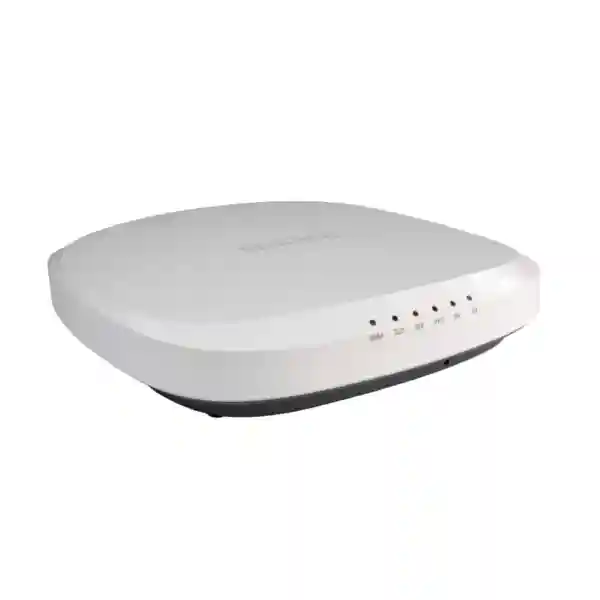
RUCKUS R560 Indoor Access Point
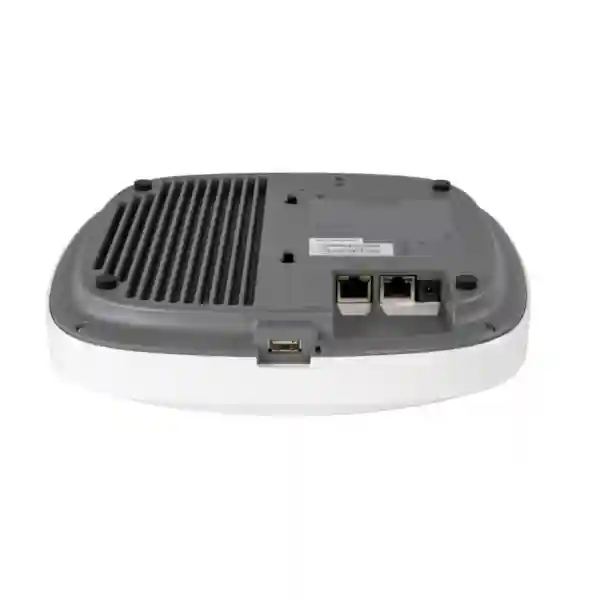
The RUCKUS R560 Indoor Access Point is positioned for organizations that need a practical step into Wi-Fi 6E without moving to the highest-capacity access point tier. It operates concurrently across 2.4 GHz, 5 GHz and 6 GHz, uses six total spatial streams in a 2×2:2 arrangement on each band and reaches a combined maximum PHY rate of approximately 4.7 Gbps. A 5GbE multigigabit uplink helps avoid making the wired connection the limiting factor when the radio side is heavily utilized. For buyers planning office, education, hospitality, residential, public-venue or high-traffic indoor wireless deployments, the R560 combines spectrum expansion, RUCKUS adaptive antenna technology and flexible enterprise management in one platform.
What the RUCKUS R560 is designed to solve
Wireless capacity problems are rarely caused by a single factor. Dense client populations, legacy devices, neighboring networks, voice and video traffic, poorly placed access points, uplink bottlenecks and inconsistent channel reuse can all reduce user experience. The RUCKUS R560 addresses these challenges as a mid-range enterprise Wi-Fi 6E platform. By adding the 6 GHz band to the familiar 2.4 GHz and 5 GHz bands, it gives compatible clients access to additional spectrum while older devices continue to use established bands. This is particularly useful when an organization is refreshing laptops, smartphones and collaboration devices gradually rather than replacing every endpoint at once.
RUCKUS BeamFlex+ adaptive antenna technology is intended to improve radio performance by dynamically selecting antenna patterns, while ChannelFly helps the access point select channels based on observed conditions. The platform also supports OFDMA and MU-MIMO, technologies designed to make airtime use more efficient when many compatible clients are active. These capabilities do not remove the need for a proper site survey, RF plan and capacity design, but they give network teams stronger tools for busy indoor environments where simple consumer or entry-level wireless equipment may struggle.
The R560 also includes an onboard IoT radio with BLE and Zigbee support and a USB 2.0 interface for broader convergence use cases. Management choices include RUCKUS Cloud, RUCKUS SmartZone and standalone operation, allowing the same hardware family to fit different operational models. Buyers should still validate licensing, controller compatibility, software release support, regional radio regulations, PoE budget and switch uplink capability before purchase. FourTeck can help structure that pre-sales checklist so the access point is evaluated as part of the complete network rather than as an isolated hardware item.
Tri-band Wi-Fi 6E
Concurrent 2.4 GHz, 5 GHz and 6 GHz operation gives modern 6 GHz-capable clients access to cleaner spectrum while maintaining service for established Wi-Fi generations.
Multigigabit backhaul
A 1/2.5/5GbE Ethernet interface is available for the main uplink, helping designers match wired capacity to the potential aggregate throughput of the wireless side.
Adaptive RF tools
BeamFlex+ and ChannelFly are designed to improve coverage, throughput and channel selection in real indoor environments where interference changes throughout the day.
Enterprise operations
Support for RUCKUS Cloud, SmartZone and standalone approaches lets organizations choose centralized or local operational models according to project requirements.
Planning the R560 as part of a complete WLAN
The access point is only one layer of a successful wireless project. Before selecting quantities, buyers should identify the expected device mix, application profile, target signal levels, roaming requirements, channel reuse plan, ceiling type, cable distances, switch port capabilities and available PoE budget. A location with hundreds of low-duty handheld devices can have very different design needs from a classroom using interactive video or an office floor running continuous voice and video collaboration. The manufacturer client-count figure is therefore not a substitute for a capacity model.
The 5GbE uplink is valuable only when the switching layer can support the required data rate, cabling standard and power. The R560 can operate under different power modes, and some features or interfaces can be affected by the available power source, so PoE design should be confirmed against the intended configuration. Network teams should also check whether the chosen controller or cloud architecture supports the required firmware train, authentication method, segmentation, guest access and analytics. For environments that already use RUCKUS infrastructure, the R560 may fit naturally into an existing management model, but software compatibility should still be verified before procurement.
For UAE projects, FourTeck’s main regional site at FourTeck UAE provides a starting point for broader infrastructure discussions. Regional buyers can also use the country-focused resources referenced later on this page. The objective is to align the access point with the site’s switch design, structured cabling, security policy, management preference and endpoint roadmap before a quotation is finalized.
RUCKUS R560 Indoor Access Point Dubai
Customers searching for the RUCKUS R560 Indoor Access Point Dubai are commonly evaluating wireless refresh projects in offices, hospitality venues, education facilities, retail environments, residential developments and shared commercial spaces. The practical attraction of the R560 is its ability to introduce 6 GHz capacity while retaining concurrent 2.4 GHz and 5 GHz service. In a city where organizations often operate dense clusters of laptops, mobile devices, collaboration endpoints and guest devices, that tri-band design gives network planners another spectrum option for newer clients. It is still important to validate the client estate, because only compatible devices can use the 6 GHz band. Buyers should therefore consider the R560 as part of a staged wireless modernization plan rather than assuming every endpoint immediately benefits from Wi-Fi 6E.
Dubai deployments also benefit from careful attention to indoor RF design. Glass partitions, reinforced walls, decorative ceiling structures, neighboring tenants and large open meeting areas can create very different propagation conditions within the same building. BeamFlex+ adaptive antennas and ChannelFly can help the platform respond to RF conditions, but AP placement should still follow a survey or predictive design based on the actual floor plan and application requirements. For voice, video conferencing and roaming users, design targets should prioritize consistent signal and airtime rather than simply maximizing nominal coverage. The R560’s 5GbE interface can also influence switch selection, because the access layer must provide the required multigigabit data rate and appropriate PoE budget.
For procurement, Dubai customers should request a quotation that clearly identifies the intended R560 regional variant, mounting requirements, power approach, controller or cloud management plan, licensing if applicable and any installation or support scope. Avoid comparing hardware-only prices without confirming whether power supplies, injectors, management subscriptions or professional services are included. If the site will mix R560 units with other RUCKUS access points, verify the selected controller software and feature requirements across the full estate. FourTeck can use the project brief to help organize these checks before commercial approval, reducing the risk of buying an access point without the switching, licensing or deployment elements needed for production use.
RUCKUS R560 Indoor Access Point UAE
A UAE-wide RUCKUS R560 Indoor Access Point requirement may span corporate offices, schools, hotels, clinics, retail branches, warehouses with office zones, residential common areas or multi-site organizations. The first design question is whether the objective is higher client capacity, access to 6 GHz spectrum, improved roaming, centralized management, stronger guest-network control or a combination of these factors. The R560 provides tri-band Wi-Fi 6E, six spatial streams and enterprise RUCKUS radio features, but each project should translate those capabilities into measurable design goals such as target throughput, supported device density, voice quality or application availability. This keeps procurement tied to business outcomes rather than a feature checklist alone.
For multi-emirate deployments, consistency becomes especially important. Network teams should decide whether every site will use the same SSID structure, authentication method, VLAN design, guest-access policy, firmware policy and monitoring model. RUCKUS Cloud or SmartZone can support centralized approaches, while standalone operation can suit narrower scenarios, but management should be selected before quantities are finalized. If branches have different switch generations, check whether each location can provide multigigabit Ethernet and the required PoE level. The R560 includes both a multigigabit Ethernet interface and a secondary 1GbE port, but the usable configuration depends on the power mode and intended design.
UAE buyers should also verify regional regulatory compatibility and destination-specific ordering details rather than assuming a generic international part is appropriate. A complete quotation request should include site count, approximate floor areas, expected users and devices, existing controller platform, switch models, authentication requirements and whether a survey or installation service is needed. If the project involves broader switching, security or structured network upgrades, FourTeck UAE infrastructure resources can support the surrounding design conversation. The R560 is most valuable when those dependencies are resolved before installation, particularly in organizations standardizing wireless across several UAE locations.
RUCKUS R560 Indoor Access Point Uganda
Organizations researching the RUCKUS R560 Indoor Access Point Uganda may be planning wireless networks for universities, private schools, hotels, healthcare environments, NGOs, offices, conference spaces or growing commercial campuses. A useful evaluation starts by separating internet bandwidth from local Wi-Fi capacity. Even when the upstream connection is modest, a well-designed WLAN still matters for local applications, voice, collaboration, device onboarding and consistent access across a building. The R560’s concurrent 2.4 GHz, 5 GHz and 6 GHz operation allows newer Wi-Fi 6E devices to use additional spectrum while existing clients remain on established bands, creating a path for gradual endpoint modernization.
Power and switching architecture should receive particular attention during procurement. The R560 can take advantage of a 5GbE uplink, but that capability should be matched to switch ports, cabling and PoE availability. If an organization is upgrading from older 1GbE access switches, it may be more cost-effective to plan wireless and switching changes together rather than deploy new APs into a constrained access layer. Sites should also document backup-power expectations for core switches, PoE switches and internet equipment, because wireless availability depends on every upstream component. Where coverage must extend through large buildings or across difficult cabling routes, SmartMesh can be evaluated, although wired backhaul remains preferable where practical for predictable capacity.
Uganda buyers should request destination-appropriate hardware, clarify management and licensing choices, and identify whether installation, configuration, survey or post-deployment support is part of the commercial scope. The FourTeck Uganda resource can be used for local-market enquiry context without assuming stock or delivery commitments that have not been confirmed. For a useful quotation, provide the number of buildings, floor plans if available, expected concurrent users, critical applications, existing switches, internet topology and the desired management platform. That information gives the procurement discussion enough technical context to move beyond a simple unit-price comparison.
RUCKUS R560 Indoor Access Point Kampala
A Kampala RUCKUS R560 Indoor Access Point project often needs to balance dense user areas with mixed building layouts. Corporate headquarters, universities, hotels, training centers, medical facilities and shared office environments may combine open floors, meeting rooms, masonry partitions and public guest areas. The correct AP count therefore cannot be determined from square metres alone. Designers should consider wall loss, ceiling height, client density, application mix and roaming paths. The R560’s BeamFlex+ technology can improve how the access point uses its antenna patterns, while ChannelFly can help with channel selection, but those functions work best when the physical deployment begins with sensible placement and channel planning.
Kampala organizations that are introducing Wi-Fi 6E should inventory endpoint support before making the 6 GHz band a central assumption. Newer business laptops and smartphones may support 6 GHz, while older devices remain on 2.4 GHz or 5 GHz. This makes a tri-band AP useful for transition periods, but performance targets should account for the actual client mix. Authentication is another planning point: businesses may need WPA3, enterprise identity integration, guest access, VLAN segmentation or dynamic credentials. The R560 platform supports modern enterprise security functions, but the final solution also depends on controller configuration, RADIUS or identity services and the organization’s operational policies.
For Kampala procurement, ask suppliers to distinguish the access point hardware from optional power accessories, management subscriptions, configuration and installation. Confirm whether the existing switch can provide the required PoE and whether its uplink architecture can support the traffic generated by several multigigabit APs. If the project is part of a larger Uganda rollout, standardize firmware policy, SSID naming, monitoring and support escalation across sites. FourTeck’s Uganda-focused network resource can support enquiry routing, while the project brief should still contain Kampala-specific floor plans, device estimates and service expectations to prevent generic sizing.
RUCKUS R560 Indoor Access Point Arua
For customers seeking the RUCKUS R560 Indoor Access Point Arua, the buying decision should begin with the operational role of Wi-Fi at the site. Schools, healthcare facilities, NGOs, branch offices, hospitality properties and administrative environments may need reliable indoor coverage for staff systems, guest access, cloud applications, VoIP, video meetings and mobile workflows. The R560 is designed as an enterprise indoor AP rather than a general-purpose outdoor device, so deployment areas should remain within the specified environmental envelope. Its tri-band radio design can support a mixed device estate while making 6 GHz available to compatible clients, which can be helpful as newer laptops and smartphones enter service over time.
Arua projects should plan carefully around the wired network and power chain. The R560 offers a 5GbE-capable interface, but many existing switches may provide only 1GbE or limited PoE budgets. That does not automatically prevent deployment, but it changes the achievable design and should be understood before purchasing hardware. Where power continuity is important, the PoE switch, gateway, controller path and upstream internet equipment should be included in backup-power planning. Where cable installation is difficult, RUCKUS SmartMesh may provide an alternative for selected links, though mesh design should account for radio capacity and should not be treated as a substitute for structured cabling in every location.
For a practical Arua quotation, buyers should provide building layout, ceiling construction, room density, approximate concurrent users, required applications, existing network equipment and management preference. It is also useful to define whether the requirement is supply only or includes survey, installation, configuration, testing and handover. This allows the commercial proposal to separate hardware from professional services and optional accessories. FourTeck can use the Uganda project context through FourTeck Uganda, while the technical scope should remain specific to the Arua site so quantities and expectations are based on the actual environment rather than a national template.
RUCKUS R560 Indoor Access Point Mbarara
A RUCKUS R560 Indoor Access Point Mbarara requirement may come from education, hospitality, healthcare, agribusiness offices, financial services, retail operations or multi-building institutions seeking more consistent indoor wireless performance. The R560 is particularly relevant when a site expects a growing population of Wi-Fi 6E-capable devices but must still serve older clients. Its three concurrent bands let network teams spread compatible devices across more spectrum, while RUCKUS radio-management features help address changing interference conditions. The result should still be validated through survey work because every building presents different attenuation, interference and user-density patterns.
For institutions with lecture rooms, conference facilities or training spaces, peak concurrency is more important than average daily usage. A room may be quiet for most of the day and then suddenly host a large number of active devices. Capacity planning should therefore model busy periods, application types and expected throughput per user. The R560’s OFDMA and MU-MIMO capabilities are designed for efficient multi-user operation, but real performance depends on compatible clients and RF conditions. Wired switching must also be assessed, including PoE headroom and multigigabit ports where the design intends to use the access point’s 5GbE capability.
Mbarara buyers should request a bill of materials that identifies access points, mounts, power accessories where required, management subscriptions or controller dependencies, installation services and testing separately. This helps avoid comparing quotations that appear similar but include different scopes. If several sites are involved, define a consistent naming, VLAN, authentication, firmware and monitoring standard before rollout. FourTeck’s Uganda network resource can support the regional enquiry path, while the technical brief should include Mbarara-specific floor plans and user profiles. That combination makes procurement more accurate and gives the deployment team clearer acceptance criteria.
RUCKUS R560 Indoor Access Point Gulu
Customers evaluating the RUCKUS R560 Indoor Access Point Gulu should consider both current wireless pain points and the expected endpoint roadmap. A campus, hotel, office, NGO facility, school or healthcare environment may be experiencing congested 5 GHz channels, inconsistent roaming, insufficient guest capacity or limitations in older AP hardware. The R560 adds 6 GHz capability for compatible devices and supports concurrent operation across all three common Wi-Fi bands. This can create additional design flexibility, but only when client support, regulatory settings and management software are correctly aligned. Older endpoints will continue to use 2.4 GHz or 5 GHz, so those bands still need careful channel and capacity planning.
Gulu sites with large rooms or long corridors should avoid assuming that one powerful AP is preferable to several well-positioned APs. Enterprise WLAN design usually works best when coverage cells, transmit power and channel reuse are controlled deliberately. BeamFlex+ can select from many antenna patterns and ChannelFly can adapt channel choices, but those capabilities complement rather than replace sound placement. If mobility matters, roaming paths between APs should be tested with the actual voice or application devices used by staff. If the network supports guests, segmentation, captive portal behavior, bandwidth policy and identity requirements should also be part of the design.
For procurement, Gulu buyers can reduce uncertainty by providing switch models, PoE availability, cable categories, floor plans, current AP locations and user estimates with the request for quotation. The R560’s multigigabit uplink can justify access-switch upgrades in some projects, while other sites may choose a staged approach. Clarify whether the quotation includes controller licensing, cloud subscriptions, configuration, installation and post-deployment support. FourTeck’s Uganda-focused site provides regional context, while the Gulu project itself should be sized from its own building and usage data. This protects the project from both oversizing and insufficient capacity.
RUCKUS R560 Indoor Access Point Kenya
The RUCKUS R560 Indoor Access Point Kenya is relevant to enterprises, universities, hospitality groups, healthcare organizations, retail chains and multi-site businesses planning a move to Wi-Fi 6E. The central buying question is whether the access point’s capabilities match the client mix and network architecture. The R560 supports 2.4 GHz, 5 GHz and 6 GHz simultaneously, which lets compatible Wi-Fi 6E clients use the newer spectrum while maintaining connectivity for older devices. For dense offices or teaching spaces, that additional spectrum can be useful, but the improvement depends on endpoint support, channel planning and how many users are active in the same area.
Kenyan organizations running distributed branches should also consider management consistency. RUCKUS Cloud can suit centralized cloud-managed operations, while SmartZone can support controller-based deployments and standalone mode may fit narrower use cases. The best choice depends on scale, security policy, internet resilience, operational skills and licensing preferences. Switch readiness must be checked at every site: a 5GbE AP uplink delivers value only when the access switch and cabling can support the desired multigigabit rate, and PoE capacity must be sufficient for the intended feature set. Budgeting should therefore include access switching where older infrastructure would constrain the WLAN upgrade.
Kenya procurement teams can use FourTeck Kenya as the regional enquiry resource. A strong request for quotation should include site locations, building plans where available, expected users, critical applications, desired SSIDs, authentication method, switch models and the preferred operational model. It should also ask for clarity on mounting, power accessories, controller or subscription requirements, installation and support. This allows competing quotations to be compared on the same technical scope and helps the R560 deployment move from purchase to production with fewer hidden dependencies.
RUCKUS R560 Indoor Access Point Kuwait
Buyers searching for the RUCKUS R560 Indoor Access Point Kuwait are often considering enterprise wireless for offices, hospitality, education, retail, healthcare and high-traffic indoor venues. The R560’s Wi-Fi 6E design provides three concurrent radio bands and gives compatible devices access to 6 GHz spectrum. This can reduce pressure on traditional bands in busy indoor networks, but the benefit should be evaluated against actual client support. Network teams should inventory laptops, mobile devices, scanners, voice devices and IoT endpoints before deciding how heavily the design will depend on 6 GHz capacity. Legacy devices remain an important part of the overall airtime plan.
Kuwait projects should pay close attention to indoor placement and environmental compliance. The R560 is specified for indoor operation, so it should not be used as a substitute for an outdoor-rated AP in exposed locations. Within conditioned spaces, reflective surfaces, partitions and dense neighboring networks can influence coverage and channel behavior. BeamFlex+ and ChannelFly are designed to improve RF performance, while SmartMesh offers flexibility where selected cable runs are difficult, but professional design remains important. Where several R560 units are concentrated on one access switch, both the PoE budget and upstream switching capacity should be checked so the wired network does not become the bottleneck.
Kuwait customers can route regional enquiries through FourTeck Kuwait. A quotation request should identify the destination, required quantity, management platform, existing switch environment, authentication needs, floor plans, user density and whether installation is part of the scope. Ask vendors to identify optional items separately, including power accessories and management subscriptions. This makes the commercial comparison more transparent and helps avoid situations in which an attractive unit price excludes components needed for deployment. For multi-site organizations, standardize firmware, monitoring and configuration policies before rollout so the new access points can be operated consistently.
RUCKUS R560 Indoor Access Point Ghana
The RUCKUS R560 Indoor Access Point Ghana can suit organizations modernizing indoor wireless across offices, schools, hospitality properties, healthcare environments, financial-service locations and shared commercial facilities. Its key architectural advantage is tri-band Wi-Fi 6E, allowing 6 GHz-capable devices to use newer spectrum while existing endpoints remain on 2.4 GHz or 5 GHz. This can support a phased hardware refresh rather than forcing an all-at-once client replacement. For buyers, the important step is to determine how many current and planned devices can actually use 6 GHz and whether the application mix justifies higher-capacity wired uplinks.
Ghana deployments should assess switching and power at the same time as wireless. The R560 offers a multigigabit 5GbE interface, so projects expecting high aggregate throughput should verify switch port speeds, uplinks and cabling. PoE capability must also match the intended operating mode. In environments where continuity is important, include the access switches and upstream network in UPS planning rather than backing up only the internet router. For campuses or buildings with variable RF conditions, BeamFlex+ and ChannelFly can help optimize operation, while proper placement, capacity planning and interference analysis remain essential to predictable performance.
For Ghana procurement, avoid reducing the comparison to the cost of the AP alone. Ask for destination-appropriate hardware, mounts, any required power accessories, management subscriptions or controller dependencies, configuration services and support terms. If the project is part of a broader Africa network program, FourTeck Africa can provide a wider regional enquiry route. A complete brief should include expected user counts, building plans, critical applications, authentication method, VLAN requirements, switch models and whether a survey is needed. This gives the supplier enough information to discuss the R560 as a system component instead of quoting hardware without context.
RUCKUS R560 Indoor Access Point Nigeria
Organizations looking for the RUCKUS R560 Indoor Access Point Nigeria may be addressing dense office floors, educational campuses, hotels, healthcare sites, branch networks or public-facing indoor spaces. The R560’s tri-band Wi-Fi 6E architecture gives planners more spectrum options for compatible devices and can be particularly useful where existing 5 GHz capacity is under pressure. Its six spatial streams, OFDMA, MU-MIMO and adaptive antenna system are designed for efficient enterprise wireless operation, but successful outcomes still depend on the number of active users, application demand, RF conditions and how the network is configured.
Nigeria projects frequently benefit from a multi-layer resilience discussion. Wireless availability depends on access-point power, switching, routing, management connectivity and upstream services. If a site has backup power requirements, the PoE switches feeding the R560 units should be included in the design. The 5GbE uplink also deserves attention: high-capacity APs connected to older 1GbE switching may still function, but the wired layer can limit the benefit of the radio upgrade. For branch rollouts, organizations should document a standard design covering SSIDs, security, VLANs, firmware, monitoring and troubleshooting so each location is not built differently.
For commercial evaluation, Nigeria buyers should request a quote that distinguishes hardware from optional accessories, controller or cloud management, licensing, installation, testing and support. Clarify the destination-specific part requirements and do not assume a generic regional code is suitable. Where the project spans multiple African markets, FourTeck Africa can support the broader enquiry path. The technical brief should still be Nigeria-specific, including building type, approximate users, device mix, critical applications and existing switch models. That information helps ensure the recommended quantity and surrounding infrastructure are aligned with actual operational needs.
RUCKUS R560 Indoor Access Point Seychelles
The RUCKUS R560 Indoor Access Point Seychelles can be relevant to hotels, resorts, offices, education sites, healthcare facilities and public-facing indoor environments where dependable guest and staff wireless is important. Hospitality projects in particular should distinguish between coverage in rooms, corridors, conference areas, restaurants and back-office spaces because each zone has different client density and wall-loss characteristics. The R560 is an indoor access point, so exposed outdoor or coastal locations require appropriately rated wireless hardware instead. Used within its intended environment, the R560 provides tri-band Wi-Fi 6E and enterprise radio features for indoor service areas.
Seychelles buyers should also consider the operational impact of remote support and replacement logistics when designing the network. A resilient architecture may justify standardized AP models, documented configurations, spare-unit planning and centralized management so troubleshooting can be performed efficiently. RUCKUS Cloud or SmartZone can support centralized visibility depending on the chosen architecture. If SmartMesh is considered for areas where cabling is difficult, capacity expectations should be tested carefully, particularly in guest environments with streaming and video use. Wired backhaul should remain the preferred option wherever practical because it separates access traffic from mesh transport overhead.
For procurement, request a complete bill of materials that includes the R560 hardware, mounting requirements, power approach, management licensing or controller requirements and any professional services. Confirm destination-specific ordering details before shipment. If the project is part of a wider regional infrastructure program, FourTeck Africa can be used as a regional contact path. Provide property plans, room counts where relevant, expected concurrent users, guest-network requirements, staff applications, switch models and internet architecture. This enables a more accurate discussion of AP quantities, placement and operational support than a simple price request for individual units.
Compatibility, management and deployment questions to resolve before ordering
First confirm the management model. If the organization already uses RUCKUS SmartZone, identify the current software version and verify R560 support within the planned release. If the strategy is RUCKUS Cloud, confirm the subscription and tenant structure required for the deployment. If standalone operation is being considered, confirm that it meets the operational and feature requirements. Management selection affects licensing, monitoring, configuration workflows and support processes, so it should not be deferred until after the hardware arrives.
Second, verify the access layer. Record the switch model, available PoE standard, per-port power, total power budget, port speed, uplink capacity and cable category. The R560’s 5GbE capability can remove a potential bottleneck only when the wired network supports it. In projects with older switching, planners may decide to upgrade priority zones first or include new multigigabit switches in the same budget. This is also the right time to review VLANs, RADIUS integration, guest segmentation and upstream firewall policies so the WLAN design has an end-to-end traffic model.
Third, define acceptance criteria. Examples include minimum coverage in occupied areas, supported voice roaming paths, guest access behavior, authentication success, expected application performance and monitoring visibility. A project that documents these outcomes before installation is easier to test and support. The R560 provides capable enterprise hardware, but the deployment quality still depends on survey accuracy, switch configuration, firmware, client behavior and policy design.
Frequently asked questions about the RUCKUS R560
Is the RUCKUS R560 Wi-Fi 6E?
Yes. The R560 is a Wi-Fi 6E indoor access point supporting concurrent 2.4 GHz, 5 GHz and 6 GHz operation. Clients must support 6 GHz to use that band; older compatible Wi-Fi devices continue to operate on 2.4 GHz or 5 GHz.
What is the maximum data rate?
RUCKUS specifies a combined maximum PHY rate of about 4.7 Gbps across the three radios. PHY rate is not the same as real application throughput, which depends on protocol overhead, client capability, signal quality, channel width, interference and network design.
Does the R560 support multigigabit Ethernet?
Yes. It includes a primary Ethernet interface supporting 1/2.5/5GbE and a secondary 1GbE interface. The switch, cabling and PoE design should be checked to ensure the intended configuration is supported.
Can it be centrally managed?
RUCKUS lists support for RUCKUS Cloud and SmartZone, as well as standalone operation. Buyers should verify the exact software release, subscription and feature requirements for their environment before procurement.
How many clients can one R560 support?
The manufacturer specification states up to 1536 clients. This is a platform capacity figure, not a recommended design target for every environment. Real AP density should be based on user behavior, application requirements, airtime, RF conditions and service-level expectations.
Does it include IoT support?
The R560 includes onboard IoT capabilities including BLE and Zigbee support, and it also provides a USB 2.0 interface. The intended IoT application and required RUCKUS software components should be validated for the project.
Is the R560 suitable for outdoor use?
The R560 is an indoor access point. Outdoor or exposed environments should use hardware designed and rated for those conditions rather than placing the R560 outside its intended operating environment.
Decision recap
Choose the R560 when the project needs an enterprise indoor Wi-Fi 6E access point with tri-band operation, multigigabit backhaul, adaptive RUCKUS RF technology and flexible management choices. Confirm that client support, switching, PoE, licensing and software compatibility align with the intended design.
Do not size an installation from the maximum client figure alone. Use floor plans, peak concurrency, application requirements and RF conditions to determine AP quantity and placement.
Quotation checklist
- Destination country and required quantity.
- Floor plans, ceiling details and approximate user density.
- Existing switch models, PoE capability and cable category.
- Preferred RUCKUS management platform and current software version.
- Authentication, VLAN, guest and security requirements.
- Whether survey, installation, configuration or support is required.
Related network planning resources
For UAE infrastructure enquiries, use FourTeck UAE. For East Africa projects, consult FourTeck Uganda or FourTeck Kenya according to the project location. Kuwait enquiries can use FourTeck Kuwait, while broader African projects can start with FourTeck Africa. These links are intended as regional enquiry routes; confirm the exact product scope, commercial terms, availability and service coverage during the quotation process.
Consult FourTeck about RUCKUS R560 design and procurement
A useful R560 sales conversation should cover more than unit price. Share the project location, floor plan, expected device count, critical applications, existing switch environment and desired management model. FourTeck can then structure the enquiry around hardware, power, management, installation and support requirements. No stock, delivery time or commercial commitment is implied on this page; those details should be confirmed in the formal quotation for the destination and project scope.

Reviews
There are no reviews yet.