
BUSINESS WI-FI 6 • INDOOR ACCESS POINT
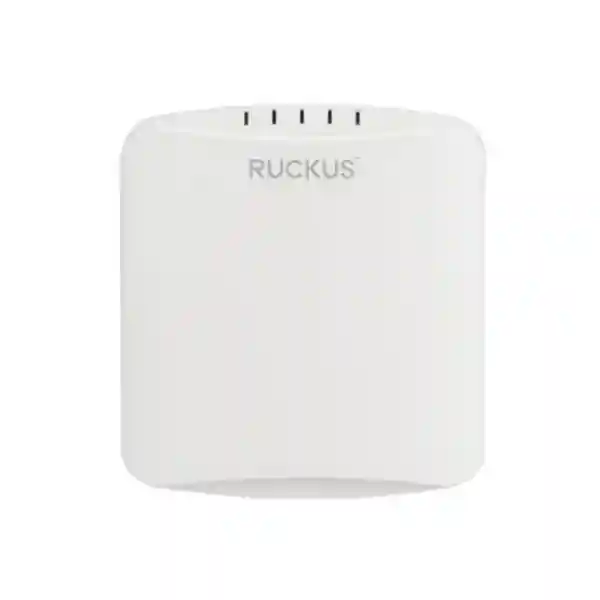
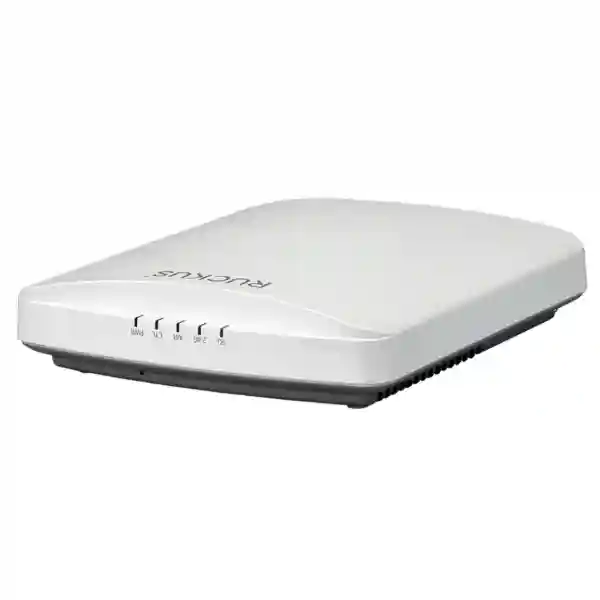
RUCKUS R350e Indoor Access Point
The RUCKUS R350e is a compact Wi-Fi 6 access point for smaller indoor environments where buyers want dependable dual-band wireless, straightforward management choices and a practical path from standalone branch Wi-Fi to centrally managed deployments. This page brings together verified product facts, buying guidance and regional procurement considerations for Dubai, the UAE and selected African and GCC markets.
Quick model check
Wi-Fi generation: Wi-Fi 6 / IEEE 802.11a/b/g/n/ac/ax
Radio design: Dual radio, 2×2:2 per band
Maximum PHY rate: 574 Mbps at 2.4 GHz + 1200 Mbps at 5 GHz
Management: RUCKUS One, SmartZone or Unleashed
Direct answer: who should consider the RUCKUS R350e?
The R350e is positioned by RUCKUS for low-density indoor environments with limited coverage areas, including small and medium economy hotels and motels, small and medium businesses, retail locations, restaurants, multi-tenant small offices and branch offices. That positioning is important when comparing access points. Buyers should not select a Wi-Fi product only from its headline speed. The more useful questions are how many clients will be active, what applications they use, how much floor area one access point must cover, what wall materials are present, what controller platform is required and whether the wired switch can supply the needed Ethernet and power design.
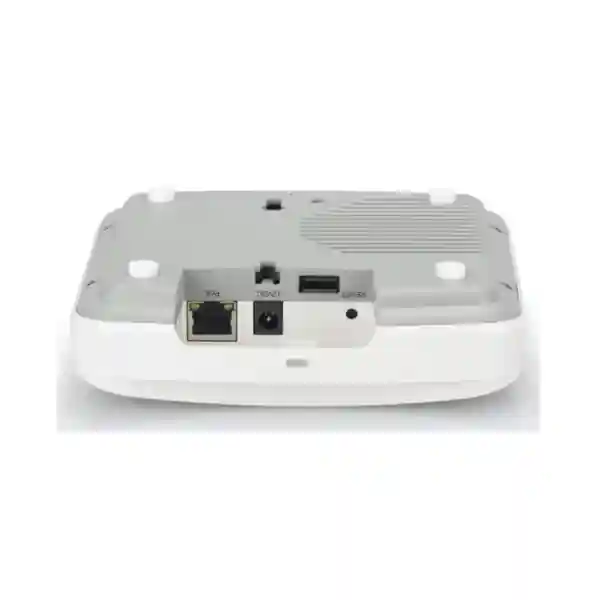
RUCKUS lists the R350e as a dual-radio Wi-Fi 6 indoor access point with 2×2:2 radio chains and streams on 2.4 GHz and 5 GHz. The published maximum PHY rates are 574 Mbps on 2.4 GHz and 1200 Mbps on 5 GHz, for a combined maximum of 1774 Mbps. The product page lists one 1 GbE Ethernet port, SmartMesh support, ChannelFly channel management, up to 128 concurrent users and management support through RUCKUS One, RUCKUS SmartZone and RUCKUS Unleashed. The manufacturer lists BeamFlex as not supported on this model, which is a useful distinction for buyers comparing the R350e with other RUCKUS indoor access points.
FourTeck can help turn those specifications into a deployment plan. A quotation request should ideally include the number of sites, approximate floor area, expected user count, internet speed, switch model, PoE availability, preferred management platform, guest Wi-Fi requirement and any VLAN or firewall segmentation needs. If your broader project includes network edge security, review the Firewall Dubai network-security overview and the FourTeck firewall product collection so wireless and security requirements are considered together rather than as separate purchases.
Verified RUCKUS R350e specifications
Wireless
Wi-Fi 6 with IEEE 802.11a/b/g/n/ac/ax support, dual 2.4 GHz and 5 GHz radios, 2×2:2 streams, and 20/40/80 MHz channelization.
Performance
Maximum PHY rate of 574 Mbps at 2.4 GHz and 1200 Mbps at 5 GHz, with a combined published maximum of 1774 Mbps.
Capacity
RUCKUS lists up to 128 concurrent users and up to eight SSIDs per access point, with four SSIDs per band in the current data sheet.
Management
Controller support is listed for RUCKUS One, RUCKUS SmartZone and RUCKUS Unleashed; management architecture should be confirmed for the intended deployment.
RF and roaming
ChannelFly, SmartMesh, Adaptive Band Balancing, Client Load Balancing, Airtime Fairness and SmartRoam are listed in manufacturer material. BeamFlex is listed as not supported.
Security
Manufacturer documentation lists WPA2, WPA3-Personal, WPA3-Enterprise, AES, Dynamic PSK, WIPS/WIDS, access-control features, captive portal and Hotspot 2.0 support.
Wired uplink
One 1 GbE Ethernet port is listed. Switch port configuration, PoE budget, VLAN tagging and uplink topology should be reviewed before installation.
Environment
RUCKUS lists an operating-temperature range of 0°C to +40°C. Indoor placement should account for ventilation and the actual room environment.
What to decide before requesting a quote
A technically correct R350e purchase begins with the management model. RUCKUS One is the cloud-oriented management option listed by the manufacturer, SmartZone is the controller family used for centrally managed environments, and Unleashed is another supported management path for R350e. The right choice depends on the number of access points, number of sites, operational preferences, feature requirements and existing RUCKUS estate. A buyer replacing another model should also confirm migration steps and software compatibility rather than assuming the new access point can simply be adopted by every existing controller release.
Next, confirm the wired network. The R350e has a 1 GbE uplink, so the switching plan should address port availability, PoE delivery, VLANs, trunking or access mode, DHCP, DNS, gateway reachability and any firewall rules needed for management or cloud connectivity. For businesses building a new branch or refreshing an old network, FourTeck can align wireless planning with firewall deployment planning in Dubai, firewall installation services and perimeter firewall design guidance. This matters because guest Wi-Fi, staff Wi-Fi, point-of-sale systems, voice devices and management interfaces often need different security policies.
Finally, plan coverage from the building rather than from a generic radius figure. Wall density, glass, metal shelving, ceiling height, neighboring access points, channel utilization, client capability and interference all influence user experience. A site with fewer users can still need several access points if the floor plan has many rooms or thick partitions. Conversely, one access point may serve a compact low-density area well when placement and RF conditions are favorable. Site survey information, floor plans and expected client locations produce a more useful design than purchasing by client count alone.
RUCKUS R350e Indoor Access Point Dubai
Buyers searching for the RUCKUS R350e Indoor Access Point Dubai usually want three answers quickly: whether the model fits a small business or branch requirement, how it will be managed, and what must be included in the final quotation. For Dubai offices, retail units, restaurants, clinics, training rooms, small hospitality properties and branch locations, the R350e is relevant when the requirement matches the manufacturer’s low-density, limited-coverage positioning. Its Wi-Fi 6 radios support modern client devices on 2.4 GHz and 5 GHz, while the 1 GbE uplink keeps the wired design straightforward. The practical deployment question is not merely whether Wi-Fi 6 is available, but how many users are simultaneously active and whether the application mix includes video meetings, cloud applications, guest browsing, mobile point-of-sale or other latency-sensitive traffic.
Dubai projects frequently combine wireless access with VLANs, guest isolation and firewall policy. A common procurement mistake is ordering an access point without checking the existing switch. Before confirming a RUCKUS R350e Dubai quotation, identify the switch make and model, available PoE budget, free Gigabit Ethernet ports, patch-panel route and cable category. If a new switch is also needed, include the number of current and future access points so the power budget is not undersized. If guest Wi-Fi must be separated from business systems, define that at the same stage as SSIDs and VLANs. FourTeck’s Dubai contact page can be used to share these requirements, while the FourTeck business profile provides context on the wider networking and security approach.
For management, tell the sales team whether the site already uses RUCKUS One, SmartZone or Unleashed. Existing RUCKUS customers should provide the controller software version and current access-point family so compatibility can be checked before purchase. New customers should describe how many sites and APs they expect to manage. A single compact branch has different operational needs from a multi-site retail estate. Dubai customers should also clarify whether they need supply only, configuration assistance, installation planning or an integrated network-security scope. FourTeck can discuss these items through the main FourTeck UAE technology platform.
When requesting RUCKUS R350e price in Dubai, ask for the exact model, quantity, management approach, required accessories, PoE method and service scope to be listed in the formal quote. Do not rely on a generic online price for a complete project because power accessories, controller licensing or subscriptions, installation and cabling may be separate. For businesses comparing the R350e with another AP, share the floor plan and expected client load; the most useful comparison is one tied to the actual coverage and management requirement.
RUCKUS R350e Indoor Access Point UAE
The RUCKUS R350e Indoor Access Point UAE search often comes from organizations standardizing connectivity across more than one emirate. A small company may have a main office in Dubai and additional locations in Abu Dhabi, Sharjah, Ajman or another UAE area. In that situation, access-point selection should include operational consistency as well as radio performance. Using the same supported management architecture across branches can simplify SSID naming, authentication policies, firmware planning and troubleshooting. RUCKUS lists RUCKUS One, SmartZone and Unleashed as supported management options for the R350e, so the choice should be based on the wider estate rather than one site in isolation.
For UAE procurement, prepare a bill-of-materials brief before asking for pricing. Include AP quantity by location, floor area, expected user count, number of SSIDs, guest access needs, VLAN requirements, switch model, PoE capacity and whether the internet gateway can enforce separation between staff, guest, CCTV and other network segments. The R350e itself provides wireless access; it does not replace the need for a correctly designed wired LAN and security gateway. If a location has dense meeting spaces, many simultaneous video calls or large open areas, the R350e may still be part of the design, but the AP count and placement should be validated rather than inferred from a theoretical user maximum.
The manufacturer lists up to 128 concurrent users, but that figure is not a recommendation to place 128 heavy-usage clients on one AP. Real application performance depends on airtime demand, client capabilities, channel availability, interference and RF design. UAE buyers should therefore describe peak occupancy and the devices being used. A staff office dominated by email, ERP and web applications differs from a training venue where dozens of users stream content simultaneously. Wi-Fi 6 capabilities such as OFDMA are designed to improve efficiency in modern networks, but proper channel and AP planning remain essential.
For multi-site purchasing, also define how installation and support will be coordinated. Some organizations want hardware only; others require configuration templates, onsite installation, post-deployment testing or integration with existing firewall policies. FourTeck can help frame the requirement through its UAE channels and network-security pages. The objective is a quote that is specific enough for procurement to compare accurately: exact AP model, quantity, accessories, management platform, service scope and any dependencies should be visible before approval.
RUCKUS R350e Indoor Access Point Uganda
Organizations researching the RUCKUS R350e Indoor Access Point Uganda commonly include offices, schools, hospitality businesses, clinics, NGOs, retail operations and branch networks that need reliable indoor wireless without overcomplicating the architecture. The R350e is designed for smaller, lower-density environments, so the first decision is whether the planned coverage area and traffic profile match that role. A reception area, branch office, compact restaurant or small hotel zone can be very different from a high-density campus or large event space. Buyer conversations should start with the actual building, the number of active devices and the applications users depend on.
Uganda procurement also benefits from careful attention to power and switching. The access point’s Ethernet connection must reach a compatible switch or power arrangement, and the switch must have enough PoE budget for the full AP count. If the project includes several rooms or buildings, record cable routes and switch locations before ordering. For sites with unstable utility conditions, the network design may also include UPS protection for switches, routers and security gateways so the Wi-Fi system is not dependent on unprotected edge equipment. Those resilience measures are part of the network project rather than features of the R350e itself.
Management choice is another key question. A customer with one small location may value a simpler RUCKUS Unleashed design, while an organization with many managed sites may evaluate RUCKUS One or SmartZone according to its operational standards. Existing customers should provide controller details and software versions for compatibility review. New customers should state whether they need central monitoring across locations, guest access workflows, common SSIDs or local autonomy at each branch. FourTeck’s Uganda technology site can be used as a regional route for broader networking discussions.
When requesting a RUCKUS R350e price in Uganda, ask the quotation to separate the access points, power or switching requirements, management platform, cabling or installation scope and support requirements. For imported or project-sourced equipment, also confirm lead time, delivery terms and warranty handling in writing at the time of quotation rather than relying on general website text. A clear bill of materials reduces procurement risk and helps technical teams know exactly what will be available when deployment begins.
RUCKUS R350e Indoor Access Point Kampala
Kampala buyers looking for the RUCKUS R350e Indoor Access Point often have a more site-specific need than a countrywide procurement request. The city includes compact offices, professional-services firms, restaurants, hotels, clinics, educational spaces and retail environments where one building may combine staff Wi-Fi, visitor access, cloud applications, IP phones, payment systems and CCTV management. In these deployments, the R350e should be considered as one component of the LAN. Its Wi-Fi 6 radios can serve modern mobile and laptop clients, but the quality of the experience also depends on the switch uplink, internet service, firewall configuration, DHCP, DNS and RF placement.
A useful Kampala site brief includes a simple floor plan, wall construction notes and peak user locations. Concrete walls, internal partitions, stairwells and metal structures can change coverage dramatically. Rather than assuming that one access point will serve an entire floor, mark where users actually work and where high-usage activities happen. Meeting rooms may need greater capacity than corridors. Restaurants may need separate staff and guest policies. Clinics may need to isolate administrative systems from visitor Wi-Fi. The R350e supports multiple SSIDs, but the number of SSIDs should still be kept purposeful because each wireless network adds management and airtime overhead.
For branch operations in Kampala, centralized management can become valuable as the organization grows. If the business expects additional sites, ask how the proposed RUCKUS One, SmartZone or Unleashed approach will scale. Procurement teams should also confirm software and entitlement requirements for the chosen management architecture, because hardware pricing alone may not represent the complete lifecycle. Where the organization already has RUCKUS equipment, provide model numbers and software details so the supplier can check whether the R350e is a suitable addition.
A RUCKUS R350e Kampala quotation should therefore answer five points: exact hardware quantity, AP management method, PoE source, installation/cabling responsibility and post-deployment support scope. If the project includes a new firewall or segmented network, specify which VLANs should reach each SSID and which services users must access. This makes wireless commissioning faster and avoids the common situation where the AP is working but business applications fail because the upstream network was never documented.
RUCKUS R350e Indoor Access Point Arua
For customers searching RUCKUS R350e Indoor Access Point Arua, the most important design issue is often building a dependable small-site network from a limited number of infrastructure components. Branch offices, guest facilities, education sites, health-related facilities, NGOs and local businesses may need wireless for staff devices, visitor connectivity and cloud access while keeping installation and support manageable. The R350e’s compact form factor and Wi-Fi 6 capability make it relevant to smaller indoor environments, provided the deployment is sized for the actual coverage and client load.
In Arua projects, document the upstream network before ordering the AP. Identify the internet router or firewall, available switch ports, whether the switch provides PoE, and how many access points may be added over time. If only one AP is being installed today but the building may expand, reserving switch capacity and suitable cable routes can reduce later rework. The 1 GbE uplink is straightforward, but cable quality and termination still matter. A well-designed access point cannot compensate for damaged copper, poor connectors or an overloaded upstream internet connection.
Management strategy should reflect local support reality. Some organizations prefer a centrally managed platform because technical staff support the branch from another city. Others want a locally manageable arrangement with simple operational steps. RUCKUS lists RUCKUS One, SmartZone and Unleashed support for the R350e, but the right selection should be reviewed against the wider network. Remote support teams should also define how they will securely reach the management system and what monitoring information they need during troubleshooting.
When requesting R350e pricing for Arua, include destination, quantity and service requirements so the quotation can address logistics as well as hardware. Ask for written confirmation of availability, delivery arrangement and warranty route at the time of purchase. If onsite installation is required, provide building access details, ceiling type, preferred AP locations and cable readiness. For organizations procuring several Uganda sites at once, a standardized configuration template can improve consistency while still allowing local SSID or VLAN variations where operationally necessary.
RUCKUS R350e Indoor Access Point Mbarara
A RUCKUS R350e Indoor Access Point Mbarara deployment can suit smaller commercial, hospitality, healthcare, education or branch environments where users need dependable access to internet and cloud services. The model’s value is clearest when the site falls within its intended low-density role. If a project includes large conference areas, crowded auditoriums or very high client concurrency, the wireless design should be reviewed more broadly instead of selecting the R350e only because it supports Wi-Fi 6. Access point families differ not only in speed but in antenna systems, radio capability, client scale and deployment purpose.
Mbarara customers should prepare both a coverage map and an application list. A hotel may prioritize guest-room browsing, reception and staff systems; a clinic may prioritize administrative applications and controlled visitor access; a retail location may need mobile point-of-sale plus guest Wi-Fi; and a professional office may be dominated by meetings, file sharing and SaaS platforms. These workloads create different airtime patterns. Placing the access point centrally, selecting clean channels and balancing 2.4 GHz and 5 GHz usage can be as important as the nominal data rate.
The network-security plan should also be agreed before deployment. Guest users generally should not share unrestricted access with business computers, servers, CCTV or management devices. The AP can broadcast separate SSIDs, but VLAN mapping and firewall policy must enforce the separation upstream. If the customer does not already have a VLAN-capable switch or suitable firewall, those dependencies should be identified before purchase so the final solution is workable rather than a standalone AP with no segmentation design.
For an R350e quote in Mbarara, share the expected AP count now and in the next phase, existing switch and firewall models, preferred management platform, number of SSIDs and installation scope. Buyers should ask whether the price includes only the access point or also mounting components, power method, licensing or subscription items and technical services. Clear commercial scope is especially useful for projects funded against a fixed budget because it prevents essential deployment elements from being discovered only after the hardware arrives.
RUCKUS R350e Indoor Access Point Gulu
Organizations evaluating the RUCKUS R350e Indoor Access Point Gulu may be connecting a compact office, education facility, hospitality location, NGO branch, clinic or retail site. The R350e is designed as an entry-level indoor Wi-Fi 6 AP for smaller, lower-density areas, making it a practical candidate when the requirement is well bounded. A proper evaluation should still distinguish between coverage and capacity. A large quiet room may need coverage across distance, while a small busy room may need capacity for many simultaneous users. Those are different RF problems and can lead to different AP counts.
For Gulu installations where technical support may be coordinated remotely, configuration consistency is useful. Agree SSID names, authentication methods, VLAN IDs, IP addressing and management access before equipment is dispatched. RUCKUS One, SmartZone and Unleashed are supported management options for the R350e, and the deployment team should know which platform is being used before commissioning. If the location is joining an existing organization-wide wireless network, provide the current controller version and configuration standards so compatibility and adoption steps can be reviewed in advance.
Power resilience and cabling should also be part of the local plan. The AP depends on its switch and internet gateway, so a stable wireless service requires those devices to remain operational. Where a UPS is part of the site design, size it for the switch, firewall/router and any additional network equipment rather than focusing only on the AP. Cable runs should be tested, labeled and documented, especially when multiple access points are installed across rooms or floors. Good labels make remote troubleshooting much easier because support staff can identify the correct switch port and AP location quickly.
When requesting the RUCKUS R350e in Gulu, include deployment address, quantity, required installation date, current network equipment, controller choice and support expectations. Procurement should request written confirmation of what is included and excluded. If the project also needs switching, firewalling or structured cabling, bundling those requirements into one technical brief can produce a more complete design and reduce the risk of component mismatches during installation.
RUCKUS R350e Indoor Access Point Kenya
The RUCKUS R350e Indoor Access Point Kenya is relevant to smaller offices, retail sites, restaurants, branches, budget hospitality environments and other indoor locations where the requirement is dependable Wi-Fi 6 with a compact access point. Kenya buyers often compare access points on price, speed and controller capability, but the most useful procurement exercise begins with the site count and operational model. A single Nairobi branch can be managed differently from a retail chain or organization with sites across multiple counties. The R350e supports RUCKUS One, SmartZone and Unleashed, allowing buyers to align the AP with the management architecture that best fits their estate.
For technical sizing, start with expected simultaneous users and applications. The manufacturer publishes up to 128 concurrent users, but this should be treated as a platform capacity figure, not an assurance that every workload will perform well at that count. Video, large downloads, cloud backups and busy guest networks consume airtime differently from messaging or normal office web use. Floor-plan materials and neighboring wireless networks also influence channel availability. Where predictable performance is important, an RF survey or at least a structured placement review is preferable to purchasing from a generic coverage estimate.
Kenya projects should also verify the wired side. Each AP needs an Ethernet connection and suitable power design. The switch should have enough PoE budget and VLAN capability for the planned SSIDs. If the Wi-Fi network includes guests, staff, POS or IoT devices, define how those groups will be separated by upstream firewall policy. The FourTeck Kenya platform can support regional technology inquiries and provide a route for discussing a broader bill of materials.
A good RUCKUS R350e Kenya quote should identify exact quantity, management platform, accessories, PoE source and implementation scope. Ask for current availability and delivery terms at the time of enquiry because those details can change. Organizations standardizing many sites should also request a configuration template and documentation approach so AP naming, VLAN mapping and support procedures remain consistent across branches. That consistency often produces more long-term value than selecting hardware on unit price alone.
RUCKUS R350e Indoor Access Point Kuwait
Customers searching for the RUCKUS R350e Indoor Access Point Kuwait are often evaluating Wi-Fi for branch offices, restaurants, retail units, professional workplaces and smaller hospitality spaces. The R350e is built for indoor operation and the manufacturer lists an operating range of 0°C to +40°C, so deployment location matters. In Kuwait, indoor APs should be installed in conditioned spaces within the environmental limits rather than in exposed outdoor or high-temperature utility areas. If coverage is required outdoors or in harsher conditions, a model designed for that environment should be evaluated instead.
The wireless design should consider both 2.4 GHz and 5 GHz clients. Newer devices may favor 5 GHz for greater channel availability and performance, while some legacy or IoT clients may depend on 2.4 GHz. R350e supports both bands concurrently. ChannelFly and other RUCKUS radio-management capabilities can assist channel selection, but AP placement and interference still need attention. In malls, office towers or shared buildings, neighboring networks can create congested spectrum, so a site review is useful before locking in the number and position of access points.
For Kuwait procurement, management choice and support scope should be written into the bill of materials. A branch that must be monitored from another country may benefit from centralized management, while a small local deployment may prioritize operational simplicity. Confirm the selected RUCKUS management platform, any subscription or entitlement requirements and the software release supported by the planned environment. The AP hardware alone does not answer those lifecycle questions.
Buyers should provide the supplier with user count, floor area, AP quantity, switch details, PoE capability, VLAN needs and installation expectations. If the access point will serve guest users, define captive-portal and isolation requirements. If the site uses cloud voice or video meetings, include those performance expectations. A detailed RUCKUS R350e Kuwait request allows the quote to be compared on equivalent scope and gives the implementation team the information needed for a clean rollout.
RUCKUS R350e Indoor Access Point Ghana
For organizations researching the RUCKUS R350e Indoor Access Point Ghana, the model is most relevant where the wireless requirement is focused on smaller indoor areas rather than high-density venues. Branch offices, clinics, retail outlets, restaurants, training rooms and compact hospitality sites are examples where the R350e’s Wi-Fi 6 platform may fit when sized correctly. The manufacturer lists 2×2:2 operation on each band, a combined maximum PHY rate of 1774 Mbps and support for up to 128 concurrent users. Those figures should be interpreted alongside real application traffic and RF conditions rather than as guaranteed user throughput.
Ghana deployments should begin with an inventory of existing infrastructure. Confirm the internet gateway, firewall, managed switch, PoE capability and cable condition. If the customer is replacing consumer-grade Wi-Fi, the network may need more than an AP upgrade. Business SSIDs often require VLANs, DHCP scopes, guest isolation and policies that prevent visitor traffic from reaching internal systems. The R350e can participate in that architecture, but the switching and firewall layers must enforce it. For regional enquiries, the FourTeck Ghana technology site offers an appropriate starting point for broader project discussion.
Management should be chosen with support resources in mind. If the organization has an IT team managing several locations, centralized visibility can reduce troubleshooting time. If the site is small and self-contained, a simpler operating model may be preferred. RUCKUS One, SmartZone and Unleashed are listed as controller options, but feature and licensing requirements should be confirmed against the intended design. Existing RUCKUS customers should also provide their current software level before ordering additional APs.
When asking for RUCKUS R350e price in Ghana, request a complete commercial scope: hardware quantity, accessories, power method, controller or management requirements, installation, cabling, configuration, travel if applicable and support. Delivery lead time and warranty route should be confirmed in writing for the exact order. That level of clarity helps finance and technical teams evaluate the same solution and reduces last-minute additions after approval.
RUCKUS R350e Indoor Access Point Nigeria
The RUCKUS R350e Indoor Access Point Nigeria can be considered for smaller indoor business sites that need Wi-Fi 6 without the radio scale of a higher-density access point. Suitable planning scenarios may include branch offices, professional-services locations, stores, restaurants, clinics and selected hospitality areas. Nigeria buyers should separate the access-point decision from the internet-bandwidth decision. An AP can provide a strong local wireless link while users still experience slow applications if the WAN is congested, the DNS service is unreliable or upstream security inspection is undersized. End-to-end network assessment is therefore important.
For multi-floor or multi-room sites, a floor plan is more useful than a simple square-meter estimate. Concrete structures, doors, metal fixtures and neighboring networks can affect signal and channel reuse. The R350e supports SmartMesh, which can be useful in certain designs, but wired Ethernet backhaul is generally worth planning wherever practical because it gives each AP a direct network connection and avoids consuming wireless capacity for backhaul. Mesh use should be engineered rather than assumed as a substitute for cabling everywhere.
Power design is another procurement consideration. Confirm the switch model and PoE budget, especially when several APs, IP phones or cameras share the same switch. If the network requires high availability during utility interruptions, consider UPS sizing for the switch, firewall/router and ISP equipment. These are infrastructure decisions around the AP, not R350e product features, but they directly affect Wi-Fi uptime. The FourTeck Nigeria site can support regional enquiries for integrated networking requirements.
A RUCKUS R350e Nigeria quotation should state the exact hardware model, management approach, number of units, required accessories, service scope and destination. Organizations with many branches should consider standardized AP names, SSIDs, VLAN IDs and support documentation so future troubleshooting does not depend on local memory. Ask for current availability, shipping terms and warranty handling at quotation time. If a project has strict rollout dates, align hardware sourcing with cabling and switch readiness so the APs do not arrive before the site can actually commission them.
RUCKUS R350e Indoor Access Point Seychelles
The RUCKUS R350e Indoor Access Point Seychelles is relevant to smaller hospitality areas, offices, retail operations and service businesses looking for compact indoor Wi-Fi 6. In island environments, procurement planning deserves extra attention because replacement parts, shipping and onsite logistics can have a larger operational impact than they do in a major distribution hub. Buyers should therefore confirm not only the AP model but also mounting components, PoE source, spare capacity and management method before dispatch. A complete bill of materials reduces the risk that installation pauses because one supporting item was omitted.
Hospitality and guest-service sites should pay particular attention to the boundary between coverage and user capacity. Guest rooms, reception spaces, cafés and staff areas may each create different RF and traffic patterns. The R350e is aimed at lower-density spaces, so a property should map where guests actually use bandwidth rather than expecting one AP to cover a large building. Wall materials and room layouts can attenuate 5 GHz more strongly than open spaces. Placement should therefore be based on the building rather than a generic range claim.
For guest networks, define authentication and segmentation requirements early. RUCKUS documentation lists captive portal and Hotspot capabilities, while the upstream firewall and VLAN design should ensure that visitors cannot access business-management systems. Staff devices, POS terminals, property-management systems and guest traffic may need distinct policies. If the site uses several SSIDs, keep the design purposeful and documented. Too many broadcast networks can increase management complexity and consume airtime.
When requesting RUCKUS R350e pricing for Seychelles, provide site location, AP quantity, expected users, floor plans, switch model, PoE availability, chosen management architecture and whether onsite or remote deployment assistance is required. Ask the quotation to clarify logistics, warranty handling and any subscription requirements. For a hotel or multi-site operator, it may also be sensible to discuss one or more spare units and standardized configuration procedures, subject to procurement policy. The goal is a wireless deployment that remains supportable after installation, not merely hardware that works on day one.
RUCKUS R350e deployment and compatibility guidance
Compatibility is broader than whether a client supports Wi-Fi 6. The AP must also fit the management platform, switching design and security architecture. Before purchase, existing RUCKUS customers should document controller type, controller software version, existing AP models and any planned firmware-standardization window. The RUCKUS support portal currently lists active R350e software resources, including current Unleashed and SmartZone software, which confirms the model remains represented in the manufacturer support ecosystem. Exact upgrade paths should be checked against the relevant release notes before production changes.
For wired connectivity, verify the AP will connect to a Gigabit Ethernet port with the required VLAN configuration. If several wireless networks are mapped to different VLANs, the switch port may need to carry tagged traffic according to the chosen design. The default gateway or firewall must provide the necessary DHCP relay, DNS reachability, routing and access-control rules. Where cloud management is used, outbound connectivity requirements should be reviewed against the organization’s firewall policy rather than opened broadly without documentation.
For installation, ceiling or wall mounting should use supported hardware and placement should avoid obvious RF obstructions. Do not place an indoor AP in areas that exceed the published environment or where water, extreme heat or unsuitable enclosure conditions are likely. After installation, validate association, DHCP, DNS, internet access, internal application access, roaming where multiple APs are used, guest isolation and representative application performance.
Frequently asked questions
Is the RUCKUS R350e a Wi-Fi 6 access point?
Yes. RUCKUS lists the R350e as an indoor Wi-Fi 6 access point supporting IEEE 802.11a/b/g/n/ac/ax on 2.4 GHz and 5 GHz.
What is the maximum wireless rate?
RUCKUS publishes maximum PHY rates of 574 Mbps on 2.4 GHz and 1200 Mbps on 5 GHz, giving a combined maximum of 1774 Mbps. Actual user throughput is lower and varies with clients, RF conditions, channel width, overhead and network design.
How many clients can the R350e support?
The manufacturer lists up to 128 concurrent users. That is not the same as a performance guarantee for 128 heavy users. Application demand, airtime, interference and AP placement should determine practical sizing.
Does the R350e support BeamFlex?
No. The official RUCKUS product page lists BeamFlex as not supported on the R350e. Buyers who specifically require BeamFlex should compare other RUCKUS models and confirm the best fit for their environment.
Can it work with RUCKUS Unleashed?
Yes. RUCKUS lists Unleashed as a supported management option, alongside RUCKUS One and SmartZone. Software version compatibility should be checked for the intended deployment.
Does it support WPA3?
Manufacturer data-sheet material lists WPA3-Personal and WPA3-Enterprise among supported security capabilities. The final authentication design also depends on the chosen management platform and network services.
Is it suitable for outdoor use?
The R350e is classified as an indoor access point. Outdoor or environmentally exposed locations should use an access point designed and rated for that environment.
What should I send FourTeck for a quote?
Send the country and site location, quantity, floor area, estimated concurrent users, existing switch model, PoE availability, management preference, number of SSIDs, VLAN needs, installation requirement and required project date. If replacing existing RUCKUS equipment, include the controller and software version.
Related FourTeck network resources
Wireless projects are more reliable when access points, switching and security are planned together. Explore the Firewall Dubai home page for security-gateway planning, the firewall product catalogue for gateway options, the firewall deployment guide for project preparation, and the firewall installation page for implementation considerations.
For projects that need stronger separation between guest wireless, staff networks, servers or other zones, review perimeter firewall planning. You can learn more about the company through the FourTeck about page and send the final bill of materials through the FourTeck contact page.
Decision recap
Choose the R350e when the site matches its small-venue, low-density indoor positioning and when its 2×2:2 Wi-Fi 6 radio design, one Gigabit Ethernet uplink and supported management options align with your requirements.
Compare another RUCKUS model when you need a different antenna system, greater density, additional radios, different environmental rating or another wired-interface requirement.
Quotation checklist
Prepare: site country and city; floor plan; AP quantity; expected active clients; application profile; switch model and PoE budget; firewall/router model; required SSIDs and VLANs; RUCKUS management platform; installation and cabling scope; and target deployment date.
Ask the final quote to show hardware, management or subscription items, accessories, services, logistics and warranty handling separately where applicable.
Consultation panel
Need help deciding whether the R350e fits your branch, office, restaurant, retail, clinic or hospitality requirement? Share the floor plan and network details. FourTeck can help frame the AP count, management approach and upstream switching/security dependencies before quotation.
Regional FourTeck routes for related requirements
Customers coordinating projects across multiple countries can also use the approved regional FourTeck network, including FourTeck Uganda, FourTeck Kenya, FourTeck Ghana and FourTeck Nigeria, while FourTeck UAE supports UAE-focused business technology enquiries. Availability, logistics and service scope should always be confirmed for the exact destination and project at quotation time.

Reviews
There are no reviews yet.