
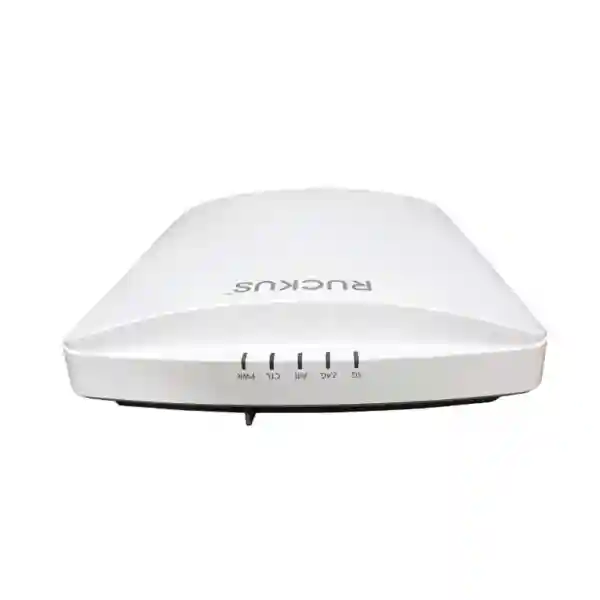
RUCKUS R750 Indoor Access Point
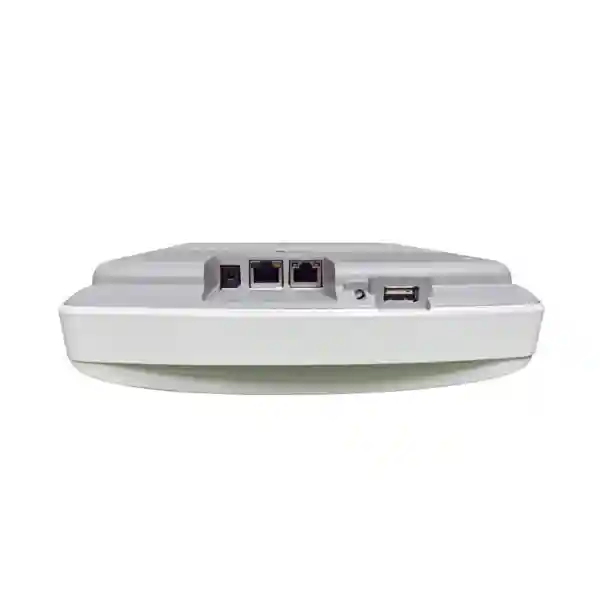
The RUCKUS R750 Indoor Access Point is designed for indoor environments where many users, devices and applications must share wireless capacity without turning network planning into guesswork. RUCKUS identifies the R750 as a dual-radio Wi-Fi 6 access point using 4×4:4 radio chains and streams, with maximum PHY rates of 1148 Mb/s on 2.4 GHz and 2400 Mb/s on 5 GHz for a combined maximum of 3548 Mb/s. It also includes one 2.5 Gigabit Ethernet interface, one 1 Gigabit Ethernet interface, BeamFlex adaptive antenna technology, ChannelFly, SmartMesh and onboard IoT support. For a buyer, those specifications are only the starting point: the right result also depends on client density, floor layout, PoE design, cabling, switch capacity, controller choice, security policy and local radio regulations.
4×4:4 Dual Radio
Up to 3548 Mb/s PHY
2.5GbE + 1GbE
Buyer Snapshot
Best evaluated for offices, education, hospitality, public venues and other indoor networks where high client counts, application diversity and managed Wi-Fi are important.
For a quote, provide the site size, floors, expected users, current switch model, controller preference, required quantity, delivery country and whether installation or configuration support is needed.
What the RUCKUS R750 Is Designed to Do
Business wireless networks are rarely limited by a single headline speed. The more difficult problem is maintaining predictable service when many different clients compete for airtime, users move through the building, cloud applications generate continuous traffic, guest devices join and leave, and IoT endpoints remain connected in the background. The RUCKUS R750 addresses that class of deployment as a Wi-Fi 6 access point with OFDMA and MU-MIMO capabilities, adaptive antenna technology and multigigabit wired connectivity. These features are intended to improve how wireless capacity is used, but practical performance still depends on the radio environment, channel plan, endpoint capabilities and how the access point is connected to the wired network.
RUCKUS lists the R750 for education, hospitality, office and retail environments, public venues, libraries, cafeterias, meeting rooms, lobbies and similar spaces. That makes it relevant when buyers are searching for terms such as RUCKUS R750 supplier, RUCKUS R750 price, RUCKUS R750 Wi-Fi 6 access point, RUCKUS R750 dealer, R750 2.5GbE access point, enterprise Wi-Fi access point, high-density indoor Wi-Fi and RUCKUS R750 installation support. The right purchasing question is not simply whether the model is powerful. It is whether the radio design, controller environment, switch uplink, power method and client profile fit the intended site.
FourTeck can help a buyer frame that decision around practical project information rather than unsupported performance promises. A quotation discussion should cover quantities, required management platform, existing RUCKUS environment if any, planned SSIDs, guest access, VLAN design, PoE availability, 2.5GbE switching, structured cabling and rollout location. Availability, warranty route, accessories and regional part-number suitability should be confirmed at quotation stage rather than assumed from a generic product listing.
Wireless Platform
Wi-Fi 6 with IEEE 802.11a/b/g/n/ac/ax support, dual 2.4 GHz and 5 GHz radios and 4×4:4 radio chains and streams.
Maximum PHY Rates
Up to 1148 Mb/s at 2.4 GHz and 2400 Mb/s at 5 GHz, with a listed combined maximum PHY rate of 3548 Mb/s.
Wired Connectivity
One 2.5 Gigabit Ethernet port and one 1 Gigabit Ethernet port help align the AP with multigigabit-capable switching designs.
Client Scale
RUCKUS lists support for up to 1024 concurrent users. Real design capacity depends on traffic type, airtime use, client radios and service expectations.
RF Technologies
BeamFlex, ChannelFly, PD-MRC and more than 4,000 antenna patterns per band are listed by RUCKUS for the R750 platform.
Management Options
Controller support includes RUCKUS SmartZone, RUCKUS Unleashed, ZoneDirector and standalone operation, subject to deployment and software requirements.
Verified R750 Capabilities and Buyer Relevance
| Specification | Manufacturer-listed detail | What to confirm in a project |
|---|---|---|
| Product type | Indoor access point | Indoor mounting position, ceiling conditions and coverage objectives. |
| Wi-Fi generation | Wi-Fi 6, IEEE 802.11a/b/g/n/ac/ax | Client mix, legacy device needs and whether newer 6 GHz or Wi-Fi 7 capability is required. |
| Radio design | Dual radio, 4×4:4 | AP density, channel reuse, interference, roaming and capacity targets. |
| Maximum PHY | 1148 Mb/s at 2.4 GHz; 2400 Mb/s at 5 GHz; 3548 Mb/s combined | Do not treat PHY rate as application throughput; client radios, RF quality and wired backhaul affect usable performance. |
| Ethernet | 1 x 2.5 GigE and 1 x 1 GbE | Switch port capability, cabling standard, uplink oversubscription and PoE budget. |
| Client count | Up to 1024 concurrent users | Design around active users and application demand rather than maximum association count alone. |
| RF features | BeamFlex, ChannelFly, SmartMesh, PD-MRC | Confirm firmware, controller and design requirements for the intended feature set. |
| IoT | IoT Onboard | Define which IoT workflows are actually required and verify compatibility before procurement. |
Before You Buy: Coverage, Switching, PoE and Management
A high-capacity access point should not be purchased in isolation from the rest of the network. Start with the building and client requirement. A floor plan, user count, device count, wall materials, ceiling height, meeting-room density, guest areas, application mix and known interference sources all influence AP quantity and placement. If the project is replacing older access points, record the problems with the existing environment rather than assuming a one-for-one replacement. Some sites have too few access points and create oversized cells; others have enough hardware but poor channel planning, weak cabling or insufficient switch capacity.
The 2.5 Gigabit Ethernet interface is useful only when the wired network can support it. Check whether the access switch provides multigigabit Ethernet on the intended ports, whether the installed cabling supports the required link rate in the real building, and whether the switch uplinks can carry aggregate traffic from multiple APs. Power must also be planned according to the selected R750 variant, switch capability and manufacturer guidance. If injectors are being considered, include them in the bill of materials rather than discovering a power gap after delivery.
Management choice matters equally. Existing RUCKUS customers may already operate SmartZone, Unleashed or another supported control model. New deployments should decide who will create SSIDs, assign VLANs, manage guest access, apply firmware, monitor alerts, maintain administrator credentials and document changes. A multi-site customer may value centralized visibility; a smaller site may have different operational priorities. The R750 can fit several management approaches, but the correct choice depends on the wider environment rather than the AP alone.
Finally, confirm local radio-domain requirements and the regional part number before ordering. Country regulations influence available channels, transmit behavior and permitted frequency use. Buyers comparing R750 price listings from different markets should therefore look beyond the model name and confirm the offered part number, warranty handling, included accessories, licensing or controller dependencies and the exact commercial terms. This is particularly important for cross-border procurement across the UAE, Africa, East Africa, West Africa and Kuwait.
RUCKUS R750 Indoor Access Point Dubai
Customers searching for a RUCKUS R750 Indoor Access Point Dubai supplier are usually trying to solve one of several practical problems: an office needs more reliable Wi-Fi during busy periods, a hospitality property needs better coverage across common areas, a school or training center needs more capacity for many simultaneous devices, or an IT integrator is preparing a bill of materials for a commercial project. The R750 is relevant to these enquiries because it is a Wi-Fi 6 4×4:4 indoor AP with a listed combined maximum PHY rate of 3548 Mb/s, BeamFlex adaptive antenna technology, ChannelFly and a 2.5 Gigabit Ethernet port. Those figures help define the platform, but a Dubai deployment should still be designed around actual floor plans, user density and the wired network behind the APs.
For offices in multi-tenant buildings, meeting-heavy workplaces, retail environments, education sites and hospitality spaces, the most useful pre-sales discussion is about capacity and placement rather than a single coverage number. Concrete walls, glass partitions, equipment rooms, neighboring wireless networks and floor-to-floor layouts can change RF behavior significantly. Buyers should identify critical areas such as conference rooms, reception zones, classrooms, guest lounges, payment areas and high-use workspaces, then decide whether a predictive design or on-site RF survey is appropriate. When multiple APs are required, roaming behavior, channel reuse and transmit-power planning become part of the same design.
Dubai buyers should also confirm switching and power. The R750 includes a 2.5GbE interface, so a multigigabit-capable access switch can prevent the wired edge from becoming an unnecessary constraint in suitable deployments. PoE budget, cable quality, switch uplink capacity and VLAN design should be reviewed together. For security, separate employee, guest and device networks where the business requirement calls for it, and define who will manage firmware, SSIDs, authentication and monitoring after handover. If the site already uses RUCKUS management, the existing platform should be included in the enquiry.
When requesting a RUCKUS R750 Dubai price or quotation, provide quantity, deployment location, existing switch details, controller preference, expected client count, required accessories and target delivery date. FourTeck can use those details to discuss sourcing and project fit without assuming stock or delivery timing before confirmation. Buyers can also compare other indoor wireless approaches through FourTeck’s UAE wireless catalog, including the Grandstream GWN7664E Wi-Fi 6 access point, which is useful when the project is still at the vendor-selection stage rather than locked to RUCKUS.
RUCKUS R750 Indoor Access Point UAE
A RUCKUS R750 Indoor Access Point UAE enquiry can come from a single-office upgrade, a multi-emirate rollout, a systems integrator preparing project pricing or an organization standardizing wireless infrastructure across branches. In each case, the same model can be evaluated differently. A small corporate floor may prioritize stable roaming and meeting-room performance, while a campus, hotel or public-facing facility may be more concerned with peak user density and consistent policy control. The R750’s dual-radio Wi-Fi 6 design, 4×4:4 streams, 2.5GbE interface and management options give network teams a capable platform, but the procurement scope should define the operating environment clearly.
For UAE deployments, start by separating coverage from capacity. Coverage asks whether a usable signal reaches the required areas. Capacity asks whether the AP and surrounding design can serve the number of active users and their traffic. A training room filled with laptops has a different requirement from a corridor with occasional mobile users. A hospitality lobby with guests, staff devices and IoT endpoints behaves differently from a private office. Instead of using a generic AP-per-square-meter formula, review active client estimates, application types, channel availability, building materials and expected growth. This helps avoid both under-deployment and unnecessary hardware.
Procurement should also include regional suitability. Confirm the exact part number, radio domain, warranty route, mounting accessories, power requirements and controller or subscription implications for the supplied unit. If an organization already has RUCKUS SmartZone, Unleashed or ZoneDirector infrastructure, include versions and architecture details so compatibility can be checked. If it is a new RUCKUS environment, decide where management responsibility will sit and what visibility is required for multiple sites. Documenting these points before quotation reduces surprises during implementation.
FourTeck’s UAE site includes additional wireless references for buyers comparing architecture and generation choices. The business Wi-Fi access point solutions overview can help frame questions about density, PoE, cabling and management, while the Grandstream GWN7673 Wi-Fi 7 access point provides a useful newer-generation reference when a buyer is deciding whether a Wi-Fi 6 R750 deployment still matches the project lifecycle. These alternatives are not substitutes by default; they are comparison points for defining the requirement accurately.
RUCKUS R750 Indoor Access Point Uganda
Organizations researching the RUCKUS R750 Indoor Access Point Uganda often need dependable indoor wireless for offices, education, hospitality, clinics, public-facing facilities or multi-branch businesses. The most productive buying process begins with the site requirement rather than with a claim that one access point can cover an entire building. The R750 is built for demanding Wi-Fi 6 environments, but Uganda projects should still consider the number of active users, room layout, wall construction, switch infrastructure, structured cabling, power resilience and how the wireless system will be managed after installation.
For a new office or campus, map the areas that require reliable connectivity and identify high-use zones such as meeting rooms, teaching spaces, reception areas, libraries, common areas and operational workspaces. If the building has multiple floors or long corridors, plan AP placement so roaming and channel reuse can be tuned rather than relying on maximum transmit power. If the environment already has legacy Wi-Fi, document coverage complaints, overloaded areas and existing cabling routes before replacing hardware. A modern AP cannot correct damaged Ethernet cabling, poor switch uplinks or an unplanned RF design by itself.
The R750’s 2.5 Gigabit Ethernet interface makes switch selection important. Buyers should confirm whether the access-layer switch supports multigigabit operation, sufficient PoE and the required number of powered ports. Where bandwidth, power quality or uplink capacity is constrained, the design should account for those factors instead of assuming the headline wireless PHY rate will be available to applications. Network segmentation should also be planned for staff, visitors, voice, IoT or other device groups where appropriate. The chosen RUCKUS management method should match the skills and operational model of the organization.
FourTeck maintains an Uganda-focused technology site for business networking and IT enquiries. Buyers can review FourTeck Uganda networking and business IT solutions and use that regional path when discussing quantity, city, project type and support expectations. A useful R750 Uganda quote request should include the deployment city, number of APs, expected users, existing switch model, controller preference, cabling status and whether site survey, configuration or installation assistance is part of the requirement. This creates a clearer basis for comparing supply options and prevents unsupported assumptions about stock, warranty or delivery.
RUCKUS R750 Indoor Access Point Kampala
A RUCKUS R750 Indoor Access Point Kampala project is often more specific than a country-wide procurement enquiry. Kampala organizations may be upgrading a headquarters, fitting out a new office floor, improving Wi-Fi in a hotel or education facility, or replacing consumer-grade wireless equipment that struggles with business traffic. In these situations, the R750 should be treated as part of a complete access network rather than as a stand-alone box. Its Wi-Fi 6 radio platform, BeamFlex antenna system, ChannelFly, 4×4:4 streams and 2.5GbE connectivity provide strong technical foundations, but placement, switching and management still determine the user experience.
For a Kampala office, first identify how people actually use the space. Open work areas may have many active laptops and phones during the day; meeting rooms can create short, intense peaks when everyone joins video calls; reception and waiting areas may need guest access; management and finance teams may require stricter network segmentation; and shared buildings can introduce neighboring Wi-Fi networks that affect channel planning. These use patterns should influence AP count, channel selection and SSID design. A predictive plan or physical survey can be valuable when walls, floors and adjacent networks make the RF environment difficult to estimate.
The wired side should be reviewed at the same time. If the project expects to make use of the R750’s multigigabit uplink, confirm suitable switch ports and cabling. Check the total PoE budget across all planned APs and any other powered devices. If the network switch also carries IP phones, cameras or other PoE endpoints, do not size power based only on port count. VLANs, uplink capacity and firewall rules should be part of the network design, especially when guest Wi-Fi and business applications share the same infrastructure.
When requesting a RUCKUS R750 Kampala price, it is useful to provide a floor plan or approximate area, number of floors, current AP count, peak users, critical rooms, switch make and model, and whether a RUCKUS controller already exists. These details help distinguish a simple hardware purchase from a deployment project. FourTeck’s Uganda channel can support the enquiry path without assuming a local warehouse or immediate availability. The focus should remain on correct part selection, a clear bill of materials and realistic implementation planning.
RUCKUS R750 Indoor Access Point Arua
Buyers searching for the RUCKUS R750 Indoor Access Point Arua may be supporting a branch office, school, hospitality property, healthcare facility, NGO environment, commercial site or other indoor network that needs more predictable Wi-Fi than a basic router can provide. For these projects, the main planning challenge is often not selecting the highest specification on paper. It is making sure the access point, switching, cabling, power, internet service and management approach all work as one system. The R750’s Wi-Fi 6 features can improve wireless efficiency, but the result depends on the quality of the surrounding infrastructure.
Arua projects should begin by defining the areas that matter most for daily operations. If a site includes offices, classrooms, reception areas, meeting spaces, guest rooms or service counters, list the estimated users and device types in each zone. Identify walls, storage areas, equipment rooms or long distances that could influence RF propagation. Rather than placing an AP where it is easiest to run a cable, choose locations based on coverage and client demand, then route cabling to support the design. Where multiple access points are needed, channel planning and roaming become important.
Procurement should account for the R750’s wired requirements and for local operating constraints. Verify switch PoE capacity, uplink speed, cabling condition and power protection. If the site experiences power interruptions, network resilience planning may include UPS capacity for switches, controllers and upstream equipment; the access points cannot remain available if their power source or network path is down. If centralized management is used, confirm how administrators will reach and monitor the site and what happens when the WAN connection is interrupted. These are operational questions rather than product marketing points, but they strongly affect the value of the deployment.
For an R750 Arua quotation, include the delivery destination, quantity, desired management method, existing RUCKUS equipment if any, switch details and expected deployment schedule. If installation support is required, describe the cabling status and building type. FourTeck can use the Uganda regional channel to discuss sourcing and project planning while confirming commercial details separately. Buyers should request the exact regional part number and warranty route rather than relying on a part number copied from a listing in another country.
RUCKUS R750 Indoor Access Point Mbarara
The RUCKUS R750 Indoor Access Point Mbarara can be considered for organizations that need managed indoor Wi-Fi across professional, educational, hospitality, healthcare, retail or branch environments. A typical buyer may be comparing RUCKUS R750 price options, replacing older APs, planning a new office, or preparing a tender that calls for Wi-Fi 6 and multigigabit connectivity. The R750 offers a verified 4×4:4 Wi-Fi 6 platform, a combined maximum PHY rate of 3548 Mb/s, BeamFlex, ChannelFly and a 2.5 Gigabit Ethernet port. Those capabilities should be translated into a site design rather than treated as a guarantee of speed everywhere in the building.
For Mbarara deployments, define peak periods as well as average usage. A training room, clinic waiting area, hotel common space or business meeting zone can experience sudden concentration of devices even if the building is quiet at other times. Wi-Fi 6 features such as OFDMA and MU-MIMO are relevant in multi-client conditions, but client capability and airtime demand still influence real performance. Place access points to serve the zones where users actually work, and do not use high transmit power as a substitute for correct density and channel planning.
The wired network deserves equal attention. Confirm that switch ports can provide the required power and, where needed, multigigabit Ethernet. Review uplinks between access and core switches, especially when several APs, cameras, phones and business systems share the same infrastructure. If the site is using VLANs, decide which SSIDs map to which networks and how the firewall will control traffic between them. Guest access should be designed deliberately so visitors do not receive unintended access to internal resources.
A useful RUCKUS R750 Mbarara quote request should state whether the purchase is hardware-only or part of a wider rollout. Include the number of APs, site type, approximate area, floors, expected active clients, switch model, controller choice and any requirement for mounting, cabling or configuration. FourTeck can use these details to discuss suitable sourcing and deployment support through its Uganda-focused channel. Exact availability, delivery timing and warranty terms should be confirmed in the quotation rather than assumed from generic online listings.
RUCKUS R750 Indoor Access Point Gulu
A RUCKUS R750 Indoor Access Point Gulu enquiry may involve a business branch, education facility, hospitality site, healthcare environment, NGO office or public-facing organization that needs stronger wireless management and capacity. The model is a high-capability indoor Wi-Fi 6 access point, but the most important buying decision is whether the full network is ready for it. The R750’s 4×4:4 radios, 2.5GbE connectivity, BeamFlex and support for many associated clients provide a strong platform for busy spaces; however, application performance can still be limited by internet bandwidth, switching, cabling, interference or poor AP placement.
For Gulu sites, begin with operational priorities. Identify where reliable Wi-Fi is essential, which applications must remain responsive and whether staff move between areas while connected. A school may prioritize classrooms and administration; a hotel may need guest areas and back-office coverage; a clinic may require stable access for staff systems while isolating visitor traffic. These differences affect SSID design, AP placement and security policy. When there are multiple buildings or long distances, do not assume an indoor AP should be stretched beyond the role for which it was designed; consider the broader architecture and appropriate products for each area.
Power and support planning are also important. Confirm PoE capacity at the switch and consider backup power for the network equipment if service continuity is required. Where remote IT teams will manage the site, establish secure administrative access, configuration backups, firmware processes and monitoring responsibilities. If SmartMesh is part of the design, verify that it is appropriate for the site rather than using wireless backhaul as a default replacement for structured cabling. Wired connections are normally easier to capacity-plan when cabling is practical.
For a RUCKUS R750 Gulu supplier or price enquiry, send the exact required quantity, project location, timeline, current network details and whether a regional part number has already been specified. If the request comes from a tender, include the technical compliance schedule so that quoted hardware can be checked against the requirement. FourTeck can support the discussion through its Uganda business IT channel and keep availability, delivery and warranty statements tied to the actual quotation.
RUCKUS R750 Indoor Access Point Kenya
The RUCKUS R750 Indoor Access Point Kenya is relevant to buyers planning high-density business Wi-Fi in corporate offices, education, hospitality, healthcare, retail, public venues and multi-site environments. Searchers commonly compare RUCKUS R750 supplier options, R750 price, Wi-Fi 6 access points, RUCKUS dealer support, controller compatibility and installation services. For procurement teams, the strongest approach is to separate confirmed product capability from reseller marketing. RUCKUS lists the R750 as a 4×4:4 Wi-Fi 6 indoor AP with maximum PHY rates of 1148 Mb/s at 2.4 GHz and 2400 Mb/s at 5 GHz, plus 2.5GbE and 1GbE Ethernet interfaces.
Kenya projects vary significantly by site. A Nairobi corporate office may concentrate users in meeting rooms and open-plan floors, while a hotel, university or branch network can have very different mobility and guest-access requirements. Buyers should therefore share a floor plan, expected active clients, application mix and known problem areas before finalizing quantity. If replacing existing APs, record where users experience weak signal, roaming issues or congestion. This helps determine whether the problem is coverage, capacity, interference or the wired network. Adding more APs without understanding the cause can create additional co-channel contention instead of fixing the issue.
The 2.5GbE uplink makes access switching a key part of the design. Confirm multigigabit port capability if it is needed, sufficient PoE budget, suitable cabling and enough upstream capacity. If the deployment is part of a tender, include required controller support, security settings and accessories in the compliance review. RUCKUS lists SmartZone, Unleashed, ZoneDirector and standalone support for the R750, but software versions and licensing arrangements should be checked for the actual environment.
FourTeck provides a Kenya-focused business IT path for networking enquiries. Buyers can review FourTeck Kenya IT and networking solutions and submit the city, quantity and project details for quotation discussion. If the requirement is still being defined, FourTeck’s UAE catalog also provides a useful technology comparison through the Grandstream GWN7672L tri-band Wi-Fi 7 access point, which can help buyers consider whether a newer wireless generation or different port design better matches the project. The comparison should be based on requirements, not on a simple speed headline.
RUCKUS R750 Indoor Access Point Kuwait
A RUCKUS R750 Indoor Access Point Kuwait enquiry typically focuses on business Wi-Fi performance, indoor coverage, user density, project pricing and controller integration. Offices, clinics, education sites, hospitality environments, retail operations and service organizations may all need managed wireless that remains stable when many devices are active. The R750 is designed for that class of environment with Wi-Fi 6, 4×4:4 radios, BeamFlex adaptive antennas and a 2.5 Gigabit Ethernet port. The product specification is strong, but a Kuwait deployment should still be engineered around the building, switch infrastructure and expected client behavior.
Indoor environments in Kuwait can include dense office layouts, meeting rooms, concrete structures, hospitality floors and commercial spaces with many neighboring wireless networks. For these projects, use a floor plan to identify capacity hotspots and potential RF obstacles. Where several R750 units are deployed, plan channel reuse and transmit settings so neighboring APs complement rather than overpower one another. If the site supports guest users, define whether guest traffic should be isolated from staff and business devices. If voice or real-time applications depend on Wi-Fi, roaming and QoS requirements should be stated before configuration.
Switching and PoE should be part of the same bill of materials. Confirm whether the existing access switch supports the required PoE level and multigigabit Ethernet. Review cabling, rack capacity and uplinks where multiple high-performance APs are planned. The R750 supports several RUCKUS management approaches, so buyers should state whether they already have SmartZone, Unleashed or ZoneDirector, or whether the project needs a new management design. This prevents a hardware quotation from overlooking the operational platform required to run the network.
FourTeck’s Kuwait site covers business Wi-Fi, switching and network infrastructure. Buyers can use FourTeck Kuwait for networking and wireless enquiries and provide the exact R750 quantity, Kuwait delivery location, current network equipment and project schedule. If the project team is comparing wireless architectures, the Grandstream GWN7672WM wall-mounted Wi-Fi 7 access point is another reference for environments where mounting style, 6 GHz support or newer Wi-Fi features may affect the decision. Exact availability and warranty terms for any model should be confirmed in the commercial quote.
RUCKUS R750 Indoor Access Point Ghana
The RUCKUS R750 Indoor Access Point Ghana can fit projects where organizations need structured, centrally manageable indoor Wi-Fi rather than a collection of independent consumer routers. Business offices, schools, hotels, healthcare sites, retail locations and multi-user facilities may search for RUCKUS R750 Ghana supplier options when they are trying to improve capacity, roaming, segmentation and wireless reliability. The R750’s verified Wi-Fi 6 capabilities include dual 4×4:4 radios, BeamFlex, ChannelFly, SmartMesh, a 2.5GbE port and support for multiple RUCKUS management platforms.
For Ghana deployments, the most important early step is to document the environment. Identify the number of users and devices, the areas where wireless service is essential, internet bandwidth, existing switches, current cabling and any requirement for guest Wi-Fi, VoIP, IoT or business applications. A large building may require multiple APs even when individual units have strong radio capability. Conversely, adding too many APs without careful channel planning can increase contention. Coverage design should therefore consider walls, floors, room use, neighboring networks and the expected concentration of active clients.
Power and switching also affect the result. If the R750 is connected to a switch that offers only 1GbE, that may become part of the performance ceiling in heavy-use scenarios; if multigigabit performance is required, verify the switch port and cabling. Check the total PoE budget for all APs and other powered devices. For multi-site operations, decide whether management should be centralized and how configuration changes, firmware updates and monitoring will be handled. Security design should separate user groups where needed rather than placing every device on one flat network.
FourTeck’s Ghana site explicitly includes networking, wireless access points and structured infrastructure among its business IT solution areas. Buyers can explore FourTeck Ghana wireless and networking solutions and submit the exact model, quantity, city, project type and support scope for a quotation discussion. A strong R750 Ghana enquiry should also state whether the organization already uses RUCKUS controllers or access points, because that can influence compatibility and rollout planning. Commercial details such as availability, warranty, regional SKU and delivery schedule should be confirmed per quotation.
RUCKUS R750 Indoor Access Point Nigeria
A RUCKUS R750 Indoor Access Point Nigeria project may range from a single-floor business upgrade to a multi-site enterprise, education, hospitality, retail or service deployment. Buyers often search by exact model because they already have a bill of materials or existing RUCKUS network, while others are still comparing enterprise Wi-Fi 6 platforms. In either case, the R750 should be evaluated around its verified specification: 4×4:4 dual-radio Wi-Fi 6, a combined maximum PHY rate of 3548 Mb/s, 2.5GbE plus 1GbE interfaces, BeamFlex, ChannelFly, SmartMesh and support for multiple management choices.
Nigeria deployments can differ substantially in site scale and operating conditions, so a generic coverage claim is not enough. A corporate floor with many video meetings, a hotel with guest traffic, a school with classrooms, and a branch office with a smaller user base create different demands. Determine peak active clients, applications, floor layout and critical areas first. If the building has several floors or dense partitions, use a proper wireless design instead of positioning APs based only on convenience. When users move between areas, roaming expectations should be discussed during design and testing.
The network behind the access points must also be sized appropriately. Check PoE requirements, switch port speeds, uplink bandwidth and structured cabling. If the site needs high availability, consider how switch power, upstream internet and management systems are protected, since wireless service depends on those components. For security, map staff, guest, IoT and operational devices to suitable SSIDs and VLANs where appropriate. Central management can simplify multi-site policy, but the chosen RUCKUS platform should fit existing skills, licensing and support arrangements.
FourTeck maintains a Nigeria-focused technology site for IT service and product enquiries. Buyers can use FourTeck Nigeria for business IT and networking discussions and include the exact R750 quantity, delivery city, project schedule, switch model and management platform in the request. If the requirement is not vendor-locked, comparing the R750 with a current Wi-Fi 7 design such as the Grandstream GWN7670E indoor access point can help clarify whether Wi-Fi generation, client count, uplink architecture or long-term standardization is most important. Final selection should follow the project requirement rather than a single feature.
RUCKUS R750 Indoor Access Point Seychelles
The RUCKUS R750 Indoor Access Point Seychelles can be evaluated for hospitality, office, education, commercial and other indoor sites that need managed Wi-Fi 6 with strong multi-client capability. Buyers may be researching an exact R750 model for a resort or business project, looking for a supplier who can coordinate cross-border procurement, or comparing access points for an upgrade from older wireless infrastructure. The R750 provides a high-capability indoor platform with 4×4:4 radios, BeamFlex, ChannelFly, 2.5GbE and centralized-management options, but island logistics and project planning make it especially important to define the complete bill of materials before procurement.
For Seychelles deployments, the wireless design should distinguish indoor guest, staff and operational areas. Hospitality properties can have a mix of rooms, lobbies, restaurants, meeting spaces and back-office zones, each with different user density and construction materials. A business office may have fewer areas but higher dependence on cloud applications and video collaboration. In both cases, use floor plans and site information to determine AP count. Do not assume the same quantity will work across buildings with different walls, ceiling heights or room layouts. Where roaming is important, test movement paths and client behavior as part of handover.
Procurement should consider spares, mounting accessories, power requirements, regional part number and warranty route before shipment. The 2.5GbE interface is valuable when the switch and cabling can support it, so include access-switch capability in the design rather than purchasing APs first and reviewing the wired network later. If replacement hardware would have a longer logistics cycle, discuss whether the project requires spare units or a support arrangement. These are operational choices that depend on the customer’s service expectations and should be confirmed commercially.
A useful RUCKUS R750 Seychelles quote request should include island or delivery destination, number of units, site type, user count, switch model, controller environment and desired deployment date. If an installer or integrator is involved, include who will handle cabling, mounting, configuration, testing and ongoing support. FourTeck can review the requirement through its wider regional channels without representing unverified local stock or office presence. Buyers should insist on confirmed regional suitability and documented commercial terms before ordering, particularly where the equipment will be imported for a project with fixed implementation dates.
Common RUCKUS R750 Buying Questions
Is the RUCKUS R750 Wi-Fi 6?
Yes. RUCKUS lists the R750 as a Wi-Fi 6 indoor access point supporting IEEE 802.11a/b/g/n/ac/ax on the 2.4 GHz and 5 GHz bands. It does not use a 6 GHz radio, so buyers specifically requiring Wi-Fi 6E or Wi-Fi 7 should compare newer RUCKUS or alternative models before purchasing.
What is the maximum wireless rate?
The manufacturer lists maximum PHY rates of 1148 Mb/s at 2.4 GHz and 2400 Mb/s at 5 GHz, for a combined maximum PHY rate of 3548 Mb/s. PHY rate is not the same as real application throughput. Protocol overhead, interference, client radio capability, distance, channel width and wired-network capacity all affect real performance.
How many clients can connect?
RUCKUS lists up to 1024 concurrent users for the R750. Network designers should not treat that as a recommended number of active, high-throughput clients on one AP. The practical design target depends on what connected users are doing, the airtime each application consumes and the service level expected.
Does the R750 have a multigigabit Ethernet port?
Yes. The listed Ethernet interfaces include one 2.5 Gigabit Ethernet port and one 1 Gigabit Ethernet port. To benefit from multigigabit connectivity, confirm the access switch, cabling and upstream network are designed to support the intended throughput.
Which RUCKUS management platforms are supported?
RUCKUS lists SmartZone, RUCKUS Unleashed, ZoneDirector and standalone support for the R750. Actual compatibility can depend on software version and deployment architecture, so an existing RUCKUS environment should be documented before a quote is finalized.
Is the R750 appropriate for offices and hotels?
RUCKUS lists office, retail, hospitality, education and public-venue categories among the R750 use environments. Suitability for a specific office or hotel depends on site design, user density, coverage requirements, management preferences and the wired network. A site survey or floor-plan review is often more valuable than a generic coverage estimate.
Should I replace each old AP with one R750?
Not automatically. A one-for-one replacement can preserve old placement mistakes. Review the current RF design, user complaints, client density, cable locations and new capacity targets first. A redesigned placement plan may use a different AP count or different mounting positions.
What information should I provide for an R750 quotation?
Provide the exact model, quantity, delivery country and city, site type, floor count, approximate area, expected active users, existing switch model, current RUCKUS controller if any, cabling status, guest Wi-Fi requirements and whether installation or configuration support is required. This makes the quotation more useful and reduces the chance that important accessories or infrastructure dependencies are missed.
Related Wireless Products and Planning References
The R750 is a Wi-Fi 6 product and may be the correct fit when an organization already uses RUCKUS or wants a proven 2.4 GHz and 5 GHz design. If the requirement is still open, reviewing other indoor access points can help define which features matter most. The links below are relevant FourTeck UAE wireless references rather than claims that one model is automatically better for every site.
Grandstream GWN7630
A Wi-Fi 5 business AP reference for buyers comparing an older-generation managed wireless platform with the Wi-Fi 6 R750.
Grandstream GWN7660EM
A compact Wi-Fi 6 access point and extender reference for smaller coverage-extension scenarios with different mounting and power expectations.
Grandstream GWN7673
A dual-band Wi-Fi 7 reference for organizations evaluating whether newer client features matter more than remaining on a Wi-Fi 6 architecture.
Grandstream GWN7672L
A tri-band Wi-Fi 7 reference that helps frame questions around 6 GHz, wired uplink capacity and future endpoint strategy.
Grandstream GWN7672WM
A wall-oriented Wi-Fi 7 option to consider when physical placement requirements differ from a conventional indoor ceiling AP design.
Grandstream GWN7664E
A higher-capacity Wi-Fi 6 reference useful when comparing vendor ecosystems, port design, management options and client requirements.
Grandstream GWN7670E
A Wi-Fi 7 indoor AP reference for buyers deciding whether a new deployment should remain on Wi-Fi 6 or move to a newer standard.
Decision Recap: When the R750 Makes Sense
The RUCKUS R750 is most compelling when the requirement is for a proven indoor Wi-Fi 6 platform with 4×4:4 radios, adaptive antenna technology, support for dense client environments, a 2.5GbE wired interface and integration with RUCKUS management options. It is less useful to evaluate the model only by maximum PHY rate. A good decision considers the installed RUCKUS ecosystem, current client devices, expected lifecycle, switch capability, coverage design, regional SKU and support model.
If your organization is already standardized on RUCKUS, the R750 can be evaluated as an expansion or replacement within that architecture after software and controller compatibility are checked. If the project is greenfield, compare the R750 against current Wi-Fi 6E and Wi-Fi 7 alternatives based on actual business requirements rather than generation labels alone.
Quotation Checklist
✓ Exact model and required quantity
✓ Delivery country and city
✓ Building type, floors and approximate area
✓ Expected active users and device types
✓ Existing switch make, model and PoE capacity
✓ Existing RUCKUS controller or management platform
✓ Cabling status and multigigabit requirement
✓ Guest Wi-Fi, VLAN and security requirements
✓ Installation, configuration or survey scope
✓ Regional part number and warranty expectations
Talk to FourTeck About Your Wireless Requirement
Send the model, quantity, delivery location and basic site information so the discussion can move beyond a generic RUCKUS R750 price request. FourTeck can review the requirement in the context of switching, cabling, management and deployment planning, then confirm commercial details through the quotation process. For wider UAE equipment research, the FourTeck IT equipment catalog provides additional infrastructure references.
For regional enquiries, use the relevant FourTeck country site where available and include the city, quantity and intended use. This helps keep product availability, shipping, warranty and implementation discussions tied to the real destination instead of assuming that terms from one market automatically apply in another.

Reviews
There are no reviews yet.