
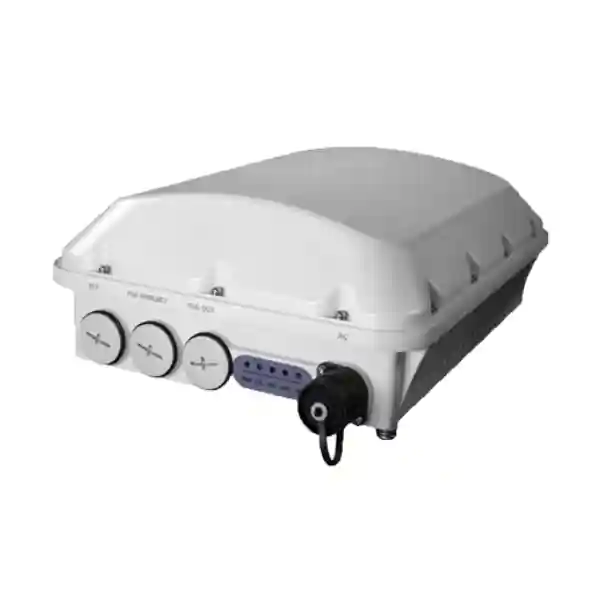
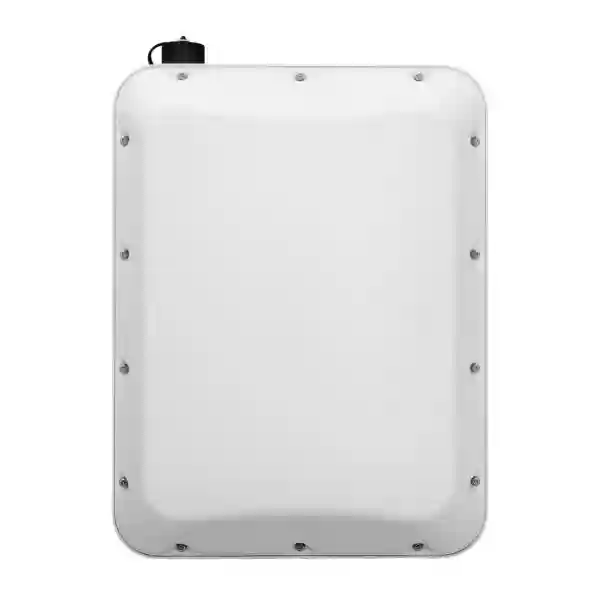
RUCKUS T750 Outdoor Access Point in Dubai
The RUCKUS T750 is built for outdoor wireless environments where client density, interference, coverage consistency and dependable backhaul matter. It delivers dual-band Wi‑Fi 6 with 4×4:4 radio chains and streams on both 2.4 GHz and 5 GHz, a combined maximum PHY rate of 3.548 Gbps, support for up to 1,024 clients per access point, BeamFlex+ adaptive antenna technology, WPA3 security support and an IP67-rated enclosure. For Dubai projects, FourTeck can help buyers review the complete deployment requirement rather than treating the access point as an isolated hardware purchase.
Confirm outdoor coverage area, expected concurrent devices, mounting height, power method, switch uplink capacity, controller platform, VLAN design and internet backhaul before ordering.
IEEE 802.11a/b/g/n/ac/ax with Wi‑Fi 6 operation on 2.4 GHz and 5 GHz.
Dual-radio 4×4:4 with MU-MIMO, OFDMA and adaptive radio-management features.
IP67-rated enclosure and published operating range from -40°C to +65°C.
2.5GbE Ethernet, additional Gigabit Ethernet and fiber interface options in the platform specification.
What the RUCKUS T750 is designed to solve
Outdoor wireless projects are rarely solved by adding one access point and increasing transmit power. The practical problem is usually a combination of user density, noisy RF conditions, wide coverage areas, mixed client capabilities, roaming, mounting constraints, uplink capacity and power availability. The T750 addresses this class of deployment with a high-capacity Wi‑Fi 6 radio design and RUCKUS adaptive RF technologies. BeamFlex+ uses multiple antenna patterns to help optimize signal direction, while ChannelFly and related radio-management features can help the WLAN adapt to changing interference conditions. For a buyer, the important point is not the feature name alone; it is whether the proposed design places the AP correctly, provides enough backhaul and applies appropriate channel planning for the site.
The T750 publishes a maximum PHY rate of 1,148 Mbps on 2.4 GHz and 2,400 Mbps on 5 GHz, producing a combined maximum of 3,548 Mbps. Those are radio link figures rather than guaranteed application throughput. Real performance depends on client capabilities, channel width, interference, airtime contention, signal level, controller configuration, uplink capacity, security overhead and the broader network. The access point can support up to 1,024 clients, but project sizing should be based on the expected active-device load and application profile rather than treating the maximum association figure as a recommended design target.
Typical T750 opportunities include hotel outdoor areas, school and university campuses, transport zones, event spaces, warehouse yards, resorts, public venues and enterprise compounds. In each case, FourTeck can help customers document what the wireless network must achieve before the hardware is quoted. Buyers who are also reviewing network security can explore FourTeck Firewall Dubai, while organizations planning implementation services can review FourTeck network and firewall service support as part of a wider infrastructure discussion.
Verified RUCKUS T750 highlights
4×4:4 Wi‑Fi 6 radios
Both 2.4 GHz and 5 GHz operate with four radio chains and four spatial streams, supporting high-capacity outdoor WLAN designs.
BeamFlex+ adaptive antennas
The internal omni-directional T750 antenna system supports more than 4,000 antenna patterns per band for adaptive RF behavior.
OFDMA and MU-MIMO
Wi‑Fi 6 scheduling and multi-user features are designed to improve efficiency where many modern clients share airtime.
WPA3 and WLAN security
The published feature set includes WPA3-Personal, WPA3-Enterprise, AES, 802.11i, OWE and wireless intrusion detection/prevention capabilities.
Outdoor environmental rating
IP67 protection and a wide published operating temperature range support deployments exposed to dust, rain and demanding outdoor conditions.
Flexible network connection
The platform provides a 2.5GbE port, additional Gigabit Ethernet connectivity and an SFP/SFP+ fiber interface, supporting different backhaul designs.
Deployment and compatibility planning
Before buying the T750, confirm the management platform and software path for the existing RUCKUS estate. The model is supported by RUCKUS One and has also been used with SmartZone and other RUCKUS management options. Compatibility should be checked against the specific controller release, existing AP models and intended firmware train. This is particularly important for mixed-generation WLANs because a controller upgrade that benefits one model can affect older access points. A quotation should therefore identify not only the access point quantity, but also the intended management platform, licensing requirement and any software work required during deployment.
Power and cabling should be planned at the same time. Outdoor APs are often mounted where electrical outlets are impractical, so PoE design, cable length, surge protection, grounding and weather-resistant termination need attention. If the design expects multigigabit throughput, the access switch must also provide the required Ethernet capability and switching capacity. Where copper distance or lightning exposure makes fiber preferable, the T750 platform’s fiber interface can be relevant, but the exact transceiver and installation design should be confirmed for the project.
Network segmentation is equally important. Guest Wi‑Fi, staff devices, point-of-sale systems, CCTV, operational devices and management traffic should not be placed into one unrestricted broadcast domain simply because they share the same access point. VLANs, authentication, firewall policy and monitoring need to be coordinated across wireless and wired infrastructure. FourTeck’s firewall deployment guidance for Dubai and perimeter firewall planning page provide useful context where an outdoor WLAN also requires controlled internet access and segmentation.
RUCKUS T750 Outdoor Access Point Dubai
Customers searching for the RUCKUS T750 Outdoor Access Point Dubai are usually planning a wireless project where ordinary indoor access points are not an appropriate fit. Common examples include hotel pool areas, resort grounds, school courtyards, university walkways, logistics yards, outdoor retail areas, transport facilities, event venues, construction compounds and large enterprise campuses. Dubai projects can combine heat, dust, outdoor exposure, reflective building surfaces and high numbers of mobile users, so the purchase decision should consider more than headline Wi‑Fi speed. The T750’s IP67 enclosure and published -40°C to +65°C operating range make it a purpose-built outdoor platform, while its dual 4×4:4 Wi‑Fi 6 radios provide substantial airtime capacity for compatible clients.
For a Dubai deployment, the first design question is the coverage objective. A public guest network serving a landscaped outdoor area is different from a warehouse yard where handheld scanners must remain connected while workers move between zones. A hospitality deployment may prioritize seamless roaming and user experience, while an event venue may focus on handling short periods of very high device density. FourTeck can help map the requirement into an access-point count, mounting approach, controller plan and backhaul design. A professional RF survey may be appropriate where site geometry, neighboring networks, elevation, metal structures or large open areas make prediction difficult.
Dubai buyers should also confirm how the T750 will connect to the switching environment. Its 2.5GbE interface can remove a one-gigabit bottleneck when the wireless load justifies multigigabit backhaul, but that benefit depends on a compatible switch port and correct cabling. PoE budget, grounding, outdoor cable routing and surge protection must be included in the bill of materials. The additional Gigabit Ethernet and fiber capability can also influence the design, especially at sites where cable distances or outdoor pathways make fiber attractive. None of these infrastructure details should be assumed from the AP model alone.
Procurement teams looking for a RUCKUS T750 supplier in Dubai can ask FourTeck to prepare a quotation around the actual project scope. Share the number of outdoor zones, expected users, existing RUCKUS controller or cloud platform, current switches, available PoE, desired SSIDs, VLAN requirements, internet bandwidth and target installation date. FourTeck can then align the product inquiry with related services and security requirements. The FourTeck product collection and Dubai quotation contact page provide the next steps for a structured request.
RUCKUS T750 Outdoor Access Point UAE
A search for RUCKUS T750 Outdoor Access Point UAE often comes from organizations that need a consistent outdoor WLAN design across several facilities rather than a single standalone hotspot. A UAE deployment can span headquarters, branches, schools, hospitality properties, logistics facilities or industrial sites in different emirates, so consistency in controller configuration, SSID naming, authentication, VLANs and monitoring can be as important as the access point hardware. The T750 supports Wi‑Fi 6 on both primary bands, OFDMA, MU-MIMO, BeamFlex+, ChannelFly and WPA3, giving network teams a platform designed for high-capacity outdoor connectivity.
For multi-site UAE projects, procurement should begin with a standard design template. The team should document which sites need outdoor coverage, expected device types, whether guest and corporate traffic are separated, how authentication is handled, which controller platform will manage the APs and what switch capabilities are available at each site. An access point that performs well at a new campus may be constrained at an older branch if the switch only provides a slower uplink or insufficient PoE. Likewise, a controller and firmware plan needs to accommodate every installed RUCKUS model if the estate is mixed.
Environmental exposure varies across the UAE. Coastal hospitality sites may need careful attention to mounting hardware and long-term exposure, while inland logistics facilities can present dust, heat and broad open spaces. Ports, transport yards and campuses may also require a combination of coverage and roaming. The T750’s outdoor enclosure and operating-temperature specification provide a strong foundation, but installation quality remains critical. Cable glands, grounding, lightning protection, physical security, pole or wall placement and accessible maintenance routes all influence reliability over time.
Organizations comparing suppliers should request a complete scope rather than a unit price alone. Ask whether the quotation includes the exact T750 variant, mounting components, PoE method, optics if fiber is used, management or support requirements, staging, configuration, installation, testing and documentation. Availability and lead time should be confirmed in writing when the purchase is ready. For broader UAE technology and networking inquiries, visit FourTeck UAE. Where network segmentation and internet-edge protection are part of the project, buyers can also review the FourTeck Dubai security-support overview before defining the final implementation scope.
RUCKUS T750 Outdoor Access Point Uganda
Businesses and institutions searching for the RUCKUS T750 Outdoor Access Point Uganda may be planning campus Wi‑Fi, hospitality coverage, education networks, logistics yards, healthcare compounds, enterprise facilities or public outdoor connectivity. The useful buying question is not simply whether the access point has enough headline speed. Uganda projects may include large compounds, buildings separated by open ground, mixed indoor and outdoor coverage, variable switch infrastructure and sites where physical access for maintenance is not always convenient. A design that considers mounting, power, backhaul and centralized management from the beginning can reduce later rework.
The T750 provides dual-band Wi‑Fi 6 with 4×4:4 streams on both 2.4 GHz and 5 GHz and a combined maximum PHY rate of 3.548 Gbps. It also supports up to 1,024 client associations, but network planners should size each radio cell according to active usage rather than the absolute maximum. For a school or university, for example, peak periods may occur between classes when many phones and laptops reconnect at once. A hotel may see heavy guest usage in outdoor dining and pool areas. A logistics operation may have fewer clients, but roaming stability for scanners or handheld terminals can be more important than raw client count.
Backhaul should be checked carefully at Ugandan sites. Where a building has multigigabit switching close to the outdoor area, the 2.5GbE port can be valuable. At larger compounds, fiber may be considered where copper distance or electrical exposure becomes a concern. The exact fiber architecture, optics and enclosure requirements should be engineered for the site. Power availability, UPS strategy and PoE budget should also be reviewed so the access point remains stable during expected operating conditions. Outdoor cable routing and grounding should be treated as part of the network design rather than an installation afterthought.
Procurement teams can use FourTeck Uganda to discuss regional sourcing and project requirements. When requesting a RUCKUS T750 quote in Uganda, provide the planned site, number of areas to cover, existing controller, switch model, PoE capability, user profile, desired SSIDs, authentication method and whether installation assistance is required. FourTeck can then help structure the bill of materials and identify questions that should be resolved before order placement, without assuming inventory, price, delivery time or warranty terms until those items are formally confirmed.
RUCKUS T750 Outdoor Access Point Kampala
Kampala buyers looking for the RUCKUS T750 Outdoor Access Point are often dealing with dense business environments where outdoor coverage must coexist with many nearby wireless networks, buildings, roads and changing user populations. Office compounds, hotels, universities, hospitals, retail destinations and institutional campuses may need Wi‑Fi across courtyards, parking areas, gardens, walkways or building-to-building spaces. In these settings, radio planning matters because simply increasing transmit power can increase interference and create uneven client behavior. The T750’s BeamFlex+ and ChannelFly features are designed to help the WLAN work more effectively in changing RF conditions, while Wi‑Fi 6 scheduling features improve airtime efficiency for modern devices.
A Kampala site survey should look at where users actually gather. A hotel guest area may need capacity at a restaurant terrace and pool rather than blanket coverage across every open square metre. A school may require stable connectivity around common areas and sports spaces, while an enterprise may prioritize parking, security posts and outdoor work zones. Mounting height, building orientation, tree cover, metal structures and neighboring transmitters can all affect the result. When possible, define performance objectives such as expected applications, minimum signal targets and roaming behavior before deciding the number of APs.
The wired network behind the AP needs equal attention. The T750 can use a 2.5GbE Ethernet connection, so switch selection and structured cabling should not be an afterthought. If the existing switch only provides one-gigabit connectivity, the WLAN can still operate, but the uplink can become a constraint under heavier aggregate load. PoE capability, surge protection, cable pathway and UPS coverage should be documented. For networks that separate guest, staff, CCTV and operational traffic, the switch and firewall should carry corresponding VLANs and policies so wireless access does not weaken the segmentation design.
For a Kampala procurement request, include the exact model name, desired quantity, site type, controller platform, preferred management approach and installation scope. A reseller quote should clarify whether accessories and services are separate from the AP hardware. FourTeck can coordinate Kampala inquiries through the Uganda regional FourTeck platform. If the project also needs a secure internet gateway, the design can be discussed alongside access control, guest-network isolation and firewall policies rather than solving wireless and security as unrelated projects.
RUCKUS T750 Outdoor Access Point Arua
Organizations searching for the RUCKUS T750 Outdoor Access Point Arua may have a different wireless challenge from a dense capital-city campus. Sites can include education compounds, hospitality properties, NGOs, healthcare facilities, warehouses, logistics operations and business premises with outdoor spaces between buildings. In such environments, the network often needs dependable coverage across distance while remaining maintainable with the switching, power and internet infrastructure available at the site. The T750’s outdoor-rated construction, adaptive antennas and Wi‑Fi 6 capacity make it relevant, but project success still depends on a realistic RF and backhaul design.
The most useful first step is to divide the site into coverage zones and identify what devices operate in each zone. Staff laptops and smartphones behave differently from rugged scanners, tablets, cameras or visitor devices. Some applications can tolerate a brief drop while a user moves, while voice, live operational apps or cloud workflows may need more consistent roaming. These differences influence AP spacing, mounting location and channel planning. A high client-capacity specification does not automatically mean one T750 should cover an entire compound; fewer stronger cells can still produce poor client uplink behavior or excessive contention if the coverage design is too broad.
Arua deployments may also benefit from early consideration of power resilience and physical serviceability. Where an access point is installed high on a pole or building, unplanned maintenance can become disruptive. Use suitable outdoor-rated cabling, grounding and surge protection, and confirm the PoE source can deliver the required power. If a long distance separates the AP from the nearest network room, a fiber approach may be preferable to stretching copper beyond its intended design. The T750 includes fiber-interface capability, but exact optics, cabling and enclosures should be selected for the specific architecture.
When requesting an Arua quote, list the number of buildings, approximate outdoor dimensions, existing switch locations, internet connection points, available UPS, current RUCKUS controller if any and expected user groups. FourTeck can use this information to prepare a more complete proposal through FourTeck Uganda. Buyers should request written confirmation of product availability, regional part number, warranty or support terms and delivery expectations at quotation stage rather than relying on assumptions from an online listing.
RUCKUS T750 Outdoor Access Point Mbarara
A RUCKUS T750 Outdoor Access Point Mbarara project may focus on universities, schools, hotels, healthcare campuses, manufacturing or distribution facilities, business compounds and outdoor public areas. These environments often combine indoor and outdoor wireless requirements, so it is useful to plan the T750 as part of a full WLAN rather than as a separate radio island. Users should be able to move between compatible indoor and outdoor access points with a consistent SSID, authentication and policy structure. That requires controller and firmware compatibility, matching security settings and thoughtful RF overlap at building entrances and transition areas.
The T750 supports SmartRoam alongside 802.11r/k/v-related mobility features, but client behavior still varies. Roaming decisions are often made by the endpoint, so a design should avoid both coverage holes and overly strong overlap that causes clients to remain attached to a distant access point. For Mbarara campuses, defining where movement occurs can improve placement. Walkways between buildings, courtyards, loading areas and hospitality spaces can be planned as roaming paths rather than treating the entire property as one undifferentiated coverage target.
Bandwidth planning should start with applications. General browsing, learning platforms and messaging have different requirements from cloud backups, video meetings or high-resolution media. The T750’s high PHY rates provide radio capacity, but internet bandwidth and LAN backhaul still set practical limits. If multiple APs share a small internet circuit, upgrading the wireless radios alone will not create faster external connectivity. Likewise, a 2.5GbE AP uplink only provides value when switching and upstream links are capable of carrying that traffic. A complete proposal should therefore examine access switching, uplinks, routing and security policy alongside the APs.
Mbarara buyers can ask FourTeck Uganda for RUCKUS T750 sourcing and deployment discussion. Include current network diagrams where available, desired coverage locations, approximate client counts, controller details and the services that matter most to users. This gives the proposal a practical basis and helps identify whether accessories, switching changes, VLAN work or installation support should be included. Current commercial terms, product availability and support coverage should be confirmed in the formal quotation.
RUCKUS T750 Outdoor Access Point Gulu
Customers researching the RUCKUS T750 Outdoor Access Point Gulu may be building wireless coverage for education, hospitality, healthcare, enterprise, logistics or institutional environments where outdoor connectivity needs to remain stable across open spaces and multiple buildings. The T750 is designed for demanding outdoor use and supports an IP67 enclosure, a broad operating-temperature range and Wi‑Fi 6 features intended to improve efficiency in multi-user environments. Those specifications make it technically capable, but buyers should translate them into a site-specific design instead of assuming one configuration works for every property.
For Gulu, begin with service continuity. Identify where users must maintain connectivity while moving and where simple spot coverage is enough. A campus with students moving between lecture blocks has different roaming needs from a warehouse yard where devices operate within defined work areas. A hotel may require guest access across landscaped spaces but also need stronger policy separation between guests, staff and operational devices. These requirements influence SSID design, VLANs, authentication and firewall rules just as much as AP placement. The T750 can broadcast multiple SSIDs, but excessive SSID counts add management overhead and consume airtime, so networks should use only what is operationally necessary.
Physical deployment should account for cabling paths, mounting security, power and weather exposure. A location that appears ideal for RF coverage may be difficult to cable or maintain. Confirm whether copper Ethernet is practical from the nearest network room, whether fiber is required, how surge protection will be handled and whether the PoE source is backed by UPS. If the network is business-critical, document the replacement and maintenance process before the AP is installed at height. These practical steps reduce the chance that a future fault becomes a lengthy site-access problem.
FourTeck can support Gulu inquiries through FourTeck Uganda. A useful request should specify the project location, quantity under consideration, expected coverage zones, controller environment, switch ports and PoE capability, client profile and any installation requirement. Buyers should also confirm whether the quote covers hardware only or includes configuration, mounting, cabling, commissioning, documentation and support. Separating these elements makes proposals easier to compare and avoids hidden scope gaps.
RUCKUS T750 Outdoor Access Point Kenya
A RUCKUS T750 Outdoor Access Point Kenya inquiry can come from enterprises, schools, universities, hotels, resorts, logistics operators, industrial facilities, hospitals and public venues that need outdoor Wi‑Fi with higher capacity than a basic access point can offer. The T750 combines Wi‑Fi 6, 4×4:4 radios, BeamFlex+ antennas, OFDMA, MU-MIMO, WPA3 support and a rugged IP67 enclosure. Kenya projects can vary widely between dense urban properties and larger regional campuses, so the same hardware may be deployed very differently depending on user concentration, site layout and available backhaul.
For a Nairobi office compound or university, adjacent WLANs and high device density can make channel planning and airtime management particularly important. A coastal hospitality property may instead prioritize outdoor guest coverage across pools, gardens and dining areas. A logistics or industrial environment may focus on mobile operational devices, yards and loading zones. These use cases should lead to different coverage cells, mounting positions and capacity assumptions. The T750’s maximum client figure is useful as a platform specification, but planners should model active usage, device capabilities and application demand for each area.
Kenyan buyers should also examine management architecture. If the organization already uses RUCKUS SmartZone, RUCKUS One or another supported RUCKUS platform, confirm the T750 software requirements before deployment. For new sites, determine whether cloud management, centralized controller infrastructure or another supported approach best matches the IT team’s operational model. The decision affects licensing, onboarding, firmware management and troubleshooting. Network administrators should also document SSIDs, VLANs, authentication, guest access and administrative roles so multiple sites can be managed consistently.
For regional sourcing and project consultation, use FourTeck Kenya. When requesting a RUCKUS T750 price in Kenya, ask for a complete commercial breakdown covering the exact unit variant, accessories, management requirements and services rather than comparing hardware-only figures with bundled proposals. If the wider project includes perimeter security, VPN or network segmentation, FourTeck can also coordinate that discussion so the WLAN and security architecture share the same VLAN, routing and policy assumptions. Availability, delivery and warranty details should be confirmed at the time of quotation.
RUCKUS T750 Outdoor Access Point Kuwait
Customers searching for the RUCKUS T750 Outdoor Access Point Kuwait are likely evaluating an outdoor WLAN for hospitality, education, enterprise campuses, logistics zones, transport areas or other exposed environments. Kuwait’s outdoor conditions make enclosure rating, mounting, thermal planning and cable protection especially important. The T750 is specified for -40°C to +65°C operation and uses an IP67-rated outdoor enclosure, but an access point should still be installed according to vendor and site requirements with suitable mounting, cable glands, grounding and surge protection.
High ambient temperatures can also influence the rest of the network. A switch installed in an unsuitable outdoor cabinet can become the weak point even if the access point itself is rated for harsh conditions. Designers should therefore identify where PoE originates, whether the switch and power supply operate within their environmental limits, and whether the cable route is protected. If fiber is used to reach a remote outdoor location, the design should include compatible optics, enclosure, power and grounding arrangements for the equipment at the remote end. The T750’s platform interfaces provide options, but the correct architecture must be engineered around the site.
Wireless planning for Kuwait should consider outdoor gathering patterns and nearby RF activity. Dense hospitality and commercial areas can create interference, while a large private compound may have little external Wi‑Fi but long coverage distances. BeamFlex+ and ChannelFly can assist with RF adaptation, yet access-point placement remains fundamental. A good design tries to give clients sufficient signal without creating excessive overlap or relying on very high transmit power. For capacity-driven zones, several appropriately placed APs can be more effective than one AP attempting to serve every user from a distant point.
For RUCKUS T750 Kuwait sourcing and project coordination, use FourTeck Kuwait. A procurement request should specify the site, quantity, management platform, required accessories, switch and PoE environment and whether installation is part of the scope. Ask the quotation to state product availability, lead-time guidance, warranty or support arrangement and any excluded work. This creates a clearer basis for purchasing and avoids interpreting a hardware listing as a complete outdoor WLAN solution.
RUCKUS T750 Outdoor Access Point Ghana
A RUCKUS T750 Outdoor Access Point Ghana deployment can suit hotels, schools, universities, healthcare campuses, enterprises, logistics operations, industrial sites and venues that need robust outdoor Wi‑Fi. Buyers searching for RUCKUS T750 Ghana price or supplier options should first define the technical scope, because access-point quantity and accessories can change significantly depending on the site. A high-capacity model is most valuable when the supporting network can provide suitable power, backhaul, management and security. The T750’s dual 4×4:4 Wi‑Fi 6 radios, BeamFlex+ antennas and multigigabit Ethernet capability create a strong platform, but the surrounding infrastructure determines the real user experience.
In Accra and other denser commercial areas, RF interference may be a major consideration. Outdoor hospitality or campus zones may see many user devices and overlapping neighboring networks. At regional sites, the challenge can instead be broader physical coverage and limited network-room locations. RF surveys, predictive designs and post-installation validation help determine whether the chosen mounting positions actually meet the intended signal and capacity targets. Designers should avoid assuming that an outdoor AP automatically reaches every edge of a large property with usable client uplink performance.
Ghana projects should also separate user roles. Guest internet access, staff devices, payment systems, cameras, management interfaces and operational endpoints should not share unrestricted access simply because they connect through the same WLAN. SSIDs, VLANs, firewall rules and authentication can create appropriate boundaries. The T750 supports enterprise security features such as WPA3 and can operate within centrally managed RUCKUS environments, but the end-to-end policy still depends on switches, controllers, authentication services and security gateways.
Regional buyers can contact FourTeck Ghana for product and project discussions. Provide approximate coverage dimensions, building layout, expected users, controller environment, existing switches, available PoE, internet bandwidth and the applications that matter most. A well-scoped quotation can then distinguish hardware, accessories, management, installation and support. Availability, delivery schedules and warranty arrangements can vary and should be confirmed in the formal offer rather than assumed from a generic online product description.
RUCKUS T750 Outdoor Access Point Nigeria
Organizations researching the RUCKUS T750 Outdoor Access Point Nigeria may be looking for high-capacity outdoor Wi‑Fi for business campuses, hotels, universities, schools, industrial facilities, logistics yards, healthcare sites, estates or public venues. Nigeria’s wide range of site types means the design should be based on local conditions rather than a generic coverage claim. Dense urban locations can have significant neighboring Wi‑Fi activity, while larger industrial or institutional compounds may require long outdoor cable routes and multiple access zones. The T750’s Wi‑Fi 6 radio platform, adaptive antennas and outdoor enclosure support these demanding applications when deployed as part of a properly planned network.
For a Lagos commercial property, for example, capacity and interference may dominate the design. A university could require consistent roaming between indoor and outdoor zones. A warehouse or logistics site may prioritize stable handheld-device connectivity around loading areas. These differences affect channel width, AP spacing and mounting. Wider channels can increase peak PHY rates but also consume more spectrum, which may be counterproductive in congested areas. The WLAN should therefore use channel widths and power levels that reflect the RF environment, not simply the maximum values supported by the hardware.
Power resilience is another procurement consideration. The outdoor AP depends on upstream PoE and network equipment, so a power strategy should include the relevant switches and UPS systems where continuity is important. Cable routing, surge protection and grounding should be reviewed for each location. The T750’s 2.5GbE port can support high aggregate traffic, but switch capacity and upstream links must be sized accordingly. If internet service is the bottleneck, higher Wi‑Fi link rates alone will not increase access to external applications.
For a RUCKUS T750 supplier inquiry in Nigeria, visit FourTeck Nigeria. Share the exact project location, intended quantity, controller platform, mounting areas, power and switching environment, user categories and requested service scope. FourTeck can help separate the AP purchase from optional configuration, installation, WLAN design and security work so procurement teams can evaluate a complete proposal. Buyers should request current confirmation of stock or sourcing status, delivery expectations, warranty/support coverage and applicable regional part details when the quotation is prepared.
RUCKUS T750 Outdoor Access Point Seychelles
A RUCKUS T750 Outdoor Access Point Seychelles project is particularly relevant to hospitality, resorts, education, government, enterprise compounds and public areas where outdoor connectivity must extend beyond building interiors. Island and coastal deployments deserve careful installation planning because sea air, wind, moisture exposure and physical access can influence long-term reliability. The T750’s IP67 enclosure is designed for demanding outdoor conditions, but the rest of the installation—including mounting hardware, connectors, cabling, enclosures and surge protection—must also be suitable for the environment. An outdoor-rated access point does not make unsuitable cable or mounting components outdoor-rated.
Resort and hospitality projects often have a distinctive user pattern. Guests expect continuous connectivity while moving between rooms, restaurants, pools, beaches, reception areas and event spaces. Some zones may be dense during meal or event periods and quiet at other times. A useful design therefore maps both coverage and peak activity. The T750’s Wi‑Fi 6 capabilities, MU-MIMO and OFDMA can support efficient multi-user operation, while BeamFlex+ helps adapt antenna behavior. However, performance still depends on how the APs are positioned, the number of active clients, client device capability and the internet circuit serving the property.
Backhaul design can be especially important across a spread-out property. Long copper cable runs may not be practical between buildings or outdoor zones, and fiber can be appropriate for distance and electrical-isolation reasons. The T750 platform includes fiber-interface capability, but optics and topology should be selected for the specific network. The same planning applies to PoE, switch placement and UPS. A remote access point that loses power or uplink still creates a coverage gap even when its radio hardware is correctly specified.
Seychelles buyers can use FourTeck Africa to discuss regional requirements. Include the property type, outdoor areas, number of buildings, existing wireless platform, switch locations, expected clients and whether installation or survey work is required. A complete quotation should identify the exact hardware variant, mounting and network accessories, management requirements, services and commercial terms. Product availability, shipping approach, warranty and support should be confirmed for the specific order rather than inferred from another country’s listing.
Specifications that matter to buyers
How to size a T750 outdoor WLAN
Sizing begins with user behavior, not square metres alone. A wide garden with ten intermittent users needs a different design from a smaller event terrace that may hold hundreds of active phones. Define each zone, estimate peak active users, identify important applications and determine whether clients will roam between zones. Then consider the RF environment, mounting options and the expected mix of 2.4 GHz and 5 GHz capable devices. Where possible, prioritize 5 GHz for capacity while retaining appropriate 2.4 GHz coverage for compatible legacy or long-range devices.
Next, check the wired bottlenecks. Multiply expected traffic across APs and confirm the access switches, uplinks, firewall and internet circuits can support the load. A network with high-speed access points can still feel slow if all traffic converges onto an undersized WAN link. For guest networks, traffic shaping and fair-use policies may help keep user experience predictable. For operational networks, latency, roaming and packet loss may matter more than headline download speed.
Finally, validate the design after installation. Confirm coverage, client behavior, channel use, uplink negotiation, authentication, VLAN placement and application access. Outdoor environments can change after landscaping, construction, seasonal events or neighboring wireless changes, so monitoring and periodic review are useful. FourTeck can discuss these elements during requirement gathering so buyers know which parts belong in hardware supply and which require design or implementation services.
Related FourTeck resources for a complete network project
The T750 is an outdoor wireless access point, but most production deployments also depend on switching, segmentation, internet-edge security and support processes. The following same-site FourTeck resources are useful when the project includes those adjacent requirements.
Firewall product collection
Review security-gateway options when outdoor WLAN traffic needs internet filtering, VPN connectivity or controlled segmentation.
Palo Alto Networks PA-410
A compact firewall option that may be evaluated for smaller sites requiring controlled internet access and security policies.
Palo Alto Networks PA-415
Useful where a project needs firewall policy control and PoE-capable edge connectivity as part of a wider branch architecture.
Sophos XGS 88
A compact security-gateway product page for buyers comparing small-office or branch firewall approaches.
Palo Alto Networks PA-Series
Compare broader firewall platform options if the wireless deployment is part of a larger enterprise security refresh.
Deployment and support services
Use this resource to discuss implementation, policy, migration, troubleshooting and documentation around the wider network.
FourTeck Dubai contact
Send the T750 quantity, site details, controller platform, switching information and desired support scope for quotation review.
Frequently asked questions
Is the RUCKUS T750 a Wi‑Fi 6 access point?
Yes. The T750 supports IEEE 802.11ax Wi‑Fi 6 as well as earlier 802.11a/b/g/n/ac standards for compatible clients.
What is the maximum published wireless rate?
RUCKUS publishes up to 1,148 Mbps on 2.4 GHz and up to 2,400 Mbps on 5 GHz, for a combined maximum PHY rate of 3,548 Mbps. Real application throughput is lower and depends on client, RF, channel, security and backhaul conditions.
How many clients can the T750 support?
The published client-capacity figure is up to 1,024 associations per AP. A production design should use expected active clients and application demand rather than treating that maximum as a recommended user count.
Is the T750 suitable for outdoor weather exposure?
The T750 has an IP67-rated enclosure and a published operating range of -40°C to +65°C. Mounting, connectors, cabling, grounding and the rest of the installation must also be suitable for the environment.
Does it support WPA3?
Yes. The published security feature set includes WPA3-Personal and WPA3-Enterprise alongside other WLAN security options.
Can the T750 use a 2.5GbE uplink?
Yes. The platform includes a 2.5GbE Ethernet interface. The access switch, cabling and upstream network must support the intended speed for the multigigabit uplink to deliver value.
Can it be managed through RUCKUS One?
The T750 series appears on RUCKUS One’s supported Wi‑Fi AP list. Existing customers should still confirm the intended management platform, licensing and firmware plan before deployment.
What information should I send for a quote?
Provide the required quantity, country and city, deployment type, outdoor coverage areas, expected clients, current controller platform, switch and PoE details, VLAN and SSID requirements, mounting constraints, preferred installation scope and target project date. This allows the quotation to address the complete requirement rather than hardware alone.
Why contact FourTeck for the T750?
A productive sales conversation should connect the access point to the network it will join. FourTeck can help gather the technical and commercial information needed to prepare a more complete proposal: exact product variant, quantity, country, management platform, required accessories, switching, PoE, backhaul, installation scope, security segmentation and support expectations. This approach is useful for both a single outdoor AP and a multi-site wireless rollout.
Regional inquiries can be routed through the relevant FourTeck platforms, including FourTeck UAE, FourTeck Kenya, FourTeck Uganda, FourTeck Kuwait, FourTeck Ghana, FourTeck Nigeria and FourTeck Africa.
FourTeck does not need to assume a fixed online price or universal stock condition to make the inquiry useful. Instead, the project can be scoped first and current sourcing, commercial terms, warranty/support arrangements and lead-time guidance can be confirmed in the quotation for the requested location.
Quotation checklist
RUCKUS T750 exact variant, quantity and required mounting accessories.
Country, city, property type, coverage areas, mounting locations and environmental constraints.
Peak active users, client types, key applications, guest access and roaming needs.
Controller platform, switch model, PoE capability, uplink speed, VLANs and internet bandwidth.
Survey, design, configuration, installation, testing, documentation and support requirements.
Request current availability, warranty/support terms, lead-time guidance and complete bill of materials.
Decision recap
The RUCKUS T750 is a high-performance outdoor Wi‑Fi 6 platform for organizations that need more than basic exterior coverage. Its 4×4:4 dual-band design, adaptive BeamFlex+ antennas, 2.5GbE connectivity, IP67 enclosure, WPA3 support and broad environmental range make it relevant to demanding outdoor WLANs. The strongest project outcome comes from matching those capabilities with correct AP placement, adequate PoE and switching, appropriate controller software, clean segmentation, sufficient backhaul and realistic user-capacity planning.
Before ordering, confirm the exact product variant and management path, document the site and user requirements, and request a complete quotation that separates hardware, accessories and implementation services. FourTeck can review that information and help buyers in Dubai, the wider UAE, Uganda, Kampala, Arua, Mbarara, Gulu, Kenya, Kuwait, Ghana, Nigeria and Seychelles structure the next procurement step.
Ready to discuss your RUCKUS T750 deployment?
Send your quantity, site details, controller information, switching and PoE environment, coverage zones and required services. FourTeck can use that information to prepare a focused product and project discussion.

Reviews
There are no reviews yet.