
ENTERPRISE WIRED NETWORKING • DUBAI & REGIONAL PROCUREMENT
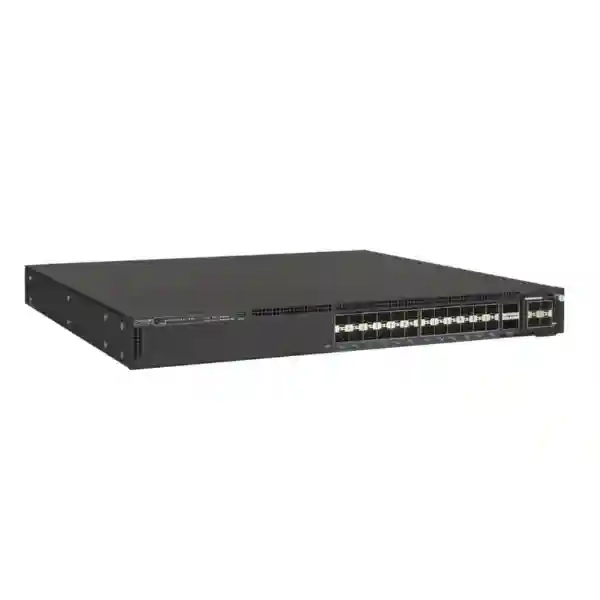
RUCKUS ICX 7550-24 Network Switch
The RUCKUS ICX 7550-24 is a 24-port 1 Gigabit Ethernet access switch built for organizations that need enterprise switching, resilient stacking and advanced Layer 2/Layer 3 functionality without PoE on the access ports. For buyers comparing RUCKUS ICX 7550-24 Dubai suppliers, the most important point is model accuracy: ICX 7550-24 is the non-PoE version in the ICX 7550 family. If powered access points, cameras or IP phones are required, the appropriate PoE models should be evaluated instead of assuming this unit provides endpoint power.
24 x 1GbE RJ45
Twenty-four 10/100/1000 Mbps copper access ports for standard enterprise Ethernet endpoints.
368 Gb/s Switching
Verified maximum switching capacity for the ICX 7550-24 model, with up to 274 Mpps forwarding capacity listed in the family data sheet.
Stackable Design
Supports stacking with up to 12 switches and up to 960 Gb/s aggregate stack bandwidth for this model.
Advanced Network Features
Layer 3 routing, BGP, VRF, MACsec, VxLAN, sFlow and Energy Efficient Ethernet are listed for the exact model.
Direct answer: what is the RUCKUS ICX 7550-24?
RUCKUS positions the ICX 7550-24 as a mid-range access switch with 24 one-gigabit copper ports. It belongs to the broader ICX 7550 family, but its specification must not be confused with the 24P or multigigabit PoE variants. The ICX 7550-24 itself does not provide PoE/PoE+ or 802.3bt endpoint power. This distinction matters during procurement because a buyer may see family-level marketing for high-power PoE or multigigabit access and incorrectly assume every ICX 7550 model contains those capabilities. FourTeck recommends confirming the exact port, power and uplink requirement before quotation.
For conventional office networks, branches, education environments, hospitality back-office networks, retail administration, server-edge connectivity and other deployments where attached devices either do not need PoE or use independent power, the ICX 7550-24 provides a strong enterprise switching foundation. It combines 24 copper access interfaces with modular high-speed uplink possibilities, resiliency options and routing capabilities that can support both straightforward access-layer use and more structured campus designs.
Verified RUCKUS ICX 7550-24 specifications
| Product type | Ethernet switch |
| Access ports | 24 x 10/100/1000 Mbps RJ45 |
| Switching capacity | 368 Gb/s maximum |
| Forwarding capacity | 274 Mpps, as listed in the ICX 7550 family data sheet |
| Stack size | Up to 12 switches |
| Aggregate stack bandwidth | Up to 960 Gb/s for ICX 7550-24 |
| PoE | No; choose an appropriate ICX 7550 PoE model when endpoint power is required |
| Routing / virtualization features | Static routing, RIP, OSPF, BGP, VRF and VxLAN support are listed for the model |
| Security / visibility | MACsec and sFlow are supported |
| Resiliency | Redundant power option and hot-swappable internal power supplies and fans |
| Airflow | Reversible airflow option |
Exact bill of materials, power supply choice, fan orientation, optics, uplink modules, software entitlement and support requirements should be confirmed against the current RUCKUS ordering information before purchase.
Why organizations shortlist this model
A 24-port access switch remains a practical format for branch offices, wiring closets, server rooms and locations where port demand is meaningful but does not justify a 48-port access layer. The ICX 7550-24 adds enterprise features that can make the platform useful beyond basic connectivity. Stacking allows multiple switches to be administered and interconnected as a coordinated system, while routing and segmentation features support network designs that need clear separation between departments, servers, guest networks or operational systems.
The availability of MACsec can be important where organizations want link-layer encryption on supported network paths. BGP, OSPF, VRF and VxLAN provide options for more advanced routing and virtualization designs, although the exact software licensing and design suitability should be checked for the proposed deployment. sFlow can assist with traffic visibility, while redundant power and hot-swappable fan options support designs that prioritize service continuity.
The most useful procurement question is therefore not simply whether the ICX 7550-24 is powerful, but whether its exact combination of 24 one-gigabit copper ports, non-PoE access, uplink requirements and software features matches the network. FourTeck can help map endpoint counts, VLAN needs, uplinks, stacking, optics and resilience requirements into a quote that reflects the complete deployment rather than just the base chassis.
ICX 7550-24 versus nearby ICX 7550 variants
Model suffixes change the buying decision. The ICX 7550-24 is the 24-port one-gigabit non-PoE access model. The ICX 7550-24P adds PoE capability for powered devices. The ICX 7550-24F is a fiber-oriented aggregation variant, while the 24ZP and 24XZP models target multigigabit and high-power PoE requirements. A customer deploying desktop computers, printers, non-PoE appliances or independently powered devices may prefer the standard ICX 7550-24. A customer connecting Wi-Fi access points, IP phones or cameras through the same switch may need a PoE model instead.
This is why FourTeck requests the endpoint list and uplink requirement before finalizing a quotation. Buying the right family but the wrong suffix can create avoidable redesign work. The selection process should account for copper versus fiber access, number of required ports, PoE demand, per-port speed, uplink bandwidth, rack power, airflow direction, resiliency expectations, management platform and growth over the expected service life.
RUCKUS ICX 7550-24 Network Switch Dubai
Businesses searching for a RUCKUS ICX 7550-24 in Dubai often need more than a switch price. Commercial offices, hospitality groups, schools, clinics, warehouses, retail operations and multi-tenant environments typically need to know whether the switch fits an existing rack, whether the access ports are PoE, how uplinks will connect to the core, how many units can be stacked and whether the design can scale without replacing the entire access layer. For Dubai deployments, where network rooms may serve dense user populations and multiple business systems, those design questions are more important than simply matching a model number.
The ICX 7550-24 is best evaluated when the customer needs 24 standard Gigabit Ethernet copper ports and does not require endpoint power from those ports. Desktop users, servers, printers, storage appliances, security gateways and other independently powered devices can be connected through a conventional Ethernet access design. If the same rack must directly power wireless access points, phones or cameras, a PoE-capable ICX 7550 model should be considered. FourTeck can help verify this before a purchase order is issued, reducing the risk of selecting a non-PoE switch for a PoE-dependent project.
Dubai buyers also commonly need clarity on uplinks and resilience. A switch may have enough access ports yet still underperform operationally if its uplink plan does not match the traffic generated by users, servers, internet services and branch connectivity. The ICX 7550 platform supports high-speed uplink and stacking options, but the exact module and optical components must be matched to the chosen topology. Redundant power options, hot-swappable fans and reversible airflow can also be relevant in professionally managed racks where maintenance and cooling direction are carefully planned.
When requesting a RUCKUS ICX 7550-24 Dubai quotation, provide the number of switches, existing core-switch model, fiber type, desired uplink speed, rack airflow preference, stack size and whether current management is through RUCKUS SmartZone, RUCKUS Cloud or another operational model. FourTeck can then align the quote with the network architecture rather than treating the switch as an isolated box. For broader UAE technology requirements, customers can also review FourTeck UAE solutions for related infrastructure and implementation discussions.
RUCKUS ICX 7550-24 Network Switch UAE
UAE organizations evaluating the RUCKUS ICX 7550-24 frequently operate across more than one site. A headquarters may connect branch offices, warehouses, showrooms, schools, clinics or hospitality properties, and each site can have different access-port requirements. The 24-port format can be particularly useful where a site needs a focused access layer instead of a large 48-port deployment. Procurement teams should compare current port usage with expected expansion, because spare capacity for new users, printers, appliances and local servers can prevent premature replacement.
The non-PoE design should be treated as a deliberate selection criterion. In mixed UAE networks, some closets host mainly desktops and network appliances while other closets serve large numbers of access points, phones or cameras. The standard ICX 7550-24 can fit the former scenario, while a PoE model may better serve the latter. Splitting roles can be more efficient than buying the same switch everywhere, but it requires careful documentation so future support teams know which racks can power endpoints and which cannot.
For enterprise buyers, routing and segmentation capability can also matter. The model supports Layer 3 functionality including static routing, RIP and OSPF, as well as BGP and VRF. These capabilities allow the hardware to participate in more sophisticated network designs when the software configuration and licensing align with the project. MACsec and VxLAN support broaden the design options further for organizations with security or overlay-network requirements. Such capabilities should be selected for a defined business or technical purpose rather than enabled simply because the platform supports them.
A useful UAE quotation request includes the topology diagram, VLAN count, switch quantity, stacking intention, uplink media, optic reach, power redundancy requirement and management preference. This gives FourTeck enough context to distinguish between a straightforward 24-port access deployment and a larger multi-switch architecture. It also supports accurate discussion of accessories, optics, uplink modules and support services without making assumptions about the existing network.
RUCKUS ICX 7550-24 Network Switch Uganda
Organizations searching for the RUCKUS ICX 7550-24 in Uganda may be planning a campus refresh, branch rollout, office upgrade or new structured-cabling deployment. The most useful buying process starts by separating port requirements from power requirements. The ICX 7550-24 provides 24 standard one-gigabit copper access ports, but it does not provide PoE. This makes it suitable where connected devices have their own power or where powered endpoints are handled by separate PoE switches or injectors. For a network dominated by access points, IP phones or surveillance cameras, a PoE model may be more appropriate.
In Uganda, multi-building and multi-floor environments can place extra emphasis on uplink planning. The copper access layer may sit in remote cabinets while fiber provides the path back to aggregation or core switching. Buyers should confirm fiber type, connector format, required distance and desired uplink bandwidth before ordering optics. A switch purchase that omits the correct transceivers or uplink components can delay deployment even when the base hardware is available. FourTeck can help structure the bill of materials around the topology rather than the chassis alone.
Stacking can be useful where several access switches are installed in the same location and administrators want a coordinated architecture. The ICX 7550-24 supports stacks of up to 12 switches, with up to 960 Gb/s aggregate stack bandwidth for this model. The practical stack design should still account for port count, physical placement, resilience, maintenance procedure and software compatibility. Redundant-power support and hot-swappable internal components can be considered where uptime requirements justify the additional hardware.
Ugandan customers preparing a procurement document should include the required switch quantity, endpoint types, VLAN and routing expectations, optical uplink distances, rack power conditions, airflow direction and support requirements. For regional network infrastructure discussions and local procurement context, the FourTeck Uganda technology site can support related enquiries. The aim is to confirm that the selected ICX 7550 variant fits both the technical design and the operational environment.
RUCKUS ICX 7550-24 Network Switch Kampala
Kampala buyers often need access switching for offices, education sites, hotels, professional services firms, healthcare environments and growing multi-floor facilities. In these networks, a 24-port switch can be attractive for smaller wiring closets or departments where a 48-port platform would leave excessive unused capacity. The RUCKUS ICX 7550-24 offers standard Gigabit Ethernet connectivity on 24 copper ports and enterprise features for customers who need more than basic unmanaged switching.
A common design question is whether the access layer will also power edge devices. This exact model is non-PoE. A Kampala office using wired desktop computers, printers, independent wireless controllers, servers or other mains-powered devices may use it effectively. A new office deploying ceiling access points and desk phones directly from the same switch should calculate PoE demand and consider an ICX 7550 PoE variant. This distinction should appear clearly in the bill of quantities so that installers do not discover the power mismatch only after cabling is complete.
Kampala deployments may also need to connect multiple floors or buildings. When fiber uplinks are used, the buyer should verify multimode versus single-mode fiber, optical distance, connector standards and the port/module configuration intended for the ICX 7550-24. Stack planning is another consideration when several units share the same rack. The platform supports up to 12 switches in a stack, which can simplify expansion, but a stack should still be designed with appropriate redundancy and maintenance procedures.
For a clear Kampala quotation, share the current network drawing where possible, identify which endpoints need PoE, list the number of copper ports currently occupied, specify the expected growth, note any server or storage traffic, and describe the fiber path back to the core. FourTeck can then recommend whether the ICX 7550-24 is the right fit or whether another model in the ICX 7550 family better matches the site. This approach keeps the procurement process focused on operational requirements rather than model-name familiarity alone.
RUCKUS ICX 7550-24 Network Switch Arua
For organizations in Arua, switch selection is often tied closely to practical site conditions: available rack space, stable power, number of wired users, fiber connectivity between buildings and the ability to support the network without unnecessary complexity. The RUCKUS ICX 7550-24 provides 24 Gigabit Ethernet copper access ports and can suit a branch, institutional building or departmental network where those ports serve devices that do not require power from the switch.
The non-PoE specification should be checked carefully in projects that include wireless access points, IP telephony or cameras. Those device classes frequently expect PoE, and the standard ICX 7550-24 will not supply it. If the site already uses separate injectors or dedicated PoE access switches, the ICX 7550-24 can still be used for other segments. If a unified access layer is preferred, a PoE-capable model should be evaluated instead. Clear endpoint mapping helps prevent overbuying one capability while missing another.
Where the Arua site connects back to another building or a central network, uplink design deserves equal attention. The distance and cable plant determine whether the project needs specific optical components, while expected traffic determines the bandwidth target. The ICX 7550-24 supports high-speed uplink and stacking options, but these must be configured with the correct hardware. Resiliency options such as redundant power may also be worth considering if the switch serves a critical network segment and the supporting power environment is designed to benefit from that redundancy.
A practical request for quotation should therefore include more than the phrase RUCKUS ICX 7550-24 Arua. It should state how many switches are required, whether the deployment is standalone or stacked, what type of fiber or copper uplink exists, whether Layer 3 routing is expected on the switch, whether MACsec or VRF is part of the design, and what support period is desired. With these details, FourTeck can help the buyer compare the standard 24-port model with alternative variants before procurement.
RUCKUS ICX 7550-24 Network Switch Mbarara
Mbarara organizations evaluating a managed enterprise switch may need dependable wired access for administrative offices, education facilities, healthcare locations, retail operations, hospitality sites or growing branch networks. The RUCKUS ICX 7550-24 gives such environments 24 copper Gigabit Ethernet ports while retaining features associated with a broader enterprise switching platform, including stacking, Layer 3 routing, sFlow, MACsec, BGP, VRF and VxLAN.
The decision should begin with a port-and-device audit. Count occupied switch ports, identify which devices need PoE and estimate expansion. Because ICX 7550-24 is a non-PoE model, it is especially relevant to PCs, printers, servers and other independently powered systems. If the planned cabinet will connect a significant number of access points, IP phones or PoE cameras, the customer should compare the PoE models in the same series. This avoids adding external power accessories later merely to compensate for an incorrect chassis selection.
For multi-building sites around Mbarara, the uplink path may be more important than the access-port count. Fiber topology, transceiver reach, connector format and available strands should be documented before the switch is ordered. A 24-port access switch can perform well locally yet still become constrained by an undersized uplink if user traffic, server access, backups and internet services converge on a single path. Stack planning can also help where multiple switches sit in one rack and future expansion is expected.
FourTeck can assist by reviewing the requested port count, topology, stack size, routing features and resilience requirement. Buyers should also specify whether they need only the base switch or a complete bill of materials containing uplink modules, optics, power components and support. Treating these items as one deployment package makes it easier to compare quotations and reduces the risk of receiving a switch that cannot be installed immediately because a required component was omitted.
RUCKUS ICX 7550-24 Network Switch Gulu
Gulu customers searching for the RUCKUS ICX 7550-24 may be replacing an older access switch, expanding a campus or standardizing a new branch design. In each case, the first step is to document what the switch must connect. The ICX 7550-24 offers 24 standard Gigabit copper ports and does not deliver PoE. That makes it a straightforward choice for independently powered endpoints while also providing enterprise functions that can support segmentation, routing and network visibility.
A replacement project should check more than port count. Existing VLANs, trunks, spanning-tree settings, routing, management IP addressing, access-control policies and uplink transceivers may all need to be mapped before migration. If the existing switch provides PoE, replacing it with a non-PoE ICX 7550-24 would require a separate power strategy for affected devices. If the old switch is non-PoE and the network is staying that way, the standard model may align well with the current operating model.
For growth projects, stacking can provide a structured expansion path. Up to 12 switches can participate in an ICX 7550 stack, though the exact stack design should be checked against the planned model mix, software version and physical layout. Resilient power and fan options can be useful where the network supports critical services and the rack environment is maintained accordingly. Reversible airflow also helps align the switch with hot-aisle/cold-aisle or front-to-back cooling practices when required.
A useful Gulu procurement request should list the required quantity, copper-port demand, PoE demand, expected stack size, fiber type, uplink speed, VLAN and routing needs, management platform and desired support. FourTeck can use that information to validate the ICX 7550-24 against the intended network rather than simply quoting the model in isolation. The result is a more transparent purchase decision and a bill of materials that is easier for installers and IT teams to work with.
RUCKUS ICX 7550-24 Network Switch Kenya
Kenyan businesses and institutions considering the RUCKUS ICX 7550-24 often need to support a mix of office users, servers, printers, branch applications and uplinks to a larger campus network. The model provides 24 one-gigabit copper access ports, making it suitable for controlled-density access layers where PoE is not required on those ports. This can include administrative departments, back-office systems, server-edge connections and network appliances with independent power.
Before buying, customers should separate requirements for basic access, powered access and high-speed access. The ICX 7550 family includes different models for these roles. A project that includes Wi-Fi access points or IP cameras should not assume the standard 24-port model supplies power. Likewise, a site requiring multigigabit access for high-performance wireless or specialist endpoints should evaluate the multigigabit variants rather than the standard one-gigabit model. This family-based comparison helps ensure that the selected switch matches the endpoint mix instead of relying only on total port count.
Kenya deployments can also benefit from careful stack and uplink planning. Where several access switches serve one building, stacking may simplify the operational model and allow coordinated growth. Where buildings are linked by fiber, the optical design should be specified before procurement. Layer 3 features such as OSPF, BGP and VRF can be useful in larger routed networks, while sFlow can contribute to visibility and MACsec can support link-layer security requirements. Whether these features are needed depends on the architecture and operational goals.
For a Kenya quotation, include site count, switch quantity per site, endpoint types, current and planned VLANs, uplink medium, optic distance, stack requirement and resilience expectations. Customers can review FourTeck Kenya for broader regional infrastructure discussions. FourTeck can then help align the switch, accessories and deployment approach with the actual network design.
RUCKUS ICX 7550-24 Network Switch Kuwait
Kuwait organizations evaluating a RUCKUS ICX 7550-24 may be designing office access, branch connectivity, structured enterprise networks or dedicated wired segments where 24 Gigabit ports are sufficient. The switch provides the advantage of enterprise software and resiliency capabilities without adding PoE where it is unnecessary. This can make it relevant for wired workstations, servers, printers and network appliances that already have independent power.
Procurement teams should verify rack and environmental details alongside the logical network design. The ICX 7550 platform offers reversible airflow options, redundant power capability and hot-swappable internal power supplies and fans. These features are valuable only when matched correctly to the rack architecture and ordered in the required configuration. Airflow direction should align with cooling practice, while redundant power should be connected to an appropriate power design if it is expected to improve availability.
Network architects may also evaluate the model for routed access or advanced segmentation. RUCKUS lists Layer 3 support, BGP, VRF, VxLAN and MACsec for the ICX 7550-24. These capabilities can support enterprise architectures, but the final configuration should be based on a clear design. For example, VRF may be used where different business or service domains require routing separation, while MACsec may be relevant for secured Ethernet links. Such features should be validated against software version, licensing and the rest of the network.
Kuwait buyers can make quotation comparisons easier by asking every supplier to price the same complete scope: switch hardware, power components, uplink modules, optics, stack requirements and support. For related regional enquiries, visit FourTeck Kuwait. FourTeck can help determine whether the standard ICX 7550-24 or another family member best matches the endpoint and uplink plan before the order is finalized.
RUCKUS ICX 7550-24 Network Switch Ghana
Ghanaian businesses, universities, professional offices, hospitality sites and institutional networks may consider the RUCKUS ICX 7550-24 when they need a managed 24-port Gigabit access layer with room for enterprise routing and resiliency features. The model is particularly appropriate where attached devices do not need PoE from the switch. By keeping this requirement explicit, procurement teams can avoid confusing the base ICX 7550-24 with the PoE and multigigabit variants in the same family.
For sites with multiple network closets, the choice of uplink technology is critical. Fiber may be needed between floors or buildings, and the correct optic depends on distance, fiber type and target speed. A network refresh should therefore inventory not just access devices but also existing transceivers and cabling. If older optics are to be reused, compatibility should be validated rather than assumed. If new optics are planned, they should be included in the bill of materials so the installation team receives a complete solution.
The switch supports stacking, with up to 12 switches in a stack for the model. This can simplify larger access layers where multiple 24-port units are preferred for modular expansion. The architecture can also use routing and segmentation features where appropriate. OSPF and BGP support allow the platform to participate in routed networks, VRF can support separate routing domains, and MACsec can support secured Ethernet links in compatible designs. These features are not substitutes for a full network design, but they give architects more options than a basic Layer 2 switch.
When requesting a Ghana quote, provide the number of locations, switches per location, endpoint mix, PoE requirements, uplink distances, current core platform and any requirement for stacking or redundant power. FourTeck can help turn those details into a coherent hardware scope. Buyers with broader regional deployments can also use the FourTeck Africa technology resource to discuss infrastructure requirements across multiple markets.
RUCKUS ICX 7550-24 Network Switch Nigeria
Nigerian enterprises often operate complex networks across headquarters, branch offices, warehouses, education sites, healthcare facilities and hospitality properties. A 24-port enterprise switch can be useful where the access layer must remain modular, allowing IT teams to add capacity in controlled increments rather than deploying 48-port hardware everywhere. The RUCKUS ICX 7550-24 supports this approach with 24 Gigabit copper access ports and a feature set that can participate in larger managed network designs.
The product is a non-PoE switch, so endpoint planning is essential. Wired desktops, printers, servers and appliances can connect normally, but access points, IP phones and cameras that depend on switch-supplied power will need another solution. Nigerian buyers planning a greenfield office should calculate PoE demand early, because wireless and voice deployments can make powered access a major part of the switch specification. Existing sites should audit current PoE consumption before replacing any switch with a non-PoE model.
For multi-site networks, routing and operational consistency may be as important as raw port count. The ICX 7550-24 supports Layer 3 protocols and features including OSPF, BGP and VRF, alongside sFlow for traffic visibility and VxLAN for relevant network virtualization designs. These capabilities can help standardize access and routing roles, but organizations should validate software version, licensing and interoperability with the rest of the environment. Stacking can support growth within a location, while redundant power options may be useful for critical closets.
A Nigerian procurement request should clearly identify each site, required quantity, stack size, uplink bandwidth, fiber distances, management approach and any resilience requirements. This helps separate the base chassis price from the total deployment cost. FourTeck can then review whether the ICX 7550-24 meets the requirement or whether a PoE, fiber or multigigabit sibling is more suitable. Clear technical scope at the quotation stage usually produces a smoother installation and easier comparison between procurement options.
RUCKUS ICX 7550-24 Network Switch Seychelles
Seychelles customers may deploy enterprise switching in hotels, resorts, professional offices, public-service environments, retail operations and distributed business sites. In these networks, selecting a switch that matches the exact endpoint mix is particularly important because a missing component or incorrect model can complicate deployment logistics. The RUCKUS ICX 7550-24 provides 24 standard Gigabit Ethernet copper ports and advanced enterprise features, but it does not supply PoE to attached devices.
For hospitality and campus-style environments, wireless coverage and IP telephony can create substantial PoE requirements. If a closet will power access points or phones, the standard ICX 7550-24 should not be selected merely because the port count looks right. A PoE model should be evaluated. Conversely, a back-office or server-area switch connecting PCs, printers, appliances or independently powered systems may not need PoE at all, making the non-PoE variant a more focused choice.
Inter-building links and distributed facilities also make uplink planning important. Fiber type, optical distance and available pathways should be documented before hardware is ordered. The ICX 7550 platform provides flexible uplink and stacking options, but the correct modules and optics must be part of the design. Buyers should also consider whether a standalone switch is sufficient or whether stacking and power redundancy would simplify future growth and maintenance.
A Seychelles request for quotation should include destination site, quantity, endpoint list, PoE demand, uplink media, expected stack size, power-supply preference and support requirement. FourTeck can use that information to verify the model selection and quote supporting components. The goal is to provide a deployment-ready scope based on the site rather than a bare switch price that leaves optics, modules or resilience decisions unresolved.
Deployment planning: ports, uplinks, stacking and power
A good ICX 7550-24 design starts with an endpoint inventory. Count current copper connections and expected growth, then classify each endpoint by speed and power requirement. Devices needing only one-gigabit data and independent power align naturally with the model. Devices requiring PoE should be placed on a PoE switch or powered through an approved alternative. Multigigabit endpoints should be assessed separately because the standard ICX 7550-24 uses conventional one-gigabit copper access ports.
Next, calculate uplink demand. Access-port totals do not directly translate to uplink bandwidth, but server traffic, backups, cloud applications, video, voice and internet usage can combine to create significant loads. The uplink should therefore be chosen from observed or expected traffic rather than simply using the lowest available speed. Fiber type and distance are equally important because they determine optic selection and can affect the achievable link design.
Stacking is useful when several switches share an access location and should operate as a coordinated system. The ICX 7550-24 supports up to 12 switches in a stack. A stack design should specify physical interconnection, redundancy, software alignment, maintenance procedure and how uplinks are distributed. Stacking simplifies some operational tasks but does not remove the need for resilient architecture; power, cabling and upstream connectivity should still be planned to avoid unnecessary single points of failure.
Finally, confirm power and airflow. RUCKUS lists redundant-power support, hot-swappable internal power supplies and fans, and reversible airflow for the ICX 7550-24. The exact options included in a quote should match the rack design. Buyers should not assume redundant components are automatically included with every base configuration. FourTeck can help define these items before ordering so that the delivered bill of materials matches the intended resilience level.
Management, visibility and security considerations
RUCKUS positions the broader ICX 7550 family for unified wired and wireless management through platforms such as RUCKUS SmartZone and RUCKUS Cloud. In a real deployment, customers should confirm which management platform is already in use, what software version is required and whether the switch will be managed centrally or through a more traditional network-operations workflow. Consistent management matters especially in multi-site networks because configuration standards, firmware planning and monitoring can become difficult when devices are administered individually without a defined operational process.
The ICX 7550-24 supports sFlow, which can provide sampled traffic information for compatible monitoring systems. Traffic visibility can help operations teams identify utilization patterns and investigate performance concerns, but it should be integrated with a suitable monitoring and analysis platform. The switch also supports MACsec, which may be relevant where link-layer encryption is required between supported devices. MACsec should be implemented as part of a deliberate security architecture rather than treated as a generic replacement for firewalling or application-layer encryption.
Routing and virtualization features such as BGP, OSPF, VRF and VxLAN give architects flexibility for segmented or routed environments. Whether those functions belong on the access switch depends on the topology, design standard and support model. A smaller branch may use the device primarily for Layer 2 access, while a larger environment may place more routing responsibility at the edge. FourTeck can help buyers identify the intended role before quotation so the design discussion includes software and configuration requirements, not just hardware specifications.
Frequently asked questions
Does the RUCKUS ICX 7550-24 provide PoE?
No. The exact ICX 7550-24 model is a non-PoE 24-port one-gigabit switch. Buyers needing switch-powered access points, phones or cameras should evaluate a PoE-capable ICX 7550 variant.
How many switches can be stacked?
RUCKUS lists a maximum of 12 switches per stack for the ICX 7550-24, with up to 960 Gb/s aggregate stack bandwidth for this model.
What is the switching capacity?
The verified maximum switching capacity for ICX 7550-24 is 368 Gb/s. The family data sheet lists 274 Mpps forwarding capacity for the same model.
Does it support Layer 3 routing?
Yes. RUCKUS lists Layer 3 static routing, RIP and OSPF, and also identifies BGP and VRF support. The precise deployment should be checked against the current software and licensing plan.
Can it be used for Wi-Fi 6 access points?
It can carry Ethernet traffic for compatible access points, but the ICX 7550-24 itself does not provide PoE. If the access points require power from the switch or need multigigabit access, another ICX 7550 model may be a better fit.
What information should I send for a quote?
Send the required quantity, site location, current switch/core model, copper-port count, PoE requirement, uplink speed, fiber type and distance, stack size, power redundancy preference, airflow requirement and support expectations.
Why contact FourTeck for RUCKUS switching?
A productive switch quotation should resolve configuration questions before the hardware is ordered. FourTeck can help customers review port count, PoE needs, stack size, uplink modules, optics, fiber distances, airflow and power resilience. This is especially useful with the ICX 7550 family because several variants share a common product name while differing materially in access speed, PoE capability and fiber orientation.
For regional and cross-border projects, standardizing the technical request also helps procurement teams compare like for like. Customers working across the Gulf and Africa can use FourTeck regional resources for localised discussions while maintaining a consistent core bill of materials. Explore FourTeck UAE, FourTeck Uganda, FourTeck Kenya, FourTeck Kuwait and FourTeck Africa for related infrastructure requirements.
FourTeck does not need to guess the design when customers provide a simple topology and endpoint list. The more clearly the requirements are described, the easier it becomes to confirm whether the ICX 7550-24 is the correct model, which accessories are needed and whether a PoE, fiber or multigigabit sibling would better support the deployment.
Decision recap
Choose the ICX 7550-24 when the network needs 24 one-gigabit copper access ports, enterprise switching and routing features, stackability and resilient hardware options, but does not need PoE on those access ports.
Reconsider the model when the project requires PoE, multigigabit copper access or a primarily fiber-based access/aggregation role. In those cases, compare the corresponding ICX 7550 variants.
Quotation checklist
Before requesting pricing, prepare: required quantity; country and delivery location; port count; endpoint types; PoE demand; desired uplink speed; fiber type and distance; number of switches per stack; redundant-power requirement; airflow orientation; current core switch; management platform; and required support period.
This information helps FourTeck return a more useful bill of materials and reduces follow-up questions during procurement.
Talk to FourTeck about your ICX 7550-24 requirement
Send the switch quantity and a short description of your network. If you have a topology diagram, existing core-switch model, fiber information or endpoint list, include those details so the quotation can account for the complete deployment. FourTeck can help confirm whether the standard non-PoE ICX 7550-24 is the right model or whether another ICX 7550 variant should be considered.
The objective is a clear, deployment-oriented purchase decision: correct access ports, correct power model, correct uplinks, correct stacking components and a support scope that matches the environment.

Reviews
There are no reviews yet.