
WatchGuard AP332CR
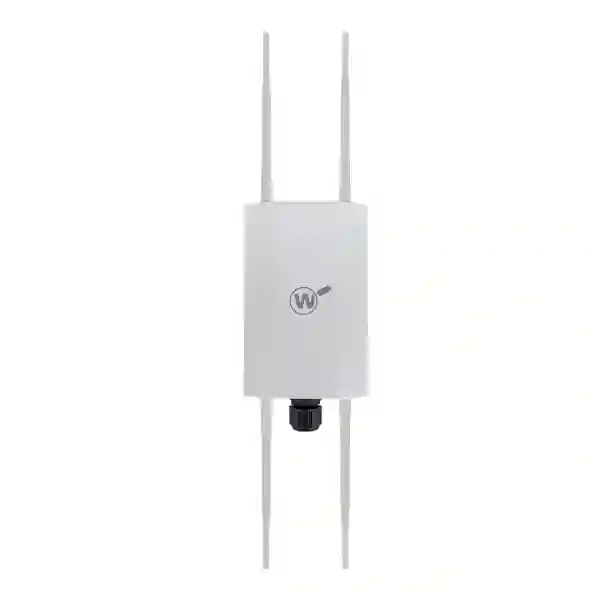
The WatchGuard AP332CR is a cloud-managed Wi-Fi 6 access point designed for mid-density indoor and rugged outdoor wireless projects. Its industrial-rated IP67 enclosure, dual-concurrent 2.4 GHz and 5 GHz 2×2 radios, four external antennas, WPA3 support and 2.5 GbE PoE+ interface make it a practical choice when a business needs managed wireless coverage beyond a conventional office ceiling. FourTeck helps customers evaluate the AP332CR as part of a complete wireless and security design rather than treating the access point as a stand-alone purchase.
Direct answer: choose the AP332CR when you need a rugged WatchGuard Wi-Fi 6 access point for a mid-density location and want centralized management through WatchGuard Cloud. Confirm radio planning, mounting position, local channel rules, PoE+ availability, Ethernet path, license term and total access-point count before ordering.
For high-density environments or projects requiring a different radio architecture, compare the requirement with other WatchGuard access-point models before finalizing the bill of materials.
WatchGuard AP332CR at a Glance
Wi-Fi 6 (802.11ax), dual-concurrent 2.4 GHz and 5 GHz radios, 2×2 spatial streams on each band.
Industrial-rated IP67 enclosure with wall and pole mounting options for rugged indoor or outdoor deployment conditions.
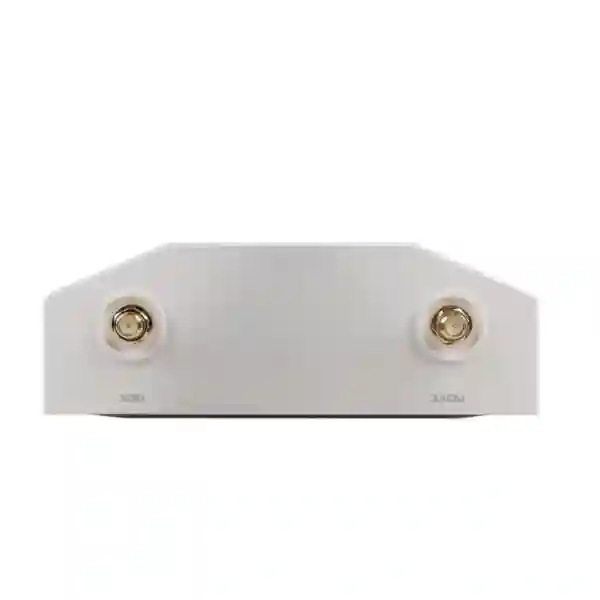
Four included external single-band dipole antennas: two for 2.4 GHz and two for 5 GHz, each listed at 5 dBi.
One 2.5 GbE Ethernet interface with IEEE 802.3at PoE+ power; vendor-published maximum consumption is 15.9 W.
Verified AP332CR Specifications and What They Mean
WatchGuard specifies the AP332CR with a 2.4 GHz 2×2 802.11b/g/n/ax radio and a 5 GHz 2×2 802.11a/n/ac/ax radio operating concurrently. Published maximum data rates are up to 574 Mbps on 2.4 GHz and up to 1200 Mbps on 5 GHz. These are radio link figures rather than a promise of application throughput for every client. Actual wireless performance depends on client capability, channel width, RF interference, distance, obstacles, transmit-power limits, airtime utilization, upstream switching, internet capacity and the number of simultaneous users. For that reason, access-point quantity should be based on coverage and capacity planning rather than a simple square-meter estimate.
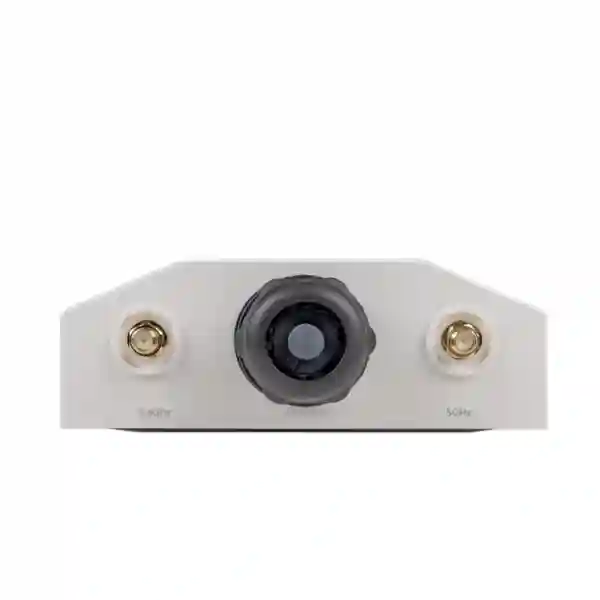
The access point provides one 2.5 GbE Ethernet port and uses PoE+ 802.3at power. This is particularly useful where the AP is mounted on a wall, pole or external structure and a local electrical outlet would be inconvenient. The Ethernet cable must still be planned as both the data path and power path, with suitable switch or injector capacity, cable distance, weatherproof termination and grounding practices. WatchGuard lists a maximum power consumption of 15.9 W and an average of 11.65 W, but the PoE source should be selected according to the required standard and the broader switch power budget rather than only average draw.
The AP332CR enclosure is rated IP67 and WatchGuard lists an operating temperature range of -20°C to 60°C, with 5% to 95% non-condensing operating humidity. The unit measures approximately 190 mm x 124 mm x 47 mm and weighs about 0.82 kg. These environmental figures help with equipment selection, but good outdoor design still requires thoughtful placement, cable protection, grounding, drainage, physical security and periodic inspection. An IP rating does not remove the need for correct installation.
Wireless security options published for the AP332CR include WPA3 PSK, WPA2 PSK, mixed WPA3/WPA2 PSK, WPA3 Enterprise, WPA2 Enterprise and OWA. Management is provided through WatchGuard Cloud. Buyers should confirm the required Wi-Fi management license because activation and the available management/reporting functions depend on the selected WatchGuard licensing package and term.
Who Should Consider the WatchGuard AP332CR?
The AP332CR is designed for mid-density wireless environments that need a rugged form factor. Typical candidates include schools with outdoor walkways, manufacturing and warehouse sites, retail areas, business courtyards, hospitality properties, campuses, logistics yards, branch offices with external gathering spaces, and facilities where the mounting location is exposed to dust or weather. It can also be used indoors when the physical environment is tougher than a conventional office.
A good fit starts with the client profile. Count laptops, phones, scanners, tablets, handheld terminals, IoT devices and guest devices that may share the cell. Identify which applications matter most, such as cloud ERP, voice, video meetings, payment terminals, warehouse scanning or guest internet. Then map the physical area and expected concurrency. A mid-density AP can still be overloaded by a concentrated group of high-demand users, while an apparently large outdoor area may need multiple APs because walls, shelving, vehicles, building materials or mounting height affect coverage.
The AP332CR is particularly relevant for organizations already using WatchGuard security products because WatchGuard Cloud provides a common management environment. Even so, the wireless design should stand on its own technical merits. FourTeck can help coordinate the AP with switching, firewall policy, VLANs, guest access, DHCP, DNS, authentication and WAN capacity so the wireless experience does not become limited by a different part of the network.
Licensing, Activation and Procurement Guidance
Do not assume that an AP332CR hardware price represents the complete deployment cost. WatchGuard access points are activated with the device serial number and an applicable Wi-Fi management license key. WatchGuard publishes Standard Wi-Fi and Unified Security Platform Wi-Fi licensing options with different management and reporting capabilities. The correct quotation should identify the hardware, license type, license duration, support entitlement, any PoE injector requirement, mounting needs, switching upgrades and implementation services.
For procurement teams, it is useful to request a bill of materials that separates one-time hardware from term-based licenses and services. For technical teams, the same bill of materials should be checked against access-point quantity, PoE budget, uplink speed, existing switch capabilities, VLAN design, internet access for cloud registration and the local regulatory domain. FourTeck can help structure this review before a purchase decision.
WatchGuard AP332CR Dubai
Customers searching for WatchGuard AP332CR Dubai are commonly trying to solve one of three problems: extend managed business Wi-Fi into an outdoor or semi-outdoor area, replace an older rugged access point with Wi-Fi 6, or standardize a branch or campus on WatchGuard Cloud. Dubai projects can include office compounds, schools, hospitality spaces, warehouses, retail environments, loading areas and mixed indoor-outdoor business sites. The AP332CR is relevant where a conventional indoor ceiling AP is not appropriate because the mounting location needs a rugged enclosure and external antennas. Its IP67-rated housing, wall/pole mounting options and PoE+ design make it easier to plan coverage on exterior walls, service areas, open courtyards and perimeter locations, provided the final placement follows local installation and radio requirements.
Dubai buyers should plan for heat, sun exposure, dust, structured cabling routes and the availability of PoE+ switching. Although WatchGuard lists an operating temperature range up to 60°C, equipment should still be positioned sensibly and not treated as immune to all environmental stress. Cable glands, Ethernet weatherproofing, grounding and physical mounting quality are part of the deployment. Where an AP is fed from a network cabinet, the switch must have sufficient 802.3at capacity and the cable path must stay within Ethernet design limits. If an injector is required, its location, electrical supply and environmental protection should be included in the installation plan.
Radio planning is equally important. Dubai offices and commercial districts can have busy RF environments, particularly around multi-tenant buildings and dense retail areas. A site survey or at least a structured pre-installation assessment can help determine channel use, AP spacing and whether 2.4 GHz or 5 GHz should carry particular client types. The AP332CR supports both bands concurrently, but client steering, channel width, transmit power and SSID design should reflect the site rather than default settings.
For a Dubai quotation, share the site type, indoor/outdoor area, expected concurrent users, number of SSIDs, guest access needs, current firewall, switch model, PoE availability, internet speed and whether installation is required. FourTeck’s Dubai deployment guidance and network security service resources can help procurement and IT teams frame the wider project before requesting a formal AP332CR proposal.
WatchGuard AP332CR UAE
A WatchGuard AP332CR UAE requirement often extends beyond one building. Organizations may need consistent wireless design across offices, schools, warehouses, clinics, retail branches, logistics facilities or hospitality properties in different emirates. In that context, the value of the AP332CR is not only its rugged hardware. Centralized WatchGuard Cloud management can help a technical team apply repeatable WLAN settings, view device status and maintain a more consistent configuration across distributed sites. Standardization can reduce operational variation, but only when each site is surveyed for its own RF, cabling, power and user-density conditions.
UAE deployments should treat regulatory-domain settings and channel availability as part of the project. Maximum transmit power and available frequencies depend on local rules, and WatchGuard specifically advises customers to review the regulations for the country of operation. The correct approach is to deploy the device in the intended regional configuration and avoid copying assumptions from installations in other markets. This matters particularly when a multinational customer wants the same AP model across the Gulf, Africa and Europe: the hardware family may be consistent while allowed frequencies, power levels and procurement requirements differ.
The physical network also needs attention. The AP332CR has a single 2.5 GbE PoE+ port. If existing access switches provide only 1 GbE, the AP can still connect at a supported lower Ethernet rate where compatible, but the design team should consider whether the switch platform, PoE budget and uplink capacity match the expected wireless load. Outdoor cable runs should be protected and grounded appropriately. In coastal or exposed environments, placement and maintenance should be planned conservatively rather than assuming an IP67 rating covers every environmental risk.
UAE buyers can use FourTeck UAE for broader IT infrastructure context and the Firewall Dubai product collection for related network-security options. When requesting pricing, specify whether the requirement is hardware-only or must include a WatchGuard Wi-Fi license, switch/PoE changes, VLAN configuration, guest network design, mounting, testing and post-installation support.
WatchGuard AP332CR Uganda
Organizations searching for WatchGuard AP332CR Uganda may be planning wireless coverage for schools, campuses, hotels, offices, healthcare facilities, warehouses, compounds or distributed branch networks. A rugged access point can be useful where users move between buildings or where part of the coverage area is outdoors. The AP332CR’s dual-band Wi-Fi 6 radios and external antennas can support modern client devices, while the IP67 enclosure and wall or pole mounting options provide deployment flexibility. The most important design question is not simply whether the AP can transmit far enough; it is whether the complete WLAN can provide reliable capacity where people actually work, learn, check in, scan inventory or access cloud applications.
For Uganda projects, plan the wired path before finalizing AP locations. The AP requires PoE+ and uses its Ethernet connection for both data and power. If a site has older switches, limited PoE budget or long runs between buildings, the bill of materials may require switch upgrades, injectors, protected outdoor cabling or a revised mounting point. A wireless design cannot compensate for unstable power or inadequate switching, so infrastructure readiness should be assessed early. Where power continuity is important, consider how the PoE switch and upstream network are supported during outages rather than focusing only on the AP itself.
Cloud management also depends on reliable internet reachability to WatchGuard services. Sites with constrained or intermittent WAN connectivity should confirm how onboarding, monitoring and operational workflows will be handled. Local authentication, guest access, VLAN segmentation and firewall rules should be defined in advance so the wireless deployment fits the business network rather than creating a parallel unmanaged environment. For schools and hospitality, separating staff, guest and operational devices can be more important than maximizing headline radio speed.
Buyers can review FourTeck Uganda for regional IT solution context and FourTeck Africa for cross-border infrastructure requirements. For an AP332CR quotation, provide city, site type, user and device count, building layout, outdoor areas, internet connection, existing switches, PoE capability and the desired WatchGuard license term. This produces a more useful proposal than requesting an access point price without deployment information.
WatchGuard AP332CR Kampala
A WatchGuard AP332CR Kampala deployment is often shaped by urban density, mixed-use buildings and the need to connect users across offices, compounds, outdoor seating areas, education facilities or hospitality properties. In a busy RF environment, simply installing an outdoor access point at maximum transmit power can create poor results because neighboring WLANs, channel overlap and client behavior all affect performance. The AP332CR provides dual 2.4 GHz and 5 GHz Wi-Fi 6 radios, but channel planning and access-point placement should be based on the actual site. In many business environments, 5 GHz should carry capable devices where practical while 2.4 GHz is retained for range or legacy/IoT clients that need it.
Kampala sites with multiple floors or separate structures should map how the wired network reaches each AP. The AP332CR uses one 2.5 GbE PoE+ interface, so switch location, PoE availability and cable route can determine the practical mounting position. Outdoor Ethernet should be terminated and protected carefully. The included grounding connection should be used according to local electrical and installation requirements. If the access point is mounted on a pole, physical stability, maintenance access and safe cable routing are as important as wireless coverage.
For businesses running guest Wi-Fi, payment systems, IP phones, CCTV, scanners or internal applications over the same campus, segment the network rather than putting every endpoint in one flat LAN. SSIDs can map to different VLANs and security policies, with the firewall controlling access between guest, staff and operational resources. This allows the AP332CR to participate in a broader security architecture rather than acting as an isolated radio.
Procurement teams in Kampala should ask for hardware, management license and deployment scope as separate line items so renewal obligations and one-time costs remain clear. Regional project discussions can start through FourTeck Uganda. When contacting FourTeck, include the number of buildings, outdoor zones, concurrent users, switch models and whether wireless coverage must support voice/video, guest traffic, cloud applications or operational devices. These details help determine whether AP332CR is the correct model and how many units are likely to be needed.
WatchGuard AP332CR Arua
For customers searching WatchGuard AP332CR Arua, the requirement may involve an office compound, education campus, healthcare facility, NGO site, hospitality property, warehouse or another environment where one wireless network must extend beyond a single indoor room. The AP332CR is suitable to evaluate when a rugged, weather-resistant Wi-Fi 6 access point is needed for a mid-density area. Its external antennas and wall or pole mounting options give designers flexibility, but that flexibility should be used with a clear coverage plan. Mounting an AP too high, too low or behind heavy construction can reduce client performance even when the access point itself has a strong radio.
Arua projects should begin with infrastructure reality. Determine where Ethernet can be routed, where PoE+ power is available, whether surge protection and grounding are required, and how the network remains operational during local power interruptions. Because the AP is cloud managed, the upstream router or firewall must allow the required connectivity to WatchGuard services. If the WAN is limited, administrators should plan how monitoring, software updates and cloud configuration fit the site’s bandwidth profile.
For sites with separated buildings, avoid assuming that one powerful access point can replace proper network design. Client devices usually transmit at much lower power than an infrastructure AP, so a laptop or phone may hear the access point while struggling to send a reliable signal back. Multiple correctly placed APs often create a better user experience than a single distant AP. The number of units should therefore reflect both coverage and concurrent-client capacity.
The quotation should also distinguish the access point from its management licensing. WatchGuard requires an appropriate Wi-Fi management license for activation and ongoing cloud-managed operation. Buyers in Arua can use FourTeck Uganda to discuss the local requirement and FourTeck Africa for wider regional projects. Include installation location, user count, coverage boundaries, existing switch type, internet service, planned SSIDs and security segmentation in the request so the proposal can be built around the site rather than a generic AP count.
WatchGuard AP332CR Mbarara
A WatchGuard AP332CR Mbarara project can be relevant for universities and training centers, hotels, clinics, offices, warehouses, retail compounds and agricultural or logistics sites that need managed Wi-Fi across mixed indoor and outdoor areas. The AP332CR is built for mid-density rugged deployments and supports Wi-Fi 6 with WPA3 security. It is a strong candidate when the network team wants central WatchGuard Cloud management and a purpose-built outdoor enclosure instead of placing an indoor AP in an unsuitable protective box.
Mbarara buyers should consider how wireless traffic connects to the rest of the business environment. If a guest SSID, employee SSID and device/IoT SSID share the same access point, they should still be separated by VLAN and firewall policy where the business risk requires it. This allows guest users to reach the internet without accessing internal systems and lets operational devices use only the services they need. For environments with multiple departments or tenants, identity and authentication requirements should be defined before deployment so SSID design does not have to be rebuilt later.
Physical planning matters equally. The AP332CR requires PoE+ and includes a 2.5 GbE network interface. Check whether the current switch provides 802.3at power and whether its total PoE budget can support all planned access points. Outdoor or semi-outdoor cabling should follow suitable installation practices, and the AP should be grounded according to local regulations. If a pole location is selected, ensure the mount is secure and that maintenance staff can safely reach the unit when inspection or replacement is required.
For procurement, request the exact hardware quantity, Wi-Fi management license type and term, any PoE injectors, cabling, mounting, configuration and support as separate items. FourTeck Uganda can be used for Mbarara-related project discussions. Share floor plans or area dimensions when available, expected peak users, existing network equipment and the applications that depend on Wi-Fi. That information helps determine whether the AP332CR should be deployed alone, as part of a multi-AP design, or alongside different WatchGuard models for areas with other capacity needs.
WatchGuard AP332CR Gulu
Customers looking for WatchGuard AP332CR Gulu may need managed wireless coverage across an education campus, office compound, healthcare site, development organization, warehouse, hospitality property or distributed branch facility. The AP332CR’s rugged IP67 enclosure can suit locations where the access point is exposed to outdoor conditions or installed in a physically demanding area. Its Wi-Fi 6 radios can serve modern laptops, phones and operational devices, while WatchGuard Cloud gives administrators a centralized management path. The design challenge is to make those capabilities dependable for the real site, not simply to install the device and expect uniform coverage.
Start with user journeys. Identify where staff work, where guests gather, where handheld devices move, and where business applications are most sensitive to delay. A school may prioritize classrooms, administration and outdoor common areas; a warehouse may prioritize loading zones and scanner paths; an office compound may need reliable coverage between buildings. Each pattern can lead to different AP placement. A radio mounted for maximum distance may not provide good capacity near the busiest user cluster, so coverage maps should be balanced with expected concurrency.
The network edge should also be ready. PoE+ capacity, Ethernet cable condition, switch uplinks, VLANs, DHCP scopes, DNS, firewall policies and internet bandwidth all influence the experience. If the WLAN is cloud managed, the site must maintain the required connectivity to WatchGuard. If internet service has variable performance, local LAN applications and cloud applications should be considered separately when testing the deployment.
Gulu buyers can contact FourTeck Uganda for regional coordination. A useful AP332CR inquiry should state the number of areas to cover, expected peak user count, existing switch and firewall models, whether 802.3at PoE+ is available, the preferred license term and whether the project includes installation. For multi-site organizations, ask for a repeatable configuration standard while keeping the physical RF survey specific to each location.
WatchGuard AP332CR Kenya
A WatchGuard AP332CR Kenya requirement can range from a Nairobi office compound to a Mombasa hospitality or logistics environment, a school campus, a retail site or a distributed enterprise branch network. The access point is intended for mid-density rugged deployments, so it is most useful when the organization needs Wi-Fi 6 in an area where weather exposure, dust or mounting conditions make a conventional indoor unit unsuitable. Its four external antennas and IP67 enclosure provide installation flexibility, while WatchGuard Cloud supports centralized configuration and monitoring.
Kenya projects should account for the difference between inland urban locations, industrial environments and coastal conditions. An IP67 enclosure helps protect against dust and water ingress, but project teams should still position and maintain equipment responsibly, especially where salt, heat, direct sun or heavy rain may be factors. Cable routes, grounding and weatherproof connectors are part of the system. Where multiple APs are installed, switch PoE budget and uplink capacity need to be checked across the complete access layer rather than one device at a time.
For businesses with several branches, the AP332CR can fit a standardization strategy when each site has similar mid-density rugged coverage needs. However, do not force the same model into every location. A small outdoor branch may suit AP332CR, while a high-density venue could require a different WatchGuard access point and a more detailed capacity design. Licensing should be planned centrally so renewal dates, feature levels and device inventory remain understandable across sites.
Regional buyers can use FourTeck Kenya for local solution discussions and FourTeck Africa for multi-country projects. When requesting a WatchGuard AP332CR price in Kenya, include whether the quote should cover the hardware only or also Wi-Fi management licensing, PoE accessories, network configuration, installation, testing and post-deployment support. This reduces procurement surprises and gives the technical team a clearer picture of the complete project.
WatchGuard AP332CR Kuwait
Buyers searching for WatchGuard AP332CR Kuwait are often evaluating outdoor or rugged Wi-Fi for commercial buildings, warehouses, schools, compounds, hospitality areas or industrial support locations. The AP332CR is a Wi-Fi 6 2×2 access point with an IP67-rated enclosure and an operating temperature range published by WatchGuard up to 60°C. Those specifications make it appropriate to evaluate for demanding environments, but outdoor installations in Kuwait should still be engineered around heat, dust, sun exposure, cable protection and safe mounting. Environmental ratings are design inputs, not a reason to ignore placement quality.
A common procurement mistake is to focus only on the access-point hardware and overlook PoE and licensing. The AP332CR uses 802.3at PoE+ through its 2.5 GbE port. Existing switches should be checked for both compatible power and total budget. If a PoE injector is used, its location must have suitable electrical and environmental protection. The AP also requires a WatchGuard Wi-Fi management license for activation and cloud management, so license type and duration should be visible in the quotation.
Wireless planning in Kuwait should consider how walls, metal structures, glass, shelving and outdoor geometry affect signal. Channel selection and transmit power should follow the local regulatory domain. For hospitality or customer-facing areas, guest WLAN design should include isolation from internal systems, while warehouse or industrial deployments may prioritize predictable roaming for handheld devices. In both cases, a capacity-based design is preferable to assuming one AP will cover the largest possible area.
Use FourTeck Kuwait for regional infrastructure inquiries. A strong AP332CR quote request should include the site type, approximate area, indoor/outdoor boundary, expected number of concurrent users, current switch model, PoE capability, firewall platform, internet bandwidth and desired management-license term. If the wireless network will connect to secured VLANs, guest access or site-to-site networks, include those requirements so configuration and security policy can be scoped together.
WatchGuard AP332CR Ghana
A WatchGuard AP332CR Ghana project may support offices, schools, hotels, clinics, warehouses, retail facilities or industrial compounds that need managed wireless coverage in outdoor or semi-outdoor locations. The AP332CR is designed for mid-density rugged use, with Wi-Fi 6, WPA3 options, four external antennas and an IP67-rated housing. That combination can be useful where a business wants the same centrally managed wireless platform across indoor operations and external service areas, provided the AP model is matched to capacity and the physical installation is properly engineered.
In Accra and other busy commercial areas, radio interference may influence the design as much as distance. Nearby wireless networks can occupy common channels, and building materials may create reflections or dead zones. A site assessment should identify likely mounting positions, client concentration and channel conditions. In coastal environments, project teams should also use sensible placement and maintenance practices. IP67 addresses ingress protection; it should not be interpreted as a blanket guarantee against every environmental factor.
Power and switching are central to the bill of materials. The AP332CR requires PoE+ and can use a 2.5 GbE connection. Confirm switch port capability, available PoE budget and upstream bandwidth before ordering several units. Where the site has backup power, decide whether the PoE switching infrastructure is included so the wireless network remains available during an interruption. If the WLAN carries guest traffic, operational devices and staff applications, define VLAN and firewall separation as part of the deployment rather than after installation.
Ghana buyers can use FourTeck Ghana for regional product and infrastructure discussions and FourTeck Africa for multi-country coordination. When requesting AP332CR pricing, specify quantities, license term, location, expected users, switch infrastructure and whether configuration, cabling or installation services are required. A complete request helps separate hardware price from licensing, accessories and implementation scope, making commercial comparison more accurate.
WatchGuard AP332CR Nigeria
Organizations searching for WatchGuard AP332CR Nigeria can have very different wireless requirements, from a branch office or school to a large multi-site enterprise, hospitality property, warehouse or logistics compound. The AP332CR is targeted at mid-density rugged environments, so it should be selected where its radio capacity, physical design and management model match the site. The IP67 enclosure and external antennas make it useful for outdoor or demanding placements, while WatchGuard Cloud can simplify administration when multiple APs are distributed across locations.
In dense urban environments such as Lagos or Abuja, RF congestion and building construction can make access-point planning more important than nominal range. Multiple neighboring networks, thick walls, metal, glass and vertical building layouts can create inconsistent coverage. A structured survey should determine how many APs are needed and where users concentrate. For warehouses or industrial compounds, roaming paths for handheld devices and operational terminals may be more important than guest browsing. For hospitality or education, client density and peak usage periods should influence capacity.
Nigeria projects should also account for power continuity and network resilience. Since the AP is powered by PoE+, wireless availability depends on the switch and upstream network. If the business uses UPS or generator-backed infrastructure, decide whether the PoE switch and firewall are included in the protected power design. Cloud management requires internet reachability, so WAN architecture and failover can affect operational visibility. The AP itself cannot compensate for an unstable upstream network.
Use FourTeck Nigeria for local IT project discussions and FourTeck Africa when the deployment spans multiple countries. For an AP332CR quotation, include city, site type, quantity estimate, peak user count, application mix, existing switch/firewall models, PoE budget, internet links and preferred Wi-Fi license term. This gives procurement a clearer comparison and lets the technical team verify whether the requested AP332CR quantity is appropriate before purchase.
WatchGuard AP332CR Seychelles
A WatchGuard AP332CR Seychelles requirement is likely to involve hospitality, resorts, offices, public-facing service areas, education, warehouses or business properties where wireless coverage must extend into outdoor spaces. The AP332CR can be a useful candidate because it combines Wi-Fi 6 with an IP67 enclosure, external antennas, wall or pole mounting and cloud management. In island environments, however, the physical deployment should be designed with extra care. Exposure to salt-laden air, wind, intense sun and rain varies by location, and an ingress-protection rating should not be interpreted as proof that the device can be mounted anywhere without shelter, inspection or maintenance.
Hospitality networks have distinct traffic patterns. Guest devices arrive and leave constantly, client capability varies widely, and usage may peak around rooms, restaurants, pool areas and common spaces. Staff devices, payment systems, management platforms and building systems should normally be separated from guest access using VLANs and firewall policy. The AP332CR can carry multiple SSIDs as part of that design, but the upstream network must enforce segmentation correctly and provide sufficient internet capacity for the expected number of users.
PoE+ simplifies mounting by avoiding a separate power outlet at each AP, but the cable route must be planned carefully. Check switch budget, cable length, weather protection and grounding. For properties with backup power, ensure the access switch, firewall and WAN equipment are included if wireless continuity is important. A cloud-managed WLAN also needs internet reachability for management workflows, so WAN redundancy may matter for properties where guest connectivity is a core service.
Seychelles buyers can start a regional discussion through FourTeck Africa. When requesting pricing, share the property type, number of buildings, outdoor zones, expected guest/staff concurrency, existing switching, firewall platform and available PoE. Ask for hardware, WatchGuard Wi-Fi licensing, accessories and implementation scope to be listed clearly. This makes it easier to compare alternatives and ensures the AP332CR is evaluated as part of a complete wireless solution rather than as an isolated device.
Deployment Checklist Before You Order
Coverage and capacity
Record the areas to cover, expected peak concurrent clients, device types, critical applications, roaming paths and whether the site is mid-density or requires a higher-capacity AP design.
PoE and switching
Confirm 802.3at PoE+, per-port and total switch power budget, cable distance, uplink bandwidth and whether 2.5 GbE access switching is required for the design.
Mounting and environment
Choose wall or pole positions based on RF performance, safe access, weather exposure, cable entry, grounding and physical security rather than convenience alone.
Security design
Define staff, guest and device SSIDs; map them to VLANs; choose WPA2/WPA3 or enterprise authentication; and confirm firewall policy between network segments.
Licensing
Select the WatchGuard Wi-Fi management package and duration required for activation, support, reporting and any additional platform features needed by the organization.
Regulatory domain
Deploy the access point using settings and radio limits applicable to the country of operation. Channel and power availability can differ by market.
Integration with Firewalls, VLANs and Business Networks
Wireless security is strongest when the AP configuration and firewall design are planned together. The AP332CR can provide secure WLAN access, but the firewall decides what each network segment can reach. A guest SSID can be placed in a guest VLAN with internet-only access. Staff Wi-Fi can be linked to corporate authentication and business applications. IoT, CCTV or operational devices can be placed in restricted segments with only the services they require. This approach limits unnecessary lateral access and makes troubleshooting clearer.
FourTeck’s perimeter firewall guidance explains how edge security connects users, internet services, VPNs and internal networks. Buyers evaluating broader security refreshes can also review the Palo Alto Networks PA-410, Sophos XGS 88, Palo Alto Networks PA-415 and PA-400R rugged firewall family as examples of related security infrastructure that may sit upstream of the WLAN. These links are not a claim that any one firewall is automatically the correct companion for AP332CR; the firewall should be sized independently for the site.
If the business already uses WatchGuard Firebox, the AP can participate in a broader WatchGuard-managed architecture. If another firewall brand is in place, confirm VLAN tagging, DHCP, routing, DNS, captive portal requirements and policy integration during design. Wireless and firewall platforms do not need to be from the same vendor to work together, but responsibilities and interfaces should be documented.
Frequently Asked Questions
Is the WatchGuard AP332CR an outdoor access point?
Yes. WatchGuard describes the AP332CR as an outdoor/indoor rugged access point with an IP67-rated enclosure. It supports wall and pole mounting. Outdoor installation should still follow proper grounding, cabling, connector and environmental practices.
Does the AP332CR support Wi-Fi 6?
Yes. It uses 802.11ax Wi-Fi 6 on both 2.4 GHz and 5 GHz radios with 2×2 operation. WatchGuard publishes up to 574 Mbps on 2.4 GHz and up to 1200 Mbps on 5 GHz under supported conditions.
How is the AP332CR powered?
The access point is powered through its Ethernet interface using IEEE 802.3at PoE+. A compatible PoE+ switch or suitable injector is required. Check total switch power budget when deploying several APs.
Do I need a WatchGuard license?
WatchGuard access-point activation uses an applicable Wi-Fi management license key. Standard Wi-Fi and USP Wi-Fi license options provide different management capabilities and reporting terms. Confirm the license type and duration in the quotation.
Can the AP332CR be managed centrally?
Yes. The AP332CR is managed through WatchGuard Cloud, which supports deployment, configuration, monitoring and reporting functions according to the selected license.
How many AP332CR units do I need?
There is no reliable universal number based only on floor area. Quantity depends on walls, outdoor geometry, interference, client density, device capabilities, application demand, mounting height and required signal quality. A site-specific survey or design assessment is recommended.
Can I use it with a non-WatchGuard firewall?
The AP can be part of a network using another firewall platform, provided VLANs, routing, DHCP, DNS, internet access and security policy are correctly integrated. WatchGuard ecosystem features should be reviewed separately where required.
Verified FourTeck Resources for Related Planning
Review FourTeck’s broader network-security positioning and supported firewall brands for Dubai business projects.
Firewall Product Collection
Explore product-oriented security guidance when the wireless refresh is part of a larger edge-security project.
Firewall Service and Support
Use deployment and support information when AP installation also requires VLAN, firewall or network changes.
Firewall Deployment Dubai
Prepare routing, segmentation and change-planning requirements for a coordinated network rollout.
Palo Alto Networks PA-410
A compact firewall product page useful for buyers comparing branch-security options around a wireless project.
Sophos XGS 88
Review a compact next-generation firewall option when the AP project is linked to branch or SMB edge security.
Palo Alto Networks PA-415
Consider branch security, PoE and segmentation requirements in a wider network design.
PA-400R Rugged Firewalls
Useful context for industrial or rugged-site projects where both wireless and security hardware face demanding conditions.
Regional FourTeck Network
For projects that extend beyond one country, FourTeck’s regional sites provide local context for procurement and infrastructure discussions. Use FourTeck UAE for UAE projects, FourTeck Uganda for Uganda requirements, FourTeck Kenya for Kenya, FourTeck Kuwait for Kuwait, FourTeck Ghana for Ghana, FourTeck Nigeria for Nigeria and FourTeck Africa for multi-country African technology projects.
Availability, license region, delivery arrangements, warranty handling, taxes, import requirements and implementation scope can differ between countries. Request a written quotation for the exact destination rather than relying on pricing published for another market.
Quotation Checklist
- Country, city and exact site type: office, school, hotel, warehouse, campus, retail, clinic, industrial or mixed-use.
- Indoor and outdoor areas to cover, number of buildings, mounting constraints and any available drawings.
- Peak concurrent users, client/device types and critical applications such as voice, video, scanning or cloud ERP.
- Existing firewall and switch models, PoE+ availability, switch power budget and Ethernet uplink speeds.
- Required SSIDs, VLANs, guest isolation, authentication approach and security-policy requirements.
- Preferred WatchGuard Wi-Fi management license type and term, if already known.
- Whether the request includes hardware only, supply and configuration, or a complete installation with testing and handover.
Decision Recap: Is AP332CR the Right Fit?
The WatchGuard AP332CR is a strong candidate when the requirement is a mid-density Wi-Fi 6 WLAN in a rugged indoor or outdoor location, with centralized WatchGuard Cloud management, external antennas and PoE+ connectivity. Its verified design includes an IP67 enclosure, 2×2 radios on 2.4 GHz and 5 GHz, a 2.5 GbE PoE+ port and WPA3 security options.
It should not be selected only because it is an outdoor AP. Confirm user density, coverage, RF conditions, local radio rules, switching, PoE budget, management licensing and upstream firewall design first. If the site is high-density or needs different radio capacity, compare another WatchGuard AP before ordering. If the site is a good fit, FourTeck can help translate the requirement into a structured quotation and deployment scope.

Reviews
There are no reviews yet.