

On-premises threat analysis platform
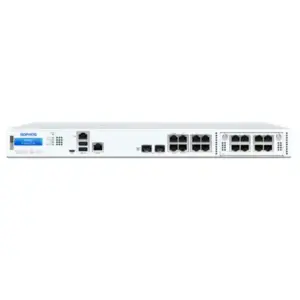
Palo Alto Networks WF-500-B Advanced WildFire Private Cloud Appliance in Dubai, UAE
The WF-500-B gives organisations a dedicated on-site platform for WildFire private cloud analysis. It is intended for environments where suspicious files must be detonated and assessed locally, while security teams retain control over how malware samples, reports and signatures are shared beyond the organisation.
Plan the complete deployment
Confirm appliance, license, software compatibility, network interfaces, rack requirements and implementation scope before ordering.
Direct answer for buyers
The Palo Alto Networks WF-500-B is a purpose-built appliance for hosting a WildFire private cloud inside an organisation’s network. Palo Alto Networks firewalls can submit suspicious files to it for local analysis, allowing benign, grayware and phishing samples to remain on premises. It is primarily considered by enterprises with regulatory, privacy, sovereignty or operational reasons for controlling sample movement. Before proceeding, buyers should verify the exact WildFire license, supported software release, required guest analysis images, expected connected-firewall count, network segmentation, rack and power arrangements, signature-generation policy and support coverage.
What the WF-500-B does
The appliance receives files forwarded by compatible Palo Alto Networks firewalls and analyses them in local sandbox environments. A sandbox executes or opens suspicious content in a controlled environment so that malicious behaviour can be observed without exposing production systems. The resulting verdicts and reports support prevention and investigation workflows across the Palo Alto Networks security stack.
A private-cloud design can be configured to keep analysed benign, grayware and phishing samples within the organisation. Malware forwarding, report sharing and signature workflows can be configured according to policy. This gives security and governance teams a clearer way to align threat analysis with internal handling requirements.
Who should consider it
The WF-500-B is most relevant where an organisation already uses Palo Alto Networks firewalls and needs an on-premises malware-analysis location. Typical candidates include regulated financial institutions, government departments, healthcare groups, defence-related environments, critical infrastructure operators, research organisations and enterprises with strict sample-handling rules.
It may be less suitable for organisations that do not have the operational resources to manage a dedicated appliance or that are comfortable using the public WildFire service. The correct choice depends on security policy, scale, integration, staffing, support and lifecycle requirements rather than on appliance ownership alone.
Business challenges this private cloud model can address
Controlled sample handling
Organisations can analyse designated samples locally instead of automatically sending every submission to an external cloud. The final design still requires clear rules for malware forwarding, reporting and signature sharing.
Regulatory alignment
A local analysis location can support architectures shaped by data-residency, confidentiality or sector-specific governance requirements. Compliance depends on the complete solution and operating process, not on the appliance alone.
Operational visibility
Security teams gain locally managed analysis, reports and verdict workflows that can be integrated with connected firewalls and, where planned, Panorama-based administration.
Resilience and scale planning
Organisations with higher availability or capacity needs can evaluate WildFire clustering, but cluster design, supported software and node requirements must be confirmed before purchase.
Product-fit decision matrix
| Requirement | Suitable when | Confirm before ordering |
|---|---|---|
| Local file detonation | Suspicious samples must be analysed within the corporate network. | Supported file types, analysis images and software release. |
| Palo Alto firewall integration | Existing firewalls will forward samples to the appliance. | Firewall versions, WildFire license and forwarding configuration. |
| Private or hybrid workflow | The organisation needs policy control over malware or report sharing. | Signature-generation and public-cloud forwarding policy. |
| High availability | Analysis services and critical data need cluster resilience. | Supported cluster size, identical software releases and network design. |
| Data-centre deployment | Rack, cooling, power and operations processes are available. | Rack type, redundant feeds, cabling and environmental conditions. |
Verified product information
The following table separates confirmed hardware and platform details from items that depend on software, licensing or deployment design.
| Brand | Palo Alto Networks |
|---|---|
| Product name | WF-500-B Advanced WildFire Private Cloud Appliance |
| Product type | On-site WildFire appliance running a purpose-built operating system |
| Primary purpose | Local analysis of suspicious files in a WildFire private cloud |
| RJ-45 interfaces | Two 100Mbps/1Gbps/10Gbps Ethernet ports, including management and Ethernet1/1 |
| SFP+ interfaces | Two 10Gbps SFP+ ports, Ethernet1/2 and Ethernet1/3 |
| System drive | 480GB SSD for operating-system files and system logs |
| Power | Dual AC power supplies; second supply provides redundancy |
| Console access | 9-pin serial console for boot messages, recovery and CLI access |
| Management | Local CLI and supported centralized management workflows; release dependent |
| Private-cloud scale | Palo Alto Networks documentation states that a private cloud can receive and analyse files from up to 100 firewalls |
| License | WildFire license required; exact entitlement and term must be confirmed |
| Analysis environments | Guest VM image and minimum PAN-OS compatibility are version dependent |
| Availability | Contact FourTeck for current UAE model, license, quantity and lead-time options |
Licensing, software and compatibility dependencies
The appliance should not be treated as a complete security outcome by itself. A WildFire license is required, and the correct entitlement must align with the connected firewalls and intended private-cloud workflow. The running PAN-OS or WildFire software release determines supported guest VM images, analysis features, cluster behaviour, management options and upgrade procedures.
Palo Alto Networks publishes a compatibility matrix for analysis environments. Installing an unsupported image can prevent samples from being processed correctly. Buyers should therefore record the current firewall versions, target appliance software, required analysis images, Panorama version and planned upgrade schedule before finalising the bill of materials.
Private-cloud documentation also notes that Android APK and macOS files are not supported for private-cloud analysis. File-type support can change with software releases, so the current vendor documentation should be reviewed for the intended deployment date.
A practical purchase and deployment journey
Define handling policy
Document which samples may remain local, which malware or reports may be shared, and who approves changes to the workflow.
Validate architecture
Confirm connected firewall count, traffic paths, management design, clustering need, rack, power and isolated VM-interface requirements.
Build the bill of materials
Match the appliance with license terms, support, optics, cables, rack requirements and professional services where necessary.
Install and configure
Rack the appliance, connect redundant power, configure management and data interfaces, activate licensing and establish firewall forwarding.
Test and operationalise
Validate submissions, verdict retrieval, reports, updates, alerting, backup procedures and administrator responsibilities.
Local analysis and sample-governance control
The main reason to select the WF-500-B is not simply to add another rack appliance. Its value lies in creating a local WildFire analysis location that can support specific governance decisions. Palo Alto Networks firewalls forward files to the appliance, where guest analysis environments inspect behaviour and return verdicts. Benign, grayware and phishing samples analysed by the private cloud remain within the organisation. Malware forwarding can be enabled, reports can be shared without the original sample, or files can be uploaded manually according to policy.
This flexibility matters when legal, security or privacy stakeholders distinguish between categories of content. A regulated organisation may permit the sharing of confirmed malware but prohibit automatic transfer of unclassified business documents. Another organisation may allow reports to be forwarded while retaining the original sample. The appliance supports the technical workflow, but policy design, approvals, logging and administrator access remain customer responsibilities.
Buyers should therefore involve security operations, network engineering, compliance, privacy and procurement teams early. The deployment should define who can change forwarding settings, who can retrieve reports, how long evidence is retained, and how exceptions are handled. FourTeck can help translate those requirements into a practical product and services quotation, but final governance rules should be approved by the organisation.
Network integration and operational manageability
The WF-500-B provides two multi-speed RJ-45 Ethernet ports and two 10Gbps SFP+ ports. The management port is used for appliance management and data traffic, while additional Ethernet interfaces can support deployment designs described in the relevant administration guide. Interface roles, IP addressing, routing, firewall rules and isolation must be planned carefully.
When a VM interface is used, Palo Alto Networks guidance calls for an isolated zone so that traffic generated during malware analysis cannot reach production networks. This is an essential design consideration. The sandbox is expected to observe malicious behaviour; therefore, its network path must be separated and controlled. Upstream firewall policy, DNS access, internet simulation, logging and monitoring should be agreed during design.
Central management through Panorama may simplify configuration and software operations for organisations running multiple Palo Alto Networks platforms. The exact management workflow depends on appliance mode and software release. Buyers should confirm whether the existing Panorama version supports the planned WF-500-B release and whether change-control procedures cover both the appliance and connected firewalls.
Resilience, clustering and lifecycle planning
The appliance includes dual AC power supplies, providing hardware-level power redundancy when each supply is connected to an appropriate independent power source. This does not by itself create service high availability. Organisations that require analysis continuity should assess WildFire appliance clustering, including node count, software consistency, network design, data replication and failure procedures.
Palo Alto Networks describes cluster high availability as a way to distribute critical data, reports and signatures and to maintain analysis or API services when a node fails. This capability is valuable for environments where the private cloud supports a large firewall estate or a critical security operations process. However, clustering adds cost, rack space, power, interfaces, support effort and upgrade coordination. It should be justified by business impact rather than selected automatically.
Lifecycle planning should include software upgrades, guest VM image compatibility, hardware support, log-drive and system-drive service procedures, backup of configuration, operational monitoring and periodic validation of submission workflows. Procurement teams should ask for current support terms and lifecycle status at quotation time because these details can change by region and date.
Suitable business environments and use cases
Government and public-sector networks
Departments with controlled information-handling requirements can evaluate local sandboxing as part of a documented threat-analysis architecture. Procurement should include security policy, support, installation and lifecycle review.
Financial and regulated services
Banks, insurers and payment organisations may use private analysis to align malware investigation with internal data classifications. Integration, audit evidence and operating procedures remain important.
Healthcare and research
Organisations handling sensitive clinical, research or intellectual-property data may prefer greater control over suspicious document analysis and sample movement.
Critical infrastructure
Energy, transport and industrial operators can consider the appliance where threat analysis must be integrated with segmented networks and strict operational controls.
Large enterprise security operations
Security operations teams managing many Palo Alto Networks firewalls can use a private cloud to centralise local analysis, provided capacity, high availability and administration are properly designed.
Sovereign or isolated environments
Networks with restricted external connectivity can evaluate local analysis, while recognising that updates, licensing and signature workflows still require planned connectivity and operational processes.
Questions to resolve before requesting a quotation
How many Palo Alto Networks firewalls will submit files?
Which firewall and Panorama software versions are currently deployed?
Which file types and analysis environments are required?
Must all samples remain on premises, or can malware and reports be forwarded?
Is a standalone appliance sufficient, or is cluster resilience required?
Which RJ-45 or SFP+ interfaces will be used?
Are compatible optics and cables already available?
Is there a dedicated 19-inch rack position with suitable cooling?
Can redundant power supplies connect to independent feeds?
Who will manage updates, guest images, reports and policy changes?
Is installation, configuration, testing or administrator handover required?
What support term, response coverage and renewal plan are expected?
Procurement checklist
How FourTeck can support the evaluation
FourTeck can help buyers convert a product request into a clearer procurement package. This can include confirming the exact model, reviewing the intended number of firewalls, identifying license and support dependencies, checking interface and accessory requirements, and coordinating a quotation for the appliance and related services. The objective is to reduce gaps between hardware ordering and the actual deployment requirement.
For projects that need professional services, FourTeck can discuss installation planning, management addressing, firewall-forwarding configuration, interface design, upgrade readiness, validation testing and administrator handover. Scope should be defined in writing because rack installation, network changes, policy design, clustering, migration and post-deployment support may require different resources.
Buyers can review other enterprise security products, explore available firewall and cybersecurity services, or contact the FourTeck security solutions team with the intended architecture and timeline.
UAE availability and support guidance
Contact FourTeck to confirm current WF-500-B availability in the UAE. Supply may depend on the exact regional SKU, quantity, license term, support selection and vendor lead time. A quotation should distinguish the hardware appliance from WildFire licensing, support, optics, cabling and professional services. Delivery and project coordination can be discussed after the final bill of materials and destination are confirmed.
Installation and configuration should be included in the quotation when required. Buyers should also confirm whether work is expected during business hours, within a controlled data centre, or as part of a larger firewall or Panorama change. These details affect access planning, technical resources and the handover process.
Dubai, Abu Dhabi, Sharjah and Ajman coverage
FourTeck can coordinate requirement review, quotation and project discussions for organisations in Dubai, Abu Dhabi, Sharjah and Ajman. The scope may include product selection, WildFire licensing guidance, accessory confirmation, delivery planning and implementation assistance. On-site work, data-centre access and project scheduling depend on the customer location, approved scope and engineer availability. Buyers should provide the deployment city, rack location, connected firewall count, software versions and desired timeline so the quotation reflects the actual requirement.
GCC availability
FourTeck can assist organisations across the GCC with requirement review and procurement coordination for the Palo Alto Networks WF-500-B. Projects in the United Arab Emirates, Saudi Arabia, Kuwait, Qatar, Bahrain and Oman may have different licensing, delivery, import, support and implementation considerations. Buyers should identify the destination country, exact appliance quantity, WildFire subscription term, support requirement, software environment and preferred deployment schedule. FourTeck can then help assess the bill of materials, coordinate quotation details, discuss configuration scope and plan the delivery process. Product availability, service visits, license activation rules and vendor lead times can vary by country, model and quantity. No local stock or fixed delivery schedule should be assumed until the requirement is reviewed and confirmed. For regional enquiries, buyers may also use the FourTeck Kuwait technology portal or the main regional contact channel.
Africa availability
FourTeck can support organisations evaluating the WF-500-B for projects in Africa, including selected opportunities in East Africa and other regions. Planning should account for destination-country requirements, appliance quantity, licensing region, power and rack standards, shipping arrangements, vendor lead time, local network readiness and the need for remote or on-site implementation assistance. Buyers should share the exact destination, connected firewall estate, preferred license term, support expectations and target deployment window. FourTeck can help review the model, related subscriptions, optics, accessories and configuration scope before preparing a quotation. Availability and fulfilment remain dependent on the final bill of materials and regional conditions, and immediate shipment or country-wide on-site coverage should not be assumed. Organisations can explore FourTeck Africa technology solutions, the Kenya technology portal or the Uganda technology portal for regional coordination.
Related products and services to consider
Palo Alto Networks firewalls
Compatible firewalls are required to forward samples to the private WildFire appliance. Model choice depends on throughput, interface and security-service requirements.
WildFire licensing
The appropriate license and subscription term should be confirmed for the connected firewall estate and intended analysis workflow.
Panorama management
Central management can support configuration and operational control where the planned software versions and architecture are compatible.
SFP+ optics and cabling
Transceiver type, fibre standard, cable length and switch compatibility must be confirmed rather than assumed.
Installation and configuration
Professional services may cover rack installation, interface setup, licensing, firewall forwarding, testing and documentation.
Lifecycle and renewal support
Support-term tracking, software planning and license renewal coordination can help maintain a usable private-cloud deployment.
Frequently asked questions
What is the WF-500-B used for?
It hosts a WildFire private cloud on the customer’s network so compatible Palo Alto Networks firewalls can submit suspicious files for local sandbox analysis.
Does the appliance require a WildFire license?
Yes. Palo Alto Networks documentation lists a WildFire appliance and WildFire license as requirements. The exact entitlement and term should be confirmed during quotation.
Do all analysed files remain on premises?
Benign, grayware and phishing samples analysed by the private cloud remain local. Malware or reports can be forwarded according to configuration and policy.
How many firewalls can use a WildFire private cloud?
Current Palo Alto Networks documentation states that a private cloud can receive and analyse files from up to 100 Palo Alto Networks firewalls. The complete architecture should still be sized for the actual environment.
Which network ports are available?
The WF-500-B has two multi-speed RJ-45 Ethernet ports and two 10Gbps SFP+ ports. Interface roles and cabling depend on the deployment design.
Can the WF-500-B be deployed in a cluster?
WildFire appliances support clustering for scale and resilience. Node count, software versions, networking and licensing should be verified before purchase.
Are SFP+ transceivers included?
Included accessories were not confirmed for this page. Required optics and cables should be listed separately in the final bill of materials.
Does FourTeck provide configuration assistance?
Configuration scope can be discussed for licensing, management, interface setup, firewall forwarding, testing and handover. The exact tasks should be included in the quotation.
Is the WF-500-B available in Dubai?
Contact FourTeck to confirm current UAE availability, regional SKU, quantity, license term, support and vendor lead time.
What information is needed for an accurate quote?
Provide the appliance quantity, connected firewall count, PAN-OS and Panorama versions, license term, interfaces, optics, support level, installation scope, destination and target schedule.
Confirm the complete WF-500-B requirement
Share your firewall count, software versions, license term, interface needs, destination and implementation scope. FourTeck can coordinate the appliance, related subscriptions, support and project services in one quotation.

Reviews
There are no reviews yet.