

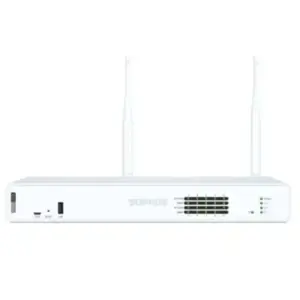
Palo Alto Networks PA-550 ML-Powered Next-Generation Firewall in Dubai, UAE
A compact PA-500 Series appliance for organisations that need application-aware security, branch segmentation, controlled internet access and adaptable copper or fibre connectivity. The right purchase depends on traffic inspection needs, subscriptions, transceivers, management preferences and implementation scope.
Prepare an accurate PA-550 quote
Share internet speed, site count, user and device volumes, required security services, interfaces and support expectations.
Direct answer for buyers
The Palo Alto Networks PA-550 is a fixed-configuration, 1U ML-Powered Next-Generation Firewall in the PA-500 Series. It is mainly used to protect branch offices, retail locations and midsize environments by identifying applications, users and content, applying security policy and enabling licensed threat-prevention services. Organisations should consider it when they need more interface flexibility and branch capacity than entry-level appliances, including 1GbE copper, 1GbE fibre and 10GbE-capable uplinks. Before proceeding, buyers should confirm inspected traffic demand, subscription bundle, support term, VPN usage, logging retention, SFP or SFP+ requirements, high-availability design, power redundancy and whether installation, migration or central management work is included.
What the PA-550 does
The appliance sits at a network boundary or internal segmentation point and evaluates traffic according to security policy. Rather than treating a connection only by port and protocol, the Palo Alto Networks platform is designed to identify applications, associate activity with users where identity sources are integrated and inspect content through enabled security services. This gives administrators a more useful basis for deciding what may pass, what requires additional inspection and what should be blocked. The PA-550 can support internet-edge control, inter-zone segmentation, site-to-site connectivity, remote-access designs and branch standardisation, subject to licenses, software support and the final configuration.
Who should evaluate it
The model is relevant to IT teams securing a sizeable branch, a group of retail sites, a regional office, a midsize headquarters or a distributed estate that benefits from consistent policy. It may also suit organisations replacing an older firewall where more high-speed interfaces, modern software support or centralised rollout methods are required. It is not automatically the right model for every branch. Very small sites may be served by a lower model, while high-volume campuses, data centres or heavily encrypted environments may require a larger platform. A realistic traffic and feature assessment remains essential.
Business challenges the PA-550 can help address
Unclear application usage
Traditional rule sets built mainly around ports can make it difficult to understand how business and non-business applications are using a connection. Application-aware policy can give administrators more context for permitting, restricting or inspecting traffic.
Inconsistent branch policy
Distributed sites often accumulate local exceptions and configuration differences. A standardised firewall platform, templates and central management approach can reduce drift, although the management design and licenses should be agreed before rollout.
Mixed copper and fibre needs
Branches may need copper access connections, fibre handoffs and faster uplinks. The PA-550 provides several interface types, but optics, cabling and negotiated speeds must match the carrier, switch and topology.
Limited rollout resources
Zero Touch Provisioning can support repeatable deployment workflows where the surrounding management and onboarding process is properly designed. It does not remove the need for sound templates, addressing, policy review, testing and operational ownership.
PA-550 suitability matrix
| Requirement | Suitable when | Confirm before ordering |
|---|---|---|
| Branch internet security | The site needs application control and licensed security inspection at the WAN edge. | Internet bandwidth, encrypted traffic level, enabled subscriptions and expected growth. |
| Flexible connectivity | The design uses 1GbE copper, 1GbE SFP or 10GbE-capable SFP+ interfaces. | Transceiver type, fibre standard, cable distance, switch compatibility and port allocation. |
| Resilient security edge | The business can deploy a second compatible unit and design high availability correctly. | HA mode, links, addressing, license alignment, support coverage and failover testing. |
| Multi-site standardisation | The organisation wants repeatable policy, onboarding and lifecycle operations. | Management platform, template hierarchy, administrative roles and change process. |
| High-volume data-centre edge | Only when verified workloads remain within platform capacity. | A larger PA-Series model may be more appropriate for sustained high throughput or dense interfaces. |
Verified PA-550 technical information
The following details are based on Palo Alto Networks PA-500 Series product and hardware documentation available for the exact PA-550 model. Performance depends on actual traffic mix and configuration. Subscription functionality, support entitlement, management features and software compatibility should be checked for the proposed order.
| Brand | Palo Alto Networks |
|---|---|
| Product name | PA-550 ML-Powered Next-Generation Firewall |
| Product family | PA-500 Series |
| Typical positioning | Distributed enterprise branch offices, retail locations and midsize businesses |
| Copper network ports | 12 x RJ-45 10/100/1000 Mbps; port 1 supports ZTP; ports 3 and 4 can be configured as fail-open ports |
| Fibre network ports | 2 x SFP 1Gbps ports and 2 x SFP/SFP+ 1Gbps/10Gbps ports |
| Management interface | Dedicated RJ-45 1Gbps management port |
| Console and USB | USB-C console, RJ-45 console and one USB port for administration and bootstrap use |
| High availability | PA-500 Series supports active/passive and active/active HA; final design and software support must be verified |
| Power | External AC adapter, 100–240V AC, 50–60Hz; second adapter may be added for load sharing and power redundancy |
| Maximum power consumption | 57W |
| Form factor | 1U; appropriate rack mounting kit and installation arrangement should be confirmed |
| Dimensions | 1.74 x 13 x 12.1 inches (44.2 x 330.2 x 307.3 mm) |
| Firewall weight | 11.2 lb (5.1 kg) |
| Storage capacity | 120 GB |
| First supported software release | PAN-OS 12.1.2; current supported release and upgrade path must be checked at deployment time |
| Security subscriptions | Subscription dependent; confirm the selected bundle, term and included services |
| Availability | Contact FourTeck for current UAE options, lead time and regional ordering guidance |
Licensing, compatibility and configuration dependencies
The appliance hardware and the operational security service are not the same purchasing decision. Advanced threat prevention, malware analysis, URL controls, DNS security, SD-WAN functions and other services may depend on the selected subscription package and current Palo Alto Networks commercial structure. Support entitlement, software updates and replacement services also need to match the intended lifecycle. A quotation should therefore identify the appliance, support term, subscription bundle, any central management requirement, optics, rack accessories, spare or redundant power arrangements and professional services as separate bill-of-material components.
Compatibility must also be reviewed. Confirm the supported PAN-OS release, management platform version, transceiver models, fibre type, upstream carrier handoff, switch configuration, authentication services, routing protocols, VPN peers, logging destination and high-availability topology. Third-party optics or unsupported components can create operational or support complications. FourTeck can assist with requirement clarification, but final compatibility should be based on the exact vendor-supported configuration and the customer’s network design.
A practical PA-550 purchase and deployment journey
Define the site profile
Document internet circuits, WAN handoffs, internal zones, users, devices, wireless networks, servers, cloud applications, remote-access users and business-critical flows. Include expected growth rather than only today’s average usage.
Size inspected traffic
Estimate traffic with the intended security services enabled, including encrypted sessions, application inspection, threat prevention and VPN. Headline firewall throughput alone is not a complete sizing method.
Build the bill of materials
Select the appliance, support, subscription term, optics, cables, rack parts, optional second power adapter, management components and professional services. For HA, duplicate and align the required elements.
Prepare configuration
Create addressing, zones, routing, NAT, security policy, authentication, certificates, logging and update plans. Existing rule sets should be reviewed rather than copied without validation.
Test and transition
Validate routing, internet access, publishing rules, VPNs, failover, logging and security events. Use a documented rollback approach, especially when replacing the active gateway.
Application visibility that supports usable policy
One of the main reasons buyers evaluate a Palo Alto Networks firewall is the ability to frame policy around applications, users and content rather than only transport-layer information. For a branch, this can make controls easier to align with business intent. A rule can be planned around approved collaboration tools, line-of-business services, software updates or controlled administrative access while maintaining stronger scrutiny of unknown or risky traffic. The operational benefit is not simply a longer list of detected applications. It is the possibility of writing policy that explains why a connection is allowed and who is expected to use it.
Good outcomes still depend on disciplined implementation. Identity mappings must be accurate, applications should be observed before enforcement is tightened, dependencies must be understood and exceptions should have owners and review dates. Decryption, where legally and technically appropriate, needs certificate planning, endpoint trust and privacy governance. A PA-550 cannot improve policy clarity if administrators carry forward a large, undocumented ruleset without analysis. FourTeck can help scope migration and rule-review work separately from hardware supply.
Interface flexibility for changing branch designs
The PA-550 offers a useful mix of twelve 1GbE copper ports, two 1GbE SFP ports and two ports that support either 1GbE SFP or 10GbE SFP+ operation. This can help when a branch has several internal security zones, dual service-provider links, fibre carrier handoffs, a high-speed switch uplink or a dedicated path for critical infrastructure. The fail-open capability available on ports 3 and 4 may also be relevant to specific continuity designs, although it should be deliberately configured and tested rather than assumed to fit every topology.
Port count alone does not complete the design. Buyers should map every physical and logical interface, reserve capacity for future changes and confirm whether VLAN subinterfaces will be used. For optical links, the chosen SFP or SFP+ module must match speed, fibre type, connector, wavelength and distance. A 10GbE port does not guarantee that the entire inspected traffic path can sustain 10Gbps under all enabled services. Capacity planning should use the real application and security profile.
Repeatable operations across distributed sites
Branch security becomes expensive when every location is treated as a unique project. The PA-550 supports Zero Touch Provisioning, which can contribute to a repeatable onboarding process when combined with suitable management, templates and operational controls. A device can be shipped toward the destination while the technical team prepares standard configuration and policy centrally. This is particularly useful for retailers, professional-service firms, healthcare groups, education networks and enterprises opening or refreshing several similar sites.
Zero-touch does not mean zero planning. The team must know how the device will reach its management service, how serial numbers and site records will be associated, which template variables are site-specific, who approves policy and what happens if onboarding fails. Administrators also need a method for software updates, configuration backups, certificate renewal, alert handling and periodic rule review. The purchase conversation should therefore include lifecycle operations and not stop at appliance delivery.
Where the PA-550 may fit well
Regional offices
A branch with multiple business teams, local servers, cloud applications and dual connectivity may benefit from the model’s port mix and policy capabilities. The final choice should account for inspected peak traffic and remote-access load.
Retail and hospitality sites
The firewall can support separation of point-of-sale, corporate, guest, IoT and management networks. Segmentation design, wireless integration, logging and compliance responsibilities remain part of the wider project.
Midsize headquarters
An organisation with moderate internet traffic and several internal zones may use the PA-550 as its primary security gateway, provided sizing confirms headroom for subscriptions, VPNs, encryption and future growth.
Standardised branch estates
Enterprises can consider the PA-550 for a branch tier within a broader model strategy. Smaller and larger locations may require different appliances, so templates should account for model-specific ports and capacity.
Operational and integration considerations
A firewall is connected to almost every important network dependency. Before installation, document routing ownership, IP addressing, DHCP responsibilities, DNS paths, public address translation, published services, dynamic routing, site-to-site VPNs, remote-access VPNs, identity sources, certificate authorities, network time, logging, monitoring and administrator authentication. The design should show which functions remain on routers, switches, wireless controllers or cloud services and which move to the PA-550.
For migration from another vendor, convert business intent rather than syntax. An old rule may reference obsolete hosts, wide service groups or undocumented exceptions. Review usage records, application dependencies and owner approval before recreating it. NAT and VPN settings deserve particular attention because a small mismatch can interrupt public services or partner connectivity. Schedule stakeholder testing for finance, voice, collaboration, ERP, remote access and other critical workflows.
Logging must be sized and routed deliberately. The appliance has local storage, but retention expectations, investigation workflows and reporting needs may justify central logging or management. Decide which events need immediate alerts, how long records must be retained and who responds. Security subscriptions can produce valuable detections only when someone reviews and acts on them.
High availability should be treated as a complete architecture. Two appliances alone do not eliminate single points of failure. Consider power feeds, ISP circuits, switches, cabling, routing, state synchronisation, management access and maintenance procedures. Test both planned and unplanned failover scenarios. A second power adapter can provide load sharing and power redundancy for the PA-550, but the rack and electrical design must support the intended outcome.
Questions to resolve before requesting a quotation
PA-550 procurement checklist
How FourTeck can assist
FourTeck can review the intended site profile and help translate it into an appliance, license, subscription, optics and services request. The discussion can include branch sizing, interface mapping, high availability, central management, policy migration, installation planning, configuration, testing and documentation. This assistance is intended to reduce ambiguity in the bill of materials; it does not replace vendor design limits or customer approval.
For a broader view of available security appliances, visit the FourTeck firewall products section. Businesses planning assessment, migration or configuration work can also review firewall services in the UAE.
UAE availability and support guidance
Contact FourTeck to confirm current PA-550 availability in the UAE. Supply timing may depend on the appliance quantity, subscription package, support term, regional product code, optics and vendor lead time. Delivery and project coordination can be discussed after the exact requirement is confirmed. Installation, migration and configuration should be listed in the quotation when required rather than assumed to be part of hardware supply.
FourTeck can coordinate enquiries for businesses in Dubai, Abu Dhabi, Sharjah and Ajman through one combined requirement review. Share the deployment address, rack readiness, circuit details, technical contacts and preferred project window. Use the FourTeck UAE contact page to begin the quotation process.
GCC availability
FourTeck can assist organisations planning PA-550 projects across GCC markets by reviewing the required appliance quantity, subscription term, support level, interface modules, deployment model and professional-service scope. Regional enquiries may involve the United Arab Emirates, Saudi Arabia, Kuwait, Qatar, Bahrain or Oman, but each destination can have different commercial, licensing, logistics and project requirements. The first step is to identify the destination country, site type, expected traffic, required security services, quantity and target deployment period.
Product availability, licensing, delivery schedules, service visits and vendor lead times can vary by country, model and order size. FourTeck does not assume local stock or a fixed installation date. Buyers should also confirm power, rack, transceiver and regulatory requirements for the destination. For a Kuwait-specific discussion, review FourTeck technology coordination in Kuwait, or contact the UAE team for a regional quotation review.
Africa availability
FourTeck can help organisations evaluating the PA-550 for African branch, retail, professional-service and midsize enterprise deployments. Assistance may include product selection, subscription and support review, optics, power planning, configuration scope, migration expectations and regional procurement coordination. Buyers in East Africa and other regions should share the destination country, exact quantity, site profile, preferred deployment schedule and whether local technical resources will support installation and handover.
Availability and fulfilment can depend on the destination, product code, license region, shipping arrangement, vendor lead time, power standards, fibre requirements and local project conditions. Immediate shipment, customs outcomes and country-wide onsite coverage should not be assumed. For relevant regional channels, visit FourTeck Africa, FourTeck Kenya or FourTeck Uganda. A complete requirement enables more useful product and deployment guidance.
Related options and services to consider
PA-500 Series alternatives
A smaller or larger model may fit different branches. Compare verified inspected performance, port requirements, PoE needs and growth rather than selecting by model number alone.
Security subscriptions
Confirm which threat, URL, DNS, malware, SD-WAN or device-security services are needed. Bundle contents and terms are subscription dependent.
Optics and rack accessories
Use suitable supported transceivers, cabling and mounting components. Compatibility should be validated against the exact port and physical installation.
Implementation services
Installation, policy configuration, VPN setup, migration, testing, documentation and knowledge transfer can be scoped according to the customer environment.
Why businesses contact FourTeck
Firewall procurement often becomes complicated because the appliance is only one element of the working solution. Buyers contact FourTeck to clarify requirements, compare suitable models, review licenses and subscriptions, assemble a bill of materials and coordinate a quotation. The team can discuss whether the PA-550 has the right interfaces and deployment position, whether another PA-500 Series model should be evaluated and which items must be added for high availability, power redundancy, optics or management.
FourTeck can also help define professional-service boundaries. A customer may need hardware supply only, or may require rack installation, base configuration, migration from an existing firewall, VPN recreation, policy cleanup, central management onboarding, testing and handover documentation. Stating these expectations early helps separate required deliverables from assumptions. Learn more about the company through the FourTeck firewall team overview.
Frequently asked questions
Is the PA-550 suitable for a branch office?
Yes, it is positioned for distributed enterprise branches, retail locations and midsize businesses. Suitability depends on inspected traffic, enabled security services, VPN demand, interface needs and future growth.
How many network interfaces does the PA-550 provide?
It provides twelve 10/100/1000 copper RJ-45 network ports, two 1Gbps SFP ports and two SFP/SFP+ ports supporting 1Gbps or 10Gbps network traffic, plus dedicated management and console interfaces.
Does the PA-550 include all security subscriptions?
Do not assume that every advanced service is included with the hardware. The required subscriptions, bundle contents, term and support entitlement should be clearly listed in the quotation.
Can the PA-550 use 10GbE fibre connections?
Yes. Two network ports support SFP/SFP+ operation at 1Gbps or 10Gbps. The transceiver, fibre type, distance and neighbouring equipment must be compatible and supported.
Does it support high availability?
The PA-500 Series supports active/passive and active/active HA. A complete design requires two compatible appliances, aligned licenses, suitable links, addressing, switching and failover testing.
Can a second power adapter be used?
Yes. The PA-550 can operate with one adapter, and a second adapter can be added for load sharing and power redundancy. Confirm the required adapter and rack power arrangement.
Can FourTeck migrate an existing firewall configuration?
Migration can be discussed as a professional-service scope. The work may include discovery, rule review, NAT and VPN conversion, implementation, testing, rollback planning and documentation.
Is the PA-550 available in Dubai?
Contact FourTeck to confirm current UAE availability. Lead time can vary by quantity, regional product code, subscriptions, support package, optics and vendor supply conditions.
What information is needed for a quotation?
Provide quantity, deployment location, internet and WAN speeds, user and device count, security services, subscription term, port and optic requirements, HA preference, support term and implementation scope.
Build the right PA-550 requirement before ordering
Send FourTeck your site profile, interface plan, security subscriptions, support term and service requirements for a focused UAE quotation and deployment discussion.

Reviews
There are no reviews yet.