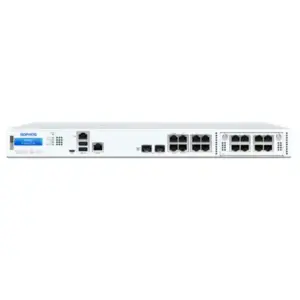
Managed Layer 2 switching for structured business networks
MikroTik CSS326-24G-2S+RM in Dubai, UAE
The MikroTik CSS326-24G-2S+RM brings twenty-four Gigabit access ports and two flexible SFP+ uplinks into a compact 1U rackmount switch. It is designed for buyers who need straightforward managed switching, browser-based SwOS administration and a clear path for linking access devices to servers, storage, another switch or a fibre backbone.
Direct answer for business buyers
The CSS326-24G-2S+RM is a managed Layer 2 switch for connecting up to twenty-four Gigabit Ethernet devices while reserving two SFP+ cages for faster uplinks or fibre connectivity. It is mainly used as an access or aggregation switch in offices, branches, equipment rooms and other structured networks. It should be considered by buyers who want essential VLAN, port-control, monitoring and bandwidth-management functions through MikroTik SwOS. Before proceeding, confirm whether SwOS-only operation meets the network design, which optical or copper modules are required, whether Power over Ethernet output is needed, and how the switch will connect to the router, firewall, servers or upstream core.
What it does
This switch concentrates wired endpoints onto a managed Ethernet platform. Computers, IP phones with separate power arrangements, wireless access points, printers, recorders, servers and other network equipment can connect through its Gigabit ports. Administrators can then organise traffic using VLANs, control forwarding between ports, monitor selected traffic with port mirroring, apply MAC filtering and set bandwidth limits. The two SFP+ cages provide options for 10 Gigabit uplinks or compatible 1.25 Gigabit modules, subject to module support and the wider network design.
Who it suits
The model is relevant to small and medium businesses, branch offices, schools, clinics, retail facilities, hospitality sites, system integrators and project teams that need many standard Gigabit access ports with a pair of faster uplink choices. It is particularly suitable when switching is the central requirement and a separate router or firewall already handles internet access, security policy, VPN and inter-VLAN routing. Organisations seeking advanced RouterOS routing functions should evaluate the CRS326 family or another appropriate platform instead.
Business challenges this switch can help address
Port concentration
A growing office may outgrow an eight- or sixteen-port switch. Twenty-four Gigabit ports provide a more practical connection point for multiple desks, printers, access points and operational devices.
Uplink bottlenecks
Two SFP+ cages can provide higher-speed links to compatible switches, servers or storage, helping avoid forcing all access traffic through one standard Gigabit uplink.
Traffic separation
VLAN support allows a network designer to separate departments, guest access, surveillance systems or operational devices when the connected router and overall design support the same segmentation plan.
Operational visibility
Port statistics, mirroring and basic managed controls give administrators more insight than an unmanaged switch, supporting troubleshooting and controlled changes.
Core switching capabilities
Product-fit matrix
| Requirement | Suitable when | Confirm before ordering |
|---|---|---|
| Twenty-four wired access connections | Most endpoints use standard Gigabit Ethernet | Actual active port count and growth allowance |
| 10 Gigabit uplink options | The upstream device has compatible SFP+ connectivity | Module, cable, fibre type, wavelength and distance |
| Layer 2 managed switching | Routing and firewall functions are handled elsewhere | Whether SwOS features match the approved design |
| Rack installation | A standard equipment rack and suitable ventilation are available | Rack depth, power, cable management and ear mounting |
| Quiet switching environment | Passive cooling is preferred | Ambient conditions and cabinet airflow |
Verified technical information
| Brand | MikroTik |
|---|---|
| Product code | CSS326-24G-2S+RM |
| Product type | Managed Ethernet switch |
| Operating system | MikroTik SwOS only |
| Ethernet ports | 24 × 10/100/1000 Mbps |
| SFP+ ports | 2 cages supporting compatible 10G SFP+ and 1.25G SFP modules |
| Switch chip | 98DX3216 |
| Form factor | 1U rackmount |
| Dimensions | 443 × 144 × 44 mm |
| Power inputs | DC jack and passive PoE input |
| Input range | 10–30 V according to the current product specification; deployment should follow the supplied documentation |
| Maximum power consumption | 19 W |
| Cooling | Passive |
| Tested ambient temperature | −20°C to 70°C |
| Included items | Rack ears, screw set and 24 V 1.2 A power adapter, subject to regional package confirmation |
| PoE output | Not provided; passive PoE is an input powering option, not a powered-device output function |
Technical details should be reconfirmed against the current manufacturer documentation and the exact regional package at the time of purchase. SFP and SFP+ interoperability depends on the selected module, cable, firmware and connected equipment.
Important operating-system and compatibility notice
The CSS326-24G-2S+RM runs SwOS and does not provide the RouterOS dual-boot capability found on the similarly named CRS326-24G-2S+RM. This distinction matters during procurement. SwOS is designed for managed switching and provides a focused web interface, while RouterOS supports a broader routing and services platform on compatible models. Buyers should not select the CSS326 when the project requires the switch itself to perform firewalling, dynamic routing, advanced VPN services or other RouterOS-dependent functions.
Transceivers and direct-attach cables should also be checked carefully. Confirm data rate, connector, fibre mode, wavelength, reach, module temperature range and compatibility at both ends of the link. A physically fitting module is not automatically the correct module for the intended circuit.
A practical purchase and deployment journey
Map connected devices
Count current endpoints, spare ports, uplinks and any devices that require PoE from a separate injector or powered switch.
Define uplinks
Decide whether each SFP+ cage will connect by fibre, direct-attach cable or compatible copper transceiver, and document link distance.
Plan VLANs
Confirm tagged and untagged port roles, management access, trunk requirements and the routing or firewall gateway for every network segment.
Confirm installation scope
Review rack space, ventilation, patch panels, cable labelling, power feeds, configuration responsibility and acceptance testing.
Request the bill of materials
Include the switch, correct modules or cables, quantity, any spare transceivers, installation accessories and requested technical services.
Efficient access switching for everyday business traffic
The core role of this model is to provide predictable Layer 2 connectivity for a group of wired devices. In a typical office design, the CSS326 can sit between endpoint cabling and an upstream firewall or router. Each desk, printer, access point, controller, server interface or building system receives a Gigabit port, while the SFP+ links carry aggregated traffic toward a central switch or high-capacity network service.
This arrangement can be valuable where endpoint traffic is individually modest but the combined demand exceeds a single Gigabit uplink. A pair of 10 Gigabit-capable cages gives the designer room to create a faster upstream path, connect to two separate destinations, or reserve one link for future expansion. The exact topology still needs careful planning. Two physical uplink ports do not automatically create resilience, stacking or link aggregation; those outcomes depend on supported features, configuration and the connected platform.
The switch is non-PoE on its access side. That makes it suitable for endpoints with their own power source, but a poor fit when a project expects the switch to power phones, cameras or wireless access points directly. In those cases, a PoE-capable switch or approved injectors should be considered. Clarifying this point early prevents an incomplete bill of materials.
SwOS management without unnecessary routing complexity
SwOS gives administrators a focused interface for switch configuration. Rather than presenting the extensive routing, firewall and service menus associated with RouterOS, it concentrates on port behaviour, VLANs, forwarding, statistics, access control and traffic-handling functions. This can shorten the learning path for teams whose requirement is clearly limited to managed Layer 2 switching.
A simpler interface does not remove the need for design discipline. VLAN mistakes can disconnect management access, bridge previously separated networks or send tagged traffic toward an endpoint that does not understand it. Port mirroring can increase traffic on a monitoring port, and bandwidth controls can affect application performance when values are chosen without measurements. Configuration should therefore be documented, backed up and tested in a controlled sequence.
For multi-site organisations, SwOS administration also requires an operational plan. Decide who owns credentials, how firmware updates are reviewed, where configuration backups are kept and how remote access is secured. The management interface should not be exposed directly to the public internet. Access should be restricted through an appropriate management network, VPN or administrative path controlled by the organisation’s firewall and security policy.
Flexible fibre and high-speed uplink planning
The two SFP+ cages are among the most important reasons to consider the CSS326-24G-2S+RM. They can support compatible 10 Gigabit SFP+ modules and compatible 1.25 Gigabit SFP modules, enabling links that range from short in-rack direct-attach connections to longer optical runs. This flexibility can help connect an access switch to a server room core, a storage host, another floor, a nearby building or a fibre handoff.
Module selection must match both physical and optical requirements. Multimode and single-mode fibre are not interchangeable design assumptions. Connector type, wavelength, fibre grade, reach, transmit power and receive sensitivity all matter. For bidirectional single-fibre modules, the transmit and receive wavelengths must be paired correctly. For copper SFP+ modules, power consumption and thermal behaviour should be considered, especially in enclosed racks.
FourTeck can help translate a link description into a quotation requirement. Useful information includes the two devices being connected, distance, available cable type, desired speed, connector at each end, indoor or outdoor pathway and whether existing fibre has been tested. This avoids selecting a transceiver based only on the connector shape or advertised speed.
Ideal business environments and use cases
Branch office access layer
Connect office workstations, printers and local infrastructure to a central firewall while using an SFP+ link toward the main communications rack.
Education and training rooms
Provide managed Gigabit connectivity for computer labs or training stations while separating administration, student and guest traffic through a planned VLAN design.
Hospitality back-office networks
Aggregate operational systems, management workstations and non-PoE devices with controlled uplinks to the property’s wider network.
Server and storage edge
Use Gigabit access for management or lower-demand interfaces and compatible SFP+ links where a higher-speed server or storage path is required.
Retail and service locations
Connect tills, office systems, controllers and other powered endpoints, with segmentation aligned to payment, guest and operational security requirements.
Surveillance aggregation without PoE
Aggregate independently powered cameras, recorders or downstream PoE switches, while checking bandwidth, VLAN and uplink capacity carefully.
Integration and operational considerations
A managed switch becomes part of a wider network rather than operating in isolation. The router or firewall must understand any VLANs that need inter-network communication or internet access. DHCP services must be available in the correct segments. Access points, phones, cameras and hypervisors may need tagged trunks, untagged access ports or mixed profiles. The complete path should be documented from endpoint to gateway.
The management address deserves special attention. Place it on a controlled network, use a strong administrator password, keep firmware current through an approved change process and limit who can reach the web interface. Record the management IP, VLAN, credentials ownership and recovery method. A reset can restore access but may also remove production configuration, so it should not be the first troubleshooting step.
Cabling quality also affects outcomes. Gigabit copper connections require correctly terminated structured cabling within supported distance limits. Fibre links require clean connectors, correct polarity and appropriate optics. Rack installation should preserve bend radius, airflow and service access. Power should be provided through the supplied or approved method, and any passive PoE input design must be checked carefully because passive PoE does not perform the same negotiation as standards-based PoE.
Monitoring expectations should be realistic. SwOS provides useful switch statistics and port controls, but it is not a replacement for a dedicated network-management platform, security information system or application performance tool. Buyers requiring centralised multi-vendor monitoring should identify the desired protocols and platform compatibility before finalising the design.
Questions to resolve before ordering
Confirm that routing, firewalling and VPN services will be provided by another device.
The switch does not power connected phones, cameras or access points through its access ports.
Specify DAC, multimode fibre, single-mode fibre or compatible copper transceiver and the required distance.
Document port membership, trunks, native or untagged behaviour and gateway locations.
Define whether resilience requires dual uplinks, a second switch, spanning-tree design or another architecture.
Clarify installation, initial configuration, documentation, testing and post-deployment responsibilities.
Procurement checklist
✓ Exact model: CSS326-24G-2S+RM
✓ Required switch quantity and spare allowance
✓ Current and planned endpoint count
✓ SFP or SFP+ module type for each uplink
✓ Fibre mode, connector and link distance
✓ Rack space, mounting and cable-management needs
✓ Power source and passive PoE input decision
✓ VLAN and management-address plan
✓ Upstream firewall, router or core-switch compatibility
✓ Installation and configuration responsibilities
✓ Firmware, backup and credential-management process
✓ Delivery destination and requested schedule
FourTeck consultation and configuration assistance
FourTeck can help buyers turn a general switch requirement into a clearer bill of materials. The review can cover port count, uplink speed, fibre distance, transceiver choice, VLAN scope, rack placement, power arrangement and the role of the connected router or firewall. This is especially useful when the project description simply asks for a “24-port managed switch” but does not yet explain whether PoE, Layer 3 routing, stacking, redundancy or centralised management is required.
Configuration support can be discussed as a separate scope. Depending on the requirement, this may include an agreed management address, port naming, VLAN membership, trunk settings, basic bandwidth controls, traffic mirroring or handover documentation. Final scope depends on the approved network design and the information supplied by the customer. Migration work, after-hours changes, onsite attendance and testing requirements should be identified before quotation.
For related infrastructure guidance, buyers can review the FourTeck technology product range, discuss network installation and configuration services, or send project details through the FourTeck Dubai contact page.
UAE availability and support guidance
Contact FourTeck to confirm current UAE availability for the MikroTik CSS326-24G-2S+RM. Availability may depend on required quantity, regional supply, selected transceivers, accessories and vendor lead time. A useful request should include the destination, number of switches, preferred uplink type, fibre distance and any configuration or installation expectations. This allows the quotation to cover the complete requirement rather than the switch alone.
Delivery and project coordination can be discussed after the exact bill of materials is confirmed. Installation and configuration are not assumed to be included with product supply and should be stated in the quotation when required. Warranty terms, package contents and support arrangements should also be confirmed for the supplied regional unit.
Dubai, Abu Dhabi, Sharjah and Ajman coverage
Businesses planning deployments in Dubai, Abu Dhabi, Sharjah and Ajman can contact FourTeck for requirement review, quotation coordination and delivery planning. Multi-site requests should identify the quantity required at each location, whether every site uses the same network design, and whether configuration templates need site-specific management addresses or VLAN assignments. Where onsite work is requested, rack access, change windows, cable readiness, security procedures and customer contacts should be agreed in advance. Coverage and service scope depend on the project requirement and should be confirmed in the final quotation.
GCC availability
FourTeck can assist organisations planning MikroTik switching requirements across GCC markets, including projects in the United Arab Emirates, Saudi Arabia, Kuwait, Qatar, Bahrain and Oman. Assistance can include reviewing the requested model, validating whether SwOS-only operation is appropriate, identifying suitable uplink modules, preparing quotation details and discussing configuration or installation scope. Product availability, licensing considerations for related systems, delivery schedules, service visits and vendor lead times can vary by country, quantity and project conditions. Buyers should provide the destination country, exact product code, required quantity, fibre or copper uplink specification, deployment location and expected timeline. For regional enquiries, use the FourTeck regional contact channel. Projects involving Kuwait can also reference FourTeck Kuwait technology assistance. Final fulfilment and service arrangements remain subject to confirmation.
Africa availability
Organisations evaluating the CSS326-24G-2S+RM for African operations can ask FourTeck for product-selection and regional procurement guidance. The discussion may cover switch quantity, transceiver and fibre requirements, rack conditions, power arrangements, configuration scope, support expectations and the compatibility of the proposed uplink design. Availability and fulfilment may depend on the destination, model quantity, shipping arrangement, local electrical or regulatory requirements, vendor lead time and installation conditions. Buyers should share the destination country, exact requirement, preferred deployment schedule and whether remote configuration or onsite coordination is expected. FourTeck resources for African technology projects, Kenya network requirements and Uganda technology enquiries can support initial planning. No local inventory, customs outcome or fixed delivery date is implied until confirmed.
Related products and services to evaluate
MikroTik CRS326-24G-2S+RM
Consider the similarly sized CRS model when dual-boot RouterOS and SwOS capability is required. Confirm the exact operating and routing expectations before treating it as a substitute.
Compatible SFP and SFP+ modules
Select optics or copper modules according to data rate, distance, fibre type, connector, wavelength and compatibility at both ends.
PoE access switching
Where phones, cameras or access points must receive power through Ethernet, evaluate a switch designed with the required PoE output budget.
Network configuration service
Discuss VLAN design, management access, uplink configuration, documentation and testing as a defined professional service scope.
Why businesses contact FourTeck
Technology buyers often need more than a model number. They need to know whether the product fits the topology, which accessories complete the link, how the device will be powered and managed, and what installation or configuration tasks belong in the project. FourTeck can help clarify these points before the quotation is finalised.
Assistance may include model comparison, bill-of-material guidance, compatibility review, uplink selection, quotation coordination, installation planning and configuration-scope discussion. Recommendations depend on the information supplied and do not replace a detailed network assessment where design risk, security policy or business continuity requirements are significant.
Frequently asked questions
Is the CSS326-24G-2S+RM a router?
No. It is a SwOS managed switch intended primarily for Layer 2 switching. Internet routing, firewalling, VPN and similar services should be provided by a suitable router or firewall.
Does it run RouterOS?
No. The CSS326-24G-2S+RM supports SwOS only. Buyers needing dual-boot RouterOS and SwOS should evaluate the CRS326-24G-2S+RM and confirm that model’s suitability.
Can it power access points or cameras?
The access ports do not provide PoE output. The device can itself receive passive PoE input on the designated port, but that does not make it a PoE-output switch.
What can the two SFP+ cages be used for?
They can accept compatible 10G SFP+ modules and compatible 1.25G SFP modules for fibre, direct-attach or supported copper connectivity. The exact module must match the link and connected equipment.
Is the switch suitable for VLANs?
Yes, SwOS provides VLAN configuration. The complete VLAN design must also be supported by the upstream router, firewall, access points, servers and other connected devices.
Does it fit a standard rack?
It is designed as a 1U rackmount device and the standard package is specified with rack ears. Rack depth, mounting hardware, airflow and power access should still be checked onsite.
Are SFP+ modules included?
The manufacturer’s listed included parts do not indicate SFP or SFP+ modules. Required optics, DAC cables or copper transceivers should be added separately after compatibility review.
Can FourTeck configure the switch?
Configuration assistance can be discussed based on the approved VLAN plan, management addressing, uplink design, port schedule, testing requirements and whether remote or onsite work is needed.
How can I confirm UAE availability?
Send FourTeck the exact model, quantity, destination, required modules and preferred timeline. Availability and delivery coordination are confirmed after the complete requirement is reviewed.
What details are needed for an accurate quotation?
Provide quantity, deployment location, endpoint count, uplink speed and medium, fibre distance, transceiver requirements, rack and power details, VLAN scope and any installation or configuration services.
Plan the complete switching requirement
Share the required quantity, uplink design and installation scope so FourTeck can help confirm whether the CSS326-24G-2S+RM is the right SwOS switch for your network.