

Direct answer for buyers
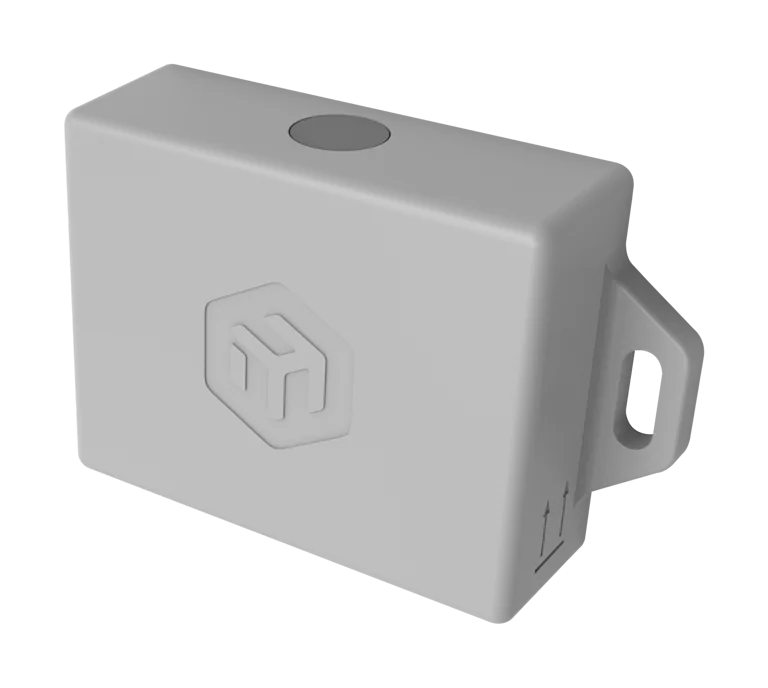
MikroTik TG-LR82 is a low-power LoRaWAN sensor tag intended for condition monitoring, movement detection and event-based reporting. It is mainly used where organisations need to observe temperature, humidity, orientation, impact, activity or door and lid events without relying on a wired data connection. Logistics providers, cold-chain operators, warehouses, facilities teams, industrial sites and IoT integrators should consider it when a compatible LoRaWAN network and monitoring platform are available. Before proceeding, confirm the required radio region, whether 868 MHz or 2.4 GHz will be used, gateway coverage, uplink intervals, battery-life expectations, mounting method, payload decoding, monitoring software and the exact configuration needed for alerts and reports.
What the TG-LR82 does
The TG-LR82 gathers physical and environmental measurements, processes selected data locally and transmits telemetry over LoRaWAN. Instead of behaving only as a simple periodic thermometer, it can evaluate rules, switch between operating profiles and report events when conditions change. This enables a deployment to remain quiet during normal operation and send more frequent updates when a door opens, movement begins, a temperature threshold is crossed or the device changes orientation.
Its integrated sensing functions include temperature, humidity and accelerometer-based measurements. The accelerometer can support motion, activity, orientation, tilt, impact and free-fall scenarios depending on configuration. A magnetic reed switch provides another practical event input for doors, lids and cabinets. The device can also calculate averages and histograms before transmission, reducing unnecessary uplinks while preserving useful insight.
Who should consider it
The model is relevant to organisations planning sensor-based visibility across warehouses, cold rooms, containers, storage cabinets, industrial equipment, research sites, mobile assets and remote infrastructure. It may also suit system integrators designing LoRaWAN solutions where battery-powered endpoints must operate for long periods and communicate over wider areas than conventional short-range wireless sensors.
It is not a complete monitoring system on its own. Buyers also need suitable gateway coverage, a LoRaWAN network server, payload decoding, dashboards or alerts, commissioning procedures and operational ownership. A small proof of concept is often advisable before a wide rollout because radio conditions, enclosure placement, sensor response, reporting intervals and backend integration can significantly affect the final result.
Business challenges the sensor can help address
Limited visibility between inspections
Manual checks create gaps in condition history. Scheduled telemetry and event reports can provide a more continuous operational record, subject to network coverage and reporting configuration.
Excessive traffic from simple sensors
Local averaging, histograms and rules can reduce the need to transmit every sample, which may help conserve battery and LoRaWAN airtime.
Slow reaction to physical events
Event-based profiles can change reporting behaviour when movement, tilt, impact or a magnetic switch event occurs.
Hard-to-wire locations
A battery-powered LoRaWAN tag can be considered where cabling is inconvenient, provided the installation remains within radio and environmental limits.
Product-fit decision matrix
| Requirement | Suitable when | Confirm before ordering |
|---|---|---|
| Environmental monitoring | Temperature and humidity trends or threshold events are required. | Accuracy range, sampling interval, alert logic and sensor placement. |
| Asset movement or tilt | Motion, orientation, impact or activity data supports the use case. | Mounting orientation, trigger thresholds and false-event tolerance. |
| Door or lid events | A magnetic reed switch can be positioned reliably. | Magnet placement, enclosure spacing and event workflow. |
| Wide-area IoT telemetry | A compatible LoRaWAN gateway and network server are available. | Frequency plan, gateway density, antenna position and interference. |
| Long unattended operation | Reporting and sampling can be tuned for low power consumption. | Expected lifecycle, non-replaceable battery and maintenance process. |
Configuration and compatibility notice
TG-LR82 performance and battery life are configuration dependent. Sampling frequency, uplink interval, confirmed message use, Class B operation, link checks, downlink activity, event thresholds and radio conditions all influence energy consumption and network behaviour. The sensor has a non-replaceable battery, so the operational plan should include a realistic replacement lifecycle rather than relying only on the maximum expected figure.
The 868 MHz radio plan and 2.4 GHz LoRa capability must be matched to the selected gateway and network server. Confirm local frequency requirements, planned channels, gateway support and project compliance before deployment. Payload decoders, application keys, JoinEUI settings, device registration, dashboards and alert workflows are separate parts of the overall solution. FourTeck can assist with requirement review, but the exact integration scope should be documented in the quotation.
A practical purchase and deployment journey
Define the monitored condition
Identify whether the project needs temperature history, humidity trends, movement detection, tilt, impact, door events or a combination.
Validate radio coverage
Survey the site, gateway location and antenna arrangement. Test difficult rooms, metal structures, containers and outdoor areas.
Design profiles and rules
Choose sampling, reporting, thresholds, event storage and profile-switching logic appropriate to the business process.
Integrate and pilot
Register devices, decode payloads, create dashboards and test alerts with a limited number of tags before full rollout.
Operate and review
Monitor signal quality, battery status, event accuracy and reporting usefulness, then adjust configuration where justified.
High-accuracy environmental monitoring
The TG-LR82 uses a NIST-traceable TMP116N temperature sensor, with the manufacturer specifying typical accuracy of ±0.2°C and maximum accuracy of ±0.3°C across the stated -25°C to +85°C accuracy range. This can make the device relevant for temperature-sensitive goods, storage spaces, research environments and facilities where useful condition history is required. However, sensor accuracy does not automatically make a complete deployment compliant with a particular quality, pharmaceutical, food, laboratory or regulatory process. Buyers should separately validate placement, calibration procedures, data retention, alarm escalation, traceability and any required certification.
The device can sample environmental values more frequently than it transmits them. It can calculate moving averages and build temperature or humidity histograms locally. For a warehouse or cold-room operator, this may provide a clearer picture than a single periodic reading because it can show how readings are distributed over time. It also helps avoid consuming radio airtime with every sample. The trade-off is that configuration becomes important: bin thresholds, sampling periods, histogram epochs and uplink timing should reflect the operational question the business is trying to answer.
Sensor placement requires care. Mounting directly next to refrigeration outlets, sunlight-exposed surfaces, heat-generating equipment or frequently opened doors can produce data that reflects a local microclimate rather than the wider space. For moving goods, the enclosure should be secured so that motion and impact readings are meaningful. A pilot can compare tag readings against an accepted reference instrument and identify placement effects before the organisation deploys many units.
Event logic that changes reporting behaviour
A major advantage of the TG-LR82 is that it is not limited to one fixed send interval. The device supports multiple configurable profiles, each holding its own sensing and uplink behaviour. Rules can switch profiles when an event occurs. For example, a tag could send a routine health update only a few times per day while conditions remain normal, then move to frequent reports when a cabinet opens or movement starts. This approach can provide faster operational visibility while preserving battery during long periods of inactivity.
The accelerometer enables several potential scenarios: activity tracking, orientation changes, tilt monitoring, impact detection and free-fall logic. These capabilities depend on configuration thresholds, timing and mounting. A threshold that works for a heavy industrial container may not suit a lightweight cabinet. Excessively sensitive settings can create false events, while broad thresholds may miss important changes. The commissioning process should therefore include controlled tests that reproduce the real event the business wants to detect.
The integrated magnetic reed switch can support door, lid or cabinet monitoring and can also be used as a command input. This provides a simple way to detect open and closed events without an external wired sensor. Magnet alignment and distance are critical. Installers should verify the mounting geometry, secure both parts against movement and test the switch over the full operating range of the door or lid. The event should also be mapped to a useful workflow, such as recording duration, notifying a responsible team or increasing telemetry frequency.
LoRaWAN integration and operational control
The TG-LR82 supports LoRaWAN 1.0.4 Class A and Class B and includes Adaptive Data Rate. Class A is commonly used for battery-sensitive endpoints because receive windows follow uplink transmissions. Class B introduces scheduled receive opportunities and may increase power use. The correct choice depends on how often the platform must send commands to the sensor, how predictable downlink timing needs to be and what battery lifetime is acceptable.
Device credentials include DevEUI, JoinEUI and AppKey information for network registration. These values must be handled securely, especially the AppKey. The network server, application server and monitoring platform need suitable payload decoding. MikroTik provides documentation and decoder resources, but integration still requires planning. Data fields should be mapped clearly into dashboards, alerts, reports and asset records. Signal strength and battery health should be monitored alongside business measurements so teams can detect deteriorating coverage or endpoints approaching replacement.
The manufacturer positions the device for use with MikroTik LR8 gateways and modern monitoring stacks. Compatible gateway options may include the KNOT LR8G kit or wAP LR8G kit for 868 MHz deployments, while 2.4 GHz designs may use suitable 2.4 GHz LoRa gateway hardware. Compatibility should never be assumed from product family names alone. Confirm the gateway radio, frequency plan, firmware, antenna system, network server and regional requirements as one design.
Ideal business environments and use cases
Cold-chain and temperature-sensitive storage
Track environmental trends, threshold events and door activity across cold rooms, refrigerated storage or monitored containers. Regulatory suitability and calibration processes must be assessed separately.
Warehousing and inventory zones
Observe humidity, heat exposure, cabinet events or asset movement in areas where wired sensors are difficult to install.
Industrial equipment and enclosures
Use orientation, activity or door-state information to support maintenance, inspection and operational records.
Logistics and mobile assets
Capture movement, impact, tilt and environmental conditions while assets remain within compatible network coverage.
Facilities and building operations
Monitor remote rooms, cabinets, archives or infrastructure spaces with low-power telemetry and event-driven updates.
Research and pilot IoT projects
Develop rule-based LoRaWAN sensing applications using configurable profiles, histograms and platform integration.
Integration and operational considerations
A successful deployment depends on more than selecting the sensor. The gateway must cover the intended locations with adequate signal margin. Metal walls, machinery, refrigeration panels, shipping containers, underground rooms and dense shelving can reduce radio performance. A desktop test near the gateway does not replace an on-site survey. The pilot should test normal and worst-case positions, including closed doors, full storage areas and moving assets.
The backend should turn sensor frames into useful business information. Define the owner of each alert, response times, escalation rules, report retention and device-maintenance responsibility. A dashboard that displays thousands of measurements without clear thresholds or action paths can create noise rather than value. For condition monitoring, decide whether operators need immediate alerts, daily exception reports, long-term trend charts or evidence for audits.
Security planning should cover credential handling, network-server access, application permissions and change control for configuration payloads. Downlink commands can alter behaviour, so administrative access should be restricted and documented. Device identities should be linked to physical asset records, installation locations and configuration versions. This helps support teams diagnose issues and replace tags correctly at the end of their service life.
Because the battery is non-replaceable, procurement should consider the full lifecycle. Reporting frequency and radio quality affect battery consumption; repeated join attempts or poor links can shorten expected life. Organisations should maintain an installation date, battery-status trend and planned replacement window for each unit. The maximum battery estimate is not a guaranteed operating period.
Questions to resolve before ordering
List the exact temperature, humidity, motion, tilt, impact or magnetic-switch events required.
Confirm the 868 MHz or 2.4 GHz design, gateway support and applicable regional plan.
Set sampling and uplink intervals that balance operational needs, airtime and battery life.
Identify the LoRaWAN server, decoder, dashboard, database and alerting tools.
Review enclosure conditions, magnet placement, orientation and radio obstructions.
Assign responsibility for credentials, configuration, alerts, battery tracking and replacement.
Procurement and evaluation checklist
☐ Confirm exact model TG-LR82 and required quantity.
☐ Validate the 868 MHz and/or 2.4 GHz network design.
☐ Confirm local frequency and project compliance requirements.
☐ Identify gateway model, antenna and installation location.
☐ Define LoRaWAN server and application platform.
☐ Confirm temperature, humidity and motion use cases.
☐ Set expected sampling and reporting intervals.
☐ Define event rules, thresholds and alert ownership.
☐ Review mounting bracket, screw and magnet requirements.
☐ Assess IP67 suitability and actual environmental exposure.
☐ Plan for non-replaceable battery lifecycle.
☐ Include configuration, commissioning and dashboard scope if needed.
☐ Confirm delivery destination and required timeline.
☐ Request current warranty and availability guidance in the quotation.
How FourTeck can assist
FourTeck can help buyers translate an IoT monitoring requirement into a practical component list. This may include reviewing the number and location of sensors, selecting a compatible gateway approach, discussing antenna placement, clarifying the monitoring platform, identifying configuration work and preparing a quotation around the required quantity. Where a project needs installation, commissioning or integration, the requested scope should be stated clearly so it can be evaluated separately.
For broader network and infrastructure planning, explore the FourTeck technology product range or review available deployment and support services. Buyers can also learn more about FourTeck or send project details through the business technology contact page.
UAE availability and support guidance
Contact FourTeck to confirm current UAE availability for the MikroTik TG-LR82. Availability can vary according to quantity, vendor lead time, regional supply and the wider bill of materials. Delivery and project coordination can be discussed after the exact requirement is confirmed. Where configuration, gateway installation, payload integration or dashboard work is needed, include those activities in the quotation request rather than assuming they are part of the hardware price.
FourTeck can coordinate requirements for organisations operating in Dubai, Abu Dhabi, Sharjah and Ajman through one combined project discussion. Share the deployment address, number of tags, gateway locations, preferred monitoring platform, expected schedule and any site-access conditions. This information helps distinguish a simple hardware purchase from a managed implementation that requires design, testing and handover.
GCC Availability
Businesses planning MikroTik TG-LR82 deployments across the GCC can contact FourTeck for requirement review, model confirmation, quotation coordination and regional project planning. A multi-country design may need different checks for radio use, gateway placement, delivery arrangements and service scope. The device can operate on 868 MHz and 2.4 GHz LoRa, but the selected frequency plan must be validated for each destination and matched with compatible gateways and network-server settings. Organisations in the United Arab Emirates, Saudi Arabia, Kuwait, Qatar, Bahrain and Oman should share the destination country, quantity, deployment environment, preferred timeline and whether configuration or installation support is required. Product availability, licensing where applicable, delivery schedules, service visits and vendor lead times can vary by country and project. FourTeck can help structure the requirement, but local stock, fixed delivery dates and onsite coverage should not be assumed until confirmed in writing. For projects involving Kuwait, buyers may also review FourTeck Kuwait technology support information.
Africa Availability
FourTeck can assist organisations evaluating TG-LR82 sensor deployments for selected African markets, including projects in East Africa and other regions where LoRaWAN monitoring is being introduced. Planning should account for the destination country, available gateway infrastructure, local radio requirements, shipping method, power arrangements for gateways, installation conditions and the monitoring platform. The sensor itself is battery powered, but the overall solution may require gateway power, internet backhaul, servers, dashboards and local commissioning support. Buyers should provide the exact quantity, deployment locations, expected reporting behaviour, proposed schedule and any requirement for installation or remote configuration. Availability and fulfilment may depend on vendor lead time, quantity, shipping arrangements and local project conditions. FourTeck does not imply immediate shipment or country-wide onsite service without review. Regional buyers can explore FourTeck Africa technology services, Kenya project assistance and Uganda technology support for relevant coordination options.
Related products and project options
MikroTik KNOT LR8G kit
A gateway option to evaluate for 868 MHz LoRaWAN deployments requiring cellular, Ethernet and wider IoT connectivity features.
MikroTik wAP LR8G kit
A compact weather-resistant LoRa gateway option for suitable 868 MHz projects. Confirm coverage and backhaul needs.
MikroTik wAP LR2 kit
A 2.4 GHz LoRa gateway option to consider where the project is designed around the worldwide 2.4 GHz LoRa band.
MikroTik TG-LR92
The 902–928 MHz variant for regions and networks that require that spectrum. It should not be substituted without frequency-plan validation.
LoRaWAN configuration support
Assistance with device registration, payload decoding, reporting profiles, event rules and pilot commissioning.
IoT dashboard integration
Project-specific integration planning for dashboards, historical analysis, alerts and operational reports.
Why businesses contact FourTeck
Technology buyers often need more than a part number. They need help confirming whether the product suits the application, how many devices are required, which gateway architecture is appropriate and what additional work is needed for data to reach a useful dashboard. FourTeck supports these practical conversations by helping clarify the requirement, review compatibility, structure a bill of materials and coordinate a quotation.
For TG-LR82 projects, useful assistance may include radio and gateway planning, sensor placement discussion, configuration scope, monitoring-platform requirements, rollout sequencing and delivery coordination. The exact services available depend on the project location, size, timeline and technical requirements. Buyers should provide as much detail as possible to receive relevant guidance rather than a generic hardware-only response.
Frequently asked questions
What is the MikroTik TG-LR82 used for?
It is used for LoRaWAN-based monitoring of temperature, humidity, motion, orientation, activity and magnetic-switch events in logistics, storage, facilities, industrial and IoT environments.
Which radio bands does TG-LR82 support?
The model supports 868 MHz and 2.4 GHz LoRa. The project must use a compatible gateway and validated regional frequency plan.
Does the sensor include a replaceable battery?
No. The manufacturer specifies a 1100 mAh LiMnO₂ non-replaceable battery. Lifecycle planning should account for eventual device replacement.
How long can the battery last?
The manufacturer states an expected life of up to approximately five years, but actual life depends on sampling, uplinks, radio quality, Class operation, events and environmental conditions.
Can TG-LR82 detect a door opening?
Yes. Its magnetic reed switch can support door, lid or cabinet event detection when the magnet and sensor are mounted correctly and configured for the required workflow.
Is the enclosure suitable for outdoor use?
The enclosure is rated IP67, but the complete installation should still be assessed for temperature, mounting, direct exposure, chemical conditions and the application environment.
Which gateway should be used?
The choice depends on the selected band, required coverage, antenna design, backhaul and platform. MikroTik LR8 gateway products may suit 868 MHz projects, while 2.4 GHz projects require compatible 2.4 GHz LoRa gateway hardware.
Can the sensor work with dashboards such as Grafana?
Yes, sensor data can be integrated into modern monitoring platforms, including Grafana-based stacks, provided the LoRaWAN server, decoder, data pipeline and dashboard are configured correctly.
What information is needed for a quotation?
Provide quantity, destination, use case, intended radio band, gateway requirement, platform, installation location, configuration scope and preferred project timeline.
Is the MikroTik TG-LR82 available in Dubai?
Contact FourTeck to confirm current UAE availability, quantity, lead time and any required configuration or deployment services.
Plan your TG-LR82 monitoring project
Share the number of sensors, deployment environment, gateway plan, required measurements and expected reporting workflow. FourTeck can help review the requirement and prepare a suitable UAE quotation.

Reviews
There are no reviews yet.