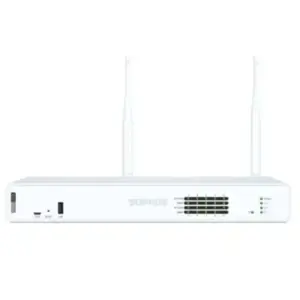
MikroTik hAP Lite RB941-2nD in Dubai, UAE
A practical entry-level MikroTik router for small indoor networks that need basic wired connectivity, 2.4 GHz wireless access and the configuration flexibility of RouterOS. FourTeck helps buyers confirm whether the hAP Lite matches the required internet speed, user count, coverage area and management needs before quotation.
Plan the correct small-network setup
Share your expected bandwidth, room layout, device count and configuration scope. We will help determine whether RB941-2nD is suitable or whether a newer Gigabit or dual-band model should be considered.
RB941-2nD
2.4 GHz Wi-Fi 4
4 × 10/100 Mbps
RouterOS Level 4
Light-duty indoor networks
Direct answer for buyers
The MikroTik hAP Lite RB941-2nD is a compact wireless router and access point built for basic home, apartment and small-office connectivity. It provides four Fast Ethernet ports, dual-chain 2.4 GHz 802.11b/g/n wireless and RouterOS Level 4 in a low-power indoor enclosure. Buyers should consider it for modest broadband links, small user groups, simple guest access, bandwidth control or a RouterOS learning environment. Before proceeding, confirm that 100 Mbps Ethernet and 2.4 GHz-only wireless are sufficient, that the intended space is not radio-dense, and that the required routing or security configuration is realistic for its 650 MHz single-core CPU and 32 MB RAM.
What the hAP Lite does
The device combines a small Ethernet router, a 2.4 GHz wireless access point and RouterOS management functions. It can connect an internet service to wired and wireless clients, apply firewall rules, create basic queues for bandwidth control, provide DHCP services and separate traffic according to the configuration. Its value is not raw throughput; its value is bringing MikroTik’s configurable software environment to a very compact and economical hardware platform.
That distinction matters. An office buying only by feature names may assume that every RouterOS function will perform equally across all MikroTik hardware. The hAP Lite can expose many RouterOS capabilities, but its processor, memory, 2.4 GHz radio and Fast Ethernet ports place practical limits on scale and performance. A well-matched deployment stays simple and works within those boundaries.
Who should consider it
The hAP Lite can suit a home office, a small reception area, a temporary desk cluster, a training bench, a compact retail back office or a lab where only a few users need general internet access. It is also useful for buyers learning RouterOS or building a simple network that benefits from configurable firewall and bandwidth rules without requiring modern multi-gigabit or high-density wireless performance.
It is usually not the right choice for a busy office, a high-speed fibre connection above Fast Ethernet limits, large file transfers, IP video workloads, dense guest Wi-Fi, modern 5 GHz-only planning or deployments where long software lifecycle headroom and stronger hardware resources are priorities. In those situations, FourTeck can help compare newer MikroTik hAP, hAP ax or wired-router options.
Business problems it can address
Basic internet sharing
Connect a modest broadband service to a small number of wired and wireless devices with routing, address assignment and configurable access policies.
Simple bandwidth control
Use RouterOS queues and traffic rules to prevent one user or application from consuming all available bandwidth, subject to correct configuration and hardware limits.
Small wired device cluster
Attach up to four Ethernet links, with one commonly serving the internet uplink, for desktops, printers or other low-bandwidth devices.
RouterOS familiarisation
Provide a low-cost platform for learning basic RouterOS navigation, firewall concepts, addressing, wireless configuration and simple network segmentation.
Product-fit matrix
| Requirement | Suitable when | Confirm before ordering |
|---|---|---|
| Internet speed | The service and expected traffic fit comfortably within 10/100 Ethernet constraints. | Subscribed speed, real throughput target and firewall or queue complexity. |
| Wireless coverage | A small indoor area requires basic 2.4 GHz coverage. | Walls, interference, client count and whether 5 GHz is required. |
| User count | Only a modest number of active clients use general business applications. | Concurrent users, video calls, cloud applications and guest traffic. |
| Management | The buyer values RouterOS flexibility and has configuration capability. | Who will secure, update, monitor and back up the configuration. |
| Lifecycle headroom | The device has a narrow, well-defined role and growth is limited. | Whether a newer Wi-Fi 6 or Gigabit model offers better long-term value. |
Verified technical information
| Brand | MikroTik |
| Product name | hAP Lite |
| Product code | RB941-2nD |
| Product type | Indoor wireless router and access point |
| Architecture / CPU | SMIPS, QCA9533, single core at 650 MHz |
| Memory and storage | 32 MB RAM, 16 MB flash storage |
| Ethernet interfaces | Four 10/100 Ethernet ports with Auto MDI/X support |
| Wireless | 2.4 GHz 802.11b/g/n, dual chain, up to 300 Mbit/s radio data rate |
| Antenna gain | 1.5 dBi for 2.4 GHz |
| Operating system | MikroTik RouterOS |
| RouterOS licence | Level 4, preinstalled and licensed |
| Power input | 5 V through MicroUSB |
| Cooling | Passive |
| Installation environment | Indoor use on a flat surface or wall-mounted with suitable hardware |
| Availability | Contact FourTeck for current UAE model, quantity and lead-time guidance |
Important limitations and dependencies
The hAP Lite should be selected with a clear understanding of its generation and intended scale. The four Ethernet ports are Fast Ethernet rather than Gigabit. Wireless operation is limited to the 2.4 GHz band and Wi-Fi 4 standards, so it does not provide 5 GHz capacity, Wi-Fi 5, Wi-Fi 6 or Wi-Fi 7 features. The maximum radio data rate is not the same as real application throughput; actual performance varies with channel conditions, client capabilities, interference, encryption, distance, wall construction and RouterOS configuration.
RouterOS Level 4 is included, but specific routing, VPN, filtering, queueing or management functions consume processor and memory resources. Complex rules, many tunnels, large address lists, extensive logging or heavy concurrent traffic can exceed the practical role of this hardware. Buyers should also confirm whether the supplied power adapter and plug type suit the destination. Country settings, permitted wireless channels and transmit power must be configured according to local regulations.
The product page describes RB941-2nD, not the visually different RB941-2nD-TC tower enclosure or newer hAP ax lite models. Confirm the exact product code on the quotation and packaging to avoid enclosure or specification confusion.
A sensible purchase and deployment journey
Define the workload
List the internet speed, expected concurrent users, main applications, wired devices and guest-access needs.
Check product fit
Verify that 100 Mbps Ethernet and 2.4 GHz-only Wi-Fi are acceptable for the location and growth plan.
Confirm the bill of materials
Confirm RB941-2nD quantity, power requirements, cables, mounting needs and any installation service.
Prepare configuration
Plan WAN addressing, LAN scope, wireless security, firewall policy, updates, backups and administration access.
Test and hand over
Validate connectivity, client roaming expectations, speed, security, remote access and recovery information.
RouterOS flexibility for a small network
A principal reason to choose the hAP Lite over a basic consumer router is RouterOS. The platform can support address assignment, NAT, firewall rules, bandwidth queues, user controls, routing policies and wireless configuration through a consistent MikroTik interface. For a technically managed home office or a small site, that flexibility can make the device useful beyond ordinary plug-and-play internet sharing.
The same flexibility creates responsibility. A secure installation should not rely indefinitely on factory settings. Administrators should set a strong unique password, restrict management services, update RouterOS to an appropriate supported release, select the correct country profile, disable unused services and store a configuration backup. Remote administration should be designed carefully rather than exposed directly to the public internet without protection.
FourTeck can help define a realistic configuration scope. A simple setup may include WAN connectivity, LAN addressing, wireless SSID and password, basic firewall rules, DNS settings and bandwidth controls. More advanced requirements such as multiple VPNs, complex policy routing, large firewall rule sets or centralised management should be assessed against the device resources and may justify a stronger MikroTik platform.
Wireless coverage and 2.4 GHz planning
The hAP Lite uses dual-chain 2.4 GHz 802.11b/g/n wireless. The 2.4 GHz band can travel through some obstacles more effectively than higher-frequency bands, but it is also shared by many nearby routers, Bluetooth devices and other radio sources. In apartment buildings, retail centres and busy office environments, channel congestion can reduce speed and stability. Product placement and channel planning therefore matter as much as the headline radio rate.
Place the router in an open indoor location, away from metal cabinets, electrical interference, thick concrete structures and heat or moisture. A central position usually provides a more balanced signal than a corner, floor cabinet or enclosed ceiling void. The device should be installed with the safety separation and environmental guidance stated by the manufacturer. Coverage cannot be guaranteed from room dimensions alone because wall materials and neighbouring networks vary.
Buyers needing stable video calls across multiple rooms, many simultaneous wireless clients or separation between legacy 2.4 GHz devices and modern high-performance clients should consider a dual-band or Wi-Fi 6 alternative. FourTeck can review the floor plan and expected client profile before recommending the hAP Lite or a newer access-point design.
Performance expectations and growth planning
The hAP Lite is designed for value and compactness, not for high-throughput routing. Its four physical ports operate at 10/100 Mbps, and its 650 MHz single-core processor and 32 MB RAM should be treated as resources for a small, controlled workload. Real routing performance changes with packet size and enabled services. Firewall rules, queues, encryption, logging and connection tracking add processing overhead, so specification-sheet maximums should never be interpreted as guaranteed application throughput.
A buyer should compare the product with the actual internet service and the expected next stage of growth. Installing a Fast Ethernet router on a faster broadband circuit can create an immediate bottleneck. Similarly, purchasing it for a site that is likely to add cloud backup, video surveillance, large file transfers or many wireless devices can lead to an early replacement. A slightly higher initial investment in a Gigabit and dual-band model may provide better total value when demand is expected to rise.
The hAP Lite remains useful where the scope is deliberately narrow: a small internet connection, light web and email use, a few wired endpoints, a simple guest network, a lab device or a temporary low-bandwidth deployment. FourTeck can help align the hardware class with the project rather than selecting solely on purchase price.
Ideal environments and practical use cases
Home office or micro-office
Provide basic internet access for a small number of laptops, phones, a printer and one or two wired devices where connection speed and coverage demands are modest.
Training and RouterOS lab
Practise addressing, DHCP, NAT, firewall rules, basic queues and wireless settings on a compact device without assigning it a critical production role.
Temporary low-bandwidth site
Support a short-term desk, registration point or small project location after confirming security, power, internet handoff and user-count requirements.
Small retail back office
Connect basic administrative devices in a limited area, provided payment, surveillance and business-critical traffic are designed with appropriate security and resilience.
Basic guest access
Create a small guest wireless service with suitable isolation and bandwidth policies, while keeping realistic expectations for concurrent use and radio congestion.
Branch utility role
Use it for a narrow auxiliary function in a larger design, subject to compatibility, security, central management and support responsibilities being clearly documented.
Integration and operational considerations
Determine how the hAP Lite will connect to the internet service. The service provider may supply DHCP, static IP information, PPPoE credentials or a modem/router that already performs NAT. Duplicate routing can complicate inbound access and troubleshooting. Decide whether the MikroTik device should act as the primary router, an access point, a lab router or a downstream network segment before configuration begins.
For wired integration, remember that all Ethernet interfaces are 10/100 Mbps. Cabling should be correctly terminated and appropriate for the environment. A switch may be needed when more wired devices are required, but adding a Gigabit switch does not turn the router uplink into Gigabit. For wireless integration, confirm SSID naming, encryption, channel selection, legacy-client needs and whether a centrally managed CAPsMAN arrangement is appropriate for the project.
Operational ownership is equally important. Someone should be responsible for RouterOS updates, configuration backups, credential management, log review and incident recovery. The administrator should document the WAN settings, LAN subnet, DHCP range, wireless details, firewall policy and any remote-management method. If the device is reset, its original configuration may be lost unless a usable backup and export are stored securely.
Businesses with formal uptime, security or compliance requirements should evaluate redundancy, monitoring and support arrangements at the overall network-design level. The hAP Lite has no built-in high-availability pair function that replaces a properly engineered resilient architecture. A stronger router, separate access points or managed support may be more suitable for critical operations.
Questions to resolve before requesting a quote
Confirm whether the standard hAP Lite enclosure is required rather than the hAP Lite TC or a newer hAP ax model.
A service above Fast Ethernet limits may be restricted by the router and should trigger a Gigabit model review.
Count simultaneous users and applications, not only the total number of devices stored at the site.
Check nearby radio congestion, client capability and whether 5 GHz is needed for performance or capacity.
Define whether the buyer, an internal IT team or FourTeck will prepare and secure the configuration.
Clarify remote guidance, change requests, troubleshooting, updates and onsite coordination as separate scope items.
Procurement checklist
☐ Exact model code RB941-2nD
☐ Required quantity and destination
☐ Internet handoff and subscribed speed
☐ Expected concurrent wired and wireless users
☐ Confirmation that 10/100 Ethernet is sufficient
☐ Confirmation that 2.4 GHz Wi-Fi meets the requirement
☐ Power adapter and regional plug requirement
☐ Ethernet cable and mounting needs
☐ WAN, LAN, firewall and wireless configuration scope
☐ Guest access or bandwidth-control requirements
☐ Remote-management and security policy
☐ Installation, testing and handover responsibilities
☐ Warranty terms on the final supplier quotation
☐ Current UAE availability and vendor lead time
How FourTeck can assist
FourTeck can help translate a small-network requirement into an appropriate MikroTik bill of materials. The process can begin with the internet speed, number of users, room layout, wired endpoints, security expectations and management preference. This information allows the team to identify whether the hAP Lite is adequate or whether the project would benefit from Gigabit Ethernet, dual-band wireless, Wi-Fi 6, stronger processing resources or separate access points.
Assistance can include exact-model confirmation, quotation coordination, UAE availability guidance, basic design review, RouterOS configuration scoping, installation planning and selection of related network components. Configuration and onsite services should be included explicitly in the quotation when required; they should not be assumed to be part of the hardware purchase.
Browse the FourTeck technology product range, review available network and configuration services, or contact the Dubai team with the required model, quantity and deployment details.
UAE availability and support guidance
Contact FourTeck to confirm current UAE availability for the MikroTik hAP Lite RB941-2nD. Availability may depend on the exact model, quantity, regional packaging, supplier position and vendor lead time. Because the hAP Lite family includes similarly named variants, the product code should appear clearly on the request and quotation. Buyers should also specify whether only hardware is required or whether RouterOS configuration, installation, testing and handover support should be priced.
Delivery and project coordination can be discussed after the final requirement is confirmed. Warranty coverage, return conditions and included accessories should be checked on the issued quotation rather than assumed from general product information. For Dubai, Abu Dhabi, Sharjah and Ajman requirements, FourTeck can coordinate requirement review and commercial guidance through one combined engagement, subject to destination, scope and scheduling.
GCC availability
FourTeck can assist organisations planning MikroTik hAP Lite deployments across GCC markets by reviewing the exact model request, intended use, quantity, power requirements and configuration scope before commercial coordination. A buyer in the United Arab Emirates, Saudi Arabia, Kuwait, Qatar, Bahrain or Oman should provide the destination country, required delivery location, expected timeline and whether the unit will be used as a router, access point, lab device or temporary site appliance. Product availability, regional packaging, delivery schedules, service visits and vendor lead times can vary by country, model and quantity. Wireless settings and permitted channels also need to follow the regulations of the destination market. FourTeck can support model-selection discussions, quotation coordination, deployment planning and RouterOS configuration scoping, but local inventory, customs outcomes and fixed installation dates should be confirmed for the individual request. For Kuwait-related technology coordination, buyers may also review FourTeck Kuwait resources.
Africa availability
Organisations evaluating the MikroTik hAP Lite for projects in Africa can ask FourTeck to review product suitability, quantity, accessories, deployment requirements and support expectations. This is particularly important where internet speeds, power conditions, wireless regulations, shipping routes and onsite technical resources differ between locations. Buyers should share the destination country, exact RB941-2nD requirement, number of units, intended application, preferred schedule and whether configuration or remote assistance is needed. Availability and fulfilment can depend on regional supply, vendor lead time, power-adapter variant, shipping arrangements and local project conditions. The hAP Lite’s Fast Ethernet and 2.4 GHz limits should also be compared with the expected workload before procurement. FourTeck can coordinate guidance for selected East African and wider regional requirements through its Africa technology platform, Kenya support channel and Uganda technology channel, subject to confirmed scope and destination.
Related options and services
Newer MikroTik hAP models
Consider a Gigabit, dual-band or Wi-Fi 6 hAP when the broadband service, client density or lifecycle plan exceeds the hAP Lite’s design limits.
Wired MikroTik routers
A wired router combined with separate access points may offer better placement, scalability and wireless coverage for business premises.
RouterOS configuration support
Scope secure WAN, LAN, firewall, wireless, queue and remote-management settings according to the site requirement.
Installation and testing
Plan placement, cabling, configuration validation, wireless checks, documentation and handover as explicit project activities.
Why businesses contact FourTeck
Technology buyers often need more than a part number. A small router may look straightforward, yet the wrong interface speed, wireless band, enclosure variant or configuration assumption can create avoidable replacement work. FourTeck helps buyers clarify the practical requirement before issuing or accepting a quotation.
The support conversation can cover exact-model identification, quantity, network role, compatibility, expected traffic, RouterOS skill level, installation scope and future growth. Where the hAP Lite is too limited, the buyer can be guided toward a more suitable category without presenting every nearby product as equivalent. This procurement-focused approach helps align hardware, services and operational responsibility with the real deployment.
Frequently asked questions
Is the MikroTik hAP Lite suitable for a small office?
It can suit a very small office with modest internet speed, limited concurrent users and basic 2.4 GHz coverage. A busier office, faster fibre connection or high-density wireless environment should be assessed for a stronger model.
Does RB941-2nD provide Gigabit Ethernet?
No. It has four 10/100 Mbps Fast Ethernet ports. Buyers needing Gigabit LAN or WAN connectivity should consider another MikroTik router.
Does the hAP Lite support 5 GHz Wi-Fi?
No. The RB941-2nD uses dual-chain 2.4 GHz 802.11b/g/n wireless. A dual-band or Wi-Fi 6 model is required when 5 GHz connectivity is important.
Is RouterOS included?
Yes. The manufacturer specifies RouterOS Level 4 as preinstalled and licensed for this model. No separate base RouterOS licence purchase is normally required.
Can it be used for bandwidth management?
RouterOS provides queue and traffic-management functions, but practical capacity depends on rule complexity, packet sizes, internet speed and other enabled services. Configuration should remain proportionate to the hardware.
What power input does the device use?
The RB941-2nD accepts 5 V through MicroUSB. Confirm the included adapter, plug type and destination requirements on the final quotation.
Can FourTeck configure the router?
Configuration assistance can be discussed for WAN, LAN, wireless, firewall, bandwidth and management settings. The required scope should be documented and included in the quotation.
How should I confirm Dubai availability?
Send FourTeck the exact model code RB941-2nD, quantity, destination, preferred timeline and service requirements. Availability and lead time will be confirmed for the request.
What should be included in a quote request?
Include the exact model, quantity, internet speed, number of users, deployment location, power requirement, configuration needs, installation scope and desired delivery schedule.
Confirm the right MikroTik model before purchasing
Share your bandwidth, user count, coverage area and configuration requirements. FourTeck will help check whether the hAP Lite RB941-2nD is appropriate and coordinate a UAE quotation.