

Ubiquiti E7 Audience Indoor in Dubai, UAE
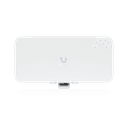
The E7-Audience-Indoor is designed for spaces where a large audience, concentrated device demand and controlled radio direction matter more than conventional room coverage. Its 5 GHz and 6 GHz WiFi 7 radios, twelve spatial streams, directional antenna patterns, 10 GbE uplink and PoE++ power method make it a specialised access point for carefully engineered high-density networks.
Before requesting a quote
Share the venue plan, expected concurrent users, mounting location, required coverage direction, existing UniFi controller, switch model, available PoE++ budget, cable distances and whether resilient dual-uplink operation is required.
802.11be WiFi 7
12 spatial streams
10 GbE RJ45
PoE++
No 2.4 GHz radio
Direct answer for buyers
Ubiquiti E7 Audience Indoor is a high-density directional access point for indoor spaces with concentrated groups of users. It is mainly used to deliver substantial 5 GHz and 6 GHz WiFi 7 capacity toward an audience area such as seating, exhibition or event zones. Organisations considering it should already have, or plan, suitable 10-gigabit switching, PoE++ power, structured cabling and UniFi management. Before proceeding, confirm the regulatory availability of 6 GHz in the deployment country, the precise radiation pattern required, expected client mix, absence of 2.4 GHz support, controller compatibility, mounting position and whether the secondary GbE interface will be used for resilience.
What this access point does
The E7 Audience Indoor concentrates wireless capacity into defined sectors rather than spreading coverage evenly in every direction. Its internal directional antennas provide two beam options, which can help wireless designers shape coverage toward occupied areas and limit unnecessary signal spill. Three 4 x 4 radio chains deliver twelve spatial streams across one 5 GHz radio and two 6 GHz radio ranges. This architecture is intended for high-density design, but actual client performance depends on channel plans, device capability, interference, airtime demand, cabling and upstream network capacity.
Who should consider it
It is relevant to network teams planning auditoriums, lecture theatres, conference centres, indoor arenas, exhibition halls, transport waiting areas, large meeting venues and hospitality spaces where many modern devices gather in a predictable direction. It is not automatically the right choice for ordinary offices, apartments or broad omnidirectional floor coverage. Buyers with many legacy 2.4 GHz devices need a complementary radio strategy because this model operates on 5 GHz and 6 GHz only.
Business challenges this model can address
Concentrated user demand
Audience spaces can place hundreds of active devices in a compact area. A directional high-capacity radio design helps engineers place capacity where users actually sit, stand or gather.
Limited spectrum reuse
Directional patterns can support more deliberate cell boundaries and channel reuse. The result still depends on professional RF design, neighbouring cells and regulatory channel availability.
Uplink bottlenecks
A 10 GbE primary interface is more appropriate than a one-gigabit uplink for an access point designed around substantial aggregate radio capacity. The switch, cabling and network core must match this objective.
Operational visibility
UniFi management, radio controls and real-time spectral analysis can give administrators a clearer basis for tuning, troubleshooting and monitoring a demanding wireless environment.
Core capabilities at a glance
Product-fit decision matrix
| Requirement | Suitable when | Confirm before ordering |
|---|---|---|
| Dense indoor audience | Users are concentrated in a predictable seating or standing zone. | Concurrent client estimate, application mix and venue occupancy pattern. |
| Directional RF coverage | A wall, pole or VESA position can aim the beam toward the intended area. | Mounting height, angle, obstructions and required 50° or 90° beam characteristics. |
| WiFi 7 and 6 GHz adoption | A meaningful proportion of devices supports modern 5 GHz or 6 GHz operation. | Country rules, client capability and any need for 2.4 GHz coverage. |
| High-capacity wired edge | The network includes a 10 GbE access port, appropriate copper cabling and PoE++. | Switch PoE budget, cable category, cable length and core capacity. |
| Resilient service design | Separate switching paths are available for primary and secondary links. | Supported topology, controller settings, switch design and failure expectations. |
Verified technical information
The following values are based on the manufacturer information available for the E7-Audience-Indoor model. Wireless rates are physical-layer maximums rather than guaranteed user throughput. Coverage and client figures are planning references; the real result depends on RF conditions, client behaviour, channel widths, application demand and network design.
| Brand | Ubiquiti UniFi |
|---|---|
| Product name | E7 Audience Indoor |
| Model | E7-Audience-Indoor |
| Product type | Directional enterprise indoor access point |
| Wireless standard | WiFi 7 / IEEE 802.11be, with backward support on relevant 5 GHz and 6 GHz standards |
| Spatial streams | 12 |
| Radio configuration | 5 GHz: 4 x 4 DL/UL MU-MIMO; 6 GHz low band: 4 x 4; 6 GHz high band: 4 x 4 |
| 2.4 GHz operation | Not supported |
| Manufacturer coverage reference | Up to 465 m² / 5,000 ft², subject to design conditions |
| Manufacturer client reference | 1,500+ clients, subject to traffic profile and deployment design |
| Maximum data rate | 6 GHz low: 11.5 Gbps at 320 MHz; 6 GHz high: 11.5 Gbps at 320 MHz; 5 GHz: 8.6 Gbps at 240 MHz |
| Antenna gain | Directional internal patterns: 15 dBi at 50° x 50° and 11 dBi at 90° x 90° for 5 GHz and 6 GHz |
| Network interfaces | One 10 GbE RJ45 port and one GbE RJ45 port |
| Power method | PoE++ |
| Maximum power consumption | 51 W |
| Supported voltage | 42.5–57 V DC |
| Dimensions | Device: 474.1 x 239.4 x 42.2 mm; bracket: 150.4 x 113.6 x 125 mm |
| Mounting | Wall and pole mounts included; VESA mounting optional |
| Management features | Wireless meshing, band steering, 802.11k/v/r functions, advanced radio management, zero-wait DFS and real-time spectral analysis |
| Guest and access features | Passpoint, captive portal options, voucher and external portal support, PPSK, isolation, schedules and RADIUS-related functions |
| Availability | Contact FourTeck for current UAE model, lead time and regional suitability |
Dependencies that should not be overlooked
The E7 Audience Indoor should be treated as one component of a wider high-density design. It needs a compatible UniFi management environment, PoE++ power, adequate switch power budget, suitable copper cabling and enough upstream capacity to justify its radio capability. Regulatory support for 6 GHz differs by country, and some wide-channel or spectrum options may not be available in every region. The model has no 2.4 GHz radio, so scanners, IoT devices, older handsets and other 2.4 GHz-only equipment need separate coverage.
Directional antennas also require disciplined placement. A high-gain beam aimed incorrectly can create strong signal in the wrong area and weak service where users are located. A site survey, predictive design and post-installation validation are therefore more important than simply selecting the highest published coverage figure.
A practical purchase and deployment journey
Define the audience and traffic
Estimate normal and peak occupancy, active device percentage, application types, video and collaboration demand, guest usage and any operational devices that must remain connected.
Model the RF environment
Review venue dimensions, seating gradient, wall materials, mounting points, beam direction, neighbouring access points, interference and channel reuse. Decide whether a narrow high-gain or wider pattern is appropriate.
Validate switching and power
Confirm 10 GbE port availability, PoE++ capacity per port and across the switch, cable category, patching, surge and grounding practices where relevant, and the path to the network core.
Prepare configuration policy
Plan SSIDs, VLANs, authentication, guest access, PPSK use, RADIUS, roaming, client isolation, rate policy, monitoring and firmware governance before the venue becomes operational.
Install, test and refine
Verify beam alignment, signal levels, roaming behaviour, uplink negotiation, PoE stability, channel utilisation and performance under realistic load. Record final settings and mounting details for ongoing support.
Capacity where the audience is located
The model’s defining characteristic is not merely its WiFi 7 label; it is the combination of twelve streams and directional RF coverage. In a lecture hall or conference space, a ceiling-style omnidirectional access point may radiate into corridors, backstage rooms or upper levels that are not the main service area. A directional design can place energy toward the occupied zone and support more controlled cell boundaries.
That does not remove the need for capacity calculations. The published client figure should never be interpreted as a promise that 1,500 users can all run high-bandwidth applications simultaneously. Airtime, channel width, client capability, transmit power balance, interference and application demand remain decisive. FourTeck can help translate the audience profile into a practical access-point count and channel plan.
Multi-gigabit wired architecture
The 10 GbE primary port matters because a high-capacity access point can outgrow a standard one-gigabit connection under heavy aggregate use. A suitable access switch should provide both the required data rate and PoE++ power. Designers must also check whether all switch ports can supply their maximum power simultaneously or whether the chassis has a shared power budget.
The secondary one-gigabit interface creates a path for high-availability planning, but resilience should be validated as an end-to-end design rather than assumed from the presence of a second socket. Separate switches, controller behaviour, spanning and failover considerations, cabling routes and power sources all influence the outcome.
Operational control through UniFi
The access point supports a broad set of UniFi wireless functions, including advanced radio management, spectral analysis, band steering and roaming-related standards. These tools help administrators understand the RF environment and apply consistent policies across a site. Guest workflows can use branded portals, vouchers, external portal integration or Passpoint where the wider configuration supports them.
Management capability is useful only when supported by disciplined operations. Teams should decide who can change radio settings, how firmware is tested, how alerts are handled, how configuration is backed up and what metrics define acceptable venue performance. A large event network benefits from change control and documented rollback plans.
Ideal environments and use cases
Conference and event halls
Suitable where attendees concentrate in seating or exhibition zones and require guest access, event applications, collaboration, streaming or digital engagement.
Lecture theatres
Can support dense student device populations when beams, channel reuse, roaming and application demand are planned across multiple rooms or tiers.
Indoor arenas and grandstands
Relevant for sector-based coverage aimed at seating blocks, subject to detailed RF modelling, mounting access and operational safety requirements.
Hospitality ballrooms
Useful where room layouts change and peak occupancy can be far higher than normal daily use. Reconfiguration plans should account for partitions and event staging.
Transport waiting areas
May fit large indoor concourses or waiting zones where client turnover is high and coverage must follow a defined passenger area.
Large worship or assembly spaces
Can be considered where many users gather at fixed times, provided installation respects the building, sightlines, acoustic systems and operational procedures.
Integration and operational considerations
A high-density access point must integrate with identity, switching, routing, security and internet capacity. Decide whether users will authenticate through WPA Enterprise, PPSK, captive portal, vouchers or another supported method. VLAN design should separate corporate, guest, event, operational and IoT traffic where appropriate. Dynamic RADIUS-assigned VLANs may be useful in more advanced identity architectures, but compatibility must be checked across the complete authentication chain.
Roaming standards such as 802.11k, 802.11v and 802.11r can improve client movement when devices and policies support them, but aggressive roaming settings can create problems for some legacy clients. Test representative handsets, laptops, scanners and event equipment before production. Because the E7 Audience Indoor has no 2.4 GHz radio, a separate access-point layer may be required for legacy and low-power devices. Avoid forcing those clients into an unsuitable design simply to standardise on one model.
Monitoring should include channel utilisation, retries, client distribution, signal quality, uplink state, switch power draw and authentication failures. Event venues should also define a support path for peak periods, including who can make changes, who approves them and what information is captured after an incident.
Questions to resolve before ordering
Procurement checklist
How FourTeck can assist
FourTeck can help turn a product request into a complete deployment requirement. That may include reviewing the intended venue, clarifying audience density, checking whether a directional access point is suitable, identifying switching and PoE requirements, and preparing a bill of materials that covers access points, mounts, switching, controllers, cabling and related services. The scope can also include installation planning, configuration, migration from an existing wireless platform, guest access design and post-installation validation where requested.
For organisations comparing several UniFi options, FourTeck can discuss the role of the E7 Audience Indoor relative to other enterprise or general-purpose access points. The goal is not to select the largest model automatically, but to match radio pattern, spectrum, client density, management and physical installation to the actual venue.
You can browse broader business technology products, review available installation and configuration services, or contact FourTeck with your venue requirement.
UAE availability and support guidance
Contact FourTeck to confirm current UAE availability for the Ubiquiti E7 Audience Indoor. Supply can depend on regional model, quantity, vendor lead time and current distribution conditions. A quotation should identify whether the requirement is hardware only or includes switches, PoE capacity, controller infrastructure, mounting, structured cabling, configuration, RF planning and validation. Buyers should also confirm the applicable 6 GHz rules and model suitability for the UAE before deployment. Delivery and project coordination can be discussed after the exact bill of materials and destination are confirmed.
Dubai, Abu Dhabi, Sharjah and Ajman coverage
FourTeck can coordinate requirement review and quotation support for projects across Dubai, Abu Dhabi, Sharjah and Ajman. The planning process can cover a single audience venue or a wider multi-site UniFi deployment. Customers should share the installation address, floor or seating plan, expected schedule, access restrictions, mounting requirements and whether existing switches and controllers will be retained. On-site work, cabling, elevated access and testing requirements should be defined separately in the scope so that the quotation reflects the real project rather than hardware alone.
GCC availability
FourTeck can assist organisations planning Ubiquiti wireless projects in GCC markets with model review, quotation coordination, switch and power sizing, configuration scope and deployment planning. Requirements in the United Arab Emirates, Saudi Arabia, Kuwait, Qatar, Bahrain and Oman may differ because 6 GHz regulation, regional product versions, delivery arrangements and service logistics are not identical. Product availability, licensing or management requirements, delivery schedules, installation visits and vendor lead times can vary by country, model and quantity. To receive useful guidance, provide the destination country, exact E7-Audience-Indoor quantity, venue type, expected audience size, preferred timeline, switch platform and any installation or support expectations. FourTeck can then discuss a suitable commercial and technical path without assuming stock or a fixed deployment date.
Africa availability
Organisations planning high-density wireless venues in Africa can contact FourTeck for product evaluation, regional model guidance, accessory planning, switching requirements, configuration scope and procurement coordination. Projects in East Africa, including Kenya and Uganda, or in other African regions may involve different delivery routes, power standards, local spectrum rules, installation conditions and support expectations. Availability and fulfilment depend on the destination, quantity, regional version, vendor lead time, shipping plan and any local project requirements. Buyers should provide the destination country, venue drawings, exact quantity, desired deployment schedule, management platform and installation or support needs. For regional enquiries, visit FourTeck Africa, FourTeck Kenya or FourTeck Uganda.
Related products and services to consider
UniFi enterprise switching
A compatible 10 GbE PoE++ switch is essential to realise the intended wired capacity and power the access point correctly.
UniFi management console
Confirm the controller or cloud gateway design, device capacity, software compatibility and operational ownership.
General-purpose 2.4 GHz access points
Complementary models may be necessary for legacy and IoT devices because E7 Audience Indoor does not operate on 2.4 GHz.
RF design and site survey
Predictive planning and validation help determine beam direction, access-point count, channel use and expected cell boundaries.
Installation and configuration
Mounting, structured cabling, controller adoption, VLANs, SSIDs, authentication and testing can be included in a defined project scope.
Support and lifecycle planning
Consider firmware governance, spare strategy, monitoring, change control and future capacity reviews for critical venues.
Why businesses contact FourTeck
High-density wireless projects often fail when the access point is selected without considering the room, audience, radio pattern, switch, power, controller and client mix. FourTeck can help clarify these dependencies, compare suitable UniFi models, prepare a complete bill of materials and coordinate quotation, installation and configuration requirements. This practical approach gives procurement teams a clearer basis for comparing offers and helps technical teams avoid missing essential infrastructure. Learn more about FourTeck or submit a business technology enquiry.
Frequently asked questions
Is E7 Audience Indoor suitable for a normal office?
Usually it is better suited to dense, directional audience areas than ordinary office floors. A general-purpose ceiling or wall access point may provide more appropriate coverage for rooms and corridors. The correct choice depends on layout, client density and mounting.
Does it support 2.4 GHz devices?
No. The model operates on 5 GHz and 6 GHz. Networks with 2.4 GHz-only devices require complementary access points or another coverage plan.
How many users can it support?
Ubiquiti lists a 1,500+ client reference, but this is not a guaranteed count for every application. Concurrent throughput, airtime, signal quality, channel design and client behaviour determine practical capacity.
Does it require a 10 GbE switch port?
The primary uplink is 10 GbE and should be connected to suitable switching when the design aims to use substantial aggregate capacity. The switch must also provide PoE++ and sufficient total power budget.
Can the secondary GbE port provide redundancy?
The platform supports a secondary interface for resilient designs, but the full topology, switches, cabling and configuration should be reviewed. A second port alone does not guarantee complete service continuity.
Is 6 GHz available in the UAE?
6 GHz operation is region and regulation dependent. Confirm current UAE rules, supported channel ranges and the exact regional model before purchasing or configuring the access point.
Which mounts are included?
Manufacturer information lists wall and pole mounting support with mounts included, while VESA mounting is optional. Confirm the package contents and required installation hardware in the quotation.
Can FourTeck assist with configuration?
Configuration support can be discussed for UniFi adoption, SSIDs, VLANs, authentication, guest access, radio settings, monitoring and testing. The exact work should be defined in the quotation.
What information is needed for a quote?
Provide the model, quantity, venue plan, user estimate, mounting details, switch and controller information, country, required delivery schedule and whether installation, cabling, configuration or testing is needed.
Is current stock or delivery time guaranteed?
No. Current UAE availability and lead time must be confirmed for the requested quantity and regional model. Delivery planning follows once the exact requirement and commercial terms are agreed.
Plan the complete audience WiFi requirement
Send FourTeck your venue layout, expected attendance, client mix, switching platform and installation needs. The team can help confirm whether E7 Audience Indoor is appropriate and prepare a coordinated UAE quotation.

Reviews
There are no reviews yet.