

Ubiquiti Enterprise Campus Aggregation ECS-Aggregation in Dubai, UAE
Build a high-capacity UniFi aggregation layer for campus, server, storage and multi-building traffic with forty-eight 25G SFP28 interfaces, six 100G QSFP28 interfaces and architecture options for MC-LAG resilience.
Plan before you order
Confirm port speeds, optics, fibre type, rack depth, power feeds, management version and redundancy design. FourTeck can translate these details into a practical bill of materials.
Direct answer for network buyers
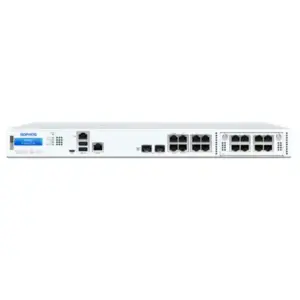
The Ubiquiti ECS-Aggregation is a full-depth 1U Layer 3 switch intended for high-density fibre aggregation in larger UniFi networks. It is mainly used to consolidate 10G and 25G access, server or distribution connections and provide 40G or 100G uplinks across a campus or data-centre environment. It is worth considering when ordinary 10G aggregation no longer provides enough port density or backbone capacity. Before proceeding, buyers should confirm the network topology, optic and cable types, supported distances, rack construction, dual-power design, UniFi Network software version, routing requirements and whether two switches will be deployed for MC-LAG. These decisions have a direct effect on the final bill of materials and implementation scope.
What the switch does
ECS-Aggregation concentrates large numbers of fast fibre links into a central switching layer. In a campus design, it can sit above access or distribution switches and carry traffic between buildings, user networks, wireless infrastructure, servers, storage systems and upstream security services. Its high port density allows an architect to terminate many 10G or 25G links without spreading the design across numerous smaller aggregation switches.
The six QSFP28 ports provide room for 40G or 100G inter-switch, server, storage or backbone connectivity. The platform supports Layer 2 and selected Layer 3 functions within UniFi Network, including VLANs, static routing, inter-VLAN routing, DHCP relay and local-network DHCP services. Exact feature suitability should be reviewed against the intended network design and the current UniFi Network release.
Who should consider it
This model is intended for organisations with a genuine requirement for dense fibre aggregation and substantial east-west or north-south traffic. Typical buyers include universities, schools with several buildings, large offices, hotels, hospitals, warehouses, media environments, technology companies, service providers and enterprises modernising their campus core.
It may be excessive for a small office with only a few 10G uplinks. In that situation, a lower-density UniFi aggregation model may be more economical and easier to deploy. The ECS-Aggregation becomes relevant when port growth, 25G server connectivity, 100G backbone requirements, redundancy objectives or consolidation of multiple distribution blocks justify the higher capacity.
Business challenges this platform can address
Aggregation sprawl
A high port count can reduce the need to operate several smaller aggregation devices simply to obtain enough 25G interfaces. Consolidation can simplify rack planning, cabling and management, although resilience may still call for a pair of switches.
Backbone bottlenecks
Six 100G-capable ports offer options for higher-capacity uplinks between network layers, buildings or infrastructure blocks. The benefit depends on traffic patterns, transceiver selection and the capacity of connected systems.
Core resilience
MC-LAG support allows two chassis to participate in a high-availability design. Proper peer-link sizing, firmware planning, topology validation and controlled failover testing remain essential.
Operational visibility
Integration with UniFi Network provides centralised configuration and monitoring within the broader UniFi environment. Management convenience should be balanced against feature requirements and operational processes.
Core capabilities in practical terms
Dense 25G access to the core
Forty-eight SFP28 ports support 25G and 10G operation, giving designers flexibility to connect a mixture of current and transitional fibre links. Port speed alone does not determine compatibility; the chosen module, fibre mode, wavelength, connector type and distance must also match both endpoints.
High-capacity 100G uplinks
The six QSFP28 ports support 100G and 40G connectivity. They can be used for switch interconnects, upstream links or suitable infrastructure endpoints. Link design should account for oversubscription, redundancy, breakout requirements and supported module combinations.
Layer 3 and segmentation functions
The platform supports inter-VLAN routing, static routing, DHCP relay and local DHCP server functions for local networks. Buyers should map required routing protocols and failover behaviour to the currently available UniFi software capabilities rather than assuming every enterprise routing feature is included.
Redundant serviceable hardware
Two hot-swappable power supplies and five hot-swappable fans support serviceability. True end-to-end resilience also depends on separate power feeds, suitable PDUs, redundant upstream devices, correct cabling and tested operational procedures.
Product-fit matrix
| Requirement | Suitable when | Confirm before ordering |
|---|---|---|
| High-density 25G aggregation | Many distribution switches, servers or appliances need 10G/25G fibre links. | Required quantity, fibre type, transceiver compatibility and link distances. |
| 100G campus backbone | Building, core or infrastructure links need more capacity than 10G or 25G. | Topology, traffic engineering, optic type and redundancy. |
| Dual-chassis resilience | The design requires links to remain available during a switch or link failure. | MC-LAG architecture, peer links, firmware baseline and failover testing plan. |
| UniFi-centred management | The organisation already uses UniFi Network and values consolidated management. | Application version, hosting method, administrator access and backup procedures. |
| Small branch aggregation | Usually not the most proportionate choice when only a handful of 10G links are required. | Compare lower-density aggregation switches and total lifecycle cost. |
Verified technical information
Values below should be read together with current Ubiquiti documentation and the final project design.
| Brand | Ubiquiti |
|---|---|
| Product name | Enterprise Campus Aggregation |
| Model | ECS-Aggregation |
| Product type | Managed Layer 3 high-density aggregation switch |
| 25G interfaces | 48 × SFP28, supporting 25G and 10G |
| 100G interfaces | 6 × QSFP28, supporting 100G and 40G |
| Switching capacity | 3.6 Tbps |
| Non-blocking throughput | 1.8 Tbps |
| Forwarding rate | 2.4 billion packets per second |
| VLANs | Up to 1,000 supported VLANs |
| MAC address table | 128,000 entries |
| Packet buffer | 24 MB |
| High availability | MC-LAG support; two hot-swappable power supplies; five hot-swappable fans |
| Layer 3 functions | Inter-VLAN routing, static routing, DHCP server for local networks and DHCP relay |
| Form factor | 1U full-depth rack mount |
| Dimensions | 442.4 × 43.7 × 496 mm |
| Weight | 9.9 kg without mounting brackets; 10 kg with brackets |
| Maximum power consumption | 340 W |
| Power input | Two universal 100–240V AC hot-swappable power modules |
| Operating temperature | -5 to 40°C |
| Management requirement | UniFi Network 8.5.6 or later |
| Availability | Contact FourTeck for current UAE options, lead time, accessories and quotation |
Compatibility and dependency notice
The switch chassis is only one part of a complete aggregation design. Every optical link requires compatible modules or cables at both ends, and the selected media must support the intended distance, fibre type and connector standard. A 25G or 100G port does not guarantee that every third-party optic will operate identically. Confirm current compatibility guidance before procurement.
The platform requires UniFi Network version 8.5.6 or later. Software capabilities can evolve, and features such as advanced routing or automatic failover should be confirmed against the release intended for production. Ubiquiti has stated that Layer 3 automatic failover using VRRP and OSPF support are scheduled for a future UniFi Network Application release; therefore, these functions should not be treated as available until verified in the selected software version.
The physical chassis is full-depth and weighs approximately 10 kg with mounting brackets. A suitable four-post rack is recommended. Where a two-post rack is unavoidable, an approved centre-mount bracket or cantilever shelf should be considered. Power design should include two independent feeds where resilience is required, rather than connecting both power supplies to the same failure point.
A sensible purchase and deployment journey
Document traffic and port requirements
List every switch, server, storage platform, firewall and upstream connection that may terminate on the aggregation layer. Record present speed, target speed, expected growth and redundancy needs.
Design the logical topology
Define VLAN boundaries, routing location, LACP groups, MC-LAG peer connections, spanning-tree behaviour, management access and the relationship with gateways or firewalls.
Select optics, cabling and rack resources
Match every link with the correct SFP28 or QSFP28 optic, direct-attach cable, fibre patch lead and patch-panel arrangement. Validate rack depth, airflow, power distribution and UPS capacity.
Prepare and stage the configuration
Update the management platform, adopt the switch in a controlled environment, create backups, apply naming and VLAN standards, and test the intended configuration before live migration.
Migrate, verify and document
Move links in planned groups, validate speed and errors, test routing and failover, monitor traffic, update diagrams and retain rollback information. High availability should be proven through controlled tests, not assumed from configuration alone.
Capacity planning beyond headline speed
The value of a 1.8 Tbps non-blocking switch depends on how traffic enters, leaves and crosses the aggregation layer. A network may have dozens of 25G edge links but only a small number of 100G upstream paths. That design can be appropriate when access traffic is bursty or mostly local, but it can also create oversubscription if many endpoints transmit simultaneously. Capacity planning should therefore use traffic measurements, application behaviour and growth forecasts rather than simply adding port speeds.
Server virtualisation, distributed storage, backup windows, video production, research computing and large wireless campuses can generate traffic patterns that differ considerably from standard office use. Some workloads create sustained flows; others generate microbursts that depend on buffering and queue behaviour. The ECS-Aggregation has a 24 MB packet buffer, but that figure alone cannot predict application performance. Link utilisation, congestion points, MTU settings, flow control and endpoint behaviour should be considered together.
A practical design often reserves 100G ports for peer links, core connections or infrastructure uplinks and uses the 25G ports for distribution or server-facing connections. The exact allocation depends on resilience. In a two-switch MC-LAG pair, some high-speed interfaces may be dedicated to inter-chassis connectivity, reducing the number available for other purposes. FourTeck can help map the physical ports to the intended logical design before the final quantity and accessory list are confirmed.
Managing resilience with MC-LAG
MC-LAG allows links from a downstream device to terminate across two physical aggregation switches while operating as a logical aggregated connection. This can reduce dependence on one chassis and provide a more direct forwarding path than designs that leave one link blocked by spanning tree. The feature is valuable for campus distribution switches, servers or appliances that support standards-based link aggregation.
However, resilience is an architecture outcome rather than a single checkbox. A reliable deployment requires correctly sized peer links, consistent VLAN and LAG configuration, independent power, separate physical paths and tested failure scenarios. Administrators should determine what happens when a member link fails, a peer link is interrupted, one chassis reboots, management becomes unavailable or the upstream gateway changes state. Maintenance procedures should also address software upgrades and configuration backups.
Connected equipment must support the intended aggregation mode. Servers may use LACP through a supported network adapter team, while downstream switches may have their own limitations on cross-chassis aggregation. Firewalls, hypervisors and storage systems should be validated individually. Where a device cannot form the required LAG, other redundancy mechanisms may be needed. FourTeck can assist with topology review and identify the questions that should be resolved with each equipment vendor before implementation.
Operations inside a UniFi environment
ECS-Aggregation is managed through UniFi Network, allowing administrators to view ports, VLAN assignments, topology, traffic information, alerts and device status alongside other UniFi network components. For organisations already operating UniFi access switching and wireless infrastructure, this consolidated interface can reduce the number of management systems used for routine tasks.
Centralised management does not remove the need for operational discipline. Administrators should define change-control procedures, role-based access, backup routines, maintenance windows, software validation and monitoring responsibilities. A configuration change at the aggregation layer can affect many downstream users, so peer review and rollback planning are particularly important. Management traffic should be protected and reachable through an appropriate administrative path.
The official requirement is UniFi Network 8.5.6 or later, but production deployments should usually use a version selected after reviewing release notes and compatibility. Newer is not automatically safer for every environment, while older releases may lack fixes or capabilities. Test important functions in a staging environment where possible. Organisations with strict routing, telemetry, automation or compliance requirements should compare those needs with the current platform capabilities before standardising on the switch.
Ideal business environments and use cases
Multi-building campuses
Education, corporate and healthcare campuses can aggregate multiple distribution blocks over 25G or 100G fibre. Fibre paths, distance, redundancy and building-entry requirements must be planned carefully.
Server and virtualisation networks
The switch can consolidate 10G and 25G server links where compute clusters or hypervisors need higher east-west capacity. Adapter support, LACP mode, VLAN design and storage traffic should be confirmed.
High-density wireless estates
Large Wi-Fi deployments may require substantial aggregation capacity from access-switch layers to gateways and services. Actual needs depend on client load, application mix, AP uplinks and oversubscription targets.
Media and content workflows
Video, design and broadcast environments can create sustained high-bandwidth flows. The entire path—including storage, endpoints, optics and uplinks—must support the required throughput.
Network modernisation
Enterprises replacing multiple legacy aggregation switches may use the platform to simplify port density and management. Migration sequencing and interoperability with existing infrastructure are key considerations.
Resilient core pairs
Two ECS-Aggregation units can support an MC-LAG design for suitable downstream devices. Redundancy should include power, cabling, upstream systems and documented failover testing.
Integration and operational considerations
Before integrating the ECS-Aggregation, document the current spanning-tree root, VLAN database, trunk definitions, native VLAN policy, MTU, LACP timers, multicast requirements, DHCP relay paths and routing boundaries. Differences between the old and new environment can create difficult-to-diagnose problems during migration. A clean diagram and port schedule are among the most useful project documents.
Optical design deserves equal attention. Multimode and single-mode fibre serve different distances and installation contexts. Patch-panel losses, connector cleanliness, bend radius and polarity can affect link quality even when the modules are nominally compatible. For short rack-level connections, direct-attach cables may be simpler, while longer paths generally require optical modules and suitable fibre. Confirm the exact cable or optic on both endpoints.
Cooling and power should be checked against the room design. The switch can consume up to 340 W and dissipate up to 1160 BTU per hour. Rack airflow must remain unobstructed, and UPS capacity should account for both the switch and associated optics. When using dual power supplies for resilience, connect them to genuinely independent sources where possible. Environmental monitoring, spare fan or power-module strategy and maintenance access should be considered for critical sites.
Security controls include ACLs, network isolation, DHCP snooping and guarding, port isolation, MAC restrictions and related Layer 2 features. Their usefulness depends on policy design and correct placement. The aggregation layer should not become a collection of undocumented exceptions. Define standard templates, test intended traffic, record changes and monitor for unexpected drops or loops after deployment.
Questions buyers should resolve
How many 25G links are needed now and in three years?
Allow for growth, redundant links and ports consumed by special connections rather than sizing only for the opening-day requirement.
Which 100G ports have defined roles?
Identify peer links, upstream connections, building backbones and server or storage links to avoid discovering a port shortage during implementation.
Is MC-LAG required?
A pair of switches changes quantity, cabling, peer-link design, rack space, power and testing requirements.
What optical media already exists?
Confirm fibre type, connector format, distance, patch panels and endpoint module support before selecting optics.
Where will routing take place?
Decide which VLANs route on the switch, gateway or firewall and verify that all required protocols and failover behaviours are available.
What installation support is expected?
Clarify whether the quotation should include rack installation, configuration, migration, testing, documentation or knowledge transfer.
Procurement checklist
✓ Exact model: ECS-Aggregation
✓ Required switch quantity
✓ Single-switch or MC-LAG design
✓ Number of 10G and 25G links
✓ Number and purpose of 40G/100G links
✓ SFP28 and QSFP28 optic types
✓ Direct-attach cable lengths
✓ Fibre mode, connectors and distance
✓ Four-post rack depth and mounting
✓ Independent AC feeds and UPS capacity
✓ UniFi Network hosting and version
✓ VLAN, routing and multicast scope
✓ Installation and migration services
✓ Documentation and support expectations
How FourTeck can assist
FourTeck can help convert a broad request for a high-capacity switch into a defined procurement scope. The process can include reviewing the proposed topology, counting required interfaces, distinguishing 10G, 25G, 40G and 100G links, identifying likely optic and cable categories, checking rack and power considerations, and documenting whether a single unit or MC-LAG pair is appropriate.
Quotation support can also include related accessories and services when required. Buyers should state whether they need only the hardware or a wider package covering optics, direct-attach cables, fibre patching, rack installation, UniFi adoption, VLAN configuration, link aggregation, migration assistance, failover testing and handover documentation. Each activity depends on the site and should be defined in the quotation rather than assumed.
For broader infrastructure planning, explore FourTeck’s business technology products, review available implementation and support services, or contact the FourTeck team with a topology diagram and port schedule. Buyers planning a wider technology project can also visit the FourTeck corporate site.
UAE availability and support guidance
Contact FourTeck to confirm current UAE availability for the Ubiquiti ECS-Aggregation, compatible optics, direct-attach cables and replacement modules. Availability may depend on quantity, accessory selection, regional supply, vendor lead time and the timing of the request. Delivery and project coordination can be discussed after the exact requirement is confirmed.
For projects in Dubai, Abu Dhabi, Sharjah and Ajman, FourTeck can review the intended deployment, prepare a quotation and discuss installation or configuration scope where required. Share the site location, number of switches, port schedule, fibre details, management environment and target project date. Hardware supply, configuration and onsite activity should be listed separately so responsibilities remain clear. No stock, delivery date or installation schedule should be assumed until confirmed in writing for the specific order.
GCC Availability
FourTeck can assist organisations planning ECS-Aggregation deployments across GCC markets, including the United Arab Emirates, Saudi Arabia, Kuwait, Qatar, Bahrain and Oman. Support may cover requirement review, switch quantity, MC-LAG design, optical-module selection, cabling, quotation coordination, configuration scope and installation planning. Regional projects should begin with a clear destination country, site count, required quantity, expected link speeds, preferred deployment window and any support obligations. Product availability, licensing considerations, delivery schedules, service visits and vendor lead times can vary by country, model, quantity and project conditions. Cross-border supply may also introduce documentation, logistics and local compliance considerations that need to be handled case by case. FourTeck does not assume local inventory or a fixed delivery timetable. Buyers can use the FourTeck Kuwait resource for relevant regional enquiries or submit the complete requirement through the main contact channel for coordinated guidance.
Africa Availability
Organisations evaluating Ubiquiti enterprise switching for African projects can contact FourTeck for requirement clarification, model selection, accessory planning and regional procurement coordination. The ECS-Aggregation may be relevant to universities, hotels, service providers, corporate campuses and data-intensive environments that require dense 25G and 100G fibre connectivity. Availability and fulfilment depend on the destination, quantity, optic type, power and rack requirements, shipping arrangements, vendor lead time and local project conditions. Buyers should provide the destination country, exact switch quantity, required transceivers or cables, preferred deployment schedule and any installation, configuration or support expectations. FourTeck can then discuss practical options without assuming local inventory, customs outcomes or guaranteed onsite coverage. For selected regional information, visit FourTeck Africa, FourTeck Kenya or FourTeck Uganda.
Related products and services to consider
25G SFP28 optics and DACs
Required for server, distribution or appliance links. Select multimode, single-mode or direct-attach media according to distance and endpoint compatibility.
100G QSFP28 connectivity
Suitable modules and cables are needed for peer links, backbone uplinks and other high-capacity connections. Confirm reach and fibre construction.
UniFi campus access switches
Enterprise Campus access models can connect to the aggregation layer over high-speed uplinks. The right model depends on copper speed, PoE demand and port count.
Rack and power planning
Full-depth rack support, independent power feeds, suitable PDUs, UPS sizing and cooling are important elements of a resilient installation.
Configuration and migration
A defined scope can cover adoption, VLANs, LAGs, MC-LAG preparation, link testing, controlled migration and documentation.
Alternative aggregation models
Smaller UniFi aggregation switches may be more suitable where 10G density is modest. Compare capacity, interfaces, resilience and budget before choosing.
Why businesses contact FourTeck
Enterprise aggregation purchases often fail at the accessory and design stage rather than at the chassis-selection stage. An incomplete order may omit optics, use the wrong fibre type, underestimate rack depth, overlook peer-link capacity or assume that a software feature behaves differently from the deployed release. FourTeck helps buyers structure the requirement before purchase so the quotation reflects the actual project.
Practical assistance can include requirement clarification, model and quantity review, bill-of-material guidance, compatibility questions, quotation coordination, installation planning, configuration scope, migration sequencing and support discussions. These activities are defined according to the project and are not automatically included with hardware supply. The objective is to give procurement and technical teams a clearer basis for approval and implementation.
Frequently asked questions
What is the ECS-Aggregation mainly used for?
It is used as a high-density fibre aggregation or campus-core switch, consolidating 10G and 25G connections and providing 40G or 100G uplinks within larger UniFi networks.
How many high-speed ports does it provide?
The switch provides 48 SFP28 ports that operate at 25G or 10G and six QSFP28 ports that operate at 100G or 40G.
Does it support Layer 3 switching?
Yes. Confirmed functions include inter-VLAN routing, static routing, DHCP relay and a DHCP server for local networks. Any additional routing requirement should be checked against the current UniFi Network release.
Can two ECS-Aggregation switches be used for resilience?
Yes, MC-LAG is supported. A resilient design requires two switches, correctly sized peer links, compatible downstream LACP devices, independent power and a tested failover plan.
Are transceivers included?
The required SFP28 and QSFP28 modules or direct-attach cables should be selected as part of the bill of materials. Do not assume that every needed optic is included with the chassis.
What rack is required?
The unit is a full-depth 1U switch designed for a suitable four-post rack with supported post depth. Alternative mounting on a two-post rack requires appropriate mechanical support.
Which UniFi Network version is needed?
Ubiquiti specifies UniFi Network version 8.5.6 or later. The production version should also be checked for feature support, stability and compatibility with the rest of the environment.
Is this switch suitable for a small office?
Usually only when the office has unusually high fibre density or backbone requirements. Smaller aggregation models may be more proportionate for a limited number of 10G links.
How can I request a UAE quotation?
Send FourTeck the quantity, topology, required port speeds, optic distances, rack details, redundancy objectives, deployment location and any installation or configuration scope.
Is warranty or extended support available?
Warranty and optional support coverage should be confirmed for the destination region and quotation. Available terms can vary by supply source and current vendor policy.
Confirm the model, optics and deployment scope
Share your port schedule, fibre distances, redundancy plan and target site. FourTeck can prepare an ECS-Aggregation quotation with the required accessories and project services clearly identified.

Reviews
There are no reviews yet.