

High-density UniFi switching for business infrastructure
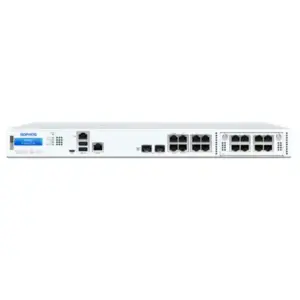
Ubiquiti Pro Max 48 PoE USW-Pro-Max-48-PoE in Dubai, UAE
A 48-port Layer 3 Etherlighting switch designed for organisations that need a practical combination of Gigabit access, 2.5 GbE connectivity, PoE++ power and four 10G SFP+ uplinks under central UniFi management.
Decision snapshot
Access ports: 48 RJ45
Multigigabit: 16 × 2.5 GbE
Uplinks: 4 × 10G SFP+
PoE capacity: Up to 720W total
Form factor: 1U rack mount
PoE+ and PoE++ mix
For dense access networks
Routing and DHCP tools
Central policy and visibility
Direct answer for buyers
The USW-Pro-Max-48-PoE is a professional 48-port UniFi switch for connecting and powering a large mix of business endpoints. It is mainly used as an access or distribution switch where wireless access points, IP cameras, VoIP phones, door-access devices and wired users need central management, VLAN control and fast uplinks. It is worth considering when a site needs more than standard Gigabit performance on selected ports, significant PoE headroom and room for growth. Before proceeding, confirm the exact port-speed mix, per-device power draw, total PoE budget, uplink media, rack and electrical requirements, UniFi Network management platform, regional power cord and any required installation or configuration services.
What it does
The switch aggregates wired users and powered edge devices into a managed UniFi network. Thirty-two RJ45 interfaces operate at up to 1 GbE, while sixteen support up to 2.5 GbE. This lets a design reserve multigigabit ports for newer wireless access points, high-throughput workstations or other endpoints that can exceed a single Gigabit, without forcing every connection into a higher-cost speed class.
Four 10G SFP+ ports provide uplink options for links to a gateway, core switch, server segment or another floor. The unit also supplies PoE, PoE+ and PoE++ according to port group and endpoint negotiation, reducing the need for separate injectors where the powered-device requirements fit the available budget.
Who it suits
This model may suit medium and larger offices, education sites, hospitality properties, warehouses, retail groups, managed buildings and surveillance-heavy installations using UniFi. It is especially relevant when a cabinet must serve many access points or cameras and still retain 10G uplink capacity.
It may be unnecessary for a small office with only a few powered endpoints, no multigigabit need and modest expansion plans. It may also be the wrong choice when an organisation requires a different management ecosystem, specialised industrial environmental ratings, 25G uplinks or features outside the confirmed UniFi switching scope.
Business challenges this switch can help address
Too many separate PoE injectors
Central PoE delivery can simplify cabinet wiring and power management, provided the planned endpoint load remains within the switch’s total and per-port limits.
Wireless links exceeding 1 GbE
The sixteen 2.5 GbE ports can support compatible high-capacity access points and other multigigabit devices without requiring a complete 10G access layer.
Limited uplink headroom
Four 10G SFP+ interfaces provide flexible paths for aggregation, redundant links or connections to compatible core infrastructure.
Fragmented network administration
UniFi management can place port configuration, topology, alerts, VLAN assignment and device visibility in a shared operational interface.
Core capability band
Designed for a dense mix of access and uplink traffic.
Supports higher-power compatible devices where port allocation and total budget allow.
Port illumination can assist identification and operational mapping within supported UniFi workflows.
Includes VLAN, routing, DHCP, aggregation, access-control and traffic-management functions.
Product-fit matrix
| Requirement | Suitable when | Confirm before ordering |
|---|---|---|
| High-density PoE access | Many cameras, APs, phones or access devices share one rack | Per-device wattage, total budget and port class |
| Multigigabit edge | Selected endpoints benefit from 2.5 GbE | Which devices and cables support 2.5 GbE |
| 10G aggregation | The design uses SFP+ uplinks to core, gateway or servers | Optics, DAC type, distance and peer compatibility |
| UniFi operations | The business prefers central UniFi Network administration | Controller or console, software version and adoption plan |
Verified technical information
| Brand | Ubiquiti |
|---|---|
| Product name | UniFi Pro Max 48 PoE |
| Model | USW-Pro-Max-48-PoE |
| Product type | Managed Layer 3 PoE switch |
| Form factor | 1U rack mount |
| 1 GbE RJ45 ports | 32 total: 24 PoE+ and 8 PoE++ |
| 2.5 GbE RJ45 ports | 16 total: 8 PoE+ and 8 PoE++ |
| SFP+ ports | 4 × 10G/1G |
| Total PoE availability | 720W |
| Maximum PoE per port | PoE 15.4W, PoE+ 32W, PoE++ 64W |
| Switching capacity | 224 Gbps |
| Non-blocking throughput | 112 Gbps |
| Forwarding rate | 167 Mpps |
| VLAN support | Up to 1,000 supported VLANs |
| MAC address table | 32,000 |
| IPv4 static routes | 256 |
| Dimensions | 442.4 × 400 × 44 mm |
| Weight | 6.2 kg without brackets; 6.3 kg with brackets |
| Power input | 100–240V AC, 50/60 Hz; USP RPS DC input supported |
| Maximum consumption | 100W excluding PoE output; 820W including PoE output |
| Display | 1.3-inch touchscreen |
| Availability | Contact FourTeck to confirm current UAE model, quantity and lead time |
Dependencies and compatibility notice
The headline port count does not mean that every port has the same speed or PoE class. The switch contains distinct 1 GbE and 2.5 GbE groups, with PoE+ and PoE++ distributed across those groups. A correct design maps each endpoint to a suitable port and checks its negotiated power requirement. The 720W budget is shared across connected devices, while individual ports remain subject to their stated class limits.
SFP+ uplinks require compatible transceivers, direct-attach cables or fibre assemblies. Distance, fibre type, connector format and the capability of the device at the other end must be confirmed. Central administration requires a suitable UniFi Network environment and an adoption plan. Feature availability can depend on software version and the wider UniFi architecture. Redundant power requires compatible UniFi power-backup equipment and should not be assumed to be included with the switch. Regional packaging, power cord, warranty path and optional support coverage must be confirmed in the quotation.
Purchase and deployment journey
Inventory endpoints
List access points, cameras, phones, controllers, door devices and wired users, including expected growth.
Calculate PoE load
Record maximum device wattage, classify PoE needs and retain sensible headroom for changes and startup conditions.
Design uplinks and VLANs
Choose 10G media, aggregation or redundancy approach, network segmentation and gateway relationships.
Confirm installation scope
Validate rack depth, airflow, electrical capacity, patching, labelling, adoption, testing and handover requirements.
Multigigabit access without making every port 10G
A common upgrade problem appears when newer wireless access points can move more than one Gigabit of aggregate traffic, yet most office endpoints still operate comfortably at 1 GbE. Replacing the entire access layer with 10G can add cost, heat and transceiver complexity that the project may not need. The Pro Max 48 PoE addresses this middle ground by providing sixteen 2.5 GbE copper ports alongside thirty-two Gigabit ports.
This mixed layout is useful only when it is planned carefully. High-throughput access points, specialist workstations or other multigigabit devices should be mapped to the 2.5 GbE group. Phones, printers, standard cameras and ordinary user connections can generally remain on Gigabit ports when their requirements permit. Cabling quality and distance should be assessed rather than assumed. The uplink design must also carry the combined traffic generated by the access layer; a fast edge port cannot compensate for an undersized or congested upstream path.
FourTeck can help translate a floor plan and endpoint schedule into a port map, identifying which connections genuinely need 2.5 GbE and which can remain at 1 GbE. This supports a clearer bill of materials and helps avoid consuming multigigabit ports on devices that cannot use the added capacity.
PoE capacity for cameras, access points and building devices
The 720W PoE budget is one of the model’s main procurement reasons, but it should be treated as an engineering resource rather than a simple total. Every powered endpoint has a maximum consumption, a negotiated PoE class and sometimes a different peak demand during startup, heater operation, infrared illumination or radio load. The switch also contains ports with different maximum classes. A high-power endpoint must be placed on a suitable PoE++ port, while lower-power devices can use PoE+ ports when compatible.
A sound budget totals the maximum planned draw, checks each port individually and leaves capacity for reasonable growth. Projects should also consider electrical supply, UPS sizing and heat in the cabinet. Maximum switch consumption including PoE output can reach 820W, so the surrounding power design must not be based only on the switch’s own non-PoE consumption.
For surveillance projects, camera quantity alone is insufficient. Buyers should provide exact camera models, optional heaters or illuminators and any connected accessories. For wireless projects, the access-point model and radio design matter. For door access or intercom deployments, locks and peripheral power arrangements may differ. FourTeck can review the endpoint schedule and identify where a separate power arrangement, another switch or a revised port allocation may be appropriate.
Operational control through the UniFi platform
The switch is intended for managed operation within the UniFi environment. This can give network teams a consolidated view of topology, connected clients, port state, VLAN assignment, power delivery and events. Etherlighting provides visual port identification that can support tracing and differentiation in a busy rack when used with compatible patching practices and supported software features.
The platform supports a substantial set of Layer 2 controls, including link aggregation, spanning-tree functions, QoS, IGMP options, 802.1X control, DHCP snooping and guarding, port isolation, mirroring, storm control and access-control features. Layer 3 functions include local-network DHCP services, relay, inter-VLAN routing and static routing. These capabilities can simplify some architectures, but they do not remove the need for a deliberate gateway, security and routing design.
Before migrating from another switching platform, document VLAN IDs, tagged and untagged behaviour, voice-network requirements, link aggregation, multicast applications, authentication methods and monitoring expectations. A configuration should be tested before a large cutover. Businesses with formal change management should include backup, rollback and acceptance criteria in the deployment scope.
Ideal business environments and use cases
Office and campus floors
Connect users, phones and high-capacity access points while maintaining segmented networks and 10G building uplinks.
Hospitality properties
Support guest wireless, back-office systems, cameras and operational devices from a centrally managed access layer.
Education environments
Provide dense classroom and common-area connectivity with VLAN separation and room for multigigabit wireless growth.
Surveillance-heavy sites
Power many compatible IP cameras while using higher-speed uplinks to recording and core-network resources.
Warehouses and retail
Combine wireless coverage, cameras, phones and operational terminals in a managed, expandable cabinet design.
Pro AV networks
Use supported Pro AV profiles and multicast controls where the complete media workflow has been validated for compatibility.
Integration and operational considerations
A switch replacement or new deployment should be designed as part of the wider network rather than as an isolated purchase. Confirm gateway throughput, firewall interfaces, VLAN routing location, DHCP ownership, DNS services and monitoring. Where the switch will connect to an existing non-UniFi core, validate VLAN tagging, LACP behaviour, spanning-tree priority and transceiver support at both ends.
For wireless projects, confirm access-point models, channel plan, client density and expected application traffic. For voice, confirm LLDP-MED and voice-VLAN design with the phone platform. For surveillance, review camera bitrate, recording architecture and multicast or broadcast behaviour. For access control, determine which components draw power from the network and which require separate protected supplies.
Rack planning should account for the 400 mm chassis depth, cable bend radius, front and rear clearance, ventilation and service access. The electrical circuit and UPS must be sized for the intended PoE draw rather than only the idle switch. Labelling and documentation should identify the port-speed and PoE groups so future technicians do not assume all forty-eight ports are identical.
Questions to resolve before requesting a quotation
Provide exact models and maximum wattage where possible.
Separate genuine multigigabit demand from ordinary Gigabit connections.
Specify distance, medium, connector, speed and remote device.
Define the roles of the gateway, switch and UniFi management platform.
Confirm compatible backup-power equipment and UPS expectations.
Include rack installation, adoption, configuration, migration, testing and documentation as relevant.
Procurement checklist
☐ Confirm exact model: USW-Pro-Max-48-PoE
☐ Confirm required quantity and deployment locations
☐ List 1 GbE and 2.5 GbE endpoint requirements
☐ Calculate PoE+, PoE++ and total wattage demand
☐ Identify SFP+ optics or DAC cables
☐ Check rack depth, airflow and mounting space
☐ Verify AC circuit and UPS capacity
☐ Confirm UniFi console or controller arrangement
☐ Document VLAN, DHCP and routing requirements
☐ Confirm redundant-power requirements
☐ Include patching, labelling and cable testing where needed
☐ Define installation, configuration and migration scope
☐ Confirm regional power cord and warranty route
☐ Confirm UAE availability and expected vendor lead time
How FourTeck can assist
FourTeck can help convert a broad switching requirement into an orderable bill of materials. The review can cover endpoint counts, port-speed allocation, PoE budgeting, SFP+ uplinks, compatible accessories, rack and electrical considerations, UniFi management and the required level of deployment support. This is useful when a buyer knows the desired outcome but has not yet finalised the exact port map or supporting components.
For projects replacing an existing switch, share the current configuration, VLAN schedule, uplink details, connected-device inventory and any known operational problems. For a new site, floor plans, wireless design, camera schedules and cabinet locations can improve sizing. Installation, configuration, testing and documentation should be stated clearly in the quotation request because these activities are scope dependent and are not automatically included with the hardware.
Explore FourTeck technology services or discuss the project with FourTeck.
UAE availability and support guidance
Contact FourTeck to confirm current UAE availability for the Ubiquiti Pro Max 48 PoE, the required quantity, regional version and associated accessories. Availability may depend on vendor lead time, quantity, power-cord region and the complete bill of materials. A quotation should distinguish the switch from optional optics, DAC cables, backup-power equipment, installation, configuration and support services.
FourTeck can coordinate requirements for Dubai, Abu Dhabi, Sharjah and Ajman in one project discussion. Delivery and implementation planning can be considered after the model, destination, quantity and scope are confirmed. Warranty terms and optional vendor support coverage should be checked against the proposed supply route rather than assumed from another regional store. For broader networking requirements, review the FourTeck product portfolio.
GCC Availability
FourTeck can assist organisations planning Ubiquiti switching requirements across GCC markets, including the United Arab Emirates, Saudi Arabia, Kuwait, Qatar, Bahrain and Oman. The useful starting point is not simply a country name but a complete requirement: destination, exact model, quantity, connected devices, PoE demand, uplink media, management environment and desired deployment date. Product availability, regional packaging, vendor lead times, service visits and project scope can vary by market and quantity. FourTeck can help review model suitability, prepare an accessory list, coordinate quotation requirements and discuss configuration or installation planning where relevant. Buyers should also identify any local electrical, rack, cabling or project-access constraints early. No assumption should be made about local stock, customs outcomes or a fixed delivery date until the final bill of materials and destination have been reviewed. Kuwait enquiries may also use FourTeck Kuwait resources.
Africa Availability
Businesses planning UniFi deployments in Africa can contact FourTeck for product evaluation, accessory selection, PoE calculations, configuration scope and regional procurement guidance. Requirements differ widely between sites, so buyers should provide the destination country, exact quantity, preferred deployment schedule, rack and power conditions, connected-device list and any expectation for installation or remote support. Fulfilment can depend on the model, regional version, shipping arrangements, vendor lead time, local regulatory or power requirements and project conditions. For camera and wireless projects, sharing endpoint models is particularly important because power draw and port-speed needs directly affect the switch design. FourTeck does not assume immediate shipment or country-wide onsite coverage; these points must be reviewed for each request. Regional information is available through FourTeck Africa, with additional resources for Kenya and Uganda.
Related products and project options
Ubiquiti Pro Max 24 PoE
A lower-port-count option to review where the endpoint schedule and PoE budget are smaller.
Ubiquiti Pro Max 48
A non-PoE alternative for designs where endpoint power is supplied separately.
10G SFP+ connectivity
Optics, fibre assemblies or DAC cables selected for distance and peer compatibility.
UniFi gateway and management
Review the console, gateway, security and management architecture around the switch.
Installation and configuration
Rack mounting, adoption, VLAN setup, uplink configuration, testing and documentation by agreed scope.
Wireless and surveillance planning
Coordinate AP or camera selection with port speed, power and uplink capacity.
Why businesses contact FourTeck
A 48-port PoE switch can appear straightforward until port classes, endpoint power, uplink optics, VLAN design and installation dependencies are combined. FourTeck helps buyers clarify those details before the purchase is finalised. Assistance can include model comparison, port mapping, PoE calculation, accessory identification, compatibility questions, quotation coordination, installation planning, configuration scope and migration considerations.
This practical review is intended to reduce ambiguity. It does not replace a formal site survey where one is needed, and it does not assume that every capability or service is included automatically. The goal is to produce a clearer requirement that procurement, technical teams and project stakeholders can evaluate together. Learn more about FourTeck.
Frequently asked questions
Does the USW-Pro-Max-48-PoE provide 2.5 GbE on all 48 ports?
No. Sixteen RJ45 ports support up to 2.5 GbE, while thirty-two RJ45 ports support up to 1 GbE. The endpoint map should reserve the multigigabit ports for devices that can use them.
Are all ports PoE++?
No. The switch has a mix of PoE+ and PoE++ ports. Official specifications identify thirty-two PoE+ ports and sixteen PoE++ ports across the Gigabit and 2.5 GbE groups.
What is the total PoE budget?
The stated total PoE availability is 720W. Each endpoint must also comply with the maximum power class of its assigned port.
Does it have 10G uplinks?
Yes. It has four SFP+ ports supporting 10G and 1G operation. Compatible optics, fibre or DAC cables must be selected separately for the intended link.
Can it perform Layer 3 functions?
Yes. Confirmed functions include local-network DHCP server, DHCP relay, inter-VLAN routing and static routing. The overall routing and security architecture should still be planned with the gateway.
Is a UniFi controller or console required?
The product is designed for UniFi Network management. Confirm the intended UniFi console, controller hosting method and supported software version before deployment.
Is redundant power included?
The switch supports a USP RPS DC input, but compatible backup-power equipment should be treated as a separate item unless explicitly included in the quotation.
Can FourTeck help with installation and configuration?
FourTeck can discuss rack installation, adoption, VLAN setup, uplinks, testing and documentation. The exact work must be defined and priced as part of the project scope.
How do I confirm Dubai availability and price?
Provide the model, quantity, destination, accessory requirements and deployment timeline. FourTeck can then confirm current UAE quotation and lead-time information.
Build the quotation around your real port and power requirements
Share your endpoint list, PoE demand, uplink design, quantity and deployment location. FourTeck can help confirm the model, accessories and implementation scope before ordering.

Reviews
There are no reviews yet.