

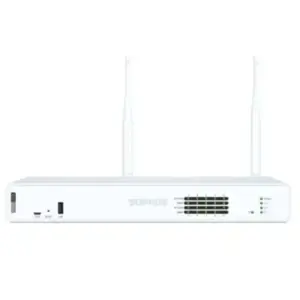
Fortinet FortiGate 90G Firewall in Dubai, UAE
The FortiGate 90G is a desktop next-generation firewall for organisations that need to protect and connect a serious business site without immediately moving to a larger rack appliance. Its role is broader than basic perimeter filtering: it can combine routing, firewall policy, IPsec VPN, Secure SD-WAN, application control and subscription-based security inspection on one FortiOS platform. The important buying question is not simply how fast the box can pass traffic, but how much inspected traffic, connectivity, resilience and security service capacity your actual site requires.
Prepare an accurate 90G quotation
Share your WAN speeds, user count, security bundle requirement, VPN design, preferred support term and whether configuration or migration assistance is needed.
Direct answer for buyers
Fortinet FortiGate 90G is a compact next-generation firewall intended for secure networking at business and distributed enterprise sites. It is mainly used to control internet and inter-site traffic, apply security inspection, build IPsec VPN connectivity, support Secure SD-WAN and integrate a branch into a wider Fortinet Security Fabric. It is worth considering when a site needs multi-gigabit WAN options, materially more inspected-security capacity than smaller entry models, and room for future growth. Before proceeding, confirm the expected inspected throughput, exact FortiGuard bundle and term, WAN handoff type, remote-access method, high-availability design, switch or access-point integration, and whether the quoted item is the base appliance or a hardware-plus-services bundle.
What the FortiGate 90G does
At the network edge, the 90G can enforce firewall rules between internet, LAN, server, guest, voice, management and other logical zones. FortiOS also provides routing and SD-WAN functions, allowing the appliance to make path decisions across multiple links while applying security policy at the same control point. This convergence can reduce the number of separate appliances used at a branch, but it also means the design should be approached as a combined networking-and-security project rather than a simple firewall replacement.
Advanced threat inspection depends on the FortiGuard services and licensing selected. Features such as intrusion prevention, web filtering, DNS security, anti-malware and other protections should therefore be mapped to a specific service bundle and subscription period in the bill of materials. Base hardware capability and subscription-delivered security are not the same thing.
Who should shortlist this model
The 90G is a practical candidate for a branch office, regional office, professional-services site, retail location, education facility, clinic, warehouse or other business environment where internet usage and encrypted applications have outgrown a smaller desktop firewall. It can also make sense for organisations standardising distributed sites on FortiOS, especially when FortiSwitch, FortiAP, central management or common security policies are part of the wider plan.
It should not be chosen simply because its raw firewall number looks high. A site with very high inspected traffic, dense east-west segmentation, unusually large session counts, many high-speed interfaces, substantial local log-storage needs or a preference for a rack-mount platform may need a different FortiGate class. Sizing should be based on the services you will actually enable.
Business challenges the 90G can help address
Branch security sprawl
Routing, firewalling, VPN and SD-WAN can be coordinated in one FortiOS appliance, reducing the need to design separate edge devices for every function.
Growing encrypted traffic
The platform provides dedicated inspected-security performance figures, which are more useful for realistic sizing than raw firewall throughput alone.
Multiple WAN links
Secure SD-WAN can be used to apply application-aware path selection and link policies when a site has primary, secondary or diverse WAN circuits.
Distributed operations
FortiOS and the wider Security Fabric can support more consistent policy, visibility and management across multiple locations when the surrounding design is planned correctly.
Core capability band
Is the FortiGate 90G the right fit?
| Requirement | Suitable when | Confirm before ordering |
|---|---|---|
| Business internet edge | You need multi-gigabit-capable edge security with meaningful inspected-throughput headroom. | Peak traffic, encrypted traffic share, enabled inspection profiles and expected growth. |
| Dual or diverse WAN | You want SD-WAN policy across two or more circuits. | RJ45 versus SFP+ handoff, link speed, transceivers and shared-media port use. |
| Remote access | Your design can use supported IPsec dial-up VPN or another current Fortinet access architecture. | Do not base the purchase on SSL-VPN web/tunnel mode; current FortiOS support for the 90G family excludes it. |
| High availability | A pair of compatible units is planned for redundancy. | Hardware generation/revision, firmware compatibility, cabling and failover design. |
| Local logging | External or platform-based logging meets your operational requirement. | The 90G itself is not the storage variant; compare the 91G if onboard storage is a requirement. |
Verified FortiGate 90G specification summary
Performance figures are vendor ‘up to’ values and can vary with FortiOS version, traffic mix, packet size, security profiles and system configuration. The table is intentionally limited to model-specific fields that can be confirmed.
| Brand | Fortinet |
|---|---|
| Product | FortiGate 90G next-generation firewall |
| Model / SKU | FG-90G for base hardware; service bundle SKUs vary by protection package and term |
| Form factor | Desktop |
| Firewall throughput | Up to 28 / 28 / 27.9 Gbps for 1518 / 512 / 64-byte UDP packets |
| IPsec VPN throughput | Up to 25 Gbps under the vendor’s stated 512-byte IPsec test |
| IPS throughput | Up to 4.5 Gbps, enterprise mix with logging enabled |
| NGFW throughput | Up to 2.5 Gbps, enterprise mix with firewall, IPS and application control |
| Threat protection throughput | Up to 2.2 Gbps, enterprise mix with firewall, IPS, application control, malware protection and logging |
| SSL inspection throughput | Up to 2.6 Gbps using the vendor’s average HTTPS test methodology |
| Application control throughput | Up to 6.7 Gbps under the stated HTTP 64K test |
| Concurrent sessions | Up to 3 million |
| New sessions per second | Up to 124,000 |
| Firewall policies | Up to 5,000 |
| IPsec tunnels | Up to 200 gateway-to-gateway; up to 2,500 client-to-gateway |
| Interfaces | 8x GE RJ45 plus 2x 10GE shared-media port pairs; exact supported speeds depend on medium and hardware generation |
| Managed FortiAP capacity | Up to 128 total / 64 tunnel mode |
| Managed FortiSwitch capacity | Up to 24 |
| Virtual domains | 10 default / 10 maximum in the current product matrix |
| Local storage | No 90G storage variant indicated; FortiGate 91G is the related model listed with 120 GB local storage |
| Power supply | Single AC power supply with dual DC inputs shown for the platform; confirm exact regional power cord and spare-adapter requirements |
| Security services | Subscription dependent; confirm the exact FortiGuard package and FortiCare term |
| UAE availability | Contact FourTeck for current hardware, bundle, quantity and lead-time options |
Configuration, licensing and compatibility dependencies
The FortiGate 90G should be quoted as a bill of materials rather than as an isolated model name. Fortinet sells base hardware and multiple hardware-plus-service combinations, and the security functions available to the organisation depend on the service package, subscription duration and current FortiOS support. Confirm whether the requirement is hardware-only, Unified Threat Protection, Enterprise Protection or another currently available package, and verify the exact service definitions at the time of quotation because bundle names and included services can change.
Remote-access design deserves special attention. Current FortiOS release guidance for the 90G family does not provide SSL-VPN web or tunnel mode on supported branches. A migration or greenfield design should therefore consider IPsec dial-up VPN or another supported access architecture instead of assuming an older SSL-VPN workflow. For high availability, also confirm that paired appliances are compatible hardware generations and run an approved firmware combination. Fortinet has published generation-specific HA cautions for 90G/91G hardware, so revision matching belongs in the procurement checklist.
The two 10GE shared-media pairs are another practical dependency: the copper and SFP+ physical connectors in each pair represent shared logical interfaces, and supported speeds differ by medium and generation. Confirm whether the ISP or upstream switch presents copper or fibre, which transceivers are required and whether both links can be mapped cleanly into the intended WAN design.
A practical purchase and deployment journey
Measure the site
Record internet circuits, user and device counts, current traffic peaks, encrypted traffic, application mix, branch-to-branch flows and expected growth.
Define controls
Choose the inspection services, web and DNS controls, IPS policy, VPN approach, SD-WAN rules, segmentation and logging requirements.
Build the bill of materials
Confirm FG-90G quantity, FortiGuard/FortiCare bundle, subscription term, power needs, transceivers, rack shelf if required and any management or logging components.
Plan migration
Map interfaces, routes, policies, objects, VPNs, authentication, certificates and cutover steps. Validate unsupported legacy features before the maintenance window.
Test and hand over
Verify internet failover, policy enforcement, VPN access, SD-WAN steering, logging, monitoring, backup and administrative access before operational handover.
Capability focus: inspected performance that matches real policy
The 28 Gbps firewall number describes packet-forwarding performance under a specific test and is useful for comparing the hardware’s basic forwarding capacity. It is not the number a security buyer should use as the sole sizing target when IPS, application control, malware inspection and logging will be enabled. For that scenario, Fortinet publishes 2.2 Gbps threat protection and 2.5 Gbps NGFW figures for the 90G under its stated enterprise-mix methodology. SSL inspection is listed at 2.6 Gbps under a separate HTTPS test. Those values provide a more relevant starting point for a fully protected internet edge.
Real networks can still differ substantially from lab traffic. A site dominated by many small encrypted sessions, cloud applications, file transfers, voice/video traffic, IPS-sensitive applications or high logging volumes may behave differently from the published test. Policy design also matters: deep inspection on all traffic is not the same workload as selective inspection based on application, destination and risk.
FourTeck can help translate circuit size and traffic patterns into a more useful sizing discussion. For a 1 Gbps internet connection, for example, the right question is whether the organisation wants full inspection at peak utilisation with growth headroom, not whether the firewall headline is greater than 1 Gbps. For multiple multi-gigabit circuits, the gap between raw forwarding and inspected-security numbers becomes even more important.
Capability focus: Secure SD-WAN and multi-gigabit edge design
A modern branch rarely has a single uncomplicated internet circuit. Businesses may combine fibre, broadband, MPLS, private Ethernet, 4G/5G routers or secondary providers for resilience. FortiGate Secure SD-WAN can use performance measurements and application-aware rules to decide which path is appropriate while keeping security policy in the same FortiOS environment. That can simplify branch design, but the outcome depends on accurate link definitions, SLA thresholds and application priorities.
The 90G’s shared-media 10GE interface pairs make it more flexible than a purely 1GbE desktop appliance, particularly when an ISP handoff or upstream switch operates above 1 Gbps. Buyers should still plan the physical layer before purchase. The RJ45 side and SFP+ side of a shared pair are not separate independent high-speed interfaces that can both be used as if four unique 10GE ports existed. Cabling, transceiver type, supported link speed and logical-interface mapping need to match the actual circuit presentation.
For a dual-WAN project, provide FourTeck with each carrier handoff type, committed and burst speeds, IP addressing method, routing protocol if applicable and the required failover behaviour. This prevents a quote from omitting transceivers, media converters or design work that only becomes visible during installation.
Capability focus: operational consistency across distributed sites
For organisations with more than one branch, the value of a firewall often depends as much on repeatable operations as on throughput. FortiGate 90G runs FortiOS, so policies, routing, VPN, SD-WAN and security profiles can follow the same operating model used across other FortiGate appliances. Central-management and analytics products such as FortiManager and FortiAnalyzer can be introduced where the scale or governance requirement justifies them.
The 90G can also act as a management point for supported FortiSwitch and FortiAP deployments, with published platform limits of up to 24 FortiSwitches and up to 128 FortiAPs total, of which up to 64 can be tunnel mode in the current product matrix. Those maximums are platform limits, not design targets. The number of users, wireless traffic, switch topology, logging volume and operational complexity should guide a practical deployment.
A distributed company considering a 90G at every site should standardise more than the model number. Agree a common FortiOS branch, object-naming convention, administrator model, policy template, monitoring approach, backup process, update cadence and incident workflow. Standardisation reduces troubleshooting ambiguity and makes future refresh or migration work easier to control.
Ideal business environments and use cases
Regional and branch offices
A branch can use the 90G for internet breakout, site-to-site IPsec, SD-WAN steering, local segmentation and security inspection while aligning policies with a headquarters FortiGate environment.
Professional services and finance offices
Organisations handling sensitive business data can apply controlled internet access, application visibility, DNS/web policy, IPS and segmented access between staff, guest, server and management networks, subject to the selected services.
Retail and multi-site operations
Stores and service locations may use a common FortiOS template for payment, corporate, guest, IoT and administrative network separation, while SD-WAN helps manage primary and backup connectivity.
Education and training sites
The model can suit campuses or training centres that need policy separation for staff, learners, guests and infrastructure, together with subscription-based web, DNS and threat-control services where required.
Warehouses and operational sites
A warehouse or logistics site may use the appliance to protect business systems, scanners, cameras, wireless infrastructure and remote management paths while keeping operational and user networks logically separated.
Firewall refresh projects
The 90G can be evaluated as a replacement for older lower-capacity firewalls, but migration should include a feature-by-feature review rather than assuming every legacy VPN or policy feature behaves identically in current FortiOS.
Integration and operating considerations
A firewall project succeeds when network, identity, logging, endpoint and operational dependencies are designed together. Before deploying a FortiGate 90G, identify the authoritative DNS and DHCP services, authentication sources, VLAN scheme, upstream and downstream routing, certificate requirements, logging destination, monitoring platform and change-control process. If FortiSwitch or FortiAP devices will be managed from the FortiGate, confirm compatible FortiOS and device firmware versions and decide whether topology changes are needed.
For FortiManager or FortiAnalyzer integration, plan registration, administrative domains where relevant, log retention and central policy ownership. A branch may be technically able to run without central management, but multi-site environments often benefit from common templates, revision tracking and consistent operational control. If the site uses third-party switches, access points, identity providers or monitoring systems, document those dependencies during design instead of treating them as post-installation tasks.
Firmware selection also matters. Use a Fortinet-supported release for the hardware and follow the recommended upgrade path. A production deployment should include configuration backup, rollback planning and validation of any feature that changed across FortiOS branches. This is particularly important when replacing an older device whose configuration contains SSL-VPN, legacy inspection modes or other behaviour that may not transfer directly to the 90G.
Questions to resolve before you request the quote
Provide peak and normal internet usage, not only the ISP circuit size. State whether IPS, application control, malware protection, web/DNS filtering and SSL inspection are expected across most outbound traffic.
Identify the business controls you need and the preferred one-, three- or five-year term. FourTeck can then map the requirement to a current bundle instead of assuming a service package.
If the existing firewall relies on SSL-VPN, treat this as a migration decision. Current 90G FortiOS support points toward IPsec dial-up VPN or another supported access architecture.
A two-unit deployment requires quantity, compatible hardware generation, cabling, power and a tested failover plan. Redundancy is not achieved merely by purchasing a second appliance.
FortiGate 90G procurement checklist
How FourTeck can assist
FourTeck can help turn a model request into a complete deployment requirement. Assistance can include reviewing circuit capacity, user and device counts, required security controls, subscription term, VPN design, shared-media WAN connectivity, transceivers, high-availability needs and management or logging requirements. This is useful when procurement teams know they want a FortiGate 90G but still need technical confirmation of the exact bill of materials.
Where requested, installation and configuration scope can be discussed separately from hardware supply. That may include interface and VLAN setup, routing, security policy, IPsec VPN, SD-WAN rules, object migration, logging integration, administrative access and handover documentation. The final scope depends on the existing environment and should be agreed in the quotation rather than assumed to be included with the appliance.
Explore FourTeck firewall services or review other firewall product options when a comparison is required.
What to send FourTeck
For a useful quotation, share:
- site location and number of branches;
- WAN providers, speeds and media type;
- approximate users and devices;
- required FortiGuard controls;
- license/support duration;
- IPsec and remote-access users;
- HA, logging and central-management needs;
- target deployment date and any migration scope.
Use the FourTeck contact page to submit the requirement.
UAE availability and support guidance
Contact FourTeck to confirm current UAE availability for the FortiGate 90G, because fulfilment can vary by base hardware versus bundle SKU, subscription term, required quantity and vendor lead time. A quote should clearly identify whether it covers hardware only or hardware plus FortiCare and FortiGuard services. It should also state any requested transceivers, spare power accessories, implementation work or management components so procurement can compare like for like.
Delivery and project coordination can be discussed after the exact requirement is confirmed. If installation or configuration is needed, include that requirement at quotation stage so the scope can account for migration, maintenance windows, remote or onsite coordination, testing and handover. FourTeck can also help compare the 90G with adjacent FortiGate models if your traffic, port or storage requirement indicates another appliance would be a better fit. For broader Fortinet planning, see Fortinet firewall guidance from FourTeck.
Dubai, Abu Dhabi, Sharjah and Ajman coverage
Businesses in Dubai, Abu Dhabi, Sharjah and Ajman can contact FourTeck for FortiGate 90G requirement review, quotation coordination and project planning. The useful starting point is the deployment requirement rather than the city name: circuit bandwidth, security services, users, device count, remote-access design, redundancy, integration needs and implementation scope determine the bill of materials. Delivery timing and onsite requirements can vary by destination and project conditions, so these should be confirmed during quotation. Where a multi-site UAE deployment is planned, FourTeck can help structure a repeatable firewall, license and configuration requirement so each location is evaluated against the same design standards while still allowing for site-specific WAN and operational differences.
GCC Availability
Organisations planning FortiGate 90G deployments across the GCC can use FourTeck to coordinate requirement review, model and service-bundle selection, quotation planning and deployment scope. A regional project may involve the United Arab Emirates together with markets such as Saudi Arabia, Kuwait, Qatar, Bahrain or Oman, but the same SKU, license arrangement, lead time or installation assumption should not automatically be applied to every country. Product availability, subscription entitlement, delivery schedule, service visits and project scope can vary by destination, quantity, vendor policy and local requirements.
For an accurate regional discussion, provide the destination country for each appliance, required quantity, desired FortiGuard and FortiCare term, WAN interface requirement, expected deployment date and whether configuration, migration or installation assistance is needed. FourTeck can then help organise a clearer bill of materials and identify items that should be confirmed before the order is placed. Businesses with Kuwait requirements can also review the FourTeck Kuwait resource as part of wider project planning.
Africa Availability
FourTeck can assist organisations evaluating the FortiGate 90G for African projects by reviewing the firewall model, FortiGuard services, FortiCare term, accessories, WAN media, migration needs and support expectations before procurement. Regional planning may involve a single office or a larger deployment across East, West, Southern or Central Africa. Availability and fulfilment can differ by destination, quantity, license region, power requirements, shipping arrangements, vendor lead time and the amount of local implementation work required, so buyers should avoid assuming that one country’s timing applies to another.
To prepare a useful requirement, share the destination country, exact model or desired service bundle, quantity, target deployment schedule, circuit types, security controls, management or logging requirements and any onsite or remote support expectations. For East African projects, FourTeck also maintains dedicated resources for Kenya technology requirements and Uganda technology requirements. Broader regional planning can begin from the FourTeck Africa platform. Local inventory, customs outcomes, delivery dates and onsite coverage should always be confirmed for the specific project.
What buyers usually need to understand before choosing a FortiGate 90G
A buyer comparing firewalls often begins with a simple question such as “Is the FortiGate 90G powerful enough for my office?” The useful answer depends on what “powerful enough” means in that network. If the site has a 1 Gbps internet circuit but intends to enable intrusion prevention, application control, malware protection and logging on most outbound traffic, the 2.2 Gbps threat-protection figure is a more relevant reference point than the 28 Gbps raw firewall figure. If the business plans two multi-gigabit links, substantial encrypted inspection, many VPN users and growing segmentation, the sizing discussion needs to consider all those workloads together. Headroom matters because internet usage and security inspection rarely stay static for the life of the appliance.
Another frequent question is whether the FortiGate 90G is for small businesses or enterprises. The better way to classify it is by site role. Fortinet positions the 90G series for distributed enterprise sites, and its desktop form factor also makes it practical for a substantial standalone office. A medium-sized company may use one at its headquarters if the throughput, ports and resilience needs fit. A large enterprise may use many 90Gs at branches while larger FortiGate appliances protect data centres or major hubs. Company size alone does not determine firewall size; traffic, topology and enabled functions do.
Buyers also look for the difference between the FortiGate 90G and 91G. The related 91G is the storage variant listed with 120 GB of local storage, while the 90G is the non-storage model. That difference can matter when local logging or related storage use is important. An organisation already sending logs to FortiAnalyzer or another approved central platform may not need onboard storage, while a site with specific local-log requirements may prefer the 91G. Storage is only one comparison factor; always verify the current model specifications and service bundle at the time of purchase.
Licensing is another area where product listings can create confusion. Search results often show a price for “FortiGate 90G” but the underlying SKU may be hardware-only, one year UTP, one year Enterprise Protection, or a three- or five-year bundle. A lower or higher displayed price may therefore represent a different entitlement rather than a better deal for the same product. When obtaining a FourTeck quotation, specify the required service level and term. If you do not yet know the appropriate bundle, list the controls you need—such as IPS, malware protection, web/DNS policy, advanced threat services or other FortiGuard capabilities—and ask for the current package mapping.
Remote-access planning is different on the 90G
Businesses replacing an older FortiGate often search specifically for SSL-VPN support. Current FortiOS guidance for the 90G family is important here: SSL-VPN web and tunnel mode is not available on supported current branches for this model family. A migration should therefore be designed around IPsec dial-up VPN or another currently supported access approach. This can affect FortiClient configuration, user instructions, authentication, firewall policy and cutover sequencing. If the existing device uses SSL-VPN heavily, include that fact in the requirement before ordering so migration work is not discovered after the hardware arrives.
Another practical query concerns dual ISP connectivity. The FortiGate 90G provides two high-speed shared-media interface pairs supporting copper or SFP+ presentations. “Shared media” means each copper/SFP+ pair corresponds to one logical interface rather than two independent ports. This design is useful because a carrier can hand off 10G copper or fibre, but it requires the installer to know the medium, transceiver and speed in advance. The copper and fibre sides do not have identical speed capabilities across every hardware generation, so the safest procurement method is to specify each carrier handoff and let the bill of materials reflect the correct transceiver or cable.
High availability raises a separate question: “Can I simply buy two 90Gs and cluster them?” A properly matched pair can be part of an HA design, but the appliances, hardware generation and FortiOS compatibility need to be checked. Fortinet has published notices concerning HA between different 90G/91G hardware generations. In practice, a redundant design should be ordered and commissioned as a pair, with independent power planning, matching network connections, heartbeat links, failover testing and an agreed firmware branch. When adding a second unit later, verify revision compatibility before assuming it can join the existing cluster.
Finally, buyers often ask for a “Dubai price” before the deployment scope is clear. A useful price request should identify whether it is for the bare FG-90G or a FortiGuard/FortiCare bundle, how many years of service are required, how many units are needed, and whether transceivers, installation, migration or central management should be included. Search-visible retail prices can help establish a rough market reference, but they should not be treated as FourTeck’s confirmed selling price or as evidence of current stock. The quotation should be based on the exact SKU and current UAE availability.
Decision questions that change the final firewall design
How much headroom should I keep above normal traffic?
Allow for peak-hour usage, software updates, cloud backup, video conferencing, new SaaS platforms and future circuit upgrades rather than sizing only to today’s average. Inspection services can also reduce usable throughput compared with raw forwarding. A reasonable design target should preserve capacity when the security policy is fully enabled, not only when the firewall is lightly configured. FourTeck can review the site’s actual peak utilisation and intended security profiles before recommending whether the 90G has enough room for growth.
Should every encrypted session be deeply inspected?
That is a security-policy decision, not a default assumption. Deep inspection can improve visibility into encrypted threats but also introduces certificate, application compatibility, privacy and performance considerations. Many organisations build exceptions for selected financial, healthcare or pinned-certificate applications while inspecting other categories. The inspection policy should be agreed with security and application owners before sizing because the volume of SSL inspection directly affects the workload placed on the firewall.
What happens if the internet provider upgrades to 2.5G or 10G?
The 90G’s shared-media high-speed ports provide useful physical flexibility, but the design still needs compatible handoff media and enough inspected-security capacity for the faster service. A 10G port does not mean every security profile can inspect 10 Gbps of real application traffic. Before a carrier upgrade, compare the new expected peak against NGFW, threat-protection and SSL-inspection needs, and confirm whether the existing port/transceiver arrangement remains appropriate.
Which subscription term makes procurement easier?
One-, three- and five-year service terms affect budget timing, renewal workload and the way a project is compared commercially. A longer term can simplify renewal administration, while a shorter term may align with a planned network refresh or budget cycle. The correct choice depends on your lifecycle plan. Compare equivalent FortiGuard/FortiCare bundles and terms rather than comparing a one-year offer with a multi-year offer as if they are the same product.
Do I need FortiAnalyzer if the 90G can log locally?
The 90G is the non-storage model, so central or external logging should be planned when retention, reporting and historical analysis are important. FortiAnalyzer is one Fortinet option, but the correct logging architecture depends on retention requirements, number of devices, reporting needs and the wider security-operations model. If onboard storage is specifically required, compare the related 91G rather than assuming the 90G includes the same storage capability.
What should be migrated from the old firewall and what should be redesigned?
Objects, routes, policies and IPsec settings may be candidates for migration, but a refresh is also an opportunity to remove unused rules, consolidate duplicates, modernise remote access and correct legacy network design. Features that are no longer supported should be redesigned instead of copied. Provide the current configuration, topology and required business services so migration planning can separate “must preserve” behaviour from technical debt that should not be carried forward.
Related FourTeck options and next-step services
Fortinet firewall portfolio
Compare adjacent FortiGate models when throughput, storage, ports or form factor suggests a different appliance.
Firewall configuration
Plan VLANs, routing, policies, IPsec VPN, SD-WAN, logging and administrative controls for a new deployment.
Migration assistance
Review an existing firewall configuration, identify unsupported legacy features and prepare a controlled cutover plan.
Business technology planning
Coordinate the firewall with switching, wireless, server, cloud and security requirements across a wider project.
Why businesses contact FourTeck for the 90G
A firewall quote can look simple until the buyer has to decide between hardware-only and service bundles, choose a subscription term, size inspected traffic, map WAN media, replace SSL-VPN, confirm HA revisions and determine whether central logging or management is required. FourTeck’s role can be to help clarify those dependencies before the order becomes difficult to change.
Practical assistance may include model selection, bill-of-material guidance, license and subscription clarification, compatibility review, quotation coordination, configuration planning, migration preparation and support-scope discussion. These activities are requirement dependent and should be identified in the final quotation. Businesses that want more background on FourTeck can review the FourTeck firewall team information.
Frequently asked questions about FortiGate 90G
Is FortiGate 90G suitable for a branch office or mid-sized business?
Yes, when the site’s traffic, inspected-security workload, port requirements and growth fit the platform. Fortinet positions the 90G series for distributed enterprise sites, and its desktop format can also suit a substantial standalone office. Sizing should use NGFW and threat-protection requirements rather than raw firewall throughput alone.
What network ports does the FortiGate 90G provide?
The current Fortinet product matrix lists eight GE RJ45 ports plus two 10GE shared-media port pairs. Shared media means the copper and SFP+ connectors in a pair map to the same logical interface. Confirm handoff type, speed and transceiver needs before ordering.
Does the FortiGate 90G include onboard storage?
The 90G is the non-storage model in the current product matrix. The related FortiGate 91G is listed with 120 GB of local storage. If local logging capacity is important, compare the 91G or plan an external/central logging platform.
Are FortiGuard security services included with every FG-90G?
No assumption should be made from the model name alone. The base appliance and hardware-plus-service bundles are different purchase options. Confirm the exact bundle SKU, included FortiGuard services, FortiCare level and subscription term in the quotation.
Does FortiGate 90G support SSL-VPN web or tunnel mode?
Current FortiOS guidance for the FortiGate 90G family states that SSL-VPN web and tunnel mode are not available on supported current branches. Fortinet recommends migration toward IPsec dial-up VPN for remote access. Review any existing SSL-VPN dependency before replacing an older firewall.
How is FortiGate 90G different from FortiGate 91G?
The related 91G is the storage variant and is listed with 120 GB local storage, while the 90G is the non-storage model. Other selection factors should still be verified from current vendor documentation and the exact bundle being quoted.
Can two FortiGate 90G appliances be deployed in high availability?
A matched pair can be designed for HA, but hardware generation, firmware compatibility, heartbeat connectivity and failover design must be confirmed. Fortinet has published a notice about unsupported HA between different 90G/91G hardware generations, so revision compatibility should be checked before pairing units.
What information does FourTeck need for an accurate FortiGate 90G quote?
Provide quantity, site location, WAN speeds and media, user/device count, required security services, preferred license term, IPsec and remote-access requirements, HA needs, logging or central management requirements, target schedule and whether installation or migration support is required.
How can I confirm FortiGate 90G availability in the UAE, GCC or Africa?
Contact FourTeck with the destination country, exact model or bundle, quantity and target timeline. Availability can vary by region, subscription, quantity and vendor lead time. Delivery, installation and support scope should be confirmed for the specific project rather than assumed from a retail listing.
Confirm the right FortiGate 90G bundle before ordering
Send FourTeck your circuit speeds, security requirements, license term, WAN media, remote-access design and deployment scope. We can help prepare a model-specific UAE quotation and identify the accessories or services that should be confirmed with the appliance.

Reviews
There are no reviews yet.