

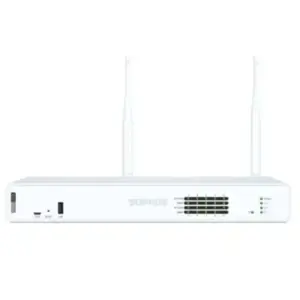
Fortinet FortiGate 700G Firewall in Dubai, UAE
A high-capacity FortiGate platform for organisations planning secure enterprise edges, campus boundaries, segmented networks, encrypted traffic inspection, VPN connectivity and secure SD-WAN. The buying decision should be based on inspected-traffic performance, interface design, licensing, redundancy and operational requirements rather than the headline firewall number alone.
Direct answer for buyers evaluating the FortiGate 700G
The Fortinet FortiGate 700G is an enterprise next-generation firewall in Fortinet’s G-series portfolio, intended for high-throughput secure networking at locations such as modern campuses, enterprise edges and distributed environments. It combines firewalling with security inspection, VPN, segmentation, SD-WAN and Fortinet Security Fabric participation. It is most relevant when a buyer needs materially more inspected-traffic capacity and interface density than smaller FortiGate models provide. Before proceeding, confirm the traffic profile after security services are enabled, required 25GE/10GE/5GE/1GE connectivity, optical modules or DACs, high-availability design, FortiGuard and FortiCare terms, logging strategy and whether the diskless FG-700G or storage-equipped FG-701G is the better fit.
What the FortiGate 700G does
The appliance sits at a security boundary and applies policy to traffic moving between networks, internet links, data-centre segments, branches or other routed zones. FortiOS brings firewall policy, network services and security controls into one operating environment. The platform can support secure SD-WAN, VPN, segmentation and visibility into applications, users and devices, while FortiGuard services add subscription-based inspection and threat-intelligence functions according to the selected bundle.
This consolidation is useful when the network team wants fewer disconnected enforcement points and a consistent policy model across routing and security. The actual set of protections available depends on FortiOS release, licensing, enabled services and configuration.
Who should consider it
The 700G is best evaluated by organisations with demanding perimeter or campus-edge requirements, substantial encrypted traffic, multiple high-speed uplinks, many internal segments, large VPN populations or a need to consolidate security and network edge functions. It can also be relevant for distributed enterprises that want a central platform with enough capacity to aggregate multiple sites.
It may be unnecessarily large for a small office whose real inspected throughput and connection counts are modest. Conversely, environments with sustained traffic beyond the 700G’s inspected-traffic envelope, unusually dense 40/100/400GE connectivity, or larger hyperscale requirements should compare higher FortiGate platforms rather than sizing from firewall throughput alone.
Business challenges the platform can help address
Security inspection at higher link speeds
Upgrading internet, campus or data-centre links can expose a gap between raw network speed and the throughput available when IPS, malware protection, application control or encrypted-traffic inspection is active. The 700G provides a significantly higher inspected-traffic ceiling than entry and lower mid-range firewalls, but sizing should use the security profile that will actually be deployed.
Port-speed transition
The mix of 25GE SFP28, 10GE SFP+, 1GE SFP and multigigabit copper interfaces can simplify designs that must bridge existing 1GE infrastructure with newer 5GE, 10GE or 25GE uplinks. Optics, cable type, distance and peer-device support still need to be confirmed before ordering.
Network and security consolidation
FortiOS combines routing, security policy, VPN, SD-WAN and platform integrations in a common operating environment. This can reduce operational fragmentation when a business wants one policy and management approach across multiple edge functions, though design governance remains important.
Resilience planning
A production firewall is often a critical dependency. The appliance provides dual AC power and can participate in FortiGate high-availability architectures. Buyers should still plan separate power feeds, switching topology, state synchronization, maintenance procedures and failover testing.
Core capability band
Fit matrix: when the 700G belongs on the shortlist
| Requirement | Suitable when | Confirm before ordering |
|---|---|---|
| High-speed enterprise edge | Inspection demand is in the multi-gigabit range and link speeds extend to 25GE. | Actual threat-protection, SSL inspection and peak traffic requirements. |
| Campus segmentation | Many routed security zones, VLANs and access layers need central policy enforcement. | Routing design, VDOM needs, switch integration and east-west traffic profile. |
| Large VPN aggregation | The deployment has many site or user VPN connections and significant encrypted throughput. | Tunnel type, cryptographic settings, authentication, client model and redundancy. |
| High availability | Firewall downtime must be reduced through redundant appliances and power paths. | Second unit, cabling, upstream/downstream design, failover policy and support scope. |
| Local log storage | A separate logging platform is acceptable or preferred. | If onboard storage is required, compare the related FortiGate 701G. |
FortiGate 700G verified technical information
Current performance figures below follow Fortinet’s July 2026 product matrix. Performance values are up to and vary with system configuration and traffic conditions.
| Brand / model | Fortinet FortiGate 700G, model FG-700G |
| Product type | Enterprise next-generation firewall appliance |
| Firewall throughput | Up to 164 / 163 / 145 Gbps for 1518 / 512 / 64 byte UDP |
| IPsec VPN throughput | Up to 55 Gbps, Fortinet test uses AES256-SHA256 |
| IPS throughput | Up to 38 Gbps, enterprise traffic mix |
| NGFW throughput | Up to 29 Gbps with firewall, IPS and application control enabled in Fortinet’s enterprise-mix test |
| Threat protection throughput | Up to 26 Gbps with firewall, IPS, application control, malware protection and logging in the defined enterprise mix |
| SSL inspection throughput | Up to 14 Gbps using an average of HTTPS sessions with different cipher suites |
| Concurrent sessions | Up to 28 million in the current Fortinet product matrix |
| New sessions per second | Up to 700,000 |
| Firewall policies | Up to 30,000 in the current product matrix |
| IPsec tunnels | Up to 2,000 gateway-to-gateway and 50,000 client-to-gateway |
| SSL VPN throughput / users | Up to 8 Gbps; recommended maximum 10,000 concurrent tunnel-mode users in the product matrix |
| Interfaces | 4 x 25GE SFP28, 4 x 10GE SFP+, 16 x GE SFP, 8 x 5GE RJ45, 1 x 2.5GE RJ45 and 1 x GE RJ45 |
| FortiAP / FortiSwitch scale | Up to 1,024 FortiAPs total / 512 tunnel; up to 128 FortiSwitches in the current product matrix |
| FortiTokens | Up to 5,000 |
| Virtual domains | 10 default / up to 50 |
| Onboard storage | No local storage on FG-700G; the related FG-701G is the storage-equipped variant with 960 GB in the current matrix |
| Power supplies | Dual AC power supplies |
| Form factor | 1RU rack mount |
| Important note | Licenses, security-service bundles, optics, cables, support terms and project services must be selected separately according to the required bill of materials unless a specific bundle states otherwise. |
Configuration, licensing and compatibility dependencies
Hardware capability and licensed security capability are not the same thing. A base FG-700G appliance gives the platform, ports and FortiOS foundation, while many security services are subscription dependent. FortiGuard bundles can include combinations of IPS, malware protection, web and DNS filtering, application control, cloud sandboxing, data-loss prevention or other services depending on the specific bundle and current vendor packaging. FortiCare support is also selected by service level and term. Do not assume a service is included simply because the firewall supports it.
Compatibility also depends on optics, cable type, peer interface speed, FortiOS release, Fortinet management products and the architecture of the existing network. For 25GE and 10GE uplinks, confirm the exact SFP28 or SFP+ module, fibre type, distance and switch/router compatibility. For upgrades, review the current Fortinet firmware upgrade path and any release notes relevant to the hardware before implementation. FourTeck can include compatibility review in the quotation and implementation scope.
A practical purchase and deployment journey
Measure the real workload
Document internet capacity, east-west traffic, encrypted-traffic percentage, application mix, session volume, VPN use and expected growth. This prevents sizing from user count alone.
Define the physical design
Map WAN, LAN, DMZ, HA, management, 25GE and 10GE links. Identify required transceivers, DACs, patching and upstream or downstream switch changes.
Choose subscriptions and support
Decide which FortiGuard security services are needed, the support level, contract term, central management and logging approach. Align the term with procurement and renewal policy.
Plan migration and acceptance
Document policy conversion, routing changes, VPN migration, HA build, testing, rollback, maintenance window and handover. Define what success looks like before the change.
Inspected throughput is the number that should drive sizing
The 164 Gbps headline firewall figure is useful for understanding packet-forwarding capability, but it is not the correct sizing number for every production design. A real enterprise edge typically enables IPS, application control, malware protection, logging and often SSL inspection. Fortinet’s current product matrix therefore provides separate enterprise-mix values: up to 38 Gbps IPS, 29 Gbps NGFW and 26 Gbps threat protection. Those figures are more useful when estimating what the firewall can process once meaningful security controls are active.
Sizing should also leave operational headroom. Peak traffic, bursts, asymmetric flows, VPN encryption, SSL inspection, logging and future bandwidth upgrades all influence the outcome. A design that consumes nearly all of the published laboratory figure at launch has little room for growth or changes in policy. FourTeck can help translate the expected policy stack into a practical sizing target.
Interface density helps bridge present and future network speeds
The FG-700G combines four 25GE SFP28 interfaces, four 10GE SFP+ interfaces, sixteen 1GE SFP interfaces, eight 5GE copper interfaces, plus dedicated 2.5GE and 1GE RJ45 connectivity shown in the current product matrix. This is useful in environments where the security edge must connect to multiple generations of campus or data-centre infrastructure rather than a single uniform link speed.
Port count alone does not complete the bill of materials. Fibre distance, connector type, transceiver wavelength, DAC requirements, switch support, link aggregation and redundancy all have to be validated. Where the appliance will sit between redundant core switches and multiple WAN providers, the port map should be drawn before purchase. That simple exercise often identifies missing optics, patch cables or spare interfaces before the equipment reaches site.
Operational control matters after the firewall is installed
A large firewall project is not complete when traffic first passes. Policy lifecycle, logging, reporting, firmware management, backup, administrator access, change control and incident response have to be planned. FortiGate can operate as part of the wider Fortinet Security Fabric, and organisations may choose FortiManager, FortiAnalyzer or other Fortinet services according to scale and operational model.
The diskless FG-700G also makes logging architecture an important buying question. If local storage is a firm requirement, the storage-equipped FG-701G should be compared. If logs will be sent to FortiAnalyzer, FortiAnalyzer Cloud, a SIEM or another approved destination, retention periods, log volume, compliance needs and connectivity should be defined as part of the deployment design rather than after go-live.
Ideal business environments and use cases
Modern enterprise campus
Suitable for organisations that need high-capacity policy enforcement between campus access, data-centre resources, internet services and multiple security zones. Segmentation and high-speed uplinks can be designed around the mixed optical and copper interface set.
Enterprise internet edge
Relevant when high-speed internet access must be inspected with IPS, application control, malware protection and encrypted-traffic policies. The threat-protection figure, not only raw firewall throughput, should guide sizing.
VPN aggregation
The platform can serve organisations with many IPsec site connections or a large remote-access requirement. Tunnel counts, cryptographic profiles, authentication and client strategy should be tested against the intended FortiOS configuration.
Distributed enterprise control point
A central or regional hub may use the firewall to aggregate branches, enforce shared policy and participate in secure SD-WAN. The WAN design should account for carrier diversity, failover and application steering.
Integration and operational considerations
A FortiGate 700G can become a central enforcement point, so integrations deserve the same attention as the appliance itself. Identity sources may include directory services and multifactor-authentication systems. Network integrations can include dynamic routing, VLANs, link aggregation, SD-WAN underlays and upstream or downstream switching. Security operations may involve centralized logging, SIEM forwarding, FortiAnalyzer, FortiManager and other Security Fabric components. Every integration introduces configuration and lifecycle dependencies that should be documented before migration.
Firmware selection is another operational decision. Fortinet publishes release notes, supported-model lists and upgrade-path guidance. Production teams should use the recommended path for the exact current firmware and should review known issues before change windows. This is particularly important when interface behaviour, VPN functions or management integrations are critical to the environment. Backups, console access, rollback planning and maintenance approval should be part of the change plan.
For organisations replacing another FortiGate, policy and object migration may be more direct than a cross-vendor migration, but it still deserves review. Interface naming, NAT, routing, VPNs, certificates, SD-WAN rules and deprecated features can all affect the cutover. FourTeck can scope migration and configuration assistance separately from the hardware quotation when required.
Buyer questions to resolve before ordering
Provide normal, peak and projected bandwidth together with IPS, malware, application and SSL inspection requirements.
List every 25GE, 10GE, 5GE and 1GE connection, plus media type and distance, so optics and cables can be included accurately.
Decide whether the project needs a FortiGuard bundle, standalone services, FortiCare level, cloud management, analytics or other licensed capabilities.
The FG-700G is diskless. Compare the FG-701G if local storage is part of the logging or operational design.
Confirm whether two firewalls, separate power feeds, redundant switches and diverse WAN circuits are required.
Separate hardware supply from installation, migration, configuration, testing, documentation, training and ongoing support so the quotation matches expectations.
Procurement checklist for the FG-700G
✓ Confirm the exact model FG-700G and required quantity.
✓ Record current and forecast inspected throughput.
✓ Map every WAN, LAN, DMZ, HA and management interface.
✓ Specify 25GE, 10GE, 5GE and 1GE optics or cables.
✓ Select the FortiGuard service bundle or standalone services.
✓ Select FortiCare service level and subscription term.
✓ Decide whether a two-node HA pair is required.
✓ Confirm whether local storage is required; compare FG-701G if yes.
✓ Define central management, logging and retention requirements.
✓ Review VPN, routing, identity and Security Fabric integrations.
✓ Scope migration, configuration, testing and rollback responsibilities.
✓ Confirm destination, delivery coordination and target project date.
How FourTeck can support the buying process
FourTeck can help translate a network requirement into a clearer FortiGate bill of materials rather than treating the firewall as a standalone box. Assistance can cover model sizing, review of performance assumptions, interface mapping, optics and accessories, FortiGuard and FortiCare selection, high-availability planning, central management and logging requirements, migration scope and quotation coordination.
For projects that need professional services, the scope can be discussed separately so responsibilities are clear. Installation may involve rack mounting, cabling and power checks; configuration can include interface setup, policy creation, routing, VPN, SD-WAN, HA and integrations; migration may include policy conversion and cutover planning; testing can cover connectivity, failover and application validation. The exact deliverables depend on the agreed project scope.
You can also browse the FourTeck firewall product range or review firewall services and support options when the requirement includes more than hardware supply.
Information that makes a quotation more accurate
A useful request normally includes:
• Required number of firewalls and HA preference
• Internet/WAN capacity and expected growth
• Estimated inspected traffic and SSL inspection needs
• Port speeds, fibre distances and transceiver requirements
• FortiGuard and FortiCare term preference
• Migration source, if replacing an existing firewall
• Delivery destination and expected project window
UAE availability and support guidance
Contact FourTeck to confirm current UAE availability for the Fortinet FortiGate 700G. Hardware availability can vary according to model, quantity, bundle, license term and vendor lead time. A base appliance, a one-year security bundle and a multi-year enterprise bundle are different commercial items and should not be treated as the same quotation. Delivery planning should begin only after the exact part numbers and destination are confirmed.
If the project includes deployment, include the installation and configuration scope in the request. That can help align hardware arrival with rack readiness, transceivers, upstream switching, change windows and technical resources. For wider Fortinet purchasing guidance, see Fortinet firewall options from FourTeck and the Fortinet UAE information hub.
FourTeck can coordinate requirements for Dubai, Abu Dhabi, Sharjah and Ajman within one UAE project discussion. Coverage, delivery arrangements, service visits and implementation timing depend on the final scope, site access, equipment availability and agreed quotation, so these details should be confirmed before scheduling.
GCC Availability
FourTeck can assist GCC organisations evaluating the FortiGate 700G with requirement review, model and license selection, quotation coordination, delivery planning and discussion of configuration or installation scope. Projects may involve the United Arab Emirates, Saudi Arabia, Kuwait, Qatar, Bahrain or Oman, but the correct commercial and technical package must be confirmed for the destination. Product availability, subscription region, service terms, project scheduling and vendor lead times can vary by country, model, quantity and license choice. Buyers should provide the destination country, required quantity, preferred FortiGuard and FortiCare term, intended deployment location and expected project timeline. Where a project includes regional rollout rather than a single site, standardising the bill of materials and documenting local connectivity requirements early can reduce procurement confusion. For Kuwait-related planning, FourTeck also maintains a FourTeck Kuwait technology resource. Final availability and service arrangements should be confirmed in the quotation.
Africa Availability
For organisations in Africa, FourTeck can help evaluate the FG-700G hardware, FortiGuard subscriptions, FortiCare support, optics, deployment requirements and regional procurement approach. Requirements can differ substantially between a headquarters campus, a regional data centre and a distributed branch network, so the destination and network design should be shared before the bill of materials is finalised. Availability and fulfilment can depend on the destination country, quantity, license region, power and rack requirements, shipping arrangements, vendor lead time and local project conditions. Buyers in markets such as Kenya and Uganda, or elsewhere across East, West, Central and Southern Africa, should provide the exact requirement, deployment schedule, installation expectations and support needs. FourTeck can then coordinate an appropriate quotation pathway without assuming local inventory or fixed delivery timing. Additional regional information is available through the FourTeck Africa technology portal.
Related options to evaluate with the FortiGate 700G
FortiGate 400G
Consider when the inspected-traffic requirement and interface demand are lower than the 700G target. Compare current Fortinet performance data and port requirements before down-sizing.
FortiGate 900G
A nearby higher model for projects that need more threat-protection capacity or a different port mix. It should be compared against the actual workload, not selected solely because it is the next model up.
FortiGate 701G
The storage-equipped counterpart to the 700G. It is relevant when onboard storage is a requirement for the chosen operational or logging design.
FortiManager and FortiAnalyzer
Centralised management and analytics may be useful in larger or multi-site deployments. Sizing, licensing and deployment model should be evaluated separately.
Configuration and migration services
Useful when the project involves policy conversion, routing changes, VPN migration, HA deployment, acceptance testing or documentation. The work should be quoted against a defined scope.
Why businesses contact FourTeck for FortiGate planning
The most useful assistance often comes before the purchase order. A high-end firewall can be technically suitable yet still be ordered incorrectly if the subscription, transceivers, HA quantity, logging design or project services are missing. FourTeck can help clarify these items so the quotation reflects the intended deployment rather than only the appliance name.
Support can include requirement clarification, model comparison, license-term discussion, bill-of-material review, compatibility questions, quotation coordination, installation planning, configuration scope, migration planning and renewal guidance. None of these activities should be assumed to be included automatically; the final quotation should state the hardware, licenses and services that form the agreed scope.
For background on FourTeck’s firewall focus, visit the Firewall Dubai FourTeck site. When you are ready to share bandwidth, port, licensing and deployment information, use the FourTeck contact page.
What buyers are trying to understand before choosing this firewall
A common first question is whether the FortiGate 700G is simply a faster firewall or whether it changes what an enterprise can consolidate at the edge. The more useful answer is that its value comes from the combination of inspected-traffic capacity, interface density and FortiOS functions. A network team can use the platform for conventional firewall policy, but the same appliance can also participate in SD-WAN, site-to-site VPN, remote access, segmentation, access-layer integration and the broader Fortinet Security Fabric. The benefit of consolidation depends on the design: adding functions without measuring their performance impact can still create a bottleneck.
Buyers also frequently compare the 700G with the 400G and 900G. The 700G and 400G share the same current raw firewall throughput figures in Fortinet’s July 2026 product matrix, yet their inspected-security figures differ materially. The current matrix lists 13 Gbps threat protection for the 400G, 26 Gbps for the 700G and 30 Gbps for the 900G. That illustrates why model selection should focus on the security profile, session scale and interfaces rather than the largest headline number. The 700G is often a logical middle choice when a project needs a major step up in inspected throughput from the 400G class but does not need the additional capacity or interface characteristics of the 900G.
Another important search and procurement question concerns licensing. FortiGate hardware can be purchased as a base appliance or in bundles that combine FortiCare support and FortiGuard services for a defined term. Public market listings vary widely because one listing may represent hardware only while another includes one, three or five years of security services and support. A buyer therefore should never compare two prices until the exact SKU and subscription term are aligned. For a UAE quotation, specify whether you want hardware only for evaluation, a bundled protection package, or a particular FortiGuard service mix, then confirm the part numbers on the formal quote.
Storage creates another practical choice. The FG-700G is the diskless model, while the related FG-701G is the variant with onboard storage. This does not make one universally better. Organisations sending logs to FortiAnalyzer, FortiAnalyzer Cloud or an existing SIEM may prefer the 700G architecture, while another environment may have a local-storage requirement that makes the 701G worth evaluating. Logging retention, compliance rules and outage behaviour should be defined before deciding.
Port planning is equally important. Four 25GE SFP28 and four 10GE SFP+ interfaces can support high-speed uplinks, while sixteen 1GE SFP and eight 5GE copper interfaces allow integration with existing network layers. Yet an appliance with the right number of ports can still be the wrong bill of materials if optics are missing or the peer devices do not support the intended speed and media. Record each link, its distance, fibre type and redundancy role before the order is placed.
Finally, buyers often want to know whether a published throughput figure guarantees the same result in production. It does not. Fortinet states that performance values are up to and depend on configuration. SSL inspection, traffic mix, packet size, logging, cryptography, policy complexity and other services affect real performance. A disciplined design therefore compares expected peak load with the relevant inspected-throughput figure and preserves headroom for growth. That approach is more reliable than choosing the smallest appliance whose laboratory number barely exceeds the current WAN speed.
Practical answers for teams preparing a shortlist or quotation
If our internet circuit is 10 Gbps, do we automatically need the 700G?
No. Circuit speed is only one input. A 10 Gbps WAN with heavy SSL inspection, many VPNs, large east-west flows and rapid growth may justify the 700G, while a simpler 10 Gbps perimeter could fit a smaller model. Compare the intended security profile, peak traffic and growth against IPS, NGFW, threat-protection and SSL-inspection figures rather than matching the WAN number to raw firewall throughput.
How much spare capacity should we leave?
There is no universal percentage because traffic patterns and business growth differ. The useful principle is to avoid designing around continuous operation near the published maximum. Include normal and peak traffic, seasonal or backup loads, new applications, more encrypted traffic and expected WAN upgrades. The design team should define an acceptable utilization target and test critical policy combinations where possible.
Should we buy one appliance now and add HA later?
That depends on the business tolerance for firewall downtime and the project budget. If high availability is a requirement from day one, it is usually clearer to design the pair, switching, cabling, power feeds and licenses together. Adding a second unit later can be done in many environments, but the original topology and procurement choices should not create avoidable redesign work.
What should we send to FourTeck for a meaningful quote?
Send the required quantity, deployment country, current and target bandwidth, estimated inspected traffic, interface speeds, fibre distances, HA requirement, preferred FortiGuard and FortiCare term, logging approach, migration source and target project date. If exact values are not known, share the network diagram and current firewall model so the sizing discussion can start from a clearer baseline.
Can we reuse existing optics and cables?
Possibly, but do not assume it. Reuse depends on transceiver standard, vendor support, wavelength, fibre type, distance, connector, peer hardware and required speed. A compatibility check is especially important for 25GE SFP28 and 10GE SFP+ links. List the exact part numbers of existing optics if reuse is part of the cost plan.
Does post-quantum readiness change the buying decision today?
Fortinet’s launch material for the 700G series highlights post-quantum cryptography readiness in FortiOS. Whether that matters to a particular organisation depends on its data-retention horizon, regulatory environment, firmware strategy and cryptographic roadmap. Treat it as a platform capability to evaluate, not a reason to skip the more immediate work of sizing performance, licensing, compatibility and operational support.
Frequently asked questions about the FortiGate 700G
Is the FortiGate 700G suitable for an enterprise campus edge?
Yes, it is designed for high-performance enterprise edge and campus use cases. Suitability still depends on inspected throughput, interface requirements, security services, VPN scale and growth. A sizing review should be completed before purchase.
What is the current threat-protection throughput of the FG-700G?
Fortinet’s July 2026 product matrix lists up to 26 Gbps threat-protection throughput for the FG-700G under its defined enterprise traffic mix with firewall, IPS, application control, malware protection and logging enabled.
Are FortiGuard security services included with every FortiGate 700G?
No. The appliance can be supplied as base hardware or as part of specific bundles. Security services and FortiCare support depend on the SKU and contract term. Confirm the exact bundle before ordering.
What is the difference between the FortiGate 700G and 701G?
The principal purchasing difference is onboard storage. The FG-700G is the diskless model, while the current Fortinet product matrix lists 960 GB local storage for the FG-701G. Confirm the exact logging design before choosing.
How many 25GE interfaces does the FortiGate 700G provide?
The current Fortinet product matrix lists four 25GE SFP28 interfaces, together with four 10GE SFP+, sixteen 1GE SFP, eight 5GE RJ45, one 2.5GE RJ45 and one 1GE RJ45 interface.
Can the FortiGate 700G be used in a high-availability deployment?
FortiGate supports high-availability architectures, and the 700G provides dual AC power supplies. A resilient design should still confirm the second appliance, HA topology, power feeds, upstream and downstream switching, failover behaviour and testing plan.
How can I confirm FortiGate 700G availability in the UAE?
Contact FourTeck with the required quantity, bundle or support term and delivery destination. Availability can vary by model, license, quantity and vendor lead time, so it should be confirmed against the exact quotation.
What information is needed for a FortiGate 700G quotation?
Provide quantity, bandwidth, traffic and inspection expectations, port speeds, transceiver requirements, HA preference, FortiGuard and FortiCare term, logging approach, migration scope, delivery destination and project timeline.
Can FourTeck help with configuration or migration?
Configuration and migration assistance can be discussed as part of the project scope. Activities may include interface and routing setup, policies, VPN, SD-WAN, HA, migration planning, testing and documentation depending on the agreed quotation.
How should transceivers be selected for the FG-700G?
Select optics or DACs by interface speed, fibre type, wavelength, distance and peer-device compatibility. Do not assume an existing SFP or SFP+ module is suitable for every 10GE or 25GE connection.
Prepare the right FortiGate 700G bill of materials before you buy
Share the traffic profile, port map, HA requirement, subscription term and deployment location. FourTeck can help turn those details into a clearer hardware, licensing and service quotation for your UAE or regional project.

Reviews
There are no reviews yet.