

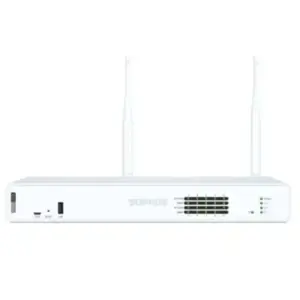
FG-3500F
High-end NGFW
25/40/100GbE options
No onboard SSD in FG-3500F
Confirm current UAE lead time
Direct answer for buyers evaluating the FortiGate 3500F
The Fortinet FortiGate 3500F is a high-capacity physical next-generation firewall intended for large networks that need dense 25GbE and 100GbE connectivity, high session scale and accelerated security inspection. It is mainly used at enterprise and data-centre boundaries, internal segmentation points, high-throughput VPN aggregation and other demanding secure-networking locations. Organisations considering it should validate inspected rather than raw traffic requirements, the exact port and optic plan, high-availability architecture, FortiGuard and FortiCare coverage, hyperscale licensing needs and whether local SSD storage is required. The closely related FG-3501F adds onboard storage, so model choice should be made against the logging and operational design rather than by name alone.
What this firewall is designed to do
FortiGate 3500F is designed to enforce security policy while moving large volumes of traffic through a compact data-centre-class appliance. Fortinet combines general processing with dedicated NP7 network processors and CP9 content processors. In practical terms, the platform is intended to offload network and security work that would otherwise place more pressure on software-only processing. This matters when a business needs to inspect high-speed flows, terminate VPNs, apply application controls, segment large environments and handle heavy connection rates without selecting a chassis platform.
Its role can span internet edge, hybrid data-centre edge, internal segmentation, secure SD-WAN, service-provider functions and selected mobile-network security use cases. Those possibilities do not mean every feature is active by default. Some capabilities depend on FortiOS configuration, FortiGuard subscriptions, optional services or the Hyperscale Firewall License. A correct design separates the hardware capability from the software and service entitlements required for the intended security policy.
Who should consider it
The FG-3500F is most relevant to organisations with substantial east-west or north-south traffic, multiple high-speed uplinks, very large session counts, large IPsec populations or a requirement to consolidate security inspection at a few high-capacity points. Typical evaluators include enterprise network teams, data-centre architects, service providers, managed service environments and organisations operating large hybrid networks.
It may be excessive for a branch, modest campus or smaller enterprise whose real inspected throughput and port requirements are far below the platform’s capacity. Selecting a firewall too far above the requirement can increase acquisition, support, optic, rack, power and operational costs without creating equivalent business value. FourTeck can help compare the 3500F against nearby FortiGate models and current-generation alternatives after the traffic profile and interface plan are known.
Business challenges the FortiGate 3500F can address
High-speed perimeter inspection
Large internet, cloud and inter-site links can outgrow security appliances that were sized on raw firewall throughput alone. The 3500F offers published enterprise-mix security performance intended for high-capacity inspection. Buyers should still size on the enabled policy set, traffic mix, encrypted traffic percentage and expected growth.
Dense data-centre connectivity
The appliance provides six hardware-accelerated 100GE QSFP28/40GE QSFP+ slots and 32 hardware-accelerated 25GE SFP28/10GE SFP+/GE SFP slots. This helps architects connect high-speed core, aggregation, edge and server-facing networks without relying on low-speed interfaces.
Large session and VPN scale
Fortinet publishes 140 million concurrent TCP sessions as a standard figure, with up to 348 million when the Hyperscale Firewall License is used, together with 165 Gbps IPsec VPN throughput under the vendor’s stated test conditions. Those figures make session design and license selection important parts of procurement.
Security and networking consolidation
FortiOS allows a single appliance to participate in firewalling, routing, segmentation, VPN, SD-WAN and security inspection workflows. Consolidation can simplify architecture, but it also increases the importance of policy design, change control, logging, high availability and management tooling.
Suitability matrix: when the 3500F fits and what to confirm
| Requirement | Suitable when | Confirm before ordering |
|---|---|---|
| 100GbE connectivity | You need multiple 100GE/40GE QSFP interfaces in a 2RU firewall. | Exact optic type, fibre, distance and port mapping. |
| High inspected throughput | Enterprise-mix security performance is within the project’s headroom target. | IPS, application control, malware protection, SSL inspection and logging requirements. |
| Large connection scale | Millions of sessions or high connection rates are part of the design. | Whether standard capacity is sufficient or the Hyperscale Firewall License is required. |
| HA deployment | Redundancy is required at a critical edge or data-centre security tier. | Cluster mode, identical service coverage, interfaces, cabling and failover design. |
| Local log storage | External logging or analysis is planned. | FG-3500F has no onboard SSD; compare FG-3501F if onboard storage matters. |
Verified FortiGate 3500F technical information
The following model-specific values are based on Fortinet’s FortiGate 3500F Series data sheet and current product matrix. Fortinet states that performance values are up to figures and can vary with system configuration. Security-throughput measurements also use defined test profiles, so production sizing should not treat any single number as a guaranteed field result.
Licensing, storage and compatibility dependencies
A FortiGate procurement is not complete when the appliance model is selected. The required security services and support coverage must be aligned with the intended policy set. Fortinet provides FortiGuard security services and FortiCare support in different bundles and a-la-carte options. Enterprise Protection, Unified Threat Protection, Advanced Threat Protection and other service combinations can cover different functions and support needs. The correct choice depends on whether the deployment requires web and DNS filtering, anti-malware services, advanced threat protection, data-loss functions, OT-related capabilities, managed services or other subscription-based functions.
High availability deserves specific attention. Fortinet’s current NGFW ordering guidance states that all members of an HA cluster need valid support contracts and must be licensed for the FortiGuard services that the cluster requires. A buyer should therefore budget and order an HA pair as a coordinated security system rather than assuming only the primary device needs service coverage.
The Hyperscale Firewall License is another distinct decision. Fortinet identifies higher session setup and concurrent-session capacity as license-dependent values on the 3500F. If the project depends on CGNAT scale, accelerated session setup, hardware logging or other hyperscale functions, FourTeck should verify that the required license is included in the proposed bill of materials.
Storage is a hardware distinction between models. The FG-3500F itself has no onboard SSD storage. The related FG-3501F provides two 1.92TB SSDs according to the current series data sheet. If the architecture relies on local log retention, local analytics workflows or another storage-specific use case, do not assume the 3500F and 3501F are interchangeable. External FortiAnalyzer or other logging architecture may also affect the decision.
Three capabilities that matter in a real deployment
1. Security inspection at high link speeds
The 3500F is not simply a high-throughput packet-forwarding device. Its value is tied to inspected traffic. Fortinet publishes 72 Gbps IPS, 65 Gbps NGFW and 63 Gbps threat protection figures under enterprise-mix test conditions, plus 63 Gbps SSL inspection using an average HTTPS profile. For architecture teams, these figures provide a more useful starting point than the much larger raw firewall number because modern policy frequently includes intrusion prevention, application control, malware protection and encrypted traffic inspection.
Sizing should still be based on the customer’s actual environment. Encrypted traffic percentage, cipher selection, packet size, policy complexity, logging level, security profile depth and traffic direction can change production performance. A design that expects 60 Gbps of sustained inspected traffic may need more headroom than a design that peaks briefly at the same number. FourTeck can help turn traffic measurements into a sizing conversation rather than using a single data-sheet number as the entire decision.
2. Port density for data-centre and aggregation designs
The interface layout is a major reason to evaluate this model. Six 100GE QSFP28/40GE QSFP+ slots provide high-speed uplink options, while 32 25GE SFP28/10GE SFP+/GE SFP slots create flexibility for aggregation, HA and segmented networks. Two 10GE/GE RJ45 management ports keep management connectivity separate from the high-speed forwarding interfaces.
Port count alone is not enough to build the bill of materials. The buyer must map every physical connection, select supported transceivers, confirm fibre type and reach, decide whether links are bundled, and determine how HA paths are cabled. Fortinet lists supported optics in model-specific ordering information, and the exact optic choice should be checked rather than assuming any SFP or QSFP module will work. For upgrades, existing optics may also need validation because a connector and nominal speed match does not automatically confirm support.
3. Large session scale with license-aware planning
Large public-facing services, carrier environments, cloud gateways and high-density user networks can be constrained by sessions and connection setup rates long before link capacity is exhausted. Fortinet publishes 140 million concurrent TCP sessions and one million new TCP sessions per second for the 3500F, with higher up-to values of 348 million sessions and five million new sessions per second tied to the Hyperscale Firewall License.
This distinction is important because architecture documents sometimes carry only the maximum number without the licensing condition. Procurement should capture both the target scale and the entitlement needed to reach it. A design should also consider state-table growth, NAT behaviour, logging volume, protection profiles and failover implications. For HA or scale-out designs, the session strategy should be tested against the actual traffic pattern instead of assuming published limits translate directly to application capacity.
A practical purchase and deployment journey
Measure the traffic
Collect WAN, data-centre, VPN and east-west traffic levels. Separate average, peak and growth projections, and estimate how much traffic will receive IPS, application control, malware protection or SSL inspection.
Map every interface
Document speeds, fibre types, optics, LAGs, management links, HA links and physical rack placement. This prevents expensive transceiver or cabling omissions late in the project.
Define security services
Choose which FortiGuard functions and support tier are required. Confirm whether the Hyperscale Firewall License, FortiAnalyzer, FortiManager or migration services are part of the design.
Design resilience
Decide Active-Passive, Active-Active or another supported architecture. Confirm that both cluster members are covered for the required support and FortiGuard services.
Plan migration
Review existing routes, objects, policies, NAT, VPNs, authentication, certificates, logging and operational dependencies. Build a cutover and rollback plan before installation.
Where the FortiGate 3500F can make sense
Enterprise internet edge
Large enterprises with multi-gigabit or 100GbE-class external connectivity may use the 3500F to combine routing, firewall policy, application visibility, threat inspection and VPN functions at a resilient edge. The design should be sized on inspected traffic and failover capacity, not only ISP circuit speed.
Data-centre segmentation
The high port density can suit internal segmentation where multiple network zones or high-speed switching domains require policy enforcement. East-west traffic patterns, asymmetric routing and dependency on dynamic routing should be assessed carefully before inserting any firewall into the path.
Large VPN aggregation
Fortinet publishes 165 Gbps IPsec VPN throughput and high tunnel scale for the platform. Enterprises or service providers can evaluate it for site-to-site and remote-access aggregation, with cryptographic profiles, tunnel counts and failover behaviour validated during design.
Service-provider and carrier edge
The platform’s NP7 acceleration, high connection scale and optional hyperscale capabilities can be relevant to carrier-scale NAT, security gateways and other high-session environments. Exact features and license dependencies should be mapped to the carrier requirement rather than assumed from the appliance name.
Hybrid data-centre connectivity
Organisations linking private data centres, cloud environments and high-speed WANs can use FortiGate as a policy enforcement point within a wider Fortinet architecture. Routing, overlay design, cloud connectivity and management responsibilities need to be clarified before purchase.
Large managed security environments
Managed service providers may value VDOM capacity, central management and high session scale when separating customer or service domains. Tenant architecture, licensing, log retention and operational access models should be confirmed independently of raw hardware capacity.
Integration and operational considerations
A high-end firewall sits in the middle of many dependencies. Network teams should confirm routing protocols, VLAN and VXLAN requirements, NAT behaviour, load balancers, upstream routers, downstream switches, cloud connections, DNS, identity sources and remote-access design. Security teams should define inspection profiles, certificate handling, URL and application controls, malware policy, logging and alert workflows. Operations teams need a change-management model, backup strategy, monitoring thresholds, software-upgrade process and escalation route.
Centralised tools may be appropriate when multiple FortiGates or large policy sets are involved. FortiManager can support central policy and device management workflows, while FortiAnalyzer can provide logging and analysis functions. Their use depends on architecture, licensing and operational scope. Buyers should not assume either platform is included with the FG-3500F hardware.
Power, cooling and rack planning also matter. The 3500F is a 2RU appliance with front-to-back airflow and dual AC power supplies. Fortinet lists average and maximum power figures of 760 W and 1174 W for FG-3500F. Data-centre teams should verify PDU capacity, feed diversity, rack depth, airflow direction and environmental limits before delivery.
When another model may be the better decision
A buyer should not choose the 3500F merely because it is powerful. If local SSD storage is required, the FG-3501F is the directly related storage-equipped option. If the deployment requires newer high-speed interface options such as 400GbE or materially higher security-inspection headroom, it is sensible to compare the FortiGate 3500G using current vendor data before finalising an F-series purchase. If traffic, session count and port density are much lower, another FortiGate class may reduce cost, power demand and operational complexity.
The correct comparison is based on the architecture that will exist over the intended service period. That includes expected growth, encryption trends, inspection depth, subscription term, redundancy, support requirements and lifecycle planning. FourTeck can help build a short list rather than treating the product catalogue as a simple ladder where the largest number is automatically the best choice.
Questions to resolve before ordering
Measure traffic that will use IPS, application control, malware protection and SSL inspection separately from raw forwarding.
Specify each 25GE, 40GE and 100GE link, fibre type, reach, redundancy arrangement and optic part number.
FG-3500F has no SSD. Decide whether external logging is sufficient or whether FG-3501F better suits the requirement.
Define the security outcomes first, then select the bundle or a-la-carte services that match them.
Plan cluster mode, duplicate licenses, support coverage, power feeds, cabling, switching and failover testing.
If the design depends on the higher published session figures or accelerated CGNAT functions, confirm the Hyperscale Firewall License.
Procurement checklist for the FortiGate 3500F
How FourTeck can assist with evaluation and quotation
FourTeck can help turn a product enquiry into a technically usable request for quotation. The process can begin with the model supplied by the customer or with a broader capacity requirement. For an FG-3500F project, useful inputs include current firewall utilisation, internet and data-centre link speeds, user and device scale, expected VPN load, desired high-availability design, security services, logging architecture, interface map, optic requirements and subscription term. With those inputs, the proposed bill of materials can be reviewed for gaps before commercial approval.
If the requirement is not yet final, FourTeck can help compare nearby FortiGate options rather than assuming the 3500F is automatically the correct size. That may include reviewing the FG-3501F where local storage is needed, or comparing newer high-end FortiGate models where 400GbE connectivity, lifecycle planning or higher inspection performance is important. Model comparison should use current vendor information at the time of quotation.
Planning can also include installation and configuration scope, migration from another firewall, policy conversion, routing integration, HA setup, VPN migration, logging integration, testing and handover. These activities should be explicitly included in the quotation when required because hardware procurement and professional services are separate parts of a project. See FourTeck’s firewall services, browse enterprise firewall products, or send the requirement to FourTeck for review.
UAE availability and project support guidance
For a FortiGate 3500F purchase in the UAE, availability should be confirmed against the exact model, required quantity, FortiGuard bundle, FortiCare term, accessories and vendor lead time. High-end appliances are often purchased as part of a project bill of materials rather than as a standalone box, so a meaningful availability check includes optics, support entitlements, HA quantities and any required management or analysis platform.
FourTeck can coordinate requirement review, quotation, delivery planning, configuration scope and installation planning for organisations in Dubai and across the UAE. Delivery dates, project schedules and service visits depend on confirmed scope and current supply conditions and should be agreed in the quotation. Buyers should share the delivery location, target deployment window and any access constraints early, especially for data-centre work that requires change windows or rack access approval.
For Fortinet-specific enquiries, buyers can also review FourTeck’s Fortinet firewall guidance and Fortinet UAE information. Current availability must still be confirmed for the exact FG-3500F configuration before purchase.
Dubai, Abu Dhabi, Sharjah and Ajman coverage
FourTeck can discuss FortiGate 3500F projects for businesses operating in Dubai, Abu Dhabi, Sharjah and Ajman as one coordinated UAE requirement. The practical starting point is the technical and commercial scope: exact model, quantity, license term, HA requirement, interface and optic plan, delivery destination, installation need and target change window. For multi-site organisations, it can be useful to standardise the bill of materials while documenting location-specific differences such as rack environment, ISP handoff, fibre reach, local switching, maintenance windows and onsite-access requirements. Product availability and service scheduling can vary, so each quotation should confirm what is being supplied, where it will be delivered and which professional services are included.
GCC Availability
Organisations planning FortiGate 3500F deployments across the GCC can use the same technical sizing process while allowing for country-specific procurement, licensing, logistics and project requirements. FourTeck can assist with requirement review, model and license selection, quotation coordination, delivery planning, configuration scope, installation planning and renewal guidance for projects involving the United Arab Emirates and other GCC markets such as Saudi Arabia, Kuwait, Qatar, Bahrain and Oman. Availability, service eligibility, shipment timing, vendor lead time and onsite work can differ by destination and project scope. Buyers should provide the destination country, exact appliance quantity, required FortiGuard and FortiCare term, transceiver list, HA design, deployment location and expected timeline. For Kuwait-related coordination, FourTeck’s Kuwait technology resource may also be useful. No local inventory, customs outcome or installation date should be assumed until confirmed in the quotation.
Africa Availability
For African enterprise and service-provider projects, FortiGate 3500F planning should account for destination, product model, quantity, license region, power environment, shipping arrangements, vendor lead time, transceiver availability and local implementation conditions. FourTeck can help organisations evaluate the appliance, required FortiGuard services, FortiCare coverage, accessories, support needs, logging architecture and deployment scope before a regional procurement request is finalised. Projects in East Africa, including Kenya and Uganda, or in other African regions may have different fulfilment and onsite-service constraints, so buyers should share the destination country, exact requirement, preferred deployment schedule and any installation or support expectations. FourTeck’s Africa technology information can support regional discussions. Product availability, delivery timing and local project coverage should be confirmed for each opportunity rather than assumed from a UAE quotation.
Related products and services to evaluate
FortiGate 3501F
A closely related model with the same core interface layout and two 1.92TB SSDs onboard. Consider it when local storage is a specific design requirement.
FortiGate 3500G
A newer high-end model worth comparing when 400GbE interfaces, greater inspection throughput or longer lifecycle planning are important. Do not assume it is a drop-in replacement without checking the design.
FortiManager
Centralised management can be useful for large or distributed FortiGate estates. Licensing, deployment model and operational ownership should be defined separately.
FortiAnalyzer
Consider dedicated logging, reporting and analysis when local appliance storage is not part of the design or when centralised visibility is required.
FortiGuard and FortiCare options
Security services and support should be selected around the policies, risk model, service level and subscription period rather than treated as a generic add-on.
Migration and configuration services
Policy conversion, HA setup, routing, VPN migration, logging integration, testing and handover can be scoped as professional services when the project requires them.
What buyers are trying to understand before choosing this platform
Most serious FortiGate 3500F enquiries quickly move beyond a simple search for the product name. Buyers want to know whether the appliance is still appropriate for a new high-capacity project, how its security performance compares with its raw firewall number, whether 100GbE connectivity is sufficient for the planned data-centre architecture, what licenses are required, why the 3501F exists, how the model compares with the 3500G, and what information is needed to obtain a meaningful quotation. Those questions are connected because the cost and suitability of a high-end firewall depend on architecture, subscriptions and lifecycle planning as much as the chassis itself.
Raw firewall throughput is not the sizing number
Fortinet publishes up to 595/590/420 Gbps IPv4 firewall throughput for different packet sizes, but a production NGFW normally runs security profiles. The more decision-relevant published numbers include 72 Gbps IPS, 65 Gbps NGFW and 63 Gbps threat protection. SSL inspection is listed at 63 Gbps under Fortinet’s stated average HTTPS profile. A buyer should therefore begin with the traffic that will actually be inspected, not with the largest number in the data sheet.
3500F and 3501F are not the same purchase
The key hardware difference is onboard storage. The FG-3500F has no local SSD storage, while FG-3501F includes two 1.92TB SSDs according to Fortinet’s series data sheet. This does not automatically make the 3501F better. If the logging design uses FortiAnalyzer or another central platform, the non-storage model may be entirely appropriate. If local storage is a requirement, the distinction becomes important before the quote is issued.
The 3500G comparison is now worth making
Fortinet’s current high-end matrix includes both FG-3500F and FG-3500G. The G-series model adds 400GbE-capable interfaces and materially higher published IPS, NGFW, threat protection and SSL inspection figures. That does not mean every 3500F project should be changed to a 3500G. Existing standardisation, interface requirements, budget, support contracts, migration complexity and project timing all matter. It does mean a new procurement should compare the alternatives before committing to a multi-year design.
Licensing is another frequent source of confusion. Buyers sometimes ask whether FortiGate ‘needs a license’ as though there were a single switch that turns the product on. In reality, hardware capability, FortiOS functions, support and FortiGuard security services have different entitlement considerations. The required bundle depends on which inspection and support outcomes the organisation expects. The Hyperscale Firewall License is separate again: Fortinet identifies it as the dependency for the higher published session and session-setup values, and describes it as enabling hardware acceleration for selected CGNAT and related functions. A design that does not need hyperscale functions should not add that license merely because the maximum numbers look attractive.
Interface planning is also a buying question, not just an engineering task. Six 100GE/40GE slots and 32 25GE/10GE/GE SFP slots sound flexible, but the actual bill of materials depends on optics and topology. A 100GbE uplink may use short-range multimode optics in one rack and long-range single-mode optics across a campus or data-centre interconnect. HA links, management links, redundant upstream switches and port-channel design consume interfaces. Buyers should attach a simple port map to the RFQ where possible, because it allows the appliance, optics and cabling to be reviewed together.
Pricing searches can be misleading for this class of product because online pages mix hardware-only figures, region-limited variants, bundles with one or several years of FortiCare and FortiGuard, and reseller reference prices. A valid UAE quotation should identify the exact FG-3500F or FG-3501F SKU, service bundle, term, optics, quantity and any professional services. Comparing a bare hardware number with a three-year security bundle is not a useful price comparison. The same caution applies to availability: a web page that shows stock in another market does not establish availability for the UAE or for the exact licensed configuration.
For migration projects, the hidden work is often in policy and operational dependencies rather than physical installation. Route maps, NAT rules, IPsec peers, SSL inspection certificates, authentication sources, object groups, security profiles, logging destinations and change windows all need to be understood. Fortinet offers FortiConverter migration capabilities and services for supported transitions, but the migration plan still requires review and testing. A quotation request is stronger when it states whether the customer expects hardware only, supply plus configuration, full migration, or an assisted cutover with post-change validation.
A concise RFQ for the 3500F should therefore include quantity, HA requirement, peak inspected throughput, WAN and LAN link speeds, optic types, VPN scale, FortiGuard requirements, support term, hyperscale requirement, logging architecture, rack location, target deployment date and requested professional services. With those inputs, FourTeck can help determine whether the model fits, whether a related option should be compared, and which commercial components belong in the quotation.
Decision questions that deserve clear answers
How much headroom should I leave above measured traffic?
There is no universal percentage because security policy, traffic mix, encryption and growth differ. Use measured peaks, then add realistic growth and failover assumptions. If an HA design expects one appliance to carry the entire load during maintenance or failure, each unit should be able to handle that state. Treat Fortinet’s performance figures as laboratory up-to values and validate the design against the security services that will be enabled.
Can existing 10G or 25G optics be reused?
Possibly, but reuse should never be assumed. The connector, speed and fibre type are only part of compatibility. Confirm the exact transceiver part number against Fortinet’s supported optic list for the model and FortiOS version, and check reach, wavelength and switch-side compatibility. Reusing unsupported optics can create avoidable troubleshooting and support issues.
Do I need FortiAnalyzer because the FG-3500F has no SSD?
Not automatically. The correct logging design depends on retention, reporting, analytics, compliance and operational requirements. FortiAnalyzer is a common Fortinet option for central logging and analysis, but it is a separate platform. Some organisations already have central log infrastructure. Others may prefer the FG-3501F because onboard storage is useful to their design. Define the logging requirement first.
Is the Hyperscale Firewall License needed for normal enterprise firewalling?
It is not the same as a general requirement to operate the appliance. Fortinet ties specific hyperscale acceleration and the higher published session values to that license. If the project depends on CGNAT scale, accelerated session setup or the licensed maximum connection figures, include it. Otherwise, confirm whether the standard platform capability already meets the design.
What should an HA quote include beyond two appliances?
Plan service coverage for both units, optics, HA links, redundant upstream and downstream connectivity, separate power feeds, management access, rack space and the professional services needed to configure and test failover. Fortinet’s ordering guidance states that cluster members should have valid support contracts and appropriate FortiGuard licenses. A complete quote should reflect the cluster, not just duplicate the chassis SKU.
How should I compare 3500F with a newer G-series firewall?
Start with required interfaces, inspected throughput, session scale, licensing, power, migration effort and expected service life. The 3500G offers newer interface and inspection capabilities, while an existing 3500F standard may still align with a specific environment. The comparison should be based on the current project and current vendor information rather than assuming newer or older is automatically right.
Why businesses contact FourTeck for high-end firewall projects
High-end firewall purchasing involves technical decisions that can be missed when a quote is built from a single product code. FourTeck can assist with requirement clarification, model selection, license and subscription review, bill-of-material checking, optic planning, compatibility discussion, quotation coordination, installation scope, migration planning and support coordination. The goal is to make the commercial proposal reflect the design that will actually be deployed.
This is particularly useful when a customer is comparing FG-3500F with FG-3501F or with a current-generation alternative, when an HA pair needs matching service coverage, when transceivers must be identified, or when migration services need to be separated from hardware supply. FourTeck does not need to assume a one-size-fits-all package: the scope can be defined around the customer’s existing network, internal engineering capability and target operating model. For general company information, visit FourTeck Firewall Dubai.
Frequently asked questions
What is the Fortinet FortiGate 3500F mainly used for?
It is a high-end 2RU next-generation firewall intended for large enterprise, data-centre, service-provider and other high-capacity security deployments where dense 25/100GbE connectivity, large session scale and accelerated security inspection are required.
What is the difference between FortiGate 3500F and 3501F?
The main hardware distinction is onboard storage. Fortinet lists no onboard storage for FG-3500F, while FG-3501F includes two 1.92TB SSDs. The core interface and published performance specifications are otherwise aligned at series level, so storage requirements should drive this part of the model choice.
What security throughput does the FortiGate 3500F provide?
Fortinet publishes up to 72 Gbps IPS throughput, 65 Gbps NGFW throughput and 63 Gbps threat protection for enterprise-mix testing. Published values are up to figures and vary with configuration, traffic and enabled services.
Does the FortiGate 3500F support 100GbE interfaces?
Yes. Fortinet lists six hardware-accelerated 100 GE QSFP28 / 40 GE QSFP+ slots, plus 32 hardware-accelerated 25 GE SFP28 / 10 GE SFP+ / GE SFP slots and two 10GE/GE RJ45 management ports.
Is a Hyperscale Firewall License required?
It is required for specific hyperscale acceleration and the higher published session-capacity figures identified by Fortinet. Whether it is needed depends on CGNAT, session scale and other hyperscale requirements. Confirm the license during design rather than adding it automatically.
Can the FortiGate 3500F be deployed in high availability?
Yes. Fortinet lists Active-Active, Active-Passive and clustering configurations. For an HA deployment, plan matching support contracts and FortiGuard service licensing for the cluster members, along with redundant power, interfaces and switching.
Are FortiGuard security services included with the hardware?
Do not assume a specific security-service bundle is included with a hardware-only purchase. Fortinet offers bundles and a-la-carte services with different FortiGuard and FortiCare coverage. The exact entitlement and term should be stated on the quotation.
What information should I send for a FortiGate 3500F quotation in Dubai?
Send the required quantity, HA design, expected inspected throughput, interface and optic requirements, VPN scale, FortiGuard and FortiCare term, hyperscale need, logging architecture, deployment location and any installation or migration scope. This allows a more complete bill of materials to be prepared.
How can I confirm current UAE availability for FG-3500F?
Contact FourTeck with the exact model, quantity, license term, accessory list and target timeline. Availability can depend on model, region, subscription, quantity and vendor lead time, so it should be confirmed for the specific project rather than inferred from an overseas listing.
Build the quotation around the actual network
Share your target throughput, interface plan, HA requirement, subscription term, optics, logging architecture and deployment scope. FourTeck can review whether FG-3500F fits the requirement and coordinate the product, license and service components for a UAE quotation.

Reviews
There are no reviews yet.