

Fortinet FortiSwitch FS-1048G Data Center Switch in Dubai, UAE
The FS-1048G is built for organisations that need dense 1G/10G fibre connectivity, multiple 100G uplinks and a switching platform that can participate in Fortinet-managed network designs. Its role is not simply to add ports: it is intended to sit where aggregation capacity, resilient uplinks, predictable low-latency forwarding and operational visibility matter to the wider network architecture.
Share your link speeds, optic types, rack design, management preference and required quantity so the bill of materials can be checked before quotation.
Direct answer for buyers evaluating the FS-1048G
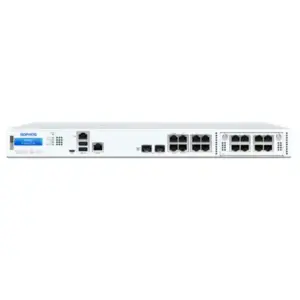
The Fortinet FortiSwitch FS-1048G is a 1RU Layer 2/3 managed switch aimed at high-capacity data centre, campus-core and aggregation deployments. It provides 48 GE/10GE SFP/SFP+ ports and six 100GE QSFP28 ports, with MACsec capability and dual AC power supplies. It is worth considering when a network needs dense fibre server or distribution links, high-speed uplinks and integration with a Fortinet switching architecture. Before proceeding, confirm the precise transceivers, port-speed plan, rack airflow direction, power feeds, FortiSwitchOS version, intended management model and support/licensing requirements. In standalone deployments, advanced dynamic routing functions may require an additional feature license, so the operational design should be agreed before the purchase order is issued.
What the FS-1048G does in a network
At a practical level, the switch concentrates a large number of fibre-connected devices or downstream switches and provides several 100G paths toward a core, firewall cluster, spine layer or other aggregation point. The forty-eight SFP/SFP+ interfaces allow a design to mix supported 1G and 10G optical or copper-transceiver links, while the six QSFP28 interfaces give the architect room to build higher-bandwidth northbound connectivity and resilient inter-switch links.
That makes the product relevant where ordinary access switching is no longer enough. Server racks, storage-adjacent networks, enterprise cores, firewall aggregation zones and large distribution blocks can all create a requirement for high port density without moving to a modular chassis. The FS-1048G addresses that fixed-form-factor use case while remaining part of Fortinet’s wider switching and management environment.
Who should put it on the shortlist
The strongest fit is an organisation that already knows it needs fibre-dense 10G access or aggregation with 100G uplinks. IT teams operating FortiGate-managed switching may also value the ability to bring the device into a consistent operational model with the rest of the Fortinet network. Data centre teams can use the switch where predictable rack-to-core connectivity, link aggregation and redundancy are more important than PoE or copper edge access.
It is not automatically the right choice for every enterprise. A branch or office that mostly needs 1G/2.5G copper and PoE for users, phones or access points should normally evaluate a campus-access model instead. Likewise, environments planning broad 25G server attachment may need to compare another FortiSwitch model with native SFP28 density. The correct decision starts with the physical interface requirement, not the model name.
Business problems this data centre switch can help address
Too many 10G fibre links
When server, distribution or appliance connections outgrow smaller switches, 48 SFP/SFP+ ports provide a concentrated fixed-form-factor platform. The actual usable port mix still depends on approved optics and the speed profile selected for each link.
Uplink bottlenecks
Six 100GE QSFP28 interfaces give architects multiple options for uplinks, peer links and high-capacity aggregation. Capacity planning should still account for oversubscription, traffic direction, failure scenarios and the bandwidth expected during maintenance events.
Fragmented LAN operations
For Fortinet-centred environments, the switch can participate in FortiGate-managed designs through FortiLink. Standalone and other management approaches are also possible, but the software version, feature set and licensing model should be planned before deployment.
Resilience at aggregation points
Dual AC power supplies support a redundant-power design. Network resilience additionally depends on independent feeds, uplink topology, link aggregation, routing design, peer switching and the procedures used during upgrades or equipment failure.
Core capabilities that matter to infrastructure teams
FS-1048G suitability matrix
| Requirement | Suitable when | Confirm before ordering |
|---|---|---|
| 10G fibre density | Dozens of servers, appliances or downstream switches require SFP/SFP+ connectivity. | Exact optic type, distance, fibre type and supported transceiver list. |
| 100G aggregation | Multiple high-capacity uplinks are required for core, spine, firewall or peer-switch paths. | QSFP28 optic or DAC/AOC choice, breakout needs and topology. |
| FortiGate-managed LAN | The organisation wants FortiLink-based central management from a supported FortiGate design. | FortiGate model, FortiOS/FortiSwitchOS compatibility, topology and management links. |
| Standalone dynamic routing | The switch must run routing functions independently rather than under FortiGate control. | Current Advanced Switching license requirement and required protocols. |
| Data centre redundancy | The rack has dual power paths and the network design uses redundant uplinks or peers. | A/B power feeds, airflow, MCLAG/LAG/routing design and maintenance procedures. |
Verified technical information
The table below concentrates on values that are confirmed for the exact FS-1048G model in current Fortinet product or ordering information. Features that depend on management mode, software release or licenses are identified separately rather than presented as unconditional hardware functions.
| Brand | Fortinet |
| Product | FortiSwitch 1048G |
| Model / manufacturer SKU | FS-1048G |
| Product type | Layer 2/3 managed data centre / campus core switch |
| Form factor | 1 RU rack mount |
| Access / downlink interfaces | 48 x GE/10GE SFP/SFP+ ports |
| High-speed interfaces | 6 x 100GE QSFP28 ports |
| Switching capacity | 2160 Gbps duplex |
| Packet forwarding | 2000 Mpps for 64-byte packets |
| Network latency | Less than 1 microsecond |
| MAC address storage | 64K in current Fortinet data centre series information |
| Memory / flash | 8 GB DDR4 memory; 32 MB NOR flash |
| MACsec | Supported |
| Power | Dual AC power supplies; 100–240V AC, 50–60 Hz |
| FortiGate controller compatibility | FortiGate switch controller compatible through supported FortiLink designs |
| PoE | Not a PoE access-switch model |
| Availability | Contact FourTeck for current UAE availability, quantity and vendor lead time |
Configuration, licensing and compatibility dependencies
Hardware capacity alone does not determine whether the FS-1048G will deliver the required design. The first dependency is the operating and management model. Fortinet supports FortiSwitch operation under FortiGate management through FortiLink, and it also supports standalone approaches. However, feature behaviour, command availability and management workflows can differ by FortiSwitchOS and FortiOS release. A bill of materials should therefore identify the intended software train and management method instead of treating the switch as a generic Ethernet appliance.
Licensing is especially important for standalone Layer 3 use. Current Fortinet guidance states that advanced features such as dynamic routing protocols require a feature license, and the ordering guide identifies an Advanced Switching license for standalone dynamic routing. Buyers planning OSPF, BGP or other advanced routing directly on the switch should confirm the exact license SKU and term applicable to the intended deployment. Cloud management is also an add-on option in the ordering guide and should be scoped only when that operating model is desired.
Optics are another common source of purchasing errors. SFP, SFP+, QSFP28, DAC and AOC choices depend on speed, fibre type, distance, peer interface, supported transceiver list and sometimes software release. Do not assume that a physically compatible module is automatically supported. FourTeck can help map every intended link to an appropriate supported transceiver or cable and separate base hardware from optional support, licensing and optical components.
A practical purchase and deployment journey
Map the traffic
Document connected devices, current and future link speeds, peak traffic, east-west flows, northbound capacity and failure-state bandwidth. This determines whether the port density and uplink count are genuinely appropriate.
Build the optic plan
List each connection by speed, medium, connector, distance and peer device. Confirm supported transceivers, DACs or AOCs and identify whether spare optics should be included in the project BOM.
Choose management
Decide whether the switch will be FortiGate-managed, standalone, on-premises centrally managed or cloud managed. Align software versions, licenses and operational ownership with that choice.
Validate rack resilience
Confirm front-to-back airflow, A/B power, rack space, patching, cable-management and peer-switch design. Resilience depends on the surrounding architecture, not only the presence of dual power supplies.
Quote the complete BOM
Request the switch, optics, support, licenses, power-related items and any configuration or installation services as one reviewed requirement. This reduces late-stage changes after the hardware arrives.
High-density 10G fibre without moving to a chassis
The defining characteristic of the FS-1048G is its concentration of forty-eight SFP/SFP+ interfaces in a 1RU fixed platform. For a buyer, that changes the design conversation. Rather than allocating many smaller switches to aggregate server or distribution links, a rack or network zone can consolidate a substantial number of fibre connections into one device. The practical value is simpler port mapping, less rack consumption and a cleaner path to 100G aggregation, provided the failure domain created by that concentration is acceptable.
This density is especially useful for environments that have standardized on optical connectivity or short-reach direct-attach links. It may also suit firewall aggregation where several high-throughput security appliances need dedicated 10G paths. However, density should not be confused with universality. If the connected estate is mostly copper RJ45, requires PoE, or is moving quickly toward native 25G server links, another model can be a better architectural fit. Procurement should begin from the endpoint interface inventory rather than simply selecting the switch with the largest port count.
The 100G ports should be treated as design resources rather than generic uplinks. They may be allocated to core connectivity, peer-switch interconnects, high-capacity firewall paths or other roles depending on topology. Capacity calculations should include normal state and failure state. A link bundle that looks sufficient during normal operation can become a bottleneck when one path is unavailable. FourTeck can review the planned topology and identify where uplink oversubscription, optic choice or redundancy needs more attention before a quotation is finalised.
Management choice changes the operating model
FortiSwitch products can be integrated into Fortinet’s broader network-management approach, but buyers should be precise about how the FS-1048G will be operated. A FortiGate-managed FortiLink deployment centralises switch configuration through supported FortiOS workflows and is attractive for organisations that want firewall and switching policies coordinated from a common operational point. This can reduce the number of independent interfaces an operations team must maintain, particularly where the organisation already runs FortiGate at the network core or edge.
Standalone operation is a different design choice. It can be appropriate where the switch must function independently or where an existing architecture does not use FortiGate as the switching controller. In that case the exact software release and license requirements matter more. Current Fortinet documentation notes that advanced features such as dynamic routing protocols require a feature license in standalone mode. The project team should identify every protocol required in production—static routing, OSPF, BGP, VRRP, MCLAG-related functions or others—and then verify that the proposed software and license combination supports the design.
Cloud or on-premises central management options can also be considered, but they should not be assumed to be included with the base appliance. Management choice affects subscription requirements, support coverage, operational workflows, change control and monitoring. For an accurate proposal, FourTeck should know who will administer the switch, whether the organisation already uses FortiManager, FortiGate or FortiEdge Cloud, and whether configuration assistance is expected as part of the project.
MACsec and resilient network design
MACsec is a verified capability of the FS-1048G and can be relevant when Ethernet links need protection against interception or tampering at Layer 2. This is useful in designs where fibre runs cross shared building infrastructure, meet-me areas, colocation spaces or other segments in which link-level confidentiality is part of the security requirement. The presence of MACsec on the switch does not by itself create a secure link: the peer device, supported cipher capabilities, keying method, software release and configuration must all align.
Resilience should be considered at the same level of detail. Dual hot-swappable AC supplies can reduce the risk of a single power-supply failure, but meaningful power redundancy requires independent upstream feeds or PDUs. Network redundancy similarly depends on multiple physical paths and a topology that behaves correctly when a link, switch or upstream device fails. LAG, MCLAG or routed designs may be suitable depending on the use case, but the project team should test convergence expectations rather than treating redundancy as an automatic property of the hardware.
Maintenance is part of resilience too. A production core or aggregation switch needs a plan for software upgrades, configuration backups, replacement procedures and rollback. The right support contract should be chosen around the business impact of an outage and the organisation’s ability to hold spares or recover service. FourTeck can include support-term and replacement-service options in the quotation, but the exact service level should be confirmed rather than assumed from the appliance purchase alone.
Where the FS-1048G is commonly considered
Top-of-rack server aggregation
A rack or pod with many fibre-connected servers can use the 10G port density to aggregate host links and the 100G interfaces for upstream connectivity. Confirm whether the server estate remains 10G over the expected lifecycle; a strong 25G requirement may change the model decision.
Firewall aggregation
Security zones with several FortiGate or other high-throughput appliances may require multiple 10G links and high-capacity paths toward the core. Port mapping, HA design, LAG support and optic compatibility should be validated with the exact firewall interfaces.
Enterprise campus core
Large campuses can use high-density fibre at the core or distribution layer to aggregate building switches. The architecture should account for routing boundaries, spanning-tree domains, redundancy, multicast requirements and the operational model used by the network team.
Data centre network consolidation
Organisations replacing multiple older 10G aggregation devices may evaluate the FS-1048G to simplify the physical layout. Migration planning should preserve VLANs, routing, redundancy and monitoring while minimising service interruption.
Service and hosting environments
Hosting or managed-service environments with many customer or infrastructure links can benefit from dense interfaces, but segmentation, telemetry, scale limits and operational separation must be designed for the actual tenancy model.
Interconnection and protected links
MACsec-capable interfaces may be useful where Layer 2 link encryption is required between compatible devices. Confirm the exact peer, speed, optic and key-management design before treating MACsec as part of the production security baseline.
Integration and operational considerations
A switch of this class rarely works in isolation. It must interoperate with upstream routers, firewalls, peer switches, servers, storage systems, monitoring platforms, authentication services and the physical cabling plant. For that reason, the pre-purchase review should include protocol and feature dependencies, not only the interface count. VLAN design, link aggregation, Layer 3 routing, multicast, ACLs, network access controls, time synchronisation, logging and telemetry requirements should be mapped to the intended FortiSwitchOS release.
Transceiver compatibility deserves its own checklist because optical errors are costly and often discovered late. The same 10G speed can use short-range multimode fibre, long-range single-mode fibre, direct-attach copper or active optical cable depending on distance and rack layout. The 100G ports have their own QSFP28 choices. Each peer link needs two compatible ends, correct fibre polarity and connector type, and a link budget appropriate for the distance.
Operational ownership also matters. Decide who is responsible for firmware, backups, monitoring, certificate or key management, incident response and support cases. If FourTeck is expected to assist with installation or configuration, define that scope in the quotation: rack-and-stack work, initial management setup, VLANs, uplinks, FortiLink adoption, routing, migration, testing and documentation are different work packages and should not be assumed to be automatically included.
Questions to resolve before the purchase order
Procurement checklist for the FS-1048G
- Confirm manufacturer model FS-1048G and required quantity.
- Document every 1G/10G SFP/SFP+ connection.
- Document every planned 100G QSFP28 connection.
- Validate optic, DAC or AOC compatibility for both ends.
- Confirm FortiGate-managed, standalone or cloud management.
- Check Advanced Switching license needs for standalone routing.
- Choose the required FortiCare/support term separately from the hardware.
- Verify rack space, front-to-back airflow and cable routing.
- Provide independent A/B power feeds where redundancy is required.
- Define VLAN, LAG, MCLAG and routing requirements.
- Clarify installation, configuration and migration scope.
- Confirm UAE delivery location and required project timeline.
How FourTeck can help with sizing and quotation
FourTeck can help turn a switch request into a complete, reviewable bill of materials. For an FS-1048G project, the most useful starting point is a port map showing the connected devices, interface speeds, fibre distances and intended 100G uplinks. From there, the requirement can be checked for supported optics, spare transceivers, power planning, support terms and management dependencies. This is particularly useful when the project is replacing an older core or aggregation layer, because existing cabling and peer devices often create constraints that are not visible from a simple switch model number.
If configuration assistance is required, FourTeck can discuss a scope covering initial setup, FortiLink adoption, VLANs, uplinks, routing, link aggregation, migration planning, validation and handover documentation. The exact service scope depends on the existing network and should be agreed in the quotation. Buyers can review broader FourTeck network and security services or browse the technology product catalogue when adjacent infrastructure is also being evaluated.
For organisations standardising on Fortinet, the FourTeck Fortinet UAE resource can also be used to discuss related FortiGate, FortiSwitch and support requirements. Availability, price and lead time are confirmed only after the exact model, quantity, support term, optics and delivery destination are known.
UAE availability and support guidance
The FS-1048G remains listed in current Fortinet switching and ordering information, but that does not mean a particular quantity is immediately available in the UAE. Enterprise switching hardware, support entitlements and optics can have different lead times, and large projects may require coordination across multiple line items. Contact FourTeck to confirm current UAE availability after the quantity and bill of materials are established.
Delivery and project coordination can be discussed once the final requirement is known. If installation or configuration assistance is needed, include it at quotation stage so rack access, change windows, migration steps and testing responsibilities can be planned. Warranty and FortiCare coverage should also be confirmed against the selected support SKU and current vendor policy rather than assumed from reseller descriptions.
Dubai, Abu Dhabi, Sharjah and Ajman project coordination
FourTeck can discuss FS-1048G requirements for projects across Dubai, Abu Dhabi, Sharjah and Ajman through one coordinated quotation process. The useful information is the same regardless of city: destination site, quantity, rack location, link-speed plan, optics, management model, support term and any installation or configuration scope. For multi-site projects, it is also important to identify whether all locations require the same configuration or whether each site has different uplink speeds, cabling distances or handover dates. Availability and delivery scheduling should be confirmed against the final bill of materials and current vendor lead time. A central project list helps prevent transceivers, support licenses or spare components from being omitted when equipment is being distributed to more than one UAE location.
GCC Availability
For GCC projects, FourTeck can assist with requirement review, exact model confirmation, optics planning, support selection, quotation coordination and deployment-scope discussions for the FS-1048G. Organisations operating across the United Arab Emirates, Saudi Arabia, Kuwait, Qatar, Bahrain or Oman should provide the destination country, required quantity, preferred support term, link-speed plan and expected project window. Product availability, licensing, delivery schedules, service visits and vendor lead times can vary by country, quantity and configuration. A regional project should therefore be quoted from a consistent bill of materials rather than assuming that hardware, optics and service terms are identical in every market. Where configuration or installation assistance is requested, confirm whether work is required at one site or across several locations. FourTeck can coordinate the commercial and technical review, while final availability and delivery planning are confirmed for the specific destination and requirement.
Africa Availability
FourTeck can also help organisations planning Fortinet switching projects in Africa with model selection, optics, subscriptions, support terms, deployment requirements and regional procurement planning. For the FS-1048G, buyers should share the destination country, exact quantity, fibre and 100G link requirements, preferred deployment schedule, power environment and any installation or support expectations. Availability and fulfilment can depend on the destination, vendor lead time, license region, shipping arrangements, power or regulatory requirements and local project conditions. This is particularly important for data centre hardware because transceivers and support entitlements may need to be coordinated with the switch itself. Projects in East Africa, including Kenya and Uganda, can be discussed through FourTeck’s regional resources, while broader requirements can be reviewed via FourTeck Africa. No local inventory or delivery date should be assumed until the complete requirement has been confirmed.
Related options and supporting services
FortiSwitch 2048F
Consider when native 25G server connectivity and a different high-speed port profile better match the data centre roadmap. It should be compared against actual interface needs rather than treated as a direct substitute.
FortiSwitch 3032G
A higher-density 100G switching option for designs where the core or spine layer needs many QSFP28 interfaces rather than 48 SFP/SFP+ access ports.
Fortinet transceivers and cables
Supported SFP/SFP+, QSFP28, DAC and AOC components should be selected by speed, distance, medium and peer device. Compatibility must be checked against the current Fortinet list.
FortiCare support
Support terms and replacement-service options can be quoted separately. Choose them according to business criticality, operational capability and the organisation’s recovery plan.
Installation and configuration
FourTeck can discuss rack, initial setup, FortiLink, VLAN, routing, uplink, migration and validation activities as a defined service scope where required.
Why businesses contact FourTeck for this switch
The main reason to involve FourTeck before ordering is to reduce ambiguity in the requirement. An enterprise switch quotation can look simple until optics, licenses, support, power, management and migration are added. FourTeck can help clarify which components belong in the bill of materials, identify questions that need to be answered by the network team and coordinate a quotation based on the real deployment rather than a hardware-only line item.
This assistance can include model comparison, link-speed review, transceiver selection, FortiGate/FortiSwitch management planning, support-term review, configuration scope and delivery coordination. Buyers can also learn more about FourTeck’s technology focus or send the requirement to the sales team. The commercial proposal should be based on confirmed scope; FourTeck does not need to assume stock, delivery dates or included services before those details are agreed.
What buyers usually need to know before choosing a high-density FortiSwitch
A search for the FS-1048G usually starts with ports and price, but the better buying decision comes from understanding what those ports must connect to. The model is a fibre-oriented switch: its forty-eight primary interfaces are SFP/SFP+ rather than fixed RJ45 copper. That means every endpoint needs a suitable optical transceiver, DAC, AOC or other supported interface method. A buyer comparing this switch with a campus-access model should therefore ask whether the network is genuinely fibre-dense. If most endpoints are users, IP phones, cameras or wireless access points, the absence of a PoE copper edge is a strong sign that a different FortiSwitch family may be more appropriate.
Another common question is whether six 100G ports are enough for the intended core or spine connection. The answer depends on topology. A pair of 100G links may be more than sufficient for one rack and completely inadequate for another. Capacity planning should compare the aggregate bandwidth of the connected 10G interfaces with the northbound capacity, then repeat the calculation for a failure scenario. If one 100G path is lost during maintenance or failure, the remaining links should still carry the expected production load without creating a new bottleneck. In peer-switch designs, some 100G ports may also be consumed by inter-switch links, so the number of uplinks visible on the front panel is not the same as the number available for northbound traffic.
Buyers also ask whether the FS-1048G requires a FortiGate. It does not have to be purchased only for a FortiGate-managed design, but the chosen management model changes licensing and operations. FortiGate management through FortiLink can provide a unified workflow for supported Fortinet environments. Standalone operation can suit other architectures, yet current Fortinet documentation states that advanced features such as dynamic routing protocols require a feature license. That matters for organisations planning OSPF or BGP directly on the switch. The requirement should be described as a protocol and topology need, not simply as “Layer 3,” because different Layer 3 functions may have different dependencies.
Price research is another area where buyers can be misled. Public reseller prices for enterprise networking hardware vary substantially by geography, support bundle, discount level and availability. A hardware-only web price may exclude FortiCare, optics, spare power components, cloud management or advanced switching licenses. It may also be quoted in another country with different tax and fulfilment conditions. For a UAE project, the useful commercial figure is the price of the complete required bill of materials, not the lowest number attached to the appliance somewhere online. FourTeck can prepare a quotation after quantity, support term, optics and service scope are confirmed.
Transceiver questions are equally important. Fortinet publishes compatible-transceiver guidance, and the ordering guide identifies specific optical options for current switch families. Buyers should match each link by speed and reach, confirm both endpoints and avoid mixing generic “10G SFP+” or “100G QSFP28” descriptions without the optical details. In a data centre, a short direct-attach cable between devices in the same rack can have very different cost and operational characteristics from a single-mode optic used across a building or campus. Spare strategy should also reflect the types deployed; one spare optic cannot replace every link type in the network.
MACsec frequently appears in product comparisons because it is a differentiator for protected Ethernet links. The useful question is not simply “does the switch have MACsec?”—it does—but “which links actually need it, and can the peer endpoint participate in the same design?” Security architecture, performance expectations, key management and operational procedures must be considered together. If the requirement is only to protect application traffic, another encryption layer may already exist. MACsec is most valuable when link-level protection itself is a defined objective.
Finally, buyers should check the lifecycle context. Current Fortinet product pages and the latest ordering guide still list the FS-1048G, and recent FortiSwitch documentation includes the model. That supports treating it as a currently documented platform rather than relying on generic reseller lifecycle banners. Even so, a purchase decision should confirm current vendor availability, support eligibility and the software release planned for deployment. FourTeck can include those checks in the quotation process so the organisation is not making a long-term core-network decision from an isolated product listing.
Decision questions that deserve a clear answer
Is the FS-1048G mainly a server switch or a core switch?
It can serve either role when the interface and capacity requirements match. Fortinet positions its data centre switching family for top-of-rack server use, firewall aggregation and enterprise core/backbone installations. The right role depends on topology, link speeds and redundancy design rather than a single fixed deployment label.
Can I use the 100G ports for any QSFP28 optic?
No blanket assumption should be made. Use a transceiver that is supported for the switch and appropriate for the peer, distance and fibre plant. Check the current Fortinet compatibility list and the exact cable or optic part number before ordering.
Do I need an Advanced Switching license?
If the FS-1048G will run advanced dynamic routing in standalone mode, current Fortinet guidance says a feature license is required. FortiGate-managed designs have a different operational model. Confirm the required protocols and management method so the correct license SKU is included.
How should I size the 100G uplinks?
Start from actual or forecast traffic, then include headroom and a failure scenario. If an uplink or peer path fails, the remaining links should still carry production demand. The count of attached 10G ports alone is not enough because workload traffic patterns vary.
Should I buy optics at the same time as the switch?
For most deployments, yes, because the optics are part of the functional bill of materials. Document each link and quote the switch together with supported SFP/SFP+, QSFP28, DAC or AOC components. Include spares where the recovery plan justifies them.
What information does FourTeck need for an accurate quote?
Provide quantity, deployment location, desired support term, management method, software environment, 1G/10G and 100G link plan, optic distances, peer devices and any installation or configuration requirements. That allows the quote to reflect the complete requirement.
Frequently asked questions
What ports does the Fortinet FortiSwitch FS-1048G provide?
The FS-1048G provides 48 GE/10GE SFP/SFP+ ports and six 100GE QSFP28 ports. The exact transceivers or cables required depend on the link speed, distance, fibre type and peer device, so optics should be confirmed as part of the bill of materials.
Is the FS-1048G suitable for top-of-rack use?
Yes. Fortinet positions its data centre switches for top-of-rack server, firewall-aggregation and enterprise core or backbone applications. Suitability still depends on whether your endpoints need the FS-1048G’s 1G/10G fibre port profile and whether six 100G ports provide the required uplink design.
Can the FS-1048G be managed through FortiGate?
Yes. The model is FortiGate switch-controller compatible and can be used in supported FortiLink deployments. Confirm the FortiGate model, FortiOS and FortiSwitchOS versions, topology and management design before deployment.
Does standalone dynamic routing require a license?
Current Fortinet documentation states that advanced features such as dynamic routing protocols require a feature license, and the ordering guide identifies an Advanced Switching license for standalone dynamic routing. Confirm the exact required protocols and license SKU for the planned software release.
Does the FS-1048G support MACsec?
Yes, MACsec is specified for the FS-1048G. A production MACsec design still requires compatible peer interfaces, supported software, appropriate keying and configuration, so the exact protected links should be reviewed before implementation.
Are transceivers included with the switch?
Do not assume that the required SFP/SFP+, QSFP28, DAC or AOC components are included with the base hardware. The optical and cable bill of materials should be built from the actual link distances, speeds and peer devices and quoted separately where required.
How do I check current FS-1048G availability in Dubai or the UAE?
Contact FourTeck with the required quantity, destination, support term and optics list. UAE availability and vendor lead time can vary by quantity and bill of materials, so they should be confirmed for the specific request rather than assumed from an online product listing.
What should I send FourTeck for a complete quotation?
Send the number of switches, deployment location, management method, required support term, 1G/10G and 100G link plan, optic distances, peer devices and any installation, configuration or migration requirements. FourTeck can then prepare a requirement-based quotation.
Build the FS-1048G bill of materials before you buy
Share your port map, optics, FortiGate or standalone management plan, support term, rack requirements and delivery location. FourTeck can help check the technical dependencies and coordinate a UAE quotation without assuming stock, license inclusion or deployment scope.

Reviews
There are no reviews yet.