

Fortinet FortiSwitch FS-3032E Data Center Switch in Dubai, UAE
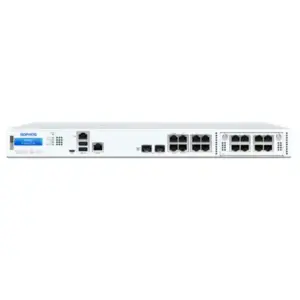
The FS-3032E is a high-density 1RU FortiSwitch designed around 32 QSFP28 interfaces for 100 Gigabit Ethernet aggregation, core and spine roles. Its value is not simply the number printed beside each port: the real purchasing decision depends on topology, breakout requirements, transceiver compatibility, FortiGate integration, redundancy, software support and the model’s current lifecycle position. FourTeck helps business and data center buyers translate those technical dependencies into a workable bill of materials before a quotation is finalised.
Direct answer for buyers evaluating the FS-3032E
The Fortinet FortiSwitch FS-3032E is a Layer 2/Layer 3 data center-class Ethernet switch with 32 high-speed QSFP28 ports designed for 100GbE core, spine and aggregation connectivity. It is most relevant to organisations that need dense east-west bandwidth, high-speed FortiGate aggregation, or a FortiLink-managed data center fabric. Before proceeding, buyers should confirm the exact port-speed mix, supported optics and cables, breakout design, FortiGate/FortiSwitchOS release compatibility, redundancy method, required routing functions and support entitlement. Because lifecycle status affects new purchasing decisions, FourTeck also recommends confirming current vendor orderability and comparing a newer FortiSwitch option when the project is a greenfield deployment.
What the switch does
FS-3032E concentrates high-speed Ethernet links in a compact rack footprint. In a spine-leaf data center, the switch can sit at the spine layer and aggregate multiple leaf switches over 100GbE. Fortinet’s current enterprise data center deployment guidance continues to use two FS-3032E units as tier-1 switches in a FortiLink-managed design, illustrating the model’s role in high-bandwidth aggregation rather than ordinary desktop access.
The 32 QSFP28 interfaces can also be relevant when connecting large FortiGate appliances, storage fabrics, virtualization clusters or other switches that need multiple high-capacity links. Port breakout can allow a QSFP28 interface to present multiple lower-speed links, but this should be designed deliberately because the selected transceiver, cable, FEC setting and platform configuration all affect whether a proposed connection is valid.
Who should consider it
The model is a fit for experienced IT teams, data center operators, managed service providers and enterprises running Fortinet-centric infrastructure that already understand their 100GbE requirements. It can make sense as an expansion unit in an established architecture where FS-3032E compatibility, software behaviour and spare strategy are already known.
It is less suitable for buyers who only need standard 1GbE or 10GbE access ports, integrated PoE, or a straightforward branch switch. It also deserves additional scrutiny for greenfield projects because procurement must include lifecycle planning. A newer platform may be more appropriate when long support runway, current ordering simplicity or additional interface flexibility outweighs the benefit of matching an existing FS-3032E design.
Business challenges this model can address
Dense east-west traffic
Virtualisation, private cloud and clustered applications often move large volumes of traffic between servers. A 100GbE spine layer can provide the fabric bandwidth required to keep those leaf-to-leaf paths from being constrained by lower-speed uplinks.
High-speed firewall aggregation
Large FortiGate platforms may have 100GbE interfaces that need resilient connectivity into the switching fabric. FS-3032E can be considered where the switch design, optics and FortiLink architecture match those requirements.
Spine consolidation
Thirty-two 100GbE ports in 1RU allow many high-capacity leaf connections without consuming the rack space of a larger chassis. That density can simplify cabling plans in certain leaf-spine deployments, provided port count and growth assumptions are realistic.
Fortinet-centric operations
FortiLink allows FortiGate to manage FortiSwitch units within an integrated operational model. Organisations already standardised on FortiGate may value the common management and topology visibility, while standalone designs should validate the preferred management platform separately.
Core capabilities that matter in a purchasing decision
Native high-speed QSFP28 connectivity supports data center spine, aggregation and core roles where 100GbE is the dominant fabric speed.
Fortinet documents split-port operation for FS-3032E, including 4 × 25G from 100G mode and 4 × 10G from 40G mode. Treat breakout as a design dependency, not an automatic substitute for native lower-speed ports.
The switch can be managed through FortiGate using FortiLink, allowing switch configuration to participate in a Fortinet Security Fabric-oriented operating model.
Dual AC power supplies support a redundant power strategy. Buyers should still confirm source circuits, PDU compatibility, replacement PSU availability and the exact regional power cord requirement.
Product-fit matrix
| Requirement | Suitable when | Confirm before ordering |
|---|---|---|
| 100GbE spine or core | The fabric needs many native QSFP28 connections in 1RU. | Leaf count, oversubscription target, optics, cable distances and growth margin. |
| 25GbE or 10GbE breakout | A supported breakout design can reduce the need for separate lower-speed aggregation ports. | Exact breakout cable/transceiver, port mode, FEC behaviour and supported topology. |
| FortiGate-managed switching | The organisation wants FortiLink integration with an appropriate FortiGate platform. | FortiGate model, FortiOS/FortiSwitchOS compatibility, FortiLink ports and operational design. |
| Resilient data center fabric | The design uses dual switches, MCLAG and redundant upstream/downstream links. | Peer-link design, failure domains, HA behaviour and tested software configuration. |
| Greenfield 2026 procurement | Only after current lifecycle, support eligibility and channel availability are validated. | Compare current-generation FortiSwitch alternatives and expected support runway. |
Verified model information
The values below are limited to model-specific information confirmed through Fortinet product, data sheet and deployment documentation. Lifecycle, support entitlement, exact accessories and current orderability should be reconfirmed at quotation time.
| Brand | Fortinet |
|---|---|
| Product / model | FortiSwitch 3032E / FS-3032E |
| Product type | Layer 2/Layer 3 data center Ethernet switch |
| Primary network interfaces | 32 × 40GE / 100GE QSFP+ / QSFP28 ports |
| Management/service port | 1 × 10/100/1000 service port |
| Console | 1 × RJ-45 serial console |
| Form factor | 1RU rack mount |
| Switching capacity | 6,400 Gbps duplex |
| Packet forwarding | 5,952 Mpps at 64-byte packets in the Fortinet data sheet |
| MAC address storage | 72K |
| VLANs | 4K |
| Latency | Less than 1 microsecond in the data sheet |
| Queues per port | 8 |
| Packet buffer | 16 MB |
| IPv4/IPv6 routing | Supported; specific dynamic routing and offload capabilities depend on software mode, release and licensing |
| Split ports | Documented support for 4 × 25G from a 100G QSFP28 mode and 4 × 10G from a 40G QSFP mode, subject to configuration |
| Power supply | Dual AC power supplies; confirm exact spare PSU and regional cord requirements |
| Operating temperature | 0°C to 40°C |
| Storage temperature | -20°C to 70°C |
| Humidity | 10–90% RH, non-condensing |
| Airflow | Front to back |
| PoE | Not applicable to this data center switch |
| Lifecycle / availability | Confirm before ordering. Current Fortinet public pages and software documentation still reference FS-3032E, while current channel lifecycle sources report that new-order status has ended. FourTeck should verify current supply and support eligibility for the destination and serialised entitlement requirement. |
Compatibility and lifecycle notice
Do not treat FS-3032E as a generic 32-port 100G box. A valid bill of materials must include the exact optic or direct-attach cable, required reach, connector type, breakout scheme, FEC behaviour, peer device capabilities and software release. Fortinet maintains a separate compatible-transceiver reference, and that compatibility should be checked for every media type rather than inferred from connector shape alone.
Lifecycle deserves the same care. Fortinet’s current Ethernet switch catalogue still displays the FS-3032E and current FortiSwitchOS documentation contains model-specific behaviour, which is relevant for installed-base support. At the same time, current lifecycle references in the channel report an End of Order date in January 2026, and Fortinet’s newest ordering guide highlights FS-3032G instead of FS-3032E. For that reason, this page does not promise new factory availability. Buyers should ask FourTeck to verify the exact sourcing path, support eligibility and whether a newer model is the better choice for a new deployment.
For organisations expanding an existing FS-3032E fabric, matching the installed platform may still have operational advantages. For a greenfield build, a lifecycle comparison should be part of architecture review rather than an afterthought.
From requirement to deployment: a practical purchase journey
Map the fabric
List every leaf, firewall, server or peer switch connection, including speed, quantity, distance and redundancy. This turns a vague request for a 100G switch into a port-level design.
Validate media
Choose supported QSFP28/QSFP+ optics, DACs or breakout cables. Check reach, fibre type, peer device, FEC settings and connector presentation.
Choose management
Decide whether FortiGate-managed FortiLink or standalone operation fits the environment, then confirm matching FortiOS and FortiSwitchOS releases and feature support.
Confirm lifecycle
Check present orderability, support term eligibility and whether the project’s expected operating life justifies FS-3032E versus a current model.
Build the quotation
Include switch quantity, support, optics, spare power components where required, rack/power needs, installation scope, configuration work and testing expectations.
100GbE density without losing design discipline
The headline strength of FS-3032E is the combination of 32 high-speed ports and a 1RU footprint. That density is useful in leaf-spine architectures because each spine port can connect to a leaf switch at 100GbE, allowing the design to scale horizontally as leaf capacity grows. Fortinet’s enterprise data center deployment guide uses FS-3032E in exactly this tier-1 aggregation role, pairing the spine with different leaf models selected according to server downlink speed. This is an important design lesson: the spine does not need to mirror the access speed of every server. Its job is to provide sufficient aggregate bandwidth between leaves, firewalls and network services.
A buyer should therefore calculate traffic ratios rather than simply count interfaces. If thirty leaf switches each have a 100G uplink, the physical port count may fit, but resilience may require dual-homing each leaf to two spine switches. Similarly, a switch with 6.4 Tbps duplex switching capacity does not remove the need to model oversubscription, application traffic locality, backup windows or storage bursts. The right question is whether the whole topology provides the required bandwidth during both normal and failure conditions.
For a UAE data center project, FourTeck can help convert rack diagrams and interface lists into a capacity map. This is particularly useful when the planned fabric mixes 100G, 40G and breakout connections. A clean port plan also makes future troubleshooting easier because each interface role, cable type and peer is documented before installation.
Breakout ports: flexible, but not a shortcut around compatibility
Fortinet documents FS-3032E split-port operation so a 100G QSFP28 interface can be divided into four 25G links, or a 40G QSFP interface can be divided into four 10G links. This can be valuable when the spine needs to aggregate equipment that does not have native 100GbE interfaces. It can also help during phased upgrades, where some leaf switches are 25G-capable while others remain on 10G uplinks.
The practical limit is that breakout changes how a physical port is represented and configured. A cable that physically fits is not enough. The switch port mode, module coding, FEC requirement, peer port speed and supported breakout construction all need to line up. Fortinet documentation also notes model-specific port-mode constraints, so a dense breakout plan should be tested against the exact intended configuration rather than extrapolated from one working link.
When requesting a quote, provide the number of 100G native links, number of 4×25G breakouts, number of 4×10G breakouts, cable distances and the make/model of every peer device. That level of detail allows FourTeck to identify whether the bill of materials needs optical modules, passive/active DACs, fibre assemblies or different leaf-switch interfaces.
FortiLink, MCLAG and routing: design the operating model first
FS-3032E can participate in FortiLink-managed deployments where FortiGate provides centralised switch management. Fortinet’s current enterprise data center guidance shows a three-tier topology in which all FortiSwitch units are managed by FortiGate, with tier-1 and tier-2 switch pairs using MCLAG for active-active paths. The value of this architecture is operational consistency: administrators can work from the FortiGate context for much of the switching configuration while maintaining redundant links and switch pairs.
That does not mean every advanced feature is automatic. Fortinet’s 7.6.1 data center deployment guide states that routing offload on the tier-1 switches requires an advanced features license, and some configuration is performed through the FortiGate CLI or FortiSwitch CLI. This is exactly why licensing and software release must be included in the initial design. A procurement team that buys hardware first and asks about routing later can discover that the required operating model needs an entitlement, a different configuration method or a validated software combination.
MCLAG also needs more than two switches and a cable. The peer relationship, inter-switch links, split-brain handling, upstream FortiGate HA design and downstream dual-homing should be documented together. In high-availability networks, the goal is to understand failure behaviour, not merely to enable an MCLAG checkbox.
If your network team already has a FortiGate standard, share the exact FortiGate model, HA mode, current FortiOS version and planned upgrade path with FourTeck. That information helps determine whether FS-3032E fits the existing management strategy or whether another FortiSwitch model should be considered.
Ideal environments and realistic use cases
Enterprise data center spine
Use FS-3032E where multiple leaf switches need 100GbE uplinks and the design benefits from compact spine density. The final topology should normally consider two spine units for resilient leaf dual-homing.
FortiGate aggregation
High-end firewall clusters with 100GbE interfaces can connect to a high-capacity switching layer, but media, FEC, FortiLink and HA behaviour must be validated for the exact FortiGate platform.
Private cloud and virtualisation
Dense east-west application traffic can justify a 100GbE spine when leaf switches aggregate many 10G or 25G server interfaces. Capacity planning should include storage, backup and migration traffic.
Installed-base expansion
An organisation already operating FS-3032E may prefer platform consistency for a controlled expansion, provided lifecycle, support and spare availability remain acceptable for the expected service period.
High-speed lab or staging fabric
A lab that mirrors a production Fortinet data center may use FS-3032E to validate FortiLink, MCLAG, optics and upgrade procedures before production change windows.
Not an access-switch replacement
The model is not intended to replace user-access PoE switches. Buyers needing copper access, Wi-Fi AP power or large numbers of 1GbE endpoints should select an access-layer FortiSwitch family instead.
Integration and operational considerations
Start with the physical layer. A 100GbE data center link may use short-reach multimode optics, longer-reach single-mode optics, direct-attach copper or other supported media depending on distance and equipment. Each option affects cost, power, cabling, fibre plant and troubleshooting. Existing patch panels and fibre polarity should be reviewed before modules are ordered. When breakout is required, the cable plant must match the logical split configuration.
Next, review cooling and rack orientation. FS-3032E uses front-to-back airflow, so the switch should be placed in a rack layout that supports the data center’s hot-aisle/cold-aisle direction. Dual power supplies are useful only when they are fed from appropriately independent power paths. If both PSUs connect to the same PDU or upstream circuit, the design does not gain the same resilience as a genuinely separated A/B power arrangement.
For network operations, decide how configuration backups, firmware upgrades, logging, monitoring and incident access will be handled. FortiLink can centralise much of the management under FortiGate, while the dedicated management/service interface can be useful in an out-of-band design. Fortinet notes that an out-of-band network is not mandatory for initial FortiLink deployment, but many production data centers still value independent management access for troubleshooting.
Finally, document change dependencies. Port mode changes, FEC settings, MCLAG adjustments and software upgrades can affect multiple links. A good deployment plan includes pre-change validation, rollback steps, spare optics, console access and post-change traffic checks rather than assuming a successful link light proves the fabric is healthy.
Questions to resolve before a quotation is final
Reserve enough ports for redundancy, peer links, firewalls and future leaf switches instead of counting only current production connections.
Breakout requirements influence cable selection, logical interface mapping and configuration. Identify them before ordering optics.
Provide the exact FortiGate model and software release so compatibility and feature behaviour can be checked.
Some functions can be license- or mode-dependent. Define the routing role before finalising the BOM.
Specify whether the design needs MCLAG, dual power feeds, redundant spine switches, HA FortiGate and dual-homed leafs.
An installed-base expansion and a new five-year greenfield deployment can lead to different model choices even when both need 32 × 100G.
Procurement checklist for FS-3032E
How FourTeck can assist with sizing and procurement
FourTeck can help turn a switch request into a complete project requirement. The starting point is not a sales quantity but a port map: which devices connect, at what speed, over what distance, with what redundancy and through which management model. From there, the proposed bill of materials can account for optics, breakout cables, power planning, support expectations and any installation or configuration work that belongs in the quotation.
For Fortinet environments, the review can also include FortiGate model compatibility, FortiLink topology, MCLAG design questions, software release planning and whether routing features introduce licensing dependencies. Where FS-3032E lifecycle makes a new deployment less attractive, FourTeck can help compare a current FortiSwitch platform without assuming that a newer model is automatically drop-in compatible.
Buyers can browse additional infrastructure options through FourTeck product resources, review implementation and support services, or explore the wider Fortinet UAE portfolio. For a project-specific recommendation, use the FourTeck contact page with the topology and delivery destination.
The result should be a quotation that is technically auditable: hardware, media, licensing, support, deployment scope and lifecycle assumptions are visible before purchase rather than discovered during implementation.
UAE availability and support guidance
Contact FourTeck to confirm current UAE availability for the FS-3032E. Availability can depend on lifecycle status, remaining channel inventory, quantity, support eligibility, vendor lead time and the exact accessories included in the requirement. Because this is a high-speed data center switch, a meaningful availability check should cover more than the base chassis. Optics, DACs, breakout assemblies, power components and support contracts can each have separate lead times or eligibility conditions.
For projects in Dubai, the quotation can also identify whether installation, rack integration, FortiLink configuration, MCLAG setup, firmware planning or validation testing is required. These services are scope-dependent and should be explicitly included where needed rather than assumed to be bundled with hardware.
If a new FS-3032E cannot be sourced with the support horizon the project requires, FourTeck can review a suitable current model and explain which parts of the design need to change. No availability, delivery date or warranty term should be assumed until the exact requirement is checked.
Dubai, Abu Dhabi, Sharjah and Ajman project coverage
FourTeck can coordinate requirement review and quotation planning for organisations in Dubai, Abu Dhabi, Sharjah and Ajman from one project scope. For a data center switch such as FS-3032E, location matters because the delivery destination, rack environment, fibre plant, installation window and onsite access policy can affect the implementation plan. Share the exact site, required quantity, cabinet location, power arrangement, cable distances and whether configuration or onsite assistance is required. Hardware delivery and project coordination can then be discussed after lifecycle, product availability, support eligibility and the final bill of materials have been confirmed.
GCC Availability
For GCC projects, FourTeck can assist with requirement review, model selection, quotation coordination and deployment planning for high-speed FortiSwitch environments. Buyers in the United Arab Emirates, Saudi Arabia, Kuwait, Qatar, Bahrain and Oman should provide the destination country, required switch quantity, intended support term, optic and cable requirements, FortiGate integration details and target deployment window. These details matter because lifecycle status, product availability, support eligibility, vendor lead times, regional power requirements and service scope can vary by country and by project. Where FS-3032E is being considered for an existing fabric, FourTeck can help assess whether matching the installed platform is practical. For a new build, a current-generation comparison may be more appropriate. Delivery planning, configuration work, installation visits and licensing should be confirmed in the final quotation; no fixed regional delivery or onsite schedule is implied until the full requirement is validated.
Africa Availability
FourTeck can also support organisations planning Fortinet switching projects across Africa, including East African environments such as Kenya and Uganda and requirements in other regional markets. For FS-3032E, the procurement discussion should include the destination country, exact quantity, lifecycle expectations, chosen transceivers, cable distances, power arrangements, support requirement and whether the switch will join an existing FortiLink or standalone environment. Availability and fulfilment may depend on remaining channel supply, model lifecycle, license region, shipping arrangements, local import conditions, vendor lead time and the installation scope. Buyers should not assume that an available chassis automatically means the correct optics or support term are available on the same schedule. FourTeck can help structure a complete bill of materials and, when appropriate, compare newer FortiSwitch options. Regional coordination can be discussed through FourTeck Africa or the main FourTeck contact channel.
What buyers are really trying to solve with a 32-port 100GbE switch
Searches for FS-3032E tend to be less about a basic product definition and more about design questions: whether it can act as a spine switch, how 100G ports can be split, what optics are required, whether FortiLink can manage the fabric, how it compares with newer FortiSwitch models, and whether it is still sensible to buy. Those are the right questions because high-density data center switching is a system decision. A 1RU switch can be technically impressive and still be a poor fit if the surrounding leaf, firewall, fibre, power and lifecycle assumptions are wrong.
For spine-leaf design, the first useful calculation is not total switching capacity but the number of resilient leaf connections. If every leaf requires one 100G uplink to each of two spines, a pair of FS-3032E switches can each dedicate one port per leaf. The remaining ports must cover FortiGate links, inter-switch or design-specific connections and future growth. This calculation quickly shows whether 32 ports are sufficient. It also exposes the difference between physical density and usable capacity under a redundant topology.
Another common question is whether 100G QSFP28 ports can serve 25G devices. Fortinet documents 4×25G split-port mode for FS-3032E, so breakout can be part of the design. However, this is not permission to buy any generic breakout cable. The peer device, transceiver coding, fibre reach and FEC settings need to be compatible. For short intra-rack runs, a supported DAC may be economical. For longer links, optical modules and the fibre plant become more important. The correct answer depends on distance and peer hardware, not simply on a preference for copper or fibre.
FortiLink is another reason buyers shortlist the FS-3032E. When managed by FortiGate, FortiSwitch can participate in a unified switching and security operating model. In Fortinet’s current enterprise data center guide, FS-3032E is used at tier 1 with FortiGate management and MCLAG. That architecture is useful evidence of intended deployment, but it should not be copied mechanically. The FortiGate model, software release, interface availability and feature requirements determine whether the same pattern is suitable in another environment.
Routing questions require similar care. Buyers sometimes ask whether the switch supports BGP, OSPF, VRF or hardware routing offload as though a feature list alone settles the purchase. In practice, feature availability can depend on FortiSwitchOS release, standalone versus FortiLink operation and licensing. Fortinet’s deployment guidance specifically calls out an advanced features license for routing offload in its tier-1 FortiLink example. The safest procurement approach is to document the routing protocols and scale required, then validate the exact software and license combination before purchase.
Lifecycle is now one of the highest-value questions. Current Fortinet pages still expose the FS-3032E model, and current FortiSwitchOS 8.0 documentation contains model-specific instructions, which matters to installed customers. At the same time, Fortinet’s newest ordering guide focuses on the FS-3032G in the 32-port 100G position, and multiple current lifecycle references report that FS-3032E reached End of Order in January 2026. That means a 2026 buyer should distinguish between software support and new-order availability. Existing installations may remain supportable while new greenfield purchases move toward a newer platform.
For quotation preparation, the most efficient request includes a small table of peer devices, interface speeds, link distances, media types, redundancy, software versions and required support term. Add the number of racks, location, preferred installation window and whether FourTeck should include configuration or testing. This reduces back-and-forth because the quotation can cover the entire connection path instead of only the switch chassis.
If the project goal is simply “we need more 100G ports,” FourTeck can help turn that goal into a design decision. Sometimes the answer is another FS-3032E for consistency with an installed fabric. Sometimes it is a newer FortiSwitch model with a longer lifecycle runway. The correct choice depends on operational continuity, planned service life, existing optics, FortiGate integration and the cost of changing the surrounding architecture.
Decision questions buyers ask before committing to the platform
Can FS-3032E still make sense for an expansion project?
Yes, potentially. If an organisation already operates FS-3032E and needs a consistent spare, lab unit or additional spine, matching the installed platform can simplify configuration and operational procedures. The important condition is that current supply, support eligibility and the remaining lifecycle align with the intended service period. FourTeck should verify those points before a purchase recommendation is made.
Should a greenfield project choose FS-3032E or compare FS-3032G?
A greenfield project should compare current models rather than assuming FS-3032E is the default. Fortinet’s current public catalogue shows both 3032E and 3032G, while the latest ordering guide places 3032G in the active 32-port 100G position. The models should not be treated as identical; interface details, software support, optics and lifecycle need a structured comparison.
What information is needed to choose the correct 100G optic?
Provide the peer device, distance, fibre type, connector type, required speed, whether breakout is used, and any known FEC requirement. For single-mode links, the target reach matters. For multimode links, existing fibre grade and path length matter. For DACs, cable length and supported coding matter. FourTeck can use this information to narrow the compatible media choice.
Does FortiLink remove the need for switch planning?
No. FortiLink simplifies management integration, but the physical and logical topology still needs to be designed. Port roles, MCLAG, VLANs, routing, optics, FortiGate connectivity, software versions and change procedures remain engineering decisions. Centralised management is valuable when the architecture beneath it is clear.
When does breakout create operational risk?
Risk rises when breakout ports are added without documenting parent interfaces, cable mapping and maintenance impact. A single physical module can represent four logical links, so an optic or port-mode change may affect several connections. Clear labelling and configuration records reduce that risk.
What should be tested after installation?
Verify link speed, FEC state, errors, LAG/MCLAG membership, VLAN reachability, routing adjacency where used, FortiLink management state, failover behaviour, monitoring and expected application traffic. A useful acceptance test includes a planned link or switch failure so resilience assumptions are proven before production handover.
Related FourTeck options and services
FortiSwitch FS-3032G review
Consider a current-generation 32-port 100G FortiSwitch when support runway and active ordering are priorities. Exact migration suitability must be checked.
FortiSwitch FS-2048F
Useful as a 25GbE-oriented leaf option in data center designs that uplink toward a 100GbE spine. Confirm exact architecture and software compatibility.
FortiGate integration planning
Review FortiGate interfaces, HA mode, FortiLink design and the role of routing offload before switch and optics are ordered.
Installation and configuration
Scope rack installation, cabling, initial configuration, MCLAG, FortiLink, validation and handover as separate project activities where required.
For broader infrastructure planning, visit FourTeck Firewall Dubai or learn more about the company through FourTeck business technology support.
Why businesses contact FourTeck for this type of project
High-speed switching purchases often fail at the edges of the bill of materials rather than at the chassis itself. The wrong optic reach, missing breakout cable, mismatched FEC setting, unsupported software combination or overlooked support term can delay a deployment even when the core switch model is technically appropriate. FourTeck’s role is to help buyers make those dependencies visible before the order is placed.
For FS-3032E specifically, lifecycle review is now just as important as port planning. FourTeck can help clarify whether the requirement is for an installed-base expansion, spare strategy, replacement unit or new architecture, then compare procurement options accordingly. The team can also coordinate the information needed for a quote: quantity, support expectation, optics, accessories, installation, configuration and destination.
This approach does not rely on unsupported claims about stock, delivery or warranty. The objective is a requirement that can be checked, quoted and implemented with fewer assumptions.
Frequently asked questions
What is the Fortinet FortiSwitch FS-3032E mainly used for?
It is a high-density 100GbE data center switch suited to spine, core, aggregation and high-speed FortiGate connectivity. Fortinet’s data center deployment documentation uses FS-3032E as a tier-1 spine switch aggregating leaf FortiSwitch units.
How many 100GbE ports does FS-3032E provide?
The model provides 32 QSFP28 interfaces supporting 100GbE. Fortinet also documents 40GbE operation and split-port configurations for supported lower-speed connections.
Can FS-3032E break out a 100G port into 25G links?
Yes. Fortinet documents 4 × 25G split-port mode from a 100G QSFP28 configuration. The exact cable or optics, peer port, FEC and software configuration still need to be validated.
Can the switch be managed by FortiGate?
Yes. FS-3032E supports FortiLink management through FortiGate. Confirm the FortiGate model, FortiOS version, FortiSwitchOS version and intended topology before deployment.
Does routing offload require a license?
In Fortinet’s FortiLink enterprise data center deployment example, routing offload on tier-1 FortiSwitch units requires an advanced features license. Licensing can depend on operating mode and feature requirements, so confirm the exact design before ordering.
Is FS-3032E still available to order new?
Current availability must be confirmed. Fortinet still references the model in public product and software documentation, while current channel lifecycle references report that the new-order window has ended. FourTeck can check present UAE sourcing and support eligibility for the exact requirement.
Should I choose FS-3032E or FS-3032G for a new project?
A new project should compare both the technical design and lifecycle. The newer FS-3032G appears in Fortinet’s current ordering guide, while FS-3032E may be more relevant to installed-base continuity. Do not assume one is a drop-in replacement without checking interfaces, software and BOM details.
What details should I send FourTeck for a quote?
Send the model and quantity, peer devices, required link speeds, cable distances, optic or breakout needs, FortiGate model, software versions, redundancy design, support term, deployment location and whether installation or configuration is required.
Does the FS-3032E provide PoE?
No. It is a data center switching platform focused on high-speed optical or direct-attach interfaces rather than powering access devices. Use a PoE-capable FortiSwitch access model when phones, cameras or wireless access points need power over Ethernet.
Can FourTeck include installation and configuration support?
Installation, FortiLink onboarding, MCLAG configuration, routing, testing and handover can be discussed as scope items. The exact work, access requirements and schedule should be defined in the quotation rather than assumed to be included with hardware.
Build the right FS-3032E requirement before you buy
Send FourTeck your port map, peer-device models, fibre distances, breakout requirements, FortiGate platform, redundancy design, support expectation and deployment location. The team can confirm current UAE availability, lifecycle implications and the complete bill of materials, or recommend a current alternative if the project needs a longer procurement and support runway.

Reviews
There are no reviews yet.