

Fortinet FortiExtender WAN 50G in Dubai, UAE
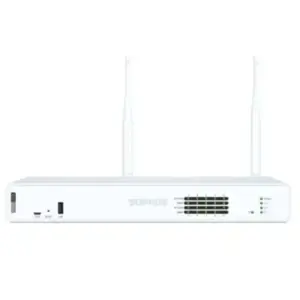
The FortiExtender WAN 50G, model FEW-50G, is built for organisations that need a high-speed cellular WAN path without turning a branch deployment into a separate routing and security island. It is designed to extend connectivity to FortiGate through 5G/LTE while supporting compact indoor placement, multi-gigabit Ethernet, dual physical SIMs, eSIM, and operational continuity features.
Fortinet lists FEW-50G-EA for EMEA/APAC/LATAM, but carrier certification and network acceptance must still be checked for the UAE and the intended operator.
A direct answer for buyers
Fortinet FortiExtender WAN 50G is an indoor 5G/LTE gateway intended to provide a high-speed cellular WAN path to a FortiGate deployment. It is mainly considered when a branch or distributed site needs primary wireless WAN, backup connectivity, a rapid additional WAN path, or remote-management resilience without replacing the FortiGate as the principal security device. Buyers should verify the FEW-50G regional SKU, intended mobile operator, available 5G/LTE bands and service, physical signal quality, FortiGate and software compatibility, power method, and implementation design before purchase. In the UAE, carrier acceptance deserves specific confirmation because regional certification can vary by network and device version.
What the FortiExtender WAN 50G does
The FEW-50G creates a cellular WAN connection that can be presented to a FortiGate through high-speed Ethernet. Fortinet positions the model as a WAN-extension gateway rather than a general-purpose branch router intended to replace the FortiGate. That distinction matters: the value of the device is strongest when an organisation wants 5G/LTE transport while retaining FortiGate for firewall policy, inspection, SD-WAN decisions, segmentation, and the wider Fortinet operational model.
The unit incorporates one 5G/LTE modem, two physical SIM positions, eSIM capability, eight internal 5G/LTE antennas and an internal GNSS antenna. The internal antenna arrangement can simplify placement in offices, retail spaces, executive areas, clinics, kiosks, project offices and other indoor locations where exposed antenna assemblies are undesirable. Placement still matters because cellular performance depends heavily on radio conditions, building materials, operator coverage and the selected service plan.
Who should consider it
The product is relevant to IT teams, network architects, managed-service providers, system integrators and procurement teams responsible for distributed sites where connectivity quality directly affects operations. A retail branch that cannot tolerate a single broadband dependency, a temporary project office awaiting fixed service, a remote location requiring out-of-band access, or a high-bandwidth branch evaluating 5G as an additional WAN path are typical situations in which the FEW-50G deserves evaluation.
It is less appropriate when the requirement is simply for a consumer 5G hotspot, when Wi-Fi access is the primary objective, when there is no FortiGate-centric design, or when the site needs an outdoor or hardened industrial enclosure. In those cases another FortiExtender model, a rugged product, or a different architecture may be a better fit. FourTeck can help compare the requirement against available Fortinet options rather than forcing the FEW-50G into an unsuitable role.
Business problems this gateway can help address
Single-link dependence
A branch that relies on one wired carrier can suffer a complete service interruption when the fixed circuit fails. A separately engineered cellular path can provide another connectivity option when it is integrated correctly with FortiGate failover or SD-WAN policy.
Long circuit lead times
New offices, pop-up environments and project sites may need connectivity before a permanent fixed line is available. A suitable 5G service can offer a practical interim or ongoing WAN option, subject to operator coverage, service terms and capacity at the site.
Remote recovery gaps
When the primary WAN is down, engineers may lose the path needed to troubleshoot the network. Out-of-band access features can provide a separate recovery route when they are designed, configured and tested as part of the support plan.
Cellular bottlenecks
A fast 5G service can be constrained by a slow Ethernet handoff. The FEW-50G uses multi-gigabit Ethernet interfaces so the wired connection to the FortiGate is better aligned with high-rate 5G service, although actual end-to-end throughput remains environment dependent.
Core capabilities that matter during evaluation
5G/LTE WAN transport
Fortinet rates the FEW-50G for up to 7 Gbps downlink and 2.5 Gbps uplink in 5G Sub-6 standalone mode. These are maximum modem figures, not a promise of application throughput at a specific UAE location.
Multi-gigabit Ethernet
Two RJ45 ports support 5GE, 2.5GE and 1GE operation, allowing the cellular gateway to connect to the FortiGate without a basic 1 Gigabit handoff becoming the obvious first bottleneck.
SIM flexibility
Two physical Nano-SIM slots and eSIM capability provide flexibility for carrier planning. The usable service combination depends on operator support, subscription arrangements, region and the configured failover policy.
Resilience tools
Fortinet documents VRRP support and out-of-band access through console or USB. These features should be validated in the intended FortiGate topology and tested before they are relied on for business continuity.
Product-fit matrix
| Requirement | Suitable when | Confirm before ordering |
|---|---|---|
| High-speed cellular WAN | A business has strong 5G/LTE service and wants cellular as primary, secondary or temporary WAN. | Operator, plan, bands, expected signal and capacity at the exact site. |
| FortiGate-centric branch | Security and routing decisions remain centred on FortiGate. | FortiOS/FortiExtender compatibility and interface design. |
| Compact indoor placement | A desk or wall position can provide usable cellular reception. | Signal survey, building attenuation, temperature and physical security. |
| UAE deployment | The selected regional SKU and operator are validated for the project. | Carrier acceptance is especially important because Fortinet notes additional testing for Arabian Peninsula carriers. |
Verified technical information for FEW-50G
The table below uses current Fortinet data-sheet information for the FEW-50G family and highlights regional dependencies rather than combining values from unrelated FortiExtender models.
| Brand | Fortinet |
| Product | FortiExtender WAN 50G |
| Base model | FEW-50G |
| Regional variants | FEW-50G-AM for North America; FEW-50G-EA for EMEA/APAC/LATAM. Confirm the exact UAE SKU and carrier before order. |
| Product type | Indoor 5G/LTE WAN-extension gateway for FortiGate |
| Modem | Internal 1x 5G/LTE modem |
| SIM capability | 2x physical Nano-SIM plus eSIM capability |
| Vendor-rated 5G maximum | Up to 7 Gbps downlink / 2.5 Gbps uplink in 5G Sub-6 SA mode; real throughput depends on carrier, spectrum, signal, network load and configuration. |
| Cellular antennas | 8x internal 5G/LTE omnidirectional antennas |
| GNSS | 1x internal GNSS/GPS antenna |
| Ethernet | 2x 5GE/2.5GE/1GE LAN/WAN RJ45 ports, plus 1x RJ45 console port |
| USB | 1x USB 3.0 Type-A with 5V/0.5A output in current data sheet |
| Bluetooth | BLE 5.0+ |
| Power over Ethernet | IEEE 802.3at, 25.5 W, on Port 2 |
| DC power | Included DC adapter is listed in Fortinet ordering information; confirm the regional adapter rating because current Fortinet documents show differing DC ratings in separate sections. |
| Mounting | Wall mount or desktop |
| Dimensions | 67 x 209 x 222 mm |
| Weight | 1.0 kg |
| Power consumption | 15 W average, 19 W maximum |
| Operating temperature | 0°C to 40°C |
| Storage temperature | -20°C to 70°C |
| Humidity | 5% to 95%, non-condensing |
| Standards listed | 802.1Q, 802.1D, 802.3ab, 802.3bz, 802.3af and 802.3at |
| Management context | Designed for FortiGate WAN extension; broader Fortinet management options depend on deployment design and software. |
| Regional caution | Fortinet identifies Arabian Peninsula carriers as requiring additional testing for certification. Do not assume UAE operator acceptance without confirmation. |
UAE carrier, regional SKU and compatibility notice
For a Dubai or wider UAE project, the most important buying step is not simply confirming that the device supports 5G. Fortinet lists FEW-50G-EA for EMEA/APAC/LATAM, but its current data sheet also states that carriers in the Arabian Peninsula may require additional testing to obtain certification. Mobile operators can control network access at the device-identity level, and support for bands can also depend on modem firmware, FortiExtender software and carrier configuration.
That means a quotation should record the exact carrier, SIM or eSIM approach, service type, intended site and regional SKU. If the deployment uses a specific FortiGate model or a managed FortiOS environment, software compatibility should be verified at the same time. FourTeck can coordinate the requirement review, but final carrier acceptance, service availability and radio performance remain dependent on the selected operator and deployment conditions.
A practical purchase and deployment journey
Define the WAN role
Decide whether 5G will be primary, backup, temporary, out-of-band, or one of several SD-WAN paths. The role determines how failover, data plans and monitoring should be designed.
Validate the carrier
Confirm the UAE operator, service plan, expected 5G/LTE coverage, device acceptance, SIM/eSIM method and any carrier-specific provisioning requirements.
Check FortiGate fit
Record the FortiGate model, FortiOS release, available multi-gigabit port, current WAN topology and whether VRRP, SD-WAN or out-of-band access is planned.
Choose placement and power
Identify a position with usable cellular signal, suitable indoor environmental conditions and either 802.3at PoE or the correct regional DC power arrangement.
Configure and test
Build the intended WAN policy, test primary and failover behaviour, confirm management reachability, monitor link quality and document recovery steps before production reliance.
High-throughput cellular without a 1G handoff ceiling
One reason the FEW-50G is different from older cellular gateways is the combination of a high-rate 5G modem with two multi-gigabit Ethernet interfaces. A 1 Gigabit Ethernet connection can become a practical ceiling even when the mobile network and radio link are capable of more. By providing 5GE/2.5GE/1GE RJ45 interfaces, the FEW-50G gives network designers more room to align the wired handoff with a fast 5G service.
That does not mean every application will receive multi-gigabit throughput. Cellular performance changes with available spectrum, signal quality, cell loading, operator policy, service plan, indoor attenuation and protocol overhead. The right design therefore starts with a realistic site assessment and expected traffic profile rather than the headline modem maximum. Where a branch has high-volume cloud traffic, large file transfers, video workloads or other bandwidth-sensitive services, the multi-gigabit handoff can still be valuable because it avoids imposing an unnecessary interface constraint.
FortiGate integration keeps policy where the team expects it
The FEW-50G is designed for WAN extension with FortiGate. For organisations already standardising branch security on FortiGate, this can simplify operational ownership. Network staff can keep security inspection, application policy and WAN decisions aligned with the existing firewall architecture instead of introducing a separate cellular router that creates another policy plane.
Planning still matters. The team should decide which FEW-50G port connects to which FortiGate interface, whether the path participates in SD-WAN, how health checks are defined, what happens when the cellular connection degrades rather than fails completely, and how carrier data usage is monitored. If VRRP is part of the design, the failure scenario should be tested explicitly. Integration reduces architectural fragmentation only when the implementation is documented and operated consistently.
Compact placement can improve radio design choices
The FEW-50G uses eight internal omnidirectional cellular antennas and supports wall or desktop installation. This removes the need to manage a cluster of external antenna elements in many indoor deployments and can make it easier to place the gateway in a visible business environment. It can also help teams position the cellular radio closer to a strong signal location while using Ethernet back to the firewall.
Internal antennas do not eliminate radio-planning requirements. A convenient cabinet may also be a poor 5G location if it is surrounded by metal, concrete or reflective building materials. A practical installation compares candidate positions, checks signal quality and stability, considers heat and physical access, and then validates real application performance. For critical sites, the chosen location should be documented so the gateway is not later moved to a cleaner-looking but poorer-performing position.
Where the FEW-50G can fit in real business environments
Retail and hospitality branches
A cellular path can support continuity for payment, cloud applications, guest services or operational systems when a fixed circuit is unavailable. The WAN policy and data plan should be sized for the traffic that is expected during failover, not just for routine standby usage.
Temporary offices and project sites
Construction offices, events and new sites often need connectivity faster than a permanent circuit can be delivered. 5G may provide a useful primary path when coverage and service capacity are suitable, with migration to a fixed circuit later if required.
Distributed enterprise branches
Organisations operating many locations may use cellular as a standard secondary transport alongside fixed broadband. Consistent FortiGate policy, monitoring and deployment documentation become especially important when the same design is repeated at scale.
Sites needing remote recovery
Out-of-band connectivity can help engineers reach equipment when the normal WAN path is unavailable. The recovery path must be configured independently enough to remain useful during the failure modes the organisation intends to cover.
Integration and operational considerations
A cellular gateway should not be evaluated in isolation from the firewall, carrier and support process around it. Begin with the FortiGate interface design. If the firewall has a compatible multi-gigabit port, decide whether the FEW-50G will connect directly, through a switch, or through another network element. Record VLAN requirements and the role of each Ethernet interface. Then define how FortiGate determines whether the cellular path is healthy. Link-up state alone may not be enough; an operator can remain attached while application quality has degraded because of congestion, weak signal or upstream issues.
SIM strategy is another operational decision. Dual physical SIM support can be useful for carrier diversity or service-plan flexibility, but it does not automatically mean two independent modems are active at the same time. The FEW-50G has one internal modem. Teams should understand the intended SIM failover behaviour, eSIM support, provisioning process and any operator restrictions before relying on multi-carrier resilience.
Monitoring should cover more than uptime. Network staff may want visibility into signal strength, link quality, latency, packet loss, data usage and failover events. A data plan that is inexpensive for standby traffic can become costly or throttled if a fixed link fails for several days and the branch sends all business traffic over cellular. The procurement team therefore needs the expected failover traffic profile as well as the hardware quantity.
Finally, document who is responsible for the mobile contract, SIM activation, firewall configuration, physical installation, carrier troubleshooting and replacement process. Many cellular projects become difficult not because the gateway is technically complex, but because responsibility is split among networking, telecom, facilities, procurement and an external provider. A clear handover plan reduces ambiguity when a real outage occurs.
Questions to resolve before ordering
Carrier acceptance and service availability are project dependencies. Name the operator and service before the regional SKU is finalised.
The answer changes data-plan sizing, firewall policy, monitoring thresholds and how failover testing should be performed.
Compatibility should be checked against the current Fortinet matrices before the bill of materials is approved.
The gateway should be placed where radio conditions are suitable, not simply where the firewall rack happens to be.
Confirm 802.3at availability and cable path, or ensure the delivered regional adapter is correct for the site.
Check whether the mobile plan has usage caps, throttling, traffic restrictions or commercial limits that could affect prolonged operation.
Procurement checklist for a clean FEW-50G quotation
How FourTeck can assist with sizing and quotation
FourTeck can help turn a general request for “a 5G FortiExtender” into a bill of materials that is more likely to fit the actual branch design. The review can begin with the FortiGate model, desired WAN role, UAE carrier, number of sites, expected traffic, mounting location and power method. From there, the team can identify whether the FEW-50G is a sensible fit, confirm the appropriate regional ordering variant, discuss related FortiCare or implementation requirements where applicable, and prepare a quotation based on current availability.
For larger rollouts, it is useful to standardise the information collected for every site. A location that has strong 5G coverage, available PoE and a multi-gigabit FortiGate interface may be straightforward, while another site in the same city could have very different indoor radio conditions or carrier constraints. FourTeck can also discuss installation and configuration scope separately from the hardware so the quotation reflects what your internal IT team will handle and what assistance is required.
UAE availability and support guidance
Contact FourTeck to confirm current UAE availability for the Fortinet FortiExtender WAN 50G and the regional variant appropriate to the intended deployment. Availability may depend on model, regional SKU, quantity, vendor lead time and the exact commercial requirement. The hardware decision should be made together with a carrier-validation step because Fortinet notes that Arabian Peninsula carriers can require additional certification testing. Delivery and project coordination can be discussed once the destination, quantity, required date and carrier are known.
If installation or configuration assistance is required, include it in the request rather than assuming it is part of the hardware supply. Useful project information includes the FortiGate model, current software release, WAN topology, operator, SIM or eSIM plan, proposed mounting position, power source and whether the cellular path is intended for primary service, failover, SD-WAN or out-of-band management. For related security infrastructure, buyers can also review FourTeck firewall and networking products or discuss a wider deployment through the technology services team.
Dubai, Abu Dhabi, Sharjah and Ajman coverage
Businesses planning FEW-50G deployments in Dubai, Abu Dhabi, Sharjah and Ajman can contact FourTeck with the exact site requirement, quantity, intended mobile operator and target schedule. The same product name can lead to different deployment decisions depending on building construction, cellular coverage, firewall model, power availability and the role of the 5G connection. For multi-site projects, provide a site list and identify any locations that require installation, configuration, testing or remote support coordination. FourTeck can then prepare the quotation around a consistent design while keeping carrier-dependent and site-dependent items clearly separated.
GCC Availability
Organisations planning FortiExtender WAN 50G deployments across the Gulf can ask FourTeck to coordinate requirement review, regional model selection, quotation planning and implementation scope. A design that works in the United Arab Emirates should not automatically be copied into Saudi Arabia, Kuwait, Qatar, Bahrain or Oman without checking the carrier, regional SKU, local service plan and deployment environment. Cellular device acceptance, supported bands, eSIM availability, operator policy and lead time can vary between markets even when the underlying Fortinet model family is the same.
For an accurate regional request, provide the destination country, exact number of units, FortiGate model, intended mobile operator, WAN role, SIM or eSIM preference, installation location and desired project schedule. FourTeck can then discuss hardware supply, configuration scope, installation planning, support expectations and regional delivery coordination. Product availability, licensing or support options, delivery schedules, service visits and vendor lead times remain dependent on country, model, quantity and project requirement. For Kuwait-related enquiries, the FourTeck Kuwait resource can also provide a regional contact path.
Africa Availability
For organisations evaluating the FEW-50G for African branches, the correct approach is to begin with the destination and mobile network rather than assume one cellular design will behave identically in every market. FourTeck can help review the requested product, regional variant, SIM or eSIM plan, FortiGate connection, power method, deployment conditions and support expectations before a quotation is prepared. East African, West African, Southern African and Central African deployments can differ substantially in available 5G spectrum, operator certification, service coverage and logistics.
Share the destination country, quantity, target installation date, intended carrier, expected traffic profile and whether the unit will be used for primary WAN, backup or remote recovery. Availability and fulfilment may depend on product model, license region where relevant, local power requirements, shipping arrangements, vendor lead time, installation scope and site conditions. FourTeck can coordinate procurement guidance without promising local inventory or fixed delivery outcomes. Buyers working in East Africa can also review FourTeck Kenya, FourTeck Uganda and the broader FourTeck Africa resource.
Related products and services to consider
FortiGate firewall sizing
The FEW-50G is intended to extend WAN connectivity to FortiGate. Confirm that the firewall model, interface speed and security capacity are appropriate for the branch traffic profile.
FortiExtender 511G
Another FortiExtender 5G gateway may suit deployments needing a different interface set or product architecture. Treat it as a separate model and compare requirements rather than assuming equivalence.
Rugged FortiExtender options
Outdoor, industrial or vehicle environments may require a ruggedised product rather than the indoor FEW-50G. Environmental rating and mounting requirements should guide the choice.
Installation and configuration support
Ask FourTeck to define physical installation, FortiGate configuration, SD-WAN integration, carrier activation and failover testing as separate scope items when assistance is needed.
Why businesses contact FourTeck for this requirement
The difficult part of a cellular WAN project is often not selecting a box with a 5G label. It is making sure the model, carrier, firewall, interface, power method and recovery plan fit together. FourTeck can help clarify those dependencies before purchase so the quotation reflects the intended architecture. This is especially relevant for the FEW-50G in the UAE because carrier certification must be treated as a verification step.
FourTeck assistance can include requirement clarification, regional model review, bill-of-material guidance, FortiGate compatibility discussion, quotation coordination, installation planning, configuration scope, migration from an existing cellular gateway, and support coordination. The exact services included depend on the quotation and project scope. For company information, visit About FourTeck, or use the FourTeck contact page to submit the branch and carrier details.
How buyers are evaluating high-speed 5G WAN in practice
A frequent starting question is whether a 5G gateway can replace a fixed internet connection. The useful answer is not a simple yes or no. The FEW-50G can provide a very fast cellular WAN path, but the business suitability of that path depends on the mobile operator, available spectrum, signal conditions, contention, service plan and how predictable performance must be. For a temporary office or a branch with excellent coverage, 5G may be a practical primary link. For a site with strict latency and capacity requirements, businesses often use it as a second transport alongside fibre or another fixed service. The FortiGate can then apply routing or SD-WAN logic according to link health and policy.
Does 7 Gbps mean the branch will get 7 Gbps?
No. Fortinet’s 7 Gbps downlink figure is a maximum modem capability in a specified 5G Sub-6 standalone mode. Real application throughput is shaped by radio bandwidth, operator configuration, network load, signal quality, device placement, protocol overhead and the rest of the branch network. Buyers should treat the number as a capability ceiling for product comparison, not as a promised site result.
Why do the 5GE ports matter?
A gateway with a fast cellular modem but only a 1 Gigabit wired interface could limit the usable handoff to the firewall. The FEW-50G’s multi-gigabit ports make sense for high-rate 5G designs because they provide more headroom between the radio gateway and FortiGate. The firewall interface and security workload still need to be sized appropriately.
Another common comparison is between a FortiExtender and a generic 5G router. A general cellular router may be suitable when the goal is simply to provide local routing or Wi-Fi. The FEW-50G is more specific: Fortinet describes it as WAN extension for FortiGate. This can be attractive when the organisation already operates FortiGate and wants security policy, monitoring and WAN decisions to remain aligned with that platform. It may be less compelling when there is no FortiGate in the design, which is why the surrounding architecture should be confirmed before purchase.
Buyers also ask whether dual SIM means two cellular connections can be active simultaneously. The FEW-50G contains one internal 5G/LTE modem, so the dual physical SIM arrangement is primarily about service flexibility and failover rather than behaving like a dual-modem gateway. If simultaneous active cellular links are a requirement, the design should be checked against another FortiExtender model or a different architecture instead of assuming the FEW-50G provides that behaviour.
For UAE procurement, the most important discovery issue is carrier compatibility. A device can support the appropriate radio technology and still require carrier-specific acceptance. Fortinet’s current documentation explicitly highlights the Arabian Peninsula as a region where additional testing may be required for carriers. Procurement teams should therefore avoid placing a large order based only on an EMEA regional code. A pilot or carrier confirmation may be appropriate before a multi-site rollout, depending on the operator and project scale.
Physical placement is another area buyers sometimes underestimate. Cellular signal quality can change dramatically between a data room, interior cabinet, perimeter office and window-facing wall. Because the FEW-50G has internal antennas and supports wall or desktop mounting, the installer can choose a practical indoor location and then run Ethernet back toward the FortiGate. The chosen location should be tested for signal stability, not just a single speed-test result. For branches that operate throughout the day, it is useful to observe performance during busy periods when the serving cell may be more heavily loaded.
A quotation becomes more accurate when the request includes more than the model name. Give FourTeck the FortiGate model, software release, operator, number of branches, expected WAN role, quantity, preferred power method, proposed mounting environment and whether configuration or installation support is required. If the 5G path is being purchased for resilience, describe the traffic that must continue during failure. A basic backup plan for point-of-sale traffic is very different from a branch expected to move all cloud, voice, video and file-transfer traffic over 5G for several days.
Support planning should also address the mobile service and the network device separately. Hardware support can help with the Fortinet appliance, but carrier congestion, SIM provisioning or network suspension must be handled through the operator. A clear support runbook should identify who opens which ticket, what diagnostic information is collected, and when the site should fail back to the primary link. Buyers who plan this process before deployment are in a stronger position to use cellular WAN as a dependable operational tool rather than an emergency link that has never been properly tested.
Decision questions buyers should answer before rollout
Can we use FEW-50G-EA in the UAE simply because it is the EMEA variant?
The EA regional designation makes it the relevant variant to evaluate, but it should not be treated as automatic proof of acceptance by every UAE mobile network. Fortinet notes additional certification testing for Arabian Peninsula carriers. Confirm the intended operator, regional SKU and current carrier status before the purchase order is finalised.
What information is needed to size the cellular data plan?
Estimate normal and failover traffic separately. Include cloud applications, voice, video, backups, software updates and any large data transfers. If 5G is only a standby path, determine how long the business expects to operate on it during a fixed-link outage. This gives procurement a more meaningful usage estimate than simply counting users.
Should the gateway be installed next to the FortiGate?
Not necessarily. The best radio position may be away from the firewall rack. Because the unit is compact and can use PoE, a design can place it where cellular reception is stronger and use Ethernet to reach the FortiGate. Confirm cable distance, PoE budget, physical security and environmental conditions before choosing the final position.
How should we test a backup 5G path?
Test the actual failure modes you care about. Disconnect or disable the primary WAN, verify route changes, confirm critical applications remain reachable, check inbound or VPN dependencies, review data consumption and ensure the support team can still manage the branch. Then restore the primary link and verify the environment returns to the intended steady state.
When might another FortiExtender model be more appropriate?
Consider alternatives when the site needs a rugged outdoor form factor, vehicle mounting, built-in Wi-Fi, a different Ethernet layout, or simultaneous active cellular links. Model choice should follow environmental and architectural requirements. FourTeck can compare the requested use case against nearby FortiExtender options without combining their specifications.
What belongs in the quotation besides the appliance?
Depending on the project, the quote may need support coverage, power or PoE components, installation, FortiGate configuration, SD-WAN work, testing, documentation and logistics. The mobile service itself is normally a separate operator decision. State these needs early so the quotation distinguishes included items from customer responsibilities.
Frequently asked questions
1. What is the Fortinet FortiExtender WAN 50G used for?
It is an indoor 5G/LTE gateway designed to extend WAN connectivity to a FortiGate. Businesses can evaluate it for primary cellular WAN, backup connectivity, temporary-site connectivity or recovery access, depending on the FortiGate design, mobile service and site conditions.
2. Which FEW-50G version is relevant for Dubai and the UAE?
Fortinet lists FEW-50G-EA for EMEA/APAC/LATAM. However, buyers should still confirm the current regional SKU and intended UAE carrier because Fortinet notes that Arabian Peninsula carriers may require additional certification testing.
3. Does the FortiExtender WAN 50G support dual SIM and eSIM?
Yes. Fortinet documents two physical Nano-SIM slots plus eSIM capability for the FEW-50G. The usable carrier combination and provisioning process depend on the regional model, operator and service plan.
4. Can the FEW-50G deliver 7 Gbps to applications?
Fortinet rates the modem for up to 7 Gbps downlink in 5G Sub-6 standalone mode. Actual application throughput is not guaranteed and depends on spectrum, carrier capacity, signal quality, network load, service plan, firewall capacity and other conditions.
5. What Ethernet interfaces does the FortiExtender WAN 50G provide?
The current Fortinet data sheet lists two RJ45 ports supporting 5GE, 2.5GE and 1GE operation, plus an RJ45 console port. The multi-gigabit interfaces help avoid an unnecessary 1 Gigabit handoff limit in fast 5G deployments.
6. How is the FEW-50G powered?
It supports IEEE 802.3at PoE on Port 2 and can also use the included DC power adapter. Because current Fortinet documentation shows different DC ratings in separate sections, confirm the exact adapter supplied with the regional SKU.
7. Does it work as a standalone replacement for a FortiGate firewall?
That is not its primary product role. Fortinet positions the FEW-50G as WAN extension for FortiGate. It can provide continuity functions such as VRRP behaviour, but FortiGate remains the intended security and policy platform in the normal design.
8. Can FourTeck help with installation and configuration?
FourTeck can discuss installation, FortiGate integration, SD-WAN or failover configuration, testing and documentation as project scope items. Include the required services in the quotation request so responsibilities and deliverables are clear.
9. How do I request a UAE quote for the FortiExtender WAN 50G?
Send FourTeck the quantity, UAE delivery location, intended mobile carrier, FortiGate model, software release, WAN role, power preference and any installation or configuration requirements. FourTeck can then confirm current availability and prepare the relevant quotation.
Confirm the FEW-50G model, carrier and deployment plan before you buy
Share your FortiGate model, UAE operator, number of sites and intended WAN role. FourTeck can help review regional fit, current availability, quotation requirements and optional deployment assistance.

Reviews
There are no reviews yet.