

Fortinet FortiAnalyzer 300G in Dubai, UAE
FortiAnalyzer 300G gives security and network teams a dedicated physical platform for collecting, retaining, analysing and reporting security telemetry. It is positioned for organisations that have moved beyond basic device-by-device log review and need a central location for operational investigation, reporting and security visibility across a Fortinet environment. The appliance should be selected from measured logging demand rather than device count alone, because daily ingestion, peak logs per second, retention expectations, ADOM structure, optional services and future growth all influence whether the FAZ-300G is the right fit.
Plan the purchase correctly
Share estimated GB/day, peak log rate, device or VDOM count, retention target, required licenses, and deployment location. FourTeck can use those details to prepare a more accurate quotation.
Direct answer for buyers
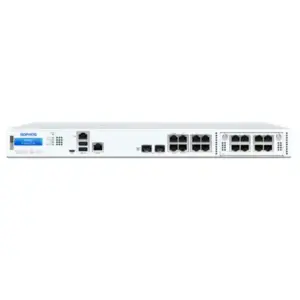
Fortinet FortiAnalyzer 300G, model FAZ-300G, is a 1U rackmount appliance for centralized logging, analytics and reporting in Fortinet-focused security environments. It is mainly used to bring telemetry from multiple devices or VDOMs into a common operational view so analysts can investigate events, run reports and retain security data without relying on individual device storage. Organisations should consider it when their logging volume and retention needs fit within its rated capacity and they prefer a dedicated appliance rather than a virtual or cloud deployment. Before proceeding, confirm actual GB/day, peak LPS, required retention, ADOM count, software compatibility, support entitlement, optional FortiAnalyzer services, power and rack requirements, and whether installation or migration assistance is part of the project.
What the FAZ-300G does
The appliance provides a central repository and analysis point for security and network telemetry. FortiAnalyzer as a platform is designed to ingest, normalize and enrich data so security teams can work from consolidated logs, incidents, alerts and reporting rather than switching between multiple product consoles. In a Fortinet Security Fabric environment, this can improve operational context because information from different security functions is brought together for investigation and reporting.
The 300G is the hardware choice within that platform for buyers whose measured logging profile aligns with its capacity. Fortinet currently rates the model for up to 100 GB of logs per day, 2,000 logs per second as an analytic sustained rate and 3,000 logs per second in collector mode. Those numbers are sizing boundaries, not a substitute for a proper log assessment. Real environments often have bursts during attacks, configuration changes, VPN events, endpoint incidents or large policy rollouts, so the average daily number should be evaluated together with peak event rate and retention requirements.
Who should consider it
The FAZ-300G can suit mid-size and distributed organisations running multiple Fortinet security devices that want an appliance-based analytics platform in a controlled data-centre or server-room environment. Typical buyers include IT operations managers, security administrators, SOC teams, managed service teams, compliance stakeholders and procurement teams that need a defined hardware bill of materials.
It should not be selected merely because the device count appears to fit. A smaller number of very busy firewalls can generate more data than a larger number of lightly used branch devices. Conversely, an organisation with moderate daily ingestion but long retention requirements may need to pay close attention to usable storage. Businesses expecting rapid growth, much higher log volume, heavier analytics workloads or a materially larger device estate should compare the next FortiAnalyzer models rather than forcing the 300G into an undersized role.
Business problems this appliance helps address
Logs spread across devices
Reviewing local logs on separate firewalls or security products slows investigation and makes cross-device analysis harder. FortiAnalyzer creates a central operational location for supported telemetry, making it easier for an analyst to trace activity across the environment.
Limited investigation context
Raw logs alone are difficult to interpret at scale. FortiAnalyzer adds analytics, dashboards, event correlation and reporting functions that help teams move from isolated records toward a more structured investigation workflow. The exact advanced functions available can depend on software version and subscription.
Retention and reporting pressure
Security teams often need to retain logs beyond the storage period practical on individual devices. The FAZ-300G provides 8 TB raw storage with 4 TB usable after the default RAID 1 configuration. Retention still depends on log volume, indexing, analytics use and policy, so it should be estimated from measured data.
Manual security operations
FortiAnalyzer supports automation-oriented security operations capabilities, including SIEM, SOAR and XDR functions across the platform. Optional services such as IOC and outbreak detection, security automation, FortiAI and other FortiGuard capabilities should be confirmed in the intended license bundle rather than assumed to be included with bare hardware.
Product-fit decision matrix
| Requirement | Suitable when | Confirm before ordering |
|---|---|---|
| Daily log volume | Measured or forecast ingestion stays within the 100 GB/day rating with sensible headroom. | Average GB/day, growth rate, burst periods and log sources. |
| Analytic event rate | Workload aligns with the 2,000 LPS analytic sustained rate. | Peak and sustained logs per second during busy windows. |
| Collector use | Collector architecture needs fit the 3,000 LPS collector sustained rate. | Whether the appliance is primarily analytics, collector, or part of a wider architecture. |
| Device estate | The environment remains within the stated maximum of 180 devices/VDOMs. | Actual device and VDOM count, planned additions and ADOM design. |
| Retention | 4 TB usable storage is adequate for the retention policy and analytics workload. | Required searchable period, archive process and compliance needs. |
| Rack deployment | A 1U physical appliance is preferred and environmental requirements can be met. | Rack depth, power, airflow, cabling and optional redundant PSU requirement. |
Verified FortiAnalyzer 300G specifications
The table below focuses on fields published for the FAZ-300G in Fortinet’s current FortiAnalyzer material. Figures apply to this exact hardware model and should not be blended with the higher-capacity 810G, 1000G or 3000-series appliances.
| Brand | Fortinet |
|---|---|
| Product / Model | FortiAnalyzer 300G / FAZ-300G |
| Product type | Centralized log and analysis appliance |
| Logs per day | Up to 100 GB/day |
| Analytic sustained rate | 2,000 logs/second |
| Collector sustained rate | 3,000 logs/second |
| Devices / VDOMs maximum | 180 |
| Maximum ADOMs | 25 on Fortinet’s current model comparison |
| Maximum days analytics at sustained rate | 50 days; Fortinet notes this can increase when average log rate is lower |
| Form factor | 1 RU rackmount |
| Network interfaces | 4 x RJ45 Gigabit Ethernet |
| Raw storage | 8 TB using 2 x 4 TB drives |
| Usable storage after RAID | 4 TB |
| RAID | Software RAID 0/1; default RAID level 1 |
| Removable hard drives | No |
| Redundant hot-swap power supply | Optional |
| Trusted Platform Module | Gen 2 |
| Dimensions | 4.4 x 43.8 x 41.6 cm (H x W x L) |
| Weight | 10.2 kg |
| AC power | 100–240 V AC, 50–60 Hz |
| Power consumption | 90.1 W average / 99 W maximum |
| Operating temperature | 0°C to 40°C |
| Humidity | 20% to 90% non-condensing |
| Airflow | Front to back |
Licensing, bundle and compatibility dependencies
The hardware SKU FAZ-300G identifies the centralized log and analysis appliance itself. Fortinet also publishes optional services and bundles for FortiAnalyzer, including FortiGuard IOC and Outbreak Detection, Security Automation Service, Enterprise Protection options, OT Security Service, Security Rating and Compliance Service, FortiGuard Threat Intelligence Platform service, FortiAI subscription and SOCaaS monitoring and management. Availability and entitlement can depend on the bundle or service SKU selected. A buyer should therefore distinguish between bare appliance hardware, a hardware bundle with support, and individual subscription services. Do not assume that every platform capability presented on the broader FortiAnalyzer product page is automatically licensed with a basic hardware purchase.
Software compatibility also matters. Confirm the planned FortiAnalyzer software release against the Fortinet release notes and against the FortiGate, FortiManager and other log sources in the environment. If the appliance is being introduced into an existing Security Fabric, migration planning should include current firmware versions, ADOM mode, device registration method, certificates, log forwarding settings, administrative domains and retention policies. FourTeck can help organise these inputs before quotation so the hardware, support term and subscription choice are evaluated together.
A practical purchase and deployment journey
Measure logging demand
Collect a realistic sample of daily log volume and peak logs per second. Include normal days, business peaks, remote-access activity and known event-heavy periods. Averages without peak data can lead to poor sizing.
Define retention and reporting
Decide how long logs must remain searchable, what reports are required and whether older data will be archived elsewhere. The 4 TB usable capacity has to support the real data profile, not a generic retention assumption.
Map devices and ADOMs
Document FortiGate devices, VDOMs, branches, tenants and administrative separation. Confirm current and expected counts so the appliance is not placed too close to its practical ceiling at the start of the project.
Select support and services
Choose the required FortiCare term and any FortiAnalyzer services according to operational goals. Treat subscriptions as line items that require confirmation rather than as implicit features of the appliance.
Prepare the site
Confirm rack space, front-to-back airflow, power, network addressing, management access, DNS, NTP and cabling. Decide whether the optional redundant power supply is required for the design.
Configure, validate and hand over
Register devices, verify log receipt, apply storage quotas and retention settings, build administrator access, test reports and alerts, then document the configuration so operations teams can support it after go-live.
Centralized visibility without relying on each firewall console
A major reason to deploy a dedicated FortiAnalyzer is to separate analytics and historical investigation from the day-to-day management console of individual FortiGate appliances. Local device logs are useful for immediate troubleshooting, but a distributed estate quickly creates fragmented evidence. A user session may start at one branch, traverse SD-WAN, trigger security inspection at another edge and generate related events from several services. Without a central view, the analyst has to reconstruct that path manually.
FortiAnalyzer is designed to collect and normalize telemetry into a common repository. For the FAZ-300G buyer, the practical value is not simply that “logs are stored.” The value is that the appliance becomes an operational reference point for queries, dashboards, event review and scheduled reporting. Security teams can establish more consistent investigation procedures because they know where retained data should be available, which administrator roles can access it and how reporting is produced.
The limit is capacity. Centralization only works well when the platform can absorb the real data stream with sufficient headroom. A company may have 60 devices and still exceed the appliance’s comfort zone if those devices generate unusually high event volume. Another company may have more moderate event rates but require longer searchable retention than 4 TB usable storage can economically provide. Capacity planning should therefore combine ingestion, sustained LPS, retention and device architecture rather than treating any one number as decisive.
Automation and threat intelligence: useful, but entitlement matters
Fortinet’s current FortiAnalyzer platform includes automation-oriented capabilities and integrations intended to help security teams prioritize and respond to events. Fortinet also offers services for indicators of compromise, outbreak detection, security automation, threat intelligence, FortiAI and other operational functions. This creates an important procurement distinction: the platform’s available capabilities are broader than the entitlement necessarily delivered by an appliance-only SKU.
When evaluating automation, write down the outcome you actually expect. Do you need enriched indicators for retrospective compromise checks? Do you want preconfigured event handlers and playbooks? Are compliance-oriented reports part of the requirement? Is AI-assisted analysis expected by the SOC team? Is OT-focused analytics relevant? Once those outcomes are clear, the appropriate bundle or service SKUs can be matched against them. This avoids two common problems: buying optional services that are not used, or buying only hardware and discovering later that a desired workflow needs an additional subscription.
Operational readiness matters as much as licensing. Automation is most useful when log sources are correctly onboarded, time synchronization is accurate, administrative roles are clear and the team has defined how alerts are triaged. FourTeck can help structure the bill of materials and configuration scope, while the customer should confirm internal ownership for investigation, response and long-term policy maintenance.
Storage, RAID and retention planning for the 300G
The FAZ-300G contains 8 TB of raw storage using two 4 TB drives. With the default RAID 1 configuration, usable storage is 4 TB. RAID 1 mirrors data across the two drives, so the available capacity is lower than the raw total. The appliance supports software RAID 0 or RAID 1, but changing RAID policy has resilience and operational implications that should be evaluated carefully. Fortinet lists the hard drives as non-removable for this model, unlike some higher-end FortiAnalyzer appliances with hot-swappable drive systems.
Fortinet states a maximum of 50 analytics days when receiving logs continuously at the sustained analytics log rate and notes that the number can increase if the average log rate is lower. This is a useful reference, but it should not be interpreted as a guaranteed retention period for every environment. Real retention depends on the actual mix of log types, daily ingestion, database processing, storage allocation, analytics settings and operational policy. If the organisation requires a specific number of searchable days for audit or investigation, estimate from measured logs and include growth. A target of “90 days” without evidence of the actual data profile is not enough for a reliable hardware decision.
Buyers should also separate searchable analytics retention from long-term archival expectations. If policy requires data to be kept longer than the appliance should hold online, discuss an archive or external storage strategy during design. The goal is to avoid discovering after deployment that compliance retention and interactive investigation have been treated as the same storage requirement.
Where the FAZ-300G can fit well
Multi-branch FortiGate estates
Companies with headquarters and a controlled number of branches can centralize FortiGate logs for common reporting and investigation. The architecture should still be sized from traffic-driven log generation rather than branch count alone.
Security operations teams
A SOC or IT security function that needs retained telemetry, structured dashboards and investigation workflows may benefit from a dedicated appliance, particularly when data location and physical deployment are important to the organisation.
Managed or segmented environments
ADOM-based separation can support operational segmentation where appropriate. Confirm the required ADOM count, administrator model and tenant or business-unit separation against the planned software design.
On-premises analytics preference
Organisations that prefer an appliance-based data repository rather than a virtual or cloud FortiAnalyzer deployment can use the 300G as a defined physical platform, provided its capacity and resilience options meet policy.
Integration and operational considerations
The physical appliance is only one part of the deployment. Before installation, decide how FortiGate and other supported devices will register, where management traffic will flow, which interfaces will be used, and how DNS and NTP will be configured. Consistent time is especially important for log analysis because event chronology becomes unreliable when devices disagree about time. Administrative access should be integrated into the organisation’s access-control approach, with separate roles where operations, security, audit and service-provider teams have different responsibilities.
If FortiManager is already used, consider how configuration management and analytics responsibilities will be separated. FortiManager and FortiAnalyzer solve different operational problems even though both are often present in the same Fortinet environment. Similarly, if an external SIEM, data lake or archive platform is used, decide which system is the system of record for each use case and whether logs are forwarded onward from FortiAnalyzer. Duplicating data movement without a clear purpose can increase complexity and storage requirements.
Firmware lifecycle planning should be part of the deployment from the start. Confirm the FortiAnalyzer release supported by the model and check compatibility with connected products before upgrading. Build backup procedures, administrator recovery processes and change controls into the operating model. For organisations that need stronger hardware resilience, evaluate the optional redundant power supply and broader high-availability design requirements rather than assuming the base chassis alone satisfies availability objectives.
Questions to resolve before requesting a quotation
Use actual measurements where possible and note unusually busy days. Capacity planning from firewall model names alone is not reliable.
Daily volume may look comfortable while short periods create much higher LPS. Both numbers matter for appliance fit.
Define operational and compliance retention separately. Searchable analytics storage is not automatically the same as long-term archive storage.
Confirm whether IOC, automation, FortiAI, OT, compliance, SOCaaS or other services are part of the desired outcome and quote them explicitly.
The base FAZ-300G hardware and bundle SKUs are not identical purchases. Define support duration and entitlement before comparing prices.
Clarify rack installation, initial configuration, device onboarding, migration, report setup, training and ongoing administration so the quotation reflects the real project scope.
Procurement checklist for FortiAnalyzer 300G
- Confirm exact model FAZ-300G and required quantity.
- Record measured average GB/day and peak log volume.
- Record analytic and collector LPS requirements.
- Confirm total devices, VDOMs and planned ADOM structure.
- Define searchable retention and archive requirements.
- Choose FortiCare support term and support level.
- Identify optional FortiAnalyzer services and subscriptions.
- Confirm software-version compatibility with log sources.
- Check 1U rack space, depth and front-to-back airflow.
- Decide whether the optional redundant PSU is required.
- Define installation, configuration or migration scope.
- Provide UAE delivery location and required project timeline.
How FourTeck can assist
FourTeck can help turn a product request into a clearer bill of materials by reviewing the key sizing inputs before quotation. That can include daily log volume, estimated peak LPS, device and VDOM count, retention objective, required support term, optional FortiAnalyzer services, rack environment and expected implementation scope. This is particularly useful when the choice is between the FAZ-300G and a higher-capacity appliance, because a small difference in current purchase cost can be less important than leaving adequate headroom for growth.
For customers that need implementation assistance, the requirement can also include installation planning, base configuration, device registration, storage policy, administrative access, reports and handover. Scope should be documented in the quotation rather than assumed. For broader Fortinet planning, review FourTeck’s Fortinet firewall guidance and technology services.
What to send for a faster quote
A useful request includes the exact model, quantity, whether appliance-only or a support bundle is wanted, support term, optional services, target country, installation site, expected project date and any deployment assistance. If sizing has not been completed, include the number and models of FortiGate devices, VDOM count, current log volume if known, and desired retention. FourTeck can then identify the remaining questions rather than quoting an incomplete configuration.
You can also browse the FourTeck product catalogue, review the Firewall Dubai technology portal, or use the FourTeck contact page to submit the requirement.
UAE availability and support guidance
Contact FourTeck to confirm current UAE availability for FortiAnalyzer 300G. Availability may depend on the exact hardware or bundle SKU, support term, optional service subscriptions, requested quantity and vendor lead time. The listing of FAZ-300G in current Fortinet product material confirms the model identity and specifications, but it does not establish FourTeck stock at a particular moment. Delivery and project coordination can be discussed after the final requirement is confirmed.
For projects requiring installation or configuration, include that scope with the quotation request so hardware supply and service planning are aligned. The customer should identify the target data centre or office, rack and power readiness, network access, security-change window and any migration from an existing FortiAnalyzer. These details help separate product availability from project readiness and reduce the risk of hardware arriving before the environment can be commissioned.
Dubai, Abu Dhabi, Sharjah and Ajman project coverage
Businesses in Dubai, Abu Dhabi, Sharjah and Ajman can discuss FortiAnalyzer 300G requirements with FourTeck as part of a UAE procurement or deployment project. The useful starting point is a common technical requirement rather than separate city-specific product assumptions: exact FAZ-300G quantity, daily log profile, required subscriptions, support term, delivery site and whether installation, configuration or migration assistance is required. Delivery coordination and service scope can vary with project location, access rules, site readiness and scheduling. For multi-site organisations, it is also worth deciding whether one centrally deployed FortiAnalyzer can serve the intended estate or whether topology, latency, regulatory policy or operational ownership points to a different collection architecture. FourTeck can review the available information and help prepare the quotation around the confirmed design.
GCC Availability
Organisations planning FortiAnalyzer 300G procurement across the GCC can ask FourTeck to review the requirement before committing to a specific bill of materials. The same appliance may be suitable for a UAE deployment, a regional data centre in Saudi Arabia, a project in Kuwait, Qatar, Bahrain or Oman, but procurement conditions can differ by destination. Product availability, service SKUs, license region, delivery schedules, vendor lead time, installation scope and local project access all need confirmation. For a useful regional quotation, provide the destination country, exact FAZ-300G quantity, support term, optional FortiAnalyzer services, required deployment date and whether on-site or remote implementation assistance is expected. If multiple countries will forward logs to one central appliance, include WAN topology, expected ingestion from each location, latency, retention policy and operational ownership in the design discussion. FourTeck can coordinate requirement review and quotation planning; current availability and any country-specific delivery conditions should be confirmed for the actual project rather than assumed from another market.
Africa Availability
For African organisations evaluating FortiAnalyzer 300G, FourTeck can assist with product selection, license and support planning, regional procurement coordination and deployment scoping. Requirements vary significantly between a single-site appliance installation and a multi-country environment that sends logs from distributed FortiGate estates. Buyers in East Africa, including Kenya and Uganda, as well as projects in other African regions should provide the destination country, exact model and quantity, expected GB/day, device count, support term, preferred deployment schedule and any installation or configuration expectations. Fulfilment can depend on destination, vendor lead time, shipping arrangements, regional SKU requirements, power and rack conditions, and local project constraints. FourTeck does not treat availability in one country as evidence of immediate availability elsewhere. If the appliance will be integrated into a wider security operations architecture, also identify existing FortiManager, SIEM, archive or SOC platforms so compatibility and workflow questions can be addressed before hardware is ordered. Regional enquiries can also be coordinated through FourTeck Africa.
Related options and adjacent services
FortiAnalyzer 150G
A lower-capacity appliance in the current FortiAnalyzer range. It may be worth comparing when the environment has materially lower ingestion, device and ADOM requirements. Do not assume it is a substitute without rechecking retention and growth.
FortiAnalyzer 810G
A higher-capacity 1U model with greater ingestion, device scale and usable storage. It is relevant when the 300G would leave limited headroom or when storage and event-rate needs are expected to grow.
FortiAnalyzer VM or Cloud
Virtual and cloud delivery options can be evaluated when hardware lifecycle, data-centre space, elasticity or cloud operations are stronger design priorities than a dedicated appliance.
Installation and migration assistance
Projects replacing an older FortiAnalyzer or consolidating multiple log sources may benefit from planned onboarding, migration, policy review and handover rather than a hardware-only transaction.
What buyers are really trying to determine before choosing the 300G
Most buyers researching the FortiAnalyzer 300G are not simply looking for a specification sheet. They are trying to answer a practical question: will this model comfortably handle the logging environment they have now and the environment they expect to have during the support term? That makes sizing the most important part of the decision. A model can look adequate from device count while being constrained by event rate, or appear generous from GB/day while failing a long retention objective. The correct evaluation combines all four dimensions: ingestion volume, sustained LPS, device or VDOM scale, and usable storage.
Is 100 GB/day enough?
It is enough only when measured or credibly forecast log ingestion remains under that rating with room for bursts and growth. A company that currently averages 70 GB/day may appear to fit, but if a network expansion is expected or attack events create large bursts, the practical headroom may be too small. Conversely, an estate averaging 20 GB/day may have ample ingestion headroom but still need careful storage planning for long retention.
What does 2,000 LPS actually mean?
Fortinet defines the analytic sustained rate as the maximum constant log message rate the platform can maintain for at least 48 hours without SQL database and system performance degradation. This is different from a theoretical burst figure. Buyers should therefore look at sustained event behaviour during busy periods, not just total logs divided by seconds in a day.
Another common research question is whether FortiAnalyzer 300G is “a SIEM.” Fortinet’s current FortiAnalyzer platform includes SIEM, SOAR and XDR capabilities as part of its security operations positioning, but buyers should not interpret that as meaning every service or premium automation function is automatically present with a bare FAZ-300G hardware SKU. The product decision has two layers: first, choose the hardware capacity; second, choose the support and service entitlements that correspond to the operational use cases. If the project objective is basic centralized FortiGate logging and reporting, the bill of materials may differ from a project that expects advanced IOC services, automation content, AI assistance, OT analytics or SOCaaS.
Buyers also compare the 300G with the 810G. The important difference is not a marketing label such as “mid-range.” Fortinet currently lists the 300G at 100 GB/day, 2,000 analytic LPS, 3,000 collector LPS and 180 maximum devices/VDOMs, while the 810G is rated higher across those measures and provides more usable storage. The correct choice depends on whether the 300G gives acceptable headroom over the expected service life. If the environment is already close to a 300G limit on day one, moving up can be more sensible than planning an early replacement.
Another frequent buyer concern is retention. The 8 TB headline figure is raw storage, not the default usable capacity. With two 4 TB drives and default RAID 1, usable capacity is 4 TB. Fortinet publishes a 50-day maximum analytics reference at sustained analytic rate and notes that lower average log rate can increase the number of days. That means a buyer asking for “90 days retention” should not simply compare 90 with 50 and stop. The environment’s actual daily volume, database use, allocation policies and archive plan all influence the result. A retention requirement should be expressed as searchable days, archive days and any compliance-specific preservation requirement so the storage design can be evaluated properly.
Physical deployment details are another area where online product comparisons often stop too early. FAZ-300G is a 1U rackmount appliance with front-to-back airflow, 4 x RJ45 GE interfaces, 100–240 V AC input and an optional redundant hot-swap power supply. A data-centre team should confirm rack depth, airflow direction, available power feeds and cabling before the delivery date. If dual power feeds are part of the availability design, the optional PSU should be considered during procurement rather than after the appliance is installed.
For quotation preparation, send the information that affects both capacity and entitlement. Useful inputs include current FortiGate models, number of VDOMs, daily GB, peak LPS, desired retention, ADOM design, planned software version, support term, optional services, quantity, delivery location and requested installation scope. If some data is unknown, identify it as unknown instead of replacing it with a guess. FourTeck can then help structure the remaining discovery questions and compare the 300G with adjacent options. This produces a more useful purchasing discussion than asking for a price against the model name alone.
Finally, buyers researching availability in Dubai or the UAE should separate “model is current” from “unit is physically available now.” Fortinet’s current product material lists the FAZ-300G and current FortiAnalyzer software support includes the model, but actual UAE stock, bundle availability, support SKU availability and delivery timing can still vary. The safe procurement step is to request a current quote for the exact hardware or bundle SKU and state the required date. That keeps technical validation and commercial availability aligned.
Decision questions buyers ask before they shortlist FortiAnalyzer 300G
How much growth headroom should I leave?
There is no universal percentage because growth depends on the business, logging policy and security architecture. A useful approach is to model current measured demand, a realistic expansion scenario and a burst scenario. If forecast usage sits close to 100 GB/day or 2,000 analytic LPS, compare a larger appliance instead of assuming the published ceiling should be the normal operating target.
Does the 8 TB storage mean I can use all 8 TB for logs?
No. Fortinet lists 8 TB raw storage from two 4 TB drives, with 4 TB usable after RAID in the default RAID 1 configuration. The practical amount available to specific log functions also depends on configuration and storage allocation. Retention should be estimated from the usable figure and the actual log profile.
Can I buy the appliance first and decide services later?
Some optional services can be added through separate entitlements, but procurement is usually cleaner when desired outcomes are identified up front. Support term, IOC services, automation, FortiAI, OT analytics and other options can affect the complete cost and implementation plan. Confirm the exact SKU structure for the current vendor programme.
What if I already use an external SIEM?
FortiAnalyzer can still be useful for Fortinet-centric analytics, operational reporting and device context, while an external SIEM may serve broader cross-vendor correlation or enterprise retention. The right architecture depends on which system owns investigation, what data must be duplicated and how forwarding affects bandwidth and storage. Define roles before deployment.
Do I need installation services for a new FAZ-300G?
Not every customer does. An experienced Fortinet team may handle rack installation, registration and policy setup internally. Organisations with limited FortiAnalyzer experience, a migration requirement or strict handover procedures may prefer configuration support. Include this in the quote request so product and service scope are clearly separated.
What information makes a quote accurate?
Provide exact quantity, destination, hardware-only versus bundle preference, FortiCare term, optional services, current Fortinet estate, measured log volume, target retention and implementation scope. These inputs reduce the risk of receiving a price for a SKU that does not match the intended operational use.
Why businesses contact FourTeck for this requirement
The useful role of a technology supplier in a FortiAnalyzer project is not to repeat the data sheet. It is to help the buyer translate operational requirements into the correct product, subscription and service scope. For the FAZ-300G, that means clarifying whether the environment fits within 100 GB/day and sustained LPS limits, checking that device and ADOM design are sensible, identifying support and service entitlements, and making sure the physical deployment is workable.
FourTeck can assist with requirement clarification, model comparison, bill-of-material guidance, quotation coordination, installation planning, migration scoping and support discussions. Those activities are scoped according to the project; they should not be treated as automatically included with every hardware quotation. For general company information, visit About FourTeck. For a product-specific request, the most efficient next step is to share the sizing and entitlement details so the quote can be prepared around the intended deployment.
Frequently asked questions
1. What is the Fortinet FortiAnalyzer 300G used for?
It is a centralized log and analysis appliance used to collect, retain, analyse and report security telemetry across supported Fortinet environments. It helps teams move investigation and reporting away from isolated device logs into a shared analytics platform.
2. How much logging capacity does the FAZ-300G support?
Fortinet rates the FAZ-300G for up to 100 GB of logs per day, 2,000 logs per second analytic sustained rate and 3,000 logs per second collector sustained rate. Actual design should include headroom for peaks and growth.
3. How much usable storage is available?
The appliance has 8 TB raw storage using two 4 TB drives. Fortinet lists 4 TB usable after RAID with the default RAID 1 configuration. Retention depends on real log volume and storage policy.
4. How many devices or VDOMs can FortiAnalyzer 300G manage?
Fortinet currently lists a maximum of 180 devices/VDOMs for this model and 25 maximum ADOMs on its current model comparison. Capacity should still be checked against log volume and event rate.
5. Are advanced FortiAnalyzer services included with the hardware?
Do not assume they are. Fortinet offers several optional services and bundles, including IOC and outbreak detection, security automation, FortiAI, OT security and other capabilities. Confirm the exact bundle or service SKUs in the quotation.
6. Is the FortiAnalyzer 300G rack-mountable?
Yes. It is a 1 RU rackmount appliance with front-to-back airflow. Confirm rack depth, power, cable routing and whether the optional redundant hot-swap power supply is required before installation.
7. Should I choose the 300G or move to the 810G?
Choose based on measured ingestion, LPS, device scale, storage and growth. The 810G has higher published capacity. If the 300G would operate close to its limits at the start of the project, a larger model may provide more practical headroom.
8. Can FourTeck help with installation and configuration?
FourTeck can discuss installation, base configuration, device onboarding, migration and handover requirements. Service scope should be defined in the quotation because it varies by environment and customer responsibility.
9. Is FortiAnalyzer 300G available in Dubai and the UAE?
Contact FourTeck to confirm current UAE availability. Stock and lead time can vary by exact SKU, quantity, support bundle, service subscriptions and vendor availability, so a current quotation is required.
Confirm the 300G against your real logging profile
Send FourTeck your daily log volume, peak LPS, device or VDOM count, retention target, desired FortiCare term, optional services, quantity and UAE delivery location. The requirement can then be reviewed as a complete product and deployment decision rather than a hardware model in isolation.

Reviews
There are no reviews yet.