

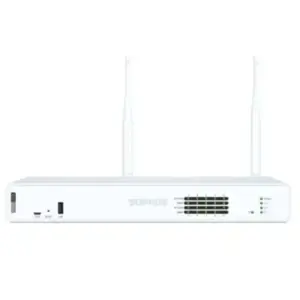
Fortinet FortiWeb 4000F in Dubai, UAE
FortiWeb 4000F is a 2U enterprise web application firewall built for organisations that need to inspect and protect large volumes of web and API traffic without treating application security as a simple perimeter-firewall feature. Fortinet publishes up to 70 Gbps HTTP/HTTPS throughput for this model, together with 40GE and 10GE connectivity, hardware SSL/TLS processing, redundant storage and dual hot-swappable power. It is a specialised platform for demanding application environments, not a default choice for every website.
Before you request pricing
Prepare expected HTTP/HTTPS traffic, peak utilisation, application count, interface requirements and your preferred deployment mode.
Confirm whether you need Standard, Advanced or Enterprise security services, plus any optional services such as SOCaaS or FortiAI-related subscriptions.
For an accurate bill of materials, include support term, HA requirement, optics or cabling, rack environment and implementation scope.
Up to 70 Gbps
2 × 40GE bypass
10 × SFP+; 2 bypass
2U rack appliance
Dual hot-swappable
Direct answer for buyers evaluating FortiWeb 4000F
Fortinet FortiWeb 4000F is a high-end hardware WAF used to protect web applications and APIs against application-layer attacks, malicious automation and other threats while providing application delivery, visibility and policy controls. It is mainly suited to large data centres, service providers, major digital platforms and enterprises with traffic volumes that justify its capacity and interface set. A buyer should not select it solely because it is the largest model in a range. Before proceeding, confirm actual encrypted traffic, traffic growth, 40GE or 10GE port requirements, high-availability architecture, certificate handling, application count, software and security-service requirements, transceivers, support term and implementation responsibilities.
What the appliance does
FortiWeb sits in the application traffic path and applies controls designed specifically for HTTP, HTTPS, APIs and web application behaviour. Unlike a general network firewall, a WAF can examine application requests, parameters, headers, cookies, upload activity, API structures and other Layer 7 behaviour. FortiWeb combines conventional techniques such as signatures, IP reputation and protocol validation with machine-learning-based application modelling. It also provides deployment options including reverse proxy, inline transparent, true transparent proxy, offline sniffing and WCCP, allowing the architecture to be matched to the network rather than forcing a single insertion method.
Who should consider it
The 4000F should be shortlisted when an organisation has a genuine high-throughput application-security requirement, high-speed data-centre links, large public-facing services or a consolidation design in which one appliance pair will protect many significant applications. It can be relevant to financial platforms, telecom or service-provider environments, large ecommerce estates, government digital services, healthcare platforms, travel systems, SaaS providers and other organisations whose application layer is a critical business surface. Smaller environments may achieve a better commercial and operational fit with a lower FortiWeb appliance, virtual deployment or cloud-delivered option.
Business challenges the FortiWeb 4000F can address
Application-layer exposure
Public web services and APIs expose business logic that ordinary network controls do not fully understand. FortiWeb provides controls for common web attack techniques, protocol behaviour, virtual patching and application-specific request inspection.
Encrypted traffic at scale
The appliance uses hardware SSL/TLS processing and is published at up to 70 Gbps system throughput. Real results depend on configuration, traffic characteristics, cipher use and policy depth, so sizing must use realistic production assumptions.
API visibility and control
FortiWeb supports API discovery, schema-related controls and protection functions. This is useful when mobile apps, partner services and automated business processes create an API surface that grows faster than manual inventories.
Automated abuse
Bot defence and credential-related capabilities help address scraping, automated login attempts and other non-human activity. The exact capability set depends on the selected bundle and optional services, so licensing must be checked before purchase.
Core platform capabilities
Controls for OWASP-related attack patterns, SQL injection, cross-site scripting, protocol validation, file upload inspection, cookie controls, denial-of-service protections and additional policy elements.
Application modelling helps distinguish normal requests, unusual activity and malicious anomalies. Learning and policy tuning remain operational activities that should be planned rather than treated as automatic project completion.
API discovery and schema-aware mechanisms can support modern application estates that depend on JSON, XML and OpenAPI-related workflows. Exact use should be tested against the organisation’s development process.
Layer 7 load balancing, content routing, SSL offloading, URL rewriting, health monitoring and related functions can be useful, but architecture should clarify where WAF, load-balancer and ADC responsibilities sit.
FortiWeb 4000F fit matrix
| Requirement | Suitable when | Confirm before ordering |
|---|---|---|
| High WAF throughput | Traffic volumes approach the range where lower appliances could constrain growth. | Peak HTTPS load, request profile, security policy depth and headroom. |
| 40GE connectivity | The data-centre design benefits from two 40GE bypass interfaces. | QSFP type, cabling, switch compatibility and bypass topology. |
| Large application estate | Multiple critical applications or tenants need consolidated protection. | Domains, policy objects, segmentation, admin domains and ownership model. |
| Resilient deployment | Business services require redundant power and HA design. | Active/passive or active/active architecture, failover behaviour and test plan. |
| Advanced application security | The organisation needs bot, credential, client-side or data-protection services beyond baseline controls. | Standard, Advanced, Enterprise and add-on service entitlements. |
Configuration, licensing and compatibility dependencies
The hardware specification is only one part of a FortiWeb 4000F purchase. Current Fortinet ordering information separates service capabilities into Standard, Advanced and Enterprise bundles, with additional services available as add-ons. The Standard tier includes core web security, IP reputation and antimalware services. The Advanced tier adds services such as FortiWeb Cloud Sandbox, Credential Stuffing Defense and Threat Analytics. Enterprise extends the service set with capabilities including Advanced Bot Protection, Client-Side Security and data loss prevention. FortiAI-related subscriptions and SOCaaS are shown as add-ons in current ordering information. Bundle structure and part numbers can change, so a quotation should use current vendor ordering data rather than an old renewal SKU or a reseller description.
Interface planning also matters. The presence of 40GE QSFP and 10GE SFP+ ports does not mean every required optic, cable or transceiver is automatically included. Confirm switch-side interface type, distance, fibre standard, breakout requirements, redundancy path and whether bypass is part of the chosen architecture. Certificate handling, backend server ciphers, TLS policies, API schema processes, authentication sources and logging destinations should also be documented. If integration with FortiGate, FortiSandbox, central logging, third-party vulnerability scanners, HSM, SIEM or another platform is required, compatibility should be checked against the software versions actually used in the project.
A practical purchase and deployment journey
Profile the application estate
List public and private applications, APIs, peak traffic, expected growth, TLS usage, business criticality, DNS ownership and current security controls. Distinguish average traffic from seasonal or campaign peaks.
Choose architecture
Decide whether reverse proxy, transparent insertion, WCCP or another supported deployment mode best fits routing, certificate ownership, load balancing and operational change constraints.
Build the bill of materials
Confirm appliance quantity, HA design, optics, support term, bundle level, add-on services, rack and power requirements, logging platform and any professional implementation or migration scope.
Stage and test
Prepare management access, firmware plan, certificates, server definitions, health checks, policies, logging and administrator roles. Test representative traffic and failover before placing critical applications fully behind enforcement.
Tune and operate
Review learning results, false positives, bot activity, API inventory, security events and capacity trends. Establish change control so application releases and WAF policy changes are coordinated rather than handled as separate disciplines.
High-throughput protection without treating 70 Gbps as a guarantee
The most visible differentiator of the FortiWeb 4000F is the 70 Gbps throughput figure in current Fortinet documentation. This figure is valuable for model comparison, but responsible sizing goes further. Real traffic is a mixture of request sizes, TLS handshakes, long-lived sessions, API calls, uploads, downloads, authentication, bot activity and application responses. Security policies may invoke different inspection engines and logging levels. High availability can change how capacity is allocated, and future application growth can consume headroom faster than expected.
A buyer should therefore collect real monitoring data from the existing WAF, load balancer, reverse proxy or application gateway. If no WAF exists, network telemetry and server logs can still reveal peak bandwidth, transactions, session behaviour and TLS patterns. The aim is not to prove that a 4000F is powerful; it is to prove that the chosen model is proportionate. If required capacity is far below the appliance range, another FortiWeb model may deliver simpler economics. If traffic is close to the top of the range, a design review should consider growth, HA operation and failure scenarios.
Machine learning is most useful when operations are prepared for learning
FortiWeb uses machine learning to model application behaviour and to help separate ordinary requests from anomalies and actual threats. That can reduce the endless rule-tuning cycle associated with a purely static policy approach. It does not remove the need for operational ownership. Applications change, developers add fields, APIs gain endpoints, customer journeys evolve and integrations introduce new request patterns. Those changes should be visible to the security team so that learning and enforcement stay aligned with the application lifecycle.
For a large environment, establish who approves policy changes, who reviews exceptions, how DevOps or application teams notify security of releases, and what data is retained for troubleshooting. A controlled learning period can help identify unexpected legitimate traffic before full blocking is applied. FortiWeb’s analytical tools, dashboards and logs support investigation, but the quality of the operating process still determines whether alerts become useful decisions. FourTeck can help customers scope the deployment tasks around the appliance, including policy planning, initial configuration, testing and handover expectations.
API security should be designed around the real API inventory
Modern organisations rarely have a single website. Mobile applications, payment services, partner integrations, customer portals, microservices and internal automation often communicate through APIs. FortiWeb provides API discovery and protection mechanisms, including schema-related controls and support for OpenAPI, XML and generic JSON workflows. These functions become more useful when the business knows which APIs are expected, who owns them and how they change.
Before deployment, identify internet-facing and partner-facing endpoints, authentication methods, sensitive data, rate expectations and any APIs that are undocumented or legacy. Connect the WAF design to the release process so a schema change is not discovered only when legitimate production traffic is blocked. API security is also an ownership issue: application teams understand business logic, network teams understand traffic flow and security teams understand attack patterns. A successful FortiWeb project creates a practical bridge between those groups rather than positioning the WAF as a device that can compensate for every application design issue.
Where FortiWeb 4000F can fit well
Large digital transaction platforms
Financial, ecommerce, ticketing and customer-service systems can generate heavy HTTPS traffic and face credential attacks, malicious automation and application exploits. Capacity, bot-service entitlement and HA should be planned together.
Service-provider or shared application security
A consolidated appliance can make sense where many applications or tenants require dedicated WAF controls. Administrative separation, logging, domain limits and operational ownership should be checked against the intended tenancy model.
Data-centre core application protection
The 40GE bypass and 10GE interface set may suit high-speed data-centre designs. Confirm optics, switch architecture, traffic steering and failure behaviour instead of assuming that port speed alone determines suitability.
API-heavy enterprise services
Organisations exposing mobile, partner and machine-to-machine APIs can use FortiWeb to add discovery, schema and threat controls. Development workflow and API ownership remain important dependencies.
Integration and operational considerations
A FortiWeb appliance is normally part of a larger application delivery and security architecture. Before ordering, map the relationship between internet edge firewalls, routers, load balancers, DNS, certificate services, web servers, API gateways, identity services, logging platforms and vulnerability-management tools. If FortiWeb will terminate TLS, define certificate import, private-key custody, renewal responsibility and supported cipher policy. If TLS terminates elsewhere, document how application traffic reaches the WAF and whether the inspection goal is still met. Where a load balancer already exists, decide which device owns server health monitoring, content routing and persistence so that functions are not duplicated without a reason.
Logging is another design decision. Security teams may need FortiWeb events in a central analytics or SIEM platform, while operations teams may need traffic visibility for troubleshooting. Retention, event volume, alert routing and time synchronisation should be planned. Administrator access should follow role separation, and management interfaces should be placed on appropriate networks. For high availability, test not just chassis failover but application behaviour during failure, link loss, certificate issues and planned maintenance. Large WAF projects benefit from a runbook that covers change, rollback, emergency bypass and escalation procedures.
Software lifecycle matters as well. FortiWeb features and configuration limits can evolve between software releases. The target release should be chosen using current compatibility and release-note guidance, especially when third-party scanners, automation APIs or central-management tools are involved. Do not buy the appliance based on a feature observed in an unrelated model or an old software screenshot. FourTeck can help define the questions that need to be answered before procurement and can include implementation or configuration assistance in the quotation when required.
Questions to resolve before placing an order
How much traffic must be protected?
Use peak HTTPS and HTTP figures, growth expectations, request rates and seasonal events. Separate internet bandwidth from application traffic if those values differ.
Which interfaces are genuinely required?
Confirm whether 40GE bypass, 10GE SFP+ or GE ports will be used, plus the exact optic, cable, reach and switch-side interface for every production and HA path.
Which security-service tier fits the risk?
Do not assume advanced bot, client-side protection, DLP or other higher-tier functions are part of every hardware purchase. Map desired outcomes to the current bundle.
How will the WAF be inserted?
Reverse proxy, transparent and redirection-based designs have different routing, certificate, troubleshooting and change requirements. Choose the mode before finalising the bill of materials.
What is the availability objective?
Define the HA model, maintenance expectations, bypass behaviour, dual-power feeds and recovery process. Hardware redundancy is only one part of end-to-end service resilience.
Who will operate the platform?
Identify administrators, application owners, incident-response contacts and the team responsible for tuning after application releases. Include training or handover where needed.
Procurement checklist for FortiWeb 4000F
✓ Confirm exact appliance model FWB-4000F and required quantity.
✓ Record peak and expected growth for protected HTTP/HTTPS traffic.
✓ Confirm HA topology and whether two appliances are required.
✓ Map 40GE, 10GE and GE connections to the switching design.
✓ Specify QSFP/SFP+ optics, cabling and reach requirements.
✓ Select current Standard, Advanced or Enterprise service bundle.
✓ Identify any add-on subscriptions and required support term.
✓ Confirm rack space, power feeds, airflow and data-centre conditions.
✓ Document deployment mode, IP addressing, routing and DNS changes.
✓ Prepare certificates, backend server details and authentication dependencies.
✓ Define central logging, monitoring and retention requirements.
✓ List integration requirements and the exact software versions involved.
✓ Confirm installation, configuration, migration, testing and handover scope.
✓ Ask FourTeck to confirm current UAE availability and vendor lead time.
How FourTeck can assist
FourTeck can help turn a model enquiry into a procurement-ready requirement. That can include reviewing the application estate, checking whether FortiWeb 4000F is proportionate to the capacity requirement, identifying nearby hardware or virtual options, clarifying current service bundles, preparing a bill of materials and coordinating a quotation. Where installation or configuration is required, the scope can be discussed before the order so the commercial proposal reflects the project rather than only the appliance.
Buyers can also use FourTeck to discuss renewal planning, migration from an existing WAF, high-availability expectations, logging and integration considerations. Explore FourTeck security products, review available deployment and support services, or read more about Fortinet solutions for Dubai projects. The aim is to confirm the requirement before purchase so model, licenses, accessories and service scope align.
UAE availability and support guidance
Contact FourTeck to confirm current UAE availability for the FortiWeb 4000F. Availability can depend on appliance quantity, service bundle, support term, vendor lead time and any required accessories. Delivery and project coordination can be discussed after the exact configuration is confirmed. If installation, initial configuration, HA setup, migration or policy assistance is required, include that work in the quotation request so responsibilities are clear before scheduling.
Dubai, Abu Dhabi, Sharjah and Ajman project coordination
Organisations in Dubai, Abu Dhabi, Sharjah and Ajman can contact FourTeck with the same core procurement information: exact model, quantity, protected application scope, expected traffic, preferred bundle, support term, deployment location and required implementation services. For data-centre projects, also share rack, power, switching, transceiver and high-availability requirements. FourTeck can coordinate product quotation and technical clarification after the requirement is defined. Availability, delivery timing and onsite scope should be confirmed for the specific project rather than assumed from a general product listing.
GCC Availability
FourTeck can assist organisations planning FortiWeb projects across GCC markets with requirement review, appliance sizing, bundle selection, quotation coordination, configuration scope and regional project planning. Requirements in the United Arab Emirates, Saudi Arabia, Kuwait, Qatar, Bahrain and Oman can differ in delivery routing, service availability, local project conditions and vendor lead time. For the FortiWeb 4000F, buyers should share the destination country, appliance quantity, required security-service tier, support term, deployment site, interface requirements and target implementation window. This allows the commercial and technical discussion to reflect the real project. Product availability, licensing, delivery schedules, service visits and installation scope can vary by country, model and quantity, so these points should be confirmed before a purchase order. For Kuwait-related enquiries, buyers may also review FourTeck Kuwait resources.
Africa Availability
For Africa-focused application-security projects, FourTeck can help organisations evaluate FortiWeb hardware, subscriptions, support requirements, accessories and implementation scope before procurement. Projects in East Africa, West Africa, Southern Africa and Central Africa may have different shipping, power, regulatory, service and deployment considerations. Buyers should provide the destination country, exact appliance requirement, quantity, service bundle, support term, preferred deployment schedule and any installation or remote-support expectations. For a high-capacity model such as FortiWeb 4000F, transceiver planning, data-centre power, rack conditions and HA design are particularly important. Availability and fulfilment can depend on destination, quantity, vendor lead time and project conditions. Regional information is available through FourTeck Africa, while final product and service commitments should be confirmed for the specific destination.
Related options worth evaluating
FortiWeb 3000F
A nearby hardware model to compare when the organisation needs enterprise WAF capabilities but does not require the 4000F throughput or 40GE interface profile.
FortiWeb 2000F
Useful for comparing lower appliance capacity, interface density and commercial fit before committing to the largest model in the current hardware range.
FortiWeb virtual options
Consider where virtualised or cloud infrastructure is preferred over dedicated hardware. Performance, licensing and platform compatibility follow a different sizing model.
Logging and analytics
Central logging or analytics may be part of the wider design. Confirm the required platform, retention objective and supported integration before adding components to the bill of materials.
Implementation services
Installation, migration, policy configuration, HA setup and handover can be scoped separately where the buyer needs more than hardware supply. See FourTeck services.
Why businesses contact FourTeck before ordering
A high-end WAF purchase can fail commercially even when the hardware is technically capable. Common causes include selecting the wrong bundle, leaving optics out of the bill of materials, discovering certificate or routing constraints late, underestimating implementation work, or buying capacity without a clear growth model. FourTeck can help buyers structure the requirement so procurement, infrastructure, application and security teams work from the same assumptions.
The practical assistance may include model selection, bundle clarification, support-term discussion, bill-of-material review, compatibility questions, deployment planning, migration scoping, renewal guidance and quotation coordination. No single service level is assumed to be included in every product quote. Tell FourTeck what outcome and responsibilities you need, and the commercial scope can be built around that requirement. For general company information, visit about FourTeck or use the contact page to start a project discussion.
What enterprise buyers usually need to know beyond the data sheet
A specification sheet answers whether the FortiWeb 4000F has 40GE ports, how much storage it contains and what throughput Fortinet publishes. A buying decision needs a different set of answers. Teams typically want to know whether the 4000F is too large or appropriately sized, what subscription services are needed, whether it replaces an existing load balancer, how it handles APIs, what happens during failover, and how much operational work is required after installation. These questions are important because a WAF is not useful merely because packets pass through it. Its value comes from enforcing application-aware policy while legitimate business traffic continues to work.
Is the 4000F only for very large websites?
No. The sizing question is broader than website size. One organisation may protect a single extremely busy transaction platform, while another may consolidate many applications and APIs behind a WAF cluster. The relevant metrics are protected traffic, TLS processing, request behaviour, interface design, application count, resilience and growth. A visually simple website can still generate a large API workload; a large corporate site can have modest traffic. Use measured data instead of labels such as “large enterprise.”
Does 70 Gbps mean every security policy can run at 70 Gbps?
Buyers should treat the number as an up-to platform figure, not a promise for every production configuration. Real performance changes with traffic patterns, security functions, logging, TLS characteristics and system configuration. For a critical service, plan headroom and test representative traffic. If the design requires HA, also consider how traffic will be handled during maintenance or when one node is unavailable.
Do you need 40GE ports to justify this model?
Not necessarily, but the two 40GE bypass interfaces are an important differentiator in data-centre designs. An organisation may still select the appliance primarily for capacity, consolidation or growth. However, if the network operates entirely at lower speeds and required traffic is far below the 4000F range, comparing the 3000F, 2000F or virtual options can prevent unnecessary cost and complexity.
Can FortiWeb protect APIs as well as websites?
Yes, FortiWeb includes API-related discovery and protection capabilities. The useful question is how those capabilities fit the organisation’s API lifecycle. Security teams should know which endpoints are public, which schemas are authoritative, how authentication works and how releases are communicated. An API control that is disconnected from development change can create avoidable false positives or miss newly exposed services.
Another frequent buying question concerns FortiWeb versus FortiGate. These products address different layers of the security architecture. A FortiGate can provide network firewall and broader security controls, while FortiWeb is purpose-built for web application and API protection. Organisations may deploy both when they need perimeter or segmentation security plus dedicated application-layer inspection. The correct architecture depends on traffic flow and control objectives; the products should not be treated as automatic substitutes.
Licensing is also a major source of confusion. The hardware appliance does not make every FortiWeb service automatically available. Current ordering material places core web security, IP reputation and antimalware in the Standard tier; Advanced adds services including Credential Stuffing Defense, Threat Analytics and FortiWeb Cloud Sandbox; Enterprise adds capabilities including Advanced Bot Protection, Client-Side Security and DLP. Additional services can have separate entitlement. Buyers should translate business requirements into service capabilities first, then map those capabilities to current Fortinet SKUs. This reduces the risk of ordering hardware with an incomplete security-service package.
Price research for high-end security appliances can also be misleading. Online figures may represent hardware only, list pricing, a one-year bundle, a multi-year bundle or a renewal subscription. Some listings mix different service terms under the same product family name. For this reason, a meaningful quotation request should state whether you need hardware only or hardware plus service bundle, the exact support period, quantity, required add-ons and delivery destination. The comparison should be made on the same bill of materials, not on two prices that describe different entitlements.
Finally, buyers often ask how difficult deployment is. The answer depends less on the rack installation and more on application context. A controlled project begins with application discovery and architecture, continues through certificate and server configuration, policy learning, logging, HA tests and business validation, and finishes with a handover process. A migration from another WAF needs additional work to review existing policies rather than importing years of exceptions without understanding them. FourTeck can assist with the requirement and project scope so the quote reflects both the appliance and the work needed to make it operational.
Decision questions that prevent a wrong WAF purchase
What should we measure before asking for a FortiWeb 4000F quote?
Measure peak and average protected traffic, HTTPS share, request rates where available, application and API count, expected growth, major traffic events and current WAF or reverse-proxy utilisation. Also document interface speeds and whether the project needs 40GE. These facts allow sizing to focus on the workload rather than the prestige of the model number.
Which bundle should we choose if bot attacks are the main problem?
Start by defining the bot problem: credential stuffing, scraping, fake accounts, automated transactions or broad malicious automation. Fortinet places different bot and credential capabilities in different service tiers, and Advanced Bot Protection is associated with Enterprise-level service in current ordering guidance. Confirm the exact entitlement and request volume assumptions in the current quote rather than relying on an older bundle name.
Do we need two appliances?
Two appliances are commonly considered when the application-security layer must remain available during a device failure or maintenance event. FortiWeb supports active/passive and active/active clustering, but the choice depends on traffic design and resilience objectives. Include switch redundancy, power feeds, routing, certificates, backend services and failover testing in the HA plan. A second chassis alone does not guarantee end-to-end availability.
Will FortiWeb replace our ADC or load balancer?
FortiWeb includes application-delivery functions such as Layer 7 load balancing, health monitoring, content routing and SSL offloading. Whether it should replace an existing ADC is an architecture decision. Review persistence, health checks, routing policies, global load balancing, automation and operational ownership before consolidating roles. In some environments, keeping specialised platforms separate is the better design.
How should a migration from another WAF be planned?
Inventory protected applications, current virtual servers, certificates, server pools, allow lists, exceptions, signatures, rate limits and custom rules. Identify which rules still serve a business purpose and which are historical workarounds. Build test cases for critical customer journeys. A migration is safer when policies are validated against current application behaviour rather than copied mechanically.
What information helps FourTeck prepare an accurate quotation?
Provide model or expected capacity, quantity, destination, HA requirement, service tier, support term, optional services, optic and cabling needs, installation scope, preferred delivery timeframe and any migration or configuration assistance required. If the model is not yet certain, provide application traffic and architecture details so the sizing discussion can start before a bill of materials is fixed.
Frequently asked questions about FortiWeb 4000F
What is Fortinet FortiWeb 4000F used for?
It is a hardware web application firewall used to protect web applications and APIs with application-layer inspection, machine-learning-based analysis, API security, bot-related controls, virtual patching, application delivery functions, logging and related security capabilities. The exact service set depends on the selected bundle and add-ons.
What throughput does FortiWeb 4000F provide?
Fortinet currently publishes up to 70 Gbps throughput for the appliance. The manufacturer states that performance values are “up to” figures and vary depending on system configuration. Real application performance should be sized using the planned traffic and security policy.
Which high-speed interfaces are available?
Current Fortinet documentation lists two 40G QSFP bypass interfaces, ten 10G BASE-SR SFP+ interfaces including two bypass ports, and eight GE RJ45 bypass interfaces. Optics and cabling requirements should be confirmed for the project.
Does FortiWeb 4000F support high availability?
Yes. Fortinet lists active/passive and active/active clustering for this model. A production HA design should also account for switch paths, power, routing, certificates, backend health and failover testing.
Are Advanced Bot Protection and DLP included with every appliance?
No assumption should be made that every advanced service is included. Current ordering information places Advanced Bot Protection, Client-Side Security and DLP in the Enterprise service tier, while other capabilities are associated with Standard, Advanced or add-on services. Confirm the exact current bundle in the quotation.
Can FortiWeb 4000F protect APIs?
Yes. FortiWeb includes API discovery and protection capabilities, including schema-related controls. Buyers should document API ownership, authentication, schema sources and release processes so policies remain aligned with application changes.
What storage and power design does the appliance use?
The current data sheet lists two 960 GB SSDs and dual hot-swappable power supplies. It is a 2U rack appliance with front-to-back airflow, so rack depth, power feeds and data-centre environmental conditions should be checked before installation.
Is FortiWeb 4000F the right model if we do not need 40GE?
It can still be suitable if the capacity, consolidation or growth requirement justifies it, but buyers should compare lower FortiWeb hardware models and virtual options. The best model is the one that fits real traffic, interface, resilience and operational needs with appropriate headroom.
How can I get a FortiWeb 4000F quotation in the UAE?
Send FourTeck the required quantity, traffic profile, HA requirement, service bundle, support term, interface and optic needs, destination and any installation or migration scope. FourTeck can then coordinate current availability and a requirement-based quotation.
Confirm the FortiWeb 4000F configuration before you order
Share your protected traffic, application scope, preferred deployment mode, high-availability requirement, service tier, support term and interface needs. FourTeck can help confirm whether the 4000F is the right fit and prepare a project-specific quotation.

Reviews
There are no reviews yet.