

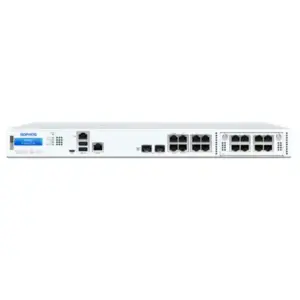
Fortinet FortiWeb VMC01 in Dubai, UAE
FortiWeb VMC01 is positioned for organisations that want FortiWeb protection in a container-oriented deployment model. The model is listed by Fortinet as a FortiWeb container appliance with a maximum permitted throughput of 25 Mbps. That makes it especially important to size the solution against real application traffic, TLS inspection, policy complexity, protected services and operational requirements rather than choosing on model name alone.
FourTeck can help review the protected applications, expected traffic, licensing, integration and implementation scope.
Direct answer for buyers
Fortinet FortiWeb VMC01 is a FortiWeb container appliance intended to protect web applications and APIs in containerised environments. Fortinet currently identifies VMC01 with a 25 Mbps maximum permitted throughput, while actual performance can vary with traffic and system configuration. It is worth considering when a container-aligned deployment is required and the expected protected traffic fits the model after inspection overhead and growth are considered. Before proceeding, confirm the exact ordering reference, supported deployment environment, software version, expected HTTP and HTTPS volumes, required FortiGuard or support services, management design, redundancy requirements and whether a larger VMC model would provide a better operational margin.
What FortiWeb VMC01 does
FortiWeb is Fortinet’s web application firewall and API protection platform. In the VMC01 form, it is delivered for container-based environments rather than as a rack-mounted hardware appliance. The security role remains application-focused: traffic reaching protected web services can be inspected against application-layer threats, policy violations and suspicious behaviour before it reaches the workload.
The value of this architecture is not that a container automatically makes security simpler. It is that the security control can be planned in a form that better matches modern application delivery. Buyers should still map protected domains, application paths, certificates, APIs, backend services, security policies, logging and operational ownership before deployment.
Who should consider it
VMC01 may suit organisations running relatively modest protected application traffic where container-based deployment is a requirement. Typical stakeholders include application owners, security architects, platform teams, DevOps or DevSecOps engineers, IT infrastructure teams and procurement specialists evaluating a FortiWeb option for private or hybrid application environments.
It is not automatically the right choice for every containerised environment. Buyers expecting traffic well above the listed 25 Mbps maximum, substantial growth, heavy encrypted traffic, demanding security-policy processing, broad multi-application consolidation or large resilience requirements should evaluate larger FortiWeb VMC sizes or other FortiWeb deployment forms before committing to VMC01.
Business challenges this model can help address
Application-layer exposure
Internet-facing applications can be targeted through vulnerabilities, malformed requests, automated attacks and abusive traffic. FortiWeb provides a control point focused on application and API traffic rather than relying only on network-layer security.
Container architecture alignment
Some organisations prefer security components that fit container-driven infrastructure and operational workflows. VMC01 gives buyers a FortiWeb option designed for containerised environments, subject to current platform and version support.
API visibility and control
Modern applications often depend on APIs that expose business functions and data flows. FortiWeb includes API discovery and protection capabilities at the platform level, but exact features should be checked against the intended software release and service bundle.
Security operations workload
Application security is not only about blocking requests. Teams also need useful events, policy tuning and incident context. FortiWeb offers analytics and security-service options, with availability depending on licensing, bundle and current Fortinet policy.
Core FortiWeb capabilities relevant to VMC01
Is VMC01 the right fit?
| Requirement | Suitable when | Confirm before ordering |
|---|---|---|
| Container-oriented deployment | Your architecture calls for the FortiWeb container appliance form factor. | Supported container platform, FortiWeb release and deployment method. |
| Protected traffic volume | Expected inspected traffic fits comfortably below the listed maximum after design margin. | Peak HTTP/HTTPS throughput, TLS profile, bursts and growth. |
| Application security scope | You need WAF and API-focused controls for defined web workloads. | Domains, APIs, policies, certificates, authentication flow and backend topology. |
| FortiGuard services | Required services are covered by the selected bundle or subscriptions. | Standard, Advanced, Enterprise or a-la-carte service requirements. |
| Operational ownership | A team is available to deploy, tune, monitor and maintain policies. | Administration, logging, incident process and support responsibilities. |
Fortinet FortiWeb VMC01 information table
| Brand | Fortinet |
| Product name | FortiWeb VMC01 |
| Ordering reference | FWB-VMC01 is commonly listed for this model; confirm the current regional ordering reference with FourTeck before purchase. |
| Product type | FortiWeb container appliance / web application firewall |
| Primary purpose | Protection of web applications and APIs in a containerised deployment context. |
| Maximum listed throughput | 25 Mbps. Fortinet states model throughput and other metrics are maximum permitted values and actual performance can vary with network traffic and system configuration. |
| Deployment type | Container-based environment; exact platform/version support must be confirmed for the intended deployment. |
| Security services | License and bundle dependent. FortiWeb security-service options can include web security, IP reputation, antimalware, sandboxing, credential-stuffing defence, threat analytics, advanced bot protection, client-side security and data-loss-prevention services depending on current licensing. |
| Management | Configuration dependent. Confirm local, central or cloud-related management requirements as part of solution design. |
| High availability | Architecture and configuration dependent. Validate the intended resilience design and whether additional instances, licenses or platform components are required. |
| Included subscriptions | Not assumed. Confirm the precise bill of materials and service bundle before ordering. |
| UAE availability | Contact FourTeck for current availability, licensing, lead-time and quotation guidance. |
Licensing, compatibility and scope dependencies
A VMC01 request should not be treated as a single line item until the buyer has confirmed how the appliance will be licensed and which security services are needed. FortiWeb capabilities are delivered through a combination of the base product, software release and FortiGuard or FortiCare offerings. Some services are included only in particular bundles, while others may be sold as add-ons. Bundle names, ordering codes and included features can change over time, so the current bill of materials should be checked before issuing a purchase order.
Compatibility also needs a deployment-level review. Confirm the container platform and release, networking model, reverse-proxy or other traffic flow, certificates, DNS changes, protected server reachability, logging destination, authentication dependencies and any integration with FortiGate, FortiSandbox, SIEM or broader Fortinet Security Fabric components. A feature being available in the FortiWeb product family does not automatically mean it is licensed, enabled or appropriate for every VMC01 deployment.
A practical purchase and deployment journey
Define the protected applications
List domains, APIs, public services, backend locations, application owners and business criticality. Identify whether the deployment is new or replacing an existing WAF.
Measure real traffic
Use peak and normal HTTP/HTTPS traffic, request rates, seasonal bursts and growth plans. Do not size only from average bandwidth.
Select services and architecture
Confirm the required security functions, logging, certificate handling, resilience and integrations, then map these needs to licenses and configuration.
Build the quotation
Request the exact VMC01 model reference, subscriptions, term, quantity and any implementation services in one clearly defined bill of materials.
Deploy, test and tune
Validate traffic routing, certificates, application behaviour, policy actions, logging, failover where applicable and alert handling before full production enforcement.
Capacity planning beyond the 25 Mbps headline
The most important technical number associated with VMC01 is the 25 Mbps maximum throughput listed by Fortinet. Buyers should interpret that figure as a product limit for the model, not as a guarantee that every deployment will sustain the same application performance under every policy set. Encrypted traffic, security inspection, traffic patterns, request size, concurrent activity, backend latency and system configuration can all influence observed results.
For business sizing, collect peak protected traffic and identify periods when usage climbs sharply. Add growth margin rather than choosing a model that is already close to its published maximum. If the environment has uncertain traffic or expects significant expansion, evaluate VMC02, VMC04 or VMC08 rather than assuming VMC01 can be stretched later without commercial or operational consequences.
Policy quality matters as much as deployment form
A WAF is effective when policies accurately reflect the protected applications and when operations teams can distinguish legitimate changes from suspicious behaviour. FortiWeb includes signature, anomaly, machine-learning, API and bot-related controls across the platform, but turning on every option without application context is not a sound deployment plan. Teams should begin with application discovery, traffic understanding and an agreed enforcement strategy.
During implementation, establish who can approve policy changes, how false positives are reviewed, where logs are sent and how incidents are escalated. Application releases can modify URLs, APIs, parameters and transaction flows. The WAF change process therefore needs to be connected to application lifecycle management rather than treated as a one-time installation task.
Container deployment needs shared ownership
Container security projects often involve more teams than conventional appliance deployments. Platform engineering may own the orchestration layer, network teams may control routing and load balancing, application teams understand service behaviour, and security teams define inspection policy. The VMC01 project should identify these responsibilities early so that prerequisites are available when configuration begins.
Document the target namespace or environment, network paths, certificates, backend endpoints, DNS changes, logging integrations, access-control expectations and maintenance process. Also confirm how updates and configuration backups will be handled. A technically compatible container platform is only one requirement; the operational model must support reliable administration after go-live.
Where FortiWeb VMC01 may fit well
Development and controlled production platforms
Teams operating containerised applications with a defined traffic envelope may consider VMC01 when they want FortiWeb controls close to the workload and the capacity requirement remains within the model’s practical range.
Application modernisation projects
When an application moves from conventional infrastructure into containers, the security design can be reviewed at the same time. VMC01 may be one option where the new architecture requires a container-form FortiWeb deployment.
API-centric business services
Applications exposing APIs to mobile apps, partners or internal services can benefit from an application-security layer that understands API behaviour. Exact FortiWeb API capabilities and licensing should be validated for the selected release.
Smaller protected traffic profiles
The 25 Mbps class is most relevant when measured application traffic, inspection needs and growth margin remain within a modest range. Higher-traffic services should be evaluated against larger VMC models.
Integration and operational considerations
FortiWeb normally sits in an application traffic path, so deployment planning should begin with a precise traffic diagram. Identify where client requests enter the environment, whether an upstream load balancer or reverse proxy is already present, where TLS is terminated, which certificates and private keys are available, how FortiWeb reaches backend services and whether source-IP visibility must be preserved. These details affect both security policy and troubleshooting.
Logging is equally important. Decide where application-security events will be reviewed and how long they need to be retained. If the organisation uses a SIEM or Fortinet analytics platform, confirm the planned integration and the required license or connectivity. Security teams should define which FortiWeb events require immediate action versus periodic review. Without this operational agreement, even a correctly deployed WAF can generate alerts that are difficult to prioritise.
For environments using other Fortinet products, integration may provide useful context, but compatibility should be checked against current versions and architecture. Avoid assuming that a Fortinet-branded component automatically integrates in the exact way your workflow requires. Record software versions, intended data flows and ownership so the proposed bill of materials can be reviewed before implementation.
Questions to resolve before requesting a quotation
Provide peak and normal HTTP/HTTPS traffic, not only overall internet bandwidth.
Share the platform, version, topology and whether the environment is private cloud, hybrid or another supported design.
List domains, services, backend endpoints and business-critical transactions.
Identify whether bot protection, threat analytics, sandboxing, DLP, client-side security or other subscriptions are needed.
Define acceptable downtime and the intended high-availability or multi-instance architecture.
Clarify installation, policy tuning, logging, monitoring and ongoing administration responsibilities.
Procurement checklist for FortiWeb VMC01
How FourTeck can assist with sizing and quotation
A useful FortiWeb quotation starts with the application design, not only a model code. FourTeck can review your requested FortiWeb VMC01, protected traffic, container environment, number of applications, service requirements and expected implementation scope. If VMC01 appears too small for the measured traffic or expected growth, the requirement can be compared with larger FortiWeb container models before the final bill of materials is prepared.
FourTeck can also help separate the base product from service subscriptions, support, implementation and integration requirements so procurement teams can understand what is included. For broader cybersecurity planning, browse FourTeck security products or review security and deployment services.
Useful information to send
Application count and domain list
Peak protected traffic and growth estimate
Container platform and software versions
Required security services
High-availability requirements
Implementation and support expectations
UAE availability and support guidance
Contact FourTeck to confirm current UAE availability for Fortinet FortiWeb VMC01, the exact ordering reference and the required service subscriptions. Availability can depend on current vendor policy, license region, quantity, subscription term and fulfilment lead time. Because VMC01 is a software/container-oriented product rather than a conventional hardware appliance, procurement should also confirm how entitlement and support registration will be delivered and which organisation will own the Fortinet account used for activation and lifecycle management.
For projects in Dubai, Abu Dhabi, Sharjah and Ajman, FourTeck can coordinate requirement review, quotation preparation and discussion of configuration or deployment scope after the exact environment is defined. Installation dates, service scope and delivery timing should be agreed in the quotation rather than assumed in advance. Use the FourTeck contact page to share your application traffic, platform and licensing needs.
GCC Availability
Businesses planning FortiWeb VMC01 deployments across the GCC can use FourTeck for requirement review, model comparison, licensing discussion and quotation coordination. A regional request should identify the destination country, number of VMC01 instances, expected protected traffic, required subscription term and whether implementation assistance is needed. Projects in the United Arab Emirates, Saudi Arabia, Kuwait, Qatar, Bahrain or Oman can have different commercial, licensing and service conditions, so a quotation prepared for one country should not be assumed to apply unchanged elsewhere. Product availability, license entitlement, vendor lead time, delivery method, service visits and implementation scope can vary by country and project. Buyers should also confirm where the FortiWeb instance will run, who owns the container platform and which team will manage support registration. For Kuwait-related coordination, FourTeck’s Kuwait technology resource may also be useful.
Africa Availability
For organisations evaluating FortiWeb VMC01 in African markets, FourTeck can assist with product selection, licensing, accessory or service requirements, deployment planning and quotation coordination. The purchasing process should begin with the destination country, exact model, quantity, container environment, expected traffic, subscription requirements and preferred deployment schedule. Fulfilment can depend on license region, vendor policy, shipping or electronic-delivery arrangements, power or regulatory considerations for related infrastructure, and local project conditions. Implementation and onsite-support possibilities should be confirmed for the specific location rather than assumed to be uniform across the continent. FourTeck can help buyers in East Africa and other regions compare the requested VMC01 with alternative FortiWeb form factors where appropriate. For regional planning, see FourTeck Africa and the dedicated Kenya technology site.
Related options to consider before finalising the bill of materials
FortiWeb VMC02
A higher-throughput container model listed at 100 Mbps. Consider when traffic or growth makes VMC01 too restrictive.
FortiWeb VMC04
A 500 Mbps container option for larger protected traffic profiles. Confirm current ordering and service requirements.
FortiWeb VM
Virtual-machine FortiWeb models may suit projects standardised on hypervisor or public-cloud VM deployments instead of containers.
FortiAppSec Cloud WAF
SaaS-based application protection can be evaluated when the buyer prefers a managed cloud service without deploying a FortiWeb appliance.
Configuration services
Policy planning, deployment, testing and tuning can be scoped separately where the customer needs implementation assistance.
How buyers are evaluating FortiWeb VMC01 in real projects
A common buyer question is whether FortiWeb VMC01 is simply the container equivalent of FortiWeb VM01. The two names are close and both are associated with a 25 Mbps class, but the deployment form is the important distinction. Fortinet’s current product information presents VMC01 under container appliances, while VM01 is presented as a virtual-machine model. That difference affects how the product is hosted, how infrastructure teams plan the deployment and which installation guidance must be followed. Procurement teams should therefore avoid substituting VM01 and VMC01 based only on similar performance labels or pricing.
The 25 Mbps figure should be compared with protected application traffic, not the organisation’s total WAN speed. A company can have a gigabit internet circuit while only a small subset of traffic reaches the websites or APIs that FortiWeb will inspect. Conversely, a modest office link can still carry application bursts that exceed a small WAF design. Collecting actual protected traffic is therefore more useful than quoting the branch bandwidth.
HTTPS dominates modern applications, so certificate ownership and TLS termination need to be addressed early. The security team should know whether FortiWeb will decrypt and inspect traffic, whether an upstream device already terminates TLS and how certificates will be renewed. These decisions influence performance, operations and troubleshooting even when the selected WAF model itself does not change.
FortiWeb is not a single undifferentiated license. Security capabilities may be associated with standard, advanced, enterprise or a-la-carte services depending on current Fortinet packaging. A quotation should spell out the subscription name, term and included services so the buyer can compare offers on the same basis rather than looking only at the base VMC01 line.
Another frequent decision is whether a small organisation should choose VMC01 merely because it is the entry point in the container range. Organisation size is not the deciding factor. A small company can run a high-traffic public platform, while a large enterprise can have a low-volume internal application. The correct model follows the traffic profile, application criticality, security inspection, growth expectation and resilience design. When any of those factors are uncertain, buyers should reserve capacity instead of sizing exactly to today’s average.
Container platform compatibility is also a practical research topic. The safest purchasing approach is to identify the exact orchestrator or container environment, its version, network model and the FortiWeb software release that will be used. Product pages and older installation guides can mention different platforms or versions over time. Rather than relying on a generic statement that FortiWeb supports containers, confirm the current installation path for the target environment before issuing the order. This is especially important where the platform team has strict requirements for images, registries, service exposure, persistent storage, secrets management or infrastructure-as-code workflows.
Buyers also compare FortiWeb with cloud WAF services. A container appliance such as VMC01 gives the organisation direct responsibility for deployment and operations inside its environment, which can be attractive when security controls must remain close to workloads or when platform teams want to manage the lifecycle themselves. A SaaS WAF can reduce infrastructure management but introduces a different traffic architecture, commercial model and operating relationship. Neither is automatically better. The choice depends on governance, application location, latency expectations, data-path requirements, internal skills and the preferred consumption model.
For procurement, a complete VMC01 request normally needs more than the words “FortiWeb VMC01 price”. It should specify the exact product, required quantity, country, subscription or support term, desired security services, anticipated go-live date and whether configuration assistance is required. If the deployment is part of a broader migration, include the existing WAF model, number of policies and any rules that must be recreated. This information allows a supplier to distinguish base licensing from service subscriptions and professional work.
Finally, lifecycle planning deserves attention before purchase. Decide who will own entitlement registration, who can open support cases, how software updates will be tested and how policy changes will be documented. Application protection changes as applications change, so WAF operations need an ongoing owner. FourTeck can help organise the commercial and implementation questions, but the customer’s application, platform and security teams should agree internal responsibilities as part of the project plan.
Buyer questions that shape the correct VMC01 design
Should I choose VMC01 if my peak is close to 25 Mbps?
Usually, operating close to a model’s listed maximum leaves little room for traffic bursts, additional inspection or growth. Because Fortinet describes throughput as a maximum permitted value and actual performance varies, buyers should add design margin. If measured peaks already approach the model limit, compare VMC02 rather than treating 25 Mbps as a target operating point.
Do I need separate subscriptions after buying the base product?
Potentially. FortiWeb services are packaged in bundles and add-ons, and the required combination depends on the security outcomes you want. Request a quotation that lists the base VMC01 item and every service, term and support component separately. Do not assume that bot protection, threat analytics, sandboxing, DLP or client-side security are included unless the selected bundle says so.
Can VMC01 protect both websites and APIs?
FortiWeb is positioned for both web application and API protection. The exact API features available in your deployment depend on the software release, configuration and license. Define the APIs you need to discover or protect, including authentication methods, schemas and business-critical operations, then validate the required features against the proposed FortiWeb build.
What information makes a FortiWeb quote more accurate?
Provide the exact model, quantity, destination, protected traffic, number of applications, container platform, desired subscription term, security services, high-availability requirement and any installation or policy-migration scope. If replacing another WAF, include a high-level rule count and application list. This helps separate licensing costs from implementation effort.
Is a container WAF automatically easier to manage?
Not necessarily. Container deployment can align well with modern platforms, but operations still require routing, certificates, policies, updates, monitoring and incident handling. The advantage is architectural fit, not the elimination of administration. Assess whether your platform and security teams have clear ownership before deciding that the container form factor is operationally simpler.
When should I consider another FortiWeb deployment model?
Consider a larger VMC when traffic exceeds the VMC01 comfort zone, a FortiWeb VM when your standard platform is virtual-machine based, a hardware appliance when an on-premises appliance is preferred, or FortiAppSec Cloud when SaaS delivery fits governance and traffic architecture better. FourTeck can help compare these options at quotation stage.
Why businesses contact FourTeck for FortiWeb planning
The practical value of a supplier discussion is requirement clarification. A FortiWeb buyer may know the product family but still need to decide whether VMC01 has enough capacity, which services belong in the subscription, whether the environment should use container, VM, hardware or SaaS delivery, and what implementation tasks belong in the project. FourTeck can help organise those questions into a clear quotation request.
For existing environments, the conversation can include compatibility review, policy migration, certificate handling, logging and integration scope. For new deployments, the focus may be sizing, service selection and deployment planning. None of these activities should be assumed to be included automatically in a product-only quotation; define the required assistance and request it explicitly.
You can learn more about FourTeck through the FourTeck Dubai profile or discuss a broader technology requirement through FourTeck UAE contact.
Frequently asked questions about Fortinet FortiWeb VMC01
What is FortiWeb VMC01?
FortiWeb VMC01 is a Fortinet FortiWeb container appliance for protecting web applications and APIs in containerised environments. Fortinet currently lists it with a maximum permitted throughput of 25 Mbps.
Is VMC01 the same product as FortiWeb VM01?
No. Their names are similar and both sit in a 25 Mbps class, but VMC01 is presented as a container appliance while VM01 is a virtual-machine appliance. Confirm the correct form factor before ordering.
What throughput does FortiWeb VMC01 support?
Fortinet lists VMC01 at 25 Mbps maximum throughput. Actual performance can vary according to network traffic, inspection and system configuration, so production sizing should include headroom.
Does the VMC01 purchase include all FortiGuard services?
Do not assume that it does. FortiWeb services can be bundle or subscription dependent. Ask for a bill of materials that names each included service and the subscription term.
Can FortiWeb VMC01 protect APIs?
FortiWeb includes API discovery and protection capabilities at the platform level. The exact functions available depend on software release, configuration and licensing, so validate your API requirements before purchase.
Which container platform is supported?
Support can depend on the FortiWeb software version and deployment method. Share the exact platform and version with FourTeck and confirm it against current Fortinet installation documentation before ordering.
Can FourTeck help configure FortiWeb VMC01?
Configuration, policy planning, testing and integration assistance can be discussed as a separate project scope. Provide the application list, traffic flow, certificates, backend design and required integrations for an accurate service quotation.
Is FortiWeb VMC01 available in Dubai and the UAE?
Contact FourTeck to confirm current UAE availability, the exact ordering reference, subscription options and lead time. Availability can vary by region, quantity and vendor policy.
What should I provide for a VMC01 quotation?
Send the required quantity, destination, protected applications, peak traffic, container platform, license term, security-service requirements, high-availability needs and desired installation or support scope.
Confirm the correct FortiWeb VMC01 configuration before purchase
Share your container platform, protected traffic, application count, security-service requirements and desired implementation scope. FourTeck can help prepare a current UAE quotation and identify whether VMC01 or another FortiWeb model better matches the requirement.

Reviews
There are no reviews yet.