

Fortinet FortiDDoS 200F in Dubai, UAE
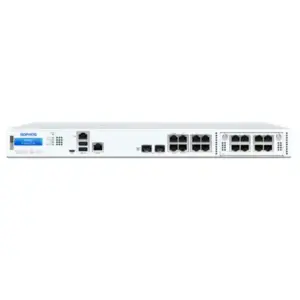
FortiDDoS 200F is designed for organisations that want dedicated, always-on inspection and mitigation at the network edge without placing DDoS response entirely on firewall rules or manual incident handling. With up to 8 Gbps inspected throughput, up to 9 Mpps inspected packet throughput and sub-one-second mitigation response stated for the current F-Series specification, it is intended for protected links that fit its Gigabit interface and capacity profile.
Fast procurement snapshot
Model: FDD-200F
Form factor: 1RU appliance
Inspected throughput: Up to 8 Gbps
Packet rate: Up to 9 Mpps
Ordering advice: Confirm topology, interfaces, protected traffic and support term before purchase.
Direct answer for buyers evaluating the 200F
Fortinet FortiDDoS 200F is a dedicated DDoS protection appliance installed inline on physical network links. Its main role is to learn normal traffic behaviour, inspect packets and mitigate abnormal Layer 3, Layer 4 and supported Layer 7 flood activity while legitimate traffic continues through the protected path. It is most relevant to organisations operating public websites, portals, DNS infrastructure, online applications or other externally reachable services where an 8 Gbps class mitigation appliance fits the design. Before proceeding, confirm the real peak bandwidth and packet rate, copper or optical connectivity, number of protected links and subnets, bypass expectations, redundancy design, support entitlement, rack and power conditions, and whether optional reputation subscriptions are required.
What FortiDDoS 200F does
The appliance sits in the traffic path and performs continuous packet inspection rather than waiting for a predefined signature to be downloaded for every attack pattern. Fortinet describes the F-Series as using machine-learning baselines and parallel processing to monitor normal behaviour across many parameters. When traffic departs from expected behaviour, mitigation can be applied automatically according to the protection profiles and policies configured for the environment.
This role is different from a general-purpose firewall. A firewall may remain essential for access control, VPN, application security and segmentation, while FortiDDoS focuses on availability threats caused by floods, malformed traffic, protocol abuse and reflection or amplification patterns. The design decision should therefore consider how DDoS protection complements the existing security stack rather than assuming it replaces the firewall.
Who should consider this model
FortiDDoS 200F can be relevant to organisations with public-facing services where a dedicated inline appliance is justified and the protected traffic stays within the model’s practical capacity. Examples include corporate data centres, service portals, education platforms, managed infrastructure, online transaction systems, DNS services and business applications that cannot tolerate avoidable disruption.
It is not automatically the right choice for every internet connection. Buyers with substantially higher inspected bandwidth, higher packet-per-second demand, 10/40/100 Gigabit link requirements or a larger number of protection profiles may need another FortiDDoS model. Likewise, organisations whose strategy is entirely cloud-based should first confirm how a physical inline appliance fits their routing and service-delivery architecture. FourTeck can review these questions before a bill of materials is prepared.
Business problems the appliance is intended to address
Volumetric and packet floods
Large packet rates can exhaust links or infrastructure even when bandwidth alone appears manageable. The 200F specification includes both Gbps and Mpps limits, so packet-rate sizing matters as much as the nominal circuit speed.
Protocol abuse
FortiDDoS includes protection mechanisms for TCP, UDP, ICMP and multiple reflection-related patterns. It can monitor state and protocol behaviour rather than relying only on basic rate limits.
DNS and NTP availability risk
The F-Series supports advanced DNS and NTP inspection, with the 200F rated for up to 2 million DNS queries per second and 1 million NTP queries per second in the current model specification.
Operational response pressure
Automatic baselining and mitigation reduce dependence on an administrator manually constructing emergency filters in the middle of an attack. Policies still require careful planning, monitoring and review.
Core capabilities that matter during evaluation
Is the FortiDDoS 200F a good fit for your requirement?
| Requirement | Suitable when | Confirm before ordering |
|---|---|---|
| Protected traffic volume | Peak inspected traffic remains within an 8 Gbps class design. | Real peak, burst behaviour, growth margin and upstream link size. |
| Packet-rate exposure | Expected traffic and attack packet rates fit the 9 Mpps inspected rating. | Small-packet attack scenarios and ISP handoff characteristics. |
| Interface type | Gigabit copper, GE LC SR multimode or GE SFP paths match the design. | Exact media, optics, bypass need and cable plant. |
| Protection segmentation | Up to eight Service Protection Profiles meet the requirement. | Number of services, subnet groups and policy boundaries. |
| Operational model | Security teams want local appliance control, reporting and automated mitigation. | Monitoring integration, alerting, HA design and support ownership. |
Licensing, reputation services and configuration dependencies
The core enterprise DDoS mitigation capability is not dependent on an IP or domain reputation subscription. Fortinet lists both IP Reputation and Domain Reputation as optional services. That distinction matters in procurement because a buyer should not assume that every subscription shown in a reseller quote is mandatory for the appliance to perform its primary mitigation function. Reputation services can still be useful where the security design calls for additional intelligence-driven filtering, so their value should be reviewed against the organisation’s threat model and operating process.
Support is a separate commercial consideration. The current ordering guidance provides 24×7 support options in one-, three- and five-year terms. Exact entitlement, start date, renewal rules and service part number should be confirmed in the final quotation. High availability, bypass behaviour, management integration, protection profile design and hybrid cloud signalling also depend on the chosen topology and configuration. FourTeck can help translate the intended design into a cleaner procurement list rather than quoting the appliance in isolation.
Important: FortiDDoS data interfaces operate transparently without IP addresses in the data path. This is useful for inline deployment, but it means routing, physical link placement and bypass design should be planned carefully before installation.
A practical deployment and purchase journey
Measure real traffic
Collect normal and peak bandwidth, packet rate, internet circuit size, public services and expected growth. A 1 Gbps circuit can still face very high packet rates, so bandwidth alone is not enough.
Map the physical path
Identify ISP handoff media, firewall placement, switching, redundant links and whether copper or optical bypass is required. The selected 200F ports must match this physical design.
Define protection profiles
Group services and subnets by traffic behaviour so the appliance can learn sensible baselines. Distinct DNS, web and application services may need different protection logic.
Build the quotation
Confirm appliance quantity, support term, optional reputation services, accessories, installation scope, configuration support and delivery destination before commercial approval.
Capacity planning: bandwidth is only half the question
DDoS appliances should be sized using more than the headline internet speed. A flood made of very small packets can push packet-processing limits long before a link reaches the same bandwidth figure seen with larger packets. This is why the FortiDDoS 200F has both an 8 Gbps inspected throughput rating and a 9 Mpps inspected packet throughput rating. A buyer with a 2 Gbps connection should not automatically conclude that the 200F has ample headroom without checking packet-rate exposure, traffic direction, growth and attack scenarios.
Capacity planning should also account for the 5.3 Mpps SYN flood mitigation figure, four million simultaneous TCP connections, one million simultaneous sources and the number of protection profiles required. These are not everyday office-network metrics; they become relevant when public services experience large-scale abnormal traffic. FourTeck can help convert monitoring data or ISP statistics into a more defensible sizing discussion.
Interface and bypass planning: match the appliance to the wire
The 200F offers several Gigabit interface types, but they do not all behave identically. Four copper GE LAN interfaces and four copper GE WAN interfaces have built-in bypass. Two GE LC SR multimode LAN and two matching WAN interfaces also include built-in optical bypass. Two GE SFP LAN and two GE SFP WAN interfaces are available without built-in bypass. Procurement should therefore record not only the number of links but also the media, connector type, fibre mode, distance and failure-state requirement.
A topology drawn before ordering can prevent expensive rework. It should show the ISP handoff, upstream router where applicable, firewall, FortiDDoS placement, switch or core connection, redundancy path and management network. If fail-open behaviour is required, the design must use appropriate bypass-capable interfaces and configuration. If fail-closed behaviour is preferred for a particular risk model, that should be discussed during implementation rather than assumed from the hardware list.
Detection, baselining and the value of continuous learning
The operational strength of FortiDDoS is its behavioural approach. The appliance learns normal activity for protected services and compares live traffic against those baselines. This is useful because many DDoS attacks do not have a neat signature that can be downloaded in advance. Attackers may change source distribution, packet size, protocol combination, destination mix or application behaviour during an event. A continuously learning system is designed to respond to deviations while continuing to evaluate other traffic parameters.
That does not remove the need for sound administration. Protection profiles must be aligned with real services, learning periods should be understood, change windows should be managed, and legitimate traffic surges such as launches, campaigns, registration deadlines or ticket releases should be considered. A sports or media platform can experience a genuine audience spike that looks very different from its weekly baseline. A university portal may see sudden demand during results publication. An e-commerce site may have campaign-driven traffic. The system’s automation is most effective when the deployment team understands those business patterns.
Reporting, graphs, attack logs, syslog integration, SNMP and the RESTful API give operations teams ways to review what happened after mitigation. This forensic visibility can support incident review, capacity planning and escalation to upstream providers where an attack exceeds the on-premise link or appliance design.
Business environments where the 200F may make sense
Public application infrastructure
Businesses running customer portals, booking services, web applications or other internet-facing systems can use a dedicated DDoS layer to protect availability before traffic reaches application infrastructure.
Authoritative DNS services
Organisations operating their own DNS infrastructure may value the model’s DNS query and response protections, especially where reflection, query floods and malformed behaviour are part of the threat model.
Service-provider edge segments
Smaller service environments can evaluate the 200F where multiple protected services share Gigabit links and the capacity, interface count and profile limits align with the intended customer or service segmentation.
Enterprise data-centre internet edge
A corporate data centre with critical internet services may place FortiDDoS ahead of or alongside existing edge security, while keeping the firewall responsible for broader access-control and application policies.
Integration and operational considerations
A DDoS appliance is most effective when its operational data reaches the people and systems that need it. FortiDDoS supports SNMP v2/v3, email alerts, syslog, command-line administration and an open RESTful API. Syslog can be directed to FortiAnalyzer, FortiSIEM or third-party servers, giving security teams a way to correlate mitigation activity with firewall, endpoint, application and infrastructure events. Authentication can use RADIUS, LDAP or TACACS+, including supported two-factor and proxy arrangements, which helps align appliance administration with existing access-control standards.
For organisations using a hybrid mitigation strategy, FortiDDoS can signal to an upstream or cloud provider through an open API when attacks exceed the practical scope of the on-premise design. The value of this approach depends on routing, provider capability, contractual arrangements and how traffic is returned after scrubbing. It should be designed in advance rather than improvised during an attack.
Change management is equally important. Network teams should document the normal bypass state, cabling, appliance software level, management addresses, administrator roles, protection profiles, alert destinations and escalation contacts. A tested rollback path is valuable whenever an inline device is introduced into production traffic.
Questions to resolve before requesting a quotation
Use monitoring data where possible. The appliance must handle both normal peaks and the attack traffic that reaches it after any upstream filtering.
Record copper or fibre, connector, optical type, link count and whether bypass is required for each protected path.
The 200F supports up to eight Service Protection Profiles. Separate services when their normal traffic behaviour differs enough to justify different thresholds and controls.
All FortiDDoS hardware models support high availability, but the quantity, cabling and change plan must be included in the design and quotation.
IP and domain reputation services are optional. Decide whether they add value to your policy rather than assuming they are required for basic DDoS mitigation.
Define ownership for monitoring, alert review, software maintenance, incident escalation, reporting and coordination with ISPs or cloud mitigation providers.
Procurement checklist for FortiDDoS 200F
✓ Confirm the exact appliance model: FDD-200F.
✓ Confirm required appliance quantity and whether an HA pair is planned.
✓ Record normal, peak and projected inspected bandwidth.
✓ Record packet-per-second levels and small-packet risk.
✓ Confirm copper, LC SR multimode or SFP interface requirements.
✓ Confirm fail-open or fail-closed expectations for each path.
✓ Count protected services, subnets and required protection profiles.
✓ Decide whether optional IP or domain reputation is required.
✓ Select the intended support term and service level.
✓ Check rack space, airflow, AC power and redundant feed availability.
✓ Define installation, cabling, configuration and testing scope.
✓ Confirm logging, monitoring and authentication integration requirements.
✓ Share delivery location and requested project timeline for coordination.
✓ Request final warranty and lifecycle guidance in the formal quotation.
How FourTeck can support the buying process
FourTeck can help convert a FortiDDoS enquiry into a technically clearer request for quotation. The process can include reviewing the circuit size, packet-rate information, public services, interface media, topology, redundancy requirement, support term and optional services. This reduces the risk of ordering an appliance that fits the product name but not the actual network.
Where implementation assistance is required, the quotation can identify installation and configuration as separate scope items. That discussion can cover rack placement, cabling, management access, protection-profile planning, alert integration, learning considerations, testing and handover. Migration from an existing DDoS platform should also account for maintenance windows, rollback, monitoring continuity and any upstream provider dependencies.
For broader security requirements, buyers can also review FourTeck security services or explore related security products before finalising the architecture.
Information that helps us quote accurately
Send the required quantity, site location, ISP bandwidth, link media, network diagram if available, number of protected services, expected traffic growth and preferred support term. Also state whether you need HA, installation, configuration, migration or integration support.
If you are comparing FortiDDoS with a firewall-only approach, explain which availability problem you are trying to solve. This helps keep the discussion focused on DDoS mitigation rather than mixing unrelated firewall specifications.
UAE availability and support guidance
Contact FourTeck to confirm current UAE availability for the Fortinet FortiDDoS 200F. Availability can depend on appliance quantity, vendor lead time, support term, optional subscriptions and the exact bill of materials. A quotation should therefore be treated as the commercial reference for the current requirement rather than relying on a historical online price or an assumption that hardware is locally stocked.
For projects that include deployment assistance, installation and configuration scope should be discussed before the order is finalised. This is particularly important for inline DDoS equipment because physical connectivity, maintenance windows, bypass behaviour, network diagrams and validation steps affect the implementation plan. Buyers can use the FourTeck contact page to share the required quantity and target timeline.
Dubai, Abu Dhabi, Sharjah and Ajman project coordination
Organisations across Dubai, Abu Dhabi, Sharjah and Ajman can approach FourTeck for requirement review, quotation coordination and deployment planning around FortiDDoS 200F. The most useful starting point is a technical requirement rather than a city name: internet capacity, packet rate, protected services, ISP handoff, fibre or copper media, redundancy, support term and the intended implementation window. Once those details are clear, delivery and project coordination can be discussed for the relevant UAE location. Installation availability, onsite scope and delivery timing depend on the final requirement and should be confirmed in the quotation. For wider Fortinet planning, buyers can review the FourTeck Fortinet security overview.
GCC Availability
For GCC projects, FourTeck can assist organisations that are evaluating the FortiDDoS 200F for a branch, data centre, public-service environment or regional security architecture. The discussion can include requirement review, model sizing, support-term selection, optional reputation services, quotation coordination, delivery planning, configuration scope and installation planning. This is useful when a central IT team manages infrastructure across the United Arab Emirates, Saudi Arabia, Kuwait, Qatar, Bahrain or Oman and wants one technical requirement that can be reviewed consistently across sites.
Product availability, licensing or support entitlement, delivery schedules, service visits, project scope and vendor lead times can differ by country, quantity and requirement. Buyers should share the destination country, required quantity, protected-link speed, interface type, support term, deployment location and expected timeline before commercial planning is finalised. FourTeck can then help structure the request without assuming local stock or a fixed delivery date. For Kuwait-linked requirements, the FourTeck Kuwait resource can support regional coordination.
Africa Availability
African organisations evaluating FortiDDoS 200F can work with FourTeck on product selection, support options, optional subscriptions, deployment requirements, configuration scope and regional procurement planning. Requirements may differ significantly between a financial institution, hosting provider, university, government environment, enterprise data centre or managed service provider. A sound comparison should therefore begin with actual traffic, packet-rate risk, interface type, public services and operating model rather than assuming that the same appliance is suitable for every site.
Availability and fulfilment can depend on destination, quantity, vendor lead time, power and rack requirements, shipping arrangements, implementation scope and local project conditions. Buyers should share the destination country, exact model requirement, quantity, expected schedule and any installation or support expectations. FourTeck can help coordinate the technical and commercial discussion for East Africa and other African markets without implying local inventory or guaranteed shipment. Regional teams can also review FourTeck Africa or FourTeck Kenya for location-relevant contact pathways.
Related options and services to consider
FortiDDoS 1500F
Consider a higher model when inspected throughput, packet rate, 10 Gigabit connectivity or profile scale exceeds the 200F design. Exact sizing should use current Fortinet specifications.
FortiDDoS 2000F
Suitable for evaluation when the requirement moves into significantly higher throughput and 40 Gigabit link scenarios. It should not be treated as a direct substitute without topology review.
FortiCare support
Support coverage should be selected as part of the procurement plan. Current Fortinet ordering guidance lists one-, three- and five-year 24×7 support options for the 200F.
DDoS deployment services
Installation planning, cabling, protection-profile design, alert integration, testing and handover can be scoped separately when in-house teams want implementation assistance.
What buyers are trying to understand before choosing this appliance
A common question is whether FortiDDoS 200F is simply another firewall. It is not positioned as a general-purpose next-generation firewall. Its job is narrower and more specialised: protect service availability by detecting and mitigating denial-of-service behaviour in traffic flowing through the appliance. In a typical enterprise architecture, a firewall may still enforce access policy, network segmentation, VPN, application controls and threat-prevention functions, while FortiDDoS is placed where it can see and mitigate floods before they consume downstream resources. Buyers comparing the two should begin with the business problem. If the main concern is unauthorised access or malware, a firewall discussion is central. If the concern is sustained or distributed traffic intended to make services unavailable, dedicated DDoS mitigation may be appropriate.
Does 8 Gbps mean it protects any 8 Gbps internet link?
Not automatically. The rating must be considered with packet rate, traffic mix, growth, attack size reaching the appliance and interface design. Upstream saturation can still interrupt service before on-premise mitigation sees the traffic.
Can it stop attacks larger than the ISP circuit?
An on-premise appliance cannot recover bandwidth that has already been saturated upstream. For very large volumetric attacks, buyers often need to plan coordination with an ISP or cloud mitigation service in addition to local mitigation.
Another frequent buying concern is whether a subscription is mandatory. Fortinet’s current ordering guidance states that IP and Domain Reputation subscriptions are optional and are not required for enterprise DDoS mitigation. This can simplify budgeting because the base mitigation function does not depend on a threat-signature subscription. However, support should still be planned separately, and optional reputation services may provide value where policy teams want to use reputation intelligence as an additional control. The right commercial package therefore depends on how the appliance will be operated, not simply on the hardware SKU.
Interface selection is another point that can cause confusion. The 200F has multiple Gigabit defence port types, but built-in bypass is available on the copper GE pairs and fixed GE LC SR multimode pairs, while the GE SFP pairs do not provide built-in bypass. A buyer who needs fibre should not simply write “SFP required” on a purchase order. The team should confirm whether it needs the fixed 850 nm multimode LC ports with bypass or the SFP ports without built-in bypass, and then validate the optics, cable distance and fail-state design. These details are easy to overlook when the purchase is driven only by a model number.
Buyers also ask how the appliance recognises an attack if it does not depend on conventional attack signatures. FortiDDoS builds behavioural baselines for normal traffic and monitors a large set of parameters for deviations. That is useful for rapidly changing attack patterns, but it also makes service grouping and learning context important. A DNS service, customer web portal and API gateway can have different normal behaviours. Protection profiles should reflect those differences. Teams should also think about legitimate events that create unusual traffic, such as product launches, examination results, ticket sales or major marketing campaigns. Security automation works best when the operators understand normal business peaks and know how to review the event data afterward.
The question “What do I need to send for a quote?” has a practical answer: share the appliance quantity, internet link speed, peak traffic if known, packet rate if available, interface media, number of protected links, number of distinct public services, HA requirement, support term and delivery location. If installation is needed, include a basic topology and change-window expectation. This information allows FourTeck to check whether the 200F is the right size and whether the quotation needs support, reputation services, additional appliances or professional services.
Finally, pricing seen online should be treated cautiously. Enterprise security appliance prices can differ by geography, support bundle, contract level, channel conditions, currency and lifecycle. A product listing may show hardware only while another includes services. For procurement approval, a current formal quotation tied to the exact destination, quantity and support term is more useful than comparing isolated web prices. FourTeck can prepare that quotation once the technical requirement is clear.
Decision questions that prevent a wrong purchase
How much headroom should we leave above our normal traffic?
There is no universal percentage. Headroom should reflect real peak traffic, growth, packet rate, expected attack exposure and the point at which upstream bandwidth becomes the limiting factor. If the protected traffic already approaches the 200F’s ratings during legitimate peaks, a larger model deserves review even before attack traffic is considered.
Should the FortiDDoS sit before or after the firewall?
Placement depends on the topology and security objectives. The key requirement is that the FortiDDoS see the traffic path it must protect while preserving routing, bypass and operational visibility. A network diagram should be reviewed before installation because the best placement can differ between direct ISP handoffs, routed edges and redundant data-centre designs.
Do we need two appliances?
If the business requires high availability, redundant traffic paths or maintenance without a single-appliance dependency, an HA design may require two appliances. The exact quantity and cabling depend on topology. Buyers should ask for the HA requirement to be reflected in both the design and quotation rather than adding a second unit later without planning.
What happens if an attack is larger than our local capacity?
The on-premise appliance protects traffic that reaches it, but an attack can still saturate the upstream circuit. FortiDDoS supports open hybrid cloud mitigation signalling, so organisations with very high volumetric risk can plan an upstream scrubbing relationship. The provider integration, routing and escalation process must be designed separately.
Can we use the SFP ports and still get built-in bypass?
The GE SFP defence ports on the 200F are listed without built-in bypass. The copper GE and fixed GE LC SR multimode pairs include built-in bypass. If bypass is a requirement, the physical interface selection must be matched to that need before transceivers or cabling are ordered.
What should be validated after installation?
Validate traffic flow, management access, link state, bypass behaviour, monitoring and alerts, protection-profile assignment, learning status, event logging and rollback procedures. Production testing should be planned so legitimate service is not disrupted. Documentation and administrator handover should be part of the implementation scope when required.
Why businesses contact FourTeck for FortiDDoS planning
The difficult part of a DDoS purchase is often not finding the model name; it is turning a network risk into the right combination of appliance capacity, physical interfaces, redundancy, support and deployment scope. FourTeck can help buyers organise those variables before a quotation is issued. This is especially useful when procurement has a model request but the technical team still needs to confirm whether the appliance fits the actual traffic and cabling design.
FourTeck assistance can cover requirement clarification, model comparison, support-term discussion, optional subscription review, bill-of-material guidance, topology and compatibility review, quotation coordination, installation planning, configuration scope, migration planning and support coordination. The exact services included in a project depend on the quotation and agreed scope.
Buyers who want to understand the company and broader technology portfolio can visit About FourTeck or the FourTeck technology website.
Frequently asked questions
What is the Fortinet FortiDDoS 200F used for?
It is a purpose-built inline appliance for detecting and mitigating distributed denial-of-service activity against networks, applications and services. It focuses on service availability threats rather than replacing the broader functions of a next-generation firewall.
What is the inspected throughput of the FortiDDoS 200F?
The current Fortinet specification lists up to 8 Gbps maximum inspected throughput and 9 Mpps inspected packet throughput. Actual deployment performance can be affected by network conditions and traffic characteristics.
Does FortiDDoS 200F require a threat subscription to mitigate DDoS attacks?
Fortinet states that IP and Domain Reputation subscriptions are optional and are not required for enterprise DDoS mitigation. They may still be selected when additional reputation-based controls are useful.
Which interfaces on the 200F include built-in bypass?
The copper GE defence pairs and fixed GE LC SR multimode defence pairs include built-in bypass. The GE SFP defence pairs are listed without built-in bypass, so interface choice should be aligned with the failure-state design.
Can FortiDDoS 200F be deployed in high availability?
Fortinet states that FortiDDoS models support high availability. A production HA design still requires the correct appliance quantity, cabling, network path and implementation plan.
How many Service Protection Profiles does the 200F support?
The current ordering guidance lists up to eight Service Protection Profiles for the FortiDDoS 200F, with up to 512 protected subnets per profile. The way services are grouped should follow actual traffic behaviour.
What support terms are available for the appliance?
Fortinet’s current ordering guidance lists 24×7 support options for one, three and five years. The exact service SKU, entitlement and commercial terms should be confirmed in the quotation.
What information should I send FourTeck for a FortiDDoS 200F quote?
Send quantity, site and destination, ISP capacity, peak traffic if known, packet rate if available, interface media, protected services, HA need, support term and any installation or configuration requirement. A simple topology is helpful for inline appliance planning.
Is FortiDDoS 200F currently available in Dubai?
Contact FourTeck to confirm current UAE availability. Hardware availability can depend on quantity, vendor lead time, support selection and the final bill of materials, so a current quotation is the appropriate reference.
Plan the FortiDDoS 200F around your actual traffic
Share your link speed, packet-rate information, interface type, protected services, HA requirement and support term. FourTeck can help determine whether the 200F fits the intended deployment, identify quotation dependencies and discuss installation or configuration scope for the UAE or a regional project.

Reviews
There are no reviews yet.