

Fortinet FortiDDoS 2000E in Dubai, UAE
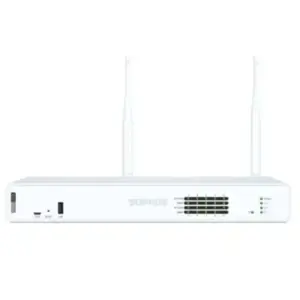
FortiDDoS 2000E is designed for organisations that cannot treat denial-of-service protection as an afterthought. The appliance is positioned inline between external connectivity and protected infrastructure, where it can inspect traffic, establish behavioural baselines and mitigate attack traffic before overloaded servers, DNS platforms, firewalls or application services become unavailable. Its 2U hardware, high-speed optical interfaces and purpose-built mitigation architecture make it relevant to data centres, service providers, hosting environments and large enterprises with substantial internet exposure.
A buyer should not choose this model from throughput alone. Link design, packet rate, attack profile, bypass architecture, redundancy, transceiver selection, firmware support and product lifecycle all affect whether the 2000E remains the right fit. FourTeck can help define those details before a quotation is prepared.
Planning a 2000E deployment?
Share your protected bandwidth, interface speeds, expected attack volume, redundancy plan, deployment location and support expectations. FourTeck can use those details to check whether the requested appliance, a newer FortiDDoS model, or a hybrid mitigation design is the more appropriate route.
Direct answer for buyers
Fortinet FortiDDoS 2000E is a purpose-built, inline DDoS mitigation appliance for high-bandwidth networks. It is mainly used to inspect traffic continuously, detect unusual traffic behaviour and suppress volumetric, protocol and selected application-layer denial-of-service activity before critical services are overwhelmed. It is most relevant to data centres, internet service providers, hosting providers, large enterprises and organisations operating important public services. Before proceeding, confirm whether the exact FDD-2000E is still orderable for the destination, whether support can be attached or renewed, the required 10GE/40GE/100GE optics, bypass design, traffic profile, expected attack scale and whether a newer FortiDDoS platform provides a better lifecycle fit.
What the FortiDDoS 2000E does
A conventional firewall can become one of the systems a large DDoS campaign exhausts. The 2000E is designed for a different task: continuous observation and mitigation of denial-of-service traffic at very high packet rates. It works inline and has no requirement to become a routed hop in the protected data path. This architecture allows the appliance to evaluate traffic behaviour while preserving the network design around it.
Fortinet documents detection and mitigation functions across Layer 3 and Layer 4 floods, TCP state anomalies, UDP reflection activity, DNS and NTP attacks, HTTP-related events, IP reputation controls and extensive logging and reporting. Some functions vary by platform generation, software release or optional subscription. Buyers therefore need to separate the capabilities of the FortiDDoS family from those specifically available on the E-Series appliance and its supported firmware branch.
Who should seriously consider it
The 2000E is not a typical branch-office security appliance. Its scale, port mix and 2U form factor point toward environments where internet-facing services carry substantial throughput or where attack packet rates can exceed the comfortable operating range of general-purpose security devices. Suitable buyers may include colocation operators, hosting companies, carriers, universities, financial institutions, government platforms, large e-commerce estates and enterprises that run revenue- or mission-critical public services.
It is less attractive when the protected internet circuit is small, when the organisation has no operational capability to manage an inline DDoS appliance, when a cloud-only mitigation service already meets the risk profile, or when procurement policy requires a platform with a clearer current ordering path. In such cases, the requirement should be re-sized instead of forcing the requested model into the design.
Business problems this appliance is intended to address
Public services overwhelmed by floods
Large packet or connection floods can consume upstream devices, server resources or application capacity. FortiDDoS is intended to identify and mitigate attack traffic while permitting legitimate traffic to continue where available bandwidth allows.
Small-packet pressure on security infrastructure
Packet-per-second load is often more important than headline bandwidth. The 2000E is documented at up to 77 Mpps inspected packet throughput, allowing architects to evaluate both Gbps and Mpps rather than relying on a single throughput number.
DNS and NTP amplification exposure
The platform includes specific DNS and NTP inspection and mitigation functions. This matters for organisations operating authoritative or recursive DNS services and for environments exposed to reflection or amplification traffic.
Need for on-premise visibility
Local mitigation provides direct telemetry about attack vectors, affected services and dropped traffic. For larger attacks that can saturate the incoming circuit, Fortinet also documents an open hybrid-cloud mitigation approach, so upstream diversion can be part of the design.
Core capability band
Fortinet’s current data sheet lists up to 90 Gbps maximum inspected throughput for the 2000E. Actual results depend on traffic and deployment conditions.
Useful when evaluating small-packet floods, where packet processing capacity can become the decisive sizing factor.
The data sheet separates inspected enterprise traffic from maximum mitigation capability. Buyers should not treat the larger mitigation figure as normal inspected application throughput.
The model supports high-speed SFP+/QSFP+/QSFP28 interface options and requires careful optical and bypass planning.
Is the FortiDDoS 2000E a good fit?
| Requirement | Suitable when | Confirm before ordering |
|---|---|---|
| High-bandwidth inline mitigation | Protected services run across 10GE, 40GE or 100GE links and require dedicated inspection. | Real peak throughput, packet rate and oversubscription assumptions. |
| Large packet-rate attacks | Risk includes small-packet UDP, ICMP, SYN or mixed-vector floods. | Expected Mpps, not only Gbps. |
| DNS service protection | Authoritative or recursive DNS availability is business-critical. | DNS topology, QPS, resolver/authoritative role and optional reputation requirements. |
| Hybrid mitigation | On-premise mitigation is desired but upstream saturation remains a risk. | Cloud scrubbing provider, diversion method, GRE return path and operational procedures. |
| New procurement in 2026 | Only after the exact hardware and support path is confirmed. | Current Fortinet ordering status, lifecycle dates, support eligibility and comparison with 2000F/other current models. |
Verified FortiDDoS 2000E technical information
The values below are taken from Fortinet’s current FortiDDoS data sheet for the exact 2000E / 2000E-DC platform. They are planning figures, not guaranteed field performance. Fortinet states that published performance is measured under internal lab conditions and that real results can vary with network variables, traffic composition, configuration and environment.
| Fortinet FortiDDoS 2000E specification summary | |
|---|---|
| Brand / Model | Fortinet FortiDDoS 2000E, device SKU FDD-2000E |
| Product type | Inline DDoS protection appliance |
| LAN interfaces | 8 x SFP+ 10GE / SFP GE plus 2 x QSFP+ 40GE or QSFP28 100GE, subject to bypass and transceiver requirements |
| WAN interfaces | 8 x SFP+ 10GE / SFP GE plus 2 x QSFP+ 40GE or QSFP28 100GE, subject to bypass and transceiver requirements |
| Passive optical bypass | 8 ports / 2 links, 1/10/40/100GE, 1310nm / 1550nm |
| Storage | 1 x 960 GB SSD |
| Form factor | 2U rack appliance |
| Power supply | Dual redundant hot-swappable AC on 2000E; 2000E-DC is a separate DC variant |
| Maximum inspected throughput | 90 Gbps |
| Inspected packet throughput | 77 Mpps |
| Maximum mitigation | 280 Gbps / 350 Mpps |
| SYN flood mitigation | 55 Mpps (SYN in + cookie out) |
| Simultaneous TCP connections | 25 million |
| Simultaneous sources | 25 million |
| Session setup/teardown | Greater than 3000 kcps |
| Latency | Maximum / typical less than 50 microseconds / less than 10 microseconds |
| Mitigation response time | First packet to under 2 seconds in the current data sheet |
| Advanced mitigation | DNS and NTP on this E-Series platform |
| DNS / NTP queries per second | 7 million / 6 million |
| Open hybrid cloud mitigation support | Yes |
| Input voltage | 100-240V AC, 50-60Hz for the AC model |
| Power consumption | 314 W average / 580 W maximum |
| Operating temperature | 0°C to 40°C |
| Dimensions / weight | 88 x 438 x 560 mm; 20 kg |
| Current availability guidance | Contact FourTeck to confirm lifecycle, support eligibility and supply. Fortinet’s 2026 ordering guide does not list the 2000E among its current order-information device SKUs. |
Configuration, lifecycle and compatibility dependencies
The biggest procurement risk with an older enterprise security appliance is assuming that a published specification automatically means the item is still a straightforward new purchase. Fortinet continues to publish technical information for the FortiDDoS 2000E and its model page still displays the platform. However, Fortinet’s March 2026 ordering guide lists the 200F, 1500F, 1500F-LR, 2000F and 3000G for current device ordering and does not include the 2000E in the order-information table. That does not by itself prove an end-of-support date, but it is a clear reason to verify the exact lifecycle and support position before a purchase order is issued.
Optics are another major dependency. The appliance uses SFP+/SFP and QSFP+/QSFP28 interfaces, and the bypass architecture introduces wavelength, fibre type, reach and transceiver matching considerations. A design should specify both sides of each protected link, the required link speed, fibre mode, connector type, transceiver reach and whether an optical bypass module is part of the bill of materials. A device that is correctly sized for traffic but paired with unsuitable optics can still fail the deployment objective.
Security services also need to be separated from core mitigation. Fortinet documents optional IP and Domain Reputation subscriptions, while the base FortiDDoS platform does not require those services for core enterprise DDoS mitigation. Buyers should decide whether the project needs reputation enrichment, the support level to be attached, logging integration, FortiAnalyzer or SIEM forwarding, high availability, hybrid cloud escalation and any installation or configuration assistance. FourTeck can help translate these dependencies into an orderable bill of materials.
A practical purchase and deployment journey
Measure the protected traffic
Collect peak and average Gbps, packet rate, connection rate, DNS/NTP query rate, traffic direction, application mix and known attack history. Do not size from internet circuit speed alone.
Map physical links
Document each ISP handoff, switch or router connection, fibre type, interface speed, transceiver reach, redundancy path and rack/power constraints. This is where the correct optics and bypass design are established.
Confirm the product path
Verify whether FDD-2000E can still be supplied and supported for the required region and term. If not, compare the requirement with currently orderable FortiDDoS alternatives rather than substituting blindly.
Define implementation scope
Agree who will rack and cable the appliance, establish protection profiles, baseline traffic, integrate logging, perform failover or bypass testing, document operations and hand over monitoring procedures.
Performance that must be interpreted correctly
The 2000E has several different performance numbers because DDoS protection is not a single workload. The 90 Gbps inspected-throughput figure is the important reference for normal enterprise traffic being analysed by the platform. The 77 Mpps figure shows packet-processing scale and is especially useful for evaluating small-packet attacks. The larger 280 Gbps / 350 Mpps maximum mitigation figure describes the appliance’s attack mitigation capacity under conditions defined by the vendor; it should not be used as a substitute for inspected application throughput when sizing legitimate production traffic.
This distinction matters in real designs. A 40 Gbps internet link can produce dramatically different load depending on packet size, protocol mix, connection churn and the proportion of encrypted or application traffic. A relatively modest bandwidth flood made up of tiny packets may push packet processing harder than a much larger flow of full-size packets. Likewise, a service provider protecting many customer networks must account for simultaneous sources, concurrent TCP connections, service protection profiles, traffic asymmetry and operational overhead.
Fortinet’s data sheet lists 25 million simultaneous TCP connections, 25 million simultaneous sources and session setup/teardown above 3000 kcps for the 2000E. These figures help frame scale, but the correct design should use observed production data and a reasonable growth margin. FourTeck can review traffic samples and requirements so that the proposal is based on the service being protected rather than on the largest number in a table.
Visibility, baselining and operational control
DDoS mitigation becomes operationally useful only when the security team can distinguish a genuine service surge from hostile traffic and can understand what the appliance did during an event. FortiDDoS continuously builds traffic baselines and uses them to identify abnormal behaviour. Administrators can work with protection policies, thresholds, blocklists or allowlists, protocol and port controls, and event information rather than waiting for a perimeter firewall or server to fail under load.
Fortinet documents filterable attack logs, summaries for top attacks and attackers, attacked subnets, protocols, TCP and UDP ports, DNS activity and other event categories. It can generate reports and export event information to external systems through mechanisms such as syslog, SNMP and REST APIs. This is important in a mature security operations process because an attack should not end with a dashboard screenshot. Teams often need evidence for incident review, ISP escalation, service-owner communication, threshold tuning and future capacity planning.
The 2000E belongs to the E-Series branch of FortiDDoS, so operations teams should also verify which FortiDDoS software release is supported on the appliance and whether the desired feature exists on that platform. Newer F-Series documentation contains functions that may not apply to the 2000E. A procurement review should therefore include the intended firmware branch, management integrations and security-service subscriptions rather than copying a feature list from a newer model.
Hybrid protection for attacks larger than the incoming link
On-premise mitigation cannot restore bandwidth that has already been consumed upstream. If an attack is larger than the organisation’s internet circuit, packets may be dropped in the provider network before they ever reach the local FortiDDoS appliance. This is why the platform’s open hybrid mitigation support is an important architectural capability rather than a marketing add-on.
A hybrid design combines local, always-on detection and mitigation with an upstream scrubbing or diversion service. Local protection can react to attacks within available link capacity and provide detailed visibility. When an event threatens to saturate upstream connectivity, a cloud or provider-based service can divert traffic, scrub it and return clean traffic. Fortinet documents attack-signalling and GRE-related hybrid workflows as part of the FortiDDoS platform, but the actual integration depends on the selected service provider, routing design, contractual service and operational process.
Buyers should decide who is responsible for diversion, what threshold triggers escalation, how routing changes are controlled, how clean traffic returns, whether asymmetry is acceptable, who validates the event and how the service is tested before production. These decisions often have more impact on resilience than simply purchasing a high-throughput appliance. FourTeck can include hybrid design questions in the sizing and quotation discussion when the protected links or risk profile justify it.
Where the FortiDDoS 2000E can fit well
Data centres and colocation facilities
Operators protecting multiple internet-facing services may value high packet-rate inspection, multiple high-speed interfaces, granular service policies and hybrid cloud signalling. Sizing should consider aggregate customer traffic and the effect of simultaneous attacks.
Internet and hosting service providers
Providers can use dedicated DDoS mitigation to protect shared infrastructure, subscriber services, DNS platforms or hosted applications. Network topology, BGP strategy, protection domains and customer separation need careful design.
Financial and public-service platforms
Banks, payment services, government portals and public digital platforms may need stronger service-availability controls because downtime affects customers or operational obligations. High availability and upstream escalation are usually part of the conversation.
Large e-commerce and SaaS environments
Businesses dependent on continuous online transactions may use local mitigation as one layer in a broader availability architecture. Application delivery, CDN, WAF, firewall and cloud-scrubbing services should be considered together rather than as isolated devices.
Integration and operational considerations
An inline DDoS appliance changes the traffic path even when it is transparent at the IP layer. The network team needs a documented insertion point, maintenance procedure and failure plan. Optical bypass can help preserve connectivity during certain appliance failures or maintenance events, but bypass itself must be designed correctly and tested. The project should specify whether bypass is fail-open or fail-closed for the chosen topology, how protected links are paired, what happens during power loss, and how the team verifies service continuity.
High availability should also be treated as a system design, not just a checkbox. Fortinet states that FortiDDoS supports HA, but the correct topology depends on link count, protection policies, switches or routers around the appliance and the organisation’s tolerance for maintenance or failure. If two devices are required, the bill of materials must account for both appliances, optics, bypass components, rack space, power feeds and support.
Monitoring should connect to the organisation’s security and network operations tools. Syslog, SNMP and API workflows can feed broader incident management, while Fortinet ecosystem integration may be relevant for customers already using FortiAnalyzer, FortiSIEM or FortiGate. The exact integration supported by the 2000E software release should be confirmed before design approval. For wider cybersecurity planning, buyers can review FourTeck firewall and security solutions and discuss how DDoS protection fits alongside perimeter, application and monitoring controls.
Questions to resolve before requesting a quotation
What is the highest legitimate inbound and outbound throughput, and what growth is expected over the next three years?
What packet-per-second rate is normal during peaks, and what has been observed during attacks?
How many physical internet links must be protected, and at what speeds?
Are the links 10GE, 40GE or 100GE, and what fibre type, wavelength and reach are required?
Is the appliance intended for a new deployment, replacement or expansion of an existing FortiDDoS estate?
Is high availability required, and how should bypass behave during a failure or maintenance event?
Are IP Reputation or Domain Reputation services required in addition to core mitigation?
Will upstream cloud scrubbing or ISP-assisted diversion be part of the mitigation plan?
Which logging, SIEM, NMS or Fortinet management tools need to receive events?
What support term, renewal path and lifecycle horizon are acceptable under procurement policy?
Procurement checklist for FortiDDoS 2000E
How FourTeck can assist with sizing and procurement
A high-capacity DDoS appliance is usually one component of a larger availability design. FourTeck can help convert a business requirement into the technical details needed for a meaningful quotation: protected bandwidth, packet rates, link speeds, optical interfaces, number of protected segments, HA expectations, reputation services, management integrations, installation scope and support requirements. This reduces the risk of receiving a quote that contains the appliance but omits the items required to install it.
For buyers who already operate Fortinet security products, FourTeck can also review how DDoS mitigation should sit alongside firewalls, logging and broader security operations. The Fortinet solutions information from FourTeck can provide additional context for organisations standardising on the Fortinet ecosystem. If the 2000E no longer meets lifecycle or supply requirements, FourTeck can compare the same traffic profile against an alternative FortiDDoS model rather than treating a replacement SKU as automatically equivalent.
Installation and configuration scope should be agreed before order. A project may include rack placement, optical cabling, initial management setup, service protection profiles, traffic learning, thresholds, logging, HA, bypass validation, integration with operations tools, change-window support and handover documentation. The exact work depends on the customer’s network and should be stated in the quotation.
UAE availability and support guidance
Contact FourTeck to confirm current UAE availability for the exact FortiDDoS 2000E SKU. Availability can depend on lifecycle status, remaining channel supply, quantity, support eligibility, required optics, vendor lead time and whether the request is for a new appliance, replacement unit or existing installed base. The fact that technical documentation remains online should not be treated as proof that the model is currently orderable as a new device.
For a reliable UAE quotation, provide the destination, quantity, required support term, interface design and preferred project timing. FourTeck can coordinate the commercial and technical review, and can include installation or configuration scope when required. Buyers can use the FourTeck Dubai contact page to request current information.
Dubai, Abu Dhabi, Sharjah and Ajman project coordination
Organisations in Dubai, Abu Dhabi, Sharjah and Ajman can discuss the same requirement through one FourTeck planning process. The key information is not the city name but the deployment environment: data-centre location, rack and power readiness, number of internet circuits, ISP handoff, interface speeds, maintenance window, remote-access policy and whether onsite implementation is required. Delivery and project coordination can be discussed after the exact hardware, accessories, support and service scope are confirmed. No delivery date or installation schedule should be assumed until the bill of materials and destination requirements have been reviewed.
GCC Availability
FourTeck can assist organisations across the GCC with FortiDDoS requirement review, model selection, quotation coordination, licensing or subscription guidance, optical-interface planning and implementation scoping. A project in the United Arab Emirates may have different supply, support and delivery conditions from one in Saudi Arabia, Kuwait, Qatar, Bahrain or Oman, particularly when the requested hardware is from an earlier platform generation. For the FortiDDoS 2000E, buyers should provide the destination country, quantity, required hardware variant, link speeds, optics, support term and expected deployment window. Product availability, vendor lead times, service visits, licensing eligibility and support options can vary by country and requirement. FourTeck can also compare currently orderable FortiDDoS platforms when a new project needs a longer lifecycle horizon. For Kuwait-related projects, organisations may also review FourTeck Kuwait technology support.
Africa Availability
FourTeck can support procurement planning for organisations evaluating FortiDDoS solutions in African markets, including projects in East Africa and other regions where internet-facing services require dedicated DDoS protection. The correct approach begins with the destination country, protected bandwidth, interface type, quantity, support expectations and any requirement for onsite installation or remote configuration assistance. With a model such as the 2000E, lifecycle and replacement planning are especially important because supply or renewal conditions may differ from those of newer platforms. Shipping arrangements, local power and rack requirements, optics, vendor lead time and project conditions must be checked before a commitment is made. Buyers in Kenya can explore FourTeck Kenya, while wider regional enquiries can use FourTeck Africa for technology procurement and project discussions.
Related products and services to evaluate
FortiDDoS 2000F
Fortinet’s 2026 ordering guide lists FDD-2000F. A new deployment should compare its inspected throughput, connectivity, current software branch and support horizon against the 2000E requirement.
FortiDDoS 3000G
A higher-current-generation option in the 2026 ordering guide for designs needing 100GE connectivity and very high packet rates. It should be sized from actual traffic rather than treated as a universal replacement.
FortiGuard reputation services
Optional IP and Domain Reputation services can supplement core mitigation when the design requires reputation-based controls. Subscription term and compatibility should be confirmed for the selected platform.
Installation and configuration
Project scope can include rack and cabling coordination, initial configuration, protection policies, baselining, logging integration, HA/bypass testing and operational handover.
Why businesses contact FourTeck for FortiDDoS planning
The value of the conversation is practical clarification. FourTeck can help a buyer determine whether the requested model matches real traffic, whether an HA pair is needed, which interfaces and optics belong in the bill of materials, whether optional reputation subscriptions are required, what support term should be quoted, and whether the selected platform has an acceptable lifecycle position. That is particularly important for the FortiDDoS 2000E because the product remains documented technically while the current Fortinet ordering guide focuses on newer models.
FourTeck can also coordinate the commercial side with the implementation side. If the customer needs installation, configuration, migration from an older DDoS platform, integration with logging tools, hybrid cloud mitigation planning or ongoing support coordination, those items can be scoped alongside the hardware rather than discovered after delivery. For broader technology planning, visit FourTeck Universal Technology.
What buyers are trying to understand before they shortlist this model
Most practical research around FortiDDoS 2000E falls into a few recurring areas: how much traffic it can really inspect, whether the 280 Gbps number means it can carry 280 Gbps of normal application traffic, what interfaces are available, whether it still makes sense for a new purchase, how DNS protection works, what licenses are required and how an on-premise appliance helps when an attack is larger than the internet circuit. These are the right questions because each one can change the design or the commercial decision.
The 90 Gbps and 280 Gbps figures describe different workloads
For sizing normal protected traffic, the 90 Gbps maximum inspected throughput and 77 Mpps inspected packet throughput are the more useful values. The 280 Gbps / 350 Mpps figure is the maximum mitigation capacity documented by Fortinet. Treating 280 Gbps as ordinary application throughput would overstate the appliance’s intended inspected-data rate. A quotation should therefore include the legitimate peak traffic and packet rate, not just an attack-size target.
Interface choice is part of the security design
The 2000E supports multiple 10GE SFP+/SFP port pairs and higher-speed QSFP+/QSFP28 connections. High-speed optics are not interchangeable simply because they fit a slot. Fibre mode, wavelength, reach, transceiver support and the optical bypass path need to match on both sides. Buyers should prepare a simple link map showing ISP/router side, protected-network side and each required speed before asking for a final bill of materials.
Core DDoS mitigation is not the same as optional reputation services
Fortinet’s ordering material describes IP and Domain Reputation services as optional rather than mandatory for enterprise DDoS mitigation. That means a buyer should not assume a specific reputation subscription is required merely to operate the appliance. The right question is whether the security policy benefits from those reputation feeds and whether the selected subscription can still be ordered or renewed for the exact E-Series platform.
A local appliance cannot prevent upstream saturation by itself
If a 200 Gbps attack hits a 20 Gbps internet circuit, the provider link can be congested before local equipment gets a chance to process the packets. On-premise mitigation is strongest when it is paired with an upstream response plan for attacks that exceed available bandwidth. Fortinet’s hybrid support can participate in such a design, but the cloud scrubbing service, routing workflow and operational trigger are separate project decisions.
Another frequent buyer concern is whether the FortiDDoS 2000E is still a sensible choice in 2026. The answer depends on whether this is an installed-base requirement or a net-new purchase. Fortinet continues to include the 2000E in its current FortiDDoS product specifications, but its March 2026 ordering guide lists the 200F, 1500F/1500F-LR, 2000F and 3000G as device SKUs and omits the 2000E from the order-information table. That creates a clear procurement checkpoint. Existing owners may still need support, expansion planning, accessories or replacement guidance; a new buyer should verify lifecycle and compare current platforms before committing.
Buyers also ask whether the 2000E can replace a firewall or web application firewall. It should not be evaluated that way. DDoS mitigation, firewall policy enforcement and application-layer security solve different problems. A robust internet-facing architecture may use several controls together: edge routing, DDoS mitigation, next-generation firewalling, WAF or application delivery controls, load balancing, CDN services and cloud scrubbing. The correct stack depends on the services being protected and the attack paths that matter.
For quotation preparation, the fastest route is to supply evidence rather than broad statements. Useful inputs include a network diagram, ISP circuit capacities, peak bandwidth graphs, packets-per-second data, top protocols, DNS/NTP load if relevant, required port speeds, rack location, AC or DC power needs, desired HA arrangement, current Fortinet products, logging destinations and the target support term. With those details, FourTeck can determine whether the 2000E request is technically coherent and commercially feasible, or whether another FortiDDoS model should be sized against the same requirement.
Decision questions buyers ask in real projects
Can the 2000E protect a 100 Gbps internet connection?
It has 100GE-capable QSFP28 interfaces, but interface speed is not the same as sustainable inspected application throughput. Fortinet lists up to 90 Gbps maximum inspected throughput and 77 Mpps packet throughput for the 2000E. A 100 Gbps physical handoff therefore requires traffic-profile analysis and design margin rather than a simple yes/no answer.
What if attacks regularly exceed the internet circuit?
Plan an upstream mitigation method. The local appliance can mitigate traffic that reaches it, but it cannot recover an ISP circuit already saturated upstream. A hybrid design can combine always-on local inspection with cloud or provider scrubbing when attack volume threatens link capacity.
Do I need FortiGuard IP or Domain Reputation?
Not for core enterprise DDoS mitigation according to Fortinet’s ordering guidance. The services are optional. They may still be useful for policy goals involving known malicious IP addresses or domains. Availability and subscription compatibility should be checked for the exact platform and term.
Why does lifecycle matter if Fortinet still publishes the specification?
Technical documentation can remain available after a product leaves a primary ordering path. Fortinet’s 2026 order-information table does not include FDD-2000E, so procurement should verify whether new hardware, support and relevant subscriptions can still be supplied for the required region and term.
What information makes a quote accurate?
Provide quantity, protected bandwidth, packet rates, link speeds, fibre type, number of protected port pairs, HA requirement, optical bypass requirement, rack and power details, desired support term, optional reputation services, installation scope and destination. These details drive both hardware selection and accessories.
Should an existing 2000E owner replace it immediately?
Not automatically. The decision depends on official lifecycle dates, current support entitlement, software requirements, risk tolerance, capacity growth and the cost of planned refresh. Existing owners should check their serial-number support status and compare replacement options before a maintenance or renewal deadline creates pressure.
Frequently asked questions about FortiDDoS 2000E
What is the Fortinet FortiDDoS 2000E used for?
It is an inline DDoS mitigation appliance used to detect and suppress high-volume, high-packet-rate and protocol-based denial-of-service attacks against internet-facing infrastructure. It is intended for data centres, service providers and large organisations rather than small branch environments.
What is the verified inspected throughput of the FortiDDoS 2000E?
Fortinet’s current data sheet lists up to 90 Gbps maximum inspected throughput and 77 Mpps inspected packet throughput for the 2000E. The same sheet lists maximum mitigation of 280 Gbps / 350 Mpps. Real performance depends on traffic and deployment conditions.
Which interfaces does the FortiDDoS 2000E provide?
The platform includes 10GE SFP+/SFP data interfaces and higher-speed QSFP+/QSFP28 interfaces supporting 40GE or 100GE designs, together with passive optical bypass capabilities. The exact optics and bypass components must be matched to link speed, fibre type and reach.
Does FortiDDoS 2000E require a security subscription for basic DDoS mitigation?
Fortinet’s ordering guide states that IP and Domain Reputation subscriptions are optional and are not required for enterprise DDoS mitigation. Support, subscription availability and compatibility should still be confirmed for the exact appliance and required term.
Can the 2000E protect DNS and NTP services?
Yes. Fortinet documents advanced DNS and NTP mitigation for the E-Series platform. The current data sheet lists up to 7 million DNS queries per second and 6 million NTP queries per second for the 2000E. Actual design should use observed service load and growth margin.
Is FortiDDoS 2000E still a current ordering model?
Fortinet still publishes 2000E specifications, but its March 2026 ordering guide does not list FDD-2000E in the current device order-information table. Buyers should therefore confirm lifecycle, support eligibility and supply with FourTeck before treating it as a new-purchase item.
What is the difference between FortiDDoS 2000E and 2000E-DC?
They share the same published platform performance and form factor, but the power configuration differs. The standard 2000E uses redundant hot-swappable AC power, while the 2000E-DC is the separate DC-powered variant. Confirm the exact SKU before ordering.
Can FortiDDoS 2000E work with cloud DDoS scrubbing?
Fortinet lists open hybrid cloud mitigation support for the platform. A real hybrid deployment still depends on the selected scrubbing provider, routing and GRE design, attack-signalling method, thresholds and operational procedures.
What should I send FourTeck to request a FortiDDoS 2000E quote?
Send the destination, quantity, protected bandwidth, packet rate, interface speeds, fibre and transceiver requirements, number of links, HA/bypass expectations, support term, optional security services and any installation or configuration scope. FourTeck can then confirm whether the requested model or a current alternative is the better fit.
Confirm the right FortiDDoS path before you order
If you are replacing an installed 2000E, expanding an existing environment or considering the model for a new project, FourTeck can review traffic, optics, lifecycle, support and deployment scope before preparing a quotation. This is especially useful when the requested model remains technically documented but is no longer shown in the latest Fortinet ordering table.

Reviews
There are no reviews yet.