

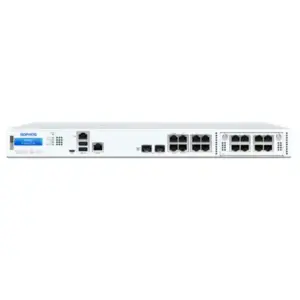
Fortinet FortiSandbox 500F in Dubai, UAE
The FortiSandbox 500F, model FSA-500F, is a dedicated 1U appliance built for organisations that want suspicious files analysed in an isolated environment rather than relying only on signatures or reputation. It can form part of a wider Fortinet security workflow, receiving objects for inspection and returning a verdict and threat information that other security controls can use. For buyers considering this model today, the technical question is only one part of the decision. Lifecycle position, current firmware support, required threat-intelligence services, virtual-machine capacity and integration compatibility should all be checked before a purchase is approved.
Before you request a quotation
Share your expected file volume, security products that will submit files, number of required analysis VMs, subscription term and preferred deployment date.
Because the 500F is no longer the entry model shown in Fortinet’s current hardware ordering line-up, confirm lifecycle, support and licensing before treating it as a standard new-project choice.
Direct answer: what is the FortiSandbox 500F?
The Fortinet FortiSandbox 500F is a dedicated advanced-threat-analysis appliance that isolates and examines suspicious files so security teams can identify malicious behaviour that may not be caught by conventional signature checks. It was designed for organisations needing local sandboxing with integration into Fortinet security workflows. The appliance uses four Gigabit Ethernet RJ45 interfaces, 1 TB of local storage and supports a maximum of six local VM clones. A buyer should confirm expected analysis volume, required VM and operating-system coverage, FortiGuard subscription requirements, integration compatibility, firmware support and present lifecycle status before proceeding. For a new 2026 project, it is also sensible to compare the 500F with current FortiSandbox G-series, virtual, PaaS and SaaS options.
What it does in a security architecture
Sandboxing is useful when a security control sees a file that cannot be confidently classified using signatures, reputation or other first-pass techniques. The suspicious object can be submitted to an isolated analysis environment where behaviour is observed and correlated with static characteristics and threat intelligence. The goal is not to replace firewalls, endpoint protection, email security or web application security. Instead, the sandbox provides deeper analysis that can improve confidence in a verdict and enrich downstream investigation or response.
FortiSandbox can participate in Fortinet Security Fabric workflows and the wider FortiSandbox family is designed to integrate with controls such as FortiGate, FortiMail, FortiClient, FortiWeb, FortiADC, FortiProxy and security-operations products. Exact interoperability for an FSA-500F should be validated against the firmware versions used in the buyer’s environment.
Who should consider this model?
The 500F can make sense when an organisation already owns the appliance, needs to extend an existing deployment, is replacing a failed unit like-for-like, or has a carefully verified opportunity to procure supported equipment. It may also be relevant to organisations that specifically need on-premises analysis because of data handling, privacy, latency, operational or policy requirements.
A new deployment should not automatically select the 500F simply because the model appears in older reference material. Fortinet’s current 2026 hardware ordering line-up is centred on the 500G, 1500G and 3000G. Buyers should compare support lifecycle, current feature entitlement, available VM licensing and expected project life before deciding whether 500F is still the appropriate commercial choice.
Business problems the appliance can help address
Unknown file risk
A file may look unfamiliar rather than clearly malicious. Sandboxing creates a controlled place to observe behaviour and add context before the object is trusted or escalated.
Evasive malware investigation
Advanced malware can try to avoid basic controls. Static and dynamic analysis together give analysts more evidence than a single detection method, although no security technology can guarantee detection of every threat.
Fragmented security workflows
When network, email, endpoint and application controls submit suspicious content independently, a central sandbox can provide a common analysis point and help standardise how verdicts are shared.
Need for local inspection
Some organisations prefer or require an appliance under their own operational control. An on-premises sandbox can support that model, subject to network design, licensing, data-governance and lifecycle requirements.
Core capabilities buyers should understand
The value of FortiSandbox comes from combining several analysis stages rather than relying on one signal. The platform can use static inspection, dynamic execution in virtualised environments, threat intelligence and policy-driven integration with other controls. Current FortiSandbox software also includes advanced AI capabilities through appropriate subscriptions; whether a particular 500F deployment can use a specific current feature depends on its firmware, entitlement and support position.
Static analysis
Examines file characteristics without depending only on execution. It can contribute rapid indicators and help reduce unnecessary dynamic-analysis load.
Dynamic analysis
Runs suspicious objects in isolated VM environments so behaviour can be observed. The 500F supports a maximum of six local VM clones.
Threat intelligence
FortiGuard intelligence and sandbox services can enrich file assessment. Ongoing access to engines, databases and advanced capabilities is subscription dependent.
Security integration
Objects and verdicts can participate in coordinated workflows with Fortinet products. Confirm exact software-version compatibility for the buyer’s environment.
Is the FortiSandbox 500F a suitable fit?
| Requirement | Suitable when | Confirm before ordering |
|---|---|---|
| On-premises sandboxing | Local analysis is required and the organisation will operate the appliance. | Lifecycle, support eligibility, firmware and subscription entitlement. |
| Moderate file analysis | Historic performance limits fit the expected workload. | Actual file mix, submission peaks and queue expectations. |
| Fortinet ecosystem integration | Existing controls can submit suspicious objects and use verdict data. | Exact product and software versions in the integration matrix. |
| Long new-project lifecycle | Only if support horizon and commercial availability are verified as acceptable. | Compare against 500G, VM, PaaS and SaaS before committing. |
| Growth beyond six local VM clones | Generally not the strongest match if local VM scale is expected to expand materially. | Current-generation appliance or alternate deployment model. |
Verified FortiSandbox 500F technical information
The figures below correspond to Fortinet documentation for the FSA-500F and are useful for sizing and replacement decisions. Performance results are vendor laboratory figures and real environments vary according to file types, submission patterns, analysis settings, VM configuration and software release.
| Brand | Fortinet |
| Product / model | FortiSandbox 500F / FSA-500F |
| Product type | On-premises advanced threat protection and sandboxing appliance |
| Form factor | 1U rack appliance |
| Network interfaces | 4 x GE RJ45 |
| Local storage | 1 x 1 TB |
| Local VM clone capacity | Maximum 6; older ordering documentation described two licensed/default VMs with expansion options |
| Sandbox pre-filter throughput | 4,500 files/hour |
| VM sandboxing throughput | 120 files/hour |
| Historic real-world effective throughput | 600 files/hour under the documented test profile |
| Sniffer throughput | 500 Mbps |
| MTA capacity | 5,000 emails/hour in the documented sizing reference; mail workflow and licensing should be confirmed |
| Power supplies | 1 x PSU |
| Power input | 100-240V AC, 50/60 Hz |
| Historic average / maximum power | 30.1 W / 76.3 W |
| Dimensions | Approximately 1.73 x 17.24 x 12.63 inches |
| Weight | Approximately 18.72 lb / 8.5 kg |
| Operating temperature | 0°C to 40°C |
| Threat-intelligence / advanced capabilities | Subscription dependent; confirm current entitlement and support |
| Current availability | Contact FourTeck for current UAE options and lifecycle verification |
Lifecycle, licensing and compatibility are part of the specification
A buyer evaluating the FortiSandbox 500F in 2026 should treat lifecycle information as a primary design input. Fortinet’s current ordering guide positions the 500G, 1500G and 3000G as the hardware appliance choices for new deployments. At the same time, current FortiSandbox 5.2 documentation still contains references to the 500F, including the supported maximum of six local clones. This combination means the model may remain relevant in installed environments even though it is not the entry hardware model shown in current ordering material.
For procurement, that distinction matters. A device can remain technically documented while its commercial ordering, support renewal, hardware replacement or licensing options differ from a current model. Before FourTeck prepares a final bill of materials, confirm the serial-status requirement, desired FortiCare level, Sandbox Threat Intelligence or Advanced AI subscription requirement, VM expansion need and target firmware. If the project depends on a specific integration, provide the exact FortiGate, FortiMail, FortiClient, FortiWeb, FortiProxy, FortiADC or security-operations version involved.
Practical buying rule: do not compare a used or old-stock 500F hardware price with a current-generation appliance quotation without also comparing supportability, subscription cost, analysis capacity and the expected remaining project life.
A practical purchase and deployment journey
Define the analysis sources
Identify which systems will send objects to the sandbox. This may include network security, email, endpoints, web applications, file shares or analyst-driven submissions. The source determines integration requirements and expected submission behaviour.
Estimate workload
Use expected suspicious-file volumes, peaks and file mix rather than total network throughput alone. Sandboxing capacity is strongly influenced by the number and complexity of objects that require deeper inspection.
Confirm VM coverage
Determine which operating-system environments are required for detonation and whether the maximum six local VM clones are sufficient. Legacy bundled VM rights and current subscription models should not be assumed to be identical.
Validate lifecycle and licensing
Check whether the proposed appliance and subscription can be ordered or renewed for the required term. For a new deployment, compare current G-series, VM, PaaS and SaaS alternatives.
Plan network integration
Define management connectivity, submission paths, DNS, routing, update access, time synchronisation and any sniffer or network-share workflows. Document firewall rules before installation.
Test and operationalise
After deployment, test sample submission, verdict return, logging, role access, alert handling and recovery procedures. Define who monitors queues and how malicious verdicts become response actions.
Capability focus: static and dynamic analysis should be sized together
One reason buyers look at a sandbox is to add behavioural evidence to an initial file assessment. Static inspection can examine structure, attributes and indicators without executing the file, while dynamic analysis observes what happens when the object runs in an isolated environment. These stages are complementary. A file can be quickly filtered or classified at an earlier stage, while uncertain objects consume the more expensive dynamic-analysis resources.
For the 500F, historic documentation lists a sandbox pre-filter throughput of 4,500 files per hour and a VM sandboxing throughput of 120 files per hour, with a documented real-world effective figure of 600 files per hour under Fortinet’s specified test mix. These figures should not be interpreted as a universal guarantee. An environment dominated by complex executables, documents requiring longer observation, encrypted content or bursts of simultaneous submissions can behave differently from a vendor test profile.
Sizing therefore starts with file behaviour, not merely WAN bandwidth. Ask how many files will reach the sandbox after upstream filtering, how long the business can tolerate a verdict queue and whether the six local clone limit allows the required operating-system diversity. Where demand is higher, a current larger appliance, clustered architecture or cloud-based service may be a better fit than trying to force a 500F into a workload it was not selected to handle.
Capability focus: integration turns a sandbox verdict into an operational workflow
A standalone sandbox can be useful for analyst-driven investigation, but many business deployments depend on automated submission and coordinated response. The FortiSandbox family is built to work with Fortinet controls across secure networking, email security, endpoint security, application security and security operations. A FortiGate can submit suspicious files encountered in network traffic; FortiMail can use sandbox analysis for suspicious email attachments; endpoint and application-security products can contribute additional submission points. Security-operations tools can then consume enriched intelligence for investigation and response.
The important buyer question is not simply whether two product names appear in the same ecosystem. Compatibility is version dependent. The exact FortiSandbox firmware, the connected product release and the chosen workflow all matter. A refresh project should document current FortiOS, FortiMail, FortiClient, FortiWeb, FortiProxy, FortiADC, FortiSIEM, FortiSOAR or FortiNDR versions before confirming the integration design.
FourTeck can help turn that inventory into a quotation and implementation scope. The result may be as simple as connecting an existing supported 500F to a FortiGate, or it may show that a current FortiSandbox model or subscription service provides a more maintainable path. That evaluation helps avoid buying hardware first and discovering later that the required integration depends on an unsupported software combination.
Capability focus: operational control, reporting and response
Sandbox deployment is not complete when the appliance starts accepting files. Security teams need an operating process for verdicts, job details, threat indicators, false-positive review, escalation and retention. FortiSandbox can provide analysis reports and threat context that help analysts understand why an object was classified as suspicious or malicious. The operational value depends on how that information is consumed by people and connected systems.
Define ownership before production use. Someone should monitor system health, storage, queues, subscriptions, update status and integration failures. Incident responders need to know what happens when a high-risk verdict is returned. Network and endpoint teams need to understand whether blocking or quarantine is automatic, policy driven or analyst approved. Compliance teams may need to know where analysed content is stored and how long reports are retained.
An on-premises appliance gives the customer more direct infrastructure control than a shared cloud service, but it also creates responsibilities for hardware lifecycle, backups, software maintenance and capacity planning. This trade-off is central to deciding between a 500F, a current hardware appliance, FortiSandbox VM, Fortinet-hosted PaaS or SaaS delivered through FortiGuard services.
Where the FortiSandbox 500F may be used
Enterprise internet edge
Organisations using Fortinet network security may submit suspicious downloads or other file objects for deeper analysis. The exact workflow depends on FortiGate, service entitlement and FortiSandbox software compatibility.
Email threat investigation
A sandbox can add behavioural analysis for suspicious attachments that pass initial email checks. Mail volume and MTA-related requirements should be sized carefully rather than assuming a nominal appliance figure covers every email environment.
SOC and malware analysis
Security teams can use sandbox findings to enrich investigations, understand behaviour and share indicators. Analysts still need procedures for triage, escalation and correlation with endpoint and network telemetry.
Sensitive on-premises environments
Where policy favours local inspection, hardware deployment may be preferred to a shared service. Data handling, update connectivity, licensing and lifecycle obligations must still be reviewed.
Application upload inspection
Web or application-security systems may benefit from sandbox analysis when users upload files. Validate the supported integration and design for acceptable user-facing delay and asynchronous verdict handling.
Existing 500F estates
The model may be especially relevant for organisations already operating it and planning renewal, expansion or replacement. In that scenario, compare the cost of sustaining the platform with moving to a current-generation or cloud model.
Integration and operational considerations
The physical installation is only one small part of a sandbox project. Management access, DNS resolution, routing, update connectivity, time synchronisation and access to any submission networks must be planned. If the appliance will receive traffic from a SPAN/TAP path, file share, API-driven source or integrated Fortinet product, document how that source reaches the appliance and whether any firewall rules or proxy exceptions are required.
Consider administrative separation as well. Security analysts may need report and job visibility while infrastructure administrators manage interfaces, backups and software updates. Least-privilege access and change control become more important when the sandbox can influence automated response workflows. A high-risk verdict should trigger a defined action, not an improvised reaction.
Power and rack planning are straightforward but should still be documented. The 500F is a 1U appliance with a single power supply, which is different from larger models that may offer redundant power. If infrastructure resilience requirements expect dual power feeds or field-replaceable redundancy, that can become a reason to select a different platform even if analysis throughput is otherwise adequate.
For organisations with strict data-residency or offline requirements, confirm how threat-intelligence updates, cloud lookups and licensing operate under the intended network policy. Do not assume that an on-premises appliance means every optional function works with no external service dependency.
Questions to resolve before requesting a quotation
List the Fortinet and third-party controls, manual analyst submissions, file shares or traffic-inspection sources.
Use average and peak submission rates and describe the typical file mix.
VM requirements determine whether the 500F’s local clone limit is acceptable.
Confirm current threat-intelligence, Advanced AI, VM and support entitlement options for this model.
A long project horizon may favour a current-generation product even if 500F hardware can be sourced.
Define rack installation, configuration, integration, testing, migration and documentation expectations.
FortiSandbox 500F procurement checklist
How FourTeck can assist with selection and deployment planning
FourTeck can help convert a broad request for “FortiSandbox 500F” into a procurement specification that is useful to IT, security and purchasing teams. The first step is to identify whether the project needs an exact 500F, a renewal for an installed appliance, a replacement for failed hardware or simply an on-premises FortiSandbox capability. That distinction avoids unnecessary effort around a model that may not be the most suitable current option.
For an exact-model requirement, FourTeck can coordinate checks around current UAE availability, applicable support or subscription options, VM requirements and quotation details. For a new project, the team can help compare the older 500F with current FortiSandbox hardware, virtual appliance, Fortinet-hosted PaaS and SaaS approaches. Installation and configuration services can be scoped separately where required.
Explore related FourTeck security products, review available technology services, or send the project requirement for a tailored quotation discussion.
UAE availability and support guidance
Contact FourTeck to confirm current UAE availability for the FortiSandbox 500F. Availability can depend on product lifecycle, quantity, condition, subscription eligibility and vendor or channel lead time. A quoted appliance should be evaluated together with the support and service term required for the project; hardware alone may not provide the ongoing engine, database or advanced feature access expected from a production sandbox deployment.
For a new deployment, share the target installation date, desired support horizon, software environment and any requirement for installation or configuration. FourTeck can then advise whether an exact 500F request is practical or whether a current FortiSandbox platform should be included as an alternative. Delivery and project coordination can be discussed after the exact requirement is confirmed.
Dubai, Abu Dhabi, Sharjah and Ajman project coordination
FourTeck can discuss FortiSandbox requirements for organisations operating across Dubai, Abu Dhabi, Sharjah and Ajman in one coordinated UAE project. Buyers can provide the installation location, quantity, desired software or subscription term, current Fortinet environment and whether professional services are needed. This makes it easier to prepare a consistent bill of materials and implementation scope instead of treating each location as an unrelated purchase. Current hardware availability, delivery timing, support entitlement and any on-site work should be confirmed in the quotation rather than assumed from a product page.
GCC Availability
Organisations planning FortiSandbox projects across the Gulf can ask FourTeck to review the technical requirement before the commercial request is finalised. A GCC project may involve the United Arab Emirates, Saudi Arabia, Kuwait, Qatar, Bahrain or Oman, but the same appliance and license assumptions should not automatically be applied to every destination. Model availability, support eligibility, licensing, delivery schedules, installation scope and vendor lead times can vary by country, quantity and project requirement. For the FortiSandbox 500F in particular, lifecycle verification is important because current Fortinet ordering material uses newer G-series hardware for new appliance deployments. Share the destination country, exact model or acceptable alternative, quantity, subscription term, connected security platforms, deployment location and required timeline. FourTeck can then coordinate quotation guidance, model comparison, configuration scope and regional project planning. For Kuwait-focused requirements, buyers can also review FourTeck Kuwait technology support.
Africa Availability
FourTeck can assist organisations evaluating FortiSandbox technology for projects in Africa by clarifying the exact appliance or service model, subscription needs, accessories, network integration and support expectations before procurement. Requirements in East Africa, West Africa, Southern Africa or Central Africa may differ in available channel options, delivery routes, power considerations, subscription region and implementation scope. For an older appliance such as the FSA-500F, buyers should pay particular attention to lifecycle, renewable support and whether a current FortiSandbox hardware or cloud model offers a better long-term fit. Share the destination country, quantity, preferred deployment schedule, current Fortinet environment and whether installation or configuration assistance is expected. FourTeck can help structure the requirement and provide appropriate quotation guidance without assuming local inventory or a fixed delivery date. Regional resources include FourTeck Africa, with country-specific information also available through FourTeck Kenya and FourTeck Uganda.
Related options to evaluate with the 500F
FortiSandbox 500G
The current entry hardware appliance in Fortinet’s 2026 FortiSandbox ordering material. Compare it when the project is new, requires a longer support horizon or needs more current VM expansion options.
FortiSandbox VM
A virtual deployment can be appropriate when the organisation wants FortiSandbox capability without a dedicated hardware appliance and has suitable virtual infrastructure.
FortiSandbox PaaS
Fortinet-hosted dedicated sandbox resources may suit buyers who want more control than shared SaaS but do not want to operate local hardware.
FortiSandbox SaaS
Cloud-delivered sandbox services can reduce local infrastructure requirements, particularly where the primary integration is through FortiGate or Security Fabric services.
FortiSandbox subscriptions
Threat-intelligence, Advanced AI and VM-related subscriptions affect capability and lifecycle. The exact SKU should be confirmed for the model, firmware and term.
Installation and integration services
A service scope can cover rack and network preparation, base configuration, integration, testing, migration and operational handover where required.
Why businesses contact FourTeck for this requirement
The difficult part of an older-model security purchase is often not identifying the model number. It is determining whether that model still fits the commercial and operational requirement. FourTeck can help buyers clarify whether they truly need FSA-500F hardware, whether they are renewing an existing deployment, whether a subscription or VM expansion is the real requirement, and whether a current FortiSandbox model should be considered alongside it.
This requirement-led approach is especially useful for procurement teams that receive a short request from an engineering team but need enough detail to obtain comparable quotations. The discussion can cover model identity, quantity, software version, licensing term, deployment location, VM requirement, integration dependencies, installation scope and desired support horizon.
For broader cybersecurity planning, visit the Fortinet solutions resource or learn more about FourTeck. These links are intended to help buyers move from a model-only enquiry to a complete deployment and support discussion.
What buyers usually need to know before shortlisting a FortiSandbox 500F
People researching the FortiSandbox 500F commonly reach the model from several different starting points. Some already own the appliance and need a renewal or replacement. Others discover the model in an older bill of materials, quotation, support document or secondary-market listing. A third group is simply looking for an on-premises FortiSandbox and assumes the 500F is the current entry appliance. These situations require different answers, so the first useful step is to identify the project context rather than treating every enquiry as a new hardware purchase.
If you already own a 500F
Start with the serial and current software release, then identify the support and subscription expiry dates. Determine whether the need is a renewal, extra VM capacity, an Advanced AI service, a replacement appliance or a migration. An installed appliance can remain operationally relevant even when a newer generation appears in current ordering guides, but the renewal path must be checked rather than assumed.
If you found a low hardware price
A low secondary-market or old-stock price does not show the total cost of a production deployment. Check whether the appliance can obtain the subscriptions, updates and support needed for your use case. Also check condition, included licenses, transferability and whether the proposed unit has a practical support horizon. For security infrastructure, purchase price and deployable value are not always the same thing.
How much analysis can it handle? The historic FSA-500F data shows 4,500 files per hour for sandbox pre-filtering, 120 files per hour for VM sandboxing and 600 files per hour as a real-world effective figure under the documented test profile. Buyers should interpret these figures as sizing references rather than promises. File size, file type, analysis depth, VM selection and workload bursts affect the actual result. If the requirement is expressed only in Mbps, translate it into suspicious-file volume before selecting an appliance.
Does the 500F include the virtual machines you need? Older ordering information described the appliance with two licensed/default VM environments and expansion to a maximum of six. Current FortiSandbox licensing has evolved, and current software supports universal and subscription-driven VM approaches. The safest procurement method is to state the operating systems and number of analysis environments required, then confirm the correct entitlement for the exact 500F and firmware rather than relying on a historic bundle description.
Can it integrate with FortiGate and other Fortinet products? FortiSandbox is designed as part of Fortinet’s broader security architecture and can integrate with network, email, endpoint, web application and security-operations products. Compatibility is not determined by brand alone. The connected product release and FortiSandbox firmware matter. A project using an older FortiGate release may have different integration considerations from one running a current release, and the same applies to FortiMail, FortiClient, FortiWeb and other components.
Should a new buyer choose the 500F or the 500G? The current Fortinet ordering guide uses the 500G as the entry hardware appliance, while current technical documentation still references the 500F in supported hardware contexts. For a new project, the 500G deserves comparison because the newer model can provide a more current lifecycle and expanded VM architecture. A 500F may still be appropriate for exact replacement or a validated installed-base requirement, but a model comparison should be part of the purchase process.
Do you need hardware at all? FortiSandbox is available through hardware, virtual appliance, PaaS and SaaS approaches. Hardware gives the customer direct control of an on-premises appliance, which can be important for residency, compliance or predictable local processing. VM deployment can fit virtualised infrastructure. PaaS provides dedicated hosted resources without customer-operated hardware. SaaS can be simpler where a shared cloud service matches the security design. The operational model can matter more than the model number.
What information produces a useful quote? Send the exact product request, quantity, destination, existing Fortinet products and versions, estimated suspicious-file volume, VM requirement, subscription term, desired support horizon and whether installation or migration is included. This gives FourTeck enough context to quote the requested 500F where feasible and, where helpful, place a current alternative beside it for comparison.
Decision questions buyers ask when comparing sandbox options
Can I deploy a 500F today for a new project?
Possibly, but it should be treated as a lifecycle-sensitive requirement rather than a default current model. Check availability, support entitlement, subscription options and the project lifespan. Compare it with the 500G and non-hardware deployment choices before final approval.
What happens if six local VM clones are not enough?
The six-clone hardware limit is a strong sizing signal. If the required operating-system diversity or concurrent analysis capacity is larger, a newer FortiSandbox appliance, VM design or cloud-based model may be more appropriate than trying to build around the 500F limit.
Will it stop malware automatically?
A sandbox creates verdicts and threat intelligence; response depends on the integration and policy. Some Fortinet workflows can automate blocking or remediation, while other deployments use analysis for visibility and analyst decisions. The exact behaviour should be defined during design and testing.
Is a FortiGuard subscription optional?
The appliance can exist as hardware, but ongoing engines, databases, threat intelligence, advanced AI features and support depend on the applicable subscriptions and contracts. A production quotation should show the service term alongside the hardware requirement.
Can I use the 500F with newer Fortinet products?
Do not decide from product family names alone. Check the exact FortiSandbox firmware and the connected product release against current integration documentation. A compatibility review is especially important in environments that have upgraded some products but retained older sandbox hardware.
What should procurement compare besides price?
Compare support horizon, subscription cost, VM capacity, integration risk, power resilience, implementation effort and replacement path. An apparently inexpensive appliance can be a poor value if it cannot be supported for the period required by the business.
Frequently asked questions
What is the Fortinet FortiSandbox 500F used for?
It is an on-premises sandboxing appliance used to analyse suspicious files and identify malicious behaviour, including threats that may not be classified by initial signature or reputation checks. It can operate as part of a broader Fortinet security workflow.
What is the maximum VM capacity of the FSA-500F?
Current FortiSandbox 5.2 technical guidance lists a maximum of six local VM clones for the FSA-500F. The exact VM licensing and operating-system entitlement should be confirmed for the appliance, software version and subscription term.
How many network ports does the 500F have?
The documented hardware specification provides four Gigabit Ethernet RJ45 interfaces. Management and integration design should take account of the required network topology and any dedicated traffic or submission paths.
What storage is included?
The FSA-500F hardware specification lists 1 x 1 TB of local storage. Storage utilisation depends on analysis activity, reports and software operation; retention and maintenance settings should be reviewed during deployment.
Is the FortiSandbox 500F the current entry hardware model?
No. Fortinet’s 2026 ordering material uses the FortiSandbox 500G as the entry hardware appliance. The 500F remains referenced in current software documentation, so buyers should verify lifecycle and support before a new purchase.
Does the 500F require subscriptions?
Ongoing threat-intelligence updates, advanced analysis services, VM entitlements and FortiCare support are license or subscription dependent. The correct current SKU and term should be confirmed rather than inferred from an older bundle description.
Can FortiSandbox 500F integrate with FortiGate?
FortiSandbox is designed to integrate with FortiGate and other Fortinet Security Fabric products. Exact compatibility depends on the FortiSandbox firmware and the connected product version, so a version check should be part of the project design.
What should I provide for a Dubai quotation?
Provide the exact model request, quantity, deployment location, current Fortinet product versions, required subscription term, expected file-analysis load, VM needs, installation scope and desired project timeline. FourTeck can then confirm current UAE options.
Should I buy a 500F or move to FortiSandbox 500G?
For an installed-base replacement, the 500F may be relevant if lifecycle and support remain acceptable. For a new deployment, the 500G should be compared because it is the current entry hardware model and offers a more current platform and expansion path.
Can FourTeck assist with installation and configuration?
Installation, configuration, integration, testing and migration can be discussed as part of the quotation. The final service scope depends on the customer’s environment, connected products, access requirements and deployment location.
Request a FortiSandbox 500F availability and lifecycle check
If your requirement specifies FSA-500F, send FourTeck the quantity, deployment location, subscription term, current Fortinet environment and expected project lifespan. The team can help confirm whether an exact 500F procurement is practical, identify the required licensing and support scope, and compare a current FortiSandbox platform where that gives the project a more sustainable path. No stock, support entitlement or delivery date should be assumed until the exact requirement has been checked.

Reviews
There are no reviews yet.