

Direct answer for buyers
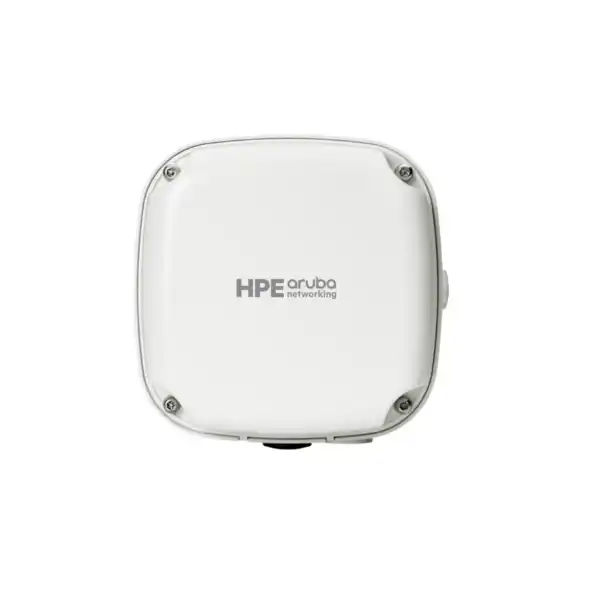
The AP-565EX is an outdoor-hardened HPE Aruba Networking access point for organisations that require Wi-Fi 6 coverage in hazardous or severe environmental conditions. It is mainly used to provide managed wireless access in industrial areas such as oil and gas sites, process environments, mining locations and similar facilities where hazardous-area certification can matter. It is best considered when an omnidirectional coverage pattern is suitable. Before proceeding, confirm the exact regional part number, site classification, mounting method, PoE budget, cabling and surge-protection design, wireless survey results, management platform, software compatibility, and any subscription or support requirement. Those checks are more important than choosing the model from headline throughput alone.
What the AP-565EX does in an industrial wireless design
Provides rugged outdoor Wi-Fi 6 access
The AP-565EX combines the wireless functions expected from an enterprise access point with an enclosure and certification profile intended for difficult outdoor and hazardous environments. HPE specifies 5 GHz and 2.4 GHz radios, each using 2×2 MIMO, together with Wi-Fi 6 capabilities such as OFDMA and multi-user operation. HPE states a maximum aggregate on-air data rate of 1.49 Gbps for the series using its stated HE80/HE20 configuration. Actual application throughput is lower and depends on client capability, channel plan, RF conditions, network load and regulatory settings.
The access point is therefore best viewed as part of a complete WLAN design rather than as a stand-alone speed upgrade. Industrial projects often need to balance RF coverage, device density, roaming behaviour, mounting height, metal structures, interference, hazardous zones and the available wired backhaul.
Uses internal omnidirectional antennas
The AP-565EX is the omnidirectional member of the 560EX hazardous-location pair. HPE lists built-in antennas with 5.4 dBi gain at 5 GHz, 3.2 dBi at 2.4 GHz, and 3.3 dBi for the Bluetooth/802.15.4 radio. An omnidirectional pattern can suit yards, work areas, process zones and open spaces where coverage is expected around the mounting point rather than concentrated in a single direction.
This distinction matters during selection. A buyer should not choose the 565EX merely because the model number is familiar. If the RF design needs a directional pattern, another model such as the AP-567EX may be more appropriate. Antenna type, mounting orientation and the physical surroundings should be validated during survey and design work.
Who should consider this access point
The AP-565EX is not a general-purpose choice for every outdoor WLAN. Its value is strongest where the site combines enterprise wireless needs with environmental or hazardous-location constraints. It may be relevant to organisations operating petrochemical facilities, oil and gas infrastructure, industrial processing plants, mining or extraction sites, utility facilities, ports, logistics yards, outdoor manufacturing areas, and other operational environments where network connectivity must be planned around safety classifications and physical exposure.
Teams extending centrally managed WLAN services into operational or outdoor hazardous areas.
Teams that need wireless connectivity while respecting site classification, mounting, power and environmental constraints.
Buyers who must confirm the right regional SKU, accessories, subscriptions, support and project scope before issuing a purchase order.
Business problems the AP-565EX can help address
Wireless coverage beyond office spaces
Industrial organisations often have users, handhelds, scanners and connected equipment operating where indoor APs are unsuitable. The AP-565EX is designed to move enterprise WLAN coverage into more demanding outdoor zones, provided the RF and hazardous-area design is correct.
Environmental exposure
HPE rates the platform for operation from -40°C to +55°C with full solar loading and lists IP66/67 water and dust protection. That makes environmental tolerance a core design feature rather than an afterthought, although installation quality and site conditions remain critical.
Hazardous-location requirements
The series carries Class 1 Division 2 and ATEX Zone 2 certifications. Buyers should still match the exact site classification and local compliance requirements to the equipment and installation method rather than assuming one certification covers every hazardous environment.
Operational consistency
A centrally managed access layer can help IT teams apply wireless policies, monitoring and lifecycle processes across indoor and outdoor areas. HPE Aruba Networking Central is one management option, subject to the selected architecture and subscription requirements.
Core capabilities that matter during evaluation
2.4 GHz and 5 GHz radios with 2×2 MIMO and Wi-Fi 6 efficiency features. Client mix and channel width determine practical performance.
Bluetooth 5 and 802.15.4/Zigbee support can assist location and IoT-related use cases, depending on platform design and application requirements.
Class 1 Division 2 and ATEX Zone 2 certification support deployments in defined hazardous locations; project engineers must confirm exact suitability.
HPE specifies 802.3at PoE+ for unrestricted operation. With lower 802.3af power, restrictions can apply depending on Intelligent Power Monitoring settings.
HPE documents WPA3, Enhanced Open, TPM-based credential protection and policy capabilities that depend on the wider HPE Aruba Networking architecture.
Unified AP deployment can support different operating and management approaches. The required software version, management platform and subscriptions should be confirmed before purchase.
Product-fit matrix
| Requirement | Suitable when | Confirm before ordering |
|---|---|---|
| Outdoor hazardous-area Wi-Fi | The location matches supported hazardous certification and environmental limits. | Site classification, local approvals and installation rules. |
| Omnidirectional coverage | The RF design needs coverage around the AP rather than a focused directional beam. | Survey results, mounting height, orientation and obstructions. |
| PoE-powered deployment | 802.3at PoE+ is available at the AP for full capability. | Switch PoE budget, cable distance, surge protection and grounding. |
| Centralised management | The organisation wants a managed Aruba WLAN architecture. | Platform design, software release and subscription or licensing requirements. |
| Industrial IoT adjacency | Bluetooth 5 or 802.15.4 capabilities are relevant to the wider design. | Application compatibility, security policy and platform integration. |
Verified technical information
The table below uses current HPE product and QuickSpecs information for the AP-565EX/560EX platform. Wireless values are maximum technical capabilities and are subject to regulatory domain, channel width, client capability and RF conditions. The regional part number shown is the RW model that HPE lists for broad international use and that appears in the HPE UAE store.
| Brand | HPE Aruba Networking |
|---|---|
| Product | AP-565EX hazardous-location outdoor access point |
| UAE / broad regional model guidance | AP-565EX (RW), manufacturer SKU R4W62A |
| Regulatory model number | APEX0565 |
| Wireless standard | Wi-Fi 6 (802.11ax), with support for earlier 802.11 generations as documented by HPE |
| Radio configuration | Dual radio; 5 GHz 2×2 MIMO and 2.4 GHz 2×2 MIMO |
| Maximum stated aggregate on-air rate | Up to 1.49 Gbps in HPE’s stated HE80/HE20 configuration |
| 5 GHz radio capability | Up to 1.2 Gbps with a 2-spatial-stream HE80 802.11ax client, subject to conditions |
| 2.4 GHz radio capability | Up to 574 Mbps with HE40 or 287 Mbps with HE20 for a compatible 2-spatial-stream client |
| Integrated antennas | Omnidirectional: 5 GHz 5.4 dBi; 2.4 GHz 3.2 dBi; Bluetooth/802.15.4 3.3 dBi |
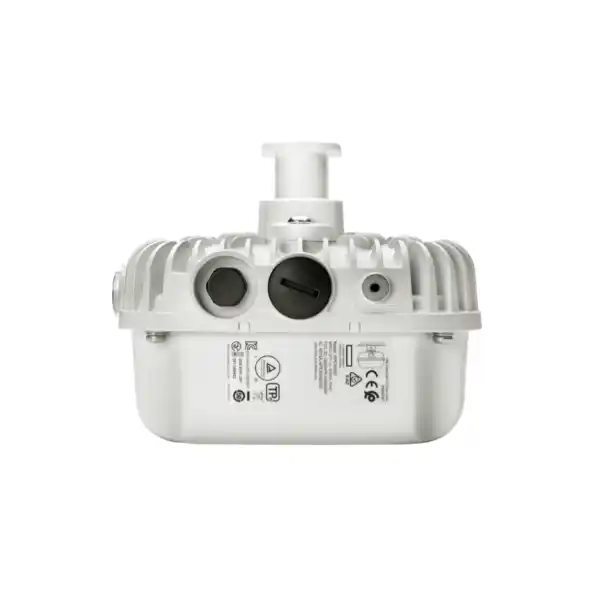
| Ethernet | One E0 10/100/1000BASE-T RJ-45 interface |
| Power | 802.3at PoE+ recommended for unrestricted operation; power source sold separately |
| Maximum power consumption | 15.6 W worst case, as specified by HPE |
| IoT radio | Bluetooth 5 and 802.15.4 radio with Zigbee support |
| Console | USB-C console interface |
| Environmental rating | IP66/67; operation from -40°C to +55°C with full solar loading |
| Hazardous-location certifications | Class 1 Division 2 and ATEX Zone 2 |
| Dimensions and weight | 16.5 cm W × 16.5 cm D × 13 cm H; 1.03 kg, excluding mount |
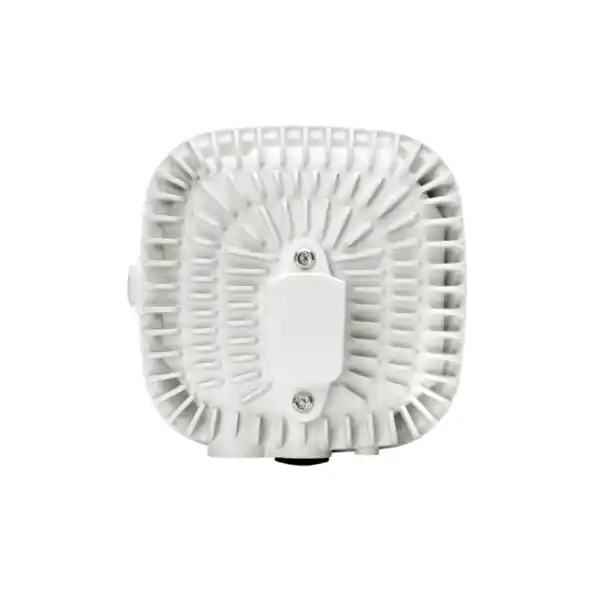
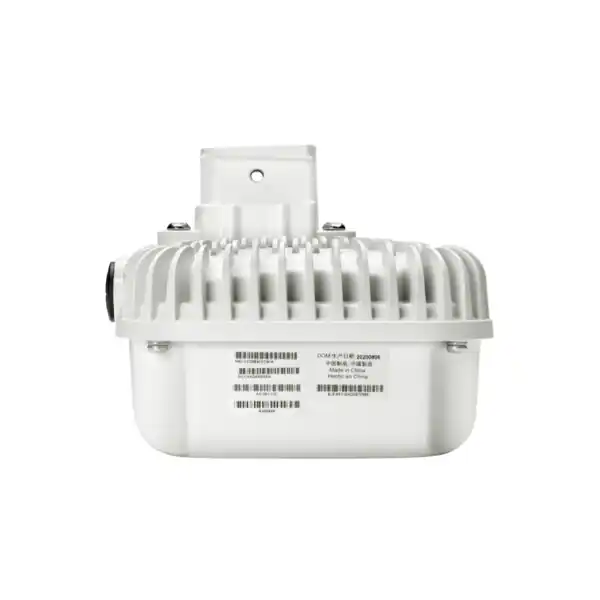
| Mounting | Optional outdoor mounting kits; the AP-56x chassis does not ship with a bracket according to current HPE QuickSpecs |
| Management and software | HPE Aruba Networking management architecture dependent; current QuickSpecs list minimum software baselines including 8.7.1.0 and 10.3.0.0 for the stated operating systems |
| Warranty guidance | HPE states a limited lifetime warranty for the series; confirm regional terms, entitlement and support requirements in the quotation |
Configuration, compatibility and scope dependencies
A correct AP-565EX purchase is more than the access point chassis. The regional SKU, mounting kit, PoE source, Ethernet infrastructure, management platform, software version, subscriptions, support options and site-specific hazardous-area requirements can all affect the final bill of materials. HPE’s current ordering information identifies R4W62A as the RW model and indicates that it is intended for regions outside several country-specific variants. UAE buyers should still have the destination and project requirement checked before purchase rather than assuming a global model is automatically correct for every tender or regulated site.
Mounting is a particularly important dependency. Current HPE QuickSpecs state that the AP-56x chassis does not ship with a bracket. HPE lists multiple pole, wall, hanging and tilt mounting options, including AP-OUT-MNT-V1A and AP-270 series brackets. The appropriate option depends on the structure, coverage plan, service access and approved installation method. Do not treat a mount kit as an optional convenience if the project requires it for physical installation.
Power design must also be checked. HPE specifies full operation with 802.3at PoE+. Operation from 802.3af can introduce restrictions based on Intelligent Power Monitoring settings and available power. For industrial installations, cable route, grounding, bonding, surge protection, outdoor connectors, enclosure transitions and switch-side PoE budget should be reviewed as part of the network design. FourTeck can help incorporate these dependencies into the quotation scope, but the site engineer or responsible authority should confirm hazardous-area installation compliance.
A practical purchase and deployment journey
Classify the environment
Document the hazardous-zone requirement, weather exposure, temperature range, corrosion concerns, mounting structure and any site engineering standards that affect equipment selection.
Validate RF coverage
Confirm whether omnidirectional coverage matches the design. Consider mounting height, metalwork, tanks, machinery, vehicle movement, client types, roaming paths and capacity expectations.
Build the bill of materials
Confirm the AP regional model, quantity, brackets, cabling, PoE capability, switch interfaces, management requirements, subscriptions and support. Include installation or configuration work if required.
Review software and management
Check the chosen WLAN architecture against supported software releases and determine whether HPE Aruba Networking Central or another supported management approach is required.
Quote and schedule
Request current UAE availability and vendor lead-time guidance after the technical requirement is fixed. Delivery and project dates should be based on the confirmed quotation, not assumed inventory.
Install, test and document
Use approved installation practices, validate RF behaviour, test roaming and client access, verify policy and management visibility, and record the final AP locations, software state and support details.
Wi-Fi 6 efficiency for operational environments
The AP-565EX uses Wi-Fi 6 technologies intended to improve how airtime is shared among compatible devices. HPE highlights OFDMA, bi-directional multi-user MIMO, Target Wake Time and related efficiency functions within the 560EX platform. These capabilities can be useful in industrial areas where the wireless client mix may include laptops, rugged handhelds, tablets, scanners, sensors and other connected endpoints. OFDMA can divide channel resources into smaller units for compatible devices, which can help reduce inefficient contention compared with older single-user scheduling behaviour.
Performance planning should remain realistic. A quoted PHY or aggregate data rate is not the same as application throughput. The result depends on client radio capability, channel width, signal quality, interference, protocol overhead, number of active devices, backhaul capacity and application behaviour. In hazardous industrial spaces, structures and process equipment can create reflections and shadowing that matter more than a laboratory speed figure. The RF survey should therefore establish where the access point will be mounted and which clients must work reliably in each zone.
For buyers upgrading from an older WLAN, the benefit may be operational consistency and improved efficiency rather than a simple speed multiplier. Client compatibility should be reviewed, especially if important devices use legacy Wi-Fi generations or specialised drivers. FourTeck can help translate client and coverage information into a model and quantity discussion before a quotation is issued.
Ruggedisation and hazardous-location design
Outdoor hardened and hazardous-location equipment is selected because the installation environment is part of the technical specification. HPE rates the 560EX series for -40°C to +55°C operation with full solar loading, IP66/67 water and dust resistance, salt spray testing, and wind survival up to 165 mph. These figures indicate that the platform is designed for exposure well beyond a conventional indoor WLAN. They do not remove the need for correct mounting, cabling, grounding, lightning and surge planning, or local engineering approval.
The hazardous-location certifications are also specific. HPE lists Class 1 Division 2 and ATEX Zone 2 certification. A site may use different classification terminology, have more restrictive zones, or require particular installation practices and documentation. Procurement should therefore obtain the project classification from the responsible engineering or HSE authority and compare it to the model’s current documentation. The safest commercial process is to make that requirement explicit in the request for quotation rather than relying on a generic phrase such as “explosion proof Wi-Fi”.
The AP-565EX’s sealed design can help reduce exposure to dust, moisture and airborne contaminants, but serviceability should still be considered. Mounting height, access permits, shutdown requirements, lifting equipment and inspection procedures can make a small AP expensive to revisit. Good planning aims to place, power and document the unit correctly the first time.
Management, policy and operational visibility
A rugged access point is most useful when it fits the organisation’s operating model. HPE describes the 560EX series as unified access points that can operate in supported standalone or gateway-based designs and can be managed through supported cloud or on-premises approaches. HPE Aruba Networking Central is one of the key options for consolidated visibility across wired and wireless networking. The exact architecture and subscription requirement should be confirmed for the customer’s installed environment and support policy.
HPE also documents security capabilities such as WPA3, Enhanced Open, TPM-based protection for credentials and keys, Policy Enforcement Firewall functions and Dynamic Segmentation features within the wider solution. Some policy behaviour depends on gateways, controllers, software releases, licensing and the complete architecture. Buyers should not assume that purchasing one AP automatically provides every platform feature without the required surrounding components and entitlements.
Operational teams should decide how alerts, configuration changes, firmware lifecycle, inventory, RF health, client troubleshooting and access policy will be handled before deployment. This is particularly important for remote or restricted industrial locations where a technician visit can be difficult. A centrally managed design may reduce routine site access, but it should be built around approved change procedures, secure management access and reliable upstream connectivity.
Ideal business environments and use cases
The strongest use cases are locations where the wireless requirement and environmental requirement overlap. The AP should be selected because it fits a real site condition, not simply because a rugged model sounds safer.
Outdoor process zones, field locations or support areas where the defined hazardous classification aligns with the AP’s certifications and the WLAN must serve mobile staff or connected devices.
Surface or industrial areas exposed to dust and weather where wireless connectivity is needed for operational mobility, subject to local environmental and safety requirements.
Facilities where corrosive, dusty or wet outdoor conditions and hazardous-zone rules require more specialised WLAN hardware than standard enterprise APs.
Open work areas that need omnidirectional coverage for handheld and operational clients, provided the hazardous-location model is justified and the RF survey supports the placement.
Integration and operational considerations
The Ethernet uplink is a key design point. HPE lists one 10/100/1000BASE-T E0 port, so the wired design should provide suitable bandwidth, PoE, VLAN configuration, network reachability and protection. Because the access point is installed outdoors or in an industrial area, cabling should be planned with the correct pathway, length, connector protection, grounding and surge controls. The AP’s industrial surge protection is useful, but it is not a substitute for a properly engineered site electrical and grounding design.
Wireless integration should include SSID design, authentication, user and device segmentation, roaming expectations, guest access if applicable, DHCP and DNS dependencies, firewall policy, monitoring, and the relationship between operational technology devices and corporate networks. Where IoT radios are part of the use case, confirm how Bluetooth or 802.15.4 data will be consumed and managed. The presence of an integrated radio does not guarantee compatibility with every sensor platform.
Finally, review lifecycle responsibilities. Decide who approves firmware, who monitors AP health, who owns the management subscription, how support cases will be raised, and how a failed unit would be accessed and replaced in a restricted area. These operational details often determine whether the WLAN remains supportable after the installation team leaves.
Buyer questions to resolve before ordering
Is the site actually Class 1 Division 2 or ATEX Zone 2?
Obtain the formal area classification. If the site uses another zone or division, the product and installation method must be checked against that requirement.
Is omnidirectional coverage the right pattern?
The 565EX distributes coverage around the AP. A directional design may call for another model and different mounting orientation.
What mounting kit is required?
The chassis does not ship with a bracket according to HPE’s current ordering notes, so wall, pole, hanging or tilt mounting must be selected separately.
Is 802.3at PoE+ available?
HPE specifies unrestricted operation with 802.3at. Lower power can create feature restrictions, so switch budget and cabling should be checked.
How will the AP be managed?
Confirm the existing Aruba architecture, software version, management platform and whether a Central subscription or another entitlement is needed.
What must be included in the quotation?
List AP quantity, regional model, mounts, licenses or subscriptions, support, installation, configuration, survey and delivery requirements rather than requesting only the chassis.
Procurement checklist for AP-565EX projects
- Confirm AP-565EX rather than AP-565 or AP-567EX.
- Confirm the RW regional model R4W62A is correct for the destination.
- Record required AP quantity and deployment locations.
- Validate hazardous-area classification and local approval requirements.
- Confirm omnidirectional antenna coverage is appropriate.
- Select the correct wall, pole, hanging or tilt mounting kit.
- Check 802.3at PoE+ availability and switch power budget.
- Review Ethernet cabling, grounding and surge-protection design.
- Confirm WLAN management architecture and supported software release.
- Confirm required HPE Aruba Networking Central subscription or other licensing.
- Specify installation, configuration and testing scope.
- Confirm support entitlement and warranty handling expectations.
- Request current UAE availability and vendor lead-time guidance.
How FourTeck can assist with model and project planning
FourTeck can support the commercial and technical preparation around the AP-565EX by reviewing the requested model, destination, quantity, mounting approach, PoE requirement, management method and service scope before a quotation is prepared. This is useful where procurement has received a model number from a consultant or tender but still needs to confirm accessories and regional details. It also helps prevent a chassis-only order from arriving without the bracket, subscription, support or configuration activity expected by the project team.
For wider WLAN work, buyers can review FourTeck networking and security products and technology services. Where the requirement includes design, installation or configuration, describe the expected deliverables in the request instead of assuming they are automatically included with hardware.
A useful request contains the project location, exact hazardous classification, AP quantity, network diagram if available, mounting details, switch model and PoE capacity, client types, management platform, preferred software architecture, required subscriptions, expected deployment window and whether onsite work is needed. That information makes the quotation more accurate and reduces follow-up questions.
UAE availability and support guidance
For UAE projects, contact FourTeck to confirm current availability of the HPE Aruba Networking AP-565EX and the required accessories. HPE’s UAE store identifies the RW AP-565EX under manufacturer SKU R4W62A but does not provide a fixed UAE selling price on the product page. Availability can depend on quantity, regional model, vendor lead time, current channel supply, support requirement and any related subscription. A project quotation should therefore be based on a confirmed bill of materials rather than on a price seen in another country or an older marketplace listing.
Delivery and project coordination can be discussed after the exact requirement is confirmed. If installation, configuration, survey, mounting or testing support is required, include it in the quotation request so the scope can be reviewed separately from hardware supply. Warranty and support entitlement should also be confirmed against the selected regional item and current HPE terms. For a project-specific check, use the FourTeck contact page and provide the destination, quantity and deployment requirement.
Dubai, Abu Dhabi, Sharjah and Ajman project coverage
FourTeck can coordinate requirement review and quotation discussions for organisations with projects in Dubai, Abu Dhabi, Sharjah and Ajman. The same product-selection discipline applies across these locations: confirm the hazardous-area classification, exact AP model, quantity, mounting hardware, PoE design, management platform, subscriptions and expected service scope. Project logistics, installation access and delivery schedules can vary by site, so they should be agreed after the requirement is documented. A multi-site buyer should provide a location-by-location quantity and note whether all sites share the same WLAN design or have different environmental, RF or support conditions.
GCC Availability
FourTeck can assist organisations planning HPE Aruba Networking AP-565EX deployments across the GCC with requirement review, model confirmation, quotation coordination, licensing discussion and deployment planning. Projects in the United Arab Emirates, Saudi Arabia, Kuwait, Qatar, Bahrain and Oman may have different regional procurement, regulatory, logistics and service conditions, so the correct country and project site should be identified before the bill of materials is finalised. HPE publishes several country-specific AP-565EX variants as well as the RW model, which makes destination confirmation particularly important for regional projects.
Product availability, vendor lead times, support options, management subscriptions, delivery schedules and service visits can vary by country, quantity and project scope. Buyers should share the destination country, required AP quantity, hazardous-area requirement, preferred deployment date, mounting approach and any installation or configuration expectations. For Kuwait-specific coordination, organisations can also review FourTeck Kuwait resources. No regional stock or fixed delivery date should be assumed until confirmed in the quotation.
Africa Availability
For African projects, FourTeck can help organisations evaluate whether the AP-565EX is the appropriate hazardous-location wireless option and can coordinate the commercial requirement around the correct regional model, accessories, management subscriptions and support needs. Industrial wireless deployments in East Africa, West Africa, Southern Africa or other regions may differ significantly in climate, site standards, logistics, regulatory expectations and service access. The customer should therefore provide the destination country, exact installation environment, quantity, desired project timing and whether installation or configuration support is part of the requirement.
Availability and fulfilment may depend on destination, quantity, vendor lead time, regional product variant, shipping arrangements, power and mounting requirements, local project conditions and applicable regulatory approvals. Buyers should not assume that a model sold in one market is automatically the right item for another. FourTeck’s Africa technology resource can be used as a regional starting point, while FourTeck Kenya and FourTeck Uganda may be relevant for selected East African requirements. Current scope and availability should always be confirmed for the specific project.
Related options and services to consider
AP-567EX directional alternative
Consider when the hazardous-location project needs a directional rather than omnidirectional antenna pattern. Confirm RF design and exact regional model before substitution.
Outdoor mounting kits
HPE lists multiple pole, wall, hanging and tilt options. Select the kit that matches the structure, orientation and maintenance requirements.
HPE Aruba Networking Central
Cloud-based management can be considered where it fits the organisation’s architecture. Subscription tier and term should be confirmed separately.
Wireless survey and design
Useful when AP placement, directional choice, capacity, roaming or industrial obstructions need validation before the hardware quantity is fixed.
Installation and configuration scope
Can be discussed where the buyer needs mounting coordination, WLAN configuration, integration, testing or documentation in addition to product supply.
Why businesses contact FourTeck for this type of requirement
Industrial WLAN procurement often fails at the boundaries between technical design and purchasing. A model may be correct but the regional SKU may be wrong; a rugged AP may be specified without the mount; the switch may not have the required PoE budget; or a management subscription may be omitted because each team assumed another party was supplying it. FourTeck can help bring these elements into one requirement review before quotation.
The practical assistance can include clarification of the requested model, review of HPE part-number guidance, accessory and mounting discussion, PoE and switch considerations, management and subscription questions, installation scope, configuration expectations, support coordination and delivery planning. These activities depend on the information supplied by the buyer and should be stated in the quotation where required.
For broader information about FourTeck and its technology focus, visit about FourTeck. For an AP-565EX project, the most useful next step is to send the exact site and bill-of-material requirements rather than a model name alone.
What buyers usually need to know before shortlisting the AP-565EX
Buyers researching this model commonly start with a simple question: is the AP-565EX just a rugged outdoor access point, or is it specifically intended for hazardous environments? The second description is more accurate. HPE positions the 560EX family for hazardous outdoor locations and documents Class 1 Division 2 and ATEX Zone 2 certification. That means the model is relevant where a project has an identified hazardous-area requirement, but the site’s engineering classification remains the controlling factor. A purchase request should state the exact zone or division and should not rely on a generic phrase such as “industrial Wi-Fi”.
The most important practical difference for many designs is antenna pattern. The AP-565EX uses internal omnidirectional antennas, while the AP-567EX uses internal directional antennas. This is not a cosmetic choice. In a yard or process area where devices move around the AP, omnidirectional coverage may fit. Along a corridor, fence line, roadway or focused zone, a directional pattern may be preferable. The decision should come from the RF design.
HPE publishes multiple AP-565EX regional variants. Current HPE QuickSpecs identify R4W62A as the RW model and state that it is available broadly outside several country-specific exceptions. The HPE UAE store also lists R4W62A. Procurement should therefore record the manufacturer part number in addition to the model family name, particularly for a tender or multi-country project.
Another frequent research question concerns power. The AP is powered through Ethernet, and HPE specifies 802.3at PoE+ for unrestricted operation. The access point can start with 802.3af power, but HPE documents potential restrictions depending on Intelligent Power Monitoring configuration. This makes switch selection and PoE budget part of the access-point decision. A buyer replacing older APs should not assume the existing switch power arrangement is adequate simply because the Ethernet connector is the same.
Mounting also affects the purchase. Current HPE ordering notes state that the AP-56x chassis does not ship with a mounting bracket. Several bracket options are available for pole, wall, hanging and tilt installations. In real projects, the correct bracket can affect antenna orientation, physical clearance, service access and the ability to meet site engineering standards. Including the bracket choice in the quotation avoids a common delay where hardware arrives but cannot be installed as planned.
Management and licensing questions should be answered before the purchase order. HPE describes unified operation and supports HPE Aruba Networking Central among its management choices, but Central is a subscription-based platform and the exact licensing need depends on the deployment architecture, feature set and term. Existing customers should identify their current Aruba environment, software release, gateway or controller design, Central tenant status and support model. New deployments should decide who will manage the APs and how firmware, monitoring and configuration changes will be handled.
Buyers also search for the practical meaning of “1.49 Gbps”. HPE’s series specification describes that as a maximum aggregate on-air data rate in its stated configuration. It should not be used as a promise of user throughput. A client device normally connects through one radio, and effective throughput is reduced by protocol overhead, signal conditions, contention and upstream network capacity. In industrial locations, metal structures, tanks, machinery and moving vehicles can create RF behaviour that makes survey data more useful than headline speed.
Finally, price research should be treated carefully. HPE’s UAE page requests a custom quote, while HPE stores in some other markets show indicative prices. Cross-market prices can differ because of currency, tax, regional channel structure, support, freight, stock and commercial policy. The useful approach for a UAE buyer is to confirm the exact R4W62A-based bill of materials, include mounts and subscriptions, state the quantity and service scope, and then request a current UAE quotation. That produces a decision-ready number rather than an isolated chassis price that may not match the final project.
Decision questions that shape the final design
Do we need hazardous certification, ruggedisation, or both?
These are related but different requirements. IP66/67 and temperature hardening address environmental exposure, while Class 1 Division 2 and ATEX Zone 2 relate to defined hazardous atmospheres. A project may require one, both or a different certification. Ask the site engineer for the formal classification and environmental envelope before selecting the AP.
Can the AP use our existing switch infrastructure?
Possibly, but verify the details. The AP-565EX has a 10/100/1000BASE-T uplink and HPE recommends 802.3at PoE+ for unrestricted operation. Check switch PoE budget, cable length, outdoor pathway, VLAN design, surge protection and any industrial network standards. If the switch provides only 802.3af, documented power restrictions can apply.
How many APs are required?
There is no reliable quantity based only on area in square metres. The number depends on client density, applications, required signal level, roaming, mounting height, obstacles, attenuation, interference and the shape of the zone. A survey or predictive design should be used when coverage or availability is operationally important.
Does the integrated IoT radio replace a separate IoT gateway?
Not automatically. The AP includes Bluetooth 5 and 802.15.4/Zigbee capability, but the application architecture determines whether those radios can be used directly. Confirm device protocol, management software, data flow and security requirements before treating the AP as an IoT integration component.
Should we choose Central management?
Central can be appropriate for organisations wanting cloud-based visibility and management, particularly across multiple sites. The decision should consider existing Aruba architecture, security policy, subscription term, operational ownership and required features. If Central is selected, the subscription should be included in the bill of materials rather than treated as an afterthought.
What information should be sent for a quotation?
Provide the destination, AP-565EX quantity, regional part-number preference, hazardous-area classification, mount type, switch and PoE details, management platform, subscription term if known, support requirement, installation scope and target deployment window. This lets FourTeck identify missing dependencies before commercial pricing is requested.
Frequently asked questions
Is the HPE Aruba Networking AP-565EX a Wi-Fi 6 access point?
Yes. HPE specifies the AP-565EX as an outdoor-hardened Wi-Fi 6 access point with 2×2 MIMO radios for 5 GHz and 2.4 GHz. Actual throughput depends on client capability, channel plan, RF conditions and regulatory settings.
What is the difference between AP-565EX and AP-567EX?
The main hardware-selection difference is antenna pattern. AP-565EX uses internal omnidirectional antennas, while AP-567EX uses internal directional antennas. The correct model should be chosen from the RF coverage design rather than by model number alone.
Which AP-565EX part number should be considered for the UAE?
HPE lists the AP-565EX RW model as R4W62A and shows it in the HPE UAE store. The destination, regulatory requirement and project bill of materials should still be confirmed before ordering.
Does the AP-565EX include a mounting bracket?
Current HPE QuickSpecs state that the AP-56x chassis does not ship with a bracket. HPE offers multiple outdoor pole, wall, hanging and tilt mounting kits, so the correct bracket should be selected as part of the order.
What PoE is recommended for AP-565EX?
HPE specifies 802.3at PoE+ for unrestricted operation. The AP can operate with 802.3af under some conditions, but Intelligent Power Monitoring may apply feature restrictions, so the switch PoE budget should be verified.
Can AP-565EX be managed with HPE Aruba Networking Central?
Yes, HPE identifies Central as a management option for the 560EX series. The required subscription, term, software architecture and feature scope should be confirmed for the customer’s environment.
Is AP-565EX suitable for hazardous industrial areas?
HPE lists Class 1 Division 2 and ATEX Zone 2 certification for the series. Suitability depends on the exact site classification, local requirements and approved installation method, so the project engineer should confirm compliance.
What environmental protection does the AP-565EX provide?
HPE specifies IP66/67 water and dust protection and an operating range of -40°C to +55°C with full solar loading. Installation practices, grounding, cabling and maintenance conditions still need to be engineered for the site.
How can I request a UAE quote for AP-565EX?
Send FourTeck the destination, quantity, hazardous-area requirement, required mounting kit, PoE and switch details, management platform, subscription needs, support scope and target deployment timing. FourTeck can then review the requirement and coordinate current UAE availability and quotation.
Plan the AP-565EX order around the full deployment
For a useful quotation, provide more than the model name. Include the project location, hazardous-area classification, quantity, mounting approach, switch and PoE details, expected coverage, management platform, subscription requirement, installation scope and target schedule. FourTeck can then help confirm the AP-565EX regional model, associated components and current UAE availability before you proceed.

Reviews
There are no reviews yet.