
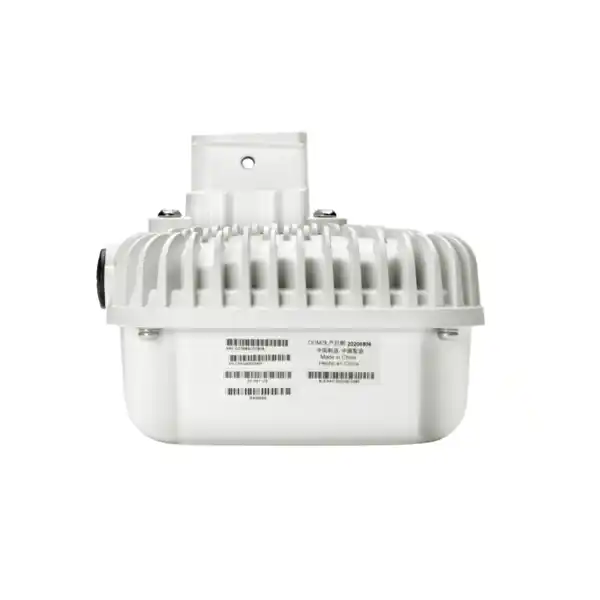
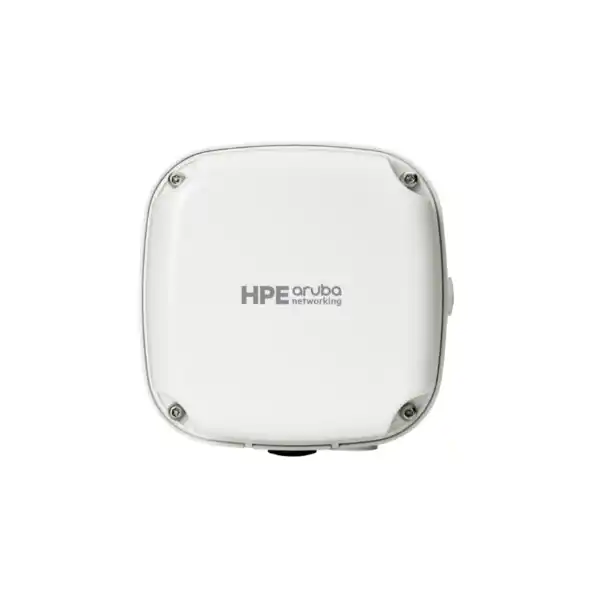
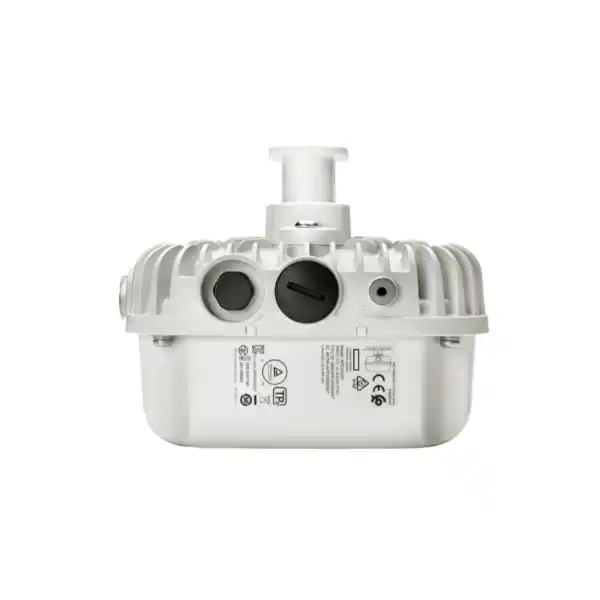
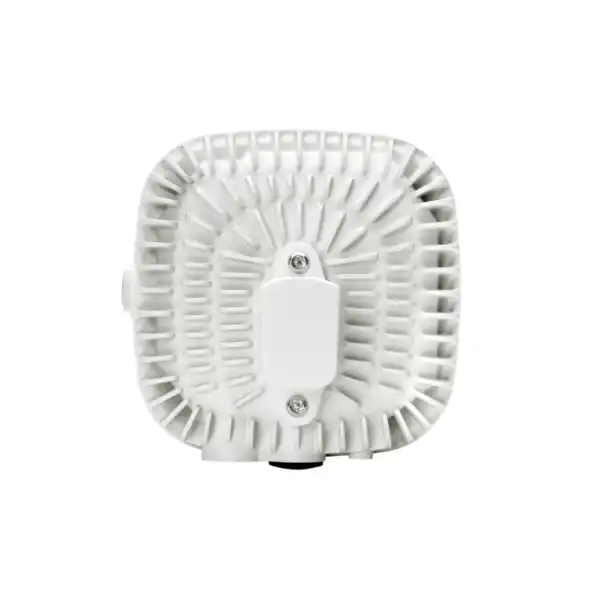
HPE Aruba Networking AP-567 in Dubai, UAE
The HPE Aruba Networking AP-567 is a hardened outdoor access point from the 560 Series that combines dual-radio Wi-Fi 6 with built-in directional antennas. Its design is aimed at organisations that need to project managed wireless coverage toward a specific outdoor area such as a yard, loading bay, building approach, transport platform, hospitality zone, warehouse edge, campus pathway or operational compound. The key buying decision is not simply whether Wi-Fi 6 is required; it is whether a directional RF pattern, outdoor environmental rating, PoE design and Aruba management model suit the actual site.
Before you request a quotation
Share the intended coverage area, mounting location and height, expected client count, existing PoE switch or injector details, current Aruba platform and whether installation or configuration assistance is required.
For UAE deployments, HPE lists the AP-567 (RW) regional model R4W48A. Regulatory settings, channel availability, quantities, accessories and lead time still need to be confirmed for the final order.
Direct answer for buyers evaluating the AP-567
The AP-567 is an outdoor Wi-Fi 6 access point designed to aim coverage into a defined area through integrated directional antennas. It is mainly used where a business needs managed wireless access beyond indoor spaces while retaining Aruba security, management and policy capabilities. It can suit campuses, industrial sites, logistics facilities, hospitality properties, warehouses and transport environments. Before proceeding, confirm that a roughly 90-degree directional pattern fits the RF plan, that the correct regional SKU is selected, that mounting hardware and PoE are included in the bill of materials, and that the intended Aruba management, software and licensing approach is compatible with the rest of the network.
What the AP-567 does
The HPE Aruba Networking AP-567 extends enterprise wireless networking into areas where an indoor access point is not suitable and where the RF energy should be aimed toward a particular zone. Its two Wi-Fi 6 radios provide 2×2 MIMO operation on both 5 GHz and 2.4 GHz, while the built-in directional antennas help shape the coverage footprint. HPE specifies 6.7 dBi antenna gain at 5 GHz and 7.0 dBi at 2.4 GHz for the AP-567, with a 90° horizontal by 90° vertical directional pattern.
The platform also incorporates Bluetooth 5 and 802.15.4 support for IoT-related use cases, a trusted platform module for protected credential storage, WPA3 and Enhanced Open capabilities, and Aruba mechanisms for client and policy control. These features are valuable when the outdoor network is expected to be part of the same operational and security framework as indoor Aruba WLAN infrastructure rather than a separate standalone hotspot.
Who should consider it
The AP-567 is most relevant when a site has a known target coverage area and a mounting location that can be oriented toward that area. Typical examples include a warehouse loading apron, outdoor seating zone, campus pathway, vehicle holding area, yard, service entrance, industrial work area or the outside edge of a large building.
It may be a less appropriate choice when the access point must provide broad, roughly circular coverage around the mounting point. In that case the AP-565, which uses integrated omnidirectional antennas, can be a model to evaluate instead. The correct decision should come from a coverage design rather than the assumption that a higher antenna gain is automatically better. Direction, mounting height, physical obstructions, client radios, channel plan and roaming expectations determine how useful the resulting RF footprint will be.
Business problems this outdoor access point can help address
Wireless stops at the building edge
Indoor AP placement often leaves parking approaches, yards, terraces, staging areas or connecting outdoor spaces with weak service. The AP-567 provides a weather-hardened option that can be positioned outside and aimed toward the area that needs coverage.
A broad antenna pattern wastes RF energy
When the useful area is in front of the access point rather than all around it, a directional model can better align RF energy with the target. That can be useful along perimeters, building faces, corridors between structures and focused outdoor zones.
Outdoor WLAN must follow enterprise policy
Businesses may want the same authentication, role-based policy and management approach outdoors that they use inside. The 560 Series supports Aruba management and policy features, allowing the outdoor WLAN to be designed as part of a broader network architecture.
The environment is harsh
Outdoor equipment must tolerate heat, moisture, dust and other exposure that typical indoor APs are not designed for. HPE rates the AP-567 for IP66/67 operation, full-solar-loading temperatures up to +55°C and wind survival up to 165 mph.
Core capability band
Two spatial streams with up to 1.2 Gbps wireless data rate for compatible 802.11ax clients using HE80.
Two spatial streams with up to 574 Mbps at HE40, or 287 Mbps at HE20, subject to client and regulatory conditions.
Integrated Bluetooth 5 and 802.15.4 radio can support applicable beacon, sensor and Zigbee-related designs.
IP66/67 enclosure protection, salt-spray testing and industrial-strength surge protection for exposed environments.
Is the AP-567 a good fit for your requirement?
| Requirement | Suitable when | Confirm before ordering |
|---|---|---|
| Focused outdoor coverage | Users or devices are mainly located in front of the mounting point. | RF survey, mounting angle and whether 90° x 90° directionality matches the site. |
| Wi-Fi 6 client mix | The network needs 802.11ax efficiency while continuing to support earlier Wi-Fi generations. | Expected client radios, applications, channel widths and practical capacity targets. |
| Harsh outdoor placement | The AP is exposed to heat, dust, moisture or weather. | Cable entry, grounding, surge protection, mounting and local installation practice. |
| Aruba-managed environment | The organisation wants the outdoor WLAN to integrate with Aruba management and policy. | Software versions, management architecture, subscription or controller requirements. |
| PoE deployment | A suitable PoE Ethernet path can reach the outdoor location. | 802.3at power budget, injector or switch choice, surge protection and cable distance. |
Verified AP-567 technical information
Model-specific values below are based on HPE Aruba Networking 560 Series QuickSpecs and the HPE UAE product listing. Regulatory limits can vary by country.
| Brand | HPE Aruba Networking |
| Product | AP-567 outdoor access point, 560 Series |
| UAE regional model | AP-567 (RW), SKU R4W48A |
| Regulatory model number | APEX0567 |
| Wireless generation | Wi-Fi 6 (802.11ax), backward support for applicable 802.11a/b/g/n/ac operation |
| Radio architecture | Dual radio: 5 GHz 2×2 MIMO and 2.4 GHz 2×2 MIMO |
| 5 GHz data rate | Up to 1.2 Gbps with compatible 2SS HE80 802.11ax client conditions |
| 2.4 GHz data rate | Up to 574 Mbps at HE40 or 287 Mbps at HE20 for compatible clients |
| Series peak aggregate rate | Up to 1.49 Gbps on-air under the HE80/HE20 profile stated by HPE |
| Integrated antennas | 90° H x 90° V directional; 6.7 dBi at 5 GHz, 7.0 dBi at 2.4 GHz, 3.2 dBi for BLE/802.15.4 |
| Associated clients | Up to 256 associated client devices per radio; practical design density depends on applications and RF conditions |
| Ethernet interface | One E0 10/100/1000BASE-T RJ-45 port with 802.3az Energy Efficient Ethernet |
| Power | PoE; 802.3at recommended for unrestricted operation. Power source is sold separately. |
| Maximum power consumption | 15.6 W worst case; 4.2 W idle; 1.7 W deep sleep |
| IoT radio | Bluetooth 5 and 802.15.4 at 2.4 GHz, including Zigbee support where applicable |
| Environmental rating | IP66/67; operating temperature -40°C to +55°C with full solar loading; 5% to 95% non-condensing internal humidity |
| Wind survival | Up to 165 mph |
| Dimensions | 16.5 cm x 16.5 cm x 13 cm, excluding mount |
| Weight | 1.09 kg, excluding mount |
| Mounting | Optional outdoor wall, pole, hanging, tilt and flush mounting kits; AP-56x chassis does not ship with a mounting bracket |
| Minimum software listed by HPE | HPE AOS and HPE Networking InstantOS 8.8.0.0; confirm current supported release for the intended architecture |
| Warranty guidance | HPE QuickSpecs state limited lifetime warranty; current terms, entitlement and regional policy should be confirmed with the quotation |
Configuration, compatibility and dependency notice
The AP-567 should not be purchased as a standalone line item without checking the surrounding bill of materials. HPE states that the AP-56x chassis does not ship with a mounting bracket, and the access point is powered by PoE. The correct mount depends on wall, pole, hanging or tilt requirements. For power, 802.3at provides unrestricted operation; 802.3af can introduce dynamic or fixed feature restrictions depending on Intelligent Power Monitoring settings. Outdoor cable entry, grounding and surge protection also need to be part of the physical design.
Management and licensing depend on the chosen Aruba architecture. HPE Aruba Networking Central subscriptions are available in several terms and tiers, but a subscription should not be assumed to be included with the AP. Controller or gateway-based designs can have separate requirements. Existing ArubaOS or Instant deployments should be checked for software compatibility, feature requirements and lifecycle alignment before quantities are finalised.
The regulatory domain is equally important. HPE lists R4W48A as the AP-567 (RW) model and its UAE product site presents that SKU for the region. Channel availability and transmit limits are controlled by regional settings. FourTeck can help confirm the requested model, quantity, accessories and management approach before the purchase order is raised.
A practical purchase and deployment journey
Define the coverage zone
Map the outdoor area, likely client positions, mounting points, obstacles and roaming paths. This determines whether the AP-567 directional pattern is appropriate.
Check RF and capacity
Estimate the number and type of clients, applications, channel width, interference and expected throughput. An association limit is not the same as useful production capacity.
Build the bill of materials
Confirm R4W48A for the UAE requirement, then select appropriate mounting hardware, PoE source, cabling, surge protection and any Aruba subscriptions or gateway components.
Plan configuration
Decide SSIDs, authentication, role policies, VLAN or segmentation design, management platform, monitoring and firmware baseline.
Install and validate
Mount the unit at the approved angle and height, verify grounding and weatherproofing, then validate signal, roaming, client performance and policy behaviour against the design.
Directional RF design is the main reason to choose AP-567
The most important distinction between the AP-567 and many outdoor access points is its integrated directional antenna system. HPE specifies a 90° horizontal by 90° vertical pattern, with 6.7 dBi gain for 5 GHz and 7.0 dBi for 2.4 GHz. Directionality is valuable because wireless design is not only about generating a strong signal; it is about placing usable signal where clients need it while controlling unnecessary RF energy elsewhere.
A directional outdoor AP can be mounted on a building face and aimed across a yard, toward an outdoor hospitality area, along a loading zone or toward a defined operational space. In these examples, an omnidirectional AP might spend part of its RF energy behind the building or into an area where no clients exist. The AP-567 can therefore be a more intentional tool for coverage design. This does not mean it creates a guaranteed range. The actual cell is affected by mounting height, antenna orientation, client transmit power, building materials, vehicles, shelving, foliage, reflections, channel selection and local power limits.
A buyer should therefore ask for a coverage objective, not a distance promise. Useful questions include: Which square metres must be served? Where can the AP be mounted? Are users static or roaming? Are clients handheld devices, scanners, laptops, vehicle terminals or sensors? Are there metal surfaces or containers that will change reflections? FourTeck can use these answers to help determine whether AP-567, AP-565 or another outdoor design is the better starting point.
Wi-Fi 6 efficiency matters more than a headline data rate
The AP-567 uses 2×2 Wi-Fi 6 radios and supports technologies including OFDMA, MU-MIMO, transmit beamforming, target wake time and other radio-efficiency mechanisms. HPE states a series peak aggregate on-air data rate of up to 1.49 Gbps under an HE80/HE20 profile. At 5 GHz, the AP supports up to 1.2 Gbps for a compatible two-spatial-stream HE80 client. At 2.4 GHz it can support up to 574 Mbps at HE40 or 287 Mbps at HE20. These are physical-layer rates under suitable conditions, not guaranteed application throughput.
For outdoor business use, efficiency under a mixed client population is often more important than the maximum link rate of one device. OFDMA can divide a channel into smaller resource units so compatible devices can be served more efficiently. Target wake time can help suitable battery-powered clients coordinate when they communicate. Client steering features can also help devices associate with a more appropriate AP as conditions change. The real benefit is improved use of airtime when multiple devices are sharing the WLAN.
One design point deserves attention: the AP-567 has a single 10/100/1000BASE-T Ethernet uplink. Buyers should not assume that a wireless physical-layer rate above 1 Gbps means the wired network will deliver the same aggregate application throughput. The uplink, protocol overhead, RF contention, client capability and upstream switching all influence end-to-end performance. Capacity planning should therefore start from business applications and user expectations rather than advertised radio rates alone.
Operational control, security and IoT integration
Outdoor coverage is usually valuable only when it can be operated with the same control as the rest of the enterprise network. The 560 Series supports WPA3 and Enhanced Open, along with Aruba policy and segmentation capabilities in appropriate deployments. HPE also includes a trusted platform module for secure storage of credentials, keys and boot-related information. These features can support organisations that want stronger authentication and consistent policy rather than an isolated outdoor SSID with separate administration.
Management depends on the architecture selected. HPE Aruba Networking Central can be used for cloud-based management, and on-premises or gateway/controller-based approaches may be relevant for other environments. Subscription requirements and feature availability are not identical across every design, so the AP itself should not be treated as the complete solution. A quotation should identify the management platform, license or subscription term where applicable, gateway/controller requirements, support expectations and the intended software baseline.
The built-in Bluetooth 5 and 802.15.4 radio adds another planning dimension. It can support relevant location, beacon, asset or sensor scenarios without automatically guaranteeing compatibility with every IoT system. Buyers should confirm the required protocol, application platform and integration path. In projects where outdoor Wi-Fi and IoT coverage are being developed together, this integrated radio can reduce the need for a separate overlay in some architectures, but the value depends on the specific application and software stack.
Where the AP-567 can make practical sense
Warehouses and logistics yards
Coverage can be directed toward loading bays, dispatch areas, staging zones or outdoor scanner workflows where devices move between indoor and exposed operational areas.
Hospitality and leisure
Outdoor seating, pool approaches, event spaces or grounds may need managed guest and staff WLAN coverage without placing indoor equipment in exposed locations.
Campuses and education
A directional AP can serve pathways, courtyards, building approaches or outdoor learning areas when coverage must extend beyond interior spaces.
Industrial environments
Hardened construction can support exposed process areas, plant perimeters and operational zones, subject to site safety classification and installation requirements.
Transport and mobility areas
Stations, depots, service yards and vehicle zones can use focused wireless cells for staff, operational devices or passenger-facing applications where appropriate.
Commercial compounds
Businesses with multiple buildings or service areas may use outdoor APs to cover transition spaces, perimeter work areas and shared external zones.
Integration and operational considerations
A successful AP-567 deployment depends on more than the AP itself. Start with the wired edge. The E0 port is Gigabit Ethernet and supplies PoE to the access point. Check the switch port for 802.3at capability, available PoE budget and suitable VLAN or routed design. If a midspan injector is required, decide whether it will be located indoors or outdoors and whether the selected unit provides the necessary surge protection. Cable distance, termination quality, outdoor-rated cabling and grounding practice should be part of the implementation scope.
Next consider the wireless architecture. If the organisation already uses Aruba infrastructure, verify whether the AP will join an Instant environment, a gateway/controller-based deployment or Aruba Central-managed architecture. Software support, subscriptions, policy features and onboarding procedure should be aligned before the AP arrives on site. HPE lists 8.8.0.0 as the minimum AOS and InstantOS version in current QuickSpecs, but buyers should normally plan around a currently supported release that fits their existing estate rather than treating the minimum version as a recommendation.
Finally, validate the operational handover. Record the installed location, mounting angle, cable path, switch port, PoE source, AP name, radio profile and any site-specific channel or transmit-power decisions. This documentation makes later troubleshooting and expansion easier. When multiple outdoor APs are involved, consistent naming and a map of intended coverage zones can reduce confusion for network teams.
Questions to resolve before placing the order
Define the target zone and client positions. The answer determines whether a directional AP is appropriate and how it should be aimed.
Voice, scanning, video, guest access, telemetry and general internet use have different capacity and roaming requirements.
802.3at is the cleanest choice for unrestricted operation. 802.3af can cause radio restrictions depending on settings and available power.
The AP chassis does not include a bracket. Wall, pole, hanging, tilt and flush installation options should be selected to match the physical site.
Confirm Aruba Central, Instant, gateway/controller or other supported architecture, along with subscriptions and software compatibility.
For the UAE, HPE presents the RW regional AP-567 R4W48A. Cross-border or special regulatory requirements should still be checked for the destination.
Procurement checklist for the AP-567
✓ Confirm AP-567 (RW) R4W48A for the UAE destination.
✓ Record required quantity and installation locations.
✓ Confirm the directional coverage objective and mounting orientation.
✓ Select the correct wall, pole, hanging or tilt mounting kit.
✓ Verify 802.3at PoE capacity or suitable injector requirement.
✓ Include outdoor cabling, glands, grounding and surge-protection needs.
✓ Confirm Aruba management platform and software compatibility.
✓ Identify any Aruba Central subscription term or gateway/controller component.
✓ Check expected client count, traffic profile and roaming behaviour.
✓ Decide whether installation, RF validation or configuration support is required.
✓ Request current lead time and regional availability for the full bill of materials.
✓ Confirm current warranty terms and support expectations in the quotation.
How FourTeck can help with sizing, quotation and deployment planning
FourTeck can assist businesses that already know they need the AP-567 as well as teams that are still deciding between outdoor models. The first task is requirement clarification: identify the area to be covered, the expected users and devices, the mounting options, the existing network platform and any environmental constraints. From there, the bill of materials can be reviewed so the AP, mounting accessories, PoE source, management requirements and implementation scope are considered together rather than purchased separately.
For organisations planning a larger wireless refresh, FourTeck can also discuss how the outdoor AP relates to switching, network segmentation, authentication, central management and support. Visit the FourTeck technology products area to review broader infrastructure options, or see implementation and support services when configuration, installation planning or integration assistance is required.
An accurate quotation is easier when the request includes the number of APs, destination, target deployment date, existing Aruba model or management platform, PoE switch information, mounting environment and desired service scope. This prevents a hardware-only quote from overlooking brackets, subscriptions or installation items that may be essential to the actual project.
UAE availability and support guidance
HPE’s UAE product listing identifies the AP-567 (RW) as SKU R4W48A, making it the regional variant to discuss for a standard UAE requirement. Current availability, quantity, lead time, accessories and commercial terms can change and should be confirmed at quotation stage. FourTeck can coordinate requirement review for Dubai projects and wider UAE deployments, including the AP model, mounting hardware, PoE design, Aruba management requirements and any requested configuration or installation scope.
For organisations operating across Dubai, Abu Dhabi, Sharjah and Ajman, it is usually more efficient to create one consistent bill of materials and deployment standard, then account for site-specific RF layouts and installation conditions. Each location can have a different mounting height, cable route, client density and interference environment even when the same access point model is used. Contact FourTeck to confirm current UAE availability and to align the purchase with the actual deployment plan.
GCC Availability
For GCC projects, the most important first step is to confirm the destination country and the regulatory variant required for that market. HPE Aruba access points use country and regional model designations, so a SKU selected for one market should not automatically be assumed appropriate elsewhere. FourTeck can assist organisations planning deployments in the United Arab Emirates and other GCC markets such as Saudi Arabia, Kuwait, Qatar, Bahrain and Oman with requirement review, model selection, quotation coordination, mounting and PoE planning, management and subscription considerations, configuration scope and regional project coordination. Product availability, software entitlement, license terms, delivery schedules, service visits and vendor lead times can vary by country, model, quantity and project requirement. Buyers should share the destination country, required AP quantity, expected deployment locations, management platform and target timeline so the quotation can be built around the correct regional and operational requirements. For wider technology planning, visit FourTeck UAE.
Africa Availability
Organisations planning AP-567 deployments in African markets should review the destination, regional product designation, quantity and full network design before ordering. Outdoor wireless projects can be affected by local regulatory rules, site power, mounting conditions, cable infrastructure, shipping arrangements, support expectations and the availability of compatible accessories. FourTeck can help businesses evaluate the access point, mounting options, Aruba management subscriptions, PoE requirements, deployment scope and support needs for selected projects in East Africa and other regions. Availability and fulfilment can depend on destination, vendor lead time, quantity, regional radio policy and project conditions, so immediate shipment or local inventory should not be assumed. Share the destination country, required quantity, planned deployment schedule and any installation or configuration expectations for appropriate guidance. Organisations with East African requirements can also review FourTeck Kenya or the broader FourTeck Africa presence.
Related options and complementary services
HPE Aruba Networking AP-565
Consider the AP-565 when broad omnidirectional outdoor coverage is a better fit than the AP-567 directional pattern. The RF design should determine the choice.
Outdoor mounting hardware
The AP-56x chassis does not include a bracket. Select a compatible wall, pole, hanging or tilt mount according to the approved installation orientation.
PoE and switching
Review 802.3at PoE switch capacity, injector requirements, uplink VLAN design and surge-protection needs before the AP is installed outdoors.
Aruba Central subscriptions
Cloud management subscriptions are available in different tiers and terms. Confirm the required entitlement and feature set rather than assuming a subscription is included with the hardware.
RF design and validation
A site survey or design review can help determine AP count, mounting angle, channel plan and whether directional coverage aligns with the intended user area.
Configuration and deployment support
FourTeck can discuss SSID, policy, management onboarding, switching and implementation scope as part of a wider business WLAN project.
What buyers are really trying to decide about the AP-567
Most buyers researching the AP-567 are not simply asking whether it is an outdoor Wi-Fi 6 access point. They are trying to determine whether its particular antenna design, regional SKU, power requirements and Aruba management model fit a real site. That changes the evaluation from a specification comparison into a deployment decision. A procurement team may see a 2×2 Wi-Fi 6 access point and compare it with newer or higher-radio-count models, while the network team may care much more about whether the AP can be aimed into a loading zone without wasting coverage behind a wall. Both perspectives are valid, and the correct answer depends on the business requirement.
Directional or omnidirectional?
The AP-567 is directional. If the coverage should extend mainly in front of the mounting point, this is a reason to shortlist it. If users surround the AP in several directions, the AP-565 or another omnidirectional design can be more logical. The difference is not a simple performance ranking; it is about coverage geometry.
Does it need a license?
The hardware can participate in different Aruba management architectures, and the subscription or controller requirement depends on how the organisation plans to operate it. Aruba Central subscriptions are separate options in HPE ordering material. Buyers should therefore ask what management experience is required, what platform is already deployed and which subscription term or controller component belongs in the bill of materials.
Will an existing PoE switch power it?
A Gigabit Ethernet PoE connection is used for the uplink and power. HPE states that 802.3at provides unrestricted operation. The AP can start on 802.3af, but restrictions may apply depending on Intelligent Power Monitoring settings and the available budget. An existing switch should be checked per port and for total chassis PoE capacity before assuming it is sufficient.
Another common question is how many users the AP supports. HPE lists up to 256 associated devices per radio, but this number is not a practical promise that hundreds of active users will receive good performance. Association capacity only shows how many devices can be connected at a protocol level. Useful production capacity depends on airtime demand, application mix, channel width, interference, retransmissions and client capability. A yard with low-rate handheld scanners is a very different design from an outdoor event area where people stream video. Capacity should be expressed in terms of expected concurrent activity and minimum acceptable experience.
Buyers also look for a simple coverage-distance figure. A fixed distance is rarely useful because outdoor propagation changes sharply with antenna height, line of sight, local transmit limits and client radios. The AP-567 may produce a strong cell when aimed across an open area, but handheld client devices still need enough transmit power to communicate back to the AP. Coverage is therefore a two-way link, not a one-way broadcast. An RF design or survey is a better purchasing tool than a generic range number.
Weather resistance is another major concern in the UAE. The AP-567 is rated IP66/67 and HPE specifies operation from -40°C to +55°C with full solar loading. Those specifications support exposed outdoor use, but they do not remove the need for correct installation. Cable glands, weatherproof Ethernet connections, grounding, surge protection and the correct mount matter. A hardened AP can still fail or perform poorly if the cable path or connector is installed incorrectly.
The regional SKU is a procurement detail that can prevent an expensive mistake. HPE’s configuration material identifies the AP-567 (RW) R4W48A as the model available in regions outside the country-specific US, Israel, Egypt, Indonesia and Japan variants, and HPE also lists R4W48A on its UAE storefront. Buyers should still verify the destination and current ordering guidance, especially for multi-country projects. A product code that is valid for a Dubai site should not be copied into a foreign bill of materials without checking that country’s regulatory domain.
Another practical topic is what comes in the box. HPE states that the AP-56x chassis does not ship with a mounting bracket, and power sources are sold separately. This matters because a low hardware-only quote can look complete while omitting the installation items needed to actually put the AP into service. The quotation should state the mount, PoE source where required, cable and surge-protection assumptions, subscription or controller components, configuration scope and warranty or support expectations.
For organisations comparing outdoor wireless options, the best next step is to define the target area, device type, expected client activity, current Aruba environment and mounting possibilities. With that information, FourTeck can help determine whether the AP-567’s directional coverage is the right fit, confirm the regional model and build a quotation that includes the operational dependencies rather than just the AP hardware.
Decision questions buyers ask before committing
Can the AP-567 cover an entire yard from one mounting point?
Possibly for some layouts, but this should not be assumed. Its directional pattern can be useful when the yard lies in front of the AP, yet coverage and capacity depend on distance, obstructions, antenna height, client radios, local transmit limits and traffic demand. A survey or predictive design should determine whether one AP is enough or whether several cells are required.
Is a higher-gain directional antenna automatically better?
No. Gain concentrates energy into a shaped pattern; it does not make every deployment better. If users are spread around the AP, a directional pattern may leave important areas underserved. The advantage appears when the antenna pattern matches the physical geometry of the target zone.
Do I need 802.3at even though 802.3af can start the AP?
For a new design, 802.3at is the safer baseline because HPE states that it supports unrestricted operation. On 802.3af, Intelligent Power Monitoring can apply restrictions, and with IPM disabled the 2.4 GHz radio can be reduced to 1×1:1. Buyers should check both the switch’s per-port budget and its total PoE capacity.
Should I order Aruba Central with every AP?
Only if Aruba Central is the selected management architecture and the required subscription tier and term are understood. HPE offers Central AP subscriptions separately. Existing gateway/controller or Instant environments can have different requirements, so the management decision should be made before the license line items are finalised.
Will Wi-Fi 6 improve older client devices?
Older clients can still connect using supported earlier Wi-Fi standards, but they cannot use every Wi-Fi 6 capability. The overall WLAN can benefit from better scheduling and radio management, yet performance remains dependent on the actual client radio, channel conditions and application demand.
What information produces the most accurate quote?
Provide the destination, quantity, target coverage areas, mounting method, existing switch and PoE details, current Aruba platform, desired management model, required subscription term, installation schedule and whether configuration or RF validation is expected. This lets the quotation include the real dependencies rather than only the access point.
Why businesses contact FourTeck for this requirement
The value of assistance on an outdoor WLAN project is mainly in avoiding mismatched components and assumptions. A buyer may know the AP model but not the correct regional SKU, may overlook the separate mounting bracket, or may assume an existing PoE switch can provide unrestricted power. Another buyer may have the correct hardware list but no defined management or subscription architecture. FourTeck can help connect these pieces before the order is finalised.
Typical assistance includes requirement clarification, AP model review, bill-of-material guidance, compatibility checks, PoE and mounting discussion, quotation coordination, configuration scope, installation planning and support or renewal guidance. These activities are scoped according to the project rather than automatically included in every hardware quotation.
If the AP-567 is part of a broader network refresh, FourTeck can also discuss switching, security and infrastructure considerations. Learn more about FourTeck’s business technology focus or send the deployment details through the FourTeck contact page.
Frequently asked questions about HPE Aruba Networking AP-567
Is the AP-567 suitable for outdoor Wi-Fi projects in the UAE?
Yes, it is designed as an outdoor-hardened access point, and HPE’s UAE product listing presents the AP-567 (RW) R4W48A. Suitability for a specific project still depends on RF coverage, mounting, PoE, regulatory settings, management architecture and current regional availability.
What is the main difference between AP-565 and AP-567?
The main model-selection difference is the antenna pattern. AP-565 uses integrated omnidirectional antennas, while AP-567 uses integrated 90° x 90° directional antennas. Choose according to the required coverage geometry rather than treating one as universally better.
Does the AP-567 include a mounting bracket?
No. HPE ordering guidance states that the AP-56x chassis does not ship with a mounting bracket. A compatible wall, pole, hanging, tilt or flush mounting option should be selected according to the site design.
What PoE standard should be used?
HPE specifies 802.3at PoE+ for unrestricted operation. The AP can operate from 802.3af under some conditions, but feature restrictions may be applied depending on Intelligent Power Monitoring settings and available power.
Can the AP-567 be managed with Aruba Central?
Yes. The 560 Series supports Aruba Central management. Central subscriptions are separate ordering options with different tiers and terms, so the required subscription should be confirmed as part of the chosen management architecture.
How many clients can connect to the AP-567?
HPE lists up to 256 associated client devices per radio. That figure is not a recommended active-user target. Practical capacity depends on application traffic, channel plan, interference, client capabilities, airtime demand and service expectations.
What environmental protection does the AP provide?
The AP-567 is rated IP66/67. HPE specifies operation from -40°C to +55°C with full solar loading, plus salt-spray testing and wind survival up to 165 mph. Correct outdoor cabling, glands, grounding and surge protection remain essential.
Which AP-567 part number should be discussed for Dubai?
For a standard UAE requirement, HPE lists the AP-567 (RW) as R4W48A on its UAE product site. Multi-country projects or special regulatory requirements should be checked individually before ordering.
What should I send FourTeck for an accurate quotation?
Send the quantity, destination, target coverage area, mounting location, expected users or devices, PoE switch details, current Aruba environment, management preference, required subscription term and whether installation, configuration or RF validation is needed.
Plan the AP-567 as a complete outdoor WLAN requirement
A reliable quotation should cover the correct regional AP, mounting hardware, PoE and surge-protection assumptions, management or subscription requirements, configuration scope and the RF objective. Share the site details with FourTeck so the AP-567 can be evaluated in the context of the actual deployment rather than as an isolated hardware item.

Reviews
There are no reviews yet.