
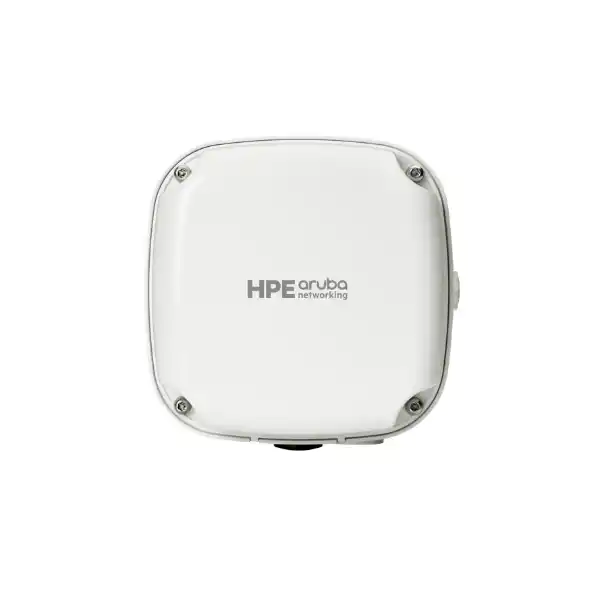
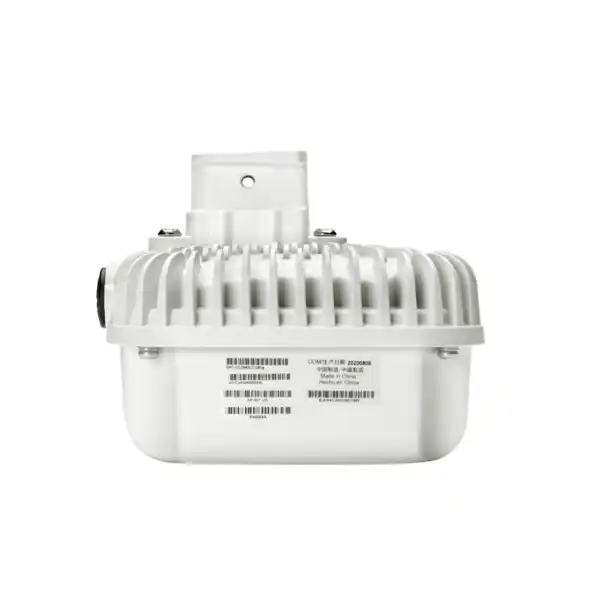
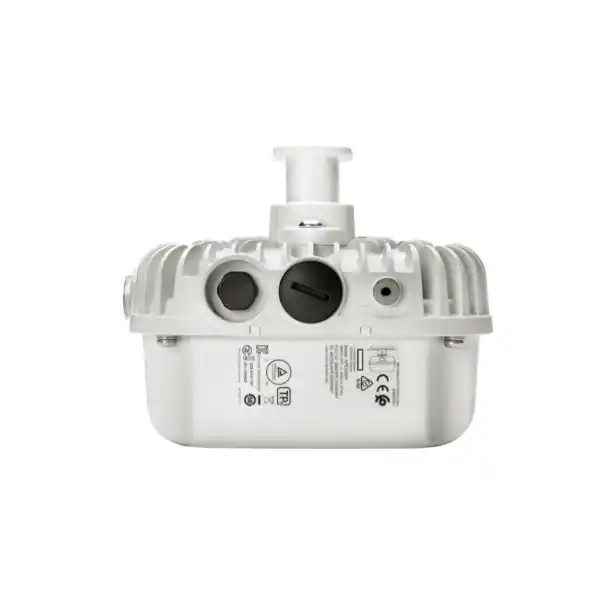
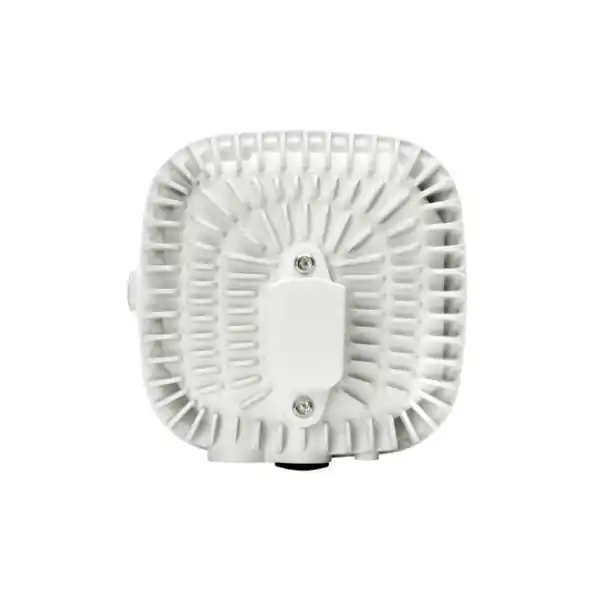
Directional Wi-Fi 6 for hazardous outdoor areas
HPE Aruba Networking AP-567EX in Dubai, UAE
The AP-567EX is an outdoor-hardened, dual-radio Wi-Fi 6 access point with integrated directional antennas for industrial and hazardous-location deployments. For UAE projects, the RW variant R4W66A is the regional option shown in HPE ordering information for markets outside the country-specific US, Israel, Egypt, Indonesia and Japan variants.

Project note: mounting hardware and power sources are ordered separately. Confirm hazardous-area requirements and the final bill of materials before purchase.
Direct answer for project buyers
HPE Aruba Networking AP-567EX is a directional, hazardous-location outdoor access point in the 560EX family. It is mainly used to extend managed Wi-Fi 6 coverage into industrial outdoor areas where weather exposure and potentially explosive gases or vapours influence equipment selection. It should be considered when a project needs focused coverage along a work zone, process area, yard, route, loading space or similarly defined sector rather than an omnidirectional coverage pattern. Before proceeding, buyers should confirm the hazardous-area classification, local regulatory variant, coverage direction, mounting method, Ethernet and PoE design, management platform, quantity, environmental conditions and any required accessories. Those details affect both technical suitability and the final quotation.
What the AP-567EX does
This access point provides 2.4 GHz and 5 GHz Wi-Fi 6 connectivity through two spatial-stream radios, using integrated directional antennas to concentrate coverage into a defined sector. HPE lists a maximum wireless data rate of up to 1.2 Gbps on the 5 GHz radio for a 2SS HE80 client and up to 574 Mbps on 2.4 GHz with HE40, subject to client capability and radio conditions. In practical enterprise deployments, the important point is not the headline PHY rate but the ability to place a rugged AP where indoor equipment would be unsuitable.
The unit also includes Bluetooth 5 and 802.15.4 radio capability for supported IoT-related use cases, plus a Gigabit Ethernet uplink. It can be managed as part of an HPE Aruba Networking architecture, with management and feature availability depending on the chosen software, licensing and network design.
Who should consider it
The AP-567EX is aimed at organisations that operate wireless networks in harsh or hazardous outdoor environments. Typical buyers include industrial IT teams, operational technology teams, EPC contractors, oil and gas project owners, mining operators, utilities, logistics facilities and system integrators designing wireless coverage near process areas or outdoor equipment zones.
It is not automatically the correct choice for every outdoor Wi-Fi project. Buyers that need broad, surrounding coverage may prefer an omnidirectional model such as the AP-565EX, while a site that is not classified as hazardous may have more economical outdoor AP options. A wireless survey and hazardous-area review are valuable because directional antenna geometry, mounting height, obstruction, client density, local radio rules and the physical process environment all influence whether this specific model is appropriate.
Business problems this model helps address
Wireless coverage near hazardous processes
Standard outdoor electronics may not be suitable where hazardous-area certification is required. The 560EX platform is specifically designed for hazardous locations, but the site classification still needs to be matched to project rules and local requirements.
Focused coverage instead of spill
The AP-567EX uses directional antennas, which can be useful when the target area lies in one principal direction from the mounting point. This can support more intentional RF design than an omnidirectional pattern in suitable locations.
Outdoor temperature and weather exposure
HPE specifies operation from -40°C to +55°C with full solar loading, IP66/67 water and dust protection, and outdoor environmental hardening. Installation practices remain important for cable entry, grounding, mounting and local conditions.
Integrating field users and IoT devices
Wi-Fi, Bluetooth 5 and 802.15.4 capability can help a site plan one managed edge platform for user connectivity and selected IoT applications, subject to the chosen software, device compatibility and security architecture.
Capability band: what matters in a real deployment
2×2 MIMO on both 5 GHz and 2.4 GHz for modern enterprise wireless access.
90-degree horizontal and vertical antenna pattern for sector-oriented placement.
802.3at PoE+ operation is supported without the power restrictions described for lower-power 802.3af operation.
Bluetooth 5 and 802.15.4 support can assist compatible IoT initiatives without adding a separate radio overlay in every case.
Is the AP-567EX the right fit?
| Requirement | Suitable when | Confirm before ordering |
|---|---|---|
| Hazardous outdoor Wi-Fi | The environment calls for equipment aligned with Class 1 Division 2 or ATEX Zone 2 requirements. | Exact zone classification, local approval requirements and engineering authority acceptance. |
| Directional coverage | Clients are mainly located in a sector in front of the AP. | Mounting azimuth, tilt, distance, obstructions and survey results. |
| Wi-Fi 6 client access | The site needs 802.11ax connectivity for field devices, tablets, scanners or laptops. | Client radio capabilities, channel plan, density and roaming expectations. |
| PoE deployment | Ethernet and PoE can reach the mounting position safely and reliably. | PoE budget, surge protection, cable path, grounding and injector or switch choice. |
| Centralised operations | The organisation wants coordinated enterprise WLAN visibility and policy. | HPE Aruba Networking Central or other supported management architecture, licensing and controller/gateway design where applicable. |
Verified technical information for AP-567EX
Values below are drawn from HPE Aruba Networking QuickSpecs and current model information. Regional, software and configuration dependencies should still be confirmed for the project.
| Brand | HPE Aruba Networking |
|---|---|
| Model | AP-567EX |
| UAE-relevant regional SKU | R4W66A (RW variant; HPE lists RW as available outside the country-specific US, Israel, Egypt, Indonesia and Japan variants) |
| Product family | HPE Aruba Networking 560EX Series Hazardous Location Access Points |
| AP type | Outdoor-hardened Wi-Fi 6 dual-radio access point |
| Radio architecture | 5 GHz 2×2 MIMO and 2.4 GHz 2×2 MIMO |
| 5 GHz data rate | Up to 1.2 Gbps for a 2SS HE80 802.11ax client, subject to client and RF conditions |
| 2.4 GHz data rate | Up to 574 Mbps with HE40 or 287 Mbps with HE20 for a 2SS 802.11ax client |
| Directional antennas | Built-in 90° horizontal × 90° vertical; 5 GHz 6.8 dBi, 2.4 GHz 7.1 dBi, BLE/802.15.4 3.0 dBi |
| Ethernet | 1 × 10/100/1000BASE-T RJ-45, auto-sensing, Energy Efficient Ethernet support |
| PoE | 802.3at PoE+ supported; HPE notes no restrictions when powered by 802.3at |
| Maximum power consumption | 15.6 W worst case |
| IoT radio | Bluetooth 5 and 802.15.4 radio with Zigbee support |
| Console | USB-C console interface |
| Dimensions | 16.5 cm × 16.5 cm × 13 cm, excluding mount |
| Weight | 1.09 kg, excluding mount |
| Operating temperature | -40°C to +55°C with full solar loading |
| Water and dust rating | IP66/67 |
| Wind survival | Up to 165 mph |
| Hazardous-location certifications | Class 1 Division 2 and ATEX Zone 2 |
| Mounting | Optional outdoor mounting kits are available; exact bracket should be selected for the mounting surface and aiming requirement |
Configuration, management and compatibility dependencies
The AP-567EX should be treated as one component in a complete wireless design. HPE documents the hardware capabilities, but the operational feature set depends on the software architecture and licenses selected for the network. HPE Aruba Networking Central can be used for centralised management, while controller or gateway roles, policy enforcement, segmentation and software functions vary by deployment model. Buyers should therefore avoid assuming that every software feature described for the wider Aruba platform is automatically available or included with the hardware purchase.
Power and mounting also require explicit planning. HPE states that power sources are sold separately. The unit supports 802.3at PoE+ without restrictions; use of lower-power 802.3af can trigger dynamic or programmed restrictions depending on Intelligent Power Monitoring settings. For industrial sites, the complete path from the PoE source to the AP should be checked for distance, surge protection, earthing, environmental exposure and any site-specific electrical requirements.
Finally, hazardous-area certification does not remove the need for local engineering approval. Project teams should confirm the exact classified zone, installation method, cable entry, bracket, installation authority requirements and regulatory acceptance for the destination country. FourTeck can help organise the product and network bill of materials, but final hazardous-area compliance decisions should remain aligned with the customer’s engineering and safety process.
From requirement to deployment: a practical purchase journey
Define the classified area
Document the hazardous-area designation, process environment, mounting zone and any customer engineering standards. This establishes whether a hazardous-location AP is appropriate and what approvals need to be reviewed.
Design the RF sector
Confirm client locations, distances, expected roaming, line of sight, obstructions and interference. The directional 90° antenna pattern should be aligned with the intended service area.
Build the bill of materials
Select the correct regional AP, mounting kit, PoE source or switch capacity, surge protection and management or licensing components required by the architecture.
Quote, install and validate
Confirm quantity, destination and project timing, then include installation or configuration services if required. After installation, validate coverage, client behaviour, power, management and security policy against the design.
Directional coverage for defined work zones
The most distinctive physical difference between AP-567EX and its AP-565EX sibling is antenna pattern. HPE specifies built-in directional antennas with a 90-degree horizontal by 90-degree vertical pattern for the AP-567. That changes the design conversation from simply asking where to mount an outdoor AP to asking where the useful energy should be concentrated. A directional AP can be appropriate when users or devices are located mainly along a road, yard edge, loading zone, process corridor, tank farm sector, equipment pad or another defined area in front of a mounting point.
This does not mean the AP automatically reaches farther in every environment. Wireless performance is affected by transmit power rules, client radios, channel width, obstructions, reflections, interference and mounting geometry. Many field devices also have smaller antennas and lower transmit power than the AP, which means the return path from the client can become the limiting factor. A design that looks strong on an AP coverage plot may still underperform if the clients cannot reliably transmit back.
For that reason, buyers should provide site plans, expected client types, mounting elevations and coverage objectives when requesting product sizing. FourTeck can use those details to help determine whether a directional AP is the right form factor and whether multiple sectors, alternative mounting points or a different outdoor model should be considered. A wireless site survey remains the strongest basis for final placement when the area is operationally important.
Rugged operation where ordinary outdoor APs may not fit
Industrial wireless projects often combine several environmental challenges at once: heat, solar loading, dust, rain, vibration, saline air, wind and process-related hazardous classifications. HPE rates the AP-567EX for -40°C to +55°C operation with full solar loading, IP66/67 protection, operation in all weather conditions, salt spray testing and wind survival up to 165 mph. Those published characteristics make the unit relevant for demanding outdoor placements, but they should be interpreted as equipment capabilities rather than a substitute for good installation practice.
Cable routes, glands, connectors, mounting hardware, grounding and surge protection must be suitable for the site. In coastal or industrial areas, the condition of brackets and fixings can be just as important as the AP enclosure itself. Sites with high vibration, chemical exposure or unusual mounting structures may also require additional engineering review. The AP’s hazardous-location certification should be matched with the full installation method, not considered in isolation.
This is especially important in UAE industrial environments, where high ambient temperatures and solar exposure can coincide with dust and outdoor process constraints. When preparing a quotation, include mounting location, available structure, cable route, PoE source location and any site safety rules. That produces a more useful bill of materials than ordering the access point alone and addressing installation details later.
Wi-Fi 6, IoT radio and operational visibility
The AP-567EX supports Wi-Fi 6 features such as OFDMA, multi-user MIMO and Target Wake Time within the broader HPE Aruba Networking implementation. For a buyer, these technologies matter because industrial wireless networks increasingly carry a mixed population of rugged handhelds, tablets, laptops, scanners and connected sensors rather than one uniform client type. Wi-Fi 6 can improve airtime efficiency when both infrastructure and clients support the relevant features, although actual performance still depends on channel planning, interference and client behaviour.
The built-in Bluetooth 5 and 802.15.4 radio extends the AP beyond conventional WLAN access. HPE positions the 560EX family as IoT-ready and lists Zigbee support through the integrated radio. This can reduce the need for a separate radio overlay in certain designs, but application support, management integration and device compatibility must be verified before treating the AP as an IoT gateway for a specific project.
Operational visibility is also tied to the management architecture. HPE Aruba Networking Central can provide central management and analytics for supported deployments, while segmentation and policy capabilities depend on the broader platform and licensing. Buyers should define whether they need cloud-managed visibility, local control, gateway integration, policy enforcement, device profiling or only straightforward AP management. Those requirements should be included in the request for quotation because the hardware alone does not define the complete operating model.
Where the AP-567EX can make sense
Oil and gas process areas
Directional wireless coverage can support workforce connectivity around selected process zones, access routes and operational areas where hazardous-location equipment is required. The exact classification and installation method need site engineering confirmation.
Mining and extraction sites
Outdoor ruggedness and focused coverage can suit selected yards, work faces, approach routes or equipment areas, subject to RF planning, client capability and local environmental conditions.
Industrial logistics zones
Facilities handling chemicals or regulated materials may require classified-area wireless equipment. A directional AP can support scanners, tablets and workstations within a defined service sector when the design is validated.
Utilities and field infrastructure
Outdoor substations, treatment facilities and remote infrastructure can benefit from hardened wireless access where the hazardous classification, mounting constraints and coverage geometry align with the model.
Integration and operating considerations
An AP-567EX project usually touches several teams: wireless networking, structured cabling, industrial safety, operations, electrical engineering and cybersecurity. Aligning those groups early avoids common procurement errors. The wireless designer needs mounting coordinates and service-area targets; the cabling team needs route and distance information; the electrical or network team needs to verify PoE capacity; and the safety authority needs to confirm the hazardous-location installation approach.
Network integration should cover VLANs or segmentation policy, authentication, DHCP and DNS dependencies, roaming design, upstream switch capacity, management access and logging. Where HPE Aruba Networking Central or gateway functions are part of the design, confirm licensing and the intended management model before the hardware is ordered. Existing Aruba environments may simplify operational integration, but software versions and platform compatibility still need review.
For a brownfield site, also check whether existing outdoor mounts, PoE injectors, surge protectors and cabling are suitable. Reusing an old mounting point can be attractive, yet a directional AP may need a different orientation or bracket than the previous device. Reusing a lower-power PoE source can also create avoidable limitations. The safest bill of materials is one built from the current design rather than from assumptions based on the equipment being replaced.
Buyer questions to resolve before a quote
- What hazardous-area classification applies at the exact mounting point?
- Is directional 90° sector coverage appropriate for the client layout?
- Which regional SKU is required for the destination country?
- How many APs are needed after RF design or survey?
- Which mounting kit fits the structure and required aiming angle?
- Will 802.3at PoE+ be available at every location?
- Is surge protection or an outdoor injector needed?
- How will the APs be managed and licensed?
- What authentication and segmentation policy is required?
- Are installation, configuration, testing or handover services required?
Procurement checklist for the AP-567EX
How FourTeck can assist
FourTeck can help turn a product request into a complete procurement brief. That may include confirming the exact regional model, reviewing quantity and mounting needs, identifying PoE and accessory requirements, discussing HPE Aruba Networking management options and preparing installation or configuration scope where required. The objective is to reduce the risk of ordering a correct AP but an incomplete bill of materials.
For broader network planning, visit the FourTeck technology services page or review available network and security products. Project-specific compatibility and delivery assumptions should be confirmed in the final quotation.
What to send for accurate sizing
A useful request includes the site or project name, destination, required quantity, hazardous-area classification, approximate mounting height, target coverage sector, client types, available PoE source and any existing Aruba management platform. Site drawings or marked-up plans are particularly helpful for directional AP projects.
If installation is required, include access constraints, preferred work window, cabling status, mounting surface and any induction or permit requirements. Use the FourTeck contact page to share the requirement and request a quotation.
UAE availability and support guidance
Contact FourTeck to confirm current UAE availability for the HPE Aruba Networking AP-567EX RW variant and any associated mounting or power accessories. Availability may depend on quantity, current vendor lead time, regional allocation and the completeness of the requested bill of materials. The AP itself should not be treated as the entire project if the installation still requires a mounting bracket, PoE source, surge protection, cabling work, management subscriptions or configuration services.
For projects in Dubai, Abu Dhabi, Sharjah and Ajman, FourTeck can coordinate requirement review, quotation preparation, delivery planning and, where requested, installation or configuration scope. Exact delivery dates and service schedules should be confirmed after the model, quantity, destination and project conditions are agreed. Buyers can also learn more about FourTeck project support before submitting the final requirement.
GCC Availability
For GCC projects, FourTeck can assist organisations that are evaluating the AP-567EX for hazardous industrial wireless coverage across the United Arab Emirates and other Gulf markets such as Saudi Arabia, Kuwait, Qatar, Bahrain and Oman. The purchasing process should begin with the destination country and site classification because regional model selection, radio regulations, project approvals and shipping arrangements can vary. FourTeck can review the required quantity, directional coverage objective, mounting approach, PoE design, management platform, licensing needs and installation scope before preparing a quotation. Availability, vendor lead time, service visits and delivery schedules are not fixed across countries and may change according to quantity and project conditions. Buyers should share the exact destination, required model, quantity, expected deployment timing and whether configuration or onsite coordination is needed. For Kuwait-specific business enquiries, the FourTeck Kuwait resource can also support regional coordination.
Africa Availability
Organisations planning hazardous-location wireless networks in Africa can contact FourTeck for product evaluation, bill-of-material review and procurement coordination for the AP-567EX and related Aruba components. Projects in East Africa, West Africa, Southern Africa or Central Africa can differ significantly in destination logistics, power design, regulatory requirements, installation conditions and support expectations, so the exact country should be identified at the quotation stage. FourTeck can help review the model, quantity, management requirement, PoE approach, mounting hardware, accessories and deployment services before a purchase decision is made. Availability and fulfilment may depend on the selected regional SKU, vendor lead time, shipping arrangements, local project conditions and the need for installation or configuration assistance. Buyers should provide the destination country, expected deployment schedule and any site engineering constraints. For regional project coordination, see FourTeck Africa and the dedicated Kenya technology resource.
How buyers compare hazardous-location outdoor access points
A buyer searching for the AP-567EX is usually trying to solve a more specific problem than simply “outdoor Wi-Fi.” The key question is whether the radio equipment can be installed safely and effectively in a harsh environment that may contain flammable gases or vapours, while still delivering useful wireless coverage to staff and connected devices. That means the decision should begin with area classification and RF design, not with throughput alone. The AP-567EX is attractive because it combines hazardous-location certification, outdoor hardening and Wi-Fi 6 in a compact directional form factor, but those characteristics only create value when they match the installation.
AP-567EX versus AP-565EX
The practical distinction is antenna pattern. The AP-567EX uses integrated directional antennas, while the AP-565EX uses integrated omnidirectional antennas. A directional design is usually considered when the intended clients occupy a sector in front of the AP. An omnidirectional model may be more appropriate when coverage is needed around the mounting point. Neither is universally better; the correct choice depends on the shape of the coverage area.
AP-567EX versus standard outdoor Wi-Fi 6 APs
Standard outdoor models can be less expensive and may offer different radio or antenna options, but they should not be substituted into a hazardous classified area merely because their weather rating is similar. IP ratings address environmental ingress; hazardous-location certification addresses a different safety requirement. A project should separate those two questions.
Buyers also ask whether the AP-567EX needs a controller. The better way to phrase the requirement is to decide how the WLAN will be managed. HPE Aruba Networking supports cloud-managed and other enterprise WLAN architectures, and the exact capabilities depend on the software, licensing and network design. A standalone hardware purchase may therefore be incomplete for an organisation that expects centralised monitoring, policy enforcement, analytics or integration with an existing Aruba environment. The quotation should identify the desired management model rather than assuming it is included with the AP.
Another common planning question is whether Wi-Fi 6 performance numbers translate directly into application throughput. HPE publishes maximum radio data rates, but user throughput is always lower and depends on protocol overhead, signal quality, channel width, interference, client capability and contention. In an industrial setting, reliable coverage and stable roaming can matter more than peak speed. A barcode scanner or rugged tablet may use far less bandwidth than a laptop, yet still require consistent signal levels and predictable handoff between APs. This is why client inventory should be part of RF planning.
Power design deserves equal attention. The AP-567EX supports 802.3at PoE+ and HPE documents unrestricted operation at that power level. If a project tries to reuse older 802.3af infrastructure, the AP can apply restrictions depending on power management settings. A procurement team should therefore check the switch model, available PoE budget, cable distance and whether an indoor or outdoor injector is more appropriate. If a surge protection device is required by the site standard, it should be included in the bill of materials rather than added after installation begins.
Mounting is another area where search results can make the product appear simpler than the project really is. HPE lists several optional outdoor mounting kits for pole, wall, hanging and tilt installations. The choice affects how precisely the directional antenna can be aimed. For a sector-shaped coverage area, even a technically compatible bracket can be a poor operational choice if it does not allow the required azimuth or elevation. A marked-up site photo or drawing can make bracket selection much easier.
Price comparisons should also be handled carefully. Publicly visible prices for R4W66A vary between markets and resellers, and HPE itself notes that reseller transaction prices can differ from indicative pricing. A published online number may exclude tax, freight, accessories, support, subscriptions or installation. For a UAE buyer, the useful figure is a project quotation that confirms the exact regional SKU, quantity, delivery destination and any required mounting, power, management and service items. Comparing only the AP unit price can hide meaningful project costs.
Finally, confirm lifecycle and support expectations at the time of purchase. The current HPE pages still list the 560EX family and show AP-567EX regional variants, but procurement teams should always request current lead time, warranty terms and any vendor lifecycle notices in the quotation. This is especially important for industrial projects that may standardise a design across multiple sites or require spare units. FourTeck can help consolidate those questions so the final offer reflects the intended deployment rather than a generic hardware line item.
Questions project teams ask before they shortlist this AP
Do we need the EX model if the area is only outdoors?
Not necessarily. The EX designation is relevant because the 560EX family is built for hazardous locations. If the site is outdoors but not within a hazardous classified area, another outdoor Aruba model may be more suitable. The decision should come from the site classification and required certifications, not from weather exposure alone.
How do we know whether directional antennas are correct?
Look at where the clients will be located relative to the mounting point. The AP-567EX’s 90-degree directional pattern is useful when coverage should be concentrated into a defined sector. If devices surround the AP or move around it, an omnidirectional model may fit better. Site drawings and a survey help turn that general rule into a specific design.
Can we power it from an existing PoE switch?
Possibly, but verify the switch and power budget. HPE specifies 802.3at PoE+ for unrestricted operation. The AP can operate with 802.3af under Intelligent Power Monitoring, but restrictions may be applied. The cable run, surge protection and outdoor environment also need review before reusing existing infrastructure.
Which part number should a UAE quotation use?
HPE lists R4W66A as the AP-567EX RW variant and describes the RW option as available outside the markets that have dedicated US, Israel, Egypt, Indonesia or Japan variants. A UAE quotation should still confirm the current regional SKU and any country-specific regulatory requirements at the time of order.
What should be included besides the access point?
At minimum, review mounting hardware and PoE. Depending on the design, the project may also need surge protection, switching capacity, cabling, management subscriptions, gateway components, installation, configuration and validation. HPE states that power sources are sold separately, so the AP line item should not be assumed to include a complete installation kit.
What information speeds up a quotation?
Provide the destination, quantity, hazardous-area classification, coverage objective, mounting height, client types, existing network environment, PoE source and preferred management approach. If services are required, add the installation location, cabling status, work access constraints and desired testing or handover scope. This lets FourTeck quote a more complete solution rather than only the AP hardware.
Related options and services to consider
AP-565EX
Hazardous-location model with integrated omnidirectional antennas. Consider it when the RF plan calls for coverage around the mounting point rather than a directional sector.
Outdoor mounting kits
HPE lists pole, wall, hanging and tilt mounting options. Select the bracket according to the mounting structure and the required directional aiming.
PoE injectors and switching
Where an existing switch cannot supply appropriate PoE+, an approved injector or revised switching design may be required. Outdoor surge protection should be reviewed as part of the cabling plan.
Wireless design and configuration
Survey, channel planning, management onboarding, security policy and validation services can be included when the project requires more than hardware procurement.
Why businesses contact FourTeck for this requirement
Hazardous-location wireless purchases benefit from more than a part-number lookup. Buyers often need help confirming whether they require AP-567EX or AP-565EX, whether the regional SKU is correct, which bracket suits the mounting point, whether the current switch can supply the required PoE and how the AP will integrate with an existing Aruba environment. FourTeck can help structure those questions before the quotation is finalised.
Assistance can also include bill-of-material review, configuration scope, migration or replacement planning, installation coordination and support-path discussion. These activities depend on the project and are not assumed to be included automatically in every product quotation. The value of the consultation is to make the dependencies visible before purchasing, so the buyer can compare complete options rather than isolated hardware prices.
Frequently asked questions about HPE Aruba Networking AP-567EX
1. What is the HPE Aruba Networking AP-567EX designed for?
It is an outdoor-hardened Wi-Fi 6 access point for hazardous locations, using integrated directional antennas. It is suited to industrial areas where the site requires equipment aligned with Class 1 Division 2 or ATEX Zone 2 environments and where sector-shaped wireless coverage is appropriate.
2. What is the main difference between AP-567EX and AP-565EX?
The AP-567EX uses integrated directional antennas with a 90° horizontal by 90° vertical pattern, while the AP-565EX uses integrated omnidirectional antennas. The correct choice depends on where the clients are located relative to the mounting point.
3. Which AP-567EX SKU is relevant for Dubai and the UAE?
HPE lists R4W66A as the AP-567EX RW variant and shows RW as available outside markets with dedicated US, Israel, Egypt, Indonesia and Japan models. Confirm the current regional SKU and regulatory requirements in the quotation before ordering.
4. Does the AP-567EX include a mounting bracket?
HPE lists mounting kits as optional accessories. Pole, wall, hanging and tilt options are available in the 560EX ordering information. Select the bracket to match the structure and required antenna aiming.
5. What PoE standard should be used?
HPE supports 802.3at PoE+ and states that the AP operates without restrictions at that power level. Lower-power 802.3af operation can involve restrictions depending on Intelligent Power Monitoring settings, so PoE+ is the safer design basis.
6. Can the AP-567EX be managed with HPE Aruba Networking Central?
Yes, the 560EX family is positioned for management with HPE Aruba Networking Central. Exact functions, subscriptions and architecture depend on the chosen deployment, so licensing and management scope should be confirmed before purchase.
7. Does it support Bluetooth and Zigbee?
Yes. HPE specifies an integrated Bluetooth 5 and 802.15.4 radio with Zigbee support. Application compatibility and software integration should be checked for the intended IoT use case.
8. Is the AP-567EX available in the UAE?
Contact FourTeck to confirm current UAE availability. Availability can vary by quantity, regional allocation and vendor lead time. Delivery timing should be confirmed after the exact model, quantity and destination are known.
9. What should I provide for a quotation?
Share the destination, quantity, hazardous-area classification, coverage objective, mounting details, PoE source, client types, existing Aruba environment and whether installation or configuration services are needed. This helps FourTeck prepare a more complete project quotation.
Prepare a complete AP-567EX requirement
Send FourTeck the quantity, site classification, coverage area, mounting details and management requirement. We can help confirm the regional model, accessories and service scope before a UAE quotation is prepared.

Reviews
There are no reviews yet.