
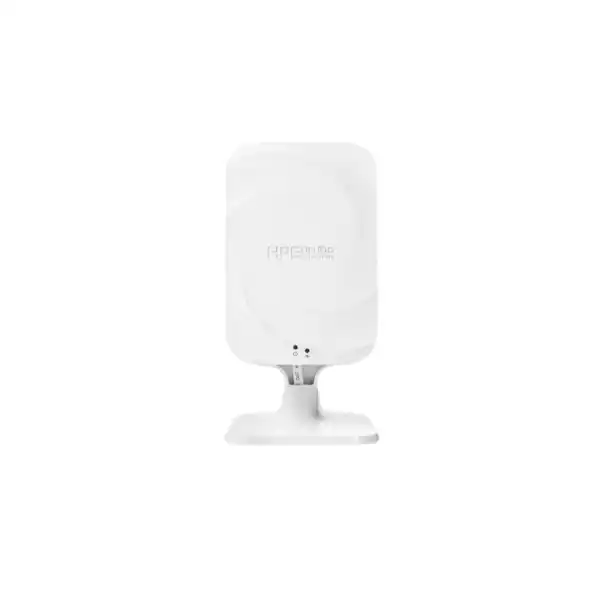
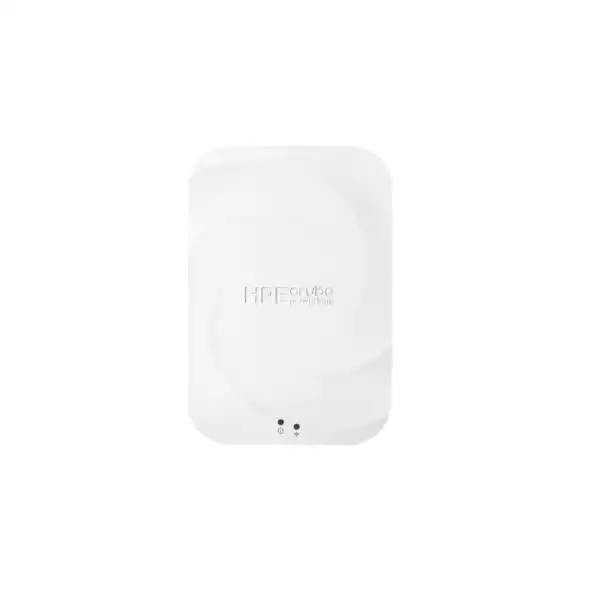
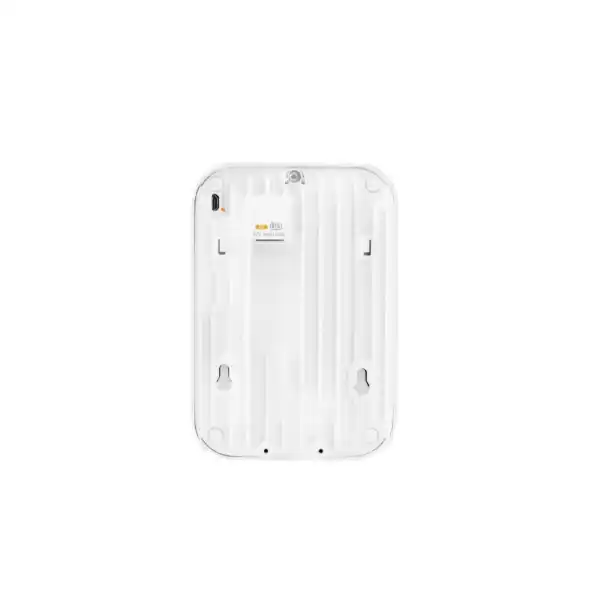
HPE Aruba Networking AP-605H in Dubai, UAE
The AP-605H is built for indoor spaces where wireless service and room-level wired connectivity need to come together cleanly. It combines a configurable dual-radio Wi-Fi 6E platform with a multigigabit uplink, four Gigabit Ethernet downlink ports, PoE capabilities and integrated IoT radios. For hotels, residences, compact offices and distributed sites, that design can reduce the need for separate access and edge-connectivity devices when the deployment has been planned around the correct power, mounting, management and regulatory requirements.
Confirm quantity, mount type, PoE source, management approach, subscriptions and the intended client-band mix before requesting a final quotation.
Direct answer for buyers
The HPE Aruba Networking AP-605H is an indoor hospitality access point in the 600H Series. Its main role is to deliver Wi-Fi 6E wireless access while also providing several Ethernet ports at the room, desk or branch edge. It is especially relevant when an organisation wants one compact device to serve wireless clients and nearby wired endpoints such as phones or other Ethernet devices. A buyer should confirm the exact regional SKU, required mount, available PoE class or DC power, management platform, software level, optional subscriptions and whether the client population can make practical use of the 6 GHz band. In the UAE, the RW variant S0B60A is the model listed by HPE for broad non-restricted regional use, but the final bill of materials should still be checked before ordering.
What the AP-605H does
The AP-605H combines a wireless access point and a small wired edge connection point. Its two 2×2 radios can be configured for any two of the 2.4 GHz, 5 GHz and 6 GHz bands. That flexibility matters because a real deployment rarely consists of only one generation of client. Older devices may still depend on 2.4 GHz or 5 GHz, while newer Wi-Fi 6E-capable laptops and phones can use the additional 6 GHz spectrum where local regulations permit it. The access point therefore gives network designers a way to choose the band combination that best fits client capability and coverage requirements rather than treating all three bands as concurrently active at the same time.
On the wired side, the unit provides a 2.5GbE uplink and four Gigabit Ethernet downlink ports. Two downlink ports can provide PoE output within the supported power budget. This can be useful in guest rooms, serviced apartments or small workspaces where a wired endpoint needs to sit close to the wireless access point. The result is a compact device that can simplify edge connectivity when cabling, power and management are planned correctly.
Who should consider it
The AP-605H is suited to organisations with repeatable indoor rooms or compact areas where each location benefits from both Wi-Fi and Ethernet. Hotels are an obvious example because a room can have guest wireless devices alongside wired handsets, media equipment or other network-connected endpoints. Student accommodation and residence halls can have similar needs. Small branch offices may also use this format when users require dependable wireless service while a few wired devices remain part of the workspace.
It is less appropriate when the design calls for outdoor operation, very high-density large-venue coverage, directional external antennas, or three simultaneous Wi-Fi radios spanning all three bands at once. It should also not be selected merely because it carries the Wi-Fi 6E label. Buyers should map room size, client mix, roaming expectations, wall construction, uplink capacity, PoE source and management architecture first. FourTeck can help turn those details into a clearer quantity and accessory plan before quotation.
Business challenges the design can address
Room-level connectivity
Where each room or compact zone needs Wi-Fi plus several physical connections, the AP-605H can consolidate functions that might otherwise require a separate access point and a small edge switch.
Mixed client generations
The configurable dual-radio architecture lets a design support legacy bands while creating a path for Wi-Fi 6E clients, with the exact radio combination chosen according to coverage and device requirements.
Distributed operations
Central management and zero-touch workflows can reduce the need for extensive hands-on configuration at each small site, subject to the chosen HPE Aruba Networking software and subscription model.
IoT coexistence
Integrated Bluetooth 5 and 802.15.4/Zigbee capabilities can support projects that include location, sensing or other IoT-related functions, but application compatibility should be reviewed in detail.
Capability band: what matters in a real deployment
Is the AP-605H a good fit?
| Requirement | Suitable when | Confirm before ordering |
|---|---|---|
| Hospitality room networking | A room needs Wi-Fi and several local Ethernet ports from one compact platform. | Mount type, cabling path, PoE source, required wired endpoints. |
| Wi-Fi 6E adoption | A meaningful share of clients can use 6 GHz, or the organisation wants a staged move toward Wi-Fi 6E. | Local 6 GHz rules, client support, channel plan and active radio pair. |
| Branch or remote office | A compact site needs centrally managed wireless plus a handful of wired connections. | Management subscription, WAN design, VPN or gateway requirements. |
| PoE to local devices | One or two local devices may need PoE from the access point. | Input PoE class and total output budget; E1/E2 PSE behaviour. |
| Large open venue | Only if a site survey shows this compact hospitality format is appropriate. | Density, antenna pattern, mounting orientation and whether a campus AP is a better choice. |
Verified technical information for AP-605H (RW)
The following values reflect the AP-605H platform and the RW regional SKU S0B60A as listed by HPE. Radio channels, allowed power and specific 6 GHz operation remain subject to country regulation. Optional mounts, power adapters, injectors, management subscriptions and other accessories should not be assumed to be included unless they are explicitly shown on the final quotation.
| Brand | HPE Aruba Networking |
|---|---|
| Product | AP-605H Hospitality Access Point |
| Regional SKU | S0B60A (RW) |
| Regulatory model | APINH605 |
| Deployment type | Indoor hospitality / compact branch / selected remote work environments |
| Wireless standard | 802.11ax Wi-Fi 6E, backward services for 802.11a/b/g/n/ac clients |
| Radio architecture | Two concurrent 2×2 MIMO radios, configurable across any two of 2.4 GHz, 5 GHz and 6 GHz |
| Maximum combined peak data rate | Up to 3.6 Gbps |
| Per-band peak PHY rates | Up to 574 Mbps on 2.4 GHz, 1.2 Gbps on 5 GHz and 2.4 Gbps on 6 GHz under supported channel conditions |
| Client associations | Up to 512 associated clients per radio; design capacity should be based on application demand rather than the association ceiling |
| Uplink | 1 x RJ-45, auto-sensing 100/1000/2500BASE-T, PoE-PD support |
| Downlink ports | 4 x RJ-45 10/100/1000BASE-T |
| PoE output | E1 and E2 support PoE-PSE; dual 802.3af or single 802.3at on E1, with up to 30 W total subject to available input power and configuration |
| Other interfaces | USB 2.0 host, serial console, DC power interface, reset control |
| IoT radios | Bluetooth 5 and 802.15.4/Zigbee |
| Location features | 802.11mc Fine Timing Measurement and integrated GNSS receiver |
| Security hardware | Built-in TPM 2.0 |
| Power input | Direct DC or IEEE 802.3af/at/bt PoE; feature restrictions can apply at lower PoE classes |
| Dimensions | 105 mm W x 40 mm D x 153 mm H |
| Weight | 500 g |
| Operating temperature | 0°C to +40°C |
| Mounting | Wall, wall-box or desk mounting using separately orderable mount kits |
| Management | Cloud or on-premises options are supported; exact software, controller, gateway or HPE Aruba Networking Central requirements depend on the intended architecture |
| Availability | Contact FourTeck to confirm current UAE availability, quantity and lead time |
Configuration, power and compatibility dependencies
The AP-605H should not be treated as a single fixed-capability appliance. Its practical behaviour depends on the selected radio pair, country regulatory domain, power source, management architecture and optional services. The access point can run without feature restrictions when powered by direct DC or 802.3bt Class 6 PoE. With lower PoE classes, functions such as USB and PoE output can be restricted, or Intelligent Power Monitoring can dynamically manage feature use according to the available budget. If downstream PoE is part of the project, the upstream switch or injector therefore needs to be chosen with the full room power requirement in mind rather than only the access point’s base consumption.
Mounting is another procurement dependency. HPE lists separate AP-600H mount kits for single-gang wall-box, dual-gang wall-box and desk deployment, so buyers should identify the intended physical orientation and outlet arrangement before the purchase order is raised. The power supply is also not automatically included with the standard AP-605H; HPE provides optional DC adapters and PoE injectors. A quotation should state clearly which mount, power accessories and cables are included.
Management and security features can also rely on software or subscriptions. Centralised cloud management, role-based segmentation, remote deployment and related operational features should be mapped to the organisation’s existing HPE Aruba Networking environment. If the AP is being introduced into a mixed estate, check software versions, licensing and gateway or controller relationships before installation.
A practical purchase and deployment journey
Define each room or site
Record room count, floor plan, wall materials, wired endpoint requirements, client types, expected traffic and whether 6 GHz clients are already in use.
Choose radio and management strategy
Decide which two radio bands should operate in the target design and whether management will be cloud-based, controller/gateway-based or aligned with an existing HPE Aruba Networking environment.
Confirm power and mounting
Check the PoE class available at the edge, total downstream PoE requirement, wall-box type, desk requirements and whether separate adapters or injectors are needed.
Quote the complete bill of materials
Request the AP, mount, power items, licences or subscriptions, installation work and configuration services together so hidden dependencies do not surface after delivery.
Validate before rollout
For multi-room projects, pilot the intended configuration, check roaming and wired-device behaviour, review power draw, then standardise the approved design for the broader deployment.
Flexible Wi-Fi 6E band planning
The most important radio characteristic of the AP-605H is not simply that it supports three Wi-Fi bands; it has two concurrent radios that can be assigned across those bands. A network designer can use 2.4 GHz plus 5 GHz where legacy support dominates, 2.4 GHz plus 6 GHz where newer client capacity is important but 2.4 GHz coverage is still required, or 5 GHz plus 6 GHz in an environment that no longer needs 2.4 GHz Wi-Fi service from that AP. In a larger multi-AP deployment, band selection can be coordinated across rooms or zones to create the intended coverage pattern.
The 6 GHz band is valuable because Wi-Fi 6E clients can operate in cleaner spectrum and can use wider channels, including 160 MHz where local rules and channel planning allow. However, a wider channel is not automatically the right choice in every room. In dense deployments, narrower channels may provide better reuse and more predictable capacity across many access points.
FourTeck can help evaluate the existing client mix and building layout so the AP’s radio flexibility is used intentionally rather than configured from a generic template.
Wired edge access without a separate mini-switch
Hospitality and residence projects often need more than wireless coverage. A guest room may include a phone, television, control system, work desk or another Ethernet endpoint. The AP-605H provides four 1GbE downlink ports, which can remove the need for a separate compact switch in some designs. Two of those ports, E1 and E2, can also provide PoE output when the access point has enough input power. That makes power design central to the bill of materials.
The access point’s uplink supports 2.5GbE. This is useful because aggregate traffic from Wi-Fi clients and local wired devices can exceed what a single 1GbE uplink would comfortably carry. The multigigabit link can preserve headroom when the upstream switch and cabling support it. At the same time, buyers should avoid assuming that the peak wireless PHY rate is equivalent to application throughput. Real performance depends on the air interface, client count, protocol overhead and the upstream path.
When room devices require PoE, specify their wattage and count in advance so the upstream PoE source can be sized correctly.
Operational control, security and IoT readiness
The AP-605H includes standards and platform functions that are useful in enterprise-managed environments. HPE documents support for WPA3 and Enhanced Open, while the access point includes a built-in TPM 2.0 for protected storage of credentials, keys and boot code. Dynamic Segmentation and policy-enforcement functions can help organisations move away from static network rules by applying policy according to user or device context, although the exact design depends on the wider HPE Aruba Networking architecture and software entitlements. Buyers should therefore separate hardware capability from the licences and gateway services required to use particular operational features.
For distributed branches and remote deployments, HPE supports zero-touch style onboarding and central management workflows. These can be valuable when many small sites need consistent configuration without a technician performing command-line work at every location. The benefit depends on a stable upstream connection, an appropriate management subscription and an approved deployment template.
The integrated Bluetooth 5 and 802.15.4/Zigbee radio can also support IoT-oriented use cases. That does not mean every sensor or platform is automatically compatible. Organisations should identify the actual IoT application, protocol, management system and data path before assuming the AP can replace another gateway or specialist device.
Where the AP-605H makes the most sense
Hotels and serviced accommodation
A room-by-room deployment can provide consistent wireless service while preserving ports for selected wired endpoints. The compact hospitality form factor suits designs where the access point is mounted near the user rather than hidden above a corridor ceiling. Radio power and channel plans should still be coordinated across floors to prevent self-interference.
Student residence halls
Dormitories often contain many personal devices plus wired equipment. A room-level AP can help keep signal close to users and offer local Ethernet access. The design should account for high device counts during evening peaks and the likelihood that many clients will remain on 5 GHz even when 6 GHz is available.
Small branches
A compact branch can combine Wi-Fi and a few wired ports in one device, reducing edge hardware. This is most useful when the branch already has suitable WAN connectivity and the organisation has a clear management model for remote configuration, updates and troubleshooting.
Remote work locations
Where corporate policy supports enterprise-managed access points outside the main office, the AP-605H can provide both Wi-Fi and local Ethernet. Security architecture, VPN or gateway relationships, support responsibilities and the user’s upstream internet connection should all be defined before rollout.
Integration and operational considerations
A successful AP-605H deployment depends on the network around it. Start with the access switch. If the project expects the AP to provide PoE to downstream devices, the switch should supply enough input power to the access point while also supporting the required uplink speed. Cabling should be assessed for 2.5GbE capability, especially in older buildings where existing horizontal cable may have been installed only with 1GbE service in mind. Where the AP is powered through an injector, make sure the injector supports the desired Ethernet rate and PoE class.
Then consider policy and authentication. Guest wireless, staff wireless, IoT traffic and room devices frequently need different network policies. The AP-605H can participate in HPE Aruba Networking segmentation and security designs, but the details depend on gateways, controllers, ClearPass or cloud services in the existing environment. Network teams should define SSIDs, authentication methods, VLAN or role treatment, address assignment and upstream firewall policy before staging.
Finally, review support operations. Decide who monitors the access points, how firmware updates are controlled, which logs are retained, how failed hardware is handled and whether a central subscription is required for the chosen management workflow. FourTeck’s networking and configuration services can be scoped around these operational tasks where required.
Questions to resolve before requesting a quotation
Procurement checklist for the AP-605H
How FourTeck can assist with AP-605H projects
The value of procurement support is not simply finding a unit price. A hospitality access point has dependencies that can create avoidable changes after the order if they are not captured up front. FourTeck can help review the exact model, quantity, mounting method, PoE source, client-band mix, network management method and whether installation or configuration should be included. That review is especially useful when an existing HPE Aruba Networking estate is being expanded because software versions, Central subscriptions, gateway roles and policy services may influence the deployment plan.
For multi-room projects, the team can also help structure a bill of materials that separates mandatory hardware from optional components. This makes it easier for procurement to see which mount kit, injector, adapter, subscription or service line is being purchased rather than assuming everything is bundled with the access point. If the project includes wider network changes, buyers can review additional options through the FourTeck technology product catalogue or discuss implementation requirements through the FourTeck contact team.
Availability and final pricing remain dependent on quantity, current channel conditions and vendor lead time. Ask for a quotation that identifies the regional SKU and all required accessories so the purchase can be evaluated as a complete deployment package.
UAE availability and support guidance
HPE’s UAE storefront lists the AP-605H RW S0B60A as the broad regional model relevant to markets outside the country-specific variants. For a UAE purchase, however, the product page listing should not be treated as a live stock guarantee. Contact FourTeck to confirm current UAE availability, required quantity, expected vendor lead time and whether the project needs separate accessories or subscriptions. Large deployments can also benefit from a staged delivery plan so pilot devices, mounting hardware and operational subscriptions are available in the correct sequence.
If configuration or installation support is required, include that scope in the quotation request rather than treating it as an assumption. Share site information, room count, switch models, available PoE class, existing HPE Aruba Networking management environment and any target rollout date. FourTeck can then coordinate a more complete commercial response instead of quoting only the access point hardware.
Dubai, Abu Dhabi, Sharjah and Ajman coverage
Organisations planning AP-605H deployments across Dubai, Abu Dhabi, Sharjah and Ajman can use a single requirement review to standardise model selection, mounting, power and management assumptions across multiple sites. This is useful for hotel groups, serviced residences, education operators and distributed businesses that want a repeatable room or branch design. Final delivery coordination, installation scope and onsite activity can vary by site, so each location should still provide quantity, access conditions, cabling status and deployment timing. FourTeck can coordinate quotations and project requirements across these UAE locations after the exact bill of materials and service scope have been agreed.
GCC Availability
For GCC projects, FourTeck can help organisations review whether the AP-605H is the correct hospitality access point for the intended location and network architecture, then coordinate model selection, quotation, accessory planning, management requirements and deployment scope. Regional projects may involve sites in the United Arab Emirates, Saudi Arabia, Kuwait, Qatar, Bahrain or Oman, but the same model and radio plan should not automatically be assumed for every country. Wi-Fi channel rules, 6 GHz permissions, local electrical requirements, vendor supply routes and project-service availability can differ.
When requesting a GCC quotation, share the destination country, exact AP quantity, mounting method, expected PoE source, required management subscription term and target deployment schedule. If downstream PoE devices will be connected to the AP, include their power requirements as well. Product availability, licensing, delivery schedules, service visits and vendor lead times can vary by country, quantity and project. FourTeck can also coordinate wider regional technology enquiries through its Kuwait technology presence and broader FourTeck channels where relevant.
Africa Availability
FourTeck can support organisations evaluating the AP-605H for projects in Africa by helping clarify the correct regional variant, accessory list, power method, software or subscription requirements and deployment expectations before commercial coordination begins. This can be important for hotel, education and multi-branch rollouts where the same room template may be considered across several countries. A technically consistent design still needs country-level checks because radio regulations, 6 GHz permissions, power infrastructure, shipping arrangements and onsite project conditions are not uniform across the continent.
Buyers should provide the destination country, quantity, intended site type, preferred deployment schedule and any installation or support requirement. Availability and fulfilment may depend on vendor lead time, regional supply, power accessories and management licensing. FourTeck can help coordinate requirements for East African projects through resources such as FourTeck Kenya and the broader FourTeck Africa technology portfolio, while the exact delivery and service plan should be confirmed for each destination.
Related options and services to consider
AP-600H mounting kits
HPE lists dedicated single-gang and dual-gang wall-box mounts, plus a compatible desk-mount option. Select the mount according to the room finish, existing outlet box and installation orientation.
PoE injectors or DC power
Where the switch cannot provide the required PoE class, an appropriate injector or DC adapter may be considered. The chosen power source should reflect any planned USB or downstream PoE usage.
HPE Aruba Networking Central
Central management may be relevant for distributed operations, onboarding, configuration consistency and monitoring. Confirm the required subscription tier and term for the planned architecture.
Network design and configuration
For larger rollouts, RF planning, switch readiness, VLAN or role design, staging and deployment validation may be more valuable than purchasing hardware alone. Review the available FourTeck service options.
Why businesses contact FourTeck for this type of purchase
The practical reason to involve a specialist supplier is to reduce uncertainty in the bill of materials. The AP-605H has regional variants, separate mounting options, multiple input-power possibilities, configurable radio choices and management dependencies. A quote that includes only the base access point may be incomplete for a real project. FourTeck can help clarify these variables before the commercial offer is finalised.
The same applies to integration. A buyer may need to know whether the existing access switch can provide 2.5GbE and sufficient PoE, whether the planned HPE Aruba Networking software level is appropriate, how the AP will join the management environment, and whether installation or staging should be included. These are procurement questions as much as technical questions because each one can add hardware, subscription or labour lines to the purchase.
For more information about the company and its broader technology focus, visit about FourTeck. For a current project, provide the exact site requirement so the quotation can separate confirmed items from options and dependencies.
What buyers commonly need to know before shortlisting the AP-605H
When buyers research a hospitality access point, the most useful questions are rarely limited to its maximum wireless rate. The real decision is whether the device matches the physical room, client mix, upstream network and operating model. The AP-605H is attractive because it can combine Wi-Fi 6E with several Ethernet connections, yet that combination only produces value when the local environment actually needs both functions. A corridor-mounted campus access point and a room-mounted hospitality access point solve different design problems even when both support modern Wi-Fi standards.
Should every hotel room get its own access point?
Not automatically. Room-level placement can improve signal consistency and provide wired ports, but the correct density depends on wall attenuation, floor plan, channel reuse, expected device counts and the desired roaming experience. Some properties may use one AP per room, while others may use a different ratio. A small pilot or RF design is more reliable than copying another building’s layout.
Does Wi-Fi 6E mean every client will be faster?
No. Only Wi-Fi 6E-capable clients can use the 6 GHz band. Older devices remain on 2.4 GHz or 5 GHz. Performance also depends on channel width, interference, signal level, airtime demand and the wired path. The value of 6 GHz is often cleaner spectrum and wider-channel opportunity, not a guaranteed application speed for every user.
Can it replace a room switch?
In some designs, yes. Four 1GbE downlink ports can cover a small group of endpoints, and two ports can provide PoE output within the supported power budget. It is not a general substitute for a full access switch where many ports, advanced switching functions or a larger PoE budget are required. Treat the wired ports as part of a room-edge design, not as an unlimited switching platform.
Is a 2.5GbE switch port necessary?
The AP can link at lower Ethernet rates, but a 2.5GbE uplink is the best way to preserve headroom where wireless and wired traffic may exceed 1Gbps in aggregate. Whether that headroom is necessary depends on the applications and client density. If an existing switch only provides 1GbE, the network team should decide whether that limit is acceptable or whether an upgrade is part of the project.
Another frequent buying question is whether the access point includes everything needed for installation. The standard AP-605H does not include the wall or desk mount kit in the base configuration, and power sources are separate options. That means a low hardware quote can become misleading if the mount and power design have not been captured. Buyers should ask the supplier to list the AP, mount kit, power device, management subscription and professional services as distinct lines where applicable.
Management is also part of the buying decision. HPE Aruba Networking Central can provide centralised cloud operations, while other supported architectures may use gateways or on-premises approaches. The correct choice depends on the organisation’s existing environment. A hotel group that already manages HPE Aruba Networking sites centrally may want the new APs to join the same operational framework. A smaller standalone location may have different priorities. Subscription terms and support coverage should therefore be included in lifecycle cost discussions rather than considered after installation.
For UAE buyers, the exact model code is worth checking carefully. The AP-605H is sold in several regulatory variants. The RW S0B60A is the broad regional version shown by HPE in the UAE store, while other SKUs exist for markets such as the United States, Israel, Japan and Egypt, and there are TAA variants as well. Matching the SKU to the deployment country helps avoid ordering a device intended for a different regulatory domain.
Finally, ask what the quotation actually covers. Product availability, shipping schedule, installation labour, configuration, subscriptions and support are separate commercial elements. FourTeck can review these items together so procurement receives a more useful comparison than a base-hardware price alone.
Decision questions buyers ask during planning
How do I choose between 2.4/5 GHz and 5/6 GHz operation?
Start with client capability and coverage. If legacy or IoT clients still require 2.4 GHz, keep that band in the plan. If the room population is predominantly modern 5 GHz and Wi-Fi 6E equipment, a 5/6 GHz combination can create more high-capacity spectrum. In mixed environments, 2.4/6 GHz may be considered, but removing 5 GHz from a specific AP can affect many current clients. The best answer is usually based on a site-wide radio plan rather than a single AP considered in isolation.
What should be checked if the AP will power a phone or another device?
Identify the endpoint’s PoE class and wattage, then calculate the AP’s own requirement plus the PoE output. HPE documents that unrestricted operation is available with DC or 802.3bt Class 6 input. Lower PoE classes can limit USB or PoE-PSE behaviour. If two downstream devices require power, confirm that their combined demand fits the supported AP output and upstream budget. The switch port or injector should be selected for the entire load, not only the access point.
Will existing Wi-Fi 5 and Wi-Fi 6 devices still connect?
The AP-605H supports legacy 802.11a/b/g/n/ac services as well as 802.11ax. The important limitation is the chosen active radio pair. A client can only connect on a band that the AP is currently using. New 6 GHz-capable devices can use Wi-Fi 6E when the 6 GHz radio is active and local regulations permit it. Client capability and the RF plan should therefore be reviewed together.
What information produces a more accurate quotation?
Provide destination, quantity, number of rooms or sites, preferred mount type, switch model, available PoE class, required wired endpoints, management platform, subscription term and whether staging, installation or configuration is needed. For an expansion project, also provide the current HPE Aruba Networking software environment. These details allow the quote to include the right accessories and service lines instead of leaving important dependencies open.
When should I consider a different access-point family?
Choose a different family when the environment is outdoor, needs external antennas, requires a ceiling-oriented campus design, has very high open-area density or needs three simultaneous Wi-Fi radios. The AP-605H is intentionally a hospitality-style device with integrated antennas and a room-edge wired-port design. A site survey and application requirements should determine whether that form factor is an advantage or a constraint.
How should a pilot be structured before a large rollout?
Select representative rooms or branches with different wall materials and usage patterns. Test the intended radio pair, management workflow, wired endpoints, PoE output, roaming behaviour and client performance. Confirm the mount and cabling method with the installation team. The goal is to validate the design assumptions and create a repeatable deployment standard, not merely to prove that a single access point can broadcast an SSID.
Frequently asked questions
Is the HPE Aruba Networking AP-605H a Wi-Fi 6E access point?
Yes. It is an 802.11ax Wi-Fi 6E access point with support for 2.4 GHz, 5 GHz and 6 GHz operation. It has two concurrent radios, so the active configuration uses any two of those three bands rather than all three simultaneously.
Which AP-605H SKU is relevant for Dubai and the UAE?
HPE lists the AP-605H (RW) as SKU S0B60A and shows this variant in its UAE storefront. Final regulatory and project requirements should still be checked before ordering, particularly for multi-country deployments.
How many Ethernet ports does the AP-605H provide?
It provides one 100/1000/2500BASE-T uplink port and four 10/100/1000BASE-T downlink ports. Two downlink ports, E1 and E2, can provide PoE output within the documented power limits.
Does the AP-605H include a mounting kit?
The standard AP-605H uses separately orderable mounting kits. HPE lists wall, wall-box and desk-oriented mount options. The correct mount should be included explicitly in the quotation when required.
Can the AP-605H be powered by PoE?
Yes. It supports 802.3af, 802.3at and 802.3bt PoE input as well as direct DC power. HPE states that unrestricted operation is available with direct DC or 802.3bt Class 6; lower PoE classes can create feature restrictions depending on configuration.
Does it support Bluetooth and Zigbee?
Yes. The access point includes Bluetooth 5 and IEEE 802.15.4/Zigbee capability for IoT-related applications. Actual application compatibility depends on the wider IoT platform and deployment design.
Can HPE Aruba Networking Central manage the AP-605H?
Yes, HPE documents Central as a management option for the 600H Series. The appropriate subscription and software architecture should be confirmed for the organisation’s environment and support requirements.
Is the AP-605H suitable for outdoor installation?
No. It is an indoor access point. Outdoor or exposed environments should use a product designed and rated for those conditions rather than adapting a hospitality indoor unit.
What should I send FourTeck for an AP-605H quote?
Share the UAE or destination location, quantity, room or site count, preferred mounting style, upstream switch and PoE capability, required wired endpoints, management platform, subscription term and whether installation, staging or configuration support is required.
Build the AP-605H quotation around the full room design
Send FourTeck the required quantity, deployment location, mount type, PoE source, connected wired devices, management method and service scope. The team can help separate the base AP from accessories, subscriptions and project work so your comparison is based on a complete requirement rather than an incomplete hardware line.

Reviews
There are no reviews yet.