
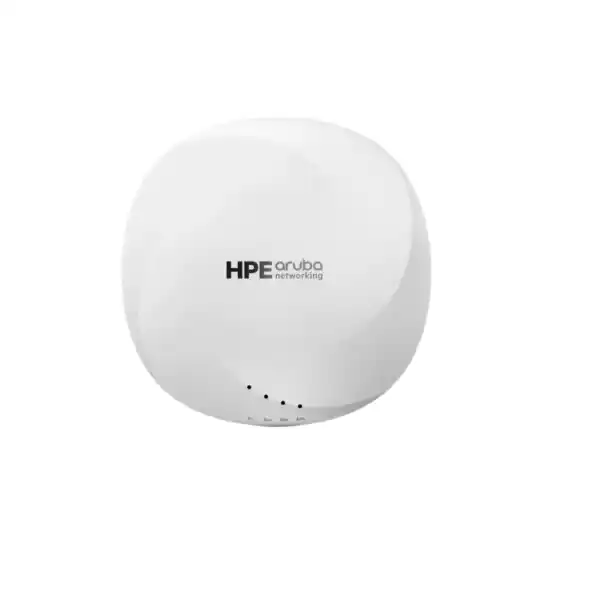
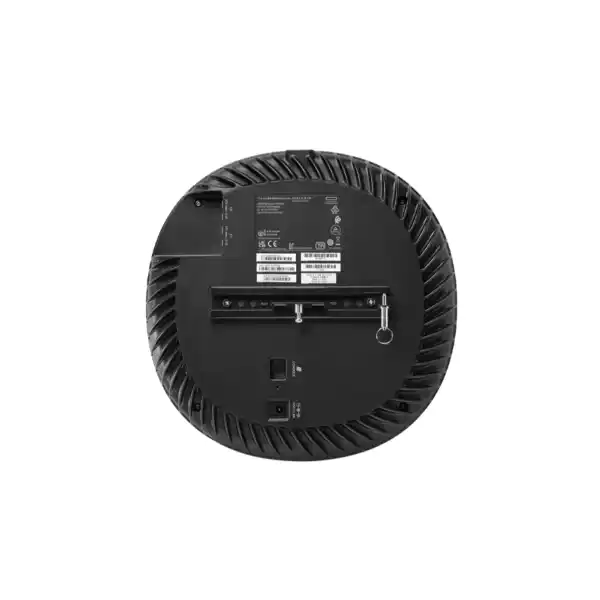
HPE Aruba Networking AP-655A in Dubai, UAE
The AP-655A is an enterprise wireless access point for organisations that need high-capacity Wi-Fi 6E, stronger operational control and a wired edge capable of supporting multi-gigabit access. The purchasing decision should include more than the access point alone: regional radio rules, software release support, management architecture, PoE capacity, switch-port speed, mounting, licensing and deployment design all influence the correct bill of materials.
Confirm the exact regional AP-655A ordering code, quantity, country of deployment, 6 GHz regulatory status, management platform, subscription requirements, available 5GBASE-T switching and Class 6 PoE budget.
Wi-Fi 6E certified
2.4, 5 and 6 GHz
5GBASE-T PoE ports
Class 6, Type 3 PD
Central / AOS release dependent
Direct answer: what is the AP-655A and who should consider it?
HPE Aruba Networking AP-655A is a 650 Series enterprise campus access point certified for Wi-Fi 6 and 6 GHz operation, intended for managed business wireless environments rather than simple standalone consumer coverage. It should be considered by IT teams refreshing high-density WLANs, introducing 6 GHz clients, standardising on HPE Aruba Networking management, or upgrading access switching to multi-gigabit Ethernet and higher PoE classes. Before proceeding, buyers should confirm that the chosen AP-655A regional variant is permitted for the destination country, that the planned HPE Aruba Networking software release supports the model, that the switch infrastructure can provide suitable PoE and Ethernet speed, and that required subscriptions, mounting parts, cabling and services are included in the quotation.
What the AP-655A does in an enterprise network
The AP-655A provides the wireless edge for users and devices that connect over modern enterprise WLANs. Its role is not simply to create a Wi-Fi signal. In a properly designed deployment it becomes part of a managed access architecture that connects employee laptops, collaboration devices, mobile endpoints and supported IoT clients to network policy, authentication services, switching infrastructure and business applications.
HPE documentation places AP-655A within the 650 Series and lists it among access points supported by HPE Aruba Networking Central. Current support documentation identifies AOS-10 release 10.7.2.0 as the minimum Central software release for AP-654A and AP-655A. Current AOS-8 documentation lists AP-655A support on the 8.13.0.x train. AirWave 8.3.0.5 also introduced AP-655A support. These version boundaries matter because an access point purchased for an existing Aruba estate must be checked against the organisation’s management and controller lifecycle before it reaches site.
The Wi-Fi Alliance certificate for AP-655A identifies Wi-Fi CERTIFIED 6 capability and confirms 2.4 GHz, 5 GHz and 6 GHz spectrum capabilities, along with enterprise and personal WPA2/WPA3 profiles, Protected Management Frames and Wi-Fi Enhanced Open. That combination makes the product relevant for organisations moving beyond dual-band Wi-Fi while maintaining compatibility planning for older clients.
Who it is designed for
The product fits buyers who treat wireless as business infrastructure: IT managers, network architects, system integrators, campus administrators and procurement teams responsible for capacity, security and lifecycle planning.
- Medium and large offices with growing Wi-Fi 6E client populations.
- Education campuses with dense classrooms, labs and collaborative spaces.
- Healthcare and professional environments requiring controlled wireless access and device segmentation.
- Hospitality, event and public-facing facilities where client density changes sharply by zone.
- Organisations already using HPE Aruba Networking Central, AOS or AirWave and planning a supported refresh.
Business problems this access point can help address
Crowded wireless spectrum
Wi-Fi 6E introduces the 6 GHz band for supported clients, creating additional spectrum options beyond conventional 2.4 GHz and 5 GHz planning. Actual 6 GHz channels and operating modes are country and regulatory-domain dependent.
Wired uplink bottlenecks
The Ethernet Alliance lists AP-655A with 5GBASE-T capability on its powered Ethernet ports. This makes multi-gigabit switch access and suitable cabling relevant when designing the wired side of a high-capacity WLAN.
Power-budget uncertainty
AP-655A is listed as a Class 6, Type 3 powered device. Procurement should therefore review per-port PoE capability and total switch PoE budget rather than assuming any PoE-enabled switch will deliver the required operating profile.
Management lifecycle mismatch
A new AP can be technically suitable yet operationally unusable if the installed management release does not support it. AP-655A has specific minimum software releases that should be checked before the hardware is ordered.
Core capabilities buyers should evaluate
The 650 Series platform is positioned by HPE as a high-performance Wi-Fi 6E campus family. HPE describes the family with three 4×4 MIMO radios across 2.4 GHz, 5 GHz and 6 GHz and a maximum combined tri-band data rate of up to 7.8 Gbps. It also describes dual configurable 5 GbE wired ports, Ultra Tri-Band filtering, integrated location capabilities, BLE and Zigbee functions, and flexible management. Because the requested model is AP-655A, buyers should still validate the exact regional ordering configuration and current data sheet before treating every family-level feature as an included entitlement or fixed operating mode.
Tri-band capacity
The principal reason to choose a 650 Series-class platform is the ability to design for three wireless bands rather than forcing all capable clients into 5 GHz. This is valuable when a meaningful portion of the client estate supports 6 GHz and the regulatory domain permits it.
Multi-gigabit Ethernet
A high-capacity AP should be paired with switching that does not artificially constrain the access layer. AP-655A is independently listed with 5GBASE-T PoE ports, so switch selection, cable certification and PoE design should be reviewed together.
Managed security
Wi-Fi Alliance certification confirms WPA3, Protected Management Frames and Enhanced Open capabilities. Enterprise authentication, segmentation and policy behaviour still depend on the chosen Aruba architecture, configuration and external identity services.
IoT and operational integration
HPE describes the 650 Series with integrated BLE and Zigbee support and Advanced IoT Coexistence. Buyers planning asset, sensor or location projects should confirm the exact application, software dependency and integration scope rather than assuming every IoT workflow is automatic.
Product-fit matrix
| Requirement | Suitable when | Confirm before ordering |
|---|---|---|
| Wi-Fi 6E refresh | The client roadmap includes 6 GHz-capable devices and the site benefits from additional spectrum. | Destination-country 6 GHz rules, client support and RF design. |
| High-density WLAN | Usage includes collaboration, video, cloud applications or concentrated user populations. | Predictive design, channel plan, AP count, mounting height and interference conditions. |
| Multi-gig access switching | The access layer can provide suitable 2.5/5 GbE connectivity and required PoE capacity. | Switch port specification, PoE budget and cabling quality. |
| Aruba-managed environment | The organisation uses a supported HPE Aruba Networking management architecture. | Central/AOS/AirWave software release and subscription model. |
| Simple low-cost Wi-Fi | Usually not the strongest fit if basic coverage is the only requirement. | Whether a lower-tier AP meets density, throughput and lifecycle needs at lower total cost. |
Verified technical and buying information
The table below separates facts that can be directly confirmed for AP-655A from broader 650 Series characteristics and items that still require regional or quotation-level confirmation. This distinction is important because wireless access points can have country-specific ordering codes, regulatory constraints and software dependencies.
| Brand | HPE Aruba Networking |
| Product | AP-655A |
| Product family | 650 Series |
| Product type | Enterprise campus wireless access point |
| Wi-Fi certification | Wi-Fi CERTIFIED 6; 2.4 GHz, 5 GHz and 6 GHz spectrum capabilities are listed for AP-655A |
| Security certification features | WPA2 Enterprise/Personal, WPA3 Enterprise/Personal, Protected Management Frames and Wi-Fi Enhanced Open are listed on the Wi-Fi Alliance AP-655A certificate |
| PoE classification | Powered Device, Class 6, Type 3; Ethernet Alliance listing |
| Powered Ethernet ports | Two ports; Ethernet Alliance listing |
| Maximum Ethernet speed on PoE ports | 5GBASE-T; Ethernet Alliance listing |
| HPE Aruba Networking Central minimum software | AOS-10 10.7.2.0 is listed as the minimum release for AP-654A/AP-655A |
| AOS-8 support | Current HPE support tables place AP-655A on 8.13.0.x |
| AirWave | AirWave 8.3.0.5 introduced AP-655A support |
| 650 Series radio architecture | HPE describes the family with 4×4 MIMO radios across 2.4, 5 and 6 GHz and up to 7.8 Gbps aggregate data rate; confirm exact AP-655A regional data sheet |
| 6 GHz operation | Region and regulatory-domain dependent |
| Antenna configuration | Confirm exact AP-655A regional ordering configuration before purchase |
| License / subscription | Deployment and management dependent; confirm chosen HPE Aruba Networking architecture and term |
| Mounting and accessories | Configuration dependent; confirm ceiling/wall mounting requirement and included items |
| Warranty guidance | HPE states the 650 Series includes a limited lifetime warranty; exact AP-655A regional terms should be confirmed in the quotation |
| UAE availability | Contact FourTeck for current options, quantity and vendor lead time |
Configuration, licensing and compatibility dependencies
The access point should be treated as one component of a wireless system. A correct purchase starts by confirming the operating architecture. If the organisation uses HPE Aruba Networking Central, AP-655A support begins at AOS-10 10.7.2.0 according to current HPE documentation. If the environment remains on AOS-8, current support tables show AP-655A on 8.13.0.x. Buyers should not assume that an older controller, Central group, template, firmware policy or AirWave deployment will automatically accept the hardware.
Licensing also requires attention. The hardware itself does not tell the buyer which Central subscription, support entitlement or service term is appropriate. That depends on the selected management model, desired feature set, support strategy and duration. For a multi-site project, standardising subscription terms and renewal dates can simplify ongoing administration. For an existing estate, the procurement team should compare the proposed AP licenses with the current tenant and contract rather than ordering a generic subscription based only on the AP model.
Compatibility on the wired side is equally important. The Ethernet Alliance AP-655A listing identifies two powered 5GBASE-T ports and Class 6 Type 3 power. The upstream switch should therefore be evaluated for supported Ethernet rates, per-port PoE class, overall PoE budget, redundancy requirements and cable quality. Where older Category 5e cabling, intermediate patching or legacy 1 GbE PoE switches are present, a physical survey may reveal that the AP purchase should be accompanied by switch or cabling remediation.
Wireless compatibility must include clients as well as infrastructure. A Wi-Fi 6E access point can continue serving appropriate legacy-band clients, but the business value of 6 GHz depends on the number and type of 6 GHz-capable endpoints. Country rules govern which 6 GHz channels and modes are permitted. The destination country must therefore be part of the ordering and configuration record, especially when the same organisation purchases APs for several regions.
A practical purchase and deployment journey
Define the wireless outcome
Document user density, device mix, critical applications, guest access, voice, IoT, roaming expectations and areas that need 6 GHz capacity. Avoid beginning with an AP quantity copied from the old network.
Validate the RF design
Use floor plans, construction materials, ceiling heights and interference information to decide AP placement. A high-performance AP does not replace sound RF planning.
Check switching and power
Confirm 5GBASE-T capability where required, PoE Class 6 support, total switch power budget, uplinks, VLAN design and cable condition. Include switch upgrades if the existing edge cannot support the target design.
Confirm management and licenses
Map the AP-655A to the planned Central, AOS or AirWave release and identify subscriptions, support terms and policy services needed for operation.
Build the bill of materials
Combine exact AP regional SKU, quantities, mounting, licenses, switching, optics if relevant, patching, installation labour and configuration services into one reviewable quotation.
Deploy and validate
After installation, verify radio operation, client association, authentication, VLAN/policy assignment, PoE state, roaming behaviour and post-deployment coverage against the intended design.
Capability focus: using 6 GHz as a capacity tool
The important question is not whether AP-655A supports 6 GHz; the Wi-Fi Alliance certificate confirms that capability. The more useful question is whether 6 GHz meaningfully improves the intended environment. A business with modern laptops, mobile devices and collaboration endpoints may be able to move suitable traffic into cleaner spectrum, leaving more room for older clients on 5 GHz. A site dominated by legacy 2.4 GHz devices will receive less immediate benefit.
6 GHz also changes design assumptions. Coverage, channel planning and client behaviour should be assessed on the actual floor plan rather than copied from a previous 5 GHz deployment. Walls, glazing, partitions, ceiling height and AP placement affect RF propagation. The network team should determine where 6 GHz is expected to be the primary performance layer and where 5 GHz remains essential for reach and client compatibility.
Regulatory status is a hard dependency. HPE maintains downloadable regulatory information for supported APs, and allowed bands can differ by country. A multinational organisation should not treat a single AP configuration as universally transferable. For UAE deployment, confirm the current regulatory-domain support and permitted operating rules at the time of purchase and deployment.
Capability focus: designing the wired edge for the AP-655A
Wireless performance begins at the switch port. The Ethernet Alliance lists the AP-655A as a Class 6 Type 3 powered device with two powered ports and a maximum PoE-port Ethernet speed of 5GBASE-T. For a buyer, this means the access switch should be part of the same design conversation as the AP. A switch with only 1 GbE ports may allow connectivity in some operating scenarios, but it can become an architectural constraint when the objective is to take advantage of a high-capacity Wi-Fi 6E platform.
PoE budgeting must be checked at both port and chassis level. A switch may advertise PoE but still lack the class or total wattage needed for a large number of high-power devices. The design should state how many APs are connected to each switch, the power class expected per port, the switch power-supply configuration and any redundancy target. This is especially important in high-density office or campus upgrades where dozens of APs are replaced at once.
Cabling also matters. Multi-gigabit Ethernet is more sensitive to cabling quality and installation history than a basic assumption of link presence suggests. Existing horizontal runs should be assessed for category, length, termination quality and patch-panel condition. When APs are moved to optimise the RF design, new cable routes may be required. The final bill of materials should therefore align AP position, cable drop, switch port and PoE budget instead of treating each discipline separately.
Capability focus: management, policy and lifecycle control
Enterprise WLAN projects often fail operationally not because the radio is inadequate, but because management, policy and lifecycle assumptions were not resolved before purchase. AP-655A has explicit support boundaries in HPE’s software tables. HPE Aruba Networking Central lists AP-654A and AP-655A from AOS-10 10.7.2.0. Current AOS-8 documentation lists AP-655A from 8.13.0.x, while AirWave 8.3.0.5 introduced management support for the model.
For an existing customer, these versions should be compared with the current production environment and change policy. An upgrade may need to be scheduled before new APs can be adopted. For a new deployment, the team should decide whether cloud management, controller-based operation or another supported architecture aligns with security policy, operational skills and subscription expectations.
The client security model should also be designed deliberately. The Wi-Fi Alliance certificate confirms WPA3 Enterprise and Personal, WPA2 profiles, Protected Management Frames and Enhanced Open. Actual authentication may involve 802.1X, certificates, RADIUS, guest onboarding, role assignment and segmentation. These are configuration and ecosystem decisions, not automatic outcomes of installing the hardware. FourTeck can help scope the AP requirement alongside switching, management and configuration services through its networking and technology services pathway.
Ideal business environments and use cases
High-density corporate floors
Large meeting zones, shared workspaces and modern endpoint fleets can justify additional 6 GHz capacity. The design should account for peak occupancy rather than average daily headcount.
Education and training campuses
Lecture rooms, labs and collaborative learning spaces can create sharp density peaks. WLAN planning should consider simultaneous device use, application profiles and roaming between classrooms.
Healthcare and clinical-adjacent areas
Managed WLANs can serve staff mobility, guest access and supported devices, but clinical integrations, segmentation and device compatibility should be validated separately for the intended workflow.
Hospitality and conference environments
Demand can change from low occupancy to dense event use quickly. AP quantities and channel plans should be based on real venue loading and construction rather than square metres alone.
Technology-rich headquarters
Organisations refreshing switching and wireless together can align multi-gigabit access, higher PoE classes, network policy and Wi-Fi 6E in a single infrastructure programme.
Multi-site Aruba estates
The AP-655A may suit standardisation projects where the customer already operates supported Aruba management, but software versions, subscription alignment and country-specific radio rules must be checked for every rollout region.
Integration and operational considerations
A wireless access point touches several enterprise systems. Authentication can involve identity stores and RADIUS services; network access can involve VLANs, roles or policy enforcement; monitoring can be handled through HPE Aruba Networking Central or AirWave depending on the architecture; and upstream switching must provide the correct Ethernet and PoE profile. These dependencies should be mapped before rollout so that the installation team is not forced to resolve architecture decisions at the ceiling.
For brownfield upgrades, inspect the existing SSID design. Carrying every historical SSID into a new Wi-Fi 6E environment can create unnecessary management overhead and airtime consumption. A refresh is an opportunity to rationalise SSIDs, review authentication methods, modernise security policies and remove obsolete network segments. Changes should be tested with critical client classes before broad deployment.
For roaming applications, validate behaviour with the actual endpoints used by the business. Voice handsets, scanners, specialist terminals and collaboration devices can have different roaming characteristics. The AP may support modern WLAN features, but the client controls part of the roaming decision. A pilot area can expose firmware, driver or authentication issues before a large-scale change.
Operational ownership should be agreed as well. Decide who manages firmware, subscriptions, configuration backups, monitoring alerts and post-change validation. If FourTeck is asked to assist with configuration or installation, include that scope explicitly in the quotation. Product supply alone should not be interpreted as an automatic commitment to design, configuration, migration, training or ongoing support.
Buyer questions to resolve before requesting a quote
Share peak occupancy, not just employee count. Include phones, laptops, tablets, collaboration equipment and managed IoT devices.
This helps determine whether Wi-Fi 6E will create immediate capacity benefit or mainly support the next device-refresh cycle.
Confirm 5GBASE-T requirements, PoE Class 6 capability, total power budget, uplink capacity and cable condition.
Provide the current Central, AOS or AirWave version so compatibility can be checked before the BOM is finalised.
Ceiling type, height, access restrictions, cabling routes and working-hour constraints can affect accessories and labour scope.
Clarify whether the requirement is hardware supply only, licensing, staging, configuration, installation, migration assistance, validation or ongoing support.
Procurement checklist for AP-655A projects
Use this checklist to reduce the risk of receiving the correct AP family but an incomplete deployment package.
✓ Confirm the exact HPE Aruba Networking AP-655A regional ordering code.
✓ Record the destination country and required quantity.
✓ Verify current 6 GHz regulatory support for the deployment location.
✓ Confirm the HPE Aruba Networking management architecture and software release.
✓ Identify required Central or other subscription/support terms.
✓ Check switch-port Ethernet speed and PoE Class 6 capability.
✓ Calculate switch-level PoE budget for the complete AP count.
✓ Review cable category, condition and new-drop requirements.
✓ Confirm mounting hardware and ceiling or wall conditions.
✓ Decide whether staging and configuration are required before delivery.
✓ Define migration and coexistence requirements with the existing WLAN.
✓ Include post-install validation if coverage or roaming is business-critical.
✓ Confirm warranty and support terms for the exact regional SKU.
✓ Confirm delivery coordination and vendor lead time in the final quotation.
How FourTeck can assist with sizing and quotation
FourTeck can help turn an AP-655A request into a more complete procurement requirement. This starts with clarifying whether the buyer is replacing an existing Aruba AP, adding capacity to an existing site, building a new WLAN or refreshing switching and wireless together. The distinction matters because the required accessories, subscriptions, migration tasks and testing scope can be very different.
For a useful quotation, share the number of APs, deployment country, floor plans where available, expected client counts, current switch models, available PoE, current Aruba management platform, software version and desired subscription term. If installation is required, include ceiling types, mounting heights, site-access constraints and whether new data cabling is part of the project. If configuration is required, provide the desired SSIDs, authentication method, VLAN or policy structure and any guest or IoT requirements that need to be reviewed.
FourTeck can also help compare the AP-655A with nearby HPE Aruba Networking options when the requirement suggests that a lower- or newer-tier platform could be a better fit. The purpose of this review is to avoid overbuying, under-sizing or missing a dependency. Explore broader business technology products or discuss a specific network requirement through the FourTeck contact team.
UAE availability and support guidance
Contact FourTeck to confirm current UAE availability for the HPE Aruba Networking AP-655A. Availability can depend on the exact regional model, quantity, vendor lead time, requested subscription term and whether the project includes accessories or services. A quotation should identify the exact item being offered rather than relying on a generic family description.
For deployment planning, include switching, PoE, cabling, mounting, configuration and validation requirements where they are part of the project. Delivery and project coordination can be discussed after the requirement is confirmed. Installation and configuration scope should be explicitly included in the quotation when required; product availability alone does not establish a fixed installation date or service commitment.
Dubai, Abu Dhabi, Sharjah and Ajman coverage
FourTeck can coordinate requirement review and quotation discussions for organisations planning AP-655A deployments across Dubai, Abu Dhabi, Sharjah and Ajman. For multi-site UAE projects, provide a location-by-location quantity, deployment schedule, management architecture and installation scope so that product, licensing and service requirements can be consolidated without assuming that every site has the same switching, cabling or mounting conditions. Current product availability and lead time should be confirmed against the final bill of materials.
GCC Availability
For GCC projects, FourTeck can assist organisations that are evaluating HPE Aruba Networking AP-655A hardware as part of a wireless refresh, new office build, campus expansion or multi-country standardisation programme. The requirement review can include the exact access-point model, regional radio considerations, expected quantities, subscription terms, compatible switching, PoE planning, configuration scope and installation coordination. Projects may involve the United Arab Emirates, Saudi Arabia, Kuwait, Qatar, Bahrain or Oman, but product availability and permitted wireless operation should be checked for the destination rather than assumed from another country. Delivery schedules, license structures, service visits, vendor lead times and local project conditions can vary by market, model and quantity. Buyers should therefore share the destination country, exact AP requirement, planned management platform, quantity, desired license term, deployment location and expected timeline. For regional enquiries that include Kuwait, the FourTeck Kuwait resource may also help start the discussion. No local-stock, customs or fixed delivery assumption should be made until the final requirement has been reviewed.
Africa Availability
FourTeck can also support organisations evaluating AP-655A requirements for African deployments where the wireless design, product region, licensing, switching and project logistics need to be considered together. A regional procurement request should identify the destination country, quantity, preferred deployment schedule, existing HPE Aruba Networking environment, power and cabling conditions, and whether the scope includes configuration, installation or post-deployment assistance. Availability can vary by destination, product model, license region, vendor lead time, shipping arrangement and local regulatory requirements. This is especially important for 6 GHz wireless, because permitted operation is country dependent and should be checked before a standard configuration is replicated across borders. Buyers working in East Africa can use FourTeck’s Kenya technology resource, while wider regional requirements can be discussed through the FourTeck Africa resource. FourTeck can help review hardware, licenses, accessories, deployment dependencies and support expectations without assuming local inventory, customs outcomes or guaranteed installation dates.
Related products, services and alternatives to consider
The AP-655A should be evaluated as part of the access network rather than as an isolated purchase. Depending on the project, related requirements may include HPE Aruba Networking Central subscriptions, compatible multi-gigabit PoE access switching, mounting accessories, structured cabling, WLAN design, installation, configuration, migration and post-deployment validation. A nearby 650 Series model or a newer product family may also be relevant if antenna, lifecycle, density or client requirements differ.
HPE Aruba Networking Central
Confirm the management subscription and term that match the AP deployment architecture and operational requirement.
Multi-gigabit PoE switching
Review 5GBASE-T requirements, PoE Class 6 support, switch power budget and uplink capacity for the planned AP count.
Wireless design and validation
Predictive planning and post-install testing can reduce the risk of coverage gaps, unnecessary AP density and poor roaming outcomes.
AP alternatives
If requirements differ on density, antenna configuration, software lifecycle or cost, ask FourTeck to compare other suitable HPE Aruba Networking AP options rather than assuming direct equivalence.
Why businesses contact FourTeck for this requirement
The useful part of a product conversation is often what happens before the purchase order. FourTeck can help clarify whether AP-655A is the exact model required, what regional and software dependencies apply, which licenses or subscriptions should be considered, whether the access switches and cabling can support the deployment, and what information is needed for a more accurate quotation.
This assistance can extend to bill-of-material review, installation planning, configuration scope, migration considerations, support coordination and regional delivery discussions when those services are requested. It does not replace vendor documentation or guarantee compatibility without a defined environment; instead, it helps the buyer identify the questions that need answers before hardware is committed. Learn more about FourTeck’s business technology focus or visit the FourTeck UAE website for broader technology requirements.
What buyers are really trying to determine before choosing AP-655A
A buyer searching for AP-655A rarely needs another list of wireless acronyms. The practical decision is whether this model fits the existing network, delivers a useful improvement for current clients, and can be deployed without unexpected switching, licensing or regulatory work. The first step is therefore to separate the radio capability from the full solution requirement.
Is Wi-Fi 6E worth it for this site?
It is most useful when the client roadmap includes a meaningful number of 6 GHz-capable devices, the deployment country permits the desired 6 GHz operation, and the RF plan can use the extra spectrum effectively. If most devices remain 2.4 GHz-only, the business case should be based on the whole lifecycle rather than an immediate 6 GHz benefit.
Will existing switches be enough?
Do not answer this from the switch model name alone. Check the exact access ports, PoE class, available power budget, multi-gigabit support, uplink capacity and cabling. AP-655A is listed with two powered 5GBASE-T ports and Class 6 Type 3 PoE, so a legacy 1 GbE or lower-power access layer may not align with the intended design.
Another common question is the difference between AP-655A and the earlier AP-655 naming. The safest procurement approach is not to infer that the suffix is cosmetic. HPE software support tables list AP-655 and AP-655A separately, with different minimum software releases in Central and AOS-8 documentation. That alone is enough reason to treat them as distinct ordering and lifecycle items. If the tender, design or existing standard specifically calls for AP-655A, the quotation should name AP-655A and the regional ordering code rather than substituting AP-655 without approval.
Buyers also want to know whether an Aruba Central license is automatically included. Hardware procurement and management entitlement should be treated separately unless the exact bundle says otherwise. The required subscription depends on the deployment model, term and service level. Before requesting price, state whether the organisation already has an Aruba Central tenant and subscriptions, whether licenses are being renewed or added, and how many APs need coverage under the chosen term. This avoids comparing a hardware-only quote against a quote that quietly includes multi-year management.
Price comparisons need similar discipline. Online prices may represent a different regional SKU, different condition, different warranty treatment, hardware-only supply or a reseller offer without the licenses and services required by the project. The visible purchase price of an AP is therefore only one part of the deployment cost. For a useful comparison, line up hardware, license term, mounting, switching upgrades, cable work, staging, configuration, installation, validation and support. A slightly lower access-point price can become irrelevant if the quotation omits required power or management components.
A good AP-655A quote should answer five things
Which exact regional AP is being supplied? Which management and software path will be used? What PoE and Ethernet capability is required at the switch? Which licenses, subscriptions and mounting items are included? What part of the deployment work—if any—is included in the commercial scope? When these five points are explicit, procurement can compare offers on a like-for-like basis rather than comparing model names alone.
For new sites, floor plans are useful because AP count should follow RF design and capacity targets rather than a simple area formula. For replacement sites, provide the current AP model, controller or Central version, switch model and existing mounting/cabling information. A one-for-one hardware swap can be attractive operationally, but it should not be assumed until power, uplink, software and RF differences have been checked.
For multi-country organisations, the AP-655A decision also has a regulatory dimension. HPE’s regulatory tables show that available bands can differ by country for the same AP family. A successful deployment in one market is not proof that the same 6 GHz configuration is permitted elsewhere. Procurement teams should therefore attach destination country to every quantity in the rollout plan and avoid moving APs between regions without checking regulatory-domain rules and support.
Finally, buyers should consider lifecycle timing. AP-655A is supported by current HPE software documentation, but the most appropriate purchase still depends on the organisation’s planned refresh horizon and whether a newer Wi-Fi generation is already being standardised elsewhere. If the project is a targeted expansion of an existing Wi-Fi 6E estate, consistency may be more valuable than moving immediately to another generation. If it is a greenfield campus with a long lifecycle, comparing AP-655A with newer HPE Aruba Networking access points can be sensible. FourTeck can help structure that comparison around actual client, switch, license and budget conditions rather than headline specifications.
Decision questions that prevent the wrong wireless purchase
Do we need AP-655A specifically, or simply a 650 Series AP?
Treat the exact model as intentional until proven otherwise. AP-655A appears separately from AP-655 in current HPE support matrices and has later minimum software requirements. Ask the designer or customer which antenna, regulatory, lifecycle or standardisation requirement drove the exact model choice. If no one can answer, review the bill of materials before purchasing.
Can our current Aruba environment adopt it today?
Check the management release first. HPE Central lists AP-655A from AOS-10 10.7.2.0, and current AOS-8 support tables place it on 8.13.0.x. If production is older, include the software upgrade, testing and change window in the project plan before the APs arrive.
Will 6 GHz work in the destination country?
AP-655A is Wi-Fi 6E capable, but the permitted channels and operating rules depend on local regulation. Confirm the regional model and regulatory support for each deployment country. Do not assume that configuration exported from another country can be used unchanged.
What happens if our switches only provide lower PoE or 1 GbE?
The project may still require a design review even if the AP can power on in a reduced or alternate operating state. Because AP-655A is listed as Class 6 Type 3 with 5GBASE-T ports, the intended high-capacity design should verify power and uplink requirements rather than relying on minimum connectivity.
What information gives FourTeck enough detail for a useful quote?
Provide destination country, quantity, exact requested model, current network platform, software version, desired subscription term, switch models, installation requirement and target schedule. Floor plans and user counts improve sizing discussions. A clear scope allows hardware, licensing and services to be separated accurately.
Should we compare Wi-Fi 6E with Wi-Fi 7 before buying?
For a greenfield or long-lifecycle project, comparison can be worthwhile. For an expansion of an existing 650 Series estate, consistency, software alignment and budget may favour Wi-Fi 6E. The decision should include client capability, switch readiness, expected service life and management standardisation rather than generation labels alone.
Frequently asked questions
1. Is the HPE Aruba Networking AP-655A a Wi-Fi 6E access point?
Yes. The Wi-Fi Alliance certificate for AP-655A lists Wi-Fi CERTIFIED 6 and spectrum capabilities for 2.4 GHz, 5 GHz and 6 GHz. Actual 6 GHz operation remains dependent on the regulatory rules of the deployment country.
2. What is the minimum HPE Aruba Networking Central software for AP-655A?
Current HPE supported-device documentation lists AOS-10 10.7.2.0 as the minimum Central software release for AP-654A and AP-655A. Check the current HPE release documentation again before deployment because support matrices can change.
3. Does AP-655A work with AOS-8?
Current HPE AOS-8 support tables list AP-655A on the 8.13.0.x train. An existing controller environment should be checked for exact release, architecture and upgrade requirements before ordering.
4. What Ethernet and PoE capability should be planned?
The Ethernet Alliance lists AP-655A as a Class 6 Type 3 powered device with two powered ports and maximum PoE-port Ethernet speed of 5GBASE-T. Confirm the switch’s per-port capability, total PoE budget and cabling before deployment.
5. Is an Aruba Central subscription included with the AP?
Do not assume a subscription is included unless the exact quoted bundle states it. Management licensing and subscription term depend on the selected architecture and commercial package and should be listed separately in the bill of materials.
6. Can AP-655A use 6 GHz in the UAE?
The model is 6 GHz capable, but permitted operation is region dependent. Confirm the current UAE regulatory-domain support, exact regional SKU and applicable HPE regulatory rules before configuration or purchase.
7. What should be supplied for an accurate quotation?
Provide quantity, destination country, required deployment date, current Aruba management platform and version, switch models, desired license term, mounting conditions and whether configuration, installation, cabling or validation services are required.
8. Is AP-655A the same as AP-655?
They should not be treated as interchangeable without confirmation. HPE support matrices list AP-655 and AP-655A separately and assign different minimum software releases. Order the exact model specified by the design or approved bill of materials.
9. Can FourTeck assist with installation and configuration?
FourTeck can discuss installation, configuration, migration, licensing and validation requirements as part of the quotation. The exact service scope, site conditions, deliverables and schedule should be agreed before the project is confirmed.
Plan the AP-655A requirement before you place the order
Share your required quantity, deployment country, existing Aruba environment, switching platform, license term and installation scope. FourTeck can help identify the commercial and technical items that should be confirmed for a complete AP-655A quotation, including regional model, software support, PoE, multi-gigabit access, subscriptions and project services.

Reviews
There are no reviews yet.