
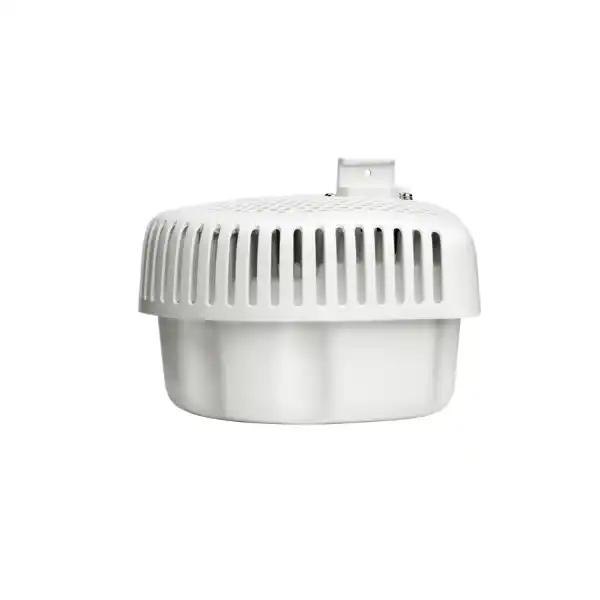
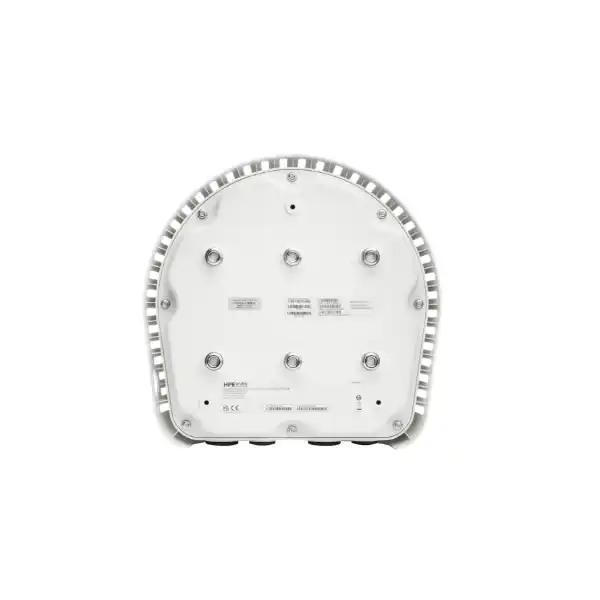
HPE Aruba Networking AP-674 in Dubai, UAE
A rugged tri-radio outdoor access point for organisations that need Wi-Fi 6E, flexible external antenna design, fast wired uplinks and enterprise-class wireless management across campuses, industrial spaces, transport areas and other exposed locations.
Wi-Fi 6E / 802.11ax with 6 GHz
Tri-radio 2×2
Up to 3.9 Gbps
External connectorized
Outdoor, ruggedized, hardened
Direct answer for buyers
The HPE Aruba Networking AP-674 is an outdoor, connectorized Wi-Fi 6E access point in the 670 Series. It is mainly used where an enterprise needs 2.4 GHz, 5 GHz and 6 GHz wireless service with external antenna control for outdoor coverage patterns, industrial areas, large campuses or difficult RF locations. Buyers should consider it when internal omni-directional antennas are not sufficient for the intended design. Before proceeding, confirm the correct regulatory-country model, external antennas and RF cables, PoE source, Ethernet or SFP uplink, mounting arrangement, management software and whether standard-power 6 GHz operation is authorised at the deployment location. FourTeck can help translate those requirements into a bill of materials and quotation.
What the AP-674 does
The AP-674 extends enterprise Wi-Fi into outdoor and environmentally challenging spaces while giving the network designer control over antenna selection. Unlike an outdoor access point that relies on built-in omni-directional antennas, the AP-674 provides external connectors for the Wi-Fi radios. That matters when coverage needs to be shaped toward a yard, roadway, loading area, open campus zone, process plant corridor or another defined service area.
It combines three 2×2 Wi-Fi radios for 2.4 GHz, 5 GHz and 6 GHz, a 2.5GbE wired interface, an SFP interface, Bluetooth and Zigbee capability, GNSS support and enterprise wireless features used across HPE Aruba Networking environments. The practical value is not simply a headline radio speed; it is the ability to build a controlled outdoor RF design around the correct antennas, network uplinks, power source and management model.
Who should consider it
The model is suitable for IT teams, network integrators and project owners who are designing enterprise-grade outdoor coverage and need more antenna flexibility than an integrated-antenna model provides. Typical environments can include education campuses, hospitality estates, logistics facilities, manufacturing sites, public-space networks, transport environments, utility compounds and large commercial properties.
It is not automatically the right choice for every outdoor deployment. If the requirement is straightforward omni-directional coverage and a simpler installation is preferred, an internal-antenna model in the same family may be more appropriate. If the site is a classified hazardous location, buyers should not assume that the standard AP-674 has the same certifications as the 670EX models. The RF design, environment and regulatory requirement should determine the choice.
Business problems this model can help address
Outdoor coverage that needs shaping
External antenna connectivity allows the wireless design to be adapted to the required coverage geometry instead of relying only on an integrated pattern. This can help when the target area is elongated, sectorised, directional or otherwise unsuitable for a standard omni pattern.
Congested multi-band environments
Tri-band operation enables use of 2.4 GHz, 5 GHz and 6 GHz, with 160 MHz channels available in 6 GHz where regulations and system conditions permit. The additional band can help planners create more capacity for compatible clients.
Long outdoor cable paths
The AP includes both a 2.5GbE Ethernet interface and an SFP interface. That gives the project team options when copper distance, electrical isolation, surge exposure or fibre topology makes a fibre uplink worth evaluating.
Wireless and IoT convergence
Bluetooth and Zigbee support can be relevant where Wi-Fi coverage is deployed alongside IoT or location-related use cases. The final design still depends on the applications, software platform, sensors and integration requirements.
Capabilities that matter in a real deployment
Product-fit matrix
| Requirement | Suitable when | Confirm before ordering |
|---|---|---|
| Directional or customised outdoor coverage | External antennas are needed to shape the RF footprint. | Antenna model, gain, cable loss, connector type, bracket and local EIRP limits. |
| Wi-Fi 6E client capacity | 6 GHz clients and wider channels are part of the design. | Regulatory authorisation, AFC requirements, client support and channel plan. |
| Outdoor fibre uplink | Fibre is preferred for topology, distance or electrical reasons. | SFP type, fibre plant, power delivery and surge/grounding design. |
| Industrial or harsh environment | The site is exposed to dust, water, heat or other outdoor conditions. | Actual environmental rating required and whether hazardous-location certification is necessary. |
| Existing Aruba architecture | The AP must join an enterprise HPE Aruba Networking environment. | Supported software release, management mode, licensing/subscription and migration implications. |
Verified technical information
Figures below reflect current HPE documentation for the AP-674 / RW reference model. Regional product numbers and allowed radio operation should be confirmed for UAE use.
| Brand | HPE Aruba Networking |
| Model | AP-674 |
| Reference product number | S0P46A for the RW variant; confirm correct regulatory-country SKU for the project |
| Deployment type | Outdoor, ruggedized, hardened |
| Wi-Fi generation | Wi-Fi 6E, IEEE 802.11ax with 6 GHz |
| Radio architecture | Triple 2×2 radios for 2.4 GHz, 5 GHz and 6 GHz |
| Channel widths | 20/40 MHz at 2.4 GHz; 20/40/80 MHz at 5 GHz; 20/40/80/160 MHz at 6 GHz |
| Peak aggregate data rate | Up to 3.9 Gbps |
| External antenna interfaces | Six connectors total: two for 2.4/5 GHz dual-band antennas, two for 6 GHz antennas, one BLE/IoT connector and one GPS/GNSS connector; included IoT and GPS antenna details are configuration-document dependent |
| IoT support | IEEE 802.15.4/Zigbee, Bluetooth 5.4 and two USB ports |
| Location services | 802.11 FTM support and GNSS receiver |
| Wired interfaces | 1 x 2.5GbE Ethernet and 1 x SFP; USB and serial-console interfaces are also documented |
| AP operating system support | HPE Aruba Networking Wireless Operating System 10.7.1.0 for AP-674 in the current data sheet; confirm supported current release before deployment |
| Management | On-premises, public cloud, virtual private cloud and as-a-service options are listed at the platform level; licensing and architecture are deployment dependent |
| Environmental protection | IP66/67, with published all-weather operation and extended temperature range |
| Operating temperature | -40°C to +65°C with full solar loading, according to current QuickSpecs |
| Warranty guidance | HPE documentation references a limited lifetime warranty. The applicable terms and duration should be confirmed for the exact SKU, country and purchase channel. |
Important dependencies: antennas, power, software and 6 GHz rules
A connectorized access point should never be ordered as though the AP body alone is a complete outdoor RF design. The antenna type, gain, polarisation, cable length, connector arrangement and mounting geometry directly influence coverage and regulatory compliance. The AP-674 uses separate external antenna connections for the Wi-Fi bands, so the bill of materials should be built around the approved antenna design rather than selected after the hardware arrives.
Power is another dependency. HPE documents intelligent power monitoring and PoE-related behaviour for the 670 Series. The selected switch, injector and cabling must provide the required power profile for the desired feature set. The wired uplink can use 2.5GbE copper or an SFP interface, but fibre does not remove the need to plan local AP power, grounding, lightning protection and enclosure practices where applicable.
The 6 GHz radio is also subject to country-specific rules. HPE states that the access points operate as standard-power devices and may require an automated frequency coordination service before 6 GHz is enabled. The 2.4 GHz and 5 GHz radios can operate independently of that 6 GHz authorisation state. For a UAE project, confirm current local regulatory approval, supported regional SKU, software release and any AFC or platform requirement before treating 6 GHz as available at the intended site.
From requirement to deployed access point
Define the service area
Identify the outdoor zones, client types, expected density, application profile, roaming requirement and where coverage must start and stop.
Design the RF pattern
Choose antenna characteristics and mounting positions based on predictive design, site information and—where necessary—onsite validation.
Confirm infrastructure
Check PoE, switching, fibre or copper paths, VLAN design, controller or cloud architecture, licences and upstream capacity.
Build the quotation
Confirm the exact regional AP SKU, antennas, cables, mounts, optics, power components, subscriptions and installation scope.
Install and validate
Mount, weather-seal, ground and connect the equipment, then validate coverage, roaming, uplink behaviour and policy operation against the design.
Why the connectorized design can be the deciding factor
Outdoor wireless design is often constrained less by the access point’s basic radio capability than by the shape of the physical environment. A warehouse yard can be long and narrow. A hospitality property may need coverage around a pool deck but not deep into neighbouring buildings. A logistics gate may require a defined sector toward vehicle lanes. A mining, utility or industrial site may have metal structures, obstructions and elevation differences that make a generic omni-directional pattern inefficient. In those cases, external antennas allow the RF engineer to choose a pattern that better reflects the actual geometry.
The AP-674 is built around that requirement. Its external antenna interfaces distinguish it from internal-antenna outdoor models in the 670 Series. That does not automatically mean it delivers longer range or higher practical throughput. Range depends on antenna gain, transmit power, client capability, frequency, interference, regulatory EIRP limits, mounting height and many other variables. A connectorized model is valuable because it gives the designer more control, not because it overrides the fundamentals of RF engineering.
For procurement teams, this creates an important ordering consequence: antenna and cable selection must be treated as part of the product decision. Using an inappropriate antenna can produce poor coverage, excessive overlap, regulatory issues or an installation that does not match the predictive design. Cable losses also matter, especially at higher frequencies. The antenna assembly should be verified against the AP’s connector arrangement, the environmental exposure and the intended radio band. If a long RF cable run is required, the loss budget should be reviewed rather than assuming the same antenna gain will be available at the access point output.
FourTeck can help buyers structure the requirement before the quote is finalised. That may include identifying whether a connectorized AP is justified, what information the RF designer needs, whether an internal-antenna alternative is simpler, and which ancillary items need to appear in the bill of materials. For complex sites, the access point should be one part of a complete design that also covers switching, power, fibre or copper transport, mounting, surge protection and the management architecture.
6 GHz outdoor Wi-Fi: capacity with additional planning
Wi-Fi 6E extends 802.11ax into the 6 GHz band, creating additional spectrum that can be useful for modern clients and high-capacity designs. On the AP-674, the 6 GHz radio supports channel widths up to 160 MHz. Wider channels can support higher PHY rates and lower contention in the right environment, but they consume more spectrum and should be selected as part of a deliberate channel plan. A design with many nearby access points may use narrower channels to create more reuse, while a lower-density application might use wider channels where permitted and beneficial.
Outdoor 6 GHz operation carries a regulatory dimension that is more significant than buyers may expect from a normal access point purchase. HPE documentation describes the 670 Series as standard-power devices and notes that, where required, an Automated Frequency Coordination service is used before enabling the 6 GHz radio. The objective of AFC is to protect incumbent services operating in the band. This means a buyer should not treat the presence of a 6 GHz radio in the hardware as proof that every 6 GHz channel will be available at every location.
The AP’s embedded location capability is relevant to that process. HPE lists GNSS support and self-location features in the 670 Series documentation. The exact operational workflow depends on software, regulatory domain and service availability. For Dubai and wider UAE projects, the correct approach is to confirm the approved regional SKU and current local rules at the time of design. Requirements can change over a product lifecycle, so quotations should be matched to the destination and the intended deployment date rather than copied from another country.
Client capability is another practical issue. Many installed devices still use 2.4 GHz and 5 GHz, while newer laptops, phones and specialist devices may support 6 GHz. The AP-674 can continue serving 2.4 GHz and 5 GHz even when the 6 GHz radio is unavailable or not authorised, but the business case for Wi-Fi 6E should be linked to the client’s roadmap. A site with no 6 GHz-capable devices may gain more from better 5 GHz design, improved switching or additional AP density than from treating 6 GHz as the primary buying reason.
Uplink, PoE and outdoor infrastructure planning
A high-performance outdoor access point is only as useful as the infrastructure behind it. The AP-674 provides a 2.5GbE Ethernet interface and an SFP interface, giving project teams more flexibility than a single copper-only uplink. A 2.5GbE copper connection can be appropriate when the cable distance, switching platform and power architecture support it. Fibre can be attractive where longer cable paths, electrical separation or the physical layout makes copper less desirable. The SFP interface should be matched to supported optics and the site’s fibre type, connector standard and link budget.
Power needs separate attention because fibre transport does not supply PoE. If the design uses the SFP uplink, a suitable local power arrangement is still required. Even with copper Ethernet, the switch or injector must provide the required PoE class for the intended operating mode. HPE’s intelligent power monitoring can report energy usage and can adjust capabilities according to available PoE power, but a design should not depend on power restrictions unless that trade-off is explicitly accepted. The correct objective is to provide sufficient, stable power for the required features.
Outdoor installations also introduce physical protection requirements. Cable entry, drip loops, gland sealing, grounding, surge protection, mounting hardware and lightning exposure should be considered alongside network connectivity. The AP’s IP rating does not protect an incorrectly installed cable system or an unsuitable power injector. Local electrical and structural practices must be followed, especially for rooftop, pole and exposed metal installations.
FourTeck can coordinate the networking portion of the requirement by reviewing the access switch, available PoE budget, fibre or copper path, optics, VLANs, management reachability and the expected upstream traffic. When quotation accuracy matters, share the current switch models, cable distances, existing fibre type, rack or outdoor cabinet arrangement and whether installation services are required. That reduces the chance of ordering an AP without the practical components needed to put it into service.
Ideal environments and use cases
Enterprise campuses
Outdoor walkways, courtyards, sports areas, parking zones and inter-building spaces can benefit from controlled antenna patterns and enterprise roaming when the RF design is planned as part of the wider campus WLAN.
Logistics and distribution
Yards, loading areas and vehicle lanes may need directional coverage for handhelds, tablets, scanners or operational devices. Client capabilities and application latency should be validated against the final channel plan.
Industrial sites
Rugged environmental design and IoT radios can be useful in industrial settings, but hazardous-location classification must be checked separately. The standard AP-674 should not be treated as an EX-certified model.
Hospitality estates
Resorts, event venues and large properties can use connectorized antennas to direct coverage toward outdoor guest areas while reducing unnecessary spill into locations that do not need service.
Transport environments
Stations, depots and perimeter areas can require flexible mounting and RF patterns. Fibre uplink capability can also be relevant where network cabinets are separated from the AP position.
Public and municipal spaces
Outdoor public access projects may need defined coverage zones, policy separation and high client diversity. Capacity estimates should be based on expected concurrency and application usage rather than area size alone.
Integration and operational considerations
The AP-674 should be evaluated as part of the complete HPE Aruba Networking operating architecture. HPE documentation lists multiple management approaches, including on-premises, public cloud, virtual private cloud and as-a-service options. Those descriptions are platform-level capabilities, not a statement that every management service is automatically included with the hardware. The correct software release, subscriptions and licensing should be confirmed for the intended environment.
Where the AP joins an existing Aruba WLAN, check software compatibility before procurement. The current data sheet identifies Wireless Operating System 10.7.1.0 support for AP-674. Software support changes as platforms evolve, so the network’s target release should be compared with current compatibility information when the order is placed. This is especially important during staged migrations, where older controllers or management instances may not support a newly introduced access-point model.
Security and segmentation are also architecture dependent. HPE describes WPA3, Enhanced Open, dynamic segmentation, policy enforcement and TPM-based credential protection as part of the 670 Series feature set. The practical use of these capabilities depends on the configured SSIDs, authentication systems, gateways, policy architecture and software. Buyers should map required user groups, IoT classes, guest access and role policies before deployment instead of assuming that simply replacing an AP automatically changes the security model.
For IoT projects, Bluetooth and Zigbee support can reduce the need for separate radio infrastructure in some use cases, but application compatibility needs to be confirmed end to end. A radio being present in the AP does not guarantee compatibility with every sensor platform or location service. The IoT requirement should identify the device type, protocol, application server, management workflow and whether USB expansion or external gateways are involved.
Questions to resolve before asking for a quote
Pole, wall, rooftop, gantry and structure mounting create different bracket, cable-entry, grounding and service-access requirements.
The answer determines whether directional, sector or omni antennas are appropriate and how many APs are likely to be required.
A mix of legacy 2.4 GHz devices, 5 GHz enterprise clients and newer 6 GHz clients may require different design priorities.
Distance, surge exposure, switching location and available infrastructure can make the SFP interface valuable in some outdoor designs.
Provide controller, gateway, cloud management and software-version details so compatibility and subscriptions can be checked.
If yes, the standard AP-674 should not be assumed suitable; the requirement must be matched to the appropriate certified product.
Procurement checklist for the AP-674
- Confirm exact AP-674 regulatory-country SKU and quantity.
- Define each deployment location and mounting orientation.
- Select approved external antennas for 2.4/5 GHz and 6 GHz.
- Confirm RF cable types, lengths and connector compatibility.
- Check PoE class, switch power budget and injector requirements.
- Decide between 2.5GbE copper and SFP fibre uplink where relevant.
- Validate supported optics and fibre type for SFP use.
- Confirm management platform, software release and subscriptions.
- Review 6 GHz regulatory and AFC requirements for the destination.
- Include mounting, glands, grounding and surge-protection scope.
- State whether RF survey, installation or configuration is required.
- Confirm warranty and support-service expectations for the exact quote.
How FourTeck can support the buying process
FourTeck can help turn a product name into a procurement-ready requirement. For the AP-674, that usually means confirming that the connectorized model is the correct fit, identifying the required country variant, checking the intended management architecture and building the accessory list around antennas, cabling, mounting, power and uplink choices. This approach is useful when procurement receives a model number from a consultant or technical team but the complete bill of materials has not yet been finalised.
If the project already has a design, share the AP schedule, antenna schedule, cable lengths, switch details, software version and expected deployment date. FourTeck can use that information to coordinate a quotation and highlight items that may require confirmation. If the requirement is still at concept stage, the discussion can start with site type, coverage zones, client density, existing network platform and whether 6 GHz is part of the business requirement.
FourTeck can also discuss installation and configuration scope where required. The exact services should be defined in the quotation, including any survey, onsite work, mounting, cabling, controller or cloud configuration, SSID creation, policy integration, testing and handover. For wider networking requirements, review FourTeck technology products, explore networking and support services, or send the project requirement for quotation guidance.
UAE availability and support guidance
Contact FourTeck to confirm current UAE availability for the HPE Aruba Networking AP-674. Availability can depend on the exact regional SKU, quantity, vendor lead time and accessory combination. Because this is a connectorized access point, a complete quotation may include antennas, RF cables, brackets, power components, optics or support subscriptions in addition to the AP itself. The correct list should be confirmed before purchase rather than assuming that a bare access point represents the whole outdoor solution.
FourTeck can coordinate product and project discussions for Dubai, Abu Dhabi, Sharjah and Ajman in one UAE requirement. Delivery and project coordination can be discussed after the exact hardware, deployment location and service scope are confirmed. Installation and configuration should be included in the quotation when required, with responsibilities for cabling, civil work, access permits, mounting structures, power and network integration stated clearly.
GCC Availability
For GCC projects, FourTeck can assist businesses with requirement review, AP and antenna selection, quotation coordination, delivery planning, configuration scope and regional project discussions. The AP-674 can be relevant to outdoor Wi-Fi projects across markets such as the United Arab Emirates, Saudi Arabia, Kuwait, Qatar, Bahrain and Oman, but the same regulatory-country SKU should not automatically be assumed for every destination. Wireless regulations, 6 GHz permissions, product variants and service arrangements can differ by country.
When requesting a GCC quotation, provide the destination country, exact deployment environment, quantity, external antenna requirement, preferred software or management platform, required subscription term if applicable and expected project timeline. Product availability, licensing, delivery schedule, service visits and vendor lead time may vary by model, quantity and destination. FourTeck can help structure the bill of materials and coordinate the commercial request, but local stock, fixed delivery dates, customs outcomes and country-specific certification should be confirmed for the actual project. For Kuwait-related requirements, buyers can also review FourTeck Kuwait resources.
Africa Availability
FourTeck can assist organisations planning outdoor wireless projects in Africa with product evaluation, accessory selection, subscription and management review, configuration scope, support requirements and procurement coordination. The AP-674 may suit campuses, logistics operations, hospitality properties, industrial areas and public-space networks where connectorized outdoor Wi-Fi is required. The correct solution should still be designed around the destination’s regulatory environment, power infrastructure, fibre or copper availability and environmental conditions.
Availability and fulfilment can depend on destination country, regional product variant, quantity, antenna selection, license region, power requirements, shipping arrangements, vendor lead time and installation scope. Buyers should share the destination, exact AP requirement, quantity, planned mounting locations, preferred deployment schedule and any installation or support expectations. FourTeck can then provide appropriate commercial and technical guidance without assuming local inventory or immediate shipment. For regional enquiries, see FourTeck Africa, FourTeck Kenya or FourTeck Uganda.
Related options and services to evaluate
HPE Aruba Networking AP-675
An internal omni-directional outdoor model in the same 670 Series. It may be worth comparing when external antenna flexibility is not required. Confirm exact regional SKU and feature fit.
HPE Aruba Networking AP-677
A directional internal-antenna outdoor option in the family. It can be considered where a built-in directional pattern is preferred to separate external antennas.
External antennas and RF cables
The AP-674 requires antenna planning. Approved antenna models, cables, gain, loss and mounting hardware should be matched to the design and local rules.
Switching and PoE review
Check whether the existing access switch provides the required PoE, 2.5GbE support and uplink capacity, or whether a switch change belongs in the project.
Wireless design and configuration
RF design, mounting, management integration, SSID configuration and policy work can be scoped separately from hardware supply where required.
Support and lifecycle planning
Confirm warranty terms, support-service options, software entitlements and operational ownership as part of the purchasing decision.
What buyers are trying to work out before choosing the AP-674
Most buyers who reach the AP-674 are not simply comparing access-point speeds. They are trying to decide whether a connectorized outdoor model is worth the extra design effort, whether 6 GHz will be usable in their location, and what else must be purchased to make the AP operational. Those questions are more important than a single throughput number because they determine whether the model fits the site and whether the quotation is complete.
The first decision is antenna strategy. If the site needs a predictable directional pattern, sector coverage or antennas mounted away from the AP body, the AP-674’s connectorized design may be the right approach. If the requirement is ordinary local-area coverage around the mounting point, an integrated-antenna outdoor model can reduce design and installation complexity. The choice should be made from the RF requirement, not from the assumption that external antennas are automatically more powerful.
The second question is whether Wi-Fi 6E materially helps the client population. The AP-674 supports 6 GHz and wide channels, but only compatible clients can use that band. A mixed estate may still depend heavily on 5 GHz, while older scanners, sensors or handheld devices may remain on 2.4 GHz. Buyers should review client radio capability and application needs before using the 6 GHz feature as the sole reason for purchase. For a new campus or technology refresh, 6 GHz can be part of the design roadmap even if adoption is gradual.
A related issue is outdoor regulatory authorisation. Searchers often ask whether an outdoor Wi-Fi 6E AP will simply enable 6 GHz once installed. The answer is: not necessarily. Standard-power 6 GHz outdoor operation may depend on the regulatory domain, AFC service and the AP’s ability to establish its location. HPE specifically documents that the 6 GHz radio is enabled only after applicable standard-power requirements are met. That makes destination-country confirmation part of procurement, not an afterthought.
Buyers also compare copper and fibre uplinks. The 2.5GbE Ethernet port is a straightforward choice when the run is within copper limits and an appropriate PoE source is available. The SFP interface can be attractive for longer outdoor paths or electrically sensitive links, but it does not eliminate the need for local power. The correct design can therefore involve fibre for data plus a separate approved power arrangement. This should be documented before ordering optics or injectors.
Another common purchasing question is whether the AP includes the software, cloud subscription or controller entitlement needed to operate in the intended architecture. Hardware, licensing and management should be treated as separate line items until the commercial configuration is confirmed. Existing Aruba customers should share the current management platform and software release; new deployments should define whether they prefer an on-premises, cloud-managed or consumption-based operating model. That information allows the quotation to be aligned with the deployment rather than built from hardware alone.
Finally, organisations want to understand what information speeds up a quotation. For the AP-674, the most useful inputs are quantity, country, mounting environment, coverage objective, antenna preference, approximate cable distance, switch model, preferred uplink medium, management platform, target deployment date and whether installation or configuration is required. A site drawing, AP schedule or existing RF design is especially useful. With those inputs, FourTeck can help separate mandatory items from optional components and reduce the risk of receiving an incomplete bill of materials.
Practical answers to high-value buying questions
Do I need to buy antennas separately?
The AP-674 is a connectorized model, so the Wi-Fi antenna design must be confirmed as part of the order. HPE documentation lists six external connectors in total and identifies included antenna elements for the IoT and GPS functions in the reference configuration. Do not assume that the Wi-Fi antennas required for 2.4/5 GHz and 6 GHz are part of a standard quote. Ask for the full antenna and RF-cable bill of materials.
Can I replace an older outdoor Aruba AP with AP-674 directly?
A physical one-for-one replacement should not be assumed. Check the existing mount, antennas, connector types, PoE level, uplink speed, software version, controller or cloud architecture and radio design. A newer AP may require different software support or power. Reusing old antennas without validating band support and gain can also create coverage or compliance problems.
Should I use 160 MHz channels in 6 GHz?
The AP supports them, but that does not mean they are always the best choice. Wider channels can increase potential throughput for capable clients, while narrower channels allow more reuse and can be better in denser multi-AP designs. Regulatory availability, interference, client capability and capacity targets should drive the channel plan.
What information should be included in an RF survey request?
Provide site drawings, outdoor dimensions, mounting heights, construction materials, client types, expected concurrency, application requirements, roaming paths and any zones where coverage should be limited. If poles or structures already exist, include photographs and cable routes. This allows antenna selection and AP placement to be based on the real environment.
Can the AP-674 be used in hazardous areas?
Do not assume so. HPE identifies specific 670EX models for hazardous locations, and certifications such as Class 1 Division 2, ATEX Zone 2 and IECEx apply to EX variants rather than the standard model. If a site is classified, provide the hazardous-area requirement before selecting hardware.
What should procurement ask FourTeck to quote?
Ask for the exact AP-674 regional SKU, quantity, approved antennas, RF cables, mounts, required optics, power components, management subscriptions, support options and any survey, installation or configuration services. Stating the destination and current Aruba software environment helps FourTeck coordinate a more accurate and deployment-ready quotation.
Why businesses contact FourTeck for this type of requirement
Outdoor WLAN procurement usually has more dependencies than an indoor access-point purchase. The AP body, antennas, cables, mounting, PoE, fibre or copper uplink, management platform and local radio rules all influence whether the final installation works as intended. FourTeck can help buyers organise these dependencies into a clear commercial request rather than treating the AP as an isolated line item.
Assistance can include requirement clarification, model and accessory selection, bill-of-material review, compatibility checks, quotation coordination, installation planning, configuration scoping and support discussions. These activities are defined according to the project and should not be assumed to be included in every hardware quote. To understand FourTeck’s broader capabilities, visit about FourTeck or use the FourTeck contact channel for a wider UAE technology requirement.
Frequently asked questions
What is the HPE Aruba Networking AP-674?
It is a rugged, connectorized outdoor Wi-Fi 6E access point in the HPE Aruba Networking 670 Series, using tri-radio 2×2 operation across 2.4 GHz, 5 GHz and 6 GHz.
What is the manufacturer part number for the RW AP-674?
HPE lists S0P46A for the AP-674 (RW) connectorized outdoor model. The correct regulatory-country SKU for a UAE order should be confirmed before purchase.
Does the AP-674 have internal Wi-Fi antennas?
The AP-674 is the connectorized external-antenna model. Wi-Fi antenna selection should be designed and quoted for the intended 2.4/5 GHz and 6 GHz coverage requirements.
What is the maximum published aggregate data rate?
HPE publishes a peak aggregate data rate of up to 3.9 Gbps for the tri-radio 2×2 platform. Actual application throughput will be lower and depends on the complete RF and network environment.
Does it support 160 MHz channels?
Yes, the 6 GHz radio supports 20, 40, 80 and 160 MHz channel widths. Channel selection should consider regulation, client support, interference and AP density.
Can the AP-674 use a fibre uplink?
Yes. HPE documents an SFP interface in addition to the 2.5GbE Ethernet interface. Supported optics, fibre type and the separate AP power method should be confirmed for the deployment.
Is 6 GHz automatically available outdoors in Dubai?
Do not assume that it is. Standard-power 6 GHz use can depend on local regulation, regional hardware, AFC requirements and software. Confirm current UAE requirements before planning the 6 GHz service.
Is the AP-674 suitable for hazardous locations?
The standard AP-674 should not be treated as a hazardous-location model. HPE lists 670EX variants for environments that require specific hazardous-location certifications.
What should I provide to request a FourTeck quote?
Provide the destination, quantity, mounting environment, antenna or coverage requirement, switch and PoE details, preferred uplink, management platform and whether design, installation or configuration support is needed.
How can I confirm UAE availability?
Contact FourTeck with the project details. Current availability can depend on the exact SKU, quantity, accessories and vendor lead time, so it should be checked at the time of quotation.
Plan the AP-674 requirement before you order
Share the site, quantity, antenna requirement, current network platform and expected project timing. FourTeck can help confirm the correct regional model, accessory list, configuration scope and current UAE quotation options.

Reviews
There are no reviews yet.