
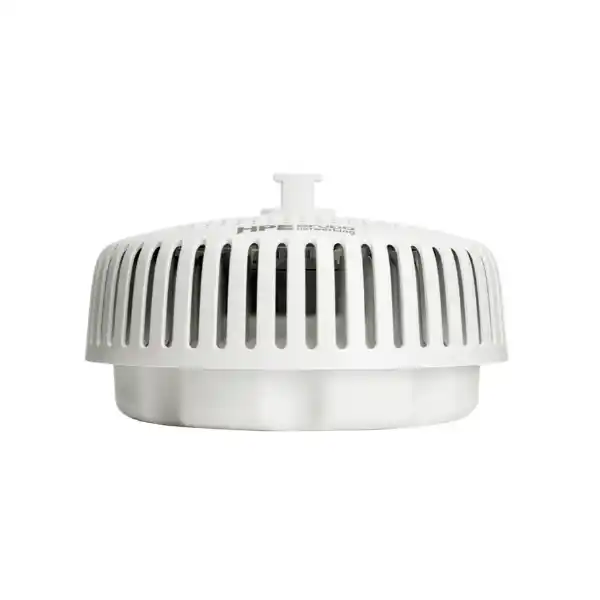
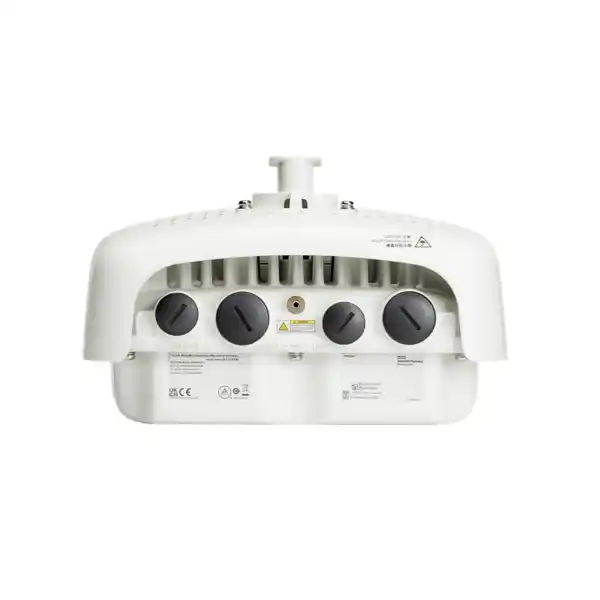
Directional outdoor enterprise wireless
HPE Aruba Networking AP-677 in Dubai, UAE
The HPE Aruba Networking AP-677 is an outdoor Wi-Fi 6E access point built for organisations that need rugged wireless infrastructure and a directional antenna pattern. It is part of the HPE Aruba Networking 670 Series and combines concurrent 2.4 GHz, 5 GHz, and 6 GHz radios with 2×2 MIMO, an integrated directional antenna system, multi-gigabit wired connectivity, IoT radios, GNSS location capability, and environmental protection for demanding outdoor installations. For UAE projects, the main purchasing questions are not only wireless speed, but also coverage geometry, regional radio rules, mounting orientation, power availability, management choice, and exact ordering variant.

Direct answer for buyers
The AP-677 is a ruggedized outdoor access point for projects that need enterprise Wi-Fi coverage aimed toward a particular zone. It can serve open courtyards, outdoor workspaces, perimeter-facing areas, logistics yards, campus routes, hospitality grounds and other locations where an omnidirectional access point may not create the desired RF shape. It supports Wi-Fi 6E across 2.4 GHz, 5 GHz and 6 GHz, plus wired 2.5GbE and SFP connectivity. Before purchasing, confirm whether the directional pattern matches the design, whether 6 GHz operation is permitted for the intended UAE configuration, how the unit will be powered and mounted, which management platform will be used, and which regional part number, license and accessories belong in the bill of materials.
What the AP-677 does
The AP-677 extends managed enterprise wireless into outdoor spaces while directing radio energy toward a defined coverage area. Its tri-radio architecture supports simultaneous operation in the established 2.4 GHz and 5 GHz bands and the newer 6 GHz band used by Wi-Fi 6E clients. This gives network designers more spectrum choices, but the practical result depends on client capability, local rules, channel planning, interference and deployment geometry.
The access point is also designed as an outdoor infrastructure node rather than a simple standalone hotspot. It includes high-speed wired uplink choices, PoE power, IoT radios, location functionality and management options that can be incorporated into a broader HPE Aruba Networking environment.
Who should consider it
It suits organisations that already know they need directional outdoor coverage or have a wireless survey indicating that a focused pattern is preferable. Typical buyers include campus IT teams, hospitality operators, warehouse and logistics organisations, industrial facilities outside hazardous zones, transport environments, public venues and enterprises extending network access between buildings or across outdoor operational areas.
It may be unnecessary when a broad omnidirectional pattern is more appropriate, when 6 GHz is not part of the design, or when the installation location requires a specifically certified hazardous-location model. Those cases should be assessed before a quotation is finalised.
Business challenges the AP-677 can help address
Coverage that must be aimed
Outdoor RF can be wasted when signal is radiated in directions where clients do not exist. The integrated directional antenna arrangement helps a designer shape coverage toward a walkway, seating zone, loading area or other target region. Proper placement and orientation still require planning.
Harsh environmental exposure
Outdoor equipment may face heat, dust, moisture, wind and persistent exposure. The AP-677 is built for outdoor service with IP66/67 protection and a published operating temperature range from -40°C to +65°C with full solar loading.
More spectrum for modern clients
Where local regulations and client devices permit, the 6 GHz radio offers additional spectrum and supports channel widths up to 160 MHz. This can be useful in designs where high-capacity applications need more room than the traditional bands can provide.
Converged wireless and IoT planning
Integrated Bluetooth and Zigbee capabilities can support selected IoT and location use cases, reducing the need to treat every wireless sensor initiative as a completely separate overlay. The exact IoT workflow remains application and management dependent.
Product-fit matrix
| Requirement | Suitable when | Confirm before ordering |
|---|---|---|
| Directional outdoor Wi-Fi | The design needs a focused coverage area rather than a 360-degree pattern. | Mounting position, tilt, coverage geometry and survey findings. |
| Wi-Fi 6E / 6 GHz | Modern clients and local spectrum rules support the intended 6 GHz operation. | UAE regulatory status, regional variant and any AFC dependency. |
| Multi-gigabit copper uplink | The wired edge can provide 2.5GbE and sufficient PoE. | Switch port capability, PoE class and cabling. |
| Fiber uplink option | Fiber is preferable for distance or electrical isolation. | Approved industrial-temperature SFP/SFP+ choice and power arrangement. |
| Outdoor industrial environment | The site is harsh but not a hazardous-location zone requiring EX certification. | Whether the AP-677EX or another certified model is required. |
Verified technical information
The table below separates confirmed AP-677 facts from items that remain deployment or region dependent. The UAE project should be based on the exact regional ordering code and current local radio policy rather than assuming that every global configuration enables identical channels.
| Brand | HPE Aruba Networking |
|---|---|
| Product | AP-677 Outdoor Access Point |
| Regional ordering reference | S0P56A for AP-677 (RW); confirm suitability for the UAE order. |
| Product family | HPE Aruba Networking 670 Series Outdoor Access Points |
| Wi-Fi generation | Wi-Fi 6E / IEEE 802.11ax with 6 GHz capability |
| Radio design | Tri-radio, concurrent 2.4 GHz, 5 GHz and 6 GHz, 2×2 MIMO per band |
| Peak aggregate data rate | Up to 3.9 Gbps across the three radios |
| Maximum channel widths | 20/40 MHz at 2.4 GHz, up to 80 MHz at 5 GHz, up to 160 MHz at 6 GHz |
| Antenna | Integrated tri-band directional antennas; approximately 90° x 90° beamwidth |
| Published combined average antenna gain | Approximately 6.9 dBi at 2.4 GHz, 6.5 dBi at 5 GHz and 6.9 dBi at 6 GHz in current QuickSpecs |
| Copper network interface | 100/1000/2500BASE-T auto-sensing E0 with PoE-PD |
| Fiber interface | SFP on E1; industrial-temperature module guidance applies |
| PoE support | 802.3at/bt; unrestricted operation specified with 802.3bt Class 6 |
| Maximum AP power consumption | Up to 29 W without attached USB device; higher with USB load, subject to power conditions |
| IoT radios | Bluetooth Low Energy and IEEE 802.15.4/Zigbee |
| Location capability | GNSS receiver and 802.11 FTM support |
| USB | USB-C and USB-A host interfaces; available power depends on PoE conditions |
| Environmental rating | IP66/67 |
| Operating temperature | -40°C to +65°C with full solar loading |
| Dimensions | 290 mm x 288 mm x 171 mm, unit only |
| Weight | Approximately 3.6 kg, unit only |
| Management | Cloud or on-premises options are supported; exact software and licensing should be confirmed for the intended architecture. |
| Availability | Contact FourTeck for current UAE availability, lead time and exact bill of materials. |
Configuration, licensing and regional dependencies
An AP-677 project should not be quoted from the access-point model name alone. The HPE ordering structure includes region-specific versions, and 6 GHz radio use is governed by local rules. HPE documentation explains that 670 Series outdoor access points operate as standard-power devices and may require Automated Frequency Coordination where the regulatory framework calls for it. This means the 2.4 GHz and 5 GHz radios may be usable even when the 6 GHz radio cannot yet be enabled in the same way. Buyers should confirm the current UAE position before treating 6 GHz as an available design assumption.
Management is another dependency. HPE Aruba Networking Central can be part of the operational design, and licenses are offered in multiple terms. The required license, feature set and management architecture should be defined before purchase rather than added as an afterthought. Mounting kits and power sources are also separate ordering decisions. The AP includes a mounting-bracket holder, but the compatible pole, wall, hanging or tilt mount needs to be selected for the installation.
For hazardous environments, do not assume the standard AP-677 is interchangeable with the AP-677EX. The EX version has different certifications and must be evaluated where flammable gases, vapours or other hazardous-location requirements apply. FourTeck can help separate the standard outdoor design from requirements that need the certified EX route.
From requirement to deployment
Define the target area
Document where clients will be, what outdoor obstructions exist, how far the coverage must extend and whether the RF should be focused in one direction. Directional hardware is most effective when the desired geometry is clear.
Confirm platform fit
Review existing HPE Aruba Networking management, gateway, switching and policy architecture. Confirm software versions, Central licensing if required and whether new 6 GHz clients are part of the project.
Build the bill of materials
Select the regional AP, mounting hardware, PoE source or injector, SFP components if using fiber, surge and cable considerations, management license and any installation services required.
Validate installation
Mounting height, azimuth, downtilt, cable entry, grounding, PoE budget and access for maintenance should all be reviewed before installation. Outdoor wireless performance is strongly affected by physical placement.
Configure and verify
Provision the AP, apply permitted channels and power settings, verify client behavior, check uplink speed and confirm that the directional coverage reaches the intended service area without creating avoidable overlap.
Directional RF design instead of generic outdoor coverage
The defining selection feature of the AP-677 is its built-in directional antenna arrangement. HPE specifies an approximate 90° x 90° beamwidth and notes that the antenna design is intended for vertical wall or pole mounting, including downtilt, or for down-firing use in a horizontal orientation. This gives a designer multiple physical approaches while preserving the fundamental idea of aimed coverage.
That is useful in locations where an omnidirectional pattern would place substantial energy behind the AP, outside a fenced operating area or into neighboring spaces. Directionality can also help when a row of access points is intended to cover long outdoor corridors with controlled overlap. It does not, however, remove the need for an RF survey. Client transmit power, obstruction materials, mounting height, reflections, neighboring networks and local channel rules still determine the real experience.
A buyer comparing AP-677 with AP-675 should therefore start with antenna geometry rather than raw data-rate figures. The AP-675 uses integrated omnidirectional antennas, while the AP-677 is intended for focused coverage. The right choice is the one that matches the intended cell shape.
Wi-Fi 6E capacity with practical regional limits
The 670 Series brings the 6 GHz band into HPE Aruba Networking outdoor deployments. The AP-677 runs 2×2 MIMO radios in all three supported Wi-Fi bands, with a maximum aggregate rate of 3.9 Gbps. At 6 GHz it can use channel widths up to 160 MHz, which can be attractive for modern client devices and applications that benefit from larger clean channels.
The design decision is more nuanced than selecting a product labelled Wi-Fi 6E. Outdoor standard-power 6 GHz operation is governed by country rules, and HPE documentation discusses AFC as part of the mechanism used where required to protect incumbent services. A project should therefore confirm that the intended regional code and deployed software will operate as expected at the exact UAE site.
The installed client base also matters. Many existing devices continue to use 2.4 GHz or 5 GHz. The AP-677 supports those bands concurrently, which allows a migration path rather than forcing all clients onto 6 GHz. The network design should map client capability by device population instead of assuming every endpoint can use the newest band.
Power, uplink and operational resilience
Outdoor access points are often installed where power and cabling are more complicated than in an office ceiling. The AP-677 supports a 2.5GbE copper interface that also accepts PoE and an SFP interface for fiber connectivity. HPE states that the SFP port is expected to serve as the primary uplink when used, and recommends industrial-temperature SFP/SFP+ modules for optimal performance.
Power budget has direct feature consequences. With 802.3bt Class 6 PoE, the AP can operate without restrictions. Lower PoE levels can lead to USB, SFP or radio-chain restrictions if Intelligent Power Monitoring is not managing the power budget. This is why the switch specification belongs in the AP decision: a high-capability access point connected to insufficient PoE may not provide the configuration the designer expected.
For sites without a suitable PoE switch near the deployment, HPE lists outdoor midspan injectors as options. The final design should consider distance, surge protection, grounding, conduit, environmental sealing and maintenance access along with the network interface itself.
Ideal business environments and use cases
Campus walkways and courtyards
Aimed cells can extend corporate wireless from indoor buildings toward shared outdoor spaces without treating the whole perimeter as one large coverage zone.
Warehouses and logistics yards
Directional outdoor APs can support handheld devices, tablets, operational mobility and selected IoT use cases around loading areas, vehicle lanes and yard processes.
Hospitality grounds
Resorts, outdoor dining areas and leisure spaces may use directional cells to serve guest areas while maintaining a managed enterprise wireless architecture.
Public and event venues
The rugged platform can be considered where outdoor client density, weather exposure and defined seating or activity areas make focused enterprise Wi-Fi appropriate.
Transport and parking areas
It can support planned coverage along waiting areas, outdoor terminals, parking zones or directional approaches, subject to local RF and mounting conditions.
Industrial outdoor zones
The standard AP-677 is suitable for rugged outdoor designs that do not require HazLoc certification. Where hazardous-location rules apply, evaluate the corresponding EX model instead.
Integration and operational considerations
The access point should be treated as one component of a wireless system. If the business already operates HPE Aruba Networking Central, gateways, campus switching or policy services, the AP-677 can fit into that operating model, but software release and licensing compatibility must be verified. HPE support documentation lists AP-677 among supported outdoor platforms in current Central On-Premises references, with software-version dependencies. A project that mixes older infrastructure with newer 670 Series APs should confirm the supported combination before shipment.
Switching design matters in two ways: Ethernet capacity and PoE capacity. The copper interface supports 2.5GbE, so the connected switch must provide the desired multi-gigabit link if the project expects more than 1GbE at the edge. The same switch must also deliver the PoE class needed for the configured features. Where fiber is used, the SFP selection must suit the outdoor temperature range and link design.
Operational teams should also decide how they will monitor outdoor devices. Access to the mounting point, replacement procedures, cable labeling, surge-protection inspection, configuration backup and alerting should be included in the rollout plan. The built-in GNSS receiver and FTM capabilities can support location-oriented services, but any application relying on those functions should be validated against the chosen management platform and client ecosystem.
For IoT, integrated Bluetooth and Zigbee expand the platform’s role, but they do not mean every sensor product will work automatically. Confirm protocol, application integration, security policy and management support. The access point can provide radio capability; the complete IoT outcome still depends on software and endpoint compatibility.
Questions to resolve before requesting a quote
Share drawings, distances, mounting points, client zones and major obstructions so the directional pattern can be evaluated.
Confirm device capability and current UAE rules rather than basing the design only on the Wi-Fi 6E label.
Choose between 2.5GbE copper with PoE and fiber via SFP, then design power accordingly.
Full-feature operation needs appropriate 802.3bt power. Lower power can restrict selected interfaces or radio capability.
Clarify cloud, on-premises or existing controller architecture and identify any licenses that belong in the order.
If the area has HazLoc requirements, the standard AP-677 should not be selected without checking the EX alternative.
Procurement checklist for AP-677 projects
- Confirm the exact AP-677 regional variant and official manufacturer part number.
- Confirm required quantity and whether spare units are part of the project policy.
- Verify the intended directional coverage area and mounting orientation.
- Check whether local 6 GHz rules permit the planned operating mode.
- Verify switch port speed, PoE class and available power budget.
- Choose copper or fiber uplink and specify approved SFP components if required.
- Select the correct wall, pole, flush or tilt mounting kit.
- Include outdoor cabling, grounding and surge-protection requirements in the site plan.
- Confirm HPE Aruba Networking management platform and license term.
- Check software compatibility with existing gateways, controllers or Central deployment.
- Identify installation, configuration and testing responsibilities.
- Confirm whether the site requires a hazardous-location certified AP instead.
- Request current UAE lead time, warranty terms and support options for the exact quotation.
How FourTeck can help with sizing and quotation
FourTeck can help translate a wireless requirement into an orderable bill of materials rather than treating the AP as an isolated line item. For AP-677 deployments, useful inputs include site drawings, mounting height, target coverage direction, expected client types, upstream switch model, available PoE, preferred management method and whether fiber uplink is required. From there, the discussion can cover the regional AP code, mounts, injectors, transceivers, licensing and installation scope.
If the organisation is replacing older outdoor Aruba access points, share the existing model numbers and mounting hardware. HPE notes common mounting hardware across the 670 Series and previous outdoor APs in several cases, but reuse should still be checked against the actual mount and installation condition. For new builds, the mounting kit should be selected around pole diameter, wall placement, tilt and cable routing.
For broader network projects, FourTeck can also coordinate discussions around switching, WLAN management, security policy and deployment services. Visit the FourTeck technology services page or contact the team with the planned quantity and project location.
UAE availability and support guidance
Contact FourTeck to confirm current UAE availability for the AP-677 and the correct regional version. Availability may depend on the model code, quantity, vendor lead time, license selection and accessories. A quotation should state the exact AP reference and separate optional items so procurement can see what is included.
Delivery and project coordination can be discussed after the requirement is confirmed. If installation or configuration is required, include that scope in the request so mounting, power, cabling and acceptance testing can be planned together with the hardware.
Dubai, Abu Dhabi, Sharjah and Ajman coverage
Businesses planning AP-677 deployments in Dubai, Abu Dhabi, Sharjah and Ajman can discuss product selection, quotation preparation, delivery coordination, and installation or configuration scope with FourTeck. The useful starting point is a clear requirement rather than a city name: provide the number of access points, deployment environment, preferred mounting points, existing HPE Aruba Networking platform, switch and PoE information, and expected project schedule. Outdoor wireless work can vary significantly between a hospitality property, logistics yard, university campus and industrial perimeter, so the same product may require a different mounting kit, power method, channel plan and services package in each case. Current availability and delivery timing should be confirmed for the exact order.
GCC Availability
FourTeck can assist organisations planning HPE Aruba Networking outdoor wireless projects across GCC markets with requirement review, regional model selection, quotation coordination, mounting and power planning, management-license guidance and deployment scope. For an AP-677 requirement, share the destination country, quantity, preferred installation date, existing Aruba platform and whether the project expects 6 GHz operation. Regulations, regional SKUs, license conditions and permitted radio behavior can differ between the United Arab Emirates, Saudi Arabia, Kuwait, Qatar, Bahrain and Oman, so the same global model family should not be assumed to operate identically in every market. Product availability, vendor lead time, delivery schedule, service visits and project scope can also vary by country and quantity. FourTeck can help prepare a practical bill of materials, but buyers should confirm the destination and exact operating requirement before an order is placed. For Kuwait-related enquiries, the FourTeck Kuwait resource can also provide regional context.
Africa Availability
For African deployments, FourTeck can help organisations evaluate the AP-677 alongside the licenses, mounting hardware, power method, switching capability, fiber components and configuration services needed for a workable outdoor design. Requirements can vary substantially between corporate campuses, logistics facilities, hospitality properties and industrial sites, so procurement should share the destination country, exact quantity, preferred deployment schedule, site conditions and support expectations. Availability and fulfilment may depend on regional product codes, vendor lead time, shipping arrangements, local radio regulations, power requirements and the installation scope. East African buyers can use the FourTeck Kenya and FourTeck Uganda resources, while broader project enquiries can use FourTeck Africa. Current inventory, customs outcomes, country-wide onsite coverage and delivery dates should always be confirmed for the specific project rather than assumed.
Related products and project options
AP-675
Consider the AP-675 when the same outdoor Wi-Fi 6E platform is needed with integrated omnidirectional rather than directional coverage. Confirm regional ordering code and project fit.
AP-679
The AP-679 offers dynamic directional antenna options for designs needing a different beam pattern. It should be compared by coverage objective, not treated as a simple performance upgrade.
AP-677EX
For hazardous-location requirements, evaluate the AP-677EX instead of the standard AP-677. Certification and installation requirements need project-specific review.
Outdoor mounting kits
HPE lists several compatible long-arm, short-arm, hanging, flush and dual-tilt outdoor mounts. The correct option depends on the pole or wall position and desired antenna orientation.
PoE injectors
Outdoor 802.3bt midspan injector options may be useful where the upstream switch cannot provide the required PoE at the planned AP location.
Deployment services
Wireless design, installation planning, configuration and validation can be included in a project discussion. Browse FourTeck products and related infrastructure options.
Why businesses contact FourTeck for this type of project
Outdoor wireless purchasing often fails when procurement receives only a device model and no design context. FourTeck can help clarify whether the requested model matches the intended antenna pattern, confirm the bill of materials around mounting and power, review license and management requirements, and identify questions that should be resolved before the order is released.
This is particularly useful with AP-677 because a successful deployment depends on more than the radio specification. The regional variant, local 6 GHz policy, PoE class, mounting orientation, cable path and operational management are all part of the result. A quotation can be prepared around the exact quantity and project scope so buyers know which components are hardware, which are licenses, and which are optional services.
For wider infrastructure planning, learn more about FourTeck technology solutions and share the existing network environment when requesting advice.
What buyers are trying to understand before choosing AP-677
Is AP-677 mainly about range?
Not exactly. Its key distinction is the directional pattern, which changes where RF energy is concentrated. A directional AP can often be placed to serve a target area more deliberately than an omnidirectional model, but usable range still depends on client devices, transmit power, obstacles, noise, channel choice and mounting height. Treat the antenna shape as a design tool, not a guaranteed distance figure.
Will every client use 6 GHz?
No. Only compatible Wi-Fi 6E or newer clients can use 6 GHz, and outdoor operation is also subject to regional regulation. Existing phones, scanners, laptops and IoT endpoints may remain on 2.4 GHz or 5 GHz. The AP’s three-radio design lets a network support a mixed client population while newer devices gain access to additional spectrum when permitted.
Why does PoE selection matter so much?
Because the access point can change its available features when the power budget is lower. HPE specifies unrestricted operation with 802.3bt Class 6 PoE. Under lower classes, USB ports, the SFP interface or part of the radio capability can be restricted depending on Intelligent Power Monitoring settings. Matching the switch and AP prevents hidden compromises after installation.
When is fiber attractive?
Fiber can be useful for long outdoor cable runs, environments where electrical isolation is preferred, or designs that already have fiber distribution near the AP. The AP-677 includes an SFP interface, but power still has to be provided separately through the supported method, and HPE recommends industrial-temperature transceiver modules for the operating environment.
Another recurring buying question is how AP-677 compares with neighboring 670 Series models. The most practical comparison is antenna architecture. AP-674 is connectorized for external antennas, useful when the project needs an antenna system chosen separately. AP-675 uses integrated omnidirectional antennas and therefore suits coverage that should spread around the mounting point. AP-677 uses integrated directional antennas for a focused cell. AP-679 adds software-provisioned directional modes for different beam shapes. These differences change site planning more than a simple table of maximum throughput would suggest.
Buyers also ask whether the AP can operate without HPE Aruba Networking Central. HPE documentation describes the access points as capable of standalone or gateway-based operation and supports cloud or on-premises management choices. The right architecture depends on the organisation’s existing environment and operational model. Central licensing can add cloud onboarding, configuration and management capabilities, but a quotation should identify the selected license term and feature requirements instead of assuming a default subscription.
A further area of interest is outdoor durability. IP66/67 indicates strong protection against dust and water ingress, while the specified -40°C to +65°C operating range with full solar loading addresses a wide range of climates. HPE also publishes salt-spray and wind-survival test references for the series. These values help with product screening, but installers still need suitable cable glands, grounding, mounting hardware, surge protection and physical access planning. Environmental rating protects the device; it does not replace good outdoor installation practice.
For quotation preparation, the fastest route is to send more than a model name. Provide a simple site description, approximate dimensions, mounting surfaces or poles, number of APs, expected client types, current HPE Aruba Networking management platform, switch model, available PoE class, preferred uplink and project location. Mention whether the requirement is a new design, an expansion or a replacement. This lets FourTeck distinguish a straightforward hardware quote from a design that also needs mounts, PoE injectors, fiber modules, licenses or configuration assistance.
Finally, buyers should separate product capability from local enablement. The AP-677 is technically built for tri-band Wi-Fi 6E, but the actual channel set available at a site depends on the regional regulatory domain and HPE software behavior. For UAE planning, confirm the correct RW variant and current radio policy at quotation time. That step is more valuable than relying on a global specification copied from another country.
Decision questions that help avoid the wrong purchase
Do I need AP-677 or AP-675 for an outdoor area?
Choose based on coverage shape first. AP-677 is the directional option, while AP-675 is designed with integrated omnidirectional antennas. If clients are mainly in front of a wall or along a defined zone, directional coverage may make sense. If clients surround the mounting point, omnidirectional coverage may be more appropriate. A site survey or predictive design can help resolve the choice.
Can I power it from an ordinary PoE+ switch?
Possibly, but not with the same unrestricted feature set. HPE documents operation with 802.3at Class 4 under restrictions when Intelligent Power Monitoring is disabled, while 802.3bt Class 6 supports unrestricted operation. Check the exact switch and power budget before finalising the design.
Does the SFP port mean the AP can run only on fiber?
No. The AP still needs supported power. The SFP interface provides a fiber network-uplink option, and HPE expects it to be the primary uplink when used. A complete design must specify how PoE or another supported power method will be delivered alongside that fiber link.
Should I include a Central license in the quote?
Include it when the chosen management architecture requires it. HPE Aruba Networking Central is a common way to onboard, configure and operate the AP, with multi-year license terms available. Existing customers should share their current subscriptions and tenant design so the quote matches rather than duplicates their environment.
How do I know if 6 GHz will work at my UAE site?
Confirm the regional product code and current regulatory enablement. Outdoor 6 GHz use is country dependent, and HPE’s standard-power operation can involve AFC where required. The AP may still provide 2.4 GHz and 5 GHz service even if 6 GHz is not enabled under the same conditions.
What information gives me a more accurate quotation?
Provide quantity, destination, mounting method, uplink preference, PoE capability, management platform and installation scope. Add drawings or photographs for outdoor areas when available. These details allow the bill of materials to include mounts, injectors, SFP modules, licenses and services instead of quoting only the access point.
Frequently asked questions
What is the HPE Aruba Networking AP-677?
It is a rugged outdoor Wi-Fi 6E access point in the HPE Aruba Networking 670 Series. The AP-677 uses integrated directional antennas and concurrent 2.4 GHz, 5 GHz and 6 GHz radios with 2×2 MIMO.
What is the AP-677 RW part number?
HPE lists S0P56A for the AP-677 (RW) tri-radio 2×2 Wi-Fi 6E internal directional outdoor access point. Confirm that this regional variant is correct for the intended UAE order before purchase.
Does AP-677 support 6 GHz?
Yes, the hardware supports Wi-Fi 6E with a 6 GHz radio and channel widths up to 160 MHz. Actual outdoor 6 GHz operation depends on local regulatory rules, regional configuration and any required AFC process.
Is AP-677 directional or omnidirectional?
AP-677 uses integrated tri-band directional antennas with an approximately 90° x 90° beamwidth. Buyers who need omnidirectional coverage should compare the AP-675 instead.
What PoE does AP-677 need?
HPE specifies unrestricted operation with 802.3bt Class 6 PoE. Lower PoE classes can operate with restrictions depending on configuration and Intelligent Power Monitoring behavior, so the upstream switch should be checked carefully.
Can AP-677 use fiber?
Yes. It includes an SFP interface in addition to the 2.5GbE copper port. HPE recommends industrial-temperature SFP/SFP+ modules for optimal performance in outdoor conditions. Power must still be planned separately.
Is a mounting kit included?
The AP has a mounting bracket holder, while the installation mount itself is selected separately from compatible outdoor wall, pole, hanging, flush or tilt mount options. Confirm the exact kit in the quotation.
Is AP-677 suitable for hazardous locations?
The standard AP-677 is not the HazLoc-certified version. For projects requiring hazardous-location certification, evaluate the AP-677EX and confirm the site classification and installation requirements.
How is AP-677 managed?
HPE supports cloud and on-premises management approaches, including HPE Aruba Networking Central. The exact architecture, software compatibility and license term should be confirmed against the customer’s existing network.
How can I get UAE pricing and availability?
Send FourTeck the required quantity, UAE deployment location, preferred timeline, management platform, power and mounting requirements. FourTeck can confirm the current product availability and prepare a project-specific quotation.
Plan the AP-677 around the site, not only the datasheet
For a useful quotation, provide the deployment location, quantity, intended coverage direction, mounting point, existing Aruba management platform, switch and PoE information, and whether copper or fiber uplink is preferred. FourTeck can help confirm the regional AP-677 model, related accessories, license considerations and installation or configuration scope. Current UAE availability and lead time should be confirmed for the exact bill of materials.

Reviews
There are no reviews yet.