
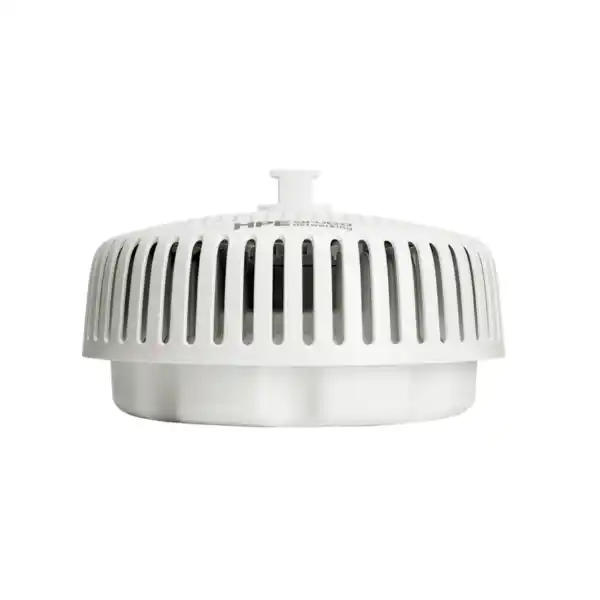
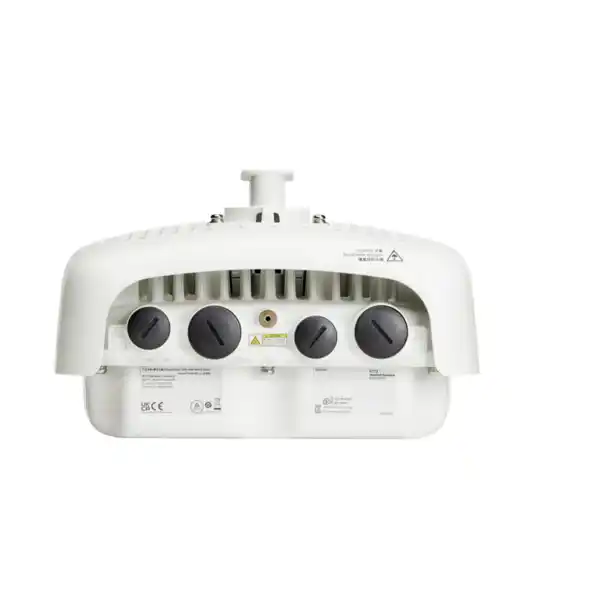
Wi-Fi 6E / 802.11ax with 6 GHz
Tri-radio, concurrent 2×2 MIMO
Integrated dynamic directional
IP66/67, temperature hardened
2.5GbE plus 1GbE SFP
Direct answer for buyers
HPE Aruba Networking AP-679 is a rugged outdoor Wi-Fi 6E access point in the 670 Series, intended for enterprise and industrial environments that benefit from integrated directional coverage. It operates concurrent 2.4 GHz, 5 GHz and 6 GHz radios and provides software-selectable wide or narrow antenna patterns on 5 GHz and 6 GHz. Buyers should consider it for outdoor sectors where coverage needs to be focused rather than radiated equally in every direction. Before proceeding, confirm the correct regional SKU, local 6 GHz permissions and automated frequency coordination requirements where applicable, PoE power capability, mount kit, copper or SFP uplink, management software, project environment, and whether the standard model or AP-679EX is the correct safety-rated choice.
What the AP-679 does
The AP-679 extends enterprise wireless service into outdoor and environmentally challenging areas while retaining a centrally manageable Wi-Fi architecture. Its role is not simply to add an outdoor radio. It is designed to let a network team direct useful RF energy toward a defined service area, while supporting Wi-Fi 6E capacity on the 6 GHz band for compatible clients.
This makes it valuable where an ordinary omnidirectional outdoor access point would illuminate too much surrounding space, where an external antenna design would add installation complexity, or where different coverage widths may be required as the deployment evolves.
Who should evaluate it
IT managers, wireless architects, system integrators and procurement teams may consider the AP-679 for enterprise campuses, logistics yards, warehouses with exterior service zones, stadium or venue sectors, hospitality grounds, transportation areas, educational campuses and industrial sites that need robust outdoor Wi-Fi.
It is especially relevant when directional RF design is part of the coverage plan. It is less suitable where a simple circular coverage footprint is preferred, where existing external antennas must be reused, or where the environment requires hazardous-location certification rather than standard rugged outdoor protection.
Business problems this model can help address
Outdoor Wi-Fi design often becomes difficult when the usable coverage area is narrow, elongated, sector-based or separated by physical boundaries. An omnidirectional access point may put substantial signal where it is not needed, while a connectorized design can require more antenna selection, cable, weather sealing and installation decisions. The AP-679 sits between these approaches by combining rugged outdoor construction with integrated directional antennas that can be provisioned in different patterns on the upper bands.
Focused coverage zones
Use directional placement to serve a target zone such as a path, courtyard edge, gate area, stand, loading lane or yard sector rather than surrounding space equally.
Outdoor 6 GHz expansion
Introduce 6 GHz capacity for compatible Wi-Fi 6E clients in outdoor designs, subject to regional rules, standard-power operation and required frequency coordination mechanisms.
Harsh weather exposure
Deploy a temperature-hardened and weather-sealed AP in exposed locations where indoor hardware is unsuitable. Site-specific mounting and surge protection still need to be planned correctly.
Mixed wired backhaul choices
Choose a 2.5GbE copper uplink or an industrial-temperature 1GbE SFP path where fibre is more appropriate, with final transceiver and weatherproofing requirements confirmed in the bill of materials.
Core capabilities that matter in a real deployment
Concurrent 2.4 GHz, 5 GHz and 6 GHz radios use 2×2 MIMO. HPE specifies a peak aggregate data rate up to 3.9 Gbps for the 670 Series configuration, with channel widths up to 160 MHz in 6 GHz.
The AP-679 can software-provision wide 90° x 30° or narrow 30° x 30° patterns for 5 GHz and 6 GHz, giving planners a way to tune the coverage footprint after physical installation.
Published environmental specifications include IP66/67 protection, operation from -40°C to +65°C with full solar loading, high humidity tolerance and wind survival testing for exposed outdoor use.
Integrated Bluetooth 5.4 and IEEE 802.15.4/Zigbee capabilities support IoT-related designs, while actual application compatibility depends on the chosen platform, software and endpoint ecosystem.
A 2.5GbE E0 port supports PoE input, while a separate SFP interface can support a fibre backhaul design when the selected transceiver and environmental requirements are correctly matched.
The 670 Series supports WPA3, Enhanced Open, policy enforcement functions and a built-in Trusted Platform Module. The effective security design still depends on authentication, segmentation, software and policy choices.
Product-fit matrix
| Requirement | Suitable when | Confirm before ordering |
|---|---|---|
| Outdoor directional Wi-Fi | Coverage must be aimed toward a sector or corridor rather than spread evenly. | Mount orientation, target area, wide or narrow mode, and RF survey assumptions. |
| 6 GHz client capacity | The client mix includes Wi-Fi 6E devices and local regulation permits the intended outdoor 6 GHz use. | Country rules, regulatory SKU and any AFC requirement. |
| High-power PoE design | The switch or injector can provide 802.3bt Class 6 for unrestricted operation. | Power budget, cable length, surge protection and injector requirements. |
| Fibre backhaul option | Copper distance, interference or topology makes an SFP uplink preferable. | Compatible industrial-temperature SFP, fibre type and weatherproof strain relief. |
| Hazardous-location deployment | Do not assume the standard AP-679 meets HazLoc requirements. | Evaluate AP-679EX and the exact local safety approval requirement instead. |
Verified AP-679 technical information
The following table separates model-confirmed information from values that depend on region, configuration or project scope. HPE publishes multiple regulatory-domain SKUs for AP-679, so the part number must be selected for the destination country rather than copied from another market.
| Brand | HPE Aruba Networking |
| Model | AP-679 |
| Product family | HPE Aruba Networking 670 Series Outdoor Access Points |
| Deployment | Outdoor, ruggedized, hardened |
| Wi-Fi generation | Wi-Fi 6E, IEEE 802.11ax with 6 GHz |
| Radios | Concurrent 2.4 GHz, 5 GHz and 6 GHz; triple 2×2 MIMO |
| Maximum channel widths | 40 MHz at 2.4 GHz, 80 MHz at 5 GHz, 160 MHz at 6 GHz |
| Peak aggregate data rate | Up to 3.9 Gbps as published for the tri-radio 2×2 configuration |
| Integrated Wi-Fi antenna | Dynamic directional; 5 GHz and 6 GHz support software-provisioned wide 90° x 30° and narrow 30° x 30° modes |
| Published antenna gains | 2.4 GHz 6 dBi; 5 GHz 9 dBi wide / 12 dBi narrow; 6 GHz 9 dBi wide / 13 dBi narrow |
| Wired interfaces | 1 x 2.5GbE E0, 1 x 1GbE SFP E1 |
| IoT support | Bluetooth 5.4, IEEE 802.15.4/Zigbee, two USB ports |
| Location capability | 802.11 FTM support and GNSS receiver |
| PoE | 802.3bt Class 6 provides unrestricted operation; lower PoE classes can impose feature restrictions |
| Maximum power consumption | 29 W without attached USB load; up to 45.5 W with the published maximum USB load assumption |
| Dimensions | 290 mm x 288 mm x 171 mm |
| Weight | 3.8 kg unit only |
| Operating temperature | -40°C to +65°C with full solar loading |
| Water and dust protection | IP66/67 |
| Mounting | Mounting bracket holder preinstalled; compatible outdoor mount kit selected separately |
| Management | HPE Aruba Networking software support is version dependent; confirm Central, ArubaOS or Instant requirements for the chosen architecture |
| Regulatory SKU | Region dependent. HPE publishes US, RW, JP, IL, EG, ID and TAA variants; confirm the correct UAE option before quotation |
| Availability | Contact FourTeck for current UAE options, quantity availability and vendor lead time |
Dependencies that can change the final bill of materials
The AP-679 is not a one-line purchase decision. The correct regulatory part number, power source, mounting kit, network uplink and management architecture must be considered together. For 6 GHz outdoor use, the destination country’s radio rules are especially important because standard-power 6 GHz operation can require automated frequency coordination to protect incumbent services. A part number that is valid in one regulatory domain should not be assumed correct for another.
Power is another practical dependency. HPE states that 802.3bt Class 6 allows unrestricted operation. Lower PoE classes can disable or reduce selected functions when sufficient power is not available. This means a legacy PoE switch may power the AP in a constrained state even if the Ethernet link itself works. If full radio, USB and SFP capability is required, the PoE budget should be reviewed before purchase.
Mounting hardware and transceivers are also selected separately. A quotation should therefore identify the wall or pole installation method, cable route, fibre or copper uplink, surge protection approach, grounding requirement, and any injector or industrial-temperature SFP needed at each location.
A practical purchase and deployment journey
Define the service area
Map where users and devices actually need wireless service. Note elevation, obstacles, mounting height, client density and whether the target area is better served by a wide or narrow directional footprint.
Confirm regional requirements
Validate the destination country, regulatory-domain SKU and permitted 6 GHz operating model. Include any frequency coordination requirement in the deployment plan.
Size power and backhaul
Check 802.3bt power availability, cable distance, surge protection and whether the 2.5GbE copper interface or 1GbE SFP path is preferred for the site.
Build the accessory list
Select the mount kit, injector if required, grounding and weatherproofing components, and any SFP plus strain-relief accessories required by the chosen uplink.
Prepare management and policy
Confirm the intended HPE Aruba Networking software architecture, software version, SSID design, authentication, segmentation, monitoring and operational ownership before installation day.
Install, aim and validate
Mount the AP safely, apply the intended antenna mode, validate RF coverage and roaming, confirm uplink performance, then document the final configuration and support responsibilities.
Dynamic directional coverage is the defining AP-679 capability
The most important reason to choose AP-679 over a nearby outdoor model is not simply that it supports Wi-Fi 6E. The model’s distinctive feature is its integrated dynamic directional antenna system. For 5 GHz and 6 GHz, the AP can be provisioned for a wider 90° x 30° pattern or a narrower 30° x 30° pattern. This gives wireless engineers a useful degree of post-installation flexibility because the beam shape can be changed in software rather than by replacing an external panel antenna.
A wider sector can be useful when the AP faces a broad courtyard edge, venue stand, open apron or group of outdoor workstations. A narrow pattern can be more appropriate when service needs to reach along a specific path, loading corridor or focused zone. The narrower pattern also carries higher published antenna gain on the 5 GHz and 6 GHz bands, but that does not automatically mean it is the right mode for every project. Coverage width, client location, mounting height, transmit power limits, interference and local regulations all affect the result.
Because antenna mode changes the RF footprint, deployment teams should treat the setting as part of the site design rather than a cosmetic configuration option. A survey or predictive plan should identify expected client areas and neighbouring AP cells, then the chosen mode should be validated after installation. FourTeck can help translate the target zone into a product and mounting discussion before the quotation is finalised.
Outdoor 6 GHz changes the planning conversation
Wi-Fi 6E adds the 6 GHz band to the familiar 2.4 GHz and 5 GHz bands. For compatible clients, this can create additional clean channel opportunities and support wider channel operation. The AP-679 supports up to 160 MHz channels in 6 GHz, which can be useful for high-throughput applications when RF conditions and regulations allow.
However, outdoor 6 GHz is not a universal plug-and-play feature. Regulatory rules vary by country, and standard-power operation can depend on automated frequency coordination. Buyers should verify how the AP will be deployed in the UAE or another destination and whether the selected software, regulatory domain and local rules support the intended design.
Power design can determine which features remain active
The AP-679 can draw more power than older outdoor access points, particularly when USB devices are attached. HPE specifies unrestricted operation with 802.3bt Class 6. Using a lower class can cause selected ports or radio capabilities to be restricted depending on Intelligent Power Monitoring settings and the available budget.
For new projects, specifying a suitable PoE source at the same time as the access point is usually cleaner than discovering a power limitation after installation. Existing switches should be checked for per-port power, total chassis budget and outdoor cabling requirements. A midspan injector may be considered where the switch cannot provide the required class, subject to design and installation conditions.
Where the AP-679 fits well
Enterprise campuses
Outdoor paths, courtyard edges, building approaches and open service zones where coverage needs to be aimed rather than distributed in all directions.
Logistics and warehousing
Loading areas, vehicle lanes, outdoor staging spaces and perimeter work zones that require enterprise connectivity for handhelds, scanners or operational devices.
Public venues
Selected seating blocks, entry zones or event sectors where a directional cell can help shape user coverage while fitting into a coordinated high-density design.
Industrial operations
Rugged outdoor areas where temperature and weather resistance matter. For sites classified as hazardous locations, evaluate AP-679EX rather than assuming the standard AP-679 is sufficient.
Hospitality grounds
Resort paths, pool-adjacent sectors, exterior meeting areas and service spaces where directional coverage can complement indoor wireless without flooding every surrounding area.
Transportation environments
Defined exterior passenger or operational areas where rugged hardware and controlled RF coverage are required as part of a broader managed network.
Integration and operational considerations
An outdoor access point is only one part of the wireless system. The AP-679 should be matched to the management platform and software train used by the organisation. HPE documentation lists AP-679 support in current Aruba networking software families, but minimum and validated versions differ between Central, ArubaOS and Central On-Premises releases. A buyer who is expanding an existing estate should therefore check the running software version before assuming the new access point can be adopted without an upgrade.
The access layer also needs to support the chosen uplink. Where 2.5GbE copper is used, check multigigabit switch support, PoE class and cabling. Where SFP is preferred, select the correct industrial-temperature optic, fibre type and outdoor sealing accessories. If high availability is a design requirement, that should be addressed at the WLAN architecture, switching, routing and power layers rather than treated as an AP feature alone.
Security policies should be defined before rollout. WPA3 capability, segmentation and policy enforcement are valuable platform functions, but they need a consistent authentication and policy design. Guest access, employee access, IoT devices and operational terminals may each require different identity sources, roles, VLAN or tunnel behaviour and internet access rules. FourTeck can include configuration scope in the quotation when the deployment needs more than hardware supply.
Questions to resolve before requesting the quote
Provide approximate length, width, mounting point, obstructions and client positions. This helps determine whether the AP-679’s dynamic directional approach is appropriate.
HPE offers different regulatory-domain versions. The destination country should be confirmed before part-number selection.
If yes, verify client support, local outdoor 6 GHz rules, software support and any frequency coordination requirement.
If not, determine whether a suitable injector is required and whether any power-related feature restrictions are acceptable.
Specify the uplink type and distance. Fibre may require an industrial SFP and weatherproof strain-relief components.
Do not substitute one for the other when hazardous-location certification is part of the project requirement.
Procurement checklist for HPE Aruba Networking AP-679
✓ Exact AP-679 regulatory-domain SKU
✓ Required quantity and deployment locations
✓ Wide or narrow directional design assumption
✓ 6 GHz operating requirement and country rules
✓ 802.3bt Class 6 power availability
✓ Copper 2.5GbE or SFP uplink choice
✓ Outdoor mount kit and orientation
✓ Surge protection and grounding approach
✓ Management platform and software version
✓ WLAN security and segmentation scope
✓ Installation, aiming and validation requirement
✓ Support service and warranty guidance
How FourTeck can assist with the AP-679 project
A useful quotation should reflect the complete deployment requirement rather than only the access point part number. FourTeck can review the intended coverage area, quantity, regulatory destination, PoE source, mounting position, uplink design, software environment and required services. This review helps identify whether the AP-679 is the right 670 Series model and which supporting components should appear in the bill of materials.
Where configuration assistance is required, the scope can include management onboarding, SSID setup, authentication and policy alignment, antenna mode configuration, software checks, radio validation and handover documentation according to the agreed project boundary. Installation planning can also account for access equipment, outdoor cable routing, grounding, weather sealing and mounting constraints that are often overlooked in desk-based hardware selection.
For broader network projects, buyers can review FourTeck’s business networking products and technology solutions to coordinate the AP with switching, security and related infrastructure requirements.
UAE availability and support guidance
Contact FourTeck to confirm current UAE availability for the required AP-679 regulatory version. Availability can vary with quantity, vendor lead time, regulatory-domain SKU and accessory selection. A price shown in another country should not be treated as a confirmed UAE selling price because reseller pricing, regional part numbers, shipping and project scope can differ.
For projects in Dubai, Abu Dhabi, Sharjah and Ajman, FourTeck can coordinate requirement review, quotation, delivery planning and service scope after the exact bill of materials has been confirmed. Installation and configuration should be stated in the quotation when required, rather than assumed to be included with hardware supply.
GCC Availability
For organisations planning HPE Aruba Networking AP-679 deployments across the Gulf region, FourTeck can assist with requirement review, model selection, regulatory-domain checks, quotation coordination and project planning. The correct part number can differ according to destination, and 6 GHz rules must be reviewed for each country rather than assumed to match a design completed elsewhere. Businesses in the United Arab Emirates, Saudi Arabia, Kuwait, Qatar, Bahrain and Oman may also have different lead times, service arrangements and local deployment constraints.
Share the destination country, quantity, intended mounting environment, 6 GHz requirement, PoE design, uplink choice and preferred project schedule when requesting assistance. Availability, licensing, delivery timing, installation visits and vendor lead time can vary by country, model and scope. FourTeck can coordinate suitable guidance without assuming local inventory or a fixed delivery date. For Kuwait-related technology enquiries, buyers may also review FourTeck Kuwait resources where relevant to the project.
Africa Availability
For African projects, the AP-679 can be evaluated as part of a broader outdoor wireless design, but the destination should be established before the bill of materials is finalised. Regulatory-domain selection, local 6 GHz policy, power standards, mounting conditions, shipping arrangements, software architecture and installation scope may affect the final recommendation. FourTeck can help organisations compare the AP-679 with other 670 Series options and identify supporting accessories, management requirements and services for the target environment.
Buyers should provide the destination country, exact quantity, expected deployment schedule, site type and any requirement for installation or remote support. Availability and fulfilment depend on the product variant, vendor lead time, project conditions and regional rules. For regional planning, FourTeck maintains dedicated resources for Kenya technology projects, Uganda technology projects and wider Africa technology coordination.
What buyers are trying to work out before choosing an AP-679
Most buyers researching this model are not asking only whether it is an outdoor access point. They are trying to decide whether its directional antenna system solves a real coverage problem better than the omnidirectional AP-675, the fixed-directional AP-677, the connectorized AP-674 or the hazardous-location AP-679EX. That comparison should start with the geometry of the service area. If users are spread around the AP in every direction, an omnidirectional design may be simpler. If the target is a defined sector, the AP-679 becomes more interesting because the 5 GHz and 6 GHz beams can be set to wide or narrow modes through software.
Is AP-679 better than AP-677?
It is not universally better. AP-677 uses integrated directional antennas with an approximately 90° x 90° beam. AP-679 adds software-selectable directional modes for 5 GHz and 6 GHz, making it useful when the project may benefit from a 90° x 30° or 30° x 30° pattern. The right choice depends on coverage geometry, mounting position and RF design.
Does the AP include the mount and power injector?
The access point has a preinstalled bracket holder, but HPE lists mount kits and PoE options separately. A quotation should identify the exact mount, power source, surge protection and any injector required. Buyers should not assume these items are included with the base AP.
Can I use an older PoE switch?
Possibly, but feature restrictions can apply. HPE specifies unrestricted operation with 802.3bt Class 6. Lower power classes can disable USB, SFP or part of the 2.4 GHz radio chain depending on available power and Intelligent Power Monitoring configuration. Power design should be checked before reuse of an existing switch.
Can outdoor 6 GHz be used everywhere?
No. Outdoor 6 GHz operation is regulated by country and may require automated frequency coordination for standard-power use. The regulatory-domain SKU and local rules must be verified for the destination. A US or another-region configuration should not be copied into a UAE project without validation.
Another common question is whether the 3.9 Gbps figure should be treated as expected user throughput. It should not. HPE’s figure is a peak aggregate PHY data-rate value across the tri-radio design. Actual application throughput depends on channel width, client capability, signal quality, protocol overhead, interference, backhaul, network congestion and the number of active users. For capacity planning, the more useful questions are how many clients are expected, which bands they support, what applications they run and whether 6 GHz-capable devices are present in meaningful numbers.
Buyers also search for the correct AP-679 part number and encounter several values, including US, RW, JP, IL, EG, ID and TAA variants. This can be confusing because the model name remains AP-679 while the ordering SKU changes by regulatory domain. The safest procurement approach is to specify the destination country first and let the regional part number be confirmed as part of the quotation. For UAE projects, FourTeck can review the current HPE ordering options rather than treating a part number found on a foreign e-commerce page as authoritative for the local deployment.
Outdoor installation questions are equally important. The AP-679 is rated IP66/67 and HPE publishes operation from -40°C to +65°C with full solar loading, but a reliable installation still depends on the mount, grounding, cable entry, surge protection, fibre or copper path and physical access method. Environmental rating does not remove the need for proper outdoor installation practice. Sites near coastal or industrial conditions should also consider corrosion exposure, maintenance access and cable-routing protection as part of the engineering review.
Management compatibility should be checked before purchase if the organisation already operates Aruba wireless. Current HPE documentation includes AP-679 support in Aruba software families, but minimum versions vary. A new AP may require a controller, Central or Instant software update before it can be adopted. That possibility should be identified in the change plan, especially where a large existing fleet depends on a controlled software lifecycle.
Finally, quote preparation is easier when the buyer sends more than a model name. A useful request includes quantity, destination, target coverage area, mounting height, preferred uplink, available PoE class, management platform, required support level and whether installation or configuration is expected. Those details allow FourTeck to distinguish the base access point from the complete deployment package and reduce the risk of missing mounts, injectors, SFPs or other practical requirements.
Buyer questions that change the final recommendation
What if the site needs coverage in all directions?
Then AP-679 may not be the natural first choice. Its value comes from directional coverage. If the access point is centrally located in an open area and clients surround it, an omnidirectional model such as AP-675 may fit the geometry better. The correct choice should follow the coverage plan rather than a preference for the most specialised model.
What if the customer already owns external antennas?
AP-679 has integrated Wi-Fi antennas, so it is not the connectorized model for reusing a custom external Wi-Fi antenna system. AP-674 is the 670 Series connectorized option. Compatibility, antenna type, regulatory limits and cable loss should be evaluated before choosing that route.
How do I know whether 6 GHz will deliver value?
Check the client fleet. If most outdoor devices are still 2.4 GHz or 5 GHz only, 6 GHz capacity may initially serve a smaller portion of users. If Wi-Fi 6E clients are expected to grow, the band can add useful channel capacity. Regulatory permission, frequency coordination and software support remain prerequisites.
Should the quote include a fibre uplink?
Use fibre when distance, electrical isolation, topology or environment makes it preferable to copper. The AP provides an SFP interface, but the optic and weatherproofing must be selected correctly. Copper 2.5GbE remains attractive where PoE delivery and cable distance fit the site.
Does IP66/67 mean no additional outdoor protection is needed?
No. The enclosure rating is important, but a complete installation still needs correct cable glands, grounding, surge protection, mount selection and installation practice. Environmental exposure can also affect the switch side, power injector, fibre transitions and maintenance approach.
What information gives the most accurate quotation?
Provide the destination country, quantity, exact model requirement, site type, mounting method, available PoE, uplink choice, software environment, required accessories and desired service scope. This lets FourTeck separate hardware, optional components and professional work clearly.
Related products and services to consider
HPE Aruba Networking AP-675
Consider when the outdoor design calls for integrated omnidirectional antennas rather than a directional sector.
HPE Aruba Networking AP-677
Consider when a fixed integrated directional pattern is suitable and dynamic wide/narrow modes are not a requirement.
HPE Aruba Networking AP-679EX
Evaluate when the site requires a hazardous-location version and the required certification matches the project and jurisdiction.
HPE Aruba Networking Central
Confirm the management architecture and software version when onboarding AP-679 into a centrally operated wireless environment.
Outdoor Wi-Fi installation services
Include mounting, cabling coordination, grounding, antenna-mode setup and validation where the project requires implementation support.
Why businesses contact FourTeck for this model
The AP-679 has enough configuration and regional dependencies that a simple part-number purchase can leave gaps. Businesses typically need help confirming the correct regional unit, PoE source, mount, uplink components, software compatibility and the difference between the standard and hazardous-location variants. FourTeck can coordinate these questions before the order is placed, then align the quotation with the actual deployment scope.
For projects that also require switching, security, installation or configuration services, the requirement can be reviewed as one infrastructure package. Learn more about FourTeck’s technology approach or use the FourTeck contact channel to share the project details.
Frequently asked questions
Is the HPE Aruba Networking AP-679 an outdoor Wi-Fi 6E access point?
Yes. AP-679 is a rugged 670 Series outdoor access point with concurrent 2.4 GHz, 5 GHz and 6 GHz 802.11ax radios. Outdoor 6 GHz use remains subject to regional regulation and the correct regulatory-domain configuration.
What is special about the AP-679 antenna design?
It has integrated dynamic directional antennas. The 5 GHz and 6 GHz radios can be software-provisioned for a wider 90° x 30° pattern or a narrower 30° x 30° pattern, helping align RF coverage with a defined target area.
Does AP-679 require 802.3bt PoE?
HPE specifies unrestricted operation with 802.3bt Class 6 PoE. Lower PoE classes can run the AP with feature restrictions depending on the available power and Intelligent Power Monitoring settings. 802.3af Class 3 or lower is not supported for normal operation.
Does the AP-679 include an SFP interface?
Yes. The model provides a 2.5GbE E0 interface and a separate 1GbE SFP E1 interface. The required SFP transceiver and outdoor strain-relief accessories should be selected for the project and are not assumed to be included.
Is AP-679 the same as AP-679EX?
No. AP-679EX is the hazardous-location variant. HPE lists Class 1 Division 2, ATEX Zone 2 and IECEx certifications for EX models only. Use the exact safety-rated model required by the site and jurisdiction.
Which AP-679 SKU should be used in the UAE?
The correct regulatory-domain SKU should be confirmed for the UAE at the time of quotation. HPE publishes multiple AP-679 regional part numbers, so a US, RW, EG or other code should not be selected only from an overseas listing.
Can AP-679 be managed with HPE Aruba Networking Central?
AP-679 is supported in HPE Aruba Networking management software, including Central families, but minimum software versions vary. Confirm the exact Central, ArubaOS or Instant release used by the existing environment before deployment.
Is the mounting kit included with AP-679?
The access point has a mounting bracket holder, while HPE lists outdoor mount kits separately. The correct wall, pole, tilt or flush-mount option should be added according to the physical installation plan.
How can I request AP-679 pricing and availability in Dubai?
Send FourTeck the required quantity, deployment location, regulatory destination, power and uplink requirements, mounting needs, software environment and any installation or configuration scope. FourTeck can then confirm current UAE options and prepare a project-specific quotation.
Confirm the AP-679 model, power and coverage design before ordering
Share the project location, quantity, target coverage zone, PoE source, uplink preference and management environment. FourTeck can help confirm the appropriate AP-679 regional option, supporting accessories and service scope for a UAE or regional quotation.

Reviews
There are no reviews yet.