
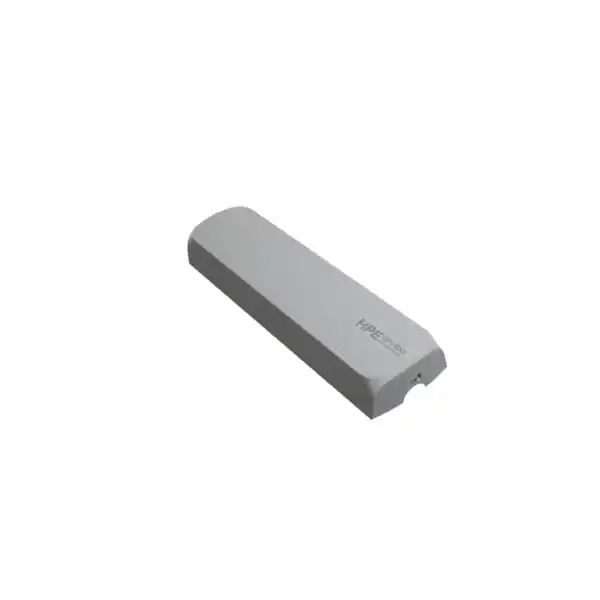
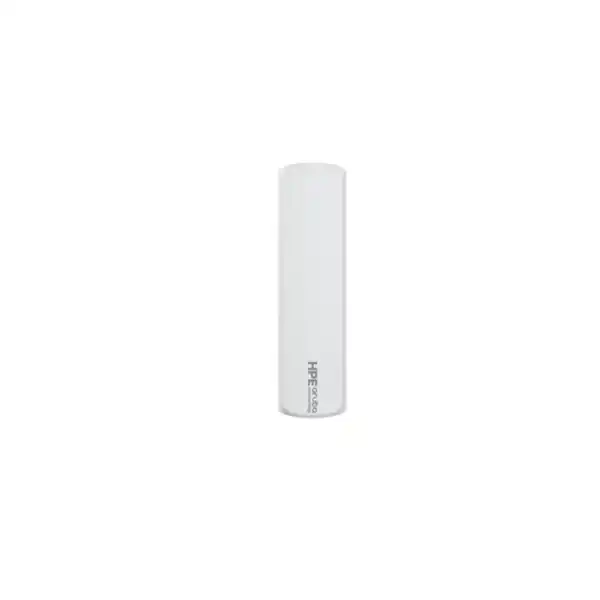
HPE Aruba Networking UXI Wi-Fi 6E Ethernet Sensor S0U51A
A purpose-built digital experience monitoring sensor that observes network and application performance from the same edge perspective as a real user, with Wi-Fi 6E coverage across 2.4, 5 and 6 GHz plus wired Gigabit Ethernet testing.
Direct answer: what is the HPE Aruba UXI G6E sensor?
S0U51A is the HPE Aruba Networking User Experience Insight G6E Ethernet and Wi-Fi 6E sensor, a physical digital experience monitoring endpoint.
It continuously tests wired and wireless connectivity, network services and application responsiveness from an end-user perspective.
IT teams supporting offices, branches, campuses and distributed sites that want proactive visibility into user experience, including 6 GHz Wi-Fi 6E.
Confirm UXI cloud subscription term, PoE or external power, mounting position, monitored SSIDs, wired network access and the required number of sensors.
FourTeck can help map site requirements to sensor quantity, subscription term, mounting accessories, power options and rollout scope for Dubai and UAE deployments.
Why this sensor is different from ordinary Wi-Fi monitoring
Conventional infrastructure monitoring usually starts from switches, access points, controllers, gateways or cloud dashboards. Those systems are essential, but they describe the network mainly from the infrastructure side. HPE Aruba Networking User Experience Insight adds an outside-in measurement point: the sensor joins and uses the environment as a client. That changes the question from “is the access point up?” to “can a user associate, obtain network services and reach the applications that matter, with acceptable response?”
The G6E model is especially relevant where Wi-Fi 6E has been introduced because it can observe 2.4 GHz, 5 GHz and 6 GHz operation. HPE equips the sensor with dual radios supporting 802.11a/b/g/n/ac/ax and two spatial streams, together with Gigabit Ethernet and Bluetooth Low Energy 5.1. The sensor therefore provides a dedicated measurement point for both wireless and wired paths instead of forcing the operations team to infer client experience only from infrastructure counters.
UXI performs synthetic testing continuously. Tests can examine fundamental services such as DHCP and DNS as well as reachability and responsiveness of internal services, cloud applications and web workflows. When a problem is visible from a sensor, IT gains evidence tied to the actual site and user path. This is useful in locations where no network engineer is permanently present and where intermittent problems are difficult to reproduce after a help-desk call.
Model identity buyers should use
The Wi-Fi 6E Ethernet model described on this page is HPE Aruba Networking User Experience Insight G6E, ordering part S0U51A. HPE describes it as a 6 GHz 802.11ax PoE-powered sensor without a PSU. It is the non-cellular member of the G6E pair.
The adjacent S0U52A G6EC adds cellular connectivity and is a different orderable item. That distinction matters during quotation because the cellular model has different hardware, onboarding and subscription considerations. Buyers who only require Ethernet and Wi-Fi 6E monitoring should not automatically pay for cellular capability; buyers who need out-of-band onboarding or cellular resilience should assess the G6EC separately.
HPE has also introduced Wi-Fi 7 UXI sensor models. A project centred on Wi-Fi 7 client behaviour, Multi-Link Operation or long-term monitoring of a new Wi-Fi 7 environment should compare the newer UX-7 family rather than treating G6E as the default for every greenfield deployment. The G6E remains a targeted choice when Wi-Fi 6E and earlier generations are the primary monitoring requirement.
HPE Aruba Networking UXI G6E technical specification summary
Use these details to validate power, placement, wireless scope and accessories before purchasing S0U51A.
| Product / part | HPE Aruba Networking User Experience Insight G6E Ethernet + Wi-Fi 6E sensor, S0U51A |
| Wireless interfaces | Dual-radio 802.11a/b/g/n/ac/ax across 2.4 GHz, 5 GHz and 6 GHz, with two spatial streams |
| Wired interface | Gigabit Ethernet 10/100/1000 |
| Bluetooth | Bluetooth Low Energy 5.1 |
| Power | 802.3af Power over Ethernet; HPE lists the R3T90A universal AC power supply as an available power option; power consumption is 12 W |
| PSU in S0U51A | The S0U51A BTO description specifies the sensor without PSU; confirm whether the deployment will use PoE or requires R3T90A |
| Dimensions with bracket | 306 mm high × 85 mm wide × 47 mm deep |
| Weight | Approximately 695 g for G6E |
| Operating environment | 0°C to 40°C; 5% to 93% non-condensing humidity; UL 2043 plenum rated |
| Storage / transport | -40°C to 70°C |
| 6 GHz operating note | Low Power Indoor operation is supported; HPE states that Standard Power client operation is not supported at this time |
| Mounting | Bracket with security features, non-skid feet for flat placement, and optional R3T84A T-bar / ceiling mounting kit; HPE guidance places wall or pillar installations around 1.5 m above floor level |
What the sensor actually measures for operations teams
Client onboarding
UXI can follow the client journey through association and network services, including authentication, DHCP and DNS. This matters because a user reporting “Wi-Fi is down” may actually be experiencing a DHCP delay, authentication problem or DNS failure while the radio infrastructure remains operational.
Application responsiveness
Configured tests can measure access to internal or cloud applications from the location where the sensor is installed. The value is comparative: IT can see whether a service is slow at one site, across many sites or only on one network path, rather than relying solely on reports from users.
Synthetic web workflows
Web application testing can be configured to reproduce user actions such as opening a site, logging in, clicking through a workflow and logging out. This allows organisations to monitor business services at the transaction level, not only test whether a host responds to ping.
Wi-Fi environment context
The G6E platform adds off-band and client monitoring capabilities for Wi-Fi 6E environments. UXI can expose measurements such as signal-to-noise ratio, QBSS and client count, giving the network team context around noise, utilisation and the number of clients potentially affected by a problem.
Wired experience
The Gigabit Ethernet interface enables the same site to be observed over a wired connection. Wired monitoring is valuable for separating wireless-specific degradation from broader problems involving DNS, WAN reachability, upstream gateways or application availability.
AIOps incident focus
UXI continuously cycles through configured synthetic tests. Its incident detection logic identifies anomalous issues and can consolidate related observations, helping operations teams focus on behaviour that differs materially from the normal profile instead of treating every threshold event as equally urgent.
Subscription and licensing: the most important ordering dependency
Buying the S0U51A hardware alone does not complete a usable UXI deployment. HPE specifies a cloud software subscription for every sensor. Subscription options are offered in one-, three- and five-year terms. The subscription provides access to the cloud dashboard and associated software services, including support, data trending, analytics and security functions. For the non-cellular G6E model, a valid cloud subscription is the relevant recurring entitlement; the separate LTE subscription applies to cellular-enabled models.
This distinction should be handled during quotation rather than after installation. A procurement team may see a hardware part number and assume it behaves like a permanently licensed appliance. UXI is different: the sensor is one component of a cloud-managed monitoring solution. The subscription term therefore affects the total project cost and lifecycle plan. Organisations with multi-site rollouts should align renewal dates where practical, because a fragmented set of sensor subscriptions can create unnecessary administrative work.
Before issuing a purchase order, decide whether the project needs one, three or five years of service, identify how many sensors will be active, and verify the commercial subscription SKU applicable to the quote. HPE has introduced configurable subscription options in addition to traditional term SKUs, so the exact ordering route can vary with commercial requirements. FourTeck can structure the quotation around the required term and deployment quantity rather than quoting only the sensor hardware.
Do not confuse the UXI cloud subscription with HPE Aruba Networking Central licensing for other network devices. UXI can integrate with HPE Aruba Networking Central and can also operate in multivendor networks. The monitoring sensor’s entitlement should therefore be validated as its own line item even when the customer already has Aruba Central subscriptions for access points, switches or gateways.
Order-check panel
- Sensor: S0U51A G6E Ethernet + Wi-Fi 6E
- Cloud entitlement: required per sensor
- Term: select 1, 3 or 5 years, or confirm applicable configurable subscription
- LTE: not part of S0U51A; evaluate S0U52A if cellular is required
- Power: S0U51A is listed without PSU; confirm PoE or R3T90A
- Mounting: verify bracket strategy and whether R3T84A is needed
Sizing UXI sensors across offices, branches and campuses
Sensor quantity should be based on the monitoring question, not simply the total number of access points. HPE gives useful starting guidance: approximately one sensor for every five access points in a typical carpeted office, one sensor per branch or retail site, and around one sensor for every ten access points in a large public venue such as a stadium or conference centre. Those are design guides rather than guarantees of perfect coverage.
A practical office deployment starts by identifying zones where user experience can differ: separate floors, distant wings, meeting-room clusters, reception areas, executive spaces, customer-facing zones or sections served by different switch stacks or WAN paths. Placing a sensor in every distinct failure domain can be more valuable than following a simple AP ratio. If two areas have different RF conditions, upstream connectivity or business applications, they may deserve separate measurement points even when the AP count is low.
Conversely, placing too many sensors without a monitoring plan increases subscription cost and dashboard volume without necessarily adding decision value. The objective is to create stable reference clients at locations that represent real users. Each sensor can test up to four networks: one through Ethernet and up to three Wi-Fi SSIDs. That capability allows a single well-positioned sensor to compare corporate, voice, guest or other relevant SSIDs while also maintaining a wired reference path, subject to the customer’s actual network configuration and test design.
For Dubai organisations with multiple branches, a good first phase is often to place one sensor in each critical branch and denser coverage in larger headquarters or campus locations. The resulting data can reveal whether problems are local, regional, ISP-related, RF-related or application-related. After several weeks of observation, the organisation can decide whether more sensors are justified in specific zones instead of buying a large quantity before knowing where measurement gaps exist.
Deployment considerations for Dubai and UAE environments
Place the sensor like a user, not like an access point
HPE’s mounting guidance places the G6E around 1.5 metres above floor level on a wall or pillar. That is deliberately closer to client height than a typical ceiling access point. The sensor is intended to observe the environment as an endpoint, so avoid hiding it inside cabinets or mounting it in locations that do not represent user conditions.
Plan PoE before the mounting date
802.3af PoE is the cleanest installation method because one cable can provide connectivity and power. If the chosen sensor location has no PoE drop, an alternative power plan is required. S0U51A is sold without a PSU, while HPE lists R3T90A as the universal AC power option. Include this decision in the bill of materials.
Confirm internet and backend access
UXI sensors need outbound access to HPE Aruba Networking backend services to receive configuration and upload test results. Firewall, proxy and SSL inspection policies must be reviewed during deployment. Do not treat the sensor as a device that can be installed on an isolated VLAN without any consideration of cloud reachability.
Use a representative network path
The sensor should be attached to the same services users depend on. A monitoring VLAN with different DNS, firewall rules or WAN routing can produce clean measurements while employees continue to experience issues. The wired and wireless networks assigned to UXI should therefore represent real production paths wherever possible.
Respect the operating environment
The documented operating range is 0°C to 40°C with 5% to 93% non-condensing humidity. In the UAE this is usually straightforward indoors, but it makes the G6E unsuitable for exposed outdoor or unconditioned spaces that can exceed its environmental limits. Outdoor Wi-Fi troubleshooting requires a different monitoring approach.
Plan 6 GHz compliance and coverage
6 GHz propagation and regulatory operation differ from 2.4 and 5 GHz. HPE documents Low Power Indoor support for the G6E and states that Standard Power client operation is not supported at this time. Buyers should verify that the intended Wi-Fi 6E design and local regulatory configuration align with the sensor’s supported operating mode.
Security and network-access considerations
The UXI sensor should be treated as a managed monitoring endpoint with controlled access, not as a general-purpose Linux host. HPE documents that the purpose-built sensor stores network credentials securely and isolates its network interfaces. Communications are initiated outbound by the sensor, and normal administrative services such as SSH or Telnet are not exposed for operators to use as an ad hoc troubleshooting shell.
Wireless security support includes common enterprise and modern Wi-Fi options such as WPA2 PSK, WPA3 SAE, WPA2 Enterprise, Enhanced Open, WPA3 Enterprise and WPA3 Enterprise CNSA, with enterprise authentication methods that include EAP-PEAP, EAP-LEAP and EAP-TTLS. The correct test network should be configured according to the same authentication path used by employees when the goal is to validate that onboarding experience. If production users rely on certificate-based or identity-driven access policies, the project team should confirm the exact UXI configuration and credential workflow before rollout.
Firewall policy is equally important. The sensor communicates with its cloud backend and may need access to public NTP or HPE-hosted time synchronisation fallback paths depending on the network. HPE guidance identifies device-gateway.capenetworks.io as essential for backend communication and advises against SSL decryption for that destination. A tightly controlled enterprise firewall can therefore block an otherwise correctly powered and licensed sensor if the necessary outbound paths have not been allowed.
Application tests also require reachability to their targets. For example, a sensor assigned to test an internal web server must have the same routed access and security policy needed by intended users. A test of a cloud service must be allowed through the internet egress path. During implementation, list each test target, associated protocol and expected network path so a failed test can be interpreted correctly rather than immediately blamed on Wi-Fi.
Use cases where the G6E can provide high operational value
Wi-Fi 6E rollout validation
After introducing 6 GHz access points and Wi-Fi 6E SSIDs, the network team can use a G6E sensor as a persistent client reference. It helps distinguish a one-time survey from continuous operational monitoring and provides evidence of day-to-day behaviour after the rollout team has left the site.
Branch-office visibility
A branch may have only a few access points but still host business-critical users. Installing a sensor gives central IT an independent view of onboarding, DNS, application reachability and WAN-sensitive services without requiring a technician to travel whenever users report intermittent problems.
SaaS experience monitoring
Organisations relying on Microsoft 365, Salesforce and other cloud services can monitor responsiveness from specific sites. When an application slows down, UXI data can help determine whether the issue is site-specific, network-path related or more broadly associated with the target service.
Change validation
Network changes are safer when there is a before-and-after client baseline. A sensor can continuously test the same services during access-point upgrades, VLAN changes, DNS migrations, WAN changes or security-policy modifications and show whether user-visible performance changed.
Guest and captive portal checks
Guest Wi-Fi often fails in ways corporate IT does not immediately notice. UXI supports captive-portal monitoring and can test connectivity and responsiveness in a continuous round-robin cycle, helping detect broken guest workflows before visitors raise complaints.
Mixed-vendor networks
UXI is not limited to HPE Aruba Networking infrastructure. That makes it useful where a customer has multiple WLAN vendors, inherited branches or a migration in progress. The sensor measures the experience it receives rather than depending exclusively on one vendor’s access-point telemetry.
When to compare another UXI model
Compare G6EC / S0U52A
Choose the cellular-enabled alternative when the deployment specifically benefits from LTE-assisted onboarding or a cellular path. It also introduces a separate LTE subscription requirement, so the added operational benefit should justify the additional entitlement and hardware cost.
Compare UX-7 / S4W52A
For a new Wi-Fi 7 environment, evaluate the UX-7 Ethernet sensor. It adds Wi-Fi 7 monitoring capabilities and is the more appropriate comparison when 802.11be and Multi-Link Operation are central to the monitoring requirement.
Compare software agents
A physical sensor is excellent as a fixed reference point, but it does not move with every employee or handheld device. UXI software agents may add value when the objective is to understand roaming, device-specific behaviour or user experience across moving endpoints.
The right answer can be a combination: fixed G6E sensors for stable site baselines plus agents on selected endpoints. Choosing the monitoring architecture before ordering avoids treating the hardware sensor as a solution to every digital-experience question.
A practical implementation journey
Define outcomes
List the user complaints or services that need objective monitoring: Wi-Fi onboarding, guest access, voice quality, SaaS responsiveness, DNS, WAN-dependent applications or a new 6 GHz rollout.
Choose sensor locations
Map representative user zones and network failure domains. Use HPE sizing guidance as a baseline, then adjust for floors, branch criticality, RF differences and application paths.
Confirm power and cabling
Validate 802.3af PoE at each Ethernet location or include R3T90A where AC power is required. Confirm mounting hardware, cable routing and physical security.
Prepare network access
Create or select the wired and wireless networks to be tested, prepare credentials, confirm backend reachability and make sure firewall or proxy policies do not prevent UXI cloud communication.
Configure meaningful tests
Start with network services and a small number of high-value applications. Add custom web, iPerf, VoIP MOS or other supported tests when they answer a real operational question.
Tune alerts and ownership
Decide who receives incidents and how they enter the IT workflow. Webhooks can connect UXI events to systems such as ServiceNow or collaboration tools, reducing the chance that useful monitoring data remains isolated in a dashboard.
Buyer questions before ordering S0U51A
Does S0U51A include cellular?
No. S0U51A is the Ethernet + Wi-Fi 6E G6E sensor. If cellular connectivity is required, compare the G6EC S0U52A and include the applicable LTE subscription.
Is the cloud subscription optional?
No. HPE specifies a valid UXI cloud subscription for the non-cellular sensor. The hardware and subscription should be quoted together for the intended term.
Does it include a power adapter?
HPE’s ordering description for S0U51A states “without PSU.” The sensor supports 802.3af PoE, and R3T90A is the listed universal AC power option when external power is required.
Can it monitor non-Aruba networks?
Yes. UXI is designed to work in HPE Aruba Networking, third-party and mixed-vendor environments because it measures connectivity from the client side rather than requiring one specific WLAN infrastructure vendor.
How many networks can one sensor test?
HPE states that one sensor can test up to four networks: one through the Ethernet port and up to three Wi-Fi SSIDs. Actual test design should reflect the services and SSIDs that matter at the location.
Is it the best choice for Wi-Fi 7?
Not necessarily. The G6E is designed for Wi-Fi 6E and earlier generations. For Wi-Fi 7 environments, the HPE Aruba Networking UX-7 sensor family should be evaluated.
Procurement guidance for Dubai businesses
For a reliable quotation, treat the UXI deployment as a small solution rather than a single hardware line. The bill of materials may include S0U51A sensors, UXI cloud subscription entitlements, optional AC power supplies, mounting kits and implementation services. The exact quantity depends on the number of sites and measurement zones, while the subscription term determines a meaningful portion of lifecycle cost.
It is also important to state whether the project is a new UXI deployment or an expansion of an existing dashboard. Existing customers may want new subscriptions aligned with current renewal dates and may already have operational processes for sensor groups, tests and alerts. New customers need dashboard onboarding, network access preparation and an initial test plan. These are different project scopes even when the hardware part number is identical.
For UAE multi-site environments, include the city or site list, quantity per site and whether installation is required. If cabling or PoE is uncertain, flag that before finalising the order. A sensor delivered to a branch without an appropriate network drop or power plan becomes an avoidable deployment delay. Similarly, identify any restrictive proxy or firewall environment because backend reachability should be tested as part of commissioning.
FourTeck can quote the sensor and help structure the associated subscription and deployment requirements for Dubai and other UAE locations. Availability, lead time and final commercial pricing should be confirmed at quotation because enterprise hardware and subscription stock conditions can change.
Decision recap
Use S0U51A when the requirement is fixed Ethernet plus Wi-Fi 6E monitoring without cellular. Compare S0U52A for cellular or UX-7 for Wi-Fi 7.
Start with representative user zones and HPE’s sizing guidance, then adjust by floor, branch, failure domain and business importance.
A UXI cloud subscription is required for every non-cellular sensor. Confirm quantity and subscription term before purchase.
S0U51A is listed without PSU. Confirm 802.3af PoE at the intended location or include the R3T90A power option.
Mount close to user height in a representative location, verify Ethernet and cloud reachability, and select mounting accessories where required.
Define meaningful services, alerts and owners. A sensor generates more value when tests map directly to business applications and troubleshooting workflows.
What FourTeck needs for an accurate UXI quotation
Providing the following information helps prevent missing subscriptions, accessories or installation dependencies and makes the quotation easier to compare internally.
Plan the right HPE Aruba UXI G6E deployment for your Dubai network
S0U51A is a strong fit when you need a fixed client-side reference for wired Ethernet and Wi-Fi 6E, but the value depends on correct sensor placement, active UXI subscriptions, appropriate power and tests that reflect real business services. Share your sites, sensor quantity and monitoring goals and FourTeck can prepare a targeted UAE quotation.

Reviews
There are no reviews yet.