
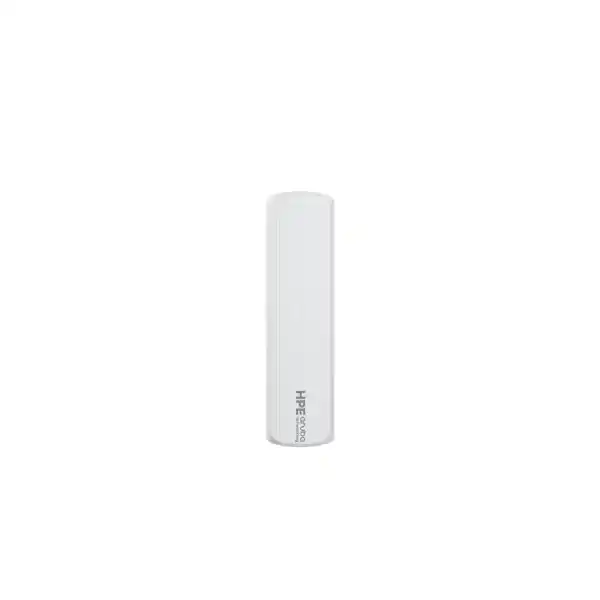
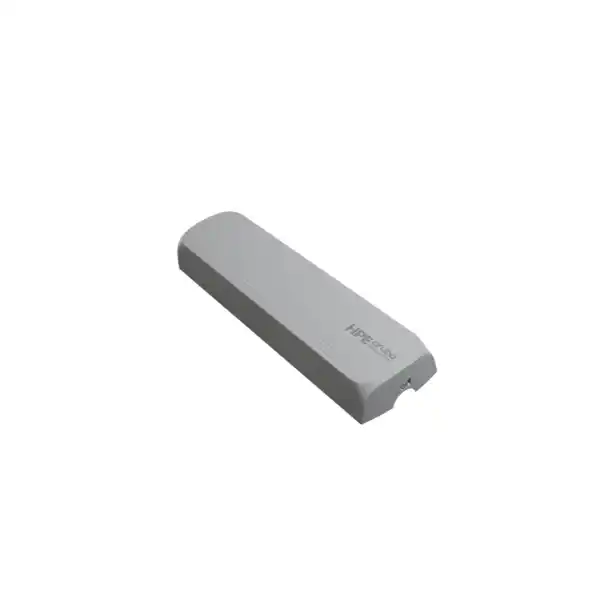
HPE Aruba Networking UXI Wi-Fi 7 Ethernet Sensor S4W52A
A dedicated Wi-Fi 7 digital experience monitoring sensor for IT teams that want continuous, user-perspective evidence of network and application performance rather than relying only on infrastructure telemetry.
Direct answer: what is the S4W52A and who is it for?
The S4W52A is HPE Aruba Networking’s UXI 7 Ethernet sensor, a dedicated hardware probe that measures digital experience from an end-user location.
It continuously runs synthetic network and application tests so IT can see whether users can connect, authenticate and reach critical services with expected performance.
Enterprises, campuses, branches, retail sites and public venues that need evidence-based Wi-Fi 7 and application monitoring across multiple locations.
Confirm that the non-cellular S4W52A is the correct variant and include the required UXI cloud subscription, power method and deployment density in the bill of materials.
Sensor quantity, licence term, PoE availability, optional AC power or T-bar mounting needs, and whether S4W52A or the cellular S4W53A better matches the site design.
Why this sensor matters in a Wi-Fi 7 deployment
Most network management platforms are strongest at explaining what an access point, switch or controller believes is happening. User Experience Insight is different because the hardware sensor is placed near real users and behaves as a client. That distinction is important when an incident exists somewhere between radio conditions, authentication, DHCP, DNS, a routed path, the internet, a SaaS service or an application transaction. The S4W52A provides a standing test point that can keep collecting evidence even when no engineer is physically present at the site.
For organisations introducing Wi-Fi 7, this model also provides a way to validate performance from a device that supports 802.11be rather than judging the upgrade only by controller statistics or occasional laptop testing. HPE specifies tri-band operation on 2.4 GHz, 5 GHz and 6 GHz, with a Wi-Fi 7 client radio and a receive-only monitoring radio, each using two spatial streams. The platform can therefore contribute both active client-experience measurements and additional observations of the surrounding wireless environment.
This does not make the S4W52A a replacement for a professional RF survey, spectrum analysis programme or full packet-analysis architecture. Its value is persistent digital experience monitoring: testing the same services repeatedly, recording when experience deviates from normal, and giving operations teams historical evidence to investigate intermittent problems. That is a different operational outcome from a one-time validation exercise.
Core capabilities translated into buyer outcomes
Wi-Fi 7 client validation
The UXI 7 platform supports 802.11a/b/g/n/ac/ax/be across all three Wi-Fi bands. This lets IT validate new Wi-Fi 7 estates while still observing environments that contain earlier client generations.
Synthetic testing
The sensor continuously tests configured network and application journeys. HPE states that a UXI sensor can run up to 20,000 tests per day and test up to four networks, helping teams move from anecdotal complaints to repeatable measurements.
Automatic triage
When problems appear intermittently, UXI can capture diagnostic context, make PCAP data available for deeper analysis and let teams review historical information for up to 30 days to correlate experience with network changes.
Path analysis
Path analysis is designed to show the outbound path toward a service so engineers can separate local wireless or LAN problems from upstream routing, internet or application-side issues.
Web workflow monitoring
UXI can test web application journeys using recorded Selenium workflows. This is useful when simply pinging a server is not enough and the business needs to know whether a user can complete a multi-step transaction.
Data export
The platform can push test and issue data to customer-managed destinations including AWS S3, Google BigQuery, Elasticsearch and generic HTTP endpoints, with additional listed integrations such as Splunk and BigPanda in beta.
HPE Aruba Networking UXI 7 S4W52A technical specifications
The following figures are the key procurement and installation characteristics published for the UXI 7 family, with S4W52A-specific details called out where HPE distinguishes the non-cellular model. Confirm local regulatory availability and the final bill of materials at quotation stage because subscriptions, accessories and regional supply can change independently from the hardware specification.
| Model / part number | HPE Aruba Networking UXI 7 Ethernet Sensor — S4W52A |
|---|---|
| Wireless client radio | 802.11a/b/g/n/ac/ax/be, 2.4 GHz, 5 GHz and 6 GHz, two spatial streams |
| Receive-only radio | 802.11a/b/g/n/ac/ax/be, 2.4 GHz, 5 GHz and 6 GHz, two spatial streams |
| 6 GHz operating note | Low Power Indoor supported; Standard Power client operation is not currently supported according to HPE QuickSpecs |
| Ethernet | Gigabit Ethernet 100/1000 |
| Bluetooth | Bluetooth Low Energy 5.4 |
| Power | 802.3af PoE or HPE Aruba Networking R3T90A AC power adapter; 12 W power consumption |
| Dimensions with bracket | 85 mm wide × 52 mm deep × 300 mm high |
| Weight | 627 g for UXI 7 non-cellular model |
| Operating environment | 0°C to 40°C; 5% to 93% relative humidity, non-condensing |
| Storage / transport | −40°C to 70°C |
| Mounting | Wall or pillar placement around 1.5 m from the ground; bracket with star set screw and Kensington lock slot; nonskid feet; optional R3T84A T-bar mounting kit |
| Plenum rating | UL 2043 rated for use in air-handling spaces |
| Warranty | HPE lists a 1-year replacement warranty with 10-day shipment; software support is included with the subscription, with additional hardware support available through HPE Aruba Networking Foundational Care |
S4W52A versus S4W53A
The distinction is operationally important. S4W52A is the Ethernet / Wi-Fi 7 UXI sensor without the cellular modem capability that HPE reserves for the UXI 7C model S4W53A. If the sensor cannot reach the network it is meant to observe, the non-cellular model may have less independent connectivity for onboarding or out-of-band communication than the cellular version.
Choose S4W52A when wired connectivity, Wi-Fi onboarding and local network reachability are acceptable and you do not need a managed cellular path. Evaluate S4W53A when cellular onboarding or backup connectivity materially improves troubleshooting independence. The cellular model also brings an LTE subscription dependency, while HPE states that the non-cellular sensor requires only a valid UXI cloud subscription.
Do not confuse a UXI sensor with an access point
The sensor does not provide production Wi-Fi coverage to staff or guests. It joins networks and exercises services as a monitored client. Its job is to answer operational questions such as: can a client associate, authenticate, obtain network services and reach an application with acceptable response time?
That means a deployment budget should not treat UXI as a substitute for access points, switching, NAC, internet connectivity or RF design. It is an observability layer added to those systems. The business case is strongest where faster fault isolation, service-level evidence and continuous branch visibility reduce help-desk effort or downtime.
Wi-Fi 7 monitoring: what the hardware actually adds
HPE positions the UXI 7 generation above the earlier UXI G6E family by adding 802.11be support. QuickSpecs also describe Multi-Link Operation capability and dual tri-band radios for advanced monitoring of Wi-Fi 7 environments. In practical terms, a buyer evaluating a new Wi-Fi 7 campus should prefer a sensor generation that can participate in and observe the same newer radio environment rather than validating only with a Wi-Fi 6 or Wi-Fi 6E probe.
The receive-only radio contributes environmental visibility beyond the active test connection. HPE highlights off-band monitoring and additional indicators such as signal-to-noise ratio, QBSS information and client count. Those data points can help an engineer judge whether an issue appears isolated to the active test path or whether broader RF conditions and client loading may be contributing. This is especially useful when the help desk receives complaints such as “Wi-Fi is slow” but controller health appears normal.
There is still an important 6 GHz limitation to check. HPE currently lists Low Power Indoor support for 6 GHz while stating that Standard Power client operation is not supported. If your UAE wireless design relies on a specific 6 GHz power class or regulatory architecture, verify that the sensor mode aligns with the intended client environment before ordering. A technically capable Wi-Fi 7 sensor is not automatically a fit for every possible 6 GHz deployment model.
Subscription, cloud access and lifecycle planning
HPE’s deployment guidance states that the non-cellular UXI sensor requires a valid cloud subscription. The dashboard and software service should therefore be treated as part of the solution cost rather than as an afterthought to the hardware purchase.
HPE lists 1-year, 3-year and 5-year UXI Cloud subscription options, including both traditional electronic subscription SKUs and newer SaaS / as-a-service models. Current QuickSpecs include R4W97AAE, R4W98AAE and R4W99AAE for 1-, 3- and 5-year cloud subscriptions, along with newer SaaS references S3M51AAS, S3M52AAS and S3M53AAS. Availability of a particular commercial model can vary by sales channel and region, so a UAE quotation should match the chosen hardware with a valid entitlement rather than assuming every published SKU is locally orderable.
For new customers, HPE has integrated User Experience Insight with HPE GreenLake. Administration functions such as accessing UXI, assigning users, adding or removing sensors and applying subscriptions can be handled through GreenLake. That makes identity and operational ownership part of deployment planning: decide which administrators should manage the service, which teams will receive incident information, and how long historical monitoring is expected to remain active.
The subscription term should normally align with the intended monitoring lifecycle. A one-year term can suit a proof-of-value exercise or short budget cycle, while a longer term may simplify continuity across a multi-year network refresh. Do not select duration only by unit price; consider renewal governance, procurement lead times and whether the sensor fleet is expected to remain in place through the next WLAN lifecycle.
How many sensors should you deploy?
There is no single count that works for every building because digital experience can vary by floor, RF cell, switch path, branch circuit, user density and application route. HPE publishes practical starting guidance rather than a universal rule. The design should then be adjusted for high-value areas, known problem zones and sites where independent experience evidence is especially important.
HPE guidance: approximately one sensor for every five access points as a starting point.
HPE guidance: one sensor per site can provide a basic always-on user perspective.
HPE guidance: approximately one sensor for every ten access points as an initial planning ratio.
These ratios should be interpreted as planning anchors, not substitutes for site context. A Dubai headquarters with executive meeting floors, dense collaboration areas and guest networks may justify more sensors than a uniform office with the same AP count. Similarly, a small branch with a critical WAN-dependent point-of-sale workflow may deserve its own sensor even if the wireless estate is modest.
Power, mounting and installation decisions
S4W52A supports 802.3af Power over Ethernet and has a stated 12 W power consumption. In a structured office deployment, PoE is often the cleanest option because it avoids a nearby mains adapter and can simplify placement. Where PoE is not available, HPE lists the R3T90A worldwide AC power supply. The power method should be decided during quotation because the product name itself does not guarantee that every accessory needed for a particular site is included.
HPE describes ideal placement on a wall or pillar at roughly 4 to 5 feet, around 1.5 metres, above the ground. The supplied bracket includes a star set screw and Kensington lock slot, while nonskid feet allow flat-surface placement. An optional R3T84A T-bar mounting kit is available when ceiling-grid installation is preferred. Placement should represent the client experience you care about rather than simply the easiest cable route. A sensor hidden inside a communications room may provide excellent infrastructure proximity but poor evidence of the RF conditions experienced by staff on the floor.
The specified operating range is 0°C to 40°C with 5% to 93% non-condensing humidity. That matters in the UAE. The sensor is intended for controlled indoor environments; mounting it in an unconditioned enclosure, exposed service area or location that routinely exceeds the stated temperature can move the installation outside the published operating envelope. Air-conditioned office, retail and campus spaces are the more natural fit.
Network egress must also be planned. UXI sensors need internet reachability to HPE’s backend services and related update and storage destinations. If the enterprise uses restrictive firewalls, proxy controls or highly segmented VLANs, confirm the current UXI installation guide and allow-list requirements before the engineer arrives on site. Successful PoE link is not the same as successful cloud onboarding.
Where S4W52A fits well — and where to evaluate something else
Strong fit
S4W52A is well aligned with organisations rolling out Wi-Fi 7 and wanting a fixed, always-on test client in important user areas. It is also attractive for multi-site operations where help-desk teams need comparable telemetry from branches without sending an engineer to reproduce every intermittent issue.
It can be particularly useful when the success metric is not merely AP uptime but user experience of authentication, DNS, SaaS, internet paths and application workflows.
Evaluate another option when
Choose the S4W53A cellular model if independent managed cellular connectivity is important to onboarding or fault isolation. Consider an earlier UXI model only when Wi-Fi 7 monitoring is not required and the economics or existing standardisation favour Wi-Fi 6 / 6E generation hardware.
If the objective is RF design, packet forensics at scale, active security scanning or replacement of WLAN infrastructure, UXI alone is not the right tool category. Those needs call for complementary platforms.
Security and enterprise wireless compatibility
HPE’s current QuickSpecs list a broad set of WLAN security modes for the UXI 7 family, including Open, WPA2 PSK, WPA3 SAE, WPA2 Enterprise, Enhanced Open using OWE, WPA3 Enterprise and WPA3 Enterprise CNSA. Listed enterprise authentication methods include EAP-PEAP, EAP-LEAP and EAP-TTLS. This range makes the sensor suitable for many corporate SSIDs, but compatibility should still be checked against the exact authentication design in use.
A corporate WLAN may depend on certificates, NAC policy, device profiling, RADIUS attributes, captive portals or role-based access controls beyond the headline encryption mode. The sensor must be provisioned in a way that meaningfully represents the desired user path. If it is placed on a special monitoring SSID with different policy from employees, it may prove network reachability without truly validating employee experience.
For that reason, deployment planning should identify which SSIDs and wired networks the sensor will test, which credentials or certificates are required, and which application destinations matter. The strongest UXI deployments are designed around business journeys—such as staff login, Microsoft 365 access, ERP availability or branch transaction flow—not around a generic “internet is up” test alone.
Operational workflows the UXI platform can support
Dubai and UAE procurement considerations
For UAE buyers, the most reliable quotation starts with the exact hardware part number S4W52A and then builds the required subscription and accessories around the deployment. “UXI Wi-Fi 7 sensor” by itself is not specific enough because HPE also lists the S4W53A cellular variant. The commercial difference is more than one extra radio: the cellular model carries different connectivity behaviour and an LTE subscription requirement.
Power and mounting should be listed explicitly. If the site has PoE available at every planned location, the design may not require the optional AC adapter. If sensors will be positioned on ceiling grids, include the relevant mounting requirement. If they will be wall mounted, confirm cable routes and physical security. Small omissions can create disproportionate installation delays when a multi-site rollout reaches branches with different cabling standards.
The quotation should also separate hardware quantity from subscription quantity and term. If the organisation is piloting UXI, identify which sites are in the pilot and what success criteria will determine expansion. If it is a production rollout, document the coverage model—per site, per AP ratio, per floor or per critical zone—so procurement can understand why the sensor count exists.
FourTeck can assist with a UAE bill-of-materials review focused on part-number accuracy, subscription term, PoE versus AC power, mounting accessories and the choice between Ethernet-only and cellular UXI 7 models. Availability and commercial terms should be confirmed at the time of quotation rather than inferred from international store listings.
Frequently asked buyer questions
Does S4W52A include cellular connectivity?
No. S4W52A is the UXI 7 Ethernet / Wi-Fi model. HPE identifies S4W53A as the UXI 7C cellular version. If cellular onboarding or backup connectivity is required, evaluate S4W53A and the associated LTE subscription.
Does the sensor require a subscription?
Yes. HPE states that the non-cellular sensor requires a valid UXI cloud subscription. Hardware and cloud entitlement should be quoted together for a working solution.
Can it be powered by PoE?
Yes. The UXI 7 supports 802.3af PoE and HPE specifies 12 W power consumption. An optional R3T90A AC adapter is available where PoE is not practical.
Is the S4W52A suitable for 6 GHz Wi-Fi 7?
It supports 6 GHz Low Power Indoor operation as part of its tri-band Wi-Fi 7 capability. HPE currently states that Standard Power client operation is not supported, so confirm fit for any specialised 6 GHz design.
Can one sensor monitor several networks?
HPE states that a UXI sensor can test up to four networks and run up to 20,000 tests per day across configured enterprise and web applications. The exact test design should reflect the networks and user journeys that matter to the business.
Is it vendor-specific to Aruba WLANs?
HPE positions UXI as vendor-agnostic digital experience monitoring. The sensor is intended to test user experience across network and application paths rather than only report the health of HPE Aruba Networking infrastructure.
Decision recap before ordering S4W52A
S4W52A is non-cellular. Select S4W53A if managed cellular connectivity is part of the requirement.
A valid UXI cloud subscription is required. Choose a term that matches the intended monitoring lifecycle.
Use HPE’s AP/site ratios as a starting point, then adjust for floors, high-value areas and branch criticality.
Confirm 802.3af PoE, optional R3T90A AC power and whether the R3T84A T-bar kit is needed.
Low Power Indoor is supported; Standard Power client operation is not currently supported.
The published operating limit is 0°C to 40°C, so use controlled indoor locations within specification.
What FourTeck needs for an accurate UAE quotation
Number of sites, floors or monitoring locations.
S4W52A Ethernet or S4W53A cellular requirement.
1-, 3- or 5-year preference and existing UXI entitlement status.
PoE availability at each location or need for AC adapters.
Wall, pillar, flat surface or T-bar ceiling requirement.
SSIDs, wired networks, applications and critical user journeys.
Dubai/UAE site details and any environmental or cabling constraints.
Supply only, configuration guidance, installation or broader monitoring rollout support.
Plan the right HPE Aruba UXI Wi-Fi 7 monitoring package for your UAE network
Share your site count, preferred sensor model, subscription term and installation approach. FourTeck can help turn those inputs into a clean S4W52A bill of materials without mixing the Ethernet and cellular UXI variants.

Reviews
There are no reviews yet.