
Enterprise modular switching • Dubai & UAE
Juniper EX9200 Ethernet Switch
A high-capacity modular switching family for organizations that need a resilient campus core, collapsed core/distribution layer, data-center aggregation platform, or EVPN-VXLAN-capable gateway. The EX9200 family spans the EX9204, EX9208 and EX9214 chassis, allowing the physical footprint, line-card count and resilience model to be matched to the network rather than forcing every deployment into one fixed switch format.
Direct answer: what is the Juniper EX9200 and who should consider it?
The Juniper EX9200 is a family of modular Ethernet switches positioned for mission-critical campus and data-center core roles. It is not a single fixed-port appliance: the buyer selects a chassis, Routing Engine configuration, switch-fabric modules, power supplies, line cards, optics and software capabilities that fit the intended design. Juniper currently documents three chassis choices—EX9204, EX9208 and EX9214—with increasing physical size and line-card capacity.
The platform is mainly used where a network needs high port density, deterministic forwarding, advanced Layer 2 and Layer 3 functions, strong hardware redundancy and an upgrade path that can accommodate different Ethernet speeds. Typical candidates include large office campuses, hospitals, universities, government environments, financial institutions, hospitality groups, industrial sites, data centers and organizations consolidating multiple distribution layers into a resilient core.
The most important factor to confirm is the complete architecture rather than the chassis name alone. The required port types, per-slot bandwidth, line-card generation, fabric compatibility, Routing Engine, power feeds, optics, routing scale, feature licenses, software release and redundancy target determine whether a proposed bill of materials will actually deliver the expected capacity and availability.
FourTeck can help translate those technical requirements into a Dubai/UAE quotation that identifies the appropriate EX9200 chassis, compatible modules, interface mix, optics, licenses, support and deployment scope. That is especially important for upgrades because the EX9200 family has both current and legacy components, and some historical line cards and the original EX9200-RE have published last-order dates.
Why the EX9200 remains a serious core-switching platform
Core switching is less about buying the highest port count and more about maintaining predictable service when links, power modules, software processes or individual hardware components fail. The EX9200 was designed around separate data, control and management planes, redundant central functions and field-replaceable components. That architecture matters to enterprises because it gives operations teams a structured way to build maintenance and failure tolerance into the platform instead of relying only on external switch pairs.
Juniper positions the family for both campus and data-center roles. In a campus, an EX9200 pair can sit at the core or perform a collapsed core/distribution role, aggregating access blocks over high-speed uplinks. In a data center, the same family can provide high-density aggregation, routing, EVPN services or VXLAN gateway functions where its scale and buffering characteristics are appropriate. The platform therefore suits organizations that value a common Junos operational model across switching and routing functions.
The modular design also changes how capacity planning is approached. A fixed switch forces the buyer to accept a defined port mix. An EX9200 project starts with the traffic model and then maps that demand to line-card slots and fabric capacity. For example, a campus with many 10GbE distribution uplinks has a different optimal bill of materials from a data-center gateway that needs fewer but faster 100GbE interfaces. The chassis can remain the same while the interface strategy changes substantially.
That flexibility is valuable, but it creates a procurement responsibility: every quote should be reviewed as a system. Chassis, midplane, switch fabric, Routing Engine, power supply, line card, optics, software and license dependencies must be checked together. Buying a chassis first and deciding on modules later can create avoidable compatibility or power-planning issues, particularly where older cards are being reused.
EX9204, EX9208 or EX9214: choosing the right chassis
EX9204 — compact modular core
The EX9204 is a 4-slot, 5U chassis. Juniper describes it as supporting up to three line cards, while redundancy and specific fabric choices can affect usable slot planning. It suits networks that need modular resilience and high-speed uplinks but do not require the larger slot count of the EX9208 or EX9214.
It is often the first chassis to examine for a smaller enterprise core, a pair of redundant collapsed-core switches, or a site with moderate current density but a need for line-card flexibility. Rack space is lower than the larger siblings, although buyers still need to plan power, airflow, optics and spare capacity.
EX9208 — balanced density
The EX9208 is an 8-slot, 8U chassis supporting up to six line cards. It provides materially more interface capacity than the EX9204 while remaining smaller than the EX9214. That makes it a practical middle option for larger campuses, aggregation layers and data-center environments with a mixed-speed interface strategy.
The EX9208 is usually evaluated when an EX9204 would consume its available slots too quickly or when additional redundancy and expansion headroom are needed. Its value comes from leaving room for growth without automatically moving to a 16U chassis.
EX9214 — maximum chassis scale
The EX9214 is a 14-slot, 16U chassis and is documented as supporting up to twelve line cards. It targets environments where very high port density, larger aggregation domains or a substantial modular growth path justify the rack space and facility requirements.
The EX9214 should be selected because the network needs its capacity, not simply because it is the largest model. Its fully loaded weight, power draw, front-to-back airflow and multi-module redundancy model require careful data-center or equipment-room planning.
For Dubai buyers, chassis sizing should normally be based on a three-to-five-year interface plan rather than today’s port count alone. Reserve slots for growth, identify which links genuinely need 100GbE, consider whether 25GbE breakout is part of the design, and decide whether line-card or chassis redundancy is expected to absorb future expansion. A correctly sized EX9208 can be preferable to an under-utilized EX9214; similarly, an EX9204 can become false economy if a near-term upgrade will exhaust its practical slot plan.
Architecture: separate planes, modular forwarding and scalable fabric
The EX9200 architecture separates control, management and forwarding responsibilities. The Routing Engine runs Junos OS and maintains protocol state, the line cards contain Packet Forwarding Engines that process traffic, and the switch-fabric modules interconnect the line cards. This division is central to the platform’s ability to scale because packet forwarding does not depend on sending every packet through the general-purpose control CPU.
Juniper’s current datasheet describes EX9200 line cards as using Juniper One custom silicon and supporting functions such as VLAN switching, link aggregation, VRRP, filtering, sampling, load balancing, rate limiting and class of service. The chassis midplane carries control and management signals and power, while data-plane connectivity uses a pass-through design between line cards and fabric modules.
Fabric generation matters. Juniper documents the EX9200-SF2 at 480 Gbps throughput per slot and the EX9200-SF3 at up to 1.5 Tbps per slot. Those figures are not interchangeable with the speed printed on a port faceplate. A line card can expose a large number of physical ports, but the practical system design still depends on fabric generation, chassis configuration and line-card characteristics. This is why a meaningful quote should identify the exact fabric module instead of stating only “EX9200 chassis.”
Compatibility also has to be checked when mixing generations. Juniper states that the EX9200-SF3 is not compatible with several older components, including EX9200-40T, EX9200-40F, EX9200-40F-M, EX9200-24Q, EX9200-SF2 and EX9200-SF. An expansion or refresh project that intends to reuse installed line cards should therefore start with an inventory of part numbers and current Junos releases.
System capacity and physical planning
| Specification | EX9204 | EX9208 | EX9214 |
|---|---|---|---|
| Backplane capacity | Up to 3 Tbps | Up to 7.5 Tbps | Up to 12 Tbps |
| Maximum fabric bandwidth per slot | 1.5 Tbps/slot | 1.5 Tbps/slot | 1.5 Tbps/slot |
| Maximum 100GbE wire-speed port density | 30 | 90 | 120 |
| Maximum 40GbE wire-speed port density | 30 | 90 | 120 |
| Rack height | 5U | 8U | 16U |
| Fully loaded weight | 128.0 lb / 58.1 kg | 163.6 lb / 74.2 kg | 350.1 lb / 158.8 kg |
These are platform maximums from Juniper’s current EX9200 datasheet, not a promise that every combination of modules will achieve all maximum values simultaneously. Port density depends on the selected line cards, fabric generation, breakout design and the distinction Juniper makes between physical port density and wire-speed operation for certain interface mixes. A production design should therefore be calculated from the actual bill of materials rather than from a single headline number.
Physical specifications also affect deployment cost. The EX9214 is substantially heavier and taller than the smaller chassis, and it uses front-to-back airflow while the EX9204 and EX9208 are documented with side-to-side airflow. That difference is operationally important in equipment rooms that assume a strict hot-aisle/cold-aisle pattern. Cable managers, neighboring racks, blanking panels and side clearance can influence cooling behavior and service access.
Power planning should be done from the configured system, not only from nominal PSU ratings. Juniper supports multiple AC and DC redundancy models depending on chassis. The number of active line cards, optics and fabric modules affects load. For a Dubai data room, confirm available 200–240 V feeds, PDU connector types, branch-circuit capacity, A/B power diversity and UPS runtime before installation. If the switch will sit in a shared telecom room rather than a purpose-built data center, facility readiness can become the limiting factor before switching capacity does.
Line-card strategy: build the port mix around actual traffic
EX9200 line cards span multiple Ethernet generations. Juniper’s current datasheet lists the EX9200-15C, EX9200-12QS and EX9200-40XS among the relevant interface choices, alongside older cards with published last-order dates. The modern design question is not simply “how many ports?” but “which port speeds are required, at what oversubscription level, with which optics and on which fabric generation?”
EX9200-15C
A high-speed 15-port line card associated with QSFP28/QSFP+ connectivity. Juniper’s hardware documentation describes rate-selectable operation at 10, 25, 40 or 100 Gbps and up to 1.5 Tbps line-rate throughput when paired with an enhanced midplane. This is the card to examine for modern high-speed aggregation, but compatibility, breakout requirements and the exact chassis/midplane state must be verified.
EX9200-12QS
A multi-rate line card that Juniper documents for 40GbE QSFP+ and 100GbE QSFP28 use. It can be attractive where the core needs a smaller number of high-bandwidth uplinks, but interface breakout and software-release support should be confirmed as part of the design.
EX9200-40XS
A 40-port 10GbE SFP+ line card that supports MACsec. It is relevant when the aggregation layer has a large 10GbE population and the buyer wants to preserve a dense modular chassis rather than immediately converting every uplink to 25GbE or 100GbE.
Legacy interface cards
Juniper lists March 31, 2022 as the last-order date for several historical cards, including EX9200-32XS, EX9200-40F-M, EX9200-40F, EX9200-40T, EX9200-6QS and EX9200-2C-8XS. Existing networks may still operate these modules, but a new quotation should distinguish between current sourcing, installed-base reuse and lifecycle-driven replacement.
The optics plan is inseparable from the line-card plan. A 100GbE port can use different optical reaches and fiber types, and the correct transceiver depends on the installed cabling, connector type, link distance and peer equipment. Likewise, 40GbE or 100GbE breakout into lower-speed interfaces can require specific cables and supported port modes. For an enterprise migration, record both ends of every link before ordering optics; relying on the switch model alone is not enough.
A useful bill of materials should also separate production ports from spare capacity. Reserving a percentage of ports for growth may be sensible, but reserving a whole additional high-speed line card years before it is needed can consume power and budget without immediate value. Conversely, operating every slot and port at launch removes maintenance and expansion flexibility. The right balance depends on procurement cycles, growth certainty and how disruptive a future chassis change would be.
High availability and maintenance design
EX9200 hardware is designed for continuous operation with redundant central components. Juniper documents support for redundant Routing Engines and switch fabrics, hot-swappable components, Graceful Routing Engine Switchover (GRES), nonstop active routing (NSR) and nonstop bridging (NSB). These capabilities allow the platform to be built for maintenance without treating every hardware intervention as a full network outage.
Redundancy still has to be deliberately purchased and configured. A base system and a redundant system are not equivalent. Juniper’s ordering examples differentiate base chassis bundles with one Routing Engine and one fabric module from redundant bundles with dual Routing Engines and additional fabrics and power supplies. If uninterrupted operation is a requirement, the quotation must specify redundant control, fabric and power components rather than assuming the chassis includes them automatically.
Chassis-level resilience is only one layer. Most critical core designs use two physical switches so a complete chassis, rack, PDU or room failure does not isolate the network. Depending on the architecture, this can involve Layer 3 routed links, MC-LAG, EVPN multihoming or a campus-fabric design. The uplink topology, access-switch dual-homing and routing convergence characteristics should be designed before the hardware count is finalized.
Software maintenance must also be considered. Juniper documents unified in-service software upgrade support only for specified line cards, and feature support can vary by Junos release and hardware generation. An organization planning zero- or low-downtime upgrades should validate the exact line-card mix and supported software path instead of assuming every EX9200 component supports the same maintenance method.
Layer 2, Layer 3 and scale characteristics
The EX9200 is intended to do more than aggregate Ethernet trunks. Juniper lists broad Layer 2 functions including VLANs, LACP, STP variants, jumbo frames and large MAC tables, while Layer 3 functions include static routing, OSPF, OSPFv3, VRRP, IPv6, BFD and virtual routers. BGP and IS-IS are tied to the Advanced Feature license in the current datasheet, which is a key commercial dependency for many core designs.
At the scale level, Juniper documents up to one million MAC addresses, 32,000 VLANs, one million IPv4 RIB entries and one million IPv6 RIB entries. The forwarding and ARP scale differs from the routing-information-base figure: the datasheet identifies up to 512,000 FIB and ARP entries with the ML scale license and 256,000 without it. Buyers should avoid comparing only the largest number in a specification sheet; route learning, forwarding table scale, ARP/neighbor scale and multicast state are different resources.
For most enterprise campuses, these maximums are far above day-one requirements. The more relevant question is whether the selected software features and hardware configuration can support the intended architecture with sufficient margin. A large government campus using multiple routing instances, multicast applications and extensive policy may stress different resources than a conventional enterprise core with a few thousand endpoints. A data-center gateway may need higher EVPN and VTEP scale than either.
Routing design also influences operational complexity. Running BGP everywhere can create a flexible fabric, while OSPF may be simpler for a traditional campus. EVPN-VXLAN introduces control-plane and overlay concepts that require appropriate skills and validation. The EX9200 can support sophisticated designs, but the best architecture is the one the operations team can monitor, troubleshoot and upgrade reliably.
EVPN-VXLAN, multihoming and fabric use
Juniper positions EVPN and VXLAN as key technologies for separating an overlay from an IP underlay. VXLAN provides logical Layer 2 segments over a Layer 3 network, while EVPN distributes reachability information through a control plane. On the EX9200, this can support campus-fabric and data-center gateway designs where traditional spanning-tree boundaries would otherwise limit scale or flexibility.
Juniper documentation identifies EX9200 support for EVPN-VXLAN gateway functions, including switching with traditional Layer 2 networks, inter-VXLAN routing with integrated routing and bridging, virtual switches, VRF functionality, load balancing and remote-VTEP statistics. Juniper also documents up to 32,000 VXLANs and 8,000 VTEPs for EX9200/MX contexts. Those platform-level capabilities can be useful for large segmentation domains, but the exact supported feature set depends on hardware and software release.
EVPN multihoming can reduce reliance on spanning tree by allowing endpoints or access switches to connect redundantly. Juniper’s EX9200 campus guidance describes EVPN multihoming using ESI-LAG as well as MC-LAG. It also notes an important exception: EVPN multihoming is not supported on the EX9200-15C in the referenced campus deployment context. That is a good example of why the line-card choice cannot be separated from the topology decision.
For an existing conventional campus, moving directly to EVPN-VXLAN is not always necessary. A routed core with LACP and VRRP can remain valid when segmentation and mobility requirements are modest. EVPN-VXLAN becomes more compelling when the organization needs scalable overlays, multi-building fabric extension, consistent segmentation, active-active attachment or a path toward a routed underlay with fewer spanning-tree dependencies.
Before an EVPN project, define the underlay routing protocol, overlay control plane, route-reflector role if applicable, gateway location, VLAN/VNI mapping, multicast or ingress-replication strategy, multi-homing behavior and operational tooling. The hardware can provide the functions, but a fabric succeeds because these relationships are designed and documented coherently.
Security, MACsec, filtering and traffic control
Core switching security is primarily about enforcing segmentation and protecting infrastructure behavior rather than replacing a dedicated next-generation firewall. The EX9200 supports ingress and egress Layer 2 through Layer 4 access-control lists, including port, VLAN and router ACLs, plus control-plane denial-of-service protection. These tools are useful for infrastructure filtering, management-plane restriction, anti-spoofing controls and policy enforcement at routing boundaries.
Juniper also lists MACsec support on specific interfaces and modules. MACsec protects Ethernet links hop by hop while preserving the ability of the switch to apply network policy to traffic. That can be relevant for inter-building fiber, data-center interconnects or other links where Layer 2 encryption is required. The exact line card, optic and security feature license should be confirmed before treating MACsec as part of the design.
Quality of service is another core function. Juniper documents eight egress queues per port, large policer scale, weighted random early detection, weighted round-robin and strict-priority queuing. These mechanisms allow voice, video, business applications, storage or control traffic to be classified and treated differently. The important design step is creating an end-to-end QoS policy; queue support on the core alone cannot compensate for inconsistent classification at access and WAN edges.
If the requirement includes application-layer inspection, malware prevention, IPS, web filtering or user-aware security policy, pair the switching design with a suitable firewall architecture. The EX9200 is a powerful switching and routing platform, not a substitute for every security control in the network.
Junos OS management and automation
The EX9200 runs Junos OS, giving network teams a familiar operational model if they already manage Juniper routers or switches. Juniper lists the command-line interface, Junos XML management protocol, SNMP, RADIUS, TACACS+, MIB support, port mirroring and LLDP among the management features. This matters because a core switch must integrate into authentication, monitoring, configuration backup and incident-response processes from the day it is installed.
The platform is programmable and supports Junos-based automation. Juniper’s product description references Junos SDK integration, Puppet and orchestration environments such as OpenStack. In practice, automation value comes from standardized configuration models, version control, pre-change validation and repeatable deployment rather than from enabling every available API at once.
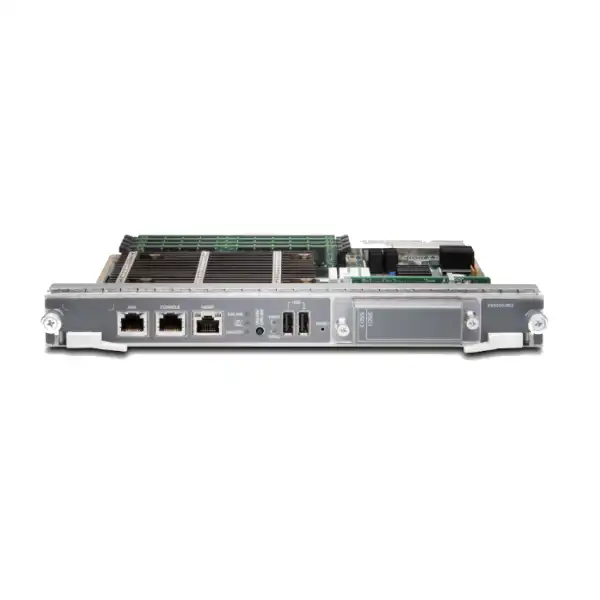
For a new EX9200 deployment, define the management design separately from production traffic. This normally includes out-of-band management addressing, console access, AAA servers, NTP, DNS, syslog, SNMP or streaming telemetry where applicable, configuration archival, software-image policy, role-based permissions and a documented emergency-access process. The Routing Engine provides dedicated console, auxiliary and Ethernet management interfaces, which makes an isolated management path practical.
Operations teams should also agree on a Junos release strategy. A version chosen only because it is the newest may not be the best fit for a particular line-card combination or change-control requirement. Feature Explorer, release notes and hardware compatibility information should be checked for the functions actually in use, particularly EVPN, VXLAN, ISSU, MACsec and advanced routing features.
Licensing: identify feature and scale requirements before quotation
EX9200 software licensing can materially change what a buyer needs to order. Juniper’s current datasheet identifies chassis-specific Advanced Feature License SKUs for EX9204, EX9208 and EX9214. It also states that BGP, IS-IS and MPLS capabilities require the Advanced Feature license. A core design that uses those protocols should therefore include licensing in the bill of materials rather than treating them as automatically available.
Juniper also lists chassis-specific ML scale licenses. The datasheet states that one ML license per chassis enables up to 512,000 FIB and ARP entries, compared with 256,000 without the ML license. This is a capacity entitlement rather than a general “performance boost,” so it should be purchased because the route and neighbor scale justifies it.
A security feature license is documented for enabling MACsec on specified interfaces. When encrypted Ethernet is part of the requirement, the quote should identify both the physical module and any license dependency. The same discipline applies to software support: entitlement to download software and obtain technical assistance depends on the purchased support arrangement and product status.
The safest procurement process is to list required features first—BGP, IS-IS, MPLS, EVPN, MACsec, scale targets and support level—and then map them to licenses. This avoids both under-licensing and unnecessary license spend. For an upgrade, the installed license state should be documented before planning a new software release or topology.
Dubai and UAE deployment planning: rack, power, airflow and cabling
A modular core is a facility project as well as a network project. The EX9200 chassis occupy 5U, 8U or 16U before allowing for cable-management space and operational access. Fully loaded chassis weights range from about 58 kg for EX9204 to almost 159 kg for EX9214. Rack load rating, mounting hardware, center of gravity and safe installation procedures therefore need to be confirmed before delivery.
Power is equally important. Juniper documents AC and DC options and multiple redundancy models. For UAE installations using AC feeds, confirm the exact input voltage, PDU receptacles, C19 power-cord requirements, UPS capacity and A/B feed design. A redundant switch connected to a single upstream PDU is not truly power redundant. If the environment has generator-backed UPS systems, calculate the configured switch load as part of total runtime planning rather than assuming the UPS has sufficient spare capacity.
Cooling deserves special attention because airflow direction differs among chassis. EX9204 and EX9208 are documented with side-to-side airflow, while EX9214 uses front-to-back airflow. In a high-density Dubai equipment room, ambient temperature control, cabinet side clearance, blanking panels, cable obstruction and neighboring heat sources can all affect thermal margin. Any site with marginal HVAC or enclosed wall cabinets should be reviewed before choosing a large chassis.
Cabling plans should identify every uplink and downstream connection by speed, fiber type, connector, distance and peer interface. That determines whether the quote needs SFP, SFP+, QSFP+, QSFP28 optics, DACs, AOCs or breakout cables. If existing multimode fiber is being reused, verify both fiber grade and reach; if single-mode fiber runs between buildings, verify the loss budget and desired optic reach rather than ordering solely from nominal distance.
Finally, reserve service space. The core should be installed where engineers can access fan trays, power modules, Routing Engines, fabrics and line cards without moving unrelated equipment. Labeling, patch-panel placement and cable management are part of availability because they reduce the chance of disconnecting the wrong link during maintenance.
Migration from an existing core to EX9200
A core migration should be planned as a sequence of controlled dependencies rather than as a single cutover event. Start by inventorying the existing network: VLANs, routed interfaces, dynamic-routing adjacencies, spanning-tree roots, port channels, first-hop redundancy, multicast, ACLs, QoS markings, management services, monitoring, WAN handoffs, firewall transit links and any appliances connected directly to the core.
Next, determine which behaviors will remain unchanged and which will be redesigned. A like-for-like migration from another chassis core can preserve VLAN and routing boundaries, reducing risk. A transformation to EVPN-VXLAN or a routed campus fabric can deliver architectural benefits, but it introduces more change and deserves a lab or staged validation. Combining hardware replacement, address redesign, new routing protocols and a new overlay into one maintenance window is usually avoidable.
The physical migration sequence is also important. If old and new cores can coexist, temporary interconnects allow access blocks to move in batches. Dual-connected downstream switches can often be migrated with less disruption than single-homed devices. Firewall clusters, wireless controllers, server farms and WAN routers require special care because their routing and state behavior may not tolerate asymmetric paths during transition.
Configuration conversion should not be treated as a line-by-line syntax translation. Different vendors and Junos releases may implement defaults, timer behavior, spanning-tree details or route policy differently. Convert the intended policy and topology, then validate the generated configuration against that intent. Pre-stage management access and monitoring before moving production links so the new core is observable throughout the change.
A rollback plan should define the exact condition that triggers reversal, how long rollback remains practical, which cables or configurations must be restored and who has authority to make the decision. Core migrations often fail operationally because teams know the target state but have not rehearsed the path back from a partially completed move.
Where the EX9200 fits best
Large enterprise campus core
Organizations with many access blocks, redundant building links and substantial east-west traffic can use an EX9200 pair to aggregate the campus and provide routed services. The modular format is useful when uplink speeds vary across buildings or will be upgraded over time.
Collapsed core/distribution
A pair of EX9200 switches can combine core and distribution functions where the site wants fewer network layers. This can simplify cabling and operations, provided the pair has enough slot, port and failure-domain capacity for the entire campus.
Data-center aggregation
The platform can aggregate multiple switch blocks, routers, security appliances and services using dense 10/40/100GbE connectivity. Buffering, routing scale and modular resilience are valuable where many high-throughput links converge.
EVPN-VXLAN gateway
Networks using an IP underlay and VXLAN overlay can use EX9200 capabilities for Layer 2/Layer 3 gateway roles, virtual switches and EVPN control-plane functions. Exact release and line-card support must be validated for the intended feature set.
High-availability institutional networks
Hospitals, universities, government entities and financial organizations can benefit from redundant Routing Engines, fabrics and power designs where maintenance continuity is important. The surrounding architecture still needs dual paths and resilient upstream/downstream connectivity.
Installed-base expansion
Organizations already operating EX9200 may expand or refresh selected components rather than replace the platform immediately. Inventory and compatibility checks are critical because some older line cards, fabric modules and Routing Engines have different lifecycle and compatibility constraints.
When another platform should be evaluated
The EX9200 is not automatically the best choice for every network. A smaller fixed-form-factor switch can be more economical when the site needs only a limited number of 10/25/100GbE ports and can achieve resilience with a pair of compact devices. Modular chassis add value through density, serviceability and expansion, but they also add rack, power and component complexity.
At the other end of the spectrum, organizations planning extensive 400GbE or 800GbE connectivity, AI fabrics or ultra-high-density leaf/spine deployments should compare newer data-center platforms designed natively for those speeds. The EX9200’s documented top-end interface class is 100GbE, so a long-term strategy centered on faster Ethernet generations deserves a broader Juniper portfolio review.
Cloud-managed campus buyers should also consider operational requirements. Juniper’s current product specification page lists EX9200 Wired Assurance and cloud-managed fields as not applicable, even though the platform can participate in EVPN-VXLAN campus designs. If an organization’s primary objective is Mist-native switch management and assurance, newer EX access platforms may provide a closer fit depending on the architecture.
The right decision therefore depends on the role. Choose EX9200 when modular capacity, Junos routing, high availability and mature 100GbE-class core functions match the requirement. Evaluate alternatives when the requirement is simpler, when a cloud-native operational model is mandatory, or when the speed roadmap extends substantially beyond 100GbE.
Procurement and lifecycle considerations
A modular switch is purchased as an ecosystem of parts, not one SKU. The quotation should identify the exact chassis bundle, Routing Engine count and model, fabric modules, power supplies, line cards, MICs where applicable, optics or cables, licenses, rack accessories, support and installation services. “EX9200” by itself is not sufficient specification for procurement approval.
Lifecycle status is particularly important for the EX9200 because Juniper’s documentation includes both current high-speed modules and historical components. The current datasheet explicitly notes a March 31, 2022 last-order date for the original EX9200-RE and for several older line cards. Existing installed equipment may continue to be supported according to applicable service terms, but a new design should avoid assuming that every component shown in older diagrams is still a current-order item.
For upgrades, capture serial numbers, hardware revisions, Junos versions and all installed part numbers. This creates a reliable base for compatibility checks and support entitlement review. It also helps determine whether an upgrade can reuse chassis infrastructure or whether a new redundant bundle is commercially and operationally cleaner.
Lead time can vary by chassis, line card, optic and support SKU, so project schedules should not be based only on the availability of the chassis. High-speed optics and specific redundant configurations can become the long-lead components. If the project has a fixed migration date, identify acceptable substitutions early rather than after the primary BOM is delayed.
UAE buyers should also confirm local power cords, import/logistics expectations, installation location and support-response requirements. A technically correct BOM is only complete when it can be delivered, powered, connected and supported in the intended site.
Detailed buyer questions about Juniper EX9200
Is the EX9200 a single switch model?
No. EX9200 is a modular family. The chassis choices are EX9204, EX9208 and EX9214, and each can be populated with compatible control, fabric and interface modules. That distinction matters when asking for a quotation because two “EX9200” systems can have very different port densities, fabric throughput, power requirements, redundancy and software entitlements. A buyer should request an itemized configuration rather than a generic chassis price.
Which chassis is best for a campus core?
There is no universal answer. EX9204 fits smaller modular cores and redundant collapsed-core pairs, EX9208 provides a middle ground with more line-card slots, and EX9214 is designed for the highest chassis density. Select by required ports, expected growth, redundancy, rack space, power and failure-domain design. Counting only today’s active ports can undersize the chassis, while buying the largest platform without a growth case can waste budget and facility capacity.
Does EX9200 support 100GbE?
Yes. Juniper documents 100GbE-capable line cards including the EX9200-15C and EX9200-12QS. Maximum 100GbE wire-speed port density is listed as 30 for EX9204, 90 for EX9208 and 120 for EX9214. Actual deployment density depends on the chosen line cards, fabric configuration, breakout mode and redundancy. Optics are a separate design decision and must match fiber type, reach and the peer device.
Can the EX9200 run BGP?
Yes, but Juniper’s current datasheet lists BGP under the Advanced Feature license. IS-IS and MPLS capabilities are also identified as Advanced Feature license functions. If BGP is part of the campus or data-center architecture, include the correct chassis-specific license in the quotation and verify the Junos release required for any advanced feature used with it.
Does it support EVPN-VXLAN?
Yes. Juniper documents EVPN and VXLAN capabilities for EX9200, including Layer 2 and Layer 3 gateway functions, virtual switches and EVPN multihoming in supported contexts. Feature support varies by hardware and Junos release. For example, Juniper notes a limitation involving EVPN multihoming and the EX9200-15C in its campus deployment guidance. Validate the exact design in Feature Explorer and release documentation before finalizing hardware.
What does the ML license change?
Juniper states that the chassis-specific ML scale license increases supported FIB and ARP entry scale to 512,000, compared with 256,000 without it. This is important for networks with large forwarding and neighbor tables. It should not be confused with the RIB figure, which is a different resource. Purchase the license when the architecture requires the additional forwarding scale, not simply because the chassis is large.
Can older EX9200 line cards be reused?
Sometimes, but reuse must be checked against fabric, chassis, software and lifecycle constraints. Juniper states that SF3 is incompatible with several older components and identifies last-order dates for multiple historical cards. An upgrade assessment should list every installed part number and current software release. Reuse can reduce project cost, but only when the remaining support life and compatibility are acceptable for the business.
How should redundancy be specified?
Start with the business failure cases. If the network must survive a Routing Engine failure, specify dual Routing Engines. If fabric failure must be tolerated, specify the required redundant fabric configuration. Use redundant power supplies fed from independent power sources where practical. For chassis or rack failure tolerance, deploy two switches and dual-home the network through an appropriate Layer 2 or Layer 3 architecture. Redundancy is a system design, not a single checkbox.
What should be checked before ordering optics?
Record port speed, transceiver form factor, fiber type, connector type, link distance and the peer device on each link. For breakout designs, confirm the supported breakout mode and cable. Existing building fiber should be tested or documented rather than assumed. The same nominal speed can use several optical standards with very different reach and cabling requirements, so optics should be matched link by link.
Is EX9200 suitable for a small office?
Usually not. A modular chassis is justified by capacity, resilience, interface flexibility or expansion needs. A small office with a few uplinks will generally obtain better cost, power efficiency and operational simplicity from a smaller fixed switch. EX9200 becomes more appropriate when it is aggregating many network blocks or providing core functions that need its scale and serviceability.
What support information should be included in a quote?
Specify the required service level, coverage term, deployment location and whether the organization needs software-download entitlement, hardware replacement, technical assistance or installation services. If the equipment is an expansion of an installed EX9200 estate, include serial numbers and current support status so renewals or new coverage can be aligned. Support should be planned for the whole system, not just the chassis shell.
How does EX9200 compare with newer fixed switches?
EX9200’s strength is modularity: replaceable line cards, redundant central components and the ability to create a tailored interface mix. Newer fixed switches can offer higher per-port speeds, lower power, smaller footprint or cloud-native operations. The comparison should therefore focus on architecture, not age alone. A modular core can remain the better choice for a dense aggregation role, while a modern fixed pair may be better for simpler 100/400GbE designs.
A practical EX9200 design workflow
- Define the role. Decide whether the platform is campus core, collapsed core/distribution, data-center aggregation, EVPN gateway or an expansion of an installed EX9200 estate. The role determines the protocol and interface requirements.
- Build the traffic model. Count current links, speeds and utilization, then model expected growth. Separate north-south traffic, east-west traffic, Internet/WAN flows, server traffic and backup or storage peaks where relevant.
- Select chassis size. Choose EX9204, EX9208 or EX9214 based on line-card demand, redundancy and planned headroom. Include rack height, weight, airflow and power in the decision.
- Select line cards and fabric. Map every required port type to supported cards and verify switch-fabric compatibility. Do not mix legacy and newer modules without a compatibility check.
- Define software functions. Identify routing protocols, EVPN/VXLAN, MPLS, MACsec, QoS, multicast and scale requirements. Map them to Junos release and license dependencies.
- Design redundancy. Choose Routing Engine, fabric and PSU redundancy and decide whether two physical chassis are required. Validate convergence and maintenance behavior for the selected topology.
- Engineer optics and cabling. Check media, distance, connector, breakout and peer compatibility for every high-speed link. Reserve spare optics according to operational criticality.
- Validate facility readiness. Confirm rack space, weight rating, power feeds, UPS, airflow, temperature and physical service clearance before equipment arrives.
- Plan migration and operations. Prepare configuration, monitoring, AAA, logging, software strategy, change windows and rollback. A core should be manageable before production traffic moves.
- Finalize the commercial BOM. Include hardware, licenses, optics, cables, support, installation and any professional services required to reach an operational state.
Decision recap for Dubai buyers
What FourTeck needs for an accurate EX9200 quotation
Plan the right Juniper EX9200 configuration before you buy
FourTeck can help UAE organizations convert a technical requirement into an itemized EX9200 bill of materials covering chassis, Routing Engines, switch fabrics, line cards, optics, licensing, support and deployment. Share your current topology, port counts and growth plan so the proposed configuration can be checked for capacity, compatibility, resilience and lifecycle fit before procurement.

Reviews
There are no reviews yet.