
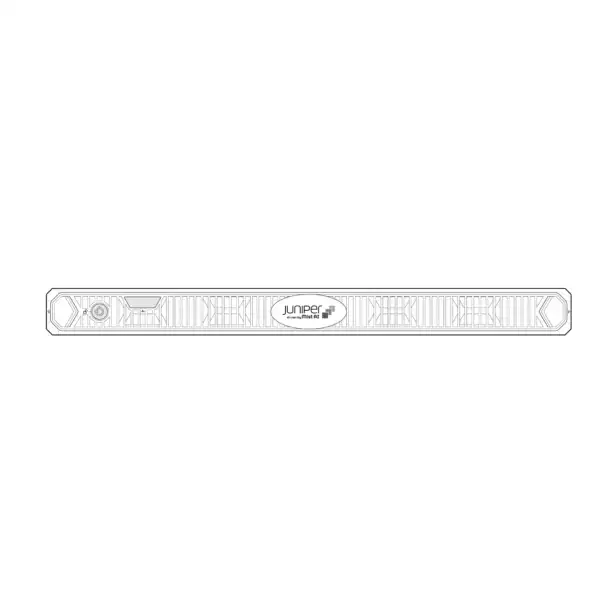
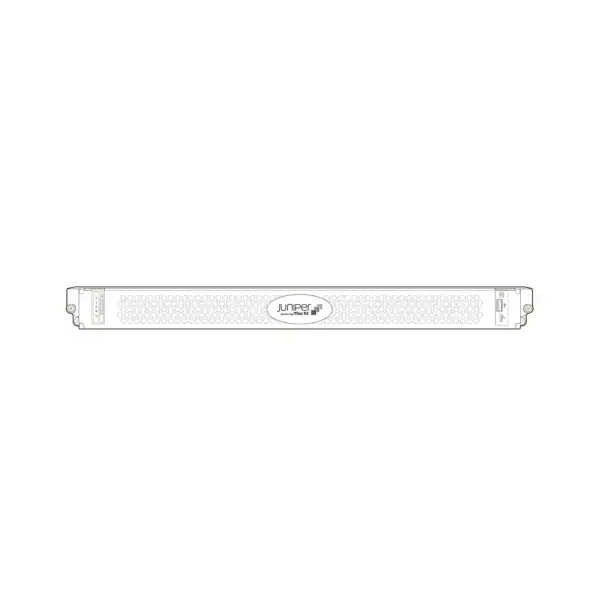
Juniper ME-X6 Mist Edge Dubai
A high-capacity Mist Edge appliance for enterprises that need on-premises tunnel termination, centralized wireless data paths, large-campus mobility and resilient service design while keeping control and management in the Juniper Mist cloud.
Direct answer: what is the Juniper ME-X6 Mist Edge?
Why the ME-X6 exists in a cloud-managed wireless architecture
The Juniper Mist architecture separates wireless control and management from the local data plane. That distinction matters because a cloud-managed WLAN does not automatically mean every user packet must be backhauled through a remote cloud service. In many enterprise networks, wireless traffic is bridged locally at the access point. In others, selected SSIDs or traffic classes need to terminate at a central point because the organization wants consistent Layer 2 behavior, centralized security insertion, a controlled guest exit, easier roaming across a large campus, or compatibility with an existing VLAN-oriented design. Mist Edge provides that local or data-center termination point without recreating the operational model of a traditional monolithic WLAN controller.
The ME-X6 is the high-capacity physical appliance in Juniper’s current Mist Edge lineup. Juniper specifies a maximum of 100 Gbps throughput, up to 5,000 access points and up to 100,000 clients. These limits are important, but they should be treated as platform ceilings rather than an invitation to operate continuously at the edge of every limit. A real design must account for the expected number of concurrently tunneled APs, the proportion of WLANs that are locally bridged versus tunneled, client behavior, application mix, multicast and broadcast patterns, future growth and the capacity that must remain available during a node or site failure.
For a Dubai enterprise, the practical value is architectural choice. A campus can retain local bridging where that is efficient, tunnel guest traffic toward a DMZ, centralize corporate wireless traffic where policy requires it, and use Mist cloud services for management and assurance. This hybrid approach can be particularly useful when a business is replacing a legacy controller estate but cannot redesign every downstream VLAN, firewall path or user network at the same time. The ME-X6 becomes a migration and service-delivery component, not simply a box placed between access points and the LAN.
Verified ME-X6 platform specifications
The following values are taken from Juniper’s current ME-X6 hardware and Mist Edge documentation. Juniper also documents two ME-X6 hardware variants, so power and environmental details should be checked against the exact unit revision supplied on the final quotation.
| Specification | ME-X6 value | Buyer relevance |
|---|---|---|
| Maximum access points | 5,000 APs | Sets a platform scale ceiling; redundancy design can require lower normal loading. |
| Maximum clients | 100,000 | Useful for high-density campuses, but client count must be considered with traffic and AP scale. |
| Maximum throughput | 100 Gbps | Sizing must use expected tunneled traffic, not total theoretical Wi-Fi radio rate. |
| Data interfaces | 4 × 25GbE SFP28 | Requires compatible switching, cabling and validated optics or DACs. |
| Management interfaces | 4 × 25GbE SFP28 | The first management interface marked MIST is used for out-of-band management. |
| Form factor | 1U | Plan rack space, rail compatibility and front/rear service clearance. |
| Approximate dimensions | 19 in W × 18.8 in D × 1.68 in H | Check usable rack depth, cable bend radius and airflow space. |
| Power supplies | Dual hot-plug redundant 800 W | A/B power feeds should be considered if the resiliency objective includes independent power paths. |
| Operating voltage | 100–240 VAC, 50/60 Hz | Confirm UAE power cords and PDU connector type on the supply schedule. |
| MTBF listed by Juniper | 231,000 hours | Useful as a reliability reference, but not a substitute for cluster and power redundancy. |
Sizing the ME-X6: why 5,000 APs is not the design target
A common procurement error is to compare the installed AP count with a platform maximum and stop there. Juniper’s high-scale guidance is more conservative. For Mist Edge clusters, Juniper recommends planning around a maximum of 80 percent loading under normal conditions when redundancy is required. For an ME-X6, that translates to roughly 4,000 APs at the 80 percent point, leaving additional capacity for failover and rebalancing. This does not mean every design should use exactly 4,000 APs per appliance. It means the architecture should reserve failure capacity instead of consuming every available resource during normal operation.
AP count is only one sizing axis. Consider a campus with 2,500 APs but a very high percentage of traffic tunneled centrally. Its throughput requirement may be more significant than its AP count. Another campus may have 4,000 APs but bridge most corporate traffic locally and tunnel only selected WLANs, producing a different load profile. Client concurrency also matters: a university at class change, an exhibition venue during a major event, a hospital with thousands of mobile clinical devices, and an office campus during ordinary working hours can have very different traffic behavior even with similar AP counts.
Resiliency changes the calculation again. If two ME-X6 appliances form a primary cluster, the question is not simply whether the pair can carry normal load. The design should determine what happens when one node is unavailable, when a data-center path fails, or when an entire primary cluster must fail over to a backup cluster. Sizing needs to consider the capacity of the surviving infrastructure. A design that operates comfortably while every component is healthy but crosses an AP, client or throughput ceiling during a failure does not deliver the intended redundancy.
FourTeck’s sizing discussion therefore starts with four numbers: APs now, APs expected during the planning horizon, concurrent clients, and estimated tunneled throughput. Those inputs are then adjusted for which SSIDs are tunneled, what redundancy model is required, whether backup clusters are planned and how much operational headroom the customer wants. The result may be one ME-X6, a multi-node ME-X6 cluster, or a smaller Mist Edge model if the requirement is well below ME-X6 scale.
ME-X6 compared with current smaller Mist Edge appliances
| Model | Max APs | Max clients | Max throughput | Primary interface profile |
|---|---|---|---|---|
| ME-X1-M | 500 | 5,000 | 4 Gbps | Quad-port 1GbE data; dual-port 1GbE management |
| ME-X2-M | 2,000 | 20,000 | 40 Gbps | Quad-port 10GbE SFP+ data; dual-port 1GbE management |
| ME-X6 | 5,000 | 100,000 | 100 Gbps | Quad-port 25GbE SFP28 data; quad-port 25GbE SFP28 management |
The ME-X6 is not automatically the best choice simply because it is the largest current physical model shown in Juniper’s primary Mist Edge comparison. An organization with several hundred APs and modest centralized traffic may obtain a cleaner and more economical design from ME-X1-M or ME-X2-M appliances, especially when resilience is achieved with multiple smaller nodes. Conversely, environments already approaching several thousand APs, tens of thousands of clients or high aggregate tunnel traffic can benefit from ME-X6 headroom and 25GbE connectivity. The correct comparison is based on failure-state capacity, interface requirements and operating model, not only purchase price or chassis count.
How tunneled WLANs work with Mist Edge
Juniper access points can use a distributed data plane, a centralized data path through Mist Edge, or a mixture of both. For WLANs selected for tunneling, Juniper documents standards-based L2TPv3 between the access points and Mist Edge. In teleworker scenarios, IPsec can be used. The architectural benefit is flexibility: one SSID can remain locally bridged at the site while another is sent through Mist Edge to a central network location. This is particularly valuable when guest, corporate, IoT and specialist device traffic have different security or routing requirements.
A practical example is a large UAE headquarters with a corporate SSID and a guest SSID. Corporate traffic may be tunneled to a data-center Mist Edge cluster so it exits into an established set of corporate VLANs and security controls. Guest traffic may be tunneled to a Mist Edge located in or connected to a DMZ, keeping guest sessions away from internal enterprise resources. A third SSID used for local building systems could be locally bridged if central tunneling offers no benefit. Mist allows this combination without forcing every WLAN into one identical forwarding model.
This design also affects switching. The 25GbE links from the ME-X6 need to connect to switching infrastructure that can carry the required VLANs and aggregate traffic. The network path from access points to the Mist Edge tunnel IP must be routable. The appliance also requires a separate management path to the Mist cloud. Because the tunnel endpoint and management interface serve different functions, the addressing plan should be prepared before installation rather than improvised during commissioning.
The buyer therefore needs to decide which WLANs are being tunneled, where they should terminate, which VLANs or network segments they enter after termination, and what firewall or policy controls sit downstream. Those decisions determine port usage, switch configuration, routing, IP allocations and the physical location of the ME-X6. They also determine whether a single cluster can serve the entire estate or whether multiple clusters placed in different data centers or campus zones are more appropriate.
High availability, clustering and failure planning
Active/active capacity
Juniper supports active/active tunneling clusters. Traffic is balanced across available Mist Edge nodes instead of reserving a full appliance as permanently idle standby capacity. This lets the design use installed resources during normal operation while still providing node redundancy.
Multiple cluster layers
Mist Edge can support backup clusters. If an entire cluster becomes unavailable, Juniper APs can fail over to another cluster in a different data center, subject to the design and available capacity. This enables resilience beyond the failure of an individual appliance.
Headroom matters
A redundant cluster should be sized so surviving nodes can accept additional APs and traffic after a failure. Juniper’s high-scale guidance uses 80 percent normal loading as a planning point, which is why failure-state modeling is more meaningful than dividing total APs by the maximum per appliance.
WLAN survivability
Juniper separates AP control and management from the data plane. AP behavior is therefore not identical to a legacy controller dependency. The detailed survivability outcome still depends on WLAN design, available tunnels, upstream services and the failure being considered.
For procurement, high availability means the quote may need more than the appliance count suggested by normal-day traffic. It can also require duplicated optics, switch ports, patching, power feeds and rack capacity. If the resilience objective includes data-center failure, the second site needs its own physical capacity and network reachability. A statement such as “we need redundant Mist Edge” is not enough for accurate pricing; the intended failure domain must be explicit.
Interfaces, optics and uplink planning
The ME-X6 uses SFP28 interfaces rather than fixed copper Ethernet for its main high-speed connectivity. Juniper lists four 25GbE SFP28 data interfaces and four 25GbE SFP28 management interfaces. The data ports provide the endpoint for AP tunnels and connect the appliance into the network that carries tunneled user traffic. The management side includes the interface marked MIST for out-of-band management. Because the port hardware is high speed, the supporting switch platform, transceiver type, fiber plant and cable distances must be selected as part of the appliance purchase.
Juniper publishes a validated optics list for ME-X6. Supported choices include 10GbE copper, short-reach and long-reach SFP+ options, 25GbE short-reach and long-reach SFP28 optics, 10GbE and 25GbE direct-attach cables, and a 100G-to-4x25G breakout DAC for supported data-port use. The important point for a buyer is not simply that an optic fits mechanically. Using a transceiver or cable validated for the Mist Edge reduces interoperability risk and makes support conversations clearer.
Optics selection should begin with the physical path. If the ME-X6 is in the same rack or an adjacent rack as a compatible switch, a DAC may be appropriate. Across a data hall, multimode short-reach optics may be suitable where the fiber infrastructure supports them. Between more distant network rooms, single-mode long-reach optics may be required. Existing patch panels, connector type, optical budget and installed fiber grade must all match the chosen transceiver. The quotation should therefore state the number of links, link speed, approximate distance, media type and whether the customer already owns compatible optics.
Do not assume all eight SFP28 positions must be populated identically. The number of active data and management links depends on the topology, link aggregation strategy and resilience design. FourTeck can help separate what is required at day one from spare port capacity that can remain available for future growth.
Power, rack and environmental planning for UAE deployments
The ME-X6 is a 1U appliance with dual hot-plug redundant 800 W power supplies. Juniper’s current hardware guide documents two hardware variants with different power characteristics. Variant 1 is listed with approximately 490 W maximum draw and 105 W idle draw, while Variant 2 is documented with a higher maximum and idle power profile. Because Juniper has revised the hardware platform over time, the final bill of materials should identify the supplied hardware variant or current shipping specification, and the data-center electrical calculation should use that confirmed value rather than an older datasheet copied from a reseller page.
Redundant power supplies deliver the greatest value when they are connected to genuinely independent power paths. In a data center with A and B PDUs, each PSU can be connected to a different feed. If both power supplies are connected to the same PDU or the same upstream circuit, the appliance has PSU redundancy but not complete feed redundancy. The same principle applies to UPS capacity and generator-backed circuits. A resilient wireless design should not overlook the infrastructure supporting the controller-replacement layer.
Rack depth and service clearance also need attention. Juniper lists the chassis at approximately 19 inches wide, 18.8 inches deep and 1.68 inches high, with a 1U form factor and sliding rail support. Cable bend radius for SFP28 fiber or DAC connections, airflow direction, rear access and neighboring equipment can matter more than the raw chassis depth. UAE facilities should also validate ambient conditions inside the actual rack, not only the room set point. Dense racks, blocked airflow and recirculated hot exhaust can create a much higher local inlet temperature than the nominal data-hall temperature.
Power cord type is another quotation detail. Juniper documentation notes country-specific cords, while some global datasheets show a North American default example. A Dubai order should therefore specify the UAE deployment location so the correct power-cord and PDU requirements are checked before shipping.
Management connectivity, OOBM and IP planning
Mist Edge needs management connectivity to the Juniper Mist cloud and a separate tunnel endpoint for AP traffic. Juniper’s setup guidance distinguishes the out-of-band management address from the Tunnel IP address. The OOBM interface on Mist Edge is marked MIST and is configured for DHCP by default. In a DHCP-enabled management network, the appliance can first reach Mist cloud and then be assigned a static management address through the Mist portal. If DHCP is not available, Juniper provides CLI-based options for initial OOBM configuration.
The Tunnel IP is different from the OOBM address and should be on a different subnet. This separation is important operationally. The OOBM path supports cloud communication and management, while the tunnel IP is where AP tunneling traffic is directed. During planning, network teams should reserve both addresses, decide the appropriate VLAN and gateway for each, and ensure the access points can route to the tunnel endpoint. Treating the appliance as though it needs only one management IP can delay commissioning when routing or firewall changes require a separate approval process.
The chassis also includes dedicated iDRAC functionality for hardware-level remote management. Juniper documents an iDRAC port and credentials available from the appliance information tag. This is useful for platform diagnostics and low-level system access that is independent of the normal Mist management plane. Whether iDRAC is connected to a dedicated infrastructure-management network should be decided according to the customer’s server-management security policy.
Before installation, document the management subnet, tunnel subnet, DNS reachability, internet egress policy, required Juniper Mist cloud destinations, switch ports and firewall rules. A site with restrictive outbound filtering may need explicit allowance for the fully qualified domain names and ports used by Mist services. This work belongs in the implementation design, not only in post-delivery troubleshooting.
Subscriptions, software entitlement and support
Hardware alone does not define a complete Mist Edge deployment. Juniper’s ordering information lists Mist Edge Assurance as a software subscription on a per-AP basis. The exact subscription SKU uses a term-based naming convention, so the quantity and term should be matched to the number of APs that will use the Mist Edge service and to the customer’s commercial agreement. Separately, the broader Juniper Mist environment usually includes the subscriptions required for wireless management and assurance. The quotation should distinguish appliance hardware from the recurring software entitlements that enable the intended operating model.
This distinction becomes especially important during migrations. An organization may already own Juniper APs and active Mist subscriptions but be adding Mist Edge for the first time. Another organization may be moving from a legacy controller platform and purchasing APs, Mist cloud subscriptions and Mist Edge hardware together. A third may be expanding an existing ME-X2-M cluster into ME-X6 capacity. Each scenario can produce a different bill of materials even if the desired final architecture looks similar.
Juniper also lists extended hardware support options for Mist Edge. Support requirements should be aligned with the business impact of wireless service. A campus that runs mission-critical clinical, operational or customer-facing applications may require a stronger replacement and support commitment than a non-critical office. Buyers should verify support term, replacement process, entitlement registration and any local logistics considerations in the UAE before finalizing the purchase.
FourTeck can structure the quote so the hardware, Mist Edge Assurance subscription, related Mist wireless subscriptions, optics and support services are shown as separate commercial components. This helps procurement teams understand which items are one-time capital purchases and which are recurring services that must be budgeted at renewal.
Migration from legacy wireless controllers
One of the strongest use cases for Mist Edge is the transition from a traditional centralized WLAN controller architecture. In a legacy controller design, control, management and data forwarding may be tightly coupled to the controller. Replacing that platform with a cloud-managed system can be difficult if the surrounding network expects wireless user traffic to appear on specific VLANs at a central location. Mist Edge helps preserve a centralized data-plane option while Juniper Mist moves control and management into a cloud-native microservices model.
This can reduce the need for a “big bang” redesign. Existing VLAN boundaries, firewall interfaces and upstream routing can often remain conceptually similar while APs are migrated to Juniper Mist. Selected WLANs can tunnel to Mist Edge and be delivered into the expected network segments. Over time, the organization can decide whether some traffic should remain centralized, be locally bridged, or use a different segmentation method. The migration therefore becomes a sequence of deliberate architectural decisions rather than a forced replication of the old controller topology.
A migration plan should inventory SSIDs, VLAN mappings, authentication methods, DHCP location, firewall dependencies, guest-internet breakout, captive-portal requirements, multicast behavior, latency-sensitive applications and roaming domains. It should also identify any functions provided by the legacy controller that are not direct responsibilities of Mist Edge. The objective is not to assume feature-for-feature equivalence; it is to understand which existing outcomes must be preserved and which can be redesigned using Mist capabilities.
Cutover sequencing matters. Large campuses may migrate building by building, floor by floor or SSID by SSID. Mist Edge cluster capacity should be sufficient for both the planned steady state and any temporary overlap required during migration. A rollback method should be documented for critical environments. When these dependencies are known early, hardware sizing and service effort become much easier to estimate accurately.
Where the ME-X6 fits best
Large enterprise campuses
Organizations with multiple buildings, thousands of APs or high roaming requirements can use ME-X6 to provide centralized tunnel termination while maintaining cloud-based management and assurance.
Universities and education estates
Large student populations, dense client concurrency and campus-wide mobility can make AP and client scale as important as throughput. The 5,000-AP and 100,000-client ceilings make ME-X6 relevant to substantial higher-education environments.
Healthcare networks
Hospitals may value centralized segmentation, roaming continuity and resilient design for clinical mobility. Sizing should consider biomedical IoT, staff devices, guest traffic and critical application paths separately.
Airports, hospitality and venues
High user turnover and guest concentration can create large client populations and bursty traffic. ME-X6 can be appropriate where centralized guest or corporate traffic handling is part of the security architecture.
Controller replacement programs
Enterprises moving from a centralized WLAN controller can preserve selected centralized data-plane behavior while adopting Mist cloud operations, reducing the number of simultaneous network changes.
When the ME-X6 may be larger than you need
A technically capable platform can still be the wrong commercial choice. If a customer has a few hundred APs, modest tunneled traffic and no foreseeable expansion toward ME-X6 scale, using the largest appliance may create unnecessary cost in hardware, optics, 25GbE switching, power and support. ME-X1-M and ME-X2-M exist precisely because not every Mist Edge deployment needs 100 Gbps or a 5,000-AP ceiling.
A smaller cluster can also provide attractive resilience. For example, an estate whose load fits comfortably within two smaller appliances may prefer that architecture if it simplifies connectivity or commercial planning. The decision should consider failure behavior, not just single-box capacity. Two or more appropriately sized nodes can sometimes offer a better balance of redundancy, maintenance flexibility and cost than one oversized appliance.
Port speed is another consideration. The ME-X6’s SFP28 connectivity is valuable when the surrounding network can use it. If the target switch infrastructure is limited to 10GbE and there is no plan to change it, the integration may require additional design work or a different Mist Edge model. Likewise, if the organization has no requirement for tunneled WLANs, a Mist Edge appliance may not be necessary at all; Juniper APs can use local bridging in many normal Mist deployments.
FourTeck’s role in a product consultation is therefore to validate whether ME-X6 solves a real architectural requirement. The recommended solution should follow the network design. It should not be justified merely because ME-X6 is the most capable appliance in the current comparison.
Implementation journey: from quotation to production
Confirm current and future AP count, client scale, estimated tunnel traffic, WLAN forwarding model, resiliency objective, data-center locations and expected growth.
Select the ME-X6 appliance quantity, validated optics or DACs, Mist Edge Assurance subscriptions, support coverage, rails, power cords and any required installation services.
Prepare rack space, A/B power where required, management and tunnel IP addresses, switch ports, VLANs, routing, DNS and outbound reachability to Juniper Mist cloud services.
Add the appliance to the appropriate Mist organization, establish management reachability, configure the tunnel service and cluster behavior, then verify cloud visibility and software state.
Assign selected WLANs to tunneling policies, validate downstream VLAN delivery, test authentication, DHCP, security controls, application paths and expected guest or corporate routing.
Test node loss, link loss and cluster failover where the project permits. Confirm that APs reconnect as designed and surviving infrastructure has enough capacity for the required service level.
Security and segmentation considerations
Mist Edge can support dynamic traffic segmentation and separation of guest and corporate traffic, but the appliance should be considered part of a wider security architecture. It does not eliminate the need to define trust zones, firewall policy, identity controls, DHCP and DNS placement, internet egress, monitoring, logging and incident-response requirements. The value of centralized tunneling is that selected wireless traffic can be delivered to a controlled network location where those services already exist or can be implemented consistently.
Guest WLAN design is a common example. A customer may choose to tunnel guest traffic to a Mist Edge cluster connected to a DMZ so that visitors obtain internet access without traversing internal business segments. Corporate traffic can terminate elsewhere, and IoT traffic can be segmented according to device class or access policy. Because Mist can form multiple tunnels according to WLAN configuration, the network does not need a single universal traffic path for every user.
For identity-centric deployments, Juniper also documents an Access Assurance Proxy use case in the Mist Edge family, where Mist Edge can proxy RADIUS authentication from third-party network devices toward the Juniper Mist cloud using secured RadSec. That capability should be designed and licensed according to the intended service; it should not be assumed as an automatic replacement for every existing NAC or RADIUS function. The customer should identify the authentication sources, certificate requirements and policy ownership before implementation.
Security teams should be included during the design phase because the placement of a Mist Edge cluster can alter where wireless user traffic enters security controls. The most successful projects define the desired trust boundary first and then place tunnel endpoints, VLANs and firewalls to support it.
Procurement risks to eliminate before placing the order
Wrong capacity assumption
Do not equate “under 5,000 APs” with “one ME-X6 is sufficient.” Throughput, clients and failover headroom can require additional nodes.
Missing optics
SFP28 ports need appropriate optics or DACs. Confirm switch side compatibility, media, distance and quantity instead of assuming transceivers are bundled.
Unclear subscription quantities
Mist Edge Assurance is ordered per AP. The AP count and subscription term should be explicitly stated in the quote.
Power variant mismatch
ME-X6 hardware variants differ in power behavior. Data-center capacity calculations should use the current unit’s documented characteristics.
No failure-state sizing
A cluster that works only while all nodes are healthy is not a resilient design. Model the load each surviving node or backup cluster must carry.
Incomplete installation scope
Clarify whether delivery includes rack mounting, patching, Mist configuration, switch changes, migration, testing, documentation and handover.
Operational monitoring and lifecycle planning
Mist Edge participates in a cloud-managed operating model, which changes how network teams should think about day-two support. The appliance is not a standalone box that should be configured once and then ignored. Its health, tunnel service, cluster state and relationship with the Mist organization need to be monitored alongside AP experience metrics, switch paths and the external services used by wireless clients. Troubleshooting should follow the traffic path from client to AP, through any tunnel, into the post-termination VLAN and then to application or internet destinations.
Software lifecycle planning should include Juniper’s Mist Edge software and base operating system updates. Maintenance procedures need to account for clustered operation so software changes do not unnecessarily interrupt wireless service. In a resilient architecture, nodes can be updated in a controlled sequence while capacity remains on the surviving members, provided the cluster has adequate headroom. That again links lifecycle operations back to the original sizing decision.
Hardware support and spares strategy should also align with business criticality. The ME-X6 uses redundant power supplies, but some internal components are not intended as customer field-replaceable parts. A support entitlement with appropriate replacement terms may be more important than purchasing internal spares. The data-center team should retain serial numbers, claim codes, support entitlement details and rack locations in the organization’s asset-management system.
Finally, revisit capacity periodically. AP growth, new Wi-Fi generations, higher client throughput, additional tunneled SSIDs and changes to guest or IoT policy can increase Mist Edge load even when the physical campus footprint stays the same. A platform purchased with healthy headroom can absorb change; one selected at the absolute boundary can become a constraint much sooner.
Detailed buyer questions about Juniper ME-X6 Mist Edge
Is the ME-X6 a wireless controller?
It provides a centralized data-path function similar to what legacy controllers handled, but Juniper’s architecture keeps control and management in the Mist cloud. It is better understood as a cloud-orchestrated edge appliance for selected on-premises services rather than a return to a traditional monolithic WLAN controller.
Does every Mist deployment need ME-X6?
No. Juniper APs can bridge traffic locally. Mist Edge is used when the design needs centralized tunnel termination, large-campus mobility behavior, centralized VLAN delivery, guest or corporate traffic redirection, IoT segmentation or related edge services.
Can one ME-X6 support 5,000 APs?
5,000 APs is Juniper’s maximum platform figure. For resilient high-scale designs, Juniper recommends normal loading that preserves headroom; its guidance uses about 80 percent as a planning point. Throughput and client count must also remain within limits.
Can ME-X6 form a cluster?
Yes. Juniper supports elastically scalable Mist Edge clusters, active/active tunneling behavior and backup clusters. Cluster architecture should be based on AP count, client scale, traffic and the failure scenarios the business expects to survive.
Are SFP28 optics included?
Do not assume so. The appliance provides SFP28 interfaces, while optics or DACs are selected according to the network link. The final bill of materials should explicitly show required Juniper-validated transceivers and cables.
What licensing should be quoted?
Juniper lists Mist Edge Assurance as a standard per-AP subscription. The correct term and quantity depend on the deployment. Broader Mist Wi-Fi subscriptions and support entitlements should be reviewed separately.
Does it support guest traffic separation?
Yes. Juniper documents split tunneling and the ability to form different tunnels based on WLAN requirements, allowing guest traffic to be sent to a DMZ while corporate traffic follows a separate path.
What needs to be ready before installation?
Prepare rack space, power feeds, management and tunnel IP addresses, switch ports, VLANs, routing, optics, DNS and required cloud reachability. The AP-to-tunnel path must also be routable.
Dubai and UAE quotation considerations
For a UAE purchase, commercial accuracy depends on more than the product code ME-X6. The quotation should identify the required appliance quantity, subscription duration, number of AP subscriptions, support term, optics, DACs, rack accessories, power-cord requirements and any professional services. If the solution is being deployed across multiple emirates or data centers, state the delivery locations and whether each site needs an independent cluster, backup cluster or only network connectivity to a central Mist Edge location.
Lead time should be confirmed at quotation stage rather than inferred from a generic online stock statement. Enterprise networking products can be affected by regional inventory, specific optics, support entitlement processing and project scheduling. FourTeck can provide a commercial offer based on the current UAE supply position once the required bill of materials is known. For project tenders, include the requested validity period, delivery schedule, payment requirements and any mandatory manufacturer authorization or compliance documents in the inquiry.
Installation scope should also be explicit. Some customers need only supply and delivery. Others require rack installation, optical patching, switch configuration, Mist organization setup, cluster deployment, WLAN migration, testing and documentation. A statement such as “installation included” is too broad to price reliably because a single-appliance greenfield deployment is very different from migrating thousands of APs from a legacy controller across several buildings.
If the project is still at design stage, the most useful first step is to provide approximate AP count, expected user population, current controller model, number of sites, planned tunnel use, redundancy objective and preferred subscription term. FourTeck can then identify which questions require a detailed technical workshop before the final bill of materials is issued.
Decision recap: is ME-X6 the right Mist Edge appliance?
What FourTeck needs for an accurate ME-X6 quotation
Providing these inputs early prevents the most common causes of re-quotation: missing optics, incorrect subscription counts, underestimated appliance quantity, overlooked redundancy hardware and unclear professional-services scope.
Plan the Juniper ME-X6 around your actual campus, not the headline limits
The ME-X6 is a powerful Mist Edge platform, but the right deployment depends on AP scale, client density, tunneled traffic, failure headroom, optics, switch capacity, subscriptions and installation conditions. FourTeck can prepare a Dubai/UAE quotation that separates hardware, licensing, connectivity and implementation so your team can evaluate the complete solution rather than a standalone appliance price.

Reviews
There are no reviews yet.