
Medium-branch SD-WAN appliance for Dubai and UAE networks
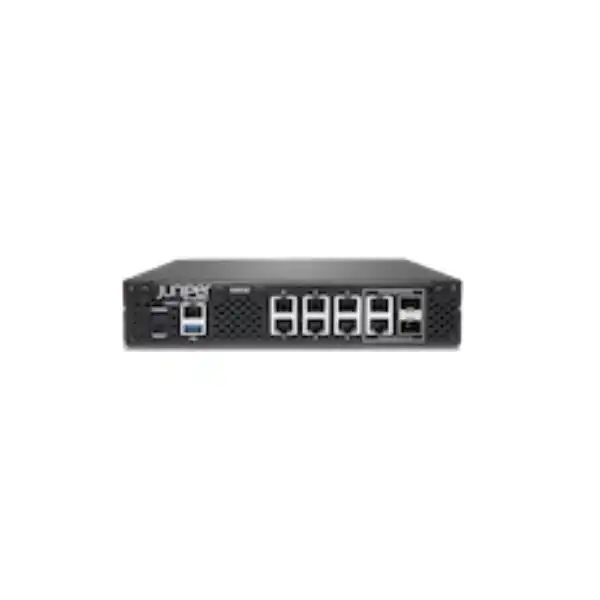
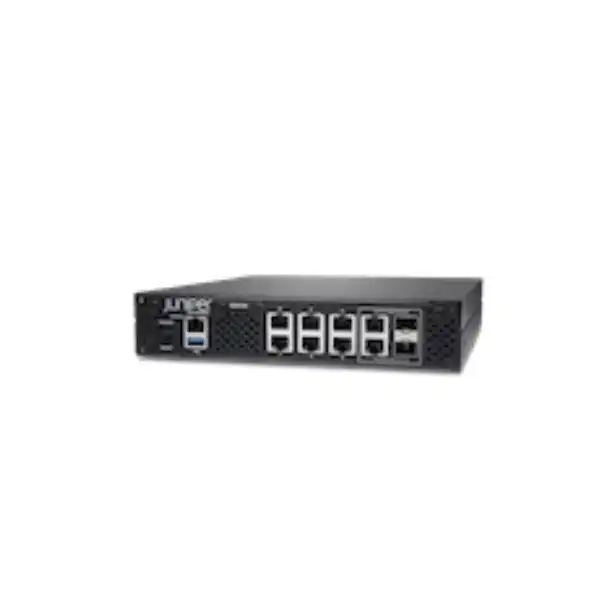
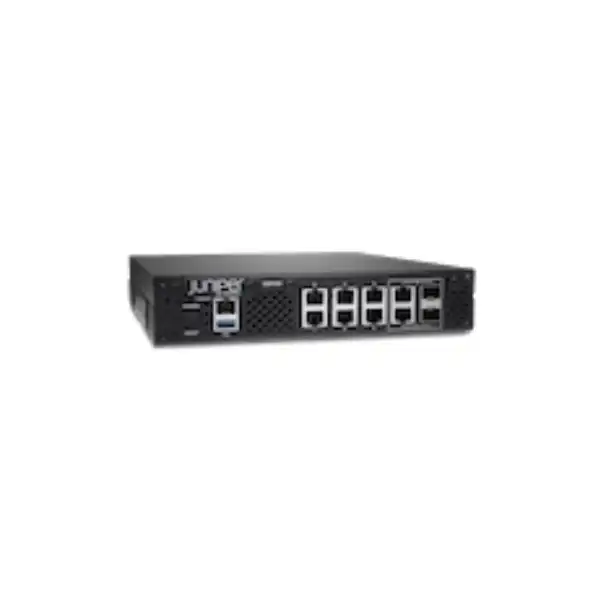
Juniper SSR130 Session Smart Router
The Juniper SSR130 is a fixed desktop Session Smart Router aimed at medium branch sites that need secure WAN edge routing, application-aware traffic control, resilient multi-link connectivity and centralized operations. Its value is not simply the eight 1GbE data interfaces; the buying decision depends on expected encrypted traffic, Session Smart licensing, management design, WAN diversity, interface media, LTE requirements and the migration plan from the existing edge.
Direct answer: what the SSR130 is and what to confirm
What exactly is it?
The Juniper SSR130 is a software-driven branch routing appliance in the Session Smart Router portfolio. It runs Juniper Session Smart software and is designed to sit at the WAN edge, where it can make forwarding decisions based on sessions, application intent, policy and available paths rather than behaving only as a traditional destination-based branch router. The platform supports secure and resilient WAN connectivity and can be operated as part of a Juniper Mist WAN Assurance deployment or a Session Smart Conductor-managed environment.
What is it mainly used for?
Its main role is branch SD-WAN and secure WAN edge connectivity. A typical deployment can use multiple Internet, private WAN or cellular paths, apply service and application policies, steer traffic according to business intent, maintain session awareness and give operations teams centralized visibility. Because Session Smart routing uses a tunnel-free Secure Vector Routing architecture, the design differs from many conventional overlay SD-WAN systems and should be reviewed as an architecture choice, not merely a replacement box with the same port labels.
Who should consider it?
Organizations with medium-size branch locations are the most natural candidates: retail or service branches, regional offices, clinics, warehouses, education sites, distributed professional offices and similar locations where WAN uptime and application performance matter. The SSR130 is especially relevant when a branch needs several 1GbE handoffs, more capacity than the smaller SSR120 position, secure multi-path routing and centralized policy. It is not automatically the right answer for high-throughput campus or data-center edges, integrated Wi-Fi requirements or environments expecting multi-gigabit access interfaces.
What is the most important factor to confirm?
Confirm the real traffic profile and the required software subscription before treating the hardware specification as sufficient. Juniper publishes different performance figures for encrypted and unencrypted traffic, and packet mix affects observed throughput. The SSR software subscription is sold separately. A buyer therefore needs to size around encrypted traffic, session behavior, WAN circuit speeds, high-availability design, management method and future growth—not simply count interfaces or compare the 2Gbps headline figure with an ISP bandwidth number.
What can FourTeck determine?
FourTeck can help translate the branch requirement into an orderable bill of materials: exact SSR130 variant, Session Smart or Mist-related subscription needs, copper versus SFP handoffs, compatible optics where fibre is required, rack-mount kit needs, LTE variant suitability, quantity, support coverage and implementation services. For Dubai and wider UAE projects, that validation is useful because carrier handoffs, branch standards, cloud-management access, regional LTE considerations and migration constraints can materially change what should be quoted.
Where the Juniper SSR130 fits in a branch architecture
The SSR130 is best understood as a WAN-edge platform rather than as a general-purpose access switch or a simple Internet gateway. Juniper positions it for medium branches, placing it above the SSR120 in the SSR100 line and below larger branch or data-center platforms such as the SSR1200. That positioning matters because the right branch router is determined by the amount and type of traffic crossing the edge, the number and nature of WAN services, the required policy features, and the operational model. A site with 500Mbps of Internet service can still be more demanding than a site with a 1Gbps service if the smaller circuit carries a high proportion of encrypted, small-packet or connection-intensive traffic.
In a typical design, the appliance has at least one WAN-facing interface connected to a carrier or Internet service and one LAN-facing interface connected to the branch switching environment. Additional interfaces may be used for a second carrier, private WAN, segregated LAN handoffs, service chaining, high-availability connectivity or other design needs. Juniper’s default port mapping for cloud onboarding gives specific ports initial WAN, LAN and HA roles, but the final production design should be based on the organization’s template and approved topology. This is particularly important during a migration: blindly mirroring the cable positions of an older router can create avoidable cutover problems if the new configuration expects different logical interfaces or services.
The Session Smart approach is application-aware and session-aware. Instead of building a conventional tunnel overlay for every path, Juniper uses Secure Vector Routing to direct sessions through the network. That architecture is one of the main reasons to evaluate the platform. It can reduce the overhead associated with traditional tunnel-centric WAN designs and enables policy to follow the session and service intent. However, the architectural advantage only becomes operationally useful when the branch, head-end, cloud and management design are planned together. A standalone hardware purchase without a clear policy and management strategy misses much of what differentiates Session Smart networking.
For a UAE organization with many branches, SSR130 can serve as a repeatable medium-site building block when the same branch profile appears across locations. Standardization can simplify templates, spares, change control and support. For organizations with mixed site sizes, it is better to define a small set of branch classes—small, medium, large or special-purpose—and assign the appropriate SSR platform to each class rather than deploy one model everywhere. That produces more predictable capacity and avoids paying for hardware that smaller sites do not need or under-sizing larger sites simply to maintain model consistency.
Verified hardware and performance profile
| Area | SSR130 detail | Why it matters to a buyer |
|---|---|---|
| Branch position | Medium branch | Use the model as a starting point for medium-site sizing, then validate traffic and resilience requirements. |
| RJ-45 interfaces | 6 × 1GbE RJ-45 | Provides multiple copper handoffs for WAN, LAN or other logical roles defined by the deployment. |
| Combo interfaces | 2 × 1GbE RJ-45/SFP combo | Useful where the carrier or local network requires copper or fibre, but suitable SFP optics are a separate design item. |
| Unencrypted throughput | Up to 2Gbps aggregate, line rate on ports in Juniper’s published test profile | Do not assume this equals encrypted production throughput or a guaranteed application rate. |
| Encrypted + HMAC | Published at 1Gbps with IMIX and 1.8Gbps with 1500-byte packets | Shows why packet profile and security processing should be included in sizing. |
| Memory | 16GB ECC RAM | Part of the fixed appliance platform; memory is not a buyer-selected expansion dimension. |
| Storage | SSD storage; current Juniper materials should be checked on the exact orderable SKU because published references may present nominal versus usable capacity differently | Avoid selecting the appliance based on storage capacity; treat it as a managed router platform rather than an application server. |
| Console / USB | 1 × RJ-45 console, 1 × USB 3.0 Type-A | Important for local setup and service procedures, not additional production Ethernet capacity. |
| Form factor | Desktop; optional SSR100-RMK rack-mount kit is sold separately | Include mounting requirements in the bill of materials for comms-room installations. |
| Power | External 100–240V AC adapter, 12V DC output; maximum draw stated at 41.5W | The appliance does not provide a supported redundant power-adapter architecture, so site power resilience must be designed upstream. |
| Environment | 0°C to 40°C operating range; front-to-back airflow with two fans | Relevant for UAE comms rooms where cooling, dust control and equipment clearance can be decisive for reliable operation. |
Performance figures are useful guardrails rather than a substitute for sizing. Juniper’s published values are tied to test conditions and packet profiles. Real sites vary in traffic mix, encryption, session establishment rate, policy complexity, WAN path behavior and software release. Capacity planning should preserve headroom for bursts, failover and growth rather than size the router to sit permanently near a published maximum.
Session Smart routing: capability, condition and buyer relevance
Juniper Session Smart Router software is built around a session-aware data plane and a service-centric control model. A session is more useful to application delivery than an isolated packet because it carries context about the communicating endpoints, service, policy and path. In practical terms, this allows the router to make forwarding decisions with an understanding of the application session and to apply policy at a more meaningful level than a simple destination route. For an enterprise buyer, the benefit is the possibility of aligning WAN behavior with business services rather than building every operational rule around links and tunnels.
Secure Vector Routing is the architectural element that distinguishes Session Smart from many overlay SD-WAN products. Juniper describes the design as tunnel-free. That does not mean traffic is unsecured or that encryption is absent. The platform can encrypt session traffic and applies Zero Trust concepts in which routes, policies and access controls determine which sessions are allowed. The architecture can also recognize traffic that is already protected by protocols such as HTTPS or IPsec and avoid unnecessary re-encryption in appropriate circumstances, reducing the overhead associated with encrypting already encrypted payloads. The exact policy behavior should be validated against the organization’s security design rather than inferred from a marketing label.
Multipath routing is another important part of the branch value proposition. A medium branch may have two Internet circuits from different carriers, a private service plus Internet, or an Ethernet circuit backed by LTE. The SSR can monitor paths and apply application or policy intent to select the appropriate route. This makes the appliance relevant to businesses that want to use diverse underlays without treating every circuit as an isolated network. The operational question is not simply whether two links are present, but which applications can use which links, how failover should occur, whether sessions should move without user-visible disruption, and what path conditions constitute degradation rather than total failure.
The SSR130 also provides stateful firewall capabilities associated with session processing, including traffic filtering, NAT, VPN functions and protections against certain denial-of-service behaviors. Buyers should interpret that in the context of the complete security architecture. A branch may still require dedicated next-generation firewall functions, cloud-delivered security, secure web gateway services or other controls depending on policy, inspection depth, compliance and threat-protection requirements. The SSR130 is not automatically interchangeable with every perimeter firewall simply because it includes stateful security functions. A design review should decide which controls belong on the Session Smart edge and which remain in other security layers.
For a distributed UAE enterprise, the strongest business case often comes from consistency. If branch policies, application priorities and WAN templates are centrally defined, new locations can be deployed with less site-specific configuration. Zero-touch provisioning through the Mist cloud can further reduce field-engineering effort when the WAN circuit, DHCP behavior and outbound connectivity needed for onboarding are prepared. This does not eliminate planning; it moves more of the planning into templates, inventory, subscriptions and standardized handoff procedures. Mature organizations typically gain more from this operating model than from comparing raw router specifications in isolation.
Interfaces, media and physical deployment decisions
Six copper 1GbE ports
The six onboard 1GbE RJ-45 ports provide substantial flexibility for a medium branch. They can support multiple WAN or LAN handoffs according to the logical configuration. Count them as physical interfaces, not as a guarantee that every branch topology can use all ports for any purpose without design work. Port roles, VLANs, addressing, routing instances, high availability and security policy must be mapped to the intended template.
Two RJ-45/SFP combo ports
The two combo ports accept either copper RJ-45 or SFP media. Juniper notes that the appliance detects which media establishes link; if both copper and fibre are connected to the same combo port, the first link to come up becomes active and the other is disabled. Procurement should therefore specify the intended medium. If fibre is required, compatible SFP optics and the correct fibre type must be selected separately.
No PoE+ access role
The SSR130 does not provide PoE+ ports. It should not be planned as the power source for access points, IP phones or cameras. Those devices remain the responsibility of the branch switching or injector design. This is a small but important distinction for compact sites where buyers sometimes expect an edge appliance to replace both router and PoE access switch.
Desktop form factor
At roughly 222mm wide, 241mm deep and 44mm high, the appliance is compact and can be deployed on a suitable level surface. Where the branch standard requires rack mounting, the SSR100-RMK kit is a separate item. Include this in the quotation rather than discovering during installation that the site has no safe shelf or suitable desktop location.
External power adapter
The unit uses an external AC-to-DC adapter and Juniper states that redundant power input is not supported for normal use. If branch uptime depends on continuous router power, provide resilience through a properly sized UPS, protected power distribution and operational procedures. Two WAN circuits do not create true branch resilience if a single local power event can take the router offline.
Cooling and UAE site conditions
The stated operating range is 0°C to 40°C with front-to-back airflow. Dubai offices are commonly air-conditioned, but comms cupboards can exceed room temperature when ventilation is poor or doors remain closed. Dust, blocked intakes and crowded shelves can also reduce cooling efficiency. Site readiness should therefore include airflow, clearance, rack or shelf condition and stable power—not only the availability of Ethernet cables.
Licensing and management are part of the product decision
The SSR130 appliance requires a Juniper Session Smart software subscription sold separately. This is one of the most important procurement facts because the hardware by itself is not the complete production solution. A quotation should identify the applicable subscription, term and management requirements alongside the appliance. The exact subscription structure can change over time, so commercial documents should be based on the current Juniper ordering model rather than an old bill of materials copied from another branch.
Juniper Session Smart Routers can be managed through Juniper Mist WAN Assurance or through Session Smart Conductor-based operations, depending on the architecture and entitlement. Mist WAN Assurance brings cloud-based onboarding, templates, service and application policies, path preferences, security policy, NAT and telemetry into the Mist operating model. Zero-touch provisioning can use a Mist claim code and a pre-prepared organization and site. The deployment process therefore depends on more than cabling the router: the organization, site, subscription, claim process, template and Internet reachability for onboarding must be prepared in advance.
For companies already standardized on Juniper Mist for wireless LAN or switching, integrating WAN assurance can create a more unified operating experience. That can be attractive to teams trying to reduce the number of tools used for branch troubleshooting. However, operational fit should be judged on workflow rather than brand consolidation alone. Network teams should review who owns templates, how changes are approved, how configuration is backed out, which telemetry is retained, what alerts reach the service desk, and how local branch staff will be supported when the cloud workflow cannot complete automatically.
Licensing also affects budget comparison. A competing router may appear cheaper or more expensive at the hardware line-item level while bundling software differently. The meaningful comparison is the total branch cost over the intended service period: appliance, subscription, support, optics, rack mounting, LTE option, installation, migration effort and operational platform. For multi-site projects, multiply this by the actual site classes and include spares, staging and project management. A disciplined total-cost comparison prevents a low hardware price from hiding higher recurring or deployment costs.
When requesting an SSR130 quote in Dubai, specify whether the requirement is for hardware only as part of an existing licensed environment, or for a complete new deployment. If it is new, provide the desired subscription term, number of sites, preferred management model and any existing Mist organization details that are relevant to design. If those decisions are not yet made, FourTeck can quote the appliance after identifying the assumptions, but the final order should not proceed until software entitlement and onboarding method are clear.
How to size the SSR130 for a real branch
Sizing starts with the traffic that the router must process during normal operation and during failure conditions. The published 2Gbps unencrypted aggregate figure is not a blanket guarantee that every 2Gbps branch design will be comfortable on the SSR130. Juniper also publishes lower figures for encrypted plus HMAC traffic under IMIX, which better represents a mix of packet sizes than a single large-packet test. If most application traffic is protected or if the design invokes security and policy processing extensively, the encrypted profile deserves greater weight than the headline unencrypted number.
The first practical input is WAN bandwidth. List every circuit and its committed or expected rate: for example, a 1Gbps Internet circuit plus a 500Mbps secondary connection. Next ask what happens during failover. If the 1Gbps link fails, can the secondary circuit carry the critical applications, and can the router process the resulting concentration of sessions? Conversely, if both links are active in normal operation, do policies allow aggregate usage that approaches the platform limit? A router should normally retain comfortable headroom for bursts, routing events, telemetry and software evolution rather than operate continuously at the edge of a lab benchmark.
The second input is packet and application profile. Voice, transactional applications, DNS, remote desktop, cloud APIs and other interactive services can produce different packet patterns and session behavior from large sequential file transfers. Session establishment rate can matter as much as bandwidth in some environments. Juniper’s own troubleshooting guidance for Session Smart platforms points to throughput, session capacity and connections per second as distinct dimensions. An accurate design therefore uses traffic telemetry from the existing environment where available instead of assuming that Mbps alone tells the full story.
The third input is encryption. Determine which traffic the SSR will encrypt, which traffic is already protected end to end, and whether existing IPsec or HTTPS flows are treated differently under policy. Adaptive encryption can avoid unnecessary double encryption for traffic already secured in supported scenarios, but the security team should decide which behavior is acceptable. If every branch flow must be protected according to a specific architecture, size using the relevant encrypted performance figures and do not assume optimization will remove the requirement.
The fourth input is growth. A branch being opened today may add users, cameras, cloud applications, guest access, SaaS backup, voice, software distribution or new business systems over the next three years. Router replacement has a cost beyond hardware because it touches carrier handoffs, firewall policy, IP addressing and change windows. It is often economical to preserve moderate growth headroom at initial deployment. The opposite is also true: oversizing every small branch for unlikely growth can waste budget. A site classification model lets the business spend where growth is plausible.
The fifth input is topology and resiliency. A single SSR130 at a branch provides a single appliance control point even if multiple WAN links are attached. If the business requires device-level high availability, the architecture may involve a pair and dedicated HA connectivity, which affects port use, switching, addressing, power, licensing and installation. Juniper’s default port mapping identifies dedicated logical HA Fabric and HA Sync roles on ports 6 and 7 in certain onboarding contexts. The production design should reserve and validate the necessary interfaces rather than count all eight ports as freely available to external networks.
A practical sizing conversation therefore includes peak and average bandwidth, encryption percentage, packet mix, concurrent sessions, connections per second where relevant, number of WAN links, failover expectations, HA requirements, LAN segmentation, growth, management model and security controls. If several of those values are unknown, the existing router, firewall, WAN monitoring platform or NetFlow-style telemetry can often provide enough evidence to make a defensible estimate. Where evidence is weak, assumptions should be recorded explicitly in the quotation so a later design review can identify what changed.
LTE variants and UAE procurement caution
The SSR130 family includes models without LTE and models with an integrated LTE modem. Juniper documentation identifies region-oriented variants including SSR130-AE and SSR130-AA, and current ordering references also include TAA variants for certain procurement requirements. LTE is integrated rather than a field-configurable module, so a buyer who may need cellular backup should make that decision before ordering. Purchasing the base non-LTE unit and expecting to add the internal modem later is not an appropriate planning assumption.
For UAE use, do not select an LTE SKU solely from the suffix name. Juniper materials describe regional groupings and supported frequency bands, but the correct product for a specific operator must also meet local carrier frequency, SIM, homologation and service requirements. The exact LTE band set should be checked against the intended Etisalat by e& or du service, or any other approved carrier arrangement, at the time of purchase. Carrier networks and product approvals can evolve, and a compatible radio band list alone does not guarantee that a particular service plan or deployment will be supported operationally.
The LTE-enabled versions support a single SIM and use two external antenna connections. That makes them useful for backup connectivity, temporary service or a branch that needs a wireless WAN option, but it is not the same as a dual-SIM industrial cellular router designed around carrier diversity. If the business requirement is automatic failover between two SIMs from two different UAE mobile operators, that requirement should be stated explicitly because the SSR130’s integrated cellular design may not match it. An external cellular gateway can sometimes be a better underlay if dual-SIM or specialized antenna placement is required.
Cellular performance also depends heavily on the site. A strong office signal near a window does not prove that the comms rack in an internal room will provide the same result. Building materials, floor level, antenna orientation, carrier load and indoor coverage affect throughput and latency. For critical backup, include signal validation, antenna positioning and real failover testing in the deployment plan. The value of LTE is operational continuity, not merely having an activated SIM visible in the inventory.
Deployment and installation workflow
Survey the branch
Record rack or shelf location, power, UPS capacity, room temperature, carrier demarcation points, copper or fibre media, LAN switch ports, patching, grounding and cable routes. This prevents a technically correct router from arriving at a site that is not physically ready.
Confirm subscriptions and cloud access
Prepare the Juniper organization, site, subscriptions and claim workflow if Mist onboarding will be used. Ensure the initial WAN link can provide the required addressing and Internet reachability for zero-touch provisioning. A blocked outbound path can turn a simple remote deployment into an unnecessary site visit.
Build the logical template
Define WAN and LAN interfaces, addressing, DHCP where required, routing, services, path preferences, security policy, NAT, QoS treatment, telemetry and high-availability behavior. Standard templates should contain variables for site-specific values rather than duplicate entire configurations for every branch.
Stage and label hardware
Associate serial or claim information with the correct site, label power adapters and interfaces, verify optics, record the planned patching and package any rack-mount components together. Staging discipline is particularly valuable in multi-site projects where a device sent to the wrong branch can delay an otherwise automated rollout.
Cut over with rollback criteria
Schedule a controlled change window. Validate WAN reachability, routing, DNS, business applications, voice, SaaS access, private services and monitoring. Keep a documented rollback threshold so the team does not spend an unlimited outage window troubleshooting an unexpected carrier or addressing dependency.
Test failure, not just success
A branch is not fully accepted because normal traffic passes. Test loss of the primary WAN, recovery, path-quality changes, LTE backup if used, policy behavior, cloud visibility and alerting. Where a redundant appliance design exists, test device failover according to the approved procedure and confirm that business sessions recover as expected.
Migration from an existing router or SD-WAN edge
A router migration is usually constrained more by hidden dependencies than by the physical replacement. The existing branch edge may provide DHCP, static routes, BGP or OSPF peering, VLAN gateways, NAT, site-to-site VPNs, Internet breakout, voice prioritization, management access or firewall rules that were added gradually over several years. Before configuring the SSR130, export or document the current state and identify which functions should be preserved, redesigned or retired. Copying every old rule into a new architecture can reproduce technical debt; ignoring those rules can break business applications.
Start with an interface and service map. For each existing port or subinterface, record the connected device, VLAN, IP address, routing role, MTU, expected speed and whether it is a provider handoff. Fibre connections need additional detail: optic type, wavelength, fibre mode, connector and provider ownership. If the current edge receives a tagged carrier handoff, the new design must preserve that tagging or explicitly change it with the carrier. When multiple devices share a public subnet, understand the ARP and gateway behavior before changing the router.
Next map routing and reachability. List static routes, dynamic neighbors, prefixes learned from each WAN, default route behavior, route filtering and any policy-based forwarding. Session Smart policy may allow a cleaner service-oriented design, but that transition should be deliberate. Where the branch connects to a data center, cloud VPC/VNet or third-party network, both ends of the path must recognize the new topology. A branch cutover can fail even when the local router is correctly configured if the remote side still expects the old tunnel endpoint or source address.
NAT and security rules deserve their own migration review. Identify inbound published services, outbound source NAT, identity or subnet-based restrictions, special application ports and any rule that exists only to work around a legacy design. Determine whether the SSR130 will enforce the equivalent control, whether the function moves to another firewall, or whether the application can be modernized. Security sign-off should be obtained before the change window for rules that affect regulated, payment, healthcare or customer data flows.
Operational dependencies matter as well. Monitoring platforms may poll the old router address with SNMP, log collectors may expect syslog from a specific source, the service desk may have scripts tied to interface names, and automation systems may depend on the current management IP. Update those systems as part of the migration checklist. A successful data-plane cutover followed by a week of monitoring blind spots is not a complete migration.
For larger rollouts, migrate a representative pilot branch first. Choose a site that reflects normal complexity but does not carry the highest business risk. Observe application performance, policy behavior, telemetry, carrier interaction and support procedures for a meaningful period, then update the standard template. Pilot findings should feed the national rollout rather than be treated as exceptions. This disciplined approach is especially useful when many UAE branches share the same ISP, cloud applications and switching standard.
SSR130 compared with nearby Juniper options
| Platform | Published positioning | When to evaluate it |
|---|---|---|
| SSR120 | Small branch; lower published throughput and fewer copper interfaces than SSR130 | Consider when the site is genuinely smaller, WAN rates and encrypted traffic fit its capacity, and the additional SSR130 interfaces or headroom are unnecessary. |
| SSR130 | Medium branch; up to 2Gbps unencrypted aggregate in published figures | Strong fit where a medium site needs multiple 1GbE handoffs, secure multi-path SD-WAN and enough capacity for the measured traffic profile. |
| SSR400 / SSR440 | Branch platforms in a newer line that can combine capabilities such as integrated Wi-Fi, switching and 5G depending on model | Evaluate when integrated branch functions, newer connectivity options or a different form factor are more important than matching an existing SSR100-series standard. |
| SSR1200 and above | Large branch, campus or data-center roles with substantially higher throughput tiers | Evaluate when multi-gigabit WAN capacity, larger site scale, more demanding encrypted throughput or a data-center/campus edge role exceeds the intended SSR130 profile. |
The comparison is not intended to force an upsell. A smaller platform can be the better engineering choice when measured demand is modest and growth is controlled. A larger platform can be justified when a branch is actually a regional hub, carries concentrated traffic from downstream sites, terminates high-speed services or must preserve significant failover headroom. The right model should be chosen from the branch role and verified traffic data, not from employee count alone.
Practical use cases for the SSR130
Regional office with dual Internet
A regional office can use separate provider links for resilience and policy-based path selection. The SSR130 is attractive when both links are 1GbE-class and the combined traffic profile fits the platform. Application policies can prioritize voice, collaboration, ERP or SaaS differently from bulk updates. The real design work is setting path objectives and testing degraded-link behavior, not merely configuring a second default route.
Retail or service branch
A branch serving point-of-sale, customer Wi-Fi, staff applications and cloud services may need predictable segmentation and WAN resilience. The SSR130 can provide the routed WAN edge while dedicated switches and access points handle LAN connectivity. If payment or guest traffic has specific security requirements, those policies should be designed explicitly and coordinated with any separate security platform.
Warehouse or logistics site
Warehouses often depend on cloud warehouse management, handheld scanners, voice, CCTV uplinks and carrier connections that may be difficult to repair quickly. Multi-path WAN can reduce the operational impact of a circuit fault. Sizing should account for camera or backup traffic if it crosses the WAN, because those flows can consume capacity rapidly even when ordinary user traffic appears modest.
Clinic or professional branch
Sites using latency-sensitive cloud applications, voice and secure access to central systems can benefit from application-aware path decisions. Compliance requirements should be mapped separately to encryption, logging, identity and firewall controls. The router can be part of a secure architecture, but the appliance alone does not define compliance.
Temporary or hard-to-reach branch
An LTE-capable SSR130 can provide a wireless WAN option for backup or certain temporary deployments, provided the regional model and carrier service are validated. Indoor signal quality and single-SIM limitations should be considered. For construction sites or industrial environments with heat, dust or vibration beyond the stated appliance conditions, a protected enclosure or different platform may be more appropriate.
Multi-site standardization
Organizations with dozens of similar medium branches can standardize on SSR130 where the measured profile fits, using centralized templates and consistent operational processes. The benefit is repeatability: predictable port maps, staging, spares, subscriptions and support. Smaller or larger outlier sites should still use the correct model rather than forcing every location into the same hardware class.
Operational planning after go-live
The router should enter service with an operational baseline. Record software version, site template, WAN circuit identifiers, normal latency and loss, expected throughput range, LAN subnets, management ownership and escalation contacts. Baselines make later incidents faster to diagnose because the support team can distinguish a genuine change from normal variation. Without them, every complaint begins with uncertainty about whether the branch was ever healthy.
Monitoring should cover both reachability and experience. A router can remain pingable while an application suffers because one path has high loss or latency. Session Smart telemetry and Mist WAN Assurance can expose path and application information that is more meaningful than interface up/down status alone. Define alert thresholds that match business impact and avoid flooding the service desk with transient events. An alert should ideally lead to a known action: investigate a carrier, move traffic, open a support case or schedule maintenance.
Software lifecycle is another planning dimension. The branch standard should define approved SSR software releases, change windows, pre-upgrade checks and rollback procedures. Multi-site organizations benefit from staged deployment: lab or pilot first, low-risk branches next, critical sites later. Changes that affect routing or encryption deserve the same governance as other network infrastructure changes even when the cloud platform makes them easy to click.
Maintain accurate asset and subscription records. The inventory should tie the hardware serial number and model variant to the physical branch, support entitlement, subscription term, cellular SIM where applicable and any rack or optic accessories. This becomes essential during renewals, replacements and audits. A device can be technically healthy while its support or software entitlement is approaching expiry, creating operational risk that network monitoring will not detect.
Finally, test resilience periodically. Carrier diversity can erode when two providers ultimately share infrastructure, LTE backup can stop working after a SIM or tariff change, and configuration changes can alter path policy. Scheduled failover exercises reveal these issues before an outage does. For branches with strict uptime requirements, resilience is a maintained capability rather than a one-time installation feature.
Important limitations and conditions to understand
The SSR130 is a 1GbE-class branch appliance. Its eight data interfaces do not create an 8Gbps forwarding platform, and the published maximum unencrypted throughput is 2Gbps aggregate. If the branch expects multi-gigabit WAN services or large east-west routing loads, another platform should be evaluated. Likewise, the 1GbE interfaces may become the limiting factor even before aggregate processing capacity in designs that expect a single link faster than 1Gbps.
The appliance does not provide PoE+ for endpoint devices. It is not a substitute for a branch access switch. Where a buyer wants an all-in-one branch platform with integrated switching, Wi-Fi or newer cellular options, compare the SSR400 family rather than assuming the SSR130 should absorb those functions. Keeping routing and access separate can still be the preferred enterprise design, particularly where switch redundancy, port density or PoE budgets are substantial.
Power redundancy is also limited at the appliance itself. The external power adapter design means local UPS and power distribution should be part of any high-availability conversation. A pair of routers connected to the same unprotected wall outlet is not a resilient design. For critical branches, separate UPS feeds, redundant switches and diverse carrier paths may be necessary to remove common failure points.
LTE is model-specific and not field configurable. A non-LTE appliance should not be purchased on the assumption that an internal modem can be added later. LTE models support a single SIM, so designs requiring dual-SIM carrier diversity should be evaluated carefully. Regional band support must be matched to the intended UAE service rather than inferred from a general geographic suffix.
Finally, the platform’s security capabilities should be mapped to the organization’s security requirements. Stateful firewalling, encryption and Zero Trust policy are meaningful features, but some organizations need advanced threat inspection, sandboxing, content controls, dedicated secure web access or other functions delivered elsewhere. The correct architecture may pair Session Smart routing with additional security services. A procurement exercise should therefore start with required controls and traffic flows, not with the assumption that one device category replaces every existing security function.
Buyer questions about the Juniper SSR130
Is the SSR130 suitable for a 1Gbps Internet circuit?
Potentially, yes, but circuit speed alone is not enough to approve the design. Juniper publishes 2Gbps aggregate unencrypted performance and lower encrypted-plus-HMAC results depending on packet size. Review how much traffic is encrypted, the packet mix, simultaneous use of secondary links, session rates, policy processing and the headroom required during failover. A branch that regularly consumes close to 1Gbps of encrypted mixed traffic deserves more careful sizing than one with a 1Gbps circuit that normally uses 150Mbps.
Does the SSR130 include the software license?
No. Juniper states that the SSR software subscription must be purchased separately. The exact subscription and term should be included in a complete solution quotation unless the customer already has suitable entitlement. If Mist WAN Assurance is part of the operating model, the relevant subscription and organization setup must also be confirmed. Hardware-only pricing is therefore not enough to compare two SD-WAN solutions fairly.
Can the two combo ports use copper and fibre at the same time?
Each combo port represents one logical interface with two media choices. Juniper explains that when both copper and fibre are connected on a combo port, the media that establishes link first becomes active and the other media is disabled. Treat the port as copper-or-fibre for planning, not as two simultaneous data interfaces. If fibre is required, specify supported SFP optics and the correct fibre patching.
Can the SSR130 be rack mounted?
Yes, a rack-mount option exists, but the appliance itself is a desktop form factor and the SSR100-RMK rack-mount kit is sold separately. Include the kit in the bill of materials when the site standard requires rack installation. Also verify rack depth, airflow, service clearance, grounding and the location of the external power adapter rather than treating the rack kit as the only installation requirement.
Is LTE included in every SSR130?
No. The base SSR130 does not include LTE, while specific regional variants include an integrated cellular module. LTE is not field configurable, so the requirement should be decided before ordering. For Dubai or other UAE locations, verify the exact regional SKU, supported bands, carrier service, SIM format and local approval. The LTE-capable design supports one SIM, which may not suit projects requiring two mobile operators inside the same appliance.
Does it support redundant power supplies?
No supported redundant power-adapter configuration is specified for the SSR130. It uses an external AC-to-DC adapter. If uptime is important, design upstream power resilience with a UPS and appropriate power distribution. For an HA pair, separate protected power paths may be justified. Device redundancy and link redundancy should always be examined for common power and switching failure points.
Can I use it instead of a firewall?
The Session Smart Router includes stateful firewall functions, NAT, encryption, VPN capabilities and Zero Trust policy controls, but whether it replaces a dedicated firewall depends on the required security services. If the organization needs deep threat prevention, web filtering, advanced malware inspection, specialized compliance controls or functions delivered by another security platform, those requirements may remain separate. Compare required controls feature by feature instead of comparing product category names.
What information is needed for an accurate quote?
Provide quantity, deployment emirate or location, current and planned WAN speeds, number of WAN links, copper or fibre handoffs, LTE requirement, management preference, subscription term, rack-mount requirement, high-availability requirement, desired support and whether installation or migration services are needed. If an existing Juniper estate is involved, include the current management platform and relevant branch standard. These details separate a useful project quotation from a hardware-only price.
When should I choose a larger model?
Evaluate a larger Session Smart platform when the branch is really a regional hub, encrypted or aggregate traffic approaches the SSR130’s practical capacity, WAN links exceed 1GbE, the design needs more interface or appliance resources, or growth is expected to move the site beyond the medium-branch profile. The decision should be based on measured demand and future architecture rather than a generic preference for larger hardware.
When might the smaller SSR120 be enough?
The SSR120 can be worth evaluating for genuinely small branches with lower traffic, fewer interface requirements and enough capacity under the relevant encrypted and unencrypted profiles. Standardizing every branch on SSR130 may simplify spares, but it can overspend across a large estate. A two- or three-tier branch standard often provides a better balance between operational consistency and hardware cost.
Procurement details that prevent ordering mistakes
Start with exact model identity. “SSR130” can refer to the base hardware family while the order may need a regional LTE or compliance-specific variant. The request should state whether cellular is required and whether any TAA or formal procurement condition applies. Do not substitute a regional SKU because it is available more quickly without confirming radio bands and local use. The model suffix is part of the technical specification, not an incidental warehouse code.
Next separate included items from accessories. The appliance uses an external power adapter and is a desktop form factor. Rack-mount hardware is a separate item. Fibre use on the combo ports may require SFP transceivers and fibre patch cords. Cellular versions require the appropriate SIM service and antenna arrangement. A complete bill of materials should list every element needed for the intended branch so the installation team is not forced to improvise on site.
Then document software and support. State the requested subscription term and whether the organization already has a Juniper Mist or Session Smart management environment. Confirm support coverage that matches business expectations and project duration. If the device is part of a multi-year rollout, renewal dates should be aligned where practical to reduce administrative fragmentation. A branch estate with hundreds of different subscription anniversaries creates avoidable renewal risk.
For fibre carrier handoffs, specify optic details rather than writing “SFP required.” The carrier or network standard should identify 1000BASE-SX, LX or another supported optic type, multimode or single-mode fibre, connector and distance. Compatible Juniper transceivers should be checked against the exact platform hardware compatibility information current at the time of order. Third-party optics may have support implications, so the commercial and technical policy should be agreed rather than decided during installation.
For project pricing, separate unit hardware cost from rollout services. A multi-site implementation may include design, template creation, staging, claim-code association, installation, migration, testing, documentation, remote support and post-cutover observation. Some customers prefer to perform installation with internal teams and purchase only hardware and design assistance; others need full deployment. Stating the service boundary clearly prevents both over-quoting and under-scoping.
Finally, record lead-time assumptions and acceptable substitutions, but do not make substitutes automatic. A larger or newer model may be technically suitable but can change licensing, dimensions, interface types, management workflows and cost. Any substitution should be evaluated against the original branch standard and approved by the design owner. Availability is a procurement condition, not permission to alter the architecture silently.
Dubai and UAE deployment considerations
The SSR130’s standard environmental range is suitable for normal conditioned enterprise spaces, but UAE deployments should pay particular attention to the actual comms-room temperature. A small cupboard with a closed door, a failed split AC unit or dense equipment can run well above the office thermostat. The router’s 40°C upper operating limit makes cooling and airflow a real deployment criterion. The two internal fans and front-to-back airflow need unobstructed ventilation; accumulating dust around an intake can undermine cooling long before the room feels unusually hot to a visitor.
Power quality and continuity should also be designed locally. The external power adapter accepts a wide AC input range, but the appliance does not offer supported redundant power adapters. Branches that support revenue-generating services or customer-facing operations should use an appropriately sized UPS and should monitor that UPS. If an HA router pair is deployed, consider whether both adapters are connected to the same UPS or power strip; eliminating a router hardware single point of failure while retaining a single local power path delivers less resilience than the diagram may suggest.
Carrier handoffs in the UAE can be copper or fibre depending on the service. Confirm the physical handoff, VLAN tagging, public or private addressing, routing protocol, managed CPE boundary and demarcation location with the service provider. If the carrier leaves an optical handoff that must connect directly to the SSR130, the correct 1GbE SFP is required. If the carrier provides its own managed router with an RJ-45 LAN handoff, the SSR130 may connect behind that device instead. These two scenarios have different failure domains and troubleshooting responsibilities.
For centralized Mist onboarding, the branch’s initial Internet path must permit the appliance to reach the required cloud services. Organizations with strict outbound firewall controls should include this in the pre-deployment checklist rather than discover during cutover that zero-touch provisioning is blocked. In regulated environments, cloud-management architecture should also be reviewed by security and governance teams. The objective is a supported design that meets both operational and policy requirements, not cloud connectivity for its own sake.
Decision recap before you shortlist the SSR130
Model fit
Use SSR130 for a medium branch where a 1GbE-class edge and the published performance profile match the measured requirement. If the site is much smaller or substantially larger, compare adjacent platforms rather than forcing a standard.
Capacity
Size on encrypted traffic, packet mix, sessions, failover and growth. The 2Gbps unencrypted number is a useful ceiling in published conditions, not a universal production guarantee.
Licensing
The Session Smart software subscription is sold separately. Confirm term, entitlement and management approach before placing the hardware order.
Connectivity
Map the six copper and two combo interfaces to the real topology, including HA roles. Specify SFP optics when fibre is needed and remember that combo copper and fibre are alternatives on the same logical port.
Installation
Confirm rack kit, UPS, airflow, grounding, patching, carrier demarcation and cloud onboarding reachability. UAE comms-room heat and dust are practical engineering concerns, not cosmetic site issues.
LTE variant
If cellular is required, order the correct integrated-LTE model from the outset and validate UAE carrier band, SIM and approval requirements. Do not assume a base unit can be upgraded internally later.
What FourTeck needs for an accurate SSR130 quotation
If some details are not yet known, the quotation can state assumptions and identify what must be validated before order. That is preferable to silently guessing a subscription, LTE region or optic. For an enterprise project, a precise list of assumptions is part of good commercial engineering because it makes later changes visible and prevents the buyer and supplier from believing they priced different solutions.
Plan the Juniper SSR130 around your branch, not around a part number
The SSR130 can be a strong medium-branch SD-WAN platform when its 1GbE interfaces, encrypted performance, Session Smart subscription and operational model match the site. A reliable purchase starts by confirming traffic, carrier handoffs, resilience, management, LTE requirements and installation conditions. FourTeck can turn those inputs into a Dubai/UAE quotation covering the exact SSR130 variant, software entitlement, accessories and deployment services required for the project.

Reviews
There are no reviews yet.