
Carrier-grade modular routing for demanding UAE networks
Juniper MX960 Universal Routing Platform in Dubai
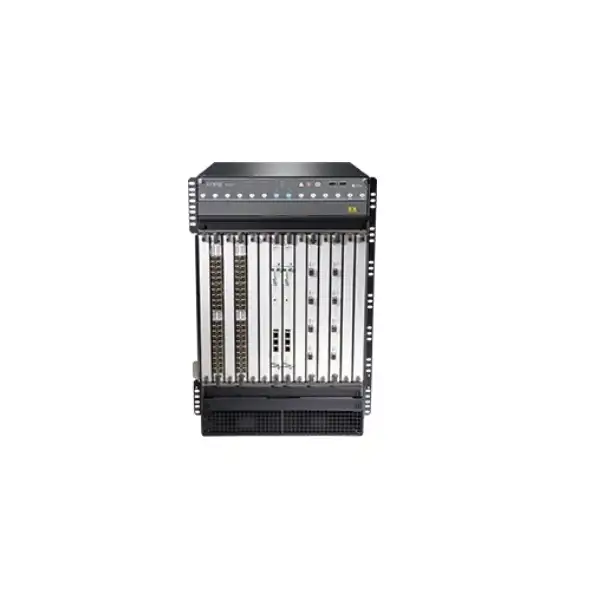
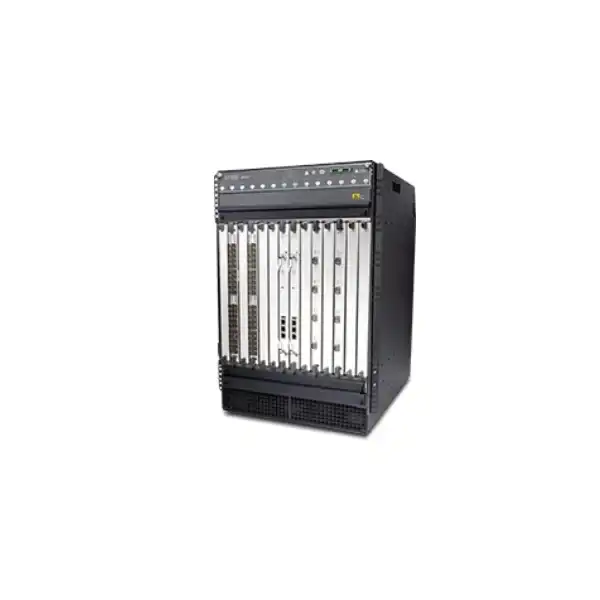
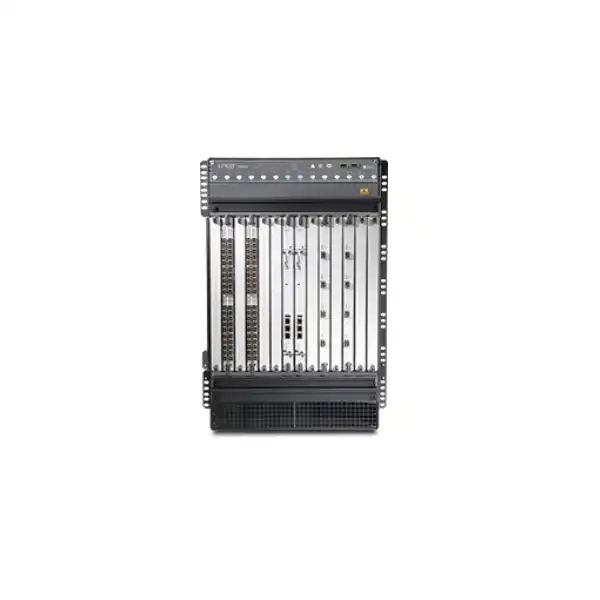
The Juniper MX960 is a 16U modular MX Series routing platform intended for large service-provider, cloud, data-center, broadband, mobile and high-scale enterprise edge deployments. Its practical value comes from a chassis architecture that can be fitted with different generations of routing engines, switch-fabric boards and Modular Port Concentrators, allowing the system to be engineered around the required throughput, interface density, services and resilience instead of locking the buyer into one fixed port configuration.
Direct answer: what the MX960 is and what must be confirmed
The Juniper MX960 is a modular Universal Routing Platform in the MX Series. It combines a carrier-class routing control plane, redundant switch fabric, field-replaceable power and cooling, and slots for MPC line cards that provide packet forwarding and physical interfaces. It runs Junos OS and is engineered for large routing, MPLS, Ethernet, subscriber, interconnect and edge roles.
Typical roles include provider edge, business edge, broadband edge, high-scale Internet peering, data-center interconnect, aggregation, mobile transport and other environments where multi-terabit capacity, service scale, interface flexibility and component redundancy are important.
Telecom operators, ISPs, cloud and colocation providers, large enterprises, government networks and critical-infrastructure operators with substantial edge or aggregation requirements should consider the MX960 when a smaller fixed router or lower-slot chassis cannot provide the required combination of interfaces, redundancy and expansion headroom.
Do not size an MX960 from the chassis name alone. The real system capability depends on the exact SCB generation, Routing Engine, MPC models, software release and licenses, optics, power supplies, cooling configuration and redundancy design. Two MX960 quotations can therefore represent very different performance and service capabilities.
FourTeck can translate the target traffic profile, routing scale, port mix, optical reach, redundancy objective, software feature set and UAE site constraints into a proposed chassis bill of materials. This includes identifying whether the project needs a new MX960 build, an expansion of an existing chassis, a refresh of older line cards or fabric, or a comparison with another MX platform.
Why the MX960 remains relevant in high-scale routing designs
The MX960 is not a conventional branch router and it is not best evaluated by a short list of fixed ports. Its continuing relevance comes from the modular MX architecture. Organizations can retain a large chassis footprint while changing the forwarding and interface capability through newer MPCs and switch-fabric components, subject to the supported hardware matrix and Junos release. That distinction matters for service providers and large networks because the economic life of the chassis can be longer than the life of a particular interface generation. A network may have started with 10GbE-heavy aggregation, moved toward 100GbE peering or core-facing links, and later introduced 400GbE on selected line cards without changing every operational process around the platform.
Juniper positions the MX960 for carrier-grade multiservice edge roles, and current published material lists system capacity up to 12 Tbps with high-capacity components. The platform can therefore sit at a point where multiple network functions converge: Layer 3 routing, MPLS service delivery, Ethernet transport, traffic engineering, subscriber services, timing-sensitive transport and high-capacity interconnect. The exact service mix matters. A router built for Internet peering may prioritize route scale, 100/400GbE density and resilient uplinks; a broadband edge system may care more about subscriber scale, hierarchical QoS, services licensing and operational integration; a DCI deployment may emphasize optical reach, MACsec support, latency, telemetry and deterministic capacity.
For UAE buyers, the practical question is therefore not whether the MX960 is “powerful.” It is whether the specific MX960 configuration is the right fit for the intended role and growth horizon. A correctly designed platform can consolidate multiple high-capacity services and give room for expansion. An incorrectly scoped build can either leave costly capacity unused or create an early bottleneck because the fabric, line cards, optics or licenses do not match the traffic plan. The configuration exercise should begin with service and traffic requirements, then work backward into hardware and software.
MX960 architecture: chassis, control plane, fabric and packet forwarding
Chassis and slots
The MX960 is a 16U modular chassis. Juniper documentation describes eleven dedicated line-card slots and a multifunction position that can accept an additional forwarding card in certain protection arrangements. Current marketing tables commonly identify eleven MPC slots for standard configuration planning. This is important because the usable line-card count depends on the switch-fabric protection design rather than a simplistic “all slots are identical” assumption.
Switch Control Boards
SCBs provide the switching fabric that carries traffic between forwarding cards. Fabric generation is one of the biggest performance dependencies in an MX960. SCBE3 supports materially higher per-slot fabric bandwidth than older SCB generations and is required to unlock the highest published MPC10E-era throughput. Redundant fabric also changes the available bandwidth profile and slot use, so the protection model has to be chosen with the traffic model.
Routing Engines
Routing Engines run Junos OS and control routing protocols, system processes and management functions. MX960 supports multiple Routing Engine generations. For a new build, the selected RE should be checked against the target Junos release, SCB generation, route scale, virtualization requirements and lifecycle status. Dual Routing Engines are a normal design choice where control-plane resilience is required.
MPC line cards
Modular Port Concentrators provide packet forwarding and, depending on the model, fixed physical interfaces or slots for MICs. Different MPC families deliver different throughput, queue scale, service scale, interface speeds and licensing behavior. The line-card choice therefore determines much of what the MX960 can actually do in production. Mixing card generations may be possible, but compatibility and software requirements must be validated before procurement.
Published capacity and what the numbers mean in a real design
| Published attribute | MX960 value | Buyer interpretation |
|---|---|---|
| System capacity | Up to 12 Tbps | Top-end capacity requires the appropriate high-capacity fabric and line-card generation; it is not guaranteed by the chassis alone. |
| Per-slot capacity | Up to 1.5 Tbps | Relevant when planning high-density MPC10E cards and deciding whether the switch fabric can feed them at the intended rate. |
| 400GbE density | Up to 24 ports in published platform tables | Actual 400GbE design depends on specific MPC10E variants, optics, breakout choices, software and the desired redundancy configuration. |
| 100GbE density | Up to 120 ports in published platform tables | Useful for peering, aggregation and DCI, but the port count is a platform maximum rather than a promise for every line-card mix. |
| Rack height | 16U | Rack planning must also include chassis depth, cable management, airflow, power distribution and service clearance. |
Capacity figures should be treated as architecture limits under defined hardware conditions, not as a shortcut for sizing. The required forwarding capacity starts with the traffic matrix. Measure expected ingress and egress by interface speed, oversubscription policy, peak utilization, traffic growth, protection behavior and service overhead. If the network uses multiple 100GbE or 400GbE uplinks, decide whether all links are expected to run simultaneously at line rate or whether statistical multiplexing is acceptable. A resilient design may also need enough spare capacity to carry traffic after one line card, fabric path, upstream link or peer fails.
The same reasoning applies to the control plane. High route counts, frequent BGP updates, large MPLS or EVPN deployments, subscriber scale and extensive telemetry can increase control-plane and memory demands even when forwarding throughput is modest. That is why an MX960 proposal should specify not only “12 Tbps capable,” but the actual SCB, RE and MPC components that create the intended performance envelope.
Interface planning from 10GbE to 400GbE
One of the MX960’s strengths is interface flexibility, but it is also a common source of quotation mistakes. The chassis does not have a fixed front-panel port set. Interfaces come from the installed MPCs and, on applicable MPC families, Modular Interface Cards. Modern MPC10E variants include multi-rate QSFP-based ports that can support combinations of 10GbE, 40GbE, 100GbE and 400GbE. Earlier cards may offer dense 10GbE, 40GbE or 100GbE with different forwarding scale and software entitlements. The correct port plan should therefore begin as a detailed interface schedule rather than a total port count.
Speed and quantity
List every required 10G, 40G, 100G and 400G connection, including protected links and forecast expansion. If breakout is planned, identify the parent port and intended lane configuration rather than counting only the resulting logical interfaces.
Optical reach
Specify whether each connection is short-reach multimode, single-mode within a campus, metro reach, long-haul, coherent/DWDM, or direct-attach. The transceiver choice has to be supported by both the MPC and the remote endpoint.
Media and connector
QSFP28 and QSFP56-DD families introduce different optics and cable requirements. Patch panels, fibre type, connector standards, polarity and existing structured cabling should be validated before optics are ordered.
Encryption requirement
Juniper publishes inline MACsec support for selected MX interfaces and configurations. If link-layer encryption is a mandatory control, confirm the exact card, interface speed, Junos release, key-management design and licensing rather than assuming every port has identical capability.
For an expansion of an existing MX960, the interface schedule should also identify the current slot map. This prevents a common problem in which a desired new MPC is technically supported but cannot be deployed cleanly because of fabric generation, power zone, cooling, software or available-slot constraints. A good upgrade quotation includes the “before” and “after” chassis map, not just the new card part number.
MPC selection: the line card is a major part of the router decision
Modular Port Concentrators are where forwarding scale, physical interfaces and much of the service behavior come together. For an MX960 buyer, choosing an MPC is therefore similar to choosing the engine and gearbox of a vehicle rather than adding a simple accessory. Juniper has released several MPC generations over the life of the platform. They do not all provide the same throughput, queue scale, VPN scale, interface combinations or licensing model.
MPC10E is a current high-capacity option for the MX240, MX480 and MX960 family. Juniper documentation describes MPC10E line cards using Trio 5 silicon and provides variants with fixed multi-rate QSFP28 and QSFP56-DD interfaces. An example 10C model includes eight QSFP28 multi-rate ports plus two QSFP56-DD multi-rate ports, while a 15C model increases the port count. These cards are associated with up to 1 or 1.5 Tbps per-slot fabric performance depending on the redundancy mode and SCBE3 configuration. That does not mean every legacy MX960 can accept an MPC10E as a drop-in upgrade without further work. The switch fabric, Routing Engine, software release, cooling and power system have to be checked together.
Earlier MPC families can still be appropriate when the requirement is dominated by established 10G, 40G or 100G services and the existing chassis already uses them. Reusing compatible cards can reduce the cost of a migration, but the design should consider support status and future expansion. A lower-throughput card that appears economical today may consume more slots or limit the path to 400GbE later. Conversely, specifying the newest highest-capacity line cards for a small traffic requirement can create unnecessary capital cost and licensing expense.
The procurement specification should name the exact MPC SKU, software entitlement, port mode, optics and expected slot. It should also identify whether the card is new, spare, replacement or part of a mixed-generation migration. For mission-critical networks, spare strategy deserves separate attention: a cold spare line card may reduce recovery time, but only if the spare is compatible with the active software and chassis architecture when it is eventually needed.
Switch fabric and redundancy: designing for capacity after a failure
The switch fabric is the internal transport system that moves packets among line cards. On the MX960, fabric capability varies significantly by Switch Control Board generation. Juniper’s hardware documentation lists SCBE3 at up to 1.5 Tbps of fabric bandwidth per slot in a non-redundant configuration with MPC10E cards and up to 1 Tbps per slot in a redundant configuration. Older SCBE2 and SCBE generations provide lower per-slot bandwidth. This makes the SCB part number a first-order performance parameter, not an administrative detail.
A production design should be sized for the chosen protection model. If the service-level objective requires the router to continue forwarding close to normal capacity after a fabric component fails, the post-failure bandwidth must be calculated. The same applies to uplinks and peering. A platform with sufficient aggregate capacity under normal conditions can still become constrained if the failure design funnels traffic through fewer fabric paths or fewer external links.
The useful design question is not simply “does the MX960 support redundancy?” It does. The important question is how the specific build behaves when a component, feed, link or upstream system fails, and whether the remaining capacity still satisfies the business service objective.
Routing Engines and Junos OS planning
The Routing Engine runs Junos OS, maintains protocol sessions and routing information, manages chassis processes and provides the administrative control plane. MX960 supports multiple Routing Engine models across different software generations. Juniper documentation lists, among others, RE-S-X6-64G and 128G variants for MX240, MX480 and MX960, with later 128 GB models introduced for newer Junos releases. Because the platform has a long product history, an existing MX960 in a customer network may contain an older RE that limits the practical software upgrade path even when the chassis itself remains serviceable.
For a new or refreshed installation, select the Routing Engine against route scale, protocol complexity, telemetry load, Junos release, supported SCB and lifecycle requirement. Internet edge environments may carry very large BGP tables and frequent updates. Provider-edge systems can maintain extensive MPLS VPN state. Broadband roles can create substantial subscriber and service control. Management automation, streaming telemetry and local scripts also consume control-plane resources. A routing design should therefore avoid assuming that forwarding throughput alone defines platform scale.
Dual Routing Engines are typically appropriate where maintenance or hardware failure should not force an avoidable outage. The operational benefit depends on correct configuration and testing. Graceful routing behavior, nonstop routing or upgrade procedures must be aligned with the actual protocols and software release. During a migration, the team should test routing-engine switchover under load rather than accepting redundancy as a box-checking exercise.
Power, cooling and rack planning for Dubai and UAE data centres
The MX960 is a large chassis platform, so facility engineering is part of the router design. Juniper lists the system at 16 rack units with a fully loaded weight up to approximately 334 lb or 151.6 kg. Current published dimensions are roughly 17.37 inches wide and 27.75 inches high, with depth dependent on the cable-management reference used in the specification. A deployment plan should confirm not only that 16U is available, but that the rack depth, rail or mounting arrangement, front and rear service clearance, floor loading and cable-management space suit the actual build.
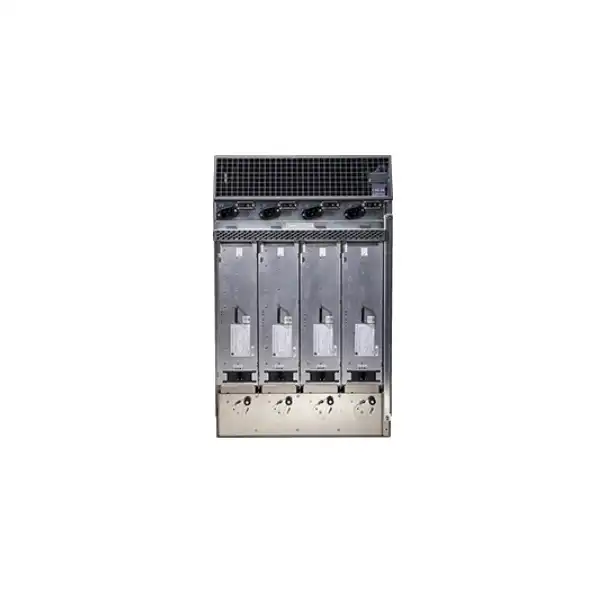
Power demand varies with the installed components. Juniper provides several AC, DC and high-voltage power-supply options across MX960 generations, including higher-capacity supplies for modern line-card configurations. Its power-planning documentation also divides the chassis into zones for certain power arrangements. A heavily populated chassis can therefore require power engineering by zone rather than a single total-wattage figure. The correct calculation should add the base chassis, fan trays, SCBs, Routing Engines and each MPC, then apply the required redundancy model and facility-feed design.
Cooling is equally important. Juniper notes that high-capacity cooling is required for MPC deployments in relevant configurations. Empty line-card positions must use the correct blank panels to maintain airflow. In UAE facilities, where outside ambient temperatures are high even though data halls are conditioned, the concern is not that the router operates outdoors; it is that cooling, containment, power density and maintenance procedures remain within the data-centre design envelope. A high-density MX960 can materially contribute to rack heat load, so the facilities team should review it alongside other network and compute equipment in the same row.
Power-cord types and feed standards should be confirmed for the target UAE facility before shipment. Large operators often have defined A/B power distribution, breaker, connector and PDU standards. A technically correct router that arrives with unsuitable power cords or an incompatible feed assumption can delay installation. The final bill of materials should therefore include the exact power module and cord requirements rather than using a generic “AC powered” description.
Software licensing is part of MX960 sizing, not an afterthought
The MX960 runs Junos OS, but the commercial right to use specific scale or advanced features depends on the installed hardware and software entitlement. Juniper’s current MX licensing model includes standard software plus Advanced and Premium feature tiers for modular MX products, with bandwidth-related SKUs and term or perpetual options for supported products. Juniper also notes that the presence of a feature in a license tier does not automatically guarantee support on every hardware model, so license selection and hardware support must be validated together.
This matters particularly with newer high-capacity MPCs. Juniper publishes full-bandwidth license mappings for cards such as MPC5E, MPC7E and MPC10E, along with scale-on-demand models for some modular MX hardware. The practical consequence is that buying a line card and buying the right to operate the desired bandwidth or service feature can be separate commercial decisions. A quotation that lists hardware only can therefore be incomplete even if all physical components fit the chassis.
Define required features
List BGP, IS-IS, MPLS, EVPN, L3VPN, subscriber services, MACsec, IPsec, HQoS, telemetry and any other service features that are actually needed. Then map them to the chosen MPC, Junos release and entitlement.
Define the commercial term
Subscription and perpetual models can have different support treatment and renewal implications. Procurement teams should compare total ownership cost over the expected platform life, not only the first-year line item.
Validate scale
The feature being licensed is only one part of the requirement. Route, VPN, queue, subscriber or security-session scale must also fit the selected hardware and software combination.
For an existing MX960, the licensing review should start by inventorying installed licenses and support contracts. An upgrade from an older MPC to MPC10E may change bandwidth licensing or support requirements. Similarly, introducing inline security or advanced service functions may require new entitlements even when the base routing functions are already in use.
FourTeck’s quotation process can separate mandatory hardware, mandatory software, optional advanced features, optics and support so the buyer can see which line items are essential for the target design. That structure is more useful than a single bundled figure because it exposes the technical and commercial dependencies that affect later expansion.
Core routing, MPLS and service-provider capabilities
The MX platform is built for rich routing and service delivery. In an Internet edge role, the MX960 can participate in large BGP environments, apply routing policies, support multi-homing and provide high-speed external connectivity. In a service-provider edge role, Junos supports MPLS and VPN technologies that allow many customers or services to share the infrastructure while maintaining logical separation. The exact scale and feature availability depend on the MPC and software license, so the design should quantify the number of routes, peers, VPN instances, labels, next hops and service interfaces rather than describing the requirement only as “MPLS capable.”
For data-center interconnect and high-capacity aggregation, the MX960’s 100GbE and 400GbE options can reduce the number of physical links required for a given throughput. That can simplify cabling and improve slot efficiency, but it may also concentrate failure domains. A single 400GbE link can carry the traffic that previously crossed several 100GbE interfaces. The network architecture should decide whether that concentration is acceptable and how link, card and chassis failures are protected.
Quality of service can be critical in carrier and business edge networks. Some MPC variants provide enhanced hierarchical queuing scale or optional licensing for higher queue counts. If the network sells differentiated services or transports latency-sensitive voice, video or mobile traffic, queue architecture should be part of the line-card selection. A high raw-throughput card is not automatically the best choice if it cannot provide the required service hierarchy at the needed scale.
Timing is another specialized consideration for mobile and transport networks. Juniper positions MX Series platforms with timing features for relevant roles. Buyers with SyncE, PTP or other synchronization requirements should identify the exact timing standard, reference sources and interface requirements so that support can be validated against the proposed hardware and Junos release.
Security, MACsec and inline IPsec considerations
Large routing platforms increasingly sit on links that need encryption as well as forwarding. Juniper advertises inline MACsec support on selected MX interfaces, including 10GbE, 40GbE and 100GbE use cases, and current MX documentation also references embedded MACsec and IPsec capabilities. These statements should not be interpreted as “encryption on every MX960 port by default.” The exact support path depends on the line card, interface mode, Junos release, license and, for some IPsec functions, services hardware.
MACsec is particularly relevant for point-to-point Ethernet links where Layer 2 frame encryption is required, such as data-center interconnect or protected provider transport. Before purchasing, confirm whether the specific MPC and optic mode support the desired MACsec speed and key-management workflow. If the design relies on 400GbE, validate the support statement for that exact interface rather than extrapolating from 100GbE documentation.
Juniper’s licensing documentation lists inline IPsec feature licenses for MX240, MX480 and MX960, including SKUs associated with security services processing. That makes IPsec a separate architectural question from simple line-rate routing. Determine the encrypted throughput, tunnel count, cipher requirements, redundancy and failure behavior before selecting services hardware. In a high-scale environment, security processing can become its own sizing dimension.
Operational security also includes management-plane design. Use dedicated management connectivity, role-based administrative access, secure authentication, logging, configuration control and software lifecycle processes. The MX960 can be a strategic infrastructure device with broad network reach; management exposure should therefore be treated as a critical control plane rather than ordinary device access.
Telemetry, operations and automation
Modern MX MPCs use Juniper Trio silicon and can provide telemetry that helps operators understand utilization, loss, delay and other forwarding conditions. This is useful in large networks because capacity problems rarely present as a single obvious total-throughput number. A port can be healthy on average but congested during short bursts; a queue can drop a priority class while aggregate utilization looks normal; a peering link can be balanced poorly even when the chassis has ample headroom. Telemetry and structured monitoring make those conditions visible.
Before deployment, decide which operational systems will collect SNMP, streaming telemetry, logs, alarms, flow data and configuration state. Define data-retention periods and alert thresholds. A service-provider edge router can generate large volumes of operational information, so the monitoring design should avoid collecting everything without a purpose. Focus on signals that support capacity planning, fault isolation, SLA validation and security operations.
Automation should also be planned around change control. Junos supports structured configuration and automation workflows, but the business value comes from repeatable templates, version control, validation and rollback rather than simply enabling an API. For a multi-chassis MX960 estate, a consistent automation approach can reduce configuration drift and shorten maintenance windows. For a single strategic router, the same discipline can improve auditability and recovery.
Operations teams should include routing-engine switchover, line-card replacement, fabric failure, power-feed failure and software-upgrade procedures in the acceptance test. A platform is operationally resilient only when the people, tooling and documented procedures can use the hardware redundancy correctly.
Sizing the MX960 for a new deployment
A new MX960 project should begin with a sizing worksheet that separates today’s requirement from the design horizon. First document peak traffic in each direction and the expected annual growth rate. Then map that traffic to physical interfaces and failure scenarios. A 4 Tbps normal-state requirement can demand significantly more installed capacity if traffic must survive a line-card or upstream failure without congestion. Conversely, a chassis with 12 Tbps headline capacity may be unnecessary if the actual service requirement is below the range of a smaller MX platform.
Next quantify the control-plane and service scale. Record the expected number of IPv4 and IPv6 routes, BGP peers, IGP adjacencies, MPLS labels, L2 circuits, VPN instances, EVPN routes, subscriber sessions, queues, filters and tunnels as applicable. Each dimension can have a different hardware or license dependency. Provide projected values, not only current counts, because route and subscriber scale often grow independently from throughput.
Then create the interface map. For every connection, specify speed, optic type, reach, connector, protection role and remote peer. Group interfaces by failure domain so that both members of a protected pair do not accidentally land on the same line card. If the network requires maintenance without service interruption, reserve enough port and slot flexibility to move or protect critical links during upgrades.
After the logical design is clear, choose fabric, Routing Engines and MPCs. The fabric must support the intended per-slot throughput. The Routing Engines must fit the software and scale requirements. The MPC mix must provide the interfaces, queue behavior, services and growth headroom. Power and cooling are then calculated from the actual components rather than estimated from the empty chassis.
Finally, review the result against alternatives. If the MX960 has many unused slots and the growth plan is modest, a smaller modular or fixed MX platform may reduce cost and power. If the requirement will rapidly exceed the practical MX960 slot or power envelope, an MX10000-series design may deserve comparison. Sizing is successful when the selected platform is defensible against both smaller and larger options.
Expanding or refreshing an existing MX960
An existing MX960 can present a very different engineering problem from a new chassis. The first task is discovery. Capture chassis serial and base model, Junos release, Routing Engine part numbers, SCB generation, power-supply models, fan-tray type, installed MPCs or DPCs, slot occupancy, optics, licenses and support status. Export the current configuration and relevant operational data. Without this inventory, a supplier can quote a compatible-looking line card while missing a fabric, cooling or software prerequisite.
The next question is the objective of the refresh. If the driver is more 100GbE or 400GbE capacity, the project may require newer MPCs and SCBE3. If the driver is a Junos upgrade or feature, the Routing Engines may be the limiting component. If the driver is lifecycle risk, older line cards or REs can be replaced even when their performance remains adequate. If the driver is power efficiency, compare the energy and rack impact of extending the chassis against moving services to a newer platform.
Mixed-generation operation can be useful during migration because it allows services to move gradually, but it must be validated. Software releases that support a new line card may change behavior on older cards. Fabric performance can be constrained by the selected redundancy mode. Power demand can shift between chassis zones. An upgrade method should identify the order in which fabric, REs, software and MPCs are changed and the rollback path at each step.
For a live service-provider router, the maintenance strategy can matter as much as the hardware. Route convergence, graceful restart, subscriber state, MPLS protection and optical protection should be evaluated during the change plan. A staged upgrade with explicit acceptance checks reduces the chance that an apparently simple capacity expansion becomes an extended outage.
Deployment journey for UAE networks
Requirement capture
Document the router role, traffic, interfaces, routes, services, encryption, timing, management, redundancy and growth targets. Include current network diagrams and the expected cutover model.
Bill of materials
Select chassis variant, Routing Engines, SCBs, MPCs, optics, fan trays, power modules, cables, blanks, software licenses and support. Show optional versus mandatory items clearly.
Facility validation
Confirm rack unit availability, depth, floor loading, front/rear access, airflow, PDU capacity, A/B feeds, breaker rating, power cords, grounding, fibre paths and cable-management space.
Configuration and staging
Install the target Junos release, base management, routing policy, protocols, services, telemetry and security controls in a controlled environment where possible. Validate licenses and optics before site cutover.
Migration and acceptance
Move traffic in controlled stages, monitor convergence and utilization, then test redundant RE, fabric, power and link behavior. Record a known-good baseline for future operations.
Operational handover
Transfer diagrams, licenses, serials, support details, backup configuration, monitoring thresholds, spare strategy and maintenance procedures to the operations team.
Migration planning from an older edge or aggregation router
A migration to the MX960 should preserve service behavior, not merely copy interfaces. Start by cataloguing every service on the source platform: routing adjacencies, BGP policy, MPLS label distribution, L2 circuits, L3VPNs, EVPN instances, subscriber functions, QoS policies, filters, NAT or security services, telemetry, management routes, timing and out-of-band access. Identify which functions will move to the MX960 and which will remain elsewhere in the architecture.
Configuration translation needs care even when the source is another Juniper platform. Hardware-dependent interface names, queue models, filter capabilities and service scale can differ. When migrating from another vendor, policy semantics may differ even if protocols are standard. A route map, policy statement or QoS class can express the same business intent using different evaluation rules. The migration team should validate outcomes with test prefixes and traffic, not compare only configuration line counts.
The cutover method should reduce the number of simultaneous unknowns. Where topology allows, connect the MX960 to the existing network in parallel, establish routing or transport adjacencies, verify policy and move services in groups. Monitor route counts, next-hop selection, interface errors, optical levels, latency, drops and CPU throughout the transition. Maintain a rollback point until the new platform has carried representative production load.
For large provider migrations, schedule capacity and maintenance around customer commitments. A highly redundant chassis does not remove the risk of policy error or incorrect service mapping. The most successful deployments separate hardware readiness, configuration validation and service migration into distinct checkpoints.
Where the MX960 fits — and when to evaluate another MX platform
| Situation | MX960 fit | What else to compare |
|---|---|---|
| Large multi-service edge with many high-speed interfaces | Strong fit when modularity, high slot count, resilience and multi-terabit scale are required. | Compare newer MX10000 options if growth, density or efficiency objectives exceed the MX960 design envelope. |
| Medium modular edge with lower port count | May be oversized if much of the chassis remains empty. | MX480 or MX240 can offer the same family architecture in smaller chassis footprints. |
| Compact fixed edge or peering role | Usually unnecessary when only a few fixed high-speed ports are needed. | Evaluate compact MX fixed platforms where rack space and power matter more than chassis expansion. |
| Existing MX960 needing 100/400G refresh | Potentially attractive if the chassis can be upgraded with supported fabric, MPC, RE, power and cooling components. | Compare the cost of extending the installed base with a platform refresh over the intended remaining lifecycle. |
The platform choice should follow the workload. The MX960 is compelling when the organization values modular scale, established Junos operations, high service density and the ability to combine several line-card types. It is less compelling when the port requirement is small, rack power is tightly constrained, or the project is already approaching a scale better served by a newer high-end platform. A balanced proposal should show the rationale for the chosen chassis rather than treating the largest option as automatically superior.
Procurement risks to avoid
Chassis-only quotation
A base chassis does not define forwarding capacity or interfaces. Confirm REs, SCBs, MPCs, power, fans, optics, software and support as a complete system.
Headline-capacity assumption
The 12 Tbps platform figure depends on high-capacity hardware. Older fabric or line cards can provide substantially lower per-slot and system bandwidth.
Missing licenses
Hardware may arrive functional for standard software but still lack the required bandwidth or premium service entitlement. Validate license SKUs before purchase order approval.
Optics mismatch
A transceiver must match the line card, speed, fibre plant, reach, remote device and software support. Do not treat all QSFP modules as interchangeable.
Facility mismatch
Power feeds, cords, rack depth, cooling and floor loading can delay deployment if checked only after the equipment reaches site.
Unclear lifecycle
A low-cost component is not necessarily good value if its support horizon is too short for the project. Match component lifecycle to the intended service life.
Planning spares, support and lifecycle
A carrier-grade architecture normally uses component redundancy to avoid immediate service impact from many hardware failures, but redundancy is not a substitute for a spare and support strategy. Decide which parts must be recoverable within the organization’s target restoration time. Power supplies and optics may justify local spares because they are comparatively easy to replace. MPCs, Routing Engines and SCBs are higher-value spares, so the decision depends on installed quantity, vendor support terms and the cost of an extended outage.
Support should align with the role of the router. A network carrying customer Internet, mobile, government or critical business traffic may require rapid hardware replacement and technical escalation. A lab or secondary site may tolerate a different service level. Support coverage should be checked for every major component and software entitlement, especially when the chassis contains a mix of older and newer parts.
Lifecycle planning is particularly important for the MX960 because the platform has supported several generations of hardware. A buyer can encounter older inventory that physically fits the chassis but does not align with the desired Junos release or long-term support target. For a new production system, select currently supported components wherever practical. For an existing system, build a phased plan that retires the most constraining elements first.
Keep an accurate asset register containing serial numbers, slot positions, optics, license identifiers, software versions and support dates. That operational record makes future capacity upgrades and incident response faster and reduces the risk of ordering a part that appears correct by family name but is wrong for the active configuration.
Practical MX960 use cases
Internet peering edge
An ISP or large content network can use the MX960 to terminate multiple high-capacity transit and peering links while maintaining large BGP tables and routing policies. Important design inputs include full-table route scale, number of peers, 100/400GbE density, DDoS architecture, telemetry and failure capacity.
Provider edge and VPN services
The platform can host MPLS and business services for many customers. In this role, VPN scale, queue hierarchy, service interfaces, redundancy and operational automation may matter more than the raw headline throughput.
Broadband edge
Broadband deployments can use MX platforms for subscriber and service edge functions. Session scale, subscriber licensing, address management, policy, authentication integration and HQoS should be defined before hardware selection.
Data-center interconnect
High-speed 100/400GbE connectivity can suit DCI and cloud edge roles. The design should address optical reach, encryption, routing or EVPN architecture, path diversity, latency, protection and the impact of concentrating traffic onto very high-speed links.
Mobile transport and aggregation
Service-provider mobile networks may use MX systems for high-capacity aggregation and packet transport. Interface density, timing, QoS, MPLS engineering and resilient topology are key selection points.
Large enterprise or government core edge
Organizations with substantial WAN, campus, data-center or partner connectivity can use the MX960 where they need a modular carrier-class edge. The business case should still be compared with smaller MX platforms to avoid unnecessary rack, power and licensing cost.
UAE availability and quotation approach
For Dubai and UAE buyers, availability should be checked against the exact bill of materials rather than the product family name. A chassis, Routing Engine, SCB, MPC, optic and license can each have a different lead time. Large modular systems are often sourced to a project specification, and stock status can change quickly. It is therefore useful to separate items that are immediately required for initial service from later expansion components.
A clear request for quotation should include the target deployment city or data centre, required delivery date, quantity of chassis, traffic requirement, port schedule, optical reach, redundancy model, software features, support term and whether installation or migration assistance is needed. Existing MX960 owners should add the current hardware inventory and Junos release. With that information, the proposed BOM can be checked for compatibility before commercial approval.
FourTeck can structure a Dubai MX960 quotation around the actual solution rather than a generic chassis description. The proposal can identify the selected component part numbers, software or bandwidth licenses, optics, power and cooling items, support coverage and optional professional services. If an alternative platform is a better fit, the comparison can focus on slot count, throughput, interface density, power, lifecycle and expected growth rather than only purchase price.
Pricing for an MX960 varies substantially by configuration. A lightly populated chassis and a fully redundant high-density 400GbE build are commercially different systems even though both carry the MX960 name. Accurate pricing therefore requires the technical BOM first.
Frequently asked buyer questions
Is the Juniper MX960 a 12 Tbps router in every configuration?
No. Juniper’s current platform positioning lists up to 12 Tbps system capacity, but that is a maximum capability tied to high-capacity switch fabric and suitable MPC line cards. Older SCB and MPC generations support lower throughput. A quotation should state the installed fabric and line cards so the expected capacity is clear.
How many line cards can an MX960 use?
Current product tables commonly list eleven MPC positions. Juniper hardware documentation explains that the chassis has eleven dedicated line-card slots plus a multifunction slot that can accept a forwarding card in some nonredundant fabric arrangements. The practical count therefore depends on the protection scheme and installed SCBs. For production design, use the exact slot map rather than a generic slot number.
Does the MX960 support 400GbE?
Yes, with suitable modern MPCs such as MPC10E variants and the required supporting architecture. Juniper publishes up to 24 400GbE ports at the platform level. The exact achievable port mix depends on the MPC model, port mode, optics, Junos release, switch fabric, licensing and redundancy design.
Can I upgrade an old MX960 to newer high-capacity line cards?
Possibly, but the line card should not be evaluated in isolation. Newer MPCs may require a specific SCB generation, supported Routing Engine and Junos release, high-capacity cooling and suitable power. The upgrade should begin with a complete chassis inventory and compatibility review.
Does the base MX960 include all software features?
No universal assumption should be made. Juniper provides a standard software feature set and Advanced or Premium licensing for additional features and scale on modular MX platforms. Bandwidth and specialized security or subscriber capabilities can have their own licensing requirements. The required entitlements should be mapped to the exact service design.
Does the MX960 include optics?
Optics should be treated as separate BOM items unless a specific bundle explicitly includes them. Select transceivers based on the line card, interface speed, fibre type, distance, connector, remote endpoint and Junos support. High-speed 100GbE and 400GbE links especially benefit from an explicit optical design.
What rack space should be reserved?
The chassis itself is 16U. Reserve enough physical depth and service clearance for the chassis and cable manager, and check the fully loaded weight, rack strength, airflow and PDU placement. Dense fibre cabling can require meaningful front-of-rack management space beyond the nominal 16U height.
How should power be sized?
Calculate power from the actual chassis components. Include the fan trays, SCBs, Routing Engines and each MPC, then apply the chosen redundancy model. Some MX960 power arrangements use chassis power zones, so both total power and per-zone capacity can matter. Confirm facility feed type, breaker, PDU and power cords for the UAE site.
Is high-capacity cooling required?
Juniper documentation states that high-capacity cooling is required for MPC use in the relevant MX960 configurations. The exact fan-tray requirement should be checked against the installed MPCs. Blank panels must also be fitted in unused slots to maintain proper airflow.
Can the MX960 provide redundant Routing Engines and power?
Yes. The chassis is designed for redundant system components, including power, fans, Routing Engines and switch-fabric elements. The actual resilience depends on how many components are installed and how the network itself is connected. Redundant hardware should be paired with software and operational procedures that have been tested for the intended failure cases.
Is the MX960 suitable for a large enterprise?
It can be, particularly for very large WAN, data-centre, carrier interconnect or government edge requirements. However, many enterprises can meet their needs with a smaller MX chassis or fixed platform at lower rack and power cost. The decision should be driven by interface count, service scale, resilience and growth rather than prestige or maximum specification.
What information is needed for an accurate Dubai quotation?
Provide quantity, deployment role, current and target traffic, interface speed and count, optical reach, route and service scale, redundancy requirement, target software features, licensing preference, support term and installation scope. For an existing chassis, add current RE, SCB, MPC, power, fan and Junos details. The resulting quotation can then be built around compatible components instead of assumptions.
Decision recap before you order an MX960
What FourTeck needs from the buyer for an accurate MX960 proposal
Peering, provider edge, broadband, DCI, aggregation, enterprise edge or upgrade.
Current peak, design peak, growth rate and required capacity after a failure.
10G, 40G, 100G and 400G quantities, breakouts, optics and optical reach.
Routes, peers, VPNs, labels, queues, subscribers, tunnels and other relevant service counts.
MPLS, EVPN, HQoS, MACsec, IPsec, timing, telemetry and advanced services.
RE, fabric, power, line-card, link and chassis protection expectations.
Dubai/UAE location, rack, PDU, feed type, grounding, cooling and maintenance access.
For upgrades: RE, SCB, MPC, power, fan, optics, Junos version, licenses and slot map.
Required support term, spare strategy, staging, installation, migration and acceptance testing.
Build the right Juniper MX960 configuration for your Dubai network
An MX960 purchase should result in a complete, supportable routing system—not a chassis with uncertain capacity. Share your traffic model, interfaces, services, redundancy target and current equipment with FourTeck. We can help turn those requirements into a practical component list covering fabric, Routing Engines, MPCs, optics, software licensing, power, cooling and support, and we can highlight when a smaller or newer MX alternative deserves comparison.

Reviews
There are no reviews yet.