
Juniper PTX10002-36QDD Packet Transport Router Dubai
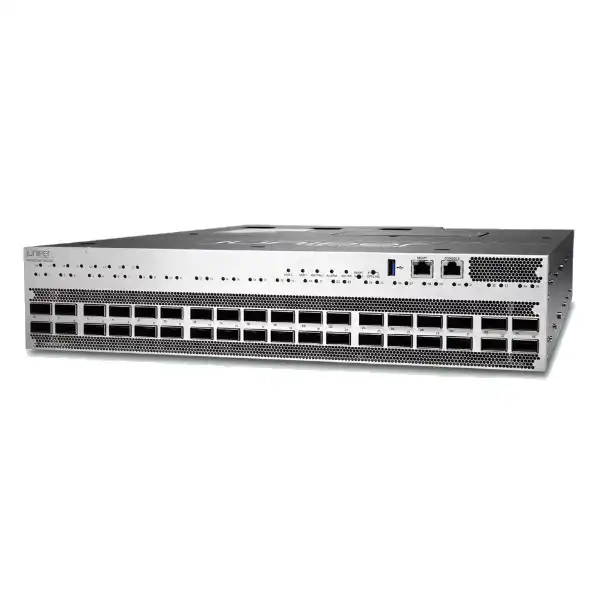
The Juniper PTX10002-36QDD is a 2U fixed-configuration router designed for organizations that need dense 100GbE, 400GbE and 800GbE transport capacity without moving to a large modular chassis. Its Express 5 forwarding architecture provides up to 28.8 Tbps of system throughput, deep routing scale, extensive traffic-engineering features and inline MACsec across high-speed interfaces. For Dubai and UAE projects, the more important buying question is not simply whether the chassis is fast enough; it is whether the selected power mode, optics, breakout design, software tier, rack environment and support plan match the intended production role.
Direct answer: what is the PTX10002-36QDD and who should consider it?
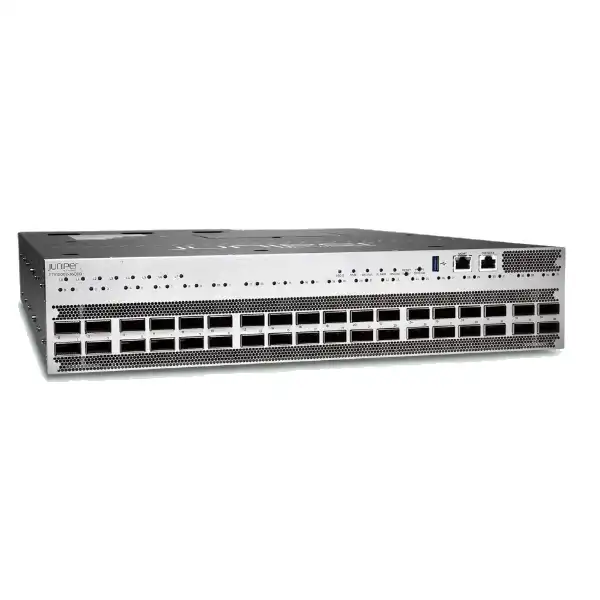
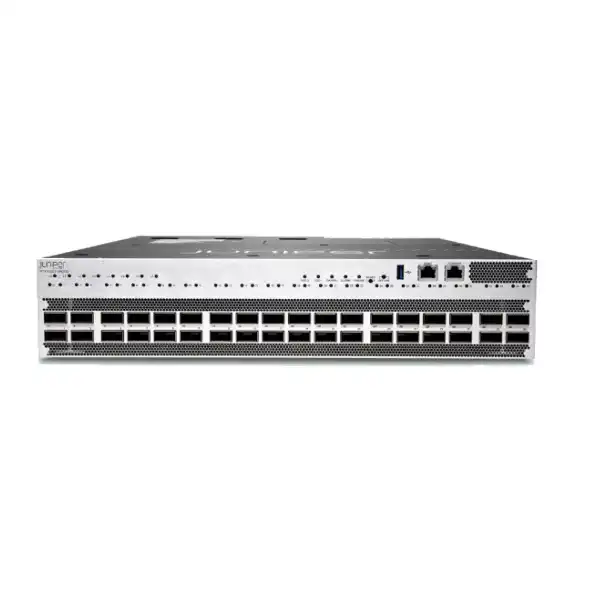
The Juniper PTX10002-36QDD is a fixed 2U packet transport router based on Juniper Express 5 silicon. It is mainly used when a network needs very high routing and transport density in a compact footprint, including core routing, Internet peering, data center interconnect, infrastructure edge, metro aggregation and selected AI data center network roles. Juniper specifies up to 28.8 Tbps of system throughput and up to 10 billion packets per second of forwarding capacity, with interface combinations that can include 36 x 800GbE, 72 x 400GbE and high-density breakout to lower speeds.
The platform is most relevant to service providers, cloud and content providers, large enterprises, carriers, data center operators and organizations building high-capacity regional or national transport networks. It can also be considered by enterprises that have outgrown conventional branch or campus routing platforms and require carrier-class route scale, MPLS, segment routing, telemetry, high-speed MACsec and dense optical connectivity.
The most important factor to confirm before ordering is the complete deployment profile: required throughput, 800G versus 400G operating mode, number and type of interfaces, breakout requirements, qualified optics, AC or DC power choice, rack power budget, airflow direction, Junos OS Evolved feature requirements, software licensing tier, redundancy expectations and support entitlement. A chassis-only comparison can be misleading because a production-ready 800G deployment depends heavily on the optical, electrical, software and operational design surrounding the router.
FourTeck can help translate those requirements into a quote-ready bill of materials for Dubai and UAE deployments, including the base system, power option, optics or cables, breakout components, software entitlements, support coverage and installation or migration scope where required.
Technical position and buyer fit
The PTX10002-36QDD is not designed as a general office router, an access switch or a small enterprise WAN appliance. Its value appears when a network has large traffic aggregates, high-speed optical links and routing scale requirements that justify 400GbE or 800GbE interfaces. The 2U chassis is significant because operators often face a mismatch between traffic growth and available rack space. In colocation facilities, Internet exchange environments, edge data centers, cable landing facilities and regional network hubs, rack units and power allocation can be as important as raw routing capacity.
Juniper positions the platform for core, peering, data center interconnect, data center edge, metro aggregation and AI data center networking. These roles share a common requirement: move large volumes of traffic while maintaining deterministic forwarding, route scale, resilient protocols and operational visibility. A core router may prioritize large FIB capacity and fast restoration. A peering router may emphasize BGP scale, filtering, counters and traffic visibility. A DCI deployment may focus on 400G or 800G optics, MACsec and the ability to connect sites over dark fiber or optical transport.
The fixed-configuration design can simplify deployment and improve space efficiency, but it also means capacity planning should be performed before purchase. If the expected design requires substantially more physical port count, independent failure domains, or future expansion beyond what a single 2U chassis can provide, an architect may prefer multiple fixed systems or a modular platform. Conversely, where the required interface density fits within the chassis and the design values power and rack efficiency, the fixed approach can be attractive.
For Dubai buyers, the practical implication is to treat the PTX10002-36QDD as an infrastructure platform rather than a simple SKU. Qualified optics, fiber plant, rack power, cooling, software, support, configuration standards, out-of-band management and migration sequencing all affect whether the intended design can be operated reliably.
Interfaces, power and software dependencies
Juniper lists 36 x 800GbE, 72 x 400GbE and high-density breakout to 100GbE and lower rates. These maximums depend on supported transceivers, channelization and software. Buyers should identify the exact mix of interfaces rather than quote only a maximum port count. Breakout cabling can affect connector choice, fiber density, patch-panel design and the number of far-end interfaces exposed from each high-density cage.
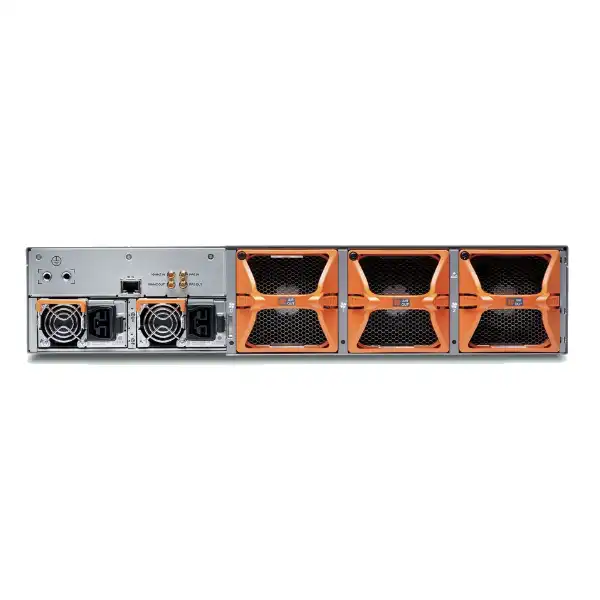
The chassis power configuration is especially important. Juniper documentation distinguishes 3000W power supplies for the full-performance 800G-capable configuration from a 2200W power-optimized mode associated with 400G operation. This makes power-supply selection part of the network design. AC or DC feed, rack PDU capacity and link-speed roadmap should be agreed before the final bill of materials is issued.
Junos OS Evolved provides the software environment for the platform. Required functions can include MPLS, segment routing, BGP, VPNs, traffic engineering, telemetry, hierarchical QoS, OAM, timing, automation and MACsec. The target software release and licensing tier should be checked against the actual production feature list. Inline MACsec is supported by the hardware, but the commercial entitlement for the desired use case should be confirmed rather than assumed.
Optics are another critical dependency. Short-reach, long-reach, coherent, breakout and direct-attach options differ in power draw, reach, fiber type and connector presentation. The current Juniper compatibility data should be used to validate each module against the chassis, port mode and Junos release.
Selected published specifications
| Specification | Value / note |
|---|---|
| Throughput | Up to 28.8 Tbps. |
| Forwarding | Up to 10 billion packets per second. |
| 800GbE | Up to 36 interfaces. |
| 400GbE | Up to 72 interfaces with supported configuration. |
| 100GbE | Up to 288 using supported breakout. |
| Form factor | 2U fixed chassis. |
| Memory | 128 GB SDRAM. |
| Storage | 2 x 200 GB SSD. |
| Packet buffer | 32 GB. |
| Operating temperature | 0°C to 40°C. |
| Operating system | Junos OS Evolved. |
Deployment and migration guidance
A production deployment should start with a traffic model, interface schedule and failure-domain plan. Define the role of the router, the peak and projected traffic, the amount of capacity that must remain after a link or node failure, and whether the solution requires one chassis or a redundant pair. This prevents the design from being based solely on the maximum throughput specification.
For migration from existing 100G or 400G routing, document every physical and logical dependency: BGP sessions, routing policies, MPLS labels, VPNs, LAGs, optics, patching, telemetry, out-of-band management and monitoring. Moving from several lower-speed links to fewer 400G or 800G links changes failure behavior as well as cabling. A staged cutover with old and new platforms operating in parallel can reduce risk where topology and available ports allow it.
Rack-and-stack preparation should cover front-to-back airflow, rail depth, cable-management space, grounding, AC or DC feed separation, PDU capacity and console access. Dubai data centers operate in controlled internal environments, but the selected rack and facility still need enough cooling and power resilience for a dense high-speed optical platform.
Operational readiness is equally important. The organization should choose a supported Junos OS Evolved release, stage the software, validate optics, test failover, confirm telemetry collection and document rollback before production migration. A high-capacity router should not become the first place where automation, monitoring or recovery procedures are tested.
When to compare another platform
The PTX10002-36QDD may be excessive for a site that needs only a small number of 10G or 100G links and moderate BGP scale. A lower-capacity router can offer lower acquisition cost, simpler optics and lower facility demand. Similarly, a design dominated by native 100G ports may be easier to operate on a platform whose physical port geometry better matches that speed, rather than relying heavily on breakout.
At the other end of the spectrum, a modular platform should be considered where the network needs far more physical port count, line-card expansion or additional hardware failure domains within a chassis. Fixed platforms maximize density and simplicity, while modular systems provide a different growth model. Neither choice is universally better.
The strongest reason to choose the PTX10002-36QDD is a real requirement for compact, high-capacity packet transport with dense 400G/800G connectivity and provider-class routing features. Where those requirements are absent, another Juniper platform may deliver better economics.
Decision recap
Capacity fit
Model peak and projected traffic, including failure-mode utilization.
Port geometry
Confirm 800G, 400G and breakout counts, connector type and far-end compatibility.
Power configuration
Choose 3kW full-performance or 2.2kW optimized mode according to the speed roadmap.
Licensing
Map required protocols, MACsec and automation to current entitlements.
Optics
Validate reach, fiber, coherent requirements, breakout and software compatibility.
Operations
Plan redundancy, support, monitoring, software lifecycle and migration.
What FourTeck needs for an accurate quotation
Plan the PTX10002-36QDD as a complete routing solution
FourTeck can help Dubai and UAE organizations validate chassis configuration, power mode, optics, software licensing, support and migration scope so the quotation reflects what is actually required for production.

Reviews
There are no reviews yet.