

Cisco Meraki MS150-48FP-4G in Dubai
A 48-port Gigabit PoE access switch for organizations that want a substantial 740 W power budget, centralized Meraki Dashboard operations, dedicated physical stacking and four 1 GbE SFP uplinks. The important buying decision is not simply whether forty-eight ports are enough; it is whether the model’s 1 GbE uplink design, PoE profile, licensing choice and stack architecture match the network you are actually building.
Direct answer: what is the MS150-48FP-4G and who is it for?
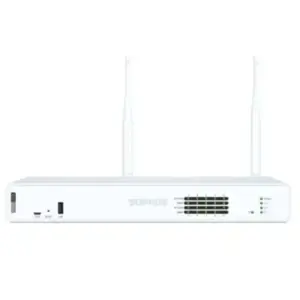
The Cisco Meraki MS150-48FP-4G is a cloud-managed, stackable Layer 2 access switch in the MS150 family. It supplies forty-eight 10/100/1000 Mbps RJ45 access ports, four 1 GbE SFP uplink interfaces, two dedicated physical stacking ports and a large 740 W switch PoE budget. Cisco positions the MS150 family for branch and campus access deployments, with Meraki Dashboard providing configuration, monitoring, firmware operations and remote troubleshooting.
Its main use is powering and connecting dense groups of wired endpoints such as wireless access points, IP phones, cameras, security appliances, IoT devices, printers and user workstations where Gigabit access is sufficient. It should be considered by businesses, schools, hospitality environments, healthcare sites, retail networks, warehouses and distributed enterprises that already use Meraki or deliberately want cloud-led switch operations.
The most important factor to confirm is architectural fit: this specific -4G variant uses four 1 GbE SFP uplinks rather than four 10 GbE SFP+ uplinks. A network that expects several high-throughput Wi-Fi access points, a fast server aggregation path or significant east-west traffic may be better served by an MS150 -4X model. PoE demand and licensing are equally important because the switch can provide a high total power budget, but the Meraki license model and organization-wide tier choices affect operation and feature access.
FourTeck can help translate device counts, expected uplink traffic, PoE wattage, fibre type, stack size, licensing model and deployment location into a cleaner bill of materials. That process reduces the risk of buying the right number of ports but the wrong uplink class, optics, power accessories or license tier.
Why this exact MS150 variant deserves a careful look
The MS150-48FP-4G sits in a very specific part of Cisco Meraki’s access-switch portfolio. It combines a full forty-eight Gigabit copper ports with a high aggregate PoE budget, but it intentionally keeps the fibre uplinks at 1 GbE. That combination can be a strong fit in access closets where the connected endpoints are numerous and power-hungry but the uplink design is modest, predictable or distributed across multiple paths. It can be equally unsuitable in a high-density wireless or server-adjacent environment where uplink oversubscription would become the limiting factor long before access-port count or PoE power is exhausted.
For a buyer, this means the model number matters. The 48FP portion signals a forty-eight-port, full-power PoE configuration in this family, while 4G identifies the four Gigabit SFP uplinks. The nearby MS150-48FP-4X retains forty-eight Gigabit access ports and the 740 W switch PoE budget but changes the uplinks to four 10 GbE SFP+ interfaces. The choice between these two models is therefore not mainly about endpoint count; it is about the bandwidth expected between the access layer and upstream switching, routing, security or server infrastructure.
The product also differs from the 48LP models, which carry a lower 370 W switch PoE budget. In a deployment with many powered devices, the FP model gives more room to support a larger simultaneous power draw. That does not remove the need for a real power calculation. Endpoint maximum wattage, actual PoE class, future additions and spare capacity should be reviewed rather than assuming that a 740 W label automatically guarantees every possible device mix.
Strong fit when
You need forty-eight 1 GbE access ports, high aggregate PoE capacity, cloud management and physical stacking, while 1 GbE fibre uplinks are sufficient for the intended traffic pattern.
Recheck the design when
The access layer will aggregate high-throughput Wi-Fi, video or server traffic that can outgrow Gigabit uplinks. The -4X variant or another platform may provide a more appropriate upstream path.
Confirm commercially
Meraki licensing, compatible optics, stacking cables, region-appropriate power cord, support expectations, quantity and installation scope should be included in the quotation discussion.
Cisco Meraki MS150-48FP-4G verified specification summary
Use these values to establish model identity and first-pass fit. Final bills of materials should also account for license term, optics, stacking, regional power accessories and current firmware requirements.
| Specification | MS150-48FP-4G detail | Buyer relevance |
|---|---|---|
| Access ports | 48 × 10/100/1000 Mbps RJ45 | Suitable for dense Gigabit edge connectivity; confirm whether any endpoints need multigigabit access. |
| Uplinks | 4 × 1 GbE SFP | This is the defining limitation versus -4X models. Validate expected aggregate traffic carefully. |
| PoE capability | PoE, up to 30 W per port; 740 W switch budget | Enough total budget for many powered endpoints, subject to each device’s actual negotiated requirement. |
| Stacking | 2 dedicated stack ports; 80 Gbps stacking bandwidth | Useful when multiple access switches need to operate as a physical stack; stacking cables are separate accessories. |
| Switching capacity | 104 Gbps | Internal fabric capacity is distinct from uplink capacity; upstream bandwidth can still be the practical constraint. |
| Routing | Static routing | Treat this primarily as an access switch and validate architecture if dynamic routing or richer Layer 3 functions are expected. |
| Management | Cisco Meraki Dashboard; dedicated management interface | Supports centralized configuration, monitoring and remote operations; cloud connectivity and licensing are part of the operating model. |
| Power input | 100–240 VAC | Confirm rack PDU, UPS and regional power-cord selection during ordering. |
| Power load | 44.6 W idle / 891.4 W maximum | Relevant for UPS sizing, PDU capacity and cabinet power planning, especially when the PoE budget is heavily used. |
| Operating environment | 0°C to 45°C; 5% to 95% humidity | Air-conditioned UAE network rooms should be assessed for sustained temperature, airflow and rack heat load, not just ambient room temperature. |
| Form factor | Integrated 1U rack mount; fixed internal power supply and fan operation | Plan one rack unit plus sensible cable-management and ventilation space. |
| Dimensions | 1.72 × 19 × 13.38 in (4.4 × 48.2 × 34 cm) | Depth matters in compact wall cabinets and shallow racks; measure usable depth including cable bend radius. |
| Weight / MTBF | 11.94 lb (5.4 kg); MTBF 1,029,618 hours at 25°C | Useful for mounting and lifecycle planning, but environmental conditions and operational practices still affect real-world service life. |
Port design: forty-eight Gigabit access ports with four Gigabit fibre uplinks
The port layout is easy to understand but should not be evaluated superficially. Forty-eight copper Gigabit ports provide substantial edge density in a single rack unit. That makes the switch attractive for floors, departments, classrooms, guest-room zones, camera networks and branch offices where many devices need a wired connection. The question is how those endpoints behave together. A set of desk phones and ordinary workstations creates a very different traffic profile from dozens of high-resolution cameras or many modern wireless access points carrying concentrated user traffic.
The four uplinks are 1 GbE SFP rather than 10 GbE SFP+. They can be useful for fibre connections to an upstream distribution switch, routed core or another suitable aggregation point, and the availability of four interfaces can support resilient topologies or separate links. Yet link count should never be confused with aggregate design headroom. Even when several uplinks are available, topology, link aggregation design, spanning-tree behavior and upstream capabilities determine how traffic is actually carried. A buyer should not assume that four physical uplinks automatically provide a transparent 4 Gbps path in every configuration.
This distinction is particularly important as access-edge demands evolve. A single Gigabit endpoint cannot exceed its port rate, but forty-eight active endpoints can collectively create far more traffic than one Gigabit uplink can pass. In many office environments that is acceptable because traffic is bursty and oversubscription is normal. In a video-heavy, backup-heavy, data-collection or Wi-Fi-intensive environment, the same oversubscription ratio may become uncomfortable. Uplink utilization data from the existing network is therefore one of the most valuable inputs when deciding between the -4G and -4X versions.
If the switch will replace an older 10/100 or Gigabit access switch whose uplinks are already lightly used, the -4G model may be entirely sensible. If it is part of a new building design expected to support high-throughput wireless generations for many years, paying close attention to the 1 GbE SFP uplink ceiling can avoid an early redesign. The MS150 family gives the buyer a nearby step-up choice through the -4X variants, so this is a decision worth making intentionally rather than by model-name familiarity.
PoE planning: use the 740 W budget intelligently
Calculate device demand
A 740 W switch budget is generous, but every powered device contributes to the total. Build a worksheet using the actual endpoint models, their standards, maximum supported draw and expected operating behavior. Cameras with heaters, pan-tilt-zoom mechanisms or infrared illumination can behave differently from low-power desk phones. Wireless access points may change power consumption when radios and USB peripherals are enabled.
Use realistic maximums for critical designs and preserve engineering margin instead of filling the budget to its theoretical limit on day one.
Distinguish per-port and total limits
Cisco lists the 48FP-4G with up to 30 W per PoE port and a 740 W switch power budget. The aggregate figure does not override the per-port ceiling. A device requiring more than the supported per-port power level is not made compatible simply because unused wattage remains elsewhere on the switch.
For endpoints needing higher-power PoE capabilities, examine the MS150 multigigabit/UPoE options or another suitable platform rather than treating total budget as interchangeable with per-port delivery.
Include power infrastructure
The maximum switch load matters to the surrounding electrical design. A heavily loaded PoE switch is not a small accessory from the perspective of UPS runtime and rack power. If several FP switches share the same cabinet, the PDU, UPS, branch circuit, cooling and generator strategy should be reviewed as one system.
This is especially relevant in Dubai and the wider UAE, where resilient air conditioning and controlled equipment-room temperatures are important practical conditions for network reliability.
Plan growth, not just today’s list
A network closet often gains devices after opening day: another camera, more wireless coverage, room-booking panels, access-control readers or new IoT systems. Leave spare ports and PoE capacity where the business expects change. That reserve is more useful than simply choosing the lowest model that passes a day-one calculation.
Conversely, if the projected powered load is modest, compare the lower-budget 48LP model because a 740 W design may be unnecessary for the site.
Cloud management changes the operating model
The MS150 is managed through Cisco Meraki Dashboard, which is one of the most important reasons organizations choose the platform. For distributed IT teams, a cloud-managed access layer can reduce the need to visit individual branch switches for routine configuration, visibility and troubleshooting. Cisco lists zero-touch provisioning, network-wide visibility and control, seamless firmware updates and remote troubleshooting among the platform capabilities. The switch family also supports features such as remote packet capture through Dashboard, SNMP and syslog integration, VLAN tagging, 802.1X authentication, IPv4/IPv6 ACL support, DHCP snooping and Dynamic ARP Inspection.
The operational benefit is strongest when the organization has a clear Meraki management standard. A network team can define branch templates, monitor topology and clients centrally, investigate port behavior remotely and manage software lifecycle with less dependence on local console access. That can be valuable for businesses with several UAE offices or broader regional locations because switch administration becomes part of a common cloud workflow rather than a collection of isolated device interfaces.
Cloud management also introduces dependencies that should be accepted deliberately. The switch needs appropriate connectivity to the Meraki cloud and must be licensed according to the organization’s chosen licensing framework. Upstream firewall policies should permit the connectivity required by Meraki services. Operational teams should understand what happens during internet outages: local switching can continue according to the active configuration, but cloud management and certain remote operations depend on connectivity. The architecture should therefore separate the concept of local data forwarding from the availability of the management plane.
For security teams, centralization can improve consistency, but it does not replace policy design. VLANs, access policies, authentication, port configurations and logging destinations still need deliberate planning. A switch cannot infer which users, cameras, phones or building systems should communicate with one another. The value of Dashboard is that well-designed policies can be administered and observed centrally, not that the need for network design disappears.
Organizations moving from traditional CLI-managed switches should include operating-process change in the project. Decide who owns the Meraki organization, how administrator roles are controlled, how configuration changes are approved, how firmware windows are governed, how alerts are routed and how events feed broader monitoring. The hardware migration is only one part of the transition; the management model should be treated as a formal element of production readiness.
Meraki licensing: confirm tier, term and organization model before ordering
Licensing is not a minor accessory for a Meraki deployment; it is part of the platform’s operating model. Cisco’s current MS150 documentation identifies Enterprise and Advanced license tiers with 1-, 3-, 5-, 7- and 10-year terms. For the forty-eight-port MS150 models, Cisco lists the LIC-MS150-48-xY family for Enterprise and LIC-MS150-48A-xY for Advanced under the traditional licensing approach. The documentation also lists subscription licensing options for the MS150 forty-eight-port family under the MS100 Large category, with Essentials and Advantage designations.
The most important procurement detail is that license compatibility can depend on the organization’s licensing model. In co-termination organizations, Cisco states that MS150 switches in the organization must use a consistent Enterprise or Advanced tier, and the interaction with other switch families that support those tiers must also be considered. A buyer who orders an Advanced switch license for a co-term organization built around Enterprise licensing can create an avoidable administrative problem. License selection should therefore begin with the existing Meraki organization’s status, not with a generic product list.
Cisco notes that Advanced licensing on the MS150 adds Adaptive Policy. That helps keep the decision grounded: do not pay for a higher tier merely because “Advanced” sounds safer. Determine whether the organization actually plans to use the relevant capability and whether the broader environment supports that design. Conversely, if Adaptive Policy is a strategic requirement, make sure the complete network and license architecture is aligned rather than upgrading one switch in isolation.
For a new Dubai deployment, the quotation conversation should record the Meraki organization, licensing model, desired term, preferred renewal strategy and any existing switches that influence tier consistency. This reduces surprises after hardware arrival and gives finance a clearer view of the recurring or term-based operating commitment associated with the cloud-managed platform.
Physical stacking and resilience planning
The MS150 family includes two dedicated stack ports and Cisco specifies 80 Gbps of stacking bandwidth. Cisco also states that up to eight MS150 switches can be stacked. Physical stacking can simplify the management and topology of a multi-switch access closet, but it should not be interpreted as automatic end-to-end high availability. Resilience depends on the full path: switch stack, uplinks, upstream devices, power sources, cabling and the behavior of connected endpoints.
A practical stack design starts with port density. If a floor requires ninety powered access ports, two forty-eight-port switches may be a natural pair with some headroom. If the requirement is closer to two hundred ports, several switches may be stacked, but rack space, heat, power and cable management become more substantial. The stack should be sized for physical growth without creating a single cabinet whose electrical or thermal load is hard to support.
Stack cabling is another bill-of-materials item. Cisco lists dedicated stacking cables for the MS150 family, including MA-CBL-100G-50CM, MA-CBL-100G-1M and MA-CBL-100G-3M. Cable length should match rack geometry. Ordering every stack with the shortest cable can be inconvenient in separated rack positions, while excessively long cables create unnecessary slack. A simple rack elevation showing switch positions often resolves the correct lengths before ordering.
Uplink resilience needs separate thought because the 48FP-4G has 1 GbE SFP interfaces. A stack can provide a robust access block internally while still being constrained by an insufficient upstream design. Decide whether uplinks should terminate on separate upstream devices, whether link aggregation is required, which fibre paths are physically diverse and how spanning tree or routed boundaries are expected to behave. The correct answer depends on the larger topology rather than on the switch in isolation.
Power resilience also deserves explicit treatment. The MS150-48FP-4G uses a fixed internal power supply. A highly available access design may therefore rely on redundant switches connected to separate protected power circuits or UPS systems rather than redundant power modules within a single chassis. Critical endpoints can be distributed across stack members where appropriate. The engineering goal is not to attach the word “stack” and assume resilience; it is to identify which failures the business needs to survive and design each layer accordingly.
SFP optics, fibre and copper uplink accessories
Short-range multimode
Cisco lists MA-SFP-1GB-SX for supported 1 GbE fibre connectivity. Before specifying it, confirm the existing fibre type, connector presentation, patching route and optical-distance requirement. An optic being supported by the switch does not prove it matches the installed fibre plant.
Longer-distance single-mode
MA-SFP-1GB-LX10 is listed among supported modules. Use it only after confirming single-mode requirements, path loss and the far-end optic. Fibre links should be designed as matched optical systems, not as individual transceiver purchases.
RJ45 through SFP
Cisco also lists MA-SFP-1GB-TX for the 4G models. This can be useful where an uplink must terminate on copper through an SFP slot, but cable length, upstream interface type and the reason for using an SFP-to-copper path should still be documented.
Optics are frequently omitted from early switch quotations because the switch’s port count is treated as the complete connectivity story. In reality, the uplink medium is a design decision. The buyer should provide fibre type, approximate distance, patch-panel connector format, number of active uplinks, redundancy plan and far-end platform. If the current site uses third-party optics, support expectations should also be clarified. A technically supported Cisco Meraki optic can reduce ambiguity during troubleshooting and support interactions, while reuse decisions may be driven by existing standards and budget.
Security controls at the access layer
An access switch is often the first network enforcement point encountered by a user or device. Cisco lists 802.1X authentication, IPv4/IPv6 ACL support, 802.1Q VLAN tagging, DHCP snooping, Dynamic ARP Inspection, broadcast storm control and Adaptive Policy among MS150 family capabilities. These features can support a more disciplined access architecture, but the value comes from using them as part of an identity, segmentation and monitoring design rather than merely enabling checkboxes.
For corporate endpoints, 802.1X can connect switch-port access with an identity service so devices or users are authenticated before gaining ordinary network access. Guest, printer, camera and building-management devices may require different onboarding approaches. The migration should therefore inventory endpoint categories and identify which can support the chosen authentication method. A security control that works for laptops may not be appropriate for every embedded device in a facility.
VLANs and ACLs provide familiar segmentation mechanisms. They are useful for separating voice, cameras, guest access, corporate users, facilities systems and other classes of traffic, but segmentation boundaries should align with the firewall and routing design. If the switch is primarily an access-layer device, inter-VLAN policy may be enforced upstream. Documenting where policy lives avoids duplication and unexpected traffic paths.
DHCP snooping and Dynamic ARP Inspection can help reduce risks associated with rogue DHCP behavior and ARP spoofing in suitable designs. Their deployment should consider trusted uplink ports, legitimate DHCP paths and any unusual devices that use static addressing. Turning on protective controls without mapping normal traffic can create outages that look like cabling or endpoint failures. A staged rollout with monitoring is safer than a blanket production change.
The Advanced license option introduces Adaptive Policy as an additional capability for the MS150. Whether that is valuable depends on the wider Cisco/Meraki environment and the organization’s segmentation strategy. Buyers interested in policy based on identity or group context should review the complete compatibility and license requirements before treating a single switch license as the whole solution.
Operational visibility, troubleshooting and lifecycle workflow
Meraki’s cloud-managed model is valuable when support teams need to understand a remote access switch without immediately dispatching an engineer. Cisco highlights remote packet capture tools through Dashboard, and the platform supports SNMP and syslog integration. Those capabilities can shorten troubleshooting when a complaint involves one client, one port, one VLAN or a recurring event that would otherwise be difficult to observe from a central office.
Remote packet capture is particularly useful when the support team needs evidence. Rather than changing configuration repeatedly in response to assumptions, engineers can inspect the traffic seen on an interface and determine whether DHCP, DNS, authentication or application flows behave as expected. The operational process should still respect privacy and change-control requirements. Capture should be targeted, time-bound and used for a defined diagnostic purpose.
Firmware management is another part of lifecycle planning. Cisco lists automatic firmware upgrades among MS150 capabilities, while Meraki Dashboard provides scheduling and network-level control. Organizations with strict maintenance windows should define upgrade policy, pilot groups, business-owner notifications and rollback/escalation procedures. Cloud-driven updates can simplify fleet consistency, but production governance still matters in environments such as hotels, healthcare sites, warehouses or always-on retail operations.
Logging should be designed before an incident. Syslog integration can feed broader monitoring or security analytics, while SNMP may be used by existing network-management systems. Decide which events matter, where they are retained, how clocks are synchronized and which team receives alerts. The Meraki Dashboard is a powerful operational view, but many enterprises still want switch events correlated with firewalls, servers, wireless infrastructure and application monitoring.
For lifecycle replacement, maintain a record of model, serial number, location, license association, stack membership, uplinks, connected critical endpoints and support status. Cloud inventory can simplify parts of this process, but physical documentation remains helpful when a switch must be replaced quickly. A clear rack label and cable map can save more recovery time than an elaborate spreadsheet that has not been updated since installation.
Installation planning for Dubai and UAE sites
Cisco specifies an operating range of 0°C to 45°C for the MS150-48FP-4G. In a UAE deployment, the practical question is not outdoor weather; it is the actual condition inside the communications room or cabinet. A properly conditioned IT room can stay well inside the operating range, while a compact wall cabinet in a poorly ventilated back-of-house space can run significantly hotter than the surrounding corridor. High PoE draw adds heat to the cabinet, so temperature, airflow and air-conditioning resilience should be checked under realistic load.
The switch is a 1U integrated rack-mount design with dimensions of roughly 4.4 × 48.2 × 34 cm. Depth can be more important than the 1U height in shallow cabinets. Allow room for rear cabling, power connectors and bend radius rather than comparing chassis depth alone with nominal cabinet depth. Front cable managers can improve serviceability when all forty-eight ports are populated.
Power planning should include the maximum electrical load, not only the switch’s base consumption. Cisco lists 44.6 W idle and 891.4 W maximum for the 48FP-4G. A UPS selected for a lightly loaded switch may provide disappointing runtime when dozens of PoE endpoints are drawing power. If cameras, access points or phones are expected to stay online during utility interruptions, their PoE demand is part of the UPS load by definition. The desired runtime should be calculated against the full protected cabinet, including upstream devices where applicable.
Cisco documentation notes that region-specific power cords are not generally included automatically outside US orders. That makes the power cord a procurement item to confirm. The correct UAE-compatible cable and plug arrangement should match the site’s PDU or UPS output rather than being chosen generically. In formal projects, include cable standard and power source in the bill of materials so installation does not stop over a basic accessory.
Finally, consider access to the Meraki cloud during commissioning. Network addressing, DNS, upstream internet connectivity and firewall allowances should be ready before installation day. A switch can be physically mounted quickly, but zero-touch-style deployment still depends on the upstream environment being able to reach the required cloud services. Coordinating this with the firewall team avoids a situation where new switching hardware appears faulty simply because management connectivity has been blocked.
Migration from an existing access switch
Record the current state
Capture port usage, VLANs, trunks, voice settings, authentication, PoE devices, uplinks, link aggregation, special static configurations and any ports that appear unused but are reserved. Utilization data is especially valuable for deciding whether 1 GbE uplinks remain appropriate.
Model the target in Dashboard
Create or prepare the Meraki network, claim the hardware according to the organization’s process, define management addressing and establish switch-port templates or settings before the physical cutover where practical.
Validate dependencies
Confirm optics, fibre pairs, stack cables, rack position, power cord, UPS capacity, upstream firewall allowances, DHCP reachability, DNS and licensing. These are frequent causes of avoidable installation delays.
Cut over in controlled groups
Move uplinks and endpoints according to a documented sequence. Critical services such as access control, voice, wireless and cameras should be tested deliberately rather than assuming a link light proves application readiness.
Observe before closing
Review clients, PoE consumption, uplink utilization, event logs, authentication and error counters after migration. A structured observation period catches issues that are invisible during a simple connectivity test.
A migration is also the right moment to remove old assumptions. If the previous switch had every access port assigned to one broad VLAN because it was installed years ago, there is little value in reproducing that design automatically. The Meraki deployment can be used to rationalize segmentation, clean up abandoned ports and improve naming. However, changes should be scoped carefully: combining a hardware replacement, VLAN redesign, identity-control rollout and firewall policy rewrite into one cutover can make troubleshooting unnecessarily complex. Separating foundational migration from later optimization often creates a safer path.
Use-case fit: where the 48FP-4G makes sense
Office access closets
An office floor with many desk phones, computers, printers and moderate wireless load can benefit from the forty-eight-port density and strong PoE budget. Check uplink utilization from the current switch before assuming Gigabit fibre remains sufficient.
Camera and security networks
The PoE capacity is attractive for large camera counts. Video traffic can also be sustained and aggregate quickly, so bitrate estimates, recording destinations and uplink design deserve closer attention than in a typical office.
Hospitality and education
High device counts and many PoE endpoints can suit the FP profile. At the same time, dense wireless deployments may make 10 GbE uplinks more attractive, especially where several high-capacity access points share one access switch.
Retail and branch networks
Cloud management can simplify oversight of distributed locations. The forty-eight-port model makes sense for larger branches, while smaller sites may be better served by a lower port-count model to avoid unnecessary hardware, power and rack cost.
IoT-heavy facilities
Sensors, controllers, panels and other connected building systems can benefit from central visibility. Their security model, static-addressing behavior and unusual PoE needs should be identified before applying corporate-user access policies.
When a different MS150 model may be the better purchase
| Model direction | Why compare it | Buyer trigger |
|---|---|---|
| MS150-48LP-4G | Same forty-eight 1 GbE access ports and four 1 GbE SFP uplinks, but a lower 370 W switch PoE budget. | Choose comparison when the connected PoE load is comfortably below the FP model’s capacity and cost/power efficiency matters. |
| MS150-48FP-4X | Retains forty-eight Gigabit access ports and the 740 W PoE budget but provides four 10 GbE SFP+ uplinks. | Compare when current or future uplink traffic could exceed a comfortable Gigabit design. |
| MS150-48MP-4X | Adds multigigabit access on sixteen ports, 10 GbE SFP+ uplinks and higher-power PoE capability on designated ports, while retaining a 740 W switch budget. | Compare for high-performance wireless or endpoints needing multigigabit Ethernet or greater per-port PoE than the 48FP models provide. |
| Smaller MS150 variants | Twenty-four-port options reduce edge density and may better match smaller sites. | Compare when forty-eight ports create excessive unused capacity, rack power or budget for the branch. |
A balanced recommendation should be willing to move away from the supplied model when the design points elsewhere. The MS150-48FP-4G is not automatically the “best” MS150 because it carries a large PoE budget. If uplink bandwidth is the limiting factor, the -4X design may be more important than the FP power tier. If the site needs only a modest PoE load, the LP model may be more proportionate. If Wi-Fi access points need multigigabit copper and higher per-port power, the MP variant addresses a different requirement. Good procurement begins with the bottleneck, not with a model hierarchy.
Capacity and oversubscription: how to judge whether 1 GbE uplinks are enough
Oversubscription is normal in access networks. Not every connected user sends traffic at line rate at the same time, so a forty-eight-port Gigabit switch does not require forty-eight Gigabits of upstream bandwidth merely to be valid. The engineering question is whether the expected aggregate traffic during important busy periods can be carried with acceptable performance and resilience. This is where real utilization data is more useful than assumptions.
For an existing site, review uplink graphs over representative business periods. Look beyond averages. A link that averages 150 Mbps may still spend important intervals near saturation during backups, camera exports, software updates or shift changes. Consider the shape of peaks, queueing, packet loss and application complaints. If current Gigabit uplinks are already busy, adding more endpoints to a new 48-port switch without increasing upstream capacity can preserve the old bottleneck in new hardware.
For a new site without historical data, estimate traffic by endpoint class. Ordinary office users are bursty. Voice traffic is comparatively modest but latency-sensitive. Cameras can create continuous upstream flows. Wi-Fi access points aggregate many wireless clients and can produce strong peaks. Local server or storage traffic may never leave the building but still crosses the access uplink if the servers sit elsewhere in the topology. These traffic types should not be treated as equivalent simply because each endpoint uses an Ethernet cable.
Redundancy changes the calculation. If two uplinks are used for resilience and the design must tolerate one link failing, the surviving capacity should still support the required business load. A topology that looks comfortable in the normal state can become constrained during maintenance or failure. This does not mean every network needs 10 GbE; it means the failure state should be considered explicitly.
The nearby MS150-48FP-4X exists precisely because some access environments benefit from higher-speed fibre uplinks. When future growth, dense wireless, high-resolution video or substantial local data movement is expected, the incremental investment in faster uplinks can extend the useful life of the access layer. When the site is a conventional branch with moderate usage and the existing distribution layer is itself Gigabit, the 4G model may be entirely appropriate and avoids paying for uplink capability the architecture cannot use.
Procurement details that affect a clean quotation
Exact hardware variant
Use the exact MS150-48FP-4G designation and do not shorten it to “MS150 48-port.” The suffix identifies the uplink and PoE profile that materially changes fit.
License model and term
Provide the existing Meraki organization details, licensing framework, desired tier and term. This prevents a hardware-only quotation that cannot be commissioned as intended.
Optics and fibre
State the number of active uplinks, fibre type, approximate distance, connector presentation and upstream platform so compatible 1 GbE SFP modules can be selected.
Stacking accessories
If several MS150 switches will form a stack, specify switch count and rack positions so the right quantity and length of stacking cables can be included.
Power and installation
Confirm the UAE power-cord requirement, rack type, UPS/PDU arrangement and whether installation, labeling, testing or migration assistance is part of the scope.
Quantity and delivery site
Provide required quantity, deployment emirate/site, project timing and whether staged delivery is needed. Availability and commercial terms should be confirmed at quotation time.
A precise bill of materials avoids the familiar problem of receiving a switch while still waiting for a license, optic, power cord or stack cable. It also gives the buyer a more meaningful comparison between proposals. Two quotations for the same chassis are not comparable if one includes the correct license term and accessories while another includes only hardware. Request line-item clarity so hardware, licensing, optics, cables, installation and support can be evaluated separately.
Common buyer questions about the Cisco Meraki MS150-48FP-4G
Does it have 10 GbE uplinks?
No. The MS150-48FP-4G provides four 1 GbE SFP uplinks. If the design requires 10 GbE SFP+ uplinks, compare the MS150-48FP-4X or another suitable switch.
How much PoE is available?
Cisco specifies a 740 W switch PoE budget and up to 30 W per port on this model. Actual endpoint support depends on the individual devices and total negotiated load.
Can it be physically stacked?
Yes. The MS150 family uses two dedicated stack ports with 80 Gbps stacking bandwidth, and Cisco states that up to eight switches can be stacked. Appropriate stacking cables are ordered separately.
Is a Meraki license required?
Licensing is part of the Meraki operating model. The exact tier, term and licensing framework should be confirmed against the existing or planned Meraki organization before purchase.
Does the box include every accessory?
No. Cisco documents the switch and rack-mount screw kit as included, while region-specific power cords outside US automatic inclusion and accessories such as optics or stacking cables should be ordered as required.
Is it right for Wi-Fi 7 access points?
The wider MS150 family is positioned for modern Wi-Fi and IoT deployments, but this exact model has 1 GbE access ports and 1 GbE SFP uplinks. High-throughput AP designs may be better matched by an MS150 multigigabit model with 10 GbE uplinks.
Can it route between networks?
Cisco lists static routing for the MS150. Treat the product principally as an access switch and confirm the larger Layer 3 design if dynamic routing or more advanced routing functions are required.
What should be checked for a Dubai deployment?
Confirm licensed operation, rack depth, ventilation, UPS/PDU capacity, region-appropriate power cord, fibre optics, stack cabling and upstream cloud connectivity. Air-conditioned equipment-room conditions should remain within Cisco’s operating limits.
How the MS150-48FP-4G fits into a wider Meraki network
A switch purchase is most useful when it supports a coherent end-to-end architecture. In a typical Meraki environment, the MS150 can provide wired access beneath upstream switching, routing or security infrastructure while sharing a common cloud-management approach with other Meraki products. The exact design depends on site scale. A branch may connect the switch directly toward a security appliance or compact core, while a campus floor may connect it to a dedicated distribution layer.
Wireless is one of the most important adjacent considerations. Modern access points can place both power and bandwidth pressure on access switching. The 48FP-4G’s 740 W budget can look attractive for AP-heavy floors, but power is only one side of the calculation. The access ports themselves are 1 GbE and the uplinks are 1 GbE SFP. If the wireless design expects multigigabit client aggregation, review the MP variants rather than assuming that a high PoE budget makes the FP-4G the natural Wi-Fi choice.
Security integration should also be considered at the topology level. Access controls on switch ports can separate users and devices, while firewalls provide policy enforcement between networks and toward external services. Logging from the switch can complement firewall and server logs during investigations. A simple responsibility map that states which policy is enforced at the switch, firewall, identity system and endpoint makes the architecture easier to operate.
For organizations using mixed Cisco and third-party infrastructure, interoperability should be planned around standards and support boundaries. Ethernet, VLANs, optics and routing can interoperate broadly when configured correctly, but operational workflows differ. A Meraki switch managed through Dashboard will not behave like a traditional standalone CLI switch from the administrator’s perspective. Training, escalation procedures and monitoring should reflect that reality.
The strongest reason to select the MS150-48FP-4G is therefore not simply “Meraki compatibility.” It is a well-defined edge requirement where forty-eight Gigabit ports, high PoE capacity, centralized cloud operations and 1 GbE fibre uplinks line up with the expected environment. When one of those assumptions is materially different, another MS150 variant or access-switch family may create a better long-term fit.
UAE sourcing, services and specialist resources
FourTeck can support UAE buyers with product sourcing discussions, licensing alignment, deployment planning and network-infrastructure services. Availability, lead time, support terms and commercial conditions should be confirmed at the time of quotation because these can change by project and supply channel.
For broader local technology sourcing and infrastructure requirements, visit FourTeck UAE. Organizations that need implementation, managed support or wider infrastructure assistance can review FourTeck IT Services UAE. Where the switching project connects directly to perimeter-security refresh work, Firewall Dubai by FourTeck provides a specialist security context. For wider international engagement, FourTeck provides the global company route.
These links are best used as supporting resources rather than substitutes for the switch design itself. The quotation should still be based on exact hardware, license model, power profile, optics, stacking and implementation scope.
Decision recap for the MS150-48FP-4G
Model fit
Forty-eight Gigabit access ports suit dense edge environments. Check whether the site genuinely needs that density or whether a smaller model would leave cleaner capacity and budget alignment.
PoE fit
The 740 W switch budget is the FP model’s major strength. Validate per-device wattage, total draw, future reserve and UPS/PDU capacity rather than evaluating the number in isolation.
Uplink fit
Four 1 GbE SFP uplinks are the defining bandwidth characteristic. If high-throughput wireless, video or local data movement is expected, compare the 10 GbE -4X alternatives.
License fit
Match tier and term to the Meraki organization’s licensing framework. Do not treat license selection as an after-purchase administrative detail.
Deployment fit
Confirm rack depth, cooling, power cord, protected power, stacking cables, supported optics and upstream cloud connectivity before installation day.
What FourTeck needs from you for an accurate quotation
The fastest route to a useful proposal is a short requirement set that describes the network rather than only repeating the switch model. Provide as much of the following as is known; unknown items can be resolved during consultation.
If the uplink requirement is uncertain, include the current switch model and any available utilization screenshots or monitoring figures. If PoE demand is uncertain, provide endpoint model numbers. These two pieces of evidence often determine whether the 48FP-4G is an efficient fit or whether an LP, 4X or MP alternative deserves comparison.
Plan the MS150-48FP-4G around your real network, not just its port count
The Cisco Meraki MS150-48FP-4G is a strong access-switch candidate when forty-eight Gigabit edge ports, a 740 W PoE budget, cloud-based operations and physical stacking align with a network whose upstream requirements can be served by 1 GbE SFP links. A sound purchase confirms the license model, endpoint power draw, fibre interfaces, stack accessories, electrical capacity and future traffic profile at the same time. That is what separates a switch that merely powers on from an access layer that remains appropriate as the site grows.

Reviews
There are no reviews yet.