

Cisco Meraki MS130-8 in Dubai, UAE
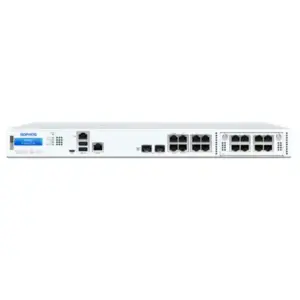
The Cisco Meraki MS130-8 is the compact, non-PoE member of the MS130 family for sites that need eight Gigabit Ethernet access ports, two 1G SFP uplinks, fanless operation and centralized Meraki Dashboard management without buying unnecessary power-over-Ethernet capacity.
2 × 1G SFP
20 Gbps switching capacity
Fanless
No PoE on this exact model
Direct answer: what the Cisco Meraki MS130-8 is and who it suits
The Cisco Meraki MS130-8 is a compact Layer 2, cloud-managed Ethernet switch in the MS130 access-switch family. Its exact hardware configuration is eight 10/100/1000 Mbps RJ45 ports plus two 1 GbE SFP interfaces. It is designed for indoor branch, retail, small-office and low-density edge deployments where centralized visibility and policy management matter more than high port density, multigigabit access speeds or local switch-by-switch administration.
Its main use is to connect a small group of wired endpoints or downstream network devices while allowing administrators to configure and monitor the switch through the Cisco Meraki Dashboard. Typical examples include point-of-sale terminals, desktop computers, printers, small servers, gateways, non-PoE IoT devices and uplinks to another switch or fibre handoff. The two SFP ports are useful when the site needs 1G fibre connectivity or a compatible copper SFP module rather than relying only on RJ45 uplinks.
The most important factor to confirm is that the exact MS130-8 does not provide Power over Ethernet. If the deployment must power wireless access points, IP phones, cameras or other PoE devices directly from the switch, the MS130-8P, MS130-8P-I or MS130-8X may be more appropriate. Licensing must also be planned before purchase because Meraki-managed operation depends on the correct license model and term.
FourTeck can help determine whether the non-PoE MS130-8 is the right compact model, which license is appropriate for the existing Meraki organization, whether SFP optics are required, how the switch should be connected to upstream infrastructure, and whether a PoE or multigigabit MS130 variant would reduce future replacement risk.
Exact model identity matters: MS130-8 is not the same as MS130-8P or MS130-8X
The MS130 family contains several compact models with very similar names, and that similarity can cause expensive ordering mistakes. The product on this page is the Cisco Meraki MS130-8. It has eight Gigabit RJ45 interfaces, two 1G SFP uplinks, no multigigabit RJ45 ports and no PoE capability. Cisco specifies 20 Gbps switching capacity, an external power supply, fanless operation, desktop or integrated wall mounting, a 0°C to 45°C operating range, and physical dimensions of approximately 2.8 × 22.2 × 15 cm. Its published weight is approximately 0.88 kg.
Those details make it fundamentally different from the MS130-8P even though both have eight 1 GbE RJ45 ports and two 1G SFP interfaces. The 8P adds a 120 W switch PoE budget and uses a higher-output external power adapter. The MS130-8P-I adds the same general PoE capacity but moves to an internal power supply and a larger chassis. The MS130-8X changes the access and uplink architecture more substantially: it combines six 1 GbE ports with two 2.5 GbE multigigabit ports and two 10G SFP+ uplinks, plus PoE. These are not cosmetic differences. They determine what can be powered, what speeds can be delivered to modern wireless access points, what uplink bandwidth is available and what accessories must be ordered.
For a buyer with eight or fewer wired endpoints that already have their own power supplies, the MS130-8 can be an efficient choice because it avoids paying for a PoE subsystem that may never be used. It also remains fanless, which is useful in quiet offices, retail counters, reception areas and other locations where acoustic noise should be minimized. For a branch that expects to add powered access points, phones or cameras, however, choosing the non-PoE model merely because it costs less at the start can create hidden costs later through injectors, extra power bricks, additional cable clutter or an early switch replacement.
The practical selection rule is therefore simple: choose the MS130-8 when eight Gigabit data ports plus two 1G SFP uplinks are enough and endpoint power is handled elsewhere. Compare the PoE or mGig variants when device power, Wi-Fi growth, uplink speed or higher access speed is part of the design. The model suffix is a technical requirement, not a naming detail.
Cisco Meraki MS130-8 verified hardware specifications
| Specification | MS130-8 detail | Buyer relevance |
|---|---|---|
| Access ports | 8 × 10/100/1000 Mbps RJ45 | Suitable for a compact wired edge with up to eight copper-connected devices before considering uplink use and growth. |
| Uplink interfaces | 2 × 1 GbE SFP | Supports compatible 1G fibre optics or supported copper SFP modules; it does not provide 10G SFP+ uplinks. |
| PoE | Not supported on the MS130-8 | Powered endpoints require their own adapters, injectors or a different MS130 model with PoE. |
| Switching capacity | 20 Gbps | Matches the compact 8-port/2-uplink design; high-bandwidth aggregation workloads may justify a larger or faster-uplink model. |
| Power input | 12 VDC, 2.5 A | Uses an external power supply; power-adapter placement and local power protection should be considered during installation. |
| Power load | 8 W idle / 8 W maximum | Low switch power draw simplifies small UPS sizing, although the full protected load must include upstream and connected equipment. |
| Cooling | Fanless | Helpful for quiet spaces, but passive cooling still requires proper ventilation and ambient-temperature control. |
| Operating temperature | 0°C to 45°C | Indoor UAE installations should be placed in a controlled environment rather than exposed to direct outdoor heat. |
| Storage / transport | -20°C to 70°C | Relevant for logistics and storage, not a substitute for the narrower powered operating range. |
| Humidity | 5% to 95% | The switch still needs a clean indoor environment and appropriate protection from condensation, dust and heat. |
| Mounting | Desktop / integrated wall mount | Well suited to compact branch spaces where a full-width rack switch would be unnecessary. |
| Dimensions | 2.8 × 22.2 × 15 cm | Confirm shelf, cabinet or wall clearance for the chassis, connectors, power adapter and cable bend radius. |
| Weight | Approx. 0.88 kg | Compact enough for distributed branch deployment and suitable wall hardware when correctly installed. |
Cisco lists a 30 W power adapter, model MA-PWR-30WAC, as the supported power accessory for the MS130-8. Region-specific power-cord requirements should be checked on the quotation rather than assumed from the chassis alone.
Why the non-PoE design can be an advantage — and when it becomes a limitation
PoE is valuable when the switch must deliver both data and electrical power across the Ethernet cable, but not every edge switch needs it. Many retail terminals, desktop PCs, printers, small appliances and industrial controllers are powered independently. In those situations, a non-PoE switch can reduce unnecessary power infrastructure and simplify the switch hardware itself. The MS130-8 also remains fanless, and Cisco rates its switch power load at only 8 W. For a small branch that needs cloud management but no powered Ethernet devices, that combination can be operationally attractive.
The limitation appears when the device mix changes. A branch may start with desktops and printers, then later add ceiling-mounted Wi-Fi access points, IP phones at every desk, security cameras, door controllers or other endpoints that are normally powered through Ethernet. The MS130-8 cannot provide that power. An injector can solve an isolated requirement, but multiple injectors introduce additional sockets, extra power supplies, more cabling and more components to troubleshoot. If several powered endpoints are already planned, a PoE model is generally cleaner.
This distinction is especially important when the MS130-8 is being purchased for a new site rather than replacing an existing non-PoE switch. A new branch design should consider the endpoint roadmap for at least the practical life of the network deployment. If the site may add two wireless access points and several phones, the apparent saving from the non-PoE model can disappear quickly. If the branch is intentionally designed around externally powered devices and a separate wireless or surveillance switch, the MS130-8 can remain the more disciplined choice.
Buyers should therefore treat “no PoE” as a design property rather than a missing feature. It is appropriate when it aligns with the architecture. It is unsuitable when powered Ethernet endpoints are central to the site plan. That single decision often determines whether MS130-8 or MS130-8P belongs on the final bill of materials.
Cloud management: the main reason to choose MS130-8 over a basic unmanaged switch
The MS130-8 is not simply an eight-port Ethernet box. Its value comes from being part of the Meraki cloud-managed switching platform. Cisco lists management through the Meraki Dashboard, remote packet-capture tools, automatic firmware upgrades, SNMP/syslog integration, IPv4/IPv6 ACL support, 802.1Q VLAN tagging, DHCP snooping and 802.1X authentication among the MS130 family capabilities. For distributed businesses, that changes the operating model because administrators can apply configuration, investigate problems and maintain visibility without relying on local console access at every branch.
This is useful in a multi-site retail or branch network where each location may have only a handful of wired endpoints. A traditional enterprise switch platform can be technically capable but operationally heavy for dozens of small sites. An unmanaged switch may be inexpensive but gives little insight into port state, segmentation or network events. The MS130-8 sits between those extremes: compact physical hardware with centralized management. The architectural question is whether the organization is prepared to operate in the Meraki model, including cloud reachability, Dashboard organization design and licensing.
Initial deployment also reflects that cloud-first approach. Cisco’s documented workflow includes claiming the device into a Meraki Dashboard organization, adding it to the appropriate network, physically connecting it to the local network, allowing it to reach the Dashboard and complete any initial firmware update, then finishing VLAN and port configuration in the Dashboard. If the device cannot obtain suitable network connectivity automatically, a static IP can be configured through the local status page. This means pre-deployment planning should include Internet reachability and any firewall or upstream policy needed for the switch to communicate with Meraki services.
For organizations already standardized on Meraki, the operational benefit can be substantial because the MS130-8 joins the same management environment as other compatible Meraki infrastructure. For an organization with no Meraki estate, the first switch introduces a new management and licensing platform. That does not make it a poor choice, but the procurement decision should include platform fit rather than comparing chassis price alone.
If the business priority is simple plug-and-play connectivity with no ongoing subscription or centralized policy, a different switch category may be more appropriate. If the priority is consistent cloud management across many small locations, the MS130-8 has a clear reason to exist beyond its port count.
Layer 2 capabilities and what they mean in a real branch network
Cisco positions the MS130 series as Layer 2 access switching for branch and campus environments. For the MS130-8, that means the switch is designed primarily to provide controlled edge connectivity rather than to act as a feature-heavy campus core. VLAN tagging lets administrators separate classes of devices that should not share the same broadcast domain. A retail site, for example, might place point-of-sale systems, staff devices, printers and building systems into different VLANs according to the organization’s network design. The switch then enforces the access-port and trunk behavior defined in Dashboard while upstream routing is handled elsewhere in the network architecture.
802.1X authentication supports identity-based access control designs where compatible endpoints or users must authenticate before receiving normal network access. The practical value depends on the rest of the authentication environment, including RADIUS services, endpoint supplicants and fallback behavior for devices that cannot perform 802.1X. Buying a switch with 802.1X support does not by itself complete a network-access-control deployment; the full policy chain must be designed and tested.
DHCP snooping can help protect the access layer against unauthorized DHCP behavior by distinguishing trusted and untrusted paths according to the network configuration. Access control lists can further restrict traffic based on the capabilities exposed by the platform and chosen design. These controls are most useful when the VLAN plan, IP addressing, authentication approach and upstream routing policy are documented. Applying security features without understanding where legitimate services reside can create outages that look like cabling or endpoint problems.
SNMP and syslog integration matter to organizations that already use centralized monitoring or event collection outside the Meraki Dashboard. The Dashboard remains the management focal point, but external monitoring and logging can support broader operational processes. Remote packet capture is also valuable when a branch user reports an intermittent application or connectivity issue. Instead of dispatching an engineer immediately, the network team may be able to inspect traffic remotely and decide whether the problem is on the switch port, endpoint, uplink or another part of the network path.
The key buyer takeaway is that the MS130-8 is most valuable when its software and management features are actually incorporated into the operating model. Used only as an unmanaged eight-port switch, much of the platform value is wasted. Used as a controlled edge node in a Meraki-managed estate, the same small chassis becomes part of a standardized network operations framework.
Understanding the two 1G SFP uplinks
The two SFP interfaces are a practical differentiator for a compact switch. They allow the MS130-8 to connect through supported 1G transceivers rather than forcing every uplink to use a fixed RJ45 interface. Cisco identifies the MA-SFP-1GB-SX, MA-SFP-1GB-LX10 and MA-SFP-1GB-TX as supported SFP options for the SFP-capable MS130 models. The right choice depends on whether the link is multimode fibre, single-mode fibre or copper, as well as distance, connector type and the transceiver used at the opposite end.
An SFP slot does not mean any optical module can be inserted without planning. The fibre type, wavelength, supported reach, connector presentation and far-end compatibility must match. Existing structured cabling documentation should be reviewed before ordering optics. If the branch has a fibre handoff from another cabinet, the bill of materials should identify what fibre is installed, how far the link runs and what optics are present upstream. For a copper handoff using a supported RJ45 SFP, cable category and link distance still matter.
The MS130-8 uplinks are 1 GbE SFP, not 10G SFP+. That distinction is important in sites where many access devices generate high aggregate traffic or where the switch connects into a high-speed distribution layer. Two 1G interfaces can provide useful topology flexibility, but they do not turn the device into a 10G-capable access switch. If 10G uplinks are a firm requirement, the MS130-8X or another model with SFP+ should be evaluated instead.
The second SFP port also gives designers options for topology, but redundancy should never be assumed merely because two uplink interfaces exist. Spanning-tree design, link aggregation support, upstream switch configuration and failure-domain planning must be considered as a complete system. A second cable that is not configured correctly can create a loop instead of resilience.
For quotation accuracy, specify the uplink medium separately from the switch. A request for “one MS130-8” does not tell the supplier whether SFP modules, fibre patch leads or supported copper SFPs are required. Those accessories can be small line items financially but critical to whether the switch can be installed on arrival.
Meraki licensing for MS130-8: a procurement item, not an afterthought
The MS130-8 is part of a licensed cloud-managed platform, so a complete purchase decision includes both hardware and the appropriate Meraki license. Cisco documents Enterprise and Advanced feature tiers for the MS130 family. For compact MS130 models, the traditional license references include LIC-MS130-CMPT-xY for Enterprise and LIC-MS130-CMPTA-xY for Advanced, with the term encoded by the ordering option. Cisco lists Enterprise terms of 1, 3, 5, 7 and 10 years, while the Advanced tier is available in shorter listed term choices and adds Adaptive Policy capability where supported by the relevant hardware and organization design.
The licensing model of the existing Meraki organization matters. Under co-termination, Cisco states that an organization cannot simply mix Enterprise and Advanced tiers across the relevant switch families that support both tiers. An organization already standardized on one tier may therefore constrain the correct license for a newly added MS130. This is easy to miss when a buyer treats the license as a standalone line item instead of part of an established Dashboard organization.
Per-device licensing can allow a mixture of Enterprise and Advanced devices within one organization, although some features can still depend on broader organization-wide consistency. Cisco also offers the MS130 family under subscription licensing, where compact models map into the MS100 Small tier with Essentials or Advantage options. The naming is different from co-term licensing, so the buyer must know which licensing model is in use before requesting a final SKU and term.
This is why an accurate quotation should capture the Meraki organization’s current licensing model, preferred term, existing tier and any advanced policy requirement. A new standalone deployment can select a suitable model from the beginning. An existing organization may need to preserve consistency with what is already deployed. If a business is renewing multiple Meraki devices around the same period, the commercial strategy can also affect whether the switch is quoted as part of a broader renewal rather than as an isolated purchase.
License planning also influences lifecycle cost. Comparing only hardware prices between an MS130-8 and an unmanaged switch ignores the cloud-management entitlement and support model that make Meraki operationally different. A meaningful comparison should consider the full expected ownership period, not just the switch chassis.
FourTeck can help map the required MS130-8 license to the intended deployment, but the buyer should provide the organization licensing model and current tier whenever possible. That single piece of information prevents one of the most common sources of delay in Meraki procurement.
Where the MS130-8 fits well
Retail point-of-sale edge
A small store may need connections for POS terminals, receipt or back-office printers, a management workstation and an upstream gateway without requiring PoE on every port. The MS130-8 gives that site cloud visibility and VLAN control while keeping the hardware compact.
Small office wired access
For a few desktops, printers and locally powered devices, eight Gigabit ports can be sufficient. The main reason to choose this over a simpler switch is centralized Meraki operations rather than raw port quantity.
Distributed branch standard
Organizations with many low-density branches can standardize on a compact cloud-managed model and apply consistent configuration from a central team, reducing dependence on local technical staff.
Fibre-connected satellite area
The two 1G SFP ports can support compatible fibre uplinks to another cabinet or distribution point, making the switch useful where the access location is physically separated from the main network room.
Quiet customer-facing location
Fanless operation can suit reception desks, boutiques and quiet offices better than small switches with audible cooling fans, provided airflow and ambient conditions stay within specification.
Where buyers should look at another model instead
The first reason to move away from the MS130-8 is PoE. If the switch will power even a modest number of access points, cameras or phones, the 8P or 8P-I can simplify the architecture. The 8P provides the same basic eight Gigabit copper ports and two 1G SFP uplinks while adding a 120 W switch PoE budget. The 8P-I performs a similar role with an internal power supply, which can be attractive where reducing external power bricks is more important than keeping the smallest chassis.
The second reason is multigigabit access or 10G uplinks. Modern high-performance wireless access points can exceed a single Gigabit Ethernet link under demanding conditions. If the network design requires 2.5 GbE access ports or 10G uplinks, the MS130-8X is the closer compact comparison. It changes the port mix to six 1 GbE plus two 2.5 GbE interfaces and uses two 10G SFP+ uplinks. That is a different capacity profile and should be selected based on expected traffic rather than marketing preference.
The third reason is port density. An eight-port switch can be ideal today and restrictive six months later if every new device consumes another access port. Count not only current endpoints but also likely additions, spare capacity, temporary maintenance needs and any ports reserved for local infrastructure. When a branch is already close to eight connected devices before installation, a 12-port or 24-port model may be more economical than adding another compact switch shortly afterward.
A fourth reason is architecture. The MS130-8 is a Layer 2 access switch. If the site requires advanced Layer 3 routing, a different switching family or upstream routing platform may be necessary. Similarly, if the organization does not want cloud licensing or cannot support the operational requirements of a Meraki-managed platform, a different management model should be considered.
A good switch selection is not the one with the highest specification. It is the model whose port speeds, power capability, uplinks, management model and growth margin match the site. The MS130-8 is deliberately compact; that focus is its strength when the requirement is equally compact.
UAE deployment considerations: heat, power, mounting and cabling
Cisco specifies an operating range of 0°C to 45°C for the MS130-8. In Dubai and the wider UAE, that figure should be interpreted carefully. The switch is an indoor device and should not be treated as suitable for unconditioned outdoor cabinets merely because the upper limit is 45°C. Enclosures exposed to sun can exceed ambient temperature significantly, and dust or poor airflow can worsen thermal conditions. A fanless design removes moving cooling components but still relies on passive heat dissipation into the surrounding air.
Installation should therefore place the switch in a clean, ventilated, climate-controlled area where possible. Wall mounting can save space, but the mounting orientation, cable strain and clearance around the chassis must still allow heat to escape. Do not trap the power adapter and bundled cabling in a tightly sealed cavity. If the branch uses a small communications cabinet, consider the combined heat from router, firewall, ONT, UPS and other equipment rather than assessing the switch in isolation.
Power planning is straightforward at the switch itself because Cisco publishes an 8 W idle and maximum switch load for this non-PoE model. The external adapter, however, still needs a protected local outlet. A small UPS can preserve the switch during brief power interruptions, but sizing must include the complete network path. Keeping the access switch powered is not useful if the upstream router, firewall or service-provider equipment loses power at the same time. For a retail site, this can directly affect payment connectivity and should be included in continuity planning.
Region-specific power cords should be confirmed on the order. Cisco documentation notes that regional cords are not universally included by default. A deployment schedule can be delayed by something as simple as receiving the correct switch and adapter without the required local cord. For UAE projects, the final quotation should clearly state the included power components and any locally appropriate power cord.
Cabling is equally important. Copper access links should be tested and labeled, especially when replacing an older unmanaged switch whose cables may have accumulated without documentation. Fibre uplinks require the correct SFP and patching. If the switch is wall-mounted near user equipment rather than in a proper rack, cable routing should avoid tight bends, unsupported fibre and connectors that can be knocked loose.
For installation and managed infrastructure support around the UAE, buyers can also review FourTeck IT Services UAE for broader deployment assistance beyond the switch hardware itself.
Planning capacity: eight ports can be enough, but only after counting correctly
Port planning often fails because buyers count only the devices visible on desks. A proper MS130-8 sizing exercise starts with every wired endpoint that will connect to the switch: desktops, printers, terminals, gateways, controllers, locally powered access points, building devices, small servers, downstream switches and any other Ethernet-connected equipment. Then separate the two SFP uplinks from the eight copper access ports. An SFP port cannot be counted as an extra RJ45 port unless a compatible copper SFP is intentionally part of the design.
Next, add growth. If six of the eight access ports are already assigned before installation, the site has only two copper ports left for future needs. That may be reasonable for a stable kiosk or retail counter, but it is a narrow margin for an expanding office. Replacing the switch later costs more than the hardware difference because it introduces procurement, scheduling, configuration, maintenance-window and migration effort. In a greenfield site with uncertain growth, a larger port count may therefore be the lower-risk choice even if most ports are unused initially.
Traffic capacity should also be considered. The MS130-8 has a published switching capacity of 20 Gbps and 1G interfaces. This is appropriate for ordinary edge traffic across a small number of endpoints, but it is not the model to select when individual devices need multi-gigabit connectivity or the uplink must exceed 1 Gbps. High local traffic between devices, heavy backup flows, surveillance aggregation or demanding wireless backhaul can change the profile even when the port count looks small.
For branch standardization, consistency can be more important than perfect per-site utilization. An organization may deliberately use the same MS130-8 design across many stores because it simplifies spares, templates, documentation and support. That strategy works only if the largest typical branch still fits comfortably within the model’s port and uplink limits. Outlier sites should be allowed to use a larger model rather than forcing an eight-port standard beyond its natural scope.
A practical quotation request should therefore state current connected-device count, expected growth, uplink medium, expected traffic concentration and any devices that may move to PoE or mGig later. These inputs are more useful than simply saying “we need an eight-port managed switch.”
Migration from an unmanaged or legacy access switch
Replacing an unmanaged switch with the MS130-8 is not only a hardware swap. The new device introduces managed ports, VLAN assignments, Dashboard ownership, firmware, licensing and potentially authentication or security policy. The safest migration begins with documentation. Identify which cable connects to which endpoint, which port is the uplink, whether the existing network uses tagged VLANs, what IP subnet the management path uses, and which devices have unusual dependencies such as static IP addresses or legacy speed negotiation.
The MS130-8 should be claimed into the correct Meraki organization and added to the correct network before the physical migration where operational processes allow it. Configuration can then be prepared so that access ports, trunks and management expectations match the intended design. If the branch has no local technical staff, pre-staging becomes particularly important because a misconfigured uplink can leave the switch unable to reach the cloud after installation.
Port-by-port migration is preferable to moving a bundle of unlabeled cables and troubleshooting afterward. Critical endpoints such as payment systems or production terminals should be tested first according to the site’s operational priority. Verify link state, DHCP behavior, VLAN placement and application reachability. If 802.1X or restrictive ACLs are being introduced at the same time, consider whether the organization should separate the hardware migration from the policy change so that fault isolation remains manageable.
Legacy fibre links need additional care. The old switch may use an optic that is not the correct supported module for the MS130-8. Do not assume an existing transceiver can simply be moved across. Confirm Cisco-supported SFP options, fibre type and far-end compatibility. The same principle applies to power: the MS130-8 uses its specified external adapter and should not be connected to an arbitrary power brick from an older device.
After cutover, the value of the Meraki platform appears in visibility and ongoing operations. Port descriptions can be made meaningful, event logs can be reviewed, configuration can be standardized and remote troubleshooting becomes possible. A successful migration therefore includes clean documentation and Dashboard organization, not just successful packet forwarding on day one.
For businesses combining a switch refresh with firewall, connectivity or broader branch modernization, Firewall Dubai by FourTeck can be a useful related resource when the upstream security gateway is also part of the project.
Segmentation, 802.1X and access security: plan the dependencies
A managed access switch can enforce more disciplined network boundaries than a simple unmanaged device, but the policy is only as good as the surrounding design. With 802.1Q VLAN tagging, the MS130-8 can place ports into the correct logical network or carry tagged traffic toward an upstream router or firewall. The upstream device must then provide the corresponding Layer 3 interfaces, routing and security policy. If a VLAN exists on the switch but not on the upstream infrastructure, devices may connect electrically yet still have no usable network path.
802.1X adds another dependency chain. The switch can participate in authentication, but successful deployment depends on the authentication server, certificates or credentials, endpoint supplicants and policy for devices that cannot use 802.1X. Printers, payment terminals, IoT devices and older appliances often require special handling. A branch migration should inventory those exceptions before enforcement is enabled. Otherwise, a security improvement can become a support incident when critical devices are unexpectedly denied network access.
DHCP snooping is valuable only when trusted and untrusted network directions are configured correctly. The switch needs to distinguish legitimate DHCP server paths from edge ports where rogue responses should not be accepted. In small branches, the legitimate DHCP service may reside on a security appliance upstream. That topology should be documented so the access switch policy aligns with it.
Access control lists can add another control layer, but rule design should follow clear business requirements. Blocking broad address ranges without understanding printers, DNS, identity services, update servers or cloud application dependencies can create intermittent failures that are difficult to diagnose. Start with a simple segmentation objective, validate the traffic path and then apply restrictions methodically.
For a small switch, these considerations may sound elaborate, but cloud management often means one configuration template is reused across many branches. A mistake can therefore scale just as quickly as a good policy. The operational advantage of Meraki is strongest when templates, change control and exception handling are treated as part of the network design.
Operations and remote troubleshooting after deployment
The Meraki Dashboard changes the support workflow for a small branch. Instead of treating the switch as an opaque box, administrators can review port status, configuration and events centrally. Cisco also documents remote packet capture on the MS130 family. That can be useful when a user says an application is “slow” or a device “drops off the network” but the fault is not obvious from basic connectivity tests. Capturing traffic at the switch can help distinguish endpoint behavior, DHCP issues, upstream reachability and application responses.
LED status still matters during physical troubleshooting. Cisco documentation identifies solid white as the normal state when the switch is operational and connected to the Meraki cloud, while other LED states can indicate upgrade activity or connectivity problems. A remote engineer can combine what the local user sees with Dashboard telemetry rather than relying on one information source. This is particularly helpful at stores or small offices that do not have resident IT staff.
Automatic firmware upgrades reduce the need to manually load software onto each branch switch, but they also make maintenance planning important. Organizations should define suitable update windows and understand how branch operations respond to brief network interruptions. A retail location may have different acceptable maintenance periods from a normal office. Cloud-managed convenience should be paired with sensible scheduling and change communication.
SNMP and syslog integration can extend visibility into an existing operations platform. A business may use Meraki Dashboard for configuration while sending relevant events into a broader monitoring or log-management environment. The design should avoid duplicate alert noise and instead define which platform is authoritative for different operational tasks.
Good port descriptions are a simple but high-value practice. Label ports according to actual device or area, not generic names such as “port 3.” When remote support staff can immediately see that a link belongs to “POS-02” or “Back-office printer,” they can make faster decisions without asking site staff to trace cables. Physical labels and Dashboard descriptions should match.
The MS130-8 is compact hardware, but it can support mature operations when documentation, Dashboard organization, monitoring and maintenance policies are equally disciplined.
MS130 compact-family comparison for buyers
| Model | Copper access | Uplinks | PoE | Best reason to consider it |
|---|---|---|---|---|
| MS130-8 | 8 × 1 GbE | 2 × 1G SFP | No | Lowest-complexity compact option when endpoints are externally powered and 1G is sufficient. |
| MS130-8P | 8 × 1 GbE | 2 × 1G SFP | 120 W switch budget | Same basic port profile with power for compatible Ethernet devices. |
| MS130-8P-I | 8 × 1 GbE | 2 × 1G SFP | 120 W switch budget | PoE plus internal power supply where an external high-power adapter is undesirable. |
| MS130-8X | 6 × 1 GbE + 2 × 2.5 GbE | 2 × 10G SFP+ | 120 W switch budget | Compact branch needing multigigabit access and faster uplinks. |
| MS130-12X | 8 × 1 GbE + 4 × 2.5 GbE | 2 × 10G SFP+ | 240 W switch budget | More compact-port capacity, additional mGig access and larger PoE budget for denser sites. |
The comparison shows why “MS130-8” must be quoted exactly. The nearby models solve different power and bandwidth problems. A buyer who needs PoE should not try to compensate for the base model with a collection of injectors unless that is an intentional design. A buyer who needs 10G uplinks should not assume the two SFP slots on the MS130-8 are SFP+. The correct model should remove architectural workarounds, not create them.
Procurement details that should appear on an accurate quotation
A precise quotation should identify the exact Cisco Meraki MS130-8 hardware, the required quantity, the appropriate licensing model and term, power components, SFP requirements and any implementation services. The license should not be described vaguely as “Meraki license” because the correct ordering reference depends on whether the organization uses co-term, per-device or subscription licensing and which feature tier is required.
The uplink should be specified as copper or fibre. For fibre, include the fibre type, approximate distance and far-end transceiver so the correct supported SFP can be selected. For copper through an SFP slot, confirm the supported module and reason it is needed. If both SFP ports are intended for uplinks, describe the topology and whether they connect to the same upstream switch, a redundant pair or two different network paths. This avoids purchasing modules before the network design is settled.
Power-cord requirements should be explicit for UAE delivery. Cisco documentation states that regional cords are not universally included, while the MS130-8 itself uses the supported external power adapter. The quote should distinguish what is included from what must be added. For multi-site rollouts, small accessory omissions can multiply into major installation delays, so a standardized branch bill of materials is worthwhile.
Services should also be separated from hardware. A buyer may require only supply, or may need staging, Dashboard claiming, VLAN configuration, onsite installation, cable testing, SFP installation, migration from an existing switch, documentation and post-cutover verification. Making these tasks visible prevents an assumption that “installation” automatically includes network redesign or licensing remediation.
For UAE-focused supply and infrastructure planning, FourTeck UAE can support the wider procurement discussion. Organizations operating across multiple regions can also refer to FourTeck global when the project extends beyond a single local site.
The result should be a bill of materials that another engineer can understand without guessing: exact switch, exact license basis, exact uplink accessory, exact power requirement and exact service scope. That clarity is more valuable than a quotation containing many unexplained line items.
A practical MS130-8 implementation journey
Confirm why MS130-8 fits
Count ports, confirm no PoE requirement, verify 1G uplinks are adequate, and check that Layer 2 access switching matches the site architecture.
Match the Meraki organization
Identify co-term, per-device or subscription licensing, existing tier and required term before the hardware is ordered.
Add optics and power items
Select supported SFPs according to the link medium, confirm the external adapter and correct regional power cord, and include any patching.
Prepare Dashboard configuration
Claim the device, assign it to the correct network, prepare port settings and VLANs, and document the intended uplink and endpoint mapping.
Mount, cable and establish cloud reachability
Install the switch in a suitable indoor environment, connect the uplink, power it correctly and allow initial check-in and firmware activity to complete.
Test the real business services
Verify link speed, VLAN placement, DHCP, authentication, application reachability, logging and remote visibility before declaring the site complete.
A staged process makes a compact switch deployment repeatable. This matters most when the same design is being rolled out to many branches. Small mistakes such as the wrong VLAN or optic can otherwise be copied across every location. A documented implementation path turns the MS130-8 from a one-off device into a manageable branch standard.
Buyer questions about Cisco Meraki MS130-8
Does MS130-8 provide PoE?
No. The exact MS130-8 has no PoE capability. If powered Ethernet endpoints are required, compare the MS130-8P, MS130-8P-I or MS130-8X, which add PoE with different power and port characteristics.
How many copper ports are available?
Eight 10/100/1000 Mbps RJ45 access ports are provided. The switch also includes two separate 1 GbE SFP ports for supported transceivers.
Are the SFP ports 10 Gigabit?
No. The MS130-8 has 1G SFP interfaces. Buyers needing 10G SFP+ uplinks should evaluate the MS130-8X, MS130-12X or another suitable model.
Is the switch fanless?
Yes. Cisco specifies fanless operation for the MS130-8. This helps in noise-sensitive locations, but the switch must still be installed with adequate ventilation inside its stated environmental limits.
Does the MS130-8 need a license?
Yes. Meraki licensing is part of the managed-platform model. The correct license depends on the organization’s licensing approach, tier and term. Existing Meraki organizations should be checked before quoting.
Can it be mounted on a wall?
Cisco lists desktop and integrated wall mounting for the compact MS130-8. The installation should still preserve cable bend radius, power-adapter placement, ventilation and safe access for maintenance.
Which SFP modules are supported?
Cisco lists MA-SFP-1GB-SX, MA-SFP-1GB-LX10 and MA-SFP-1GB-TX for the 1G SFP-capable MS130 models. Selection depends on fibre type, distance and the interface at the far end.
Is it suitable for outdoor UAE cabinets?
It should be treated as an indoor switch. Its powered operating range is 0°C to 45°C, so uncontrolled outdoor enclosures in UAE heat can be unsuitable unless the environment is properly engineered and maintained within specification.
Can it replace an unmanaged switch directly?
Physically it may occupy a similar edge role, but the migration should account for Dashboard claiming, license status, VLAN configuration, uplink design and any authentication or access controls. Treat it as a managed-platform deployment rather than a blind cable swap.
When should a larger MS130 be selected?
Choose a larger or faster variant when eight copper ports leave too little growth margin, when PoE demand is significant, when mGig is required, or when 10G uplinks are part of the network design.
Lifecycle and support planning
A network switch purchase should be evaluated over the expected operating period rather than only at installation. With the MS130-8, the lifecycle discussion includes the hardware, license term, Dashboard organization, firmware management, support process, spare strategy and future branch requirements. If a business selects a one-year license for a site expected to operate much longer, renewal administration becomes part of the operating plan. Longer license terms may reduce renewal frequency, while shorter terms may align better with a project whose future is uncertain. Commercial policy and budget cycles should guide the term rather than habit.
Spare strategy is particularly relevant in multi-site deployments. A single branch may not justify holding a local spare, but an organization with many identical stores may benefit from keeping one or more pre-defined replacement units. The replacement process should include a documented method for claiming or assigning the device, restoring the intended configuration and handling licensing according to the organization’s policy. Centralized management can accelerate recovery only if the operational procedure is known before a failure occurs.
Firmware management should be part of the lifecycle as well. Automatic cloud-managed updates remove much of the manual software-loading work, but administrators still need to understand maintenance windows, release planning and application sensitivity. A switch that serves payment terminals, access control or other business-critical endpoints deserves a defined update window even if the physical chassis is small.
Expansion is the final lifecycle question. If the site evolves toward higher-speed Wi-Fi, more powered endpoints or denser wired access, the replacement path may move to another MS130 variant. Planning that possibility now makes cabling and power decisions more durable. For example, installing structured cabling and fibre infrastructure that can support future bandwidth can be more valuable than trying to future-proof every switch port today.
The MS130-8 should therefore be viewed as one element in a branch architecture and operating model. Its compact size is not a reason to skip lifecycle planning; it is a reason to standardize that planning so many small sites remain easy to manage.
What information should be supplied for a Dubai or UAE quotation?
An accurate MS130-8 quotation can usually be prepared quickly when the buyer provides the technical context instead of only the model name. Start with quantity and delivery location. Then state whether this is a new Meraki organization or an addition to an existing one. If it is existing, provide the licensing model and current tier if known. This helps prevent quoting a license that conflicts with the rest of the switch estate.
Next, describe the endpoint mix. Confirm that no connected device needs PoE from this switch. If even one access point, phone or camera is expected, state it so the non-PoE design can be reviewed. Also provide the current and expected copper-port count. If the requirement is already seven or eight devices, mention likely expansion so a larger model can be compared before purchase.
For uplinks, state whether the connection is standard copper, multimode fibre, single-mode fibre or another handoff. For fibre, include approximate distance and far-end equipment if available. This allows supported SFP selection to be treated as an engineered part of the quote rather than a generic accessory. If two uplinks are planned, explain whether the goal is redundancy, separate network paths or simple spare capacity.
Finally, define the required service scope. Supply-only orders are different from projects that include onsite installation, Dashboard staging, VLAN configuration, firewall changes, migration, testing or documentation. Naming those tasks avoids confusion over responsibility on installation day. If the project covers several branches, provide a representative site topology and note any locations with exceptions.
With these details, the quotation can focus on the actual deployment rather than producing a generic hardware price that still leaves the important engineering questions unanswered.
Decision recap: is the MS130-8 the right compact switch?
Model fit
Best aligned with low-density edge sites needing eight 1G copper ports and two 1G SFP interfaces.
Power
This exact model has no PoE. Powered endpoints are the clearest reason to move to another variant.
Uplink speed
SFP uplinks are 1G. Select an SFP+ model if 10G is an architectural requirement.
Licensing
Confirm the Meraki licensing model, current tier and required term before final ordering.
Environment
Fanless indoor operation suits quiet branches, with a specified powered temperature range up to 45°C.
Growth
Leave enough spare ports and consider future PoE or mGig needs before standardizing on the base model.
What FourTeck needs from you for an accurate MS130-8 quote
Existing or new Meraki organization
Co-term, per-device or subscription licensing
Preferred license term and current tier
Current and future wired-device count
Any present or planned PoE devices
Copper or fibre uplink requirement
SFP type, fibre type and approximate distance
Supply-only or installation requirement
Migration, VLAN or firewall changes in scope
Build the right Cisco Meraki MS130-8 package for your Dubai or UAE site
A complete MS130-8 purchase is more than the chassis. Confirm the non-PoE design, licensing model, SFP requirement, power-cord detail, installation environment and future port demand before the order is finalized. FourTeck can help convert those inputs into a clear bill of materials and implementation scope, including comparison with nearby MS130 variants when the base model is not the best long-term fit.

Reviews
There are no reviews yet.