

Cloud-managed access switching for compact business sites
Cisco Meraki MS130-8P Dubai
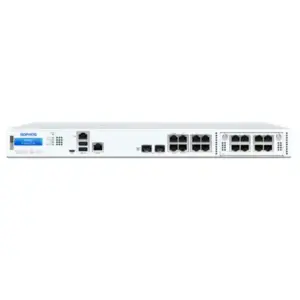
The MS130-8P is a compact Meraki Layer 2 access switch with eight 1 Gigabit Ethernet copper ports, two 1G SFP uplinks, a 120 W Power over Ethernet budget, fanless operation and cloud-based management. It is designed for smaller branch, retail, office, Wi-Fi and IoT edge deployments where buyers need practical PoE capacity and centralized visibility without moving to a full-size rack switch.
Direct answer: what is the Cisco Meraki MS130-8P?
The Cisco Meraki MS130-8P is a cloud-managed, compact Layer 2 access switch in the MS130 family. It provides eight 10/100/1000 Mbps RJ45 access ports and two 1 Gigabit SFP uplink interfaces. Cisco documents a 120 W total PoE switch budget and a 30 W per-port budget for this model, making it useful where a small site must power devices such as business Wi-Fi access points, IP phones, cameras or other compatible Ethernet-powered endpoints while keeping switching management centralized in the Meraki Dashboard.
It should be considered by organizations that need a low-port-count managed switch rather than an unmanaged desktop switch, especially when operations teams want remote configuration, monitoring, packet-capture tools, firmware management, event visibility, VLAN controls, 802.1X authentication, DHCP snooping and other standard Meraki switching capabilities. Its compact physical format and fanless operation can also suit quieter office or retail environments where a large rack-mount chassis would be unnecessary.
The most important factor to confirm is not merely whether eight ports are enough today. The buyer should validate the combined PoE load, uplink bandwidth, fibre transceiver requirements, future port growth, licensing model and license tier, and whether 1G access and 1G SFP uplinks remain appropriate for the intended lifecycle. The MS130-8P is not the multigigabit MS130-8X, and it does not provide 10G SFP+ uplinks.
FourTeck can help determine whether the MS130-8P is the correct compact model, which Meraki license and term fit the organization, whether supported SFP modules are required, what UAE power-cord and power-adapter items should be listed, how much PoE headroom is sensible, and whether a larger or multigigabit model should be quoted instead.
Why the MS130-8P has a distinct place in the MS130 family
Compact switches are often selected too casually. A buyer sees eight copper ports, assumes that the model is interchangeable with every other eight-port switch, and discovers later that the uplink speed, PoE budget, licensing or power design changes the deployment outcome. The MS130-8P is useful precisely because it occupies a specific middle position in Cisco Meraki’s compact MS130 range. It adds PoE to the basic MS130-8 while retaining eight 1GbE access ports and two 1G SFP uplinks. Compared with the MS130-8P-I, the MS130-8P uses an external power supply rather than the internal power-supply arrangement of the -I version. Compared with the MS130-8X, it stays on standard Gigabit copper access and 1G SFP uplinks rather than providing the -X model’s multigigabit access ports and 10G SFP+ uplinks.
That distinction matters in real branch design. A small office with a handful of 1GbE endpoints, two or three PoE access points, several phones and a fibre uplink may gain no practical value from multigigabit interfaces. In that scenario, the MS130-8P can be a cleaner commercial fit. Conversely, a site planning high-throughput Wi-Fi access points, heavy east-west traffic, multiple high-speed local services or an uplink expected to exceed 1 Gbps should not select the MS130-8P simply because the initial device count is low. Port count and port speed are separate sizing questions.
The model is also different from the larger 24- and 48-port MS130 switches. Cisco positions the compact line for lower-density needs while full-size models serve wider branch and campus access requirements. That means the MS130-8P can work well as a small edge switch, a dedicated switch for a room or retail zone, a compact branch access device, or a controlled extension point. It is less attractive where the eight access ports would be consumed immediately and another switch would have to be added soon after deployment. The cost of a later change includes not only hardware but additional licensing, power, cabling, support and management overhead.
For procurement, the useful question is therefore: does the business need exactly a compact, fanless, cloud-managed Gigabit PoE access layer with 1G SFP uplinks? If yes, the MS130-8P is a focused candidate. If the requirement includes multigigabit access, 10G uplinks, materially more ports or a different resiliency architecture, the evaluation should move to another MS130 model or a different Meraki family before the quotation is finalized.
Verified MS130-8P hardware specification
| Specification | Cisco Meraki MS130-8P | Buyer relevance |
|---|---|---|
| Access ports | 8 × 1GbE RJ45 | Suitable for low-density wired access where Gigabit per-port speed is sufficient. |
| Uplinks | 2 × 1G SFP | Supports approved 1G SFP modules; it is not a 10G SFP+ compact model. |
| PoE | 802.3bt listed; 30 W per-port budget; 120 W total switch budget | Calculate endpoint demand and retain reasonable headroom rather than assuming all eight ports can each draw 30 W simultaneously. |
| Switching capacity | 20 Gbps | Appropriate for the fixed Gigabit port profile, while uplink design still determines traffic concentration limits. |
| Power input | 54 VDC, 2.78 A | External power-adapter model; confirm adapter and UAE cord contents on the quote. |
| Power load | 8 W idle / 128 W maximum | Useful for UPS planning and cabinet power calculations, together with attached PoE load. |
| Cooling | Fanless | Reduces fan noise, but installation must still maintain the documented environmental limits and airflow around the unit. |
| Operating temperature | 0°C to 45°C | Important for UAE sites with cabinets, back rooms or utility areas that may become warm. |
| Humidity | 5% to 95% | Environmental planning must also consider condensation, dust and enclosure conditions at the actual site. |
| Mounting | Desktop / integrated wall mount | Well suited to compact placements; verify physical space, cable bend radius and secure mounting. |
| Dimensions | 1.1 × 8.74 × 6 in / 2.8 × 22.2 × 15 cm | Compact chassis helps where rack depth or wall space is constrained. |
| Weight | 1.94 lb / 0.88 kg | Lightweight deployment, though power adapter and cabling add to installation requirements. |
| MTBF at 25°C | 563,569 hours | A reliability reference from Cisco documentation, not a promise of site-specific service life. |
Specification values above reflect Cisco Meraki documentation for the MS130-8P. Exact orderable hardware, accessory inclusion, licensing and regional power items should be confirmed on the commercial quotation because those items can differ from the core switch specification.
Eight Gigabit access ports: where they work well and where they become a constraint
Good fit for low-density access
Eight 1GbE ports can be entirely sufficient for a small branch, point-of-sale cluster, meeting space, reception area, camera group, compact office zone or dedicated Wi-Fi edge. If the attached devices negotiate at 1 Gbps or below and the site has a stable endpoint count, the compact port profile avoids paying for a much larger chassis that may never be used.
Growth can consume ports faster than expected
An eight-port switch should not be sized by current endpoint count alone. Phones may have pass-through PC connectivity, but access points, cameras, printers, door controllers, sensors, meeting-room devices and local appliances can quickly consume spare interfaces. Leave practical expansion capacity if the site is likely to add devices during the switch lifecycle.
Gigabit is not multigigabit
The MS130-8P provides standard 1GbE RJ45 access. If a deployment depends on 2.5GbE access for newer wireless infrastructure or high-throughput endpoints, selecting an eight-port count does not make this model suitable. The MS130-8X exists for a different requirement and should be compared when multigigabit access and 10G uplinks are important.
Port utilization should therefore be modeled as a three-year or five-year operational question rather than a day-one inventory exercise. Count the endpoints that definitely require dedicated switch ports, identify which devices may be added later, reserve a realistic number of service ports for troubleshooting or expansion, and decide whether the two SFP interfaces will be used for uplinks, redundant topology choices or another network purpose. If the resulting design uses every available interface from the start, a higher-port-count switch is often the more defensible purchase even when the initial hardware price is higher.
PoE planning: the 120 W budget needs an endpoint calculation
Power over Ethernet is one of the main reasons to select the MS130-8P rather than the non-PoE MS130-8, but the presence of PoE does not remove the need for power budgeting. Cisco documents a 120 W total PoE switch budget and a 30 W per-port budget for this model. Those two figures should be read together. Eight ports multiplied by 30 W would exceed the total switch budget, so a design in which every attached device expects the maximum per-port allowance cannot be supported simultaneously within the stated total budget.
A proper PoE worksheet lists each intended powered endpoint, its expected power class or maximum consumption, the number of units, and the preferred headroom. For example, an office may have two access points, four IP phones and two cameras. The calculation should use the actual power requirements of those exact endpoint models rather than a generic assumption about their device category. A modern access point can draw much more than a basic desk phone, and cameras with heaters, infrared illumination, pan-tilt-zoom functions or other features can have different power profiles. The same caution applies to IoT gateways and specialty devices.
PoE headroom matters because operational designs evolve. Replacing one access point with a higher-power model, enabling an additional feature on a camera, or adding a device to a previously unused port can change the demand. A switch operating permanently close to its budget gives the administrator less flexibility. It is usually better to retain enough margin for reasonable endpoint changes and to check the Meraki Dashboard after installation for real power use and port status.
If the site requires more than 120 W, if several attached devices approach the per-port maximum, or if the business expects substantial PoE growth, evaluate a larger PoE switch rather than treating the MS130-8P as a universal compact power source. The correct outcome may be a different switch model, a revised endpoint distribution across multiple switches, or a higher-density access layer. This is a sizing decision, not a feature-checkbox decision.
Uplink design: two 1G SFP interfaces are useful, but their speed must match the architecture
The MS130-8P includes two 1G SFP interfaces. This gives the compact switch a practical way to connect over fibre or supported SFP media without consuming all of the copper access ports. Cisco lists supported 1G modules for the relevant MS130 compact SFP models, including MA-SFP-1GB-SX, MA-SFP-1GB-LX10 and MA-SFP-1GB-TX. The exact optic should be chosen according to the physical medium, fibre type, link distance and interface at the far end. An SFP slot by itself does not determine which transceiver is suitable.
For many small branches, a 1Gbps uplink is adequate because the attached endpoints rarely generate simultaneous sustained traffic near their access-port line rates. In other sites, especially where the switch aggregates multiple busy access points, high-resolution cameras, storage traffic or other bandwidth-heavy endpoints, a 1G uplink can become the practical bottleneck even though the switch itself has eight Gigabit access ports. The traffic profile therefore matters more than the simple sum of port speeds.
The presence of two SFP interfaces also invites questions about topology. A buyer may want diverse upstream connectivity, a secondary path or a specific network design using both uplinks. Those possibilities must be evaluated against the wider Meraki switching design, spanning-tree behavior, upstream switch capabilities and the organization’s resiliency objectives. The MS130 compact family uses virtual rather than physical stacking, so it should not be treated as a chassis pair with a dedicated hardware stacking fabric.
If the branch has a 2 Gbps, 5 Gbps or 10 Gbps aggregation requirement, or if the access layer is being built around multigigabit Wi-Fi, the MS130-8P’s fixed 1G SFP uplinks deserve particular scrutiny. The MS130-8X and other higher models provide different interface choices. Choosing the MS130-8P because it is compact can be false economy when an uplink upgrade is already foreseeable.
For a quotation, specify whether the uplink is copper or fibre, the fibre type where applicable, the approximate distance, the upstream switch or firewall model, the number of required uplinks and whether optics are already available. That information allows the hardware list to include the correct supported transceivers and prevents a common installation-day problem: a switch arrives, but the site lacks the media components needed to connect it.
Meraki Dashboard management changes how the switch is operated
Centralized configuration
The MS130 series is managed through the Cisco Meraki Dashboard. That operating model is valuable when an IT team supports multiple branches because switching configuration and status can be administered from a centralized cloud interface rather than requiring an engineer to work locally at every site.
Remote troubleshooting
Cisco lists remote packet capture and other Dashboard troubleshooting capabilities for the MS130. In distributed environments this can reduce the need for immediate physical attendance when diagnosing port, client or connectivity issues, although some faults will still require onsite inspection.
Firmware lifecycle
The Meraki operating model includes managed firmware upgrades. Businesses should integrate those upgrades into their maintenance process, choose appropriate change windows and review release considerations rather than treating cloud management as a reason to ignore change control.
Monitoring and logs
SNMP and syslog integration are among the documented capabilities. Organizations can align switch visibility with their wider monitoring and logging practice, while still using Dashboard for Meraki-specific operational views and device administration.
Security controls at the access layer
The series documentation includes 802.1X authentication, IPv4/IPv6 ACL support, DHCP snooping and 802.1Q VLAN tagging. These functions can support access-control and segmentation designs when they are configured as part of a coherent network policy rather than enabled independently without testing.
Cloud management is therefore a major part of the purchasing decision. A buyer who only wants a locally configured standalone switch should examine whether Meraki’s licensing and Dashboard-centered operational model aligns with the organization’s standards. A buyer already operating Meraki networks may see the opposite advantage: a compact switch can be added to the same administrative framework, policy processes and monitoring approach used across other Meraki sites.
Licensing is mandatory to plan before purchase
The MS130-8P is not a hardware-only buying decision. Cisco documents Enterprise and Advanced licensing tiers for the MS130 line and also lists subscription-licensing options. For the compact MS130 models, the co-term licensing family uses compact-switch license SKUs with terms that depend on the tier. Cisco’s MS130 documentation states that Enterprise licensing is available in 1-, 3-, 5-, 7- and 10-year terms, while the Advanced tier is available in the same terms except 7 and 10 years. Advanced adds Adaptive Policy capability in the MS130 licensing structure described by Cisco, but actual feature applicability also depends on model and firmware support.
The licensing model of the existing Meraki organization can affect what should be ordered. Cisco explains that co-term organizations have tier-consistency rules for switches that offer Enterprise and Advanced licensing, while per-device licensing provides different flexibility. This is especially relevant when the customer already has Meraki switches in production. Adding a new MS130-8P should not be treated as an isolated transaction if the organization’s current licensing tier or renewal structure creates a dependency.
A quotation request should therefore include the existing Meraki organization status where known, the preferred license duration, the desired licensing model if the project is new, and whether Advanced-tier functionality is actually required. If the customer is extending an existing organization, identifying the current switch licenses can prevent ordering a tier that conflicts with the organization’s licensing arrangement. If the deployment is new, the design discussion can compare initial term, lifecycle plan and renewal administration.
Do not compare vendor quotes only on the hardware line. One quote may contain the switch alone, another may include a license, and a third may bundle support or implementation. Those are not equivalent commercial offers. The useful comparison is the complete bill of materials required to claim, operate and support the switch in the intended Meraki environment over the agreed term.
What is included, and what may need to be ordered separately
Cisco’s MS130 documentation lists the MS130-8P switch with an AC power supply in the box for the compact external-power models. It also states that region-specific power cords are not generally included except for the automatic US-order case, so UAE buyers should make the power-cord requirement explicit rather than assuming it will be present. Cisco lists the MA-PWR-150WAC-ADP as the supported 150 W power adapter for the MS130-8P and MS130-8X. Commercial packaging can be affected by channel and region, so the final quotation should state the power components clearly.
SFP modules are another common separate item. The switch has two 1G SFP slots, but transceivers are selected according to the link. Cisco lists MA-SFP-1GB-SX, MA-SFP-1GB-LX10 and MA-SFP-1GB-TX among supported modules for the SFP-equipped MS130 compact models. A fibre run may also require patch cords, correct connector types and verified optical parameters. Those details are site-specific and should not be guessed from the switch model.
The license is also a separate commercial dependency. The exact license SKU and term should be shown on the proposal. If installation is required, services should specify whether the scope includes mounting, patching, VLAN configuration, port profiles, switch claiming, Dashboard network assignment, uplink configuration, firmware coordination, testing, documentation and handover. A single line marked installation can hide substantial differences in responsibility.
Finally, consider supporting infrastructure. A compact switch may need a UPS, suitable wall or shelf placement, patch leads, fibre accessories, a small enclosure, cable management or labeling. None of those should be automatically added without need, but they should be reviewed before shipment. The objective is a complete deployment bill of materials, not merely a correct switch part number.
Deployment workflow for a new MS130-8P
Validate the design
Confirm endpoint count, PoE draw, uplink media, VLAN requirements, Dashboard organization, license tier, growth expectations and physical placement. This is the stage where a larger or faster switch should be selected if the compact model would be immediately constrained.
Prepare the Meraki organization
Determine whether the device will join an existing Dashboard organization and network or whether a new organization/network must be created. Review licensing compatibility with the existing estate before purchasing the final license.
Pre-stage configuration
Where project processes allow it, claim and preconfigure the device, define VLANs, port intent, management settings and relevant templates before field installation. Pre-staging reduces onsite decision-making and supports consistent rollout across multiple branches.
Install and connect
Mount the fanless compact chassis in a secure location within environmental limits, connect the correct power components, attach the uplink using the selected copper or SFP media, and patch endpoint ports according to the approved cable schedule.
Allow Dashboard check-in
Cisco’s setup guidance calls for connecting the switch to infrastructure, allowing it to check in to Dashboard, and applying initial firmware updates where necessary. If normal addressing cannot provide cloud reachability, the local status page may be used for appropriate static-IP configuration.
Test and document
Validate uplink operation, client access, VLAN assignment, PoE delivery, monitoring, authentication and any security controls. Record the installed serial, location, ports, optics, addressing, license term and support ownership so future troubleshooting does not begin from an incomplete inventory.
Network controls that matter in a business deployment
A compact branch switch still participates in the security and availability design of the network. The MS130 documentation includes 802.1Q VLAN tagging, IPv4/IPv6 ACL support, DHCP snooping and 802.1X authentication. These are not merely feature-list items. VLAN design determines which user, voice, camera, guest, IoT or management traffic shares a broadcast domain. 802.1X can help establish authenticated access policies where the wider identity architecture supports it. DHCP snooping can reduce certain classes of unauthorized DHCP behavior when configured correctly. ACLs can impose traffic restrictions appropriate to the access layer.
The design should be coherent across endpoints, wireless, firewalling and switching. For example, placing cameras in a camera VLAN is useful only if routing and security policy enforce the intended communication boundaries. Likewise, deploying voice endpoints may require correct VLAN assignment and QoS considerations across the whole path, not just on the MS130-8P. A switch cannot compensate for an upstream network that has conflicting or incomplete policy.
802.1X projects require particular care. The switch capability is one piece of an authentication system that can also include a RADIUS or identity service, certificate or credential policy, endpoint supplicants, fallback behavior for non-802.1X devices, guest or remediation design, and operational handling when authentication services are unavailable. A buyer should not purchase the switch on the assumption that 802.1X becomes useful automatically upon installation.
For logging and support, SNMP and syslog integration can complement Dashboard visibility. Organizations with a network monitoring platform or SIEM should decide which events and metrics need to be collected, how device naming and site labels will be standardized, and who receives alerts. The objective is to make a small switch visible to the same operations process as larger infrastructure, rather than allowing compact devices to become unmanaged exceptions.
These controls make the MS130-8P more appropriate for business environments than an unmanaged eight-port switch when centralized policy and observability are required. They also increase the importance of proper configuration. A cloud-managed switch is not automatically secure simply because it is centrally managed; security comes from applying the correct policy, protecting administrator access, maintaining firmware, reviewing logs and validating network behavior.
Dubai and UAE installation considerations
The MS130-8P is specified for an operating temperature range of 0°C to 45°C. In Dubai and across the UAE, indoor commercial environments are commonly air-conditioned, but network equipment can still be installed in enclosed cabinets, storerooms, ceiling spaces or utility areas where the local temperature differs substantially from the occupied room. A fanless switch eliminates fan noise and one moving component, but it does not remove thermal limits. The mounting position should provide sensible airflow and avoid heat sources or direct exposure to harsh environmental conditions.
Power planning should cover more than the switch adapter. Confirm the correct regional cord, socket availability, UPS capacity and runtime objective. The Cisco documentation states 8 W idle and up to 128 W maximum power load for the MS130-8P. UPS sizing should consider the complete local network set, which may include a firewall, ISP equipment, access points and other powered devices. Because PoE endpoints may depend on the switch for power, keeping the switch on UPS can preserve more than wired connectivity during a short power event.
Cabling quality is equally important. Gigabit copper links depend on properly installed structured cabling, while fibre uplinks depend on the correct fibre type, clean connectors, compatible optics and suitable patching. If the switch is being installed during an office move or refurbishment, cabling certification and labeling should be included in the project plan rather than deferred to troubleshooting after cutover.
For organizations that need installation, migration or broader infrastructure support, FourTeck IT Services UAE can be used as a service resource alongside product procurement. For general UAE infrastructure sourcing and project discussions, the FourTeck UAE site provides a broader regional route. These links are intended as practical navigation rather than a substitute for defining the specific project scope.
Multi-site businesses should also decide whether the MS130-8P will be deployed as a one-off device or as a standard branch component. Standardization can simplify configuration templates, spares, installation procedures, labeling, documentation and support. However, standardization should not override site requirements. A branch with heavier Wi-Fi, more cameras or greater growth may need a different switch even if most locations use the MS130-8P.
Use cases where the MS130-8P can make sense
Small branch office
A branch with a few desktops, phones and one or two access points may benefit from an eight-port PoE switch that can be centrally administered without placing a full 24-port unit at every location. The decision depends on whether the total port and PoE plan leaves enough headroom.
Retail or point-of-sale edge
Retail environments may need controlled connectivity for POS terminals, phones, cameras, wireless and back-office devices. Central Dashboard operation is useful when support teams oversee many sites, while the compact fanless format can fit locations with limited dedicated network space.
Dedicated Wi-Fi edge
A small zone may use the MS130-8P primarily to power and connect wireless access points. This can work when those access points only require Gigabit Ethernet and their combined PoE load stays within budget. Multigigabit Wi-Fi designs should instead examine the MS130-8X or other suitable models.
IP surveillance cluster
A compact PoE switch can connect a limited camera group where bandwidth, PoE and port counts are carefully calculated. Camera power demand and aggregate video traffic vary widely, so the exact camera models and recording architecture should be checked before approving the design.
Meeting or collaboration area
Rooms containing phones, conferencing systems, control units, room schedulers or access points can require a small managed access layer close to the endpoints. The MS130-8P may fit if 1GbE and the PoE budget meet every device requirement.
When to evaluate a different Meraki model
The MS130-8P should not be recommended automatically just because the project asks for an eight-port PoE switch. A technically useful quotation also explains when the buyer should move away from it. The first trigger is multigigabit access. If attached devices need 2.5GbE, the MS130-8P’s 1GbE RJ45 interfaces are a hard design limitation. Cisco’s MS130-8X provides six 1GbE ports, two 2.5GbE ports and two 10GbE SFP+ uplinks, making it a more relevant compact comparison where faster access and uplink bandwidth are required.
The second trigger is port growth. If a branch expects more than eight wired endpoints, or if the design consumes all ports immediately, a 24-port model may provide better expansion economics. Adding a second compact switch later can mean another power adapter, another license, additional uplink planning, more patching and a less elegant physical installation. The larger switch may therefore be the lower-complexity option even if it looks oversized at day one.
The third trigger is PoE demand. A 120 W budget works for many compact sites, but not for every combination of access points, cameras and specialty powered devices. A higher PoE budget should be selected where the endpoint calculation requires it. The fourth trigger is uplink speed. If the site will aggregate meaningful traffic above 1 Gbps, a compact model with 10G SFP+ or a larger access switch may be more appropriate.
The fifth trigger is switching architecture. The MS130 is positioned as a Layer 2 access platform with DHCP relay in the family comparison, and compact models use virtual rather than physical stacking. Environments requiring broader Layer 3 functions, physical stacking, higher resilience or more advanced campus roles should be designed around a family that explicitly supports those requirements.
The best purchase is the smallest model that meets the entire lifecycle requirement with sensible headroom, not the smallest model that can be made to work on installation day. That principle protects the buyer from avoidable replacement, uplink bottlenecks, port exhaustion and fragmented branch standards.
MS130-8P, MS130-8P-I and MS130-8X: practical comparison
| Decision | MS130-8P | MS130-8P-I | MS130-8X |
|---|---|---|---|
| Copper access | 8 × 1GbE | 8 × 1GbE | 6 × 1GbE + 2 × 2.5GbE |
| Uplinks | 2 × 1G SFP | 2 × 1G SFP | 2 × 10G SFP+ |
| Total PoE budget | 120 W | 120 W | 120 W |
| Power supply | External | Internal | External |
| Cooling | Fanless | Fanless | Fixed internal fan |
| Best comparison reason | Standard compact Gigabit PoE edge | Same access/uplink profile with internal PSU preference | Multigigabit access and 10G uplink requirement |
This comparison shows why the exact suffix matters. The -P, -P-I and -X models are not cosmetic variants. They change power-supply arrangement, interface speed and cooling characteristics. Procurement documents should therefore use the precise model and hardware SKU rather than a generic phrase such as “Meraki MS130 eight-port switch.” Cisco’s family material identifies the orderable MS130-8P hardware as MS130-8P-HW; the commercial proposal should still be checked for current regional ordering details.
Migration from an unmanaged or legacy switch
Replacing an unmanaged switch with the MS130-8P can improve visibility and policy control, but the migration should begin by documenting what the old switch is actually doing. Unmanaged devices often hide design assumptions because every port behaves similarly and there is little configuration to inspect. Before cutover, identify each connected cable, endpoint, upstream path, VLAN requirement, PoE dependency, addressing behavior and any device that depends on a particular physical port arrangement.
If the legacy switch is managed, export or record its configuration and translate requirements rather than copying syntax. Vendor features may use different terminology or operational models. Determine which VLANs are tagged or untagged, which ports are trunks or access ports, whether link aggregation is used, how spanning tree is configured, whether access-control features are active, and what monitoring system expects from the device. A migration plan should map intent from the old platform to the Meraki Dashboard.
PoE migrations need a dedicated check. Confirm that every powered endpoint is compatible with the target power design and that the aggregate demand fits the 120 W budget. If the old switch had a higher PoE budget, the MS130-8P can appear functionally equivalent by port count while being insufficient by power. The reverse is also possible: an old switch may have used injectors that can be removed when the new PoE design is validated.
The uplink is another cutover dependency. If the old switch uses fibre, identify the optic and far-end interface. Do not assume that an existing third-party transceiver is supported by the new platform. If the old switch uses copper uplink and the design intends to move to SFP fibre, the cabling and optics must be ready before the migration window.
A good migration includes a rollback path. Keep the original switch configuration and patching record available until the new switch is validated. Test representative clients, phones, access points, cameras or other endpoint categories, and confirm monitoring after cutover. For a branch used during business hours, performing these checks in a controlled change window is more important than the physical speed of swapping an eight-port device.
Where several branches are being migrated, complete one pilot site first. The lessons from that deployment can improve port templates, labeling, SFP selection, PoE assumptions, installation notes and remote-support procedures for the remaining sites. This is one area where Meraki’s centralized model can provide operational leverage: once the design is proven, consistent configuration patterns can be applied at scale without pretending that every site has identical physical requirements.
Performance sizing beyond the headline 20 Gbps switching capacity
Cisco specifies 20 Gbps switching capacity for the MS130-8P. That figure is consistent with the ten Gigabit-class interfaces in the physical design, but it should not be used as a substitute for traffic engineering. Real application performance depends on how traffic flows through the switch, where the destinations are located, how much traffic must traverse the uplink, and whether the attached endpoint interfaces themselves are the limiting factor.
Consider a small branch where most user traffic goes to cloud applications through a firewall. In that design, many access devices share the uplink path toward the router or firewall. Even though each endpoint has a 1GbE access port, the aggregate traffic leaving the switch can be constrained by a 1Gbps uplink. That may still be entirely acceptable because user workloads are bursty and rarely sustain line-rate traffic simultaneously. The correct conclusion comes from expected traffic, not from adding every port’s theoretical maximum.
Now consider a different site with multiple access points, local video streams and heavy file transfers. The 1G uplink can become a more significant planning issue. The buyer may need to distribute traffic, redesign the access layer or select a model with faster uplink interfaces. This distinction is why the MS130-8X and larger MS130 models exist alongside the MS130-8P.
Latency-sensitive applications such as voice and interactive video also depend on upstream QoS, WAN quality and congestion management. Cisco’s MS family provides voice and video QoS capabilities, but the end-to-end network must be designed consistently. A branch switch cannot correct an undersized internet link or a congested upstream interface by itself.
When requesting a quote for a performance-sensitive deployment, describe the endpoints and application mix rather than asking only for “an eight-port switch.” Mention high-throughput Wi-Fi, camera recording, local servers, NAS traffic, voice, collaboration equipment and WAN speed. That information gives the supplier enough context to challenge the model choice if a faster uplink or multigigabit access layer would materially improve the design.
Reliability, fanless operation and lifecycle support
Cisco publishes an MTBF figure of 563,569 hours at 25°C for the MS130-8P. MTBF is a statistical reliability measure under defined assumptions; it is not a prediction that an individual switch will operate for that number of hours without fault. Site conditions, power quality, temperature, handling, connected equipment and installation quality influence real-world outcomes. Use the figure as a comparative engineering reference rather than a warranty statement.
Fanless operation is attractive in offices and customer-facing areas because it avoids fan noise. It also removes a moving part, but the thermal design relies on passive cooling. Do not place the unit against heat-generating equipment, inside an unventilated enclosure or in a location that routinely exceeds its documented operating range. In hot climates, a room being air-conditioned does not guarantee that a small communications cupboard remains within specification throughout the day.
Lifecycle planning should include licensing and firmware as well as hardware. A Meraki switch is operated as part of the Dashboard ecosystem, so license renewal ownership must be documented. Decide who tracks renewal dates, who has administrative access to the organization, who approves firmware windows, and how configuration changes are logged. These governance details are often more important to long-term service quality than the initial installation.
For branch fleets, consider spare strategy. A business with one MS130-8P can normally rely on support and replacement procedures appropriate to its risk tolerance. A business with dozens of identical branches may choose to hold a compatible spare or define a rapid replacement process. Standardizing the compact switch model can make this easier, provided sites genuinely share the same port, PoE and uplink requirements.
The quotation should therefore identify hardware support and license term clearly, while the deployment documentation records the device in the organization’s asset and network inventory. Reliable operation comes from a combination of suitable hardware, correct environment, protected power, supported software, configuration governance and responsive support.
Procurement checklist for a complete MS130-8P quotation
Exact hardware identity
Specify Cisco Meraki MS130-8P and confirm the current orderable hardware reference, commonly shown in Cisco family material as MS130-8P-HW. Avoid accepting a generic “MS130 compact switch” description.
License tier and term
State whether the organization needs the applicable Enterprise or Advanced tier, or the relevant subscription model, and identify the required duration. Existing Meraki organization rules should be reviewed.
PoE endpoint schedule
List every powered endpoint and its expected draw. Confirm that the combined requirement remains inside the 120 W switch budget with sensible headroom for operational changes.
Uplink and optics
State whether the uplink uses copper or fibre, fibre type and distance, far-end equipment, and required SFP quantity. Supported transceivers should appear explicitly on the BOM when needed.
Power components
Confirm the external adapter and correct UAE power cord rather than relying on assumptions about region-specific packaging. Include UPS requirements separately when they form part of the project.
Services and handover
Define claiming, configuration, installation, cabling, migration, testing, documentation, training and post-installation support as separate responsibilities so commercial comparisons are meaningful.
Questions buyers frequently ask about the Cisco Meraki MS130-8P
Is the MS130-8P a Layer 3 switch?
Cisco positions the MS130 as a Layer 2 access-switch family and lists DHCP relay in the family routing comparison. Buyers that require broader Layer 3 routing functions should not assume those capabilities are provided just because the device is cloud managed. The target architecture should be checked against the exact routing requirement.
Does every port provide 30 W at the same time?
Cisco lists a 30 W per-port budget and a 120 W total PoE switch budget. Eight ports each drawing 30 W would require more than the total budget, so endpoint power must be calculated across the whole switch. This is one of the most important checks before purchase.
Does it have 10G uplinks?
No. The MS130-8P has two 1G SFP uplinks. The compact MS130-8X uses two 10G SFP+ uplinks and adds multigigabit access ports. If 10G aggregation is a requirement, compare the -8X or another suitable model.
Is the MS130-8P fanless?
Yes. Cisco documents fanless operation for the MS130-8P. That supports quieter deployment, but the unit must still be installed within its environmental limits and given appropriate ventilation.
Does it use an internal power supply?
No. The MS130-8P uses an external power supply. The MS130-8P-I is the related compact model with an internal power supply. This suffix difference should be explicit in the purchase order.
Is a Meraki license required?
Licensing is part of the MS130 operating model. Cisco documents Enterprise and Advanced co-term license options for the family, along with subscription licensing. The correct tier, model and term should be included in the commercial design.
Can it be wall mounted?
Cisco lists desktop and integrated wall mounting for the MS130-8P. The physical installation should still provide secure fixing, cable clearance, power-adapter placement and suitable airflow.
Which SFP modules can be considered?
Cisco lists MA-SFP-1GB-SX, MA-SFP-1GB-LX10 and MA-SFP-1GB-TX among supported modules for the relevant SFP-equipped MS130 models. Select the optic according to medium, distance and the far-end interface rather than choosing by model code alone.
Is this a good switch for Wi-Fi 6 or Wi-Fi 7 access points?
It depends on the exact access-point Ethernet and PoE requirements. The MS130-8P provides 1GbE access and a 30 W per-port / 120 W total PoE profile. If an access point requires multigigabit connectivity or a different power level, another switch should be selected. Never size wireless infrastructure by Wi-Fi generation name alone.
Can FourTeck supply and configure it in Dubai?
FourTeck can prepare a quotation around the switch, applicable licensing, supported optics, power items and project services according to the stated requirement. For broader networking, security and infrastructure navigation, buyers can also review FourTeck and the Firewall Dubai by FourTeck specialist site.
How to compare quotations without losing technical scope
Comparing switch quotes only on unit price can hide major differences. For the MS130-8P, the first comparison point is exact hardware identity. The MS130-8P, MS130-8P-I and MS130-8X are different models. A supplier that quotes a related compact switch without the exact suffix may be offering a materially different power or interface design. The bill of materials should identify the precise hardware model and quantity.
The second comparison point is licensing. Record the tier, term, quantity and licensing model represented in the quotation. A one-year license and a five-year license create different total costs and renewal schedules. A hardware-only quote is not commercially comparable with a hardware-plus-license quote if the license is required for the intended operation.
The third comparison point is accessories. Does the price include the external power adapter? Is the correct UAE power cord listed? Are SFP modules included, and if so, are they the right type for the fibre path? Are patch cords or mounting items required? The phrase “complete switch” is not enough; line-item clarity is better.
The fourth comparison point is service scope. One supplier may ship the product, while another includes Dashboard claiming, firmware coordination, VLAN and port configuration, onsite installation, testing and handover. Decide whether those services are required, then compare equivalent scopes. If the customer has its own network team, a supply-only quotation may be appropriate. If the branch has no local IT staff, implementation support can be the more important part of the purchase.
The fifth comparison point is lead time and support handling. Availability changes, so a quotation should state the expected supply position rather than relying on a generic web statement. Support ownership should also be clear: who opens vendor cases, who provides first-line troubleshooting, and what information the customer must retain?
A technically complete quote makes the decision easier because it removes hidden assumptions. For this product, the minimum useful comparison normally covers exact hardware, license, power items, optics, services, delivery and support. That structure also protects the buyer from a low initial number that later expands when missing components are discovered.
Decision recap: is the MS130-8P the right compact switch?
Choose it for the right access profile
The strongest fit is a low-density site that needs eight 1GbE copper ports, two 1G SFP uplinks and centralized Meraki management. If multigigabit access or 10G uplinks are already in the requirement, do not force this model into the design.
Validate PoE numerically
The 120 W total budget and 30 W per-port figure must be matched to the actual endpoint list. Leave headroom for reasonable change. If the power worksheet is tight, a higher-budget switch is a safer engineering choice.
Treat licensing as part of the architecture
Confirm existing organization licensing, tier and term before ordering. License compatibility and renewal structure can affect the correct SKU even when the switch hardware itself is obvious.
Plan the physical deployment
The chassis is compact and fanless, but it uses an external power supply. Confirm wall or desktop placement, UAE power cord, UPS strategy, cable management and environmental conditions.
What FourTeck needs for an accurate Cisco Meraki MS130-8P quote
A concise requirement normally produces a more accurate quotation than a product name by itself. The following inputs allow the hardware, licensing, optics and service scope to be checked together.
Plan the MS130-8P as a complete Dubai branch switching solution
The Cisco Meraki MS130-8P is most valuable when its compact hardware, 120 W PoE budget, 1G SFP uplinks and Dashboard licensing model all match the same requirement. Send FourTeck the endpoint count, PoE load, uplink design, preferred license term and installation scope so the quotation can include the correct switch, licensing, power items, optics and services rather than a hardware line in isolation.
For wider infrastructure planning, visit FourTeck for broader company resources. UAE customers can use the regional and specialist links provided on this page to coordinate product supply with implementation requirements.

Reviews
There are no reviews yet.