

Cloud-managed access switching for Dubai and UAE networks
Cisco Meraki MS150-48FP-4X Dubai
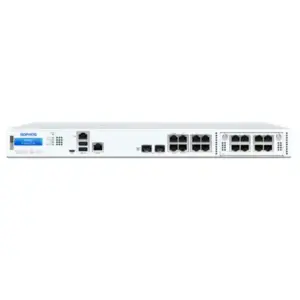
The Cisco Meraki MS150-48FP-4X is a 48-port cloud-managed access switch for organizations that need a substantial PoE budget, 10GbE fibre or DAC uplinks, physical stacking, and centralized operations through the Meraki Dashboard. Its defining combination is 48 x 1GbE access ports, four 10GbE SFP+ uplinks, a 740W switch PoE budget, two dedicated stack ports, and an 80Gbps stacking architecture.
Direct answer: what is the MS150-48FP-4X and who is it for?
The Cisco Meraki MS150-48FP-4X is a fixed-configuration, cloud-managed access switch in the MS150 family. It is mainly used to connect and power large numbers of wired endpoints at the network access layer while providing high-speed uplinks toward distribution, core, firewall, or server infrastructure. Its 48 copper access interfaces are 1GbE, while four SFP+ interfaces provide 10GbE uplink capability. The model also includes two dedicated stack ports and supports an aggregate switch PoE budget of 740W, making power delivery one of its strongest differentiators within the MS150 range.
Organizations should consider this model when they expect many PoE-powered devices and want Meraki Dashboard operations across branch or campus access switching. Examples include office floors with Wi-Fi access points, IP phones, surveillance cameras, access-control devices, room systems, IoT gateways, and conventional desktop connectivity. The most important factor to confirm is not simply the port count: buyers should validate endpoint power draw, 1GbE versus multigigabit access requirements, uplink topology, stacking needs, optics or DAC requirements, the Meraki licensing model already used by the organization, and rack power and cooling conditions.
FourTeck can help translate the endpoint list and network design into the correct switch quantity, PoE headroom, license tier and term, uplink accessories, stacking cables, and installation scope. That matters because a switch can have enough physical ports but still be the wrong choice if the powered-device budget, future Wi-Fi speed, licensing alignment, or resiliency architecture is not matched to the site.
Where the MS150-48FP-4X fits in the Cisco Meraki switching portfolio
The MS150 family is positioned as stackable access switching for branch and campus environments. The MS150-48FP-4X sits toward the high-PoE end of the 48-port, 1GbE access variants. It is not the multigigabit model, and that distinction is important. Every one of its 48 RJ45 access ports is designed for 10/100/1000Mbps Ethernet, so the switch is a good match where endpoint bandwidth is adequately served by Gigabit Ethernet. Its uplink side is considerably faster, with four 10GbE SFP+ interfaces that can connect the access layer to upstream switching, routing, firewall, or server infrastructure.
The “FP” element is commercially significant because this variant carries the 740W aggregate PoE budget, compared with the lower-power 48LP-4X variant at 370W. For a buyer deploying a high density of phones, cameras, access points, or powered edge devices, that extra PoE capacity can reduce the need to reserve ports solely because of power limitations. However, the 740W figure is a switch-wide power pool rather than permission to assume every port can simultaneously deliver its theoretical maximum. The design should add each endpoint’s expected PoE draw, account for startup and future headroom, and verify that the device class is compatible with the switch’s 30W-per-port power profile.
For environments where access points or specialist endpoints require more than 1GbE to the edge, the MS150-48MP-4X deserves comparison. That model provides a mixture of 1GbE and 5GbE multigigabit access ports and offers higher per-port PoE capability on its multigigabit ports. The trade-off is that not every copper port is multigigabit. In other words, the MS150-48FP-4X is best understood as a high-density Gigabit access switch with a generous PoE pool and 10GbE uplinks, rather than as the fastest edge option in the family.
This positioning makes the product particularly relevant when the wired edge remains predominantly 1GbE but the organization still wants modern cloud operations, stackability, strong uplink capacity, and enough PoE budget to avoid power starvation during a dense rollout. The decision should therefore begin with endpoint type and speed, not with the model name alone.
Cisco Meraki MS150-48FP-4X specifications
| Specification | MS150-48FP-4X detail |
|---|---|
| Access ports | 48 × 10/100/1000Mbps RJ45 |
| Uplinks | 4 × 10GbE SFP+ |
| PoE profile | Up to 30W per powered port, 740W aggregate switch PoE budget |
| Dedicated management | 1 dedicated management interface |
| Physical stacking | 2 dedicated stack ports |
| Stacking bandwidth | 80Gbps |
| Switching capacity | 176Gbps |
| Routing | Static routing capability; the family is primarily positioned for Layer 2 access switching |
| Power input | 100–240VAC |
| Power load | Approximately 44.6W idle / 891.4W maximum in current Cisco Meraki documentation |
| Operating temperature | 0°C to 45°C |
| Humidity | 5% to 95% |
| Mounting | Integrated 1U rack mount |
| Dimensions | 1.72 × 19 × 13.38 in / 4.4 × 48.2 × 34 cm |
| Weight | 11.94 lb / 5.4 kg |
| Published MTBF at 25°C | 1,029,618 hours |
Specifications should be verified against the current Cisco Meraki datasheet at the time of quotation because hardware documentation, licensing names, supported accessories, and regional ordering details can change.
Why the 740W PoE budget matters in real deployments
High device density
A 48-port switch can quickly become power-constrained when the endpoint mix includes dozens of wireless access points, cameras, IP phones, room devices, sensors, and security peripherals. The 740W aggregate budget gives the MS150-48FP-4X substantially more powered-edge capacity than the 370W 48LP model.
Better headroom planning
Good PoE design includes reserve capacity rather than sizing to the exact normal draw. Endpoints may negotiate different power classes, consume more during certain operating modes, or be replaced later by higher-draw hardware. A larger shared budget reduces the likelihood that the switch itself becomes the limiting factor.
One limit still remains
The MS150-48FP-4X is a 30W-per-port class model. A large total PoE pool does not turn an individual access port into a 60W output. Endpoints that genuinely require higher per-port power should be mapped to an appropriate switch model rather than relying on the aggregate wattage figure.
PoE sizing is therefore a two-level calculation. First, check each endpoint’s maximum power requirement against the power capability of an individual switch port. Second, total the planned draw across all powered ports and compare that figure with the switch-wide 740W budget. A design can fail either test. For example, a single device can be incompatible because it needs more power than one access port can supply even when hundreds of watts remain unused in the switch-wide pool. Conversely, every endpoint might be individually compatible but the combined load could still exceed the aggregate budget.
This distinction is especially relevant during Wi-Fi refresh projects. A legacy access point may operate within 30W and only need 1GbE, while a newer high-end access point can require additional power and benefit from multigigabit Ethernet. In that case, the correct comparison is not simply “740W versus 370W.” The buyer should evaluate both power per port and access-port speed. If a substantial portion of the wireless estate needs 2.5GbE or 5GbE and higher-power delivery, a multigigabit MS150 variant or another Meraki access-switch family may be more appropriate.
10GbE SFP+ uplinks: the access layer is only as good as the path upstream
The four SFP+ interfaces distinguish the “4X” models from MS150 variants that use 1GbE SFP uplinks. This matters when dozens of access ports converge on a smaller number of upstream links. A 48-port access switch does not need a dedicated 10GbE uplink for every client, but the aggregate traffic profile, oversubscription ratio, application mix, backup windows, wireless traffic, camera streams, and east-west flows should all be considered before choosing the uplink topology.
Four 10GbE uplink ports create several design possibilities. They can be used as independent links, members of aggregated uplink designs where supported by the surrounding architecture, or connections toward redundant upstream devices. The exact use depends on the broader Meraki and non-Meraki topology, spanning-tree design, link aggregation plan, and whether physical stacking is used. The presence of four ports is useful, but it does not by itself provide end-to-end redundancy. Redundancy exists only when upstream devices, physical paths, power feeds, and configuration are also designed to survive the intended failure scenario.
Transceiver selection is another procurement dependency. The current MS150 documentation lists supported Meraki 1GbE and 10GbE optics for SFP+ models, including short-range and long-range fibre options, and selected direct-attach cables. Buyers should match the module to fibre type, distance, connector plan, existing patch panels, and the hardware at the other end of the link. Ordering a switch without confirming optics is a common cause of an otherwise complete network build arriving unable to connect to the core.
For short same-rack or adjacent-rack connections, a supported DAC may be attractive where the topology and cable reach permit it. For longer building, floor, or campus links, fibre optics are normally the more practical path. The design should specify each uplink individually: source switch, destination device, port speed, media, estimated distance, optic or DAC type, and redundancy role.
Physical stacking and what it changes operationally
The MS150 family includes two dedicated stack ports and an 80Gbps stacking bandwidth specification. Cisco Meraki states that the MS150 platform can be stacked in groups of up to eight switches. Physical stacking is valuable when several access switches in the same location should be operated as a coordinated stack rather than as isolated devices. It can simplify certain uplink and management designs and gives the network team a more structured way to scale port count within a wiring closet.
Stacking is not automatic merely because two or more switches are installed together. The design requires supported stacking cables, a planned stack topology, Dashboard configuration, compatible members, and correct physical cabling. The current documentation lists dedicated MS150 stacking cable options in multiple lengths. Cable length matters because switches must be physically arranged so the stack can be closed or interconnected as intended without strain, excessive slack, or routing that interferes with service access.
A stack also does not eliminate every single point of failure. Each MS150-48FP-4X uses a fixed internal power supply, so local power design still matters. If all members depend on one rack PDU, one UPS circuit, or one upstream path, the stack may remain vulnerable despite having multiple switches. The useful question is not “does it stack?” but “which failures must this access block survive?” From there, the buyer can decide how many switches, uplinks, power sources, stack links, and upstream devices are needed.
For smaller branches, a single MS150-48FP-4X may be entirely adequate. For larger floors or campus closets, stacking can improve operational consistency and create a cleaner expansion path. The number of switches should be based on usable port demand, PoE demand, uplink design, failure domains, spare capacity, and physical rack constraints rather than on port count alone.
Meraki Dashboard management: why the operating model matters
A central reason to select the MS150-48FP-4X is the Meraki cloud-management model. The switch is designed to be claimed, configured, monitored, and troubleshot through the Cisco Meraki Dashboard. That operating model can be attractive to organizations with distributed branches because a central network team can maintain visibility and configuration without needing a separate traditional management stack at every site.
Dashboard-based operations support zero-touch style provisioning workflows, centralized visibility, firmware management, remote troubleshooting tools, and integration with operational mechanisms such as SNMP and syslog. The practical benefit is consistency. Port configuration, VLAN assignments, access policies, switch status, client visibility, and firmware workflows can be handled within the broader Meraki environment rather than through device-by-device command-line administration.
That benefit comes with an architectural commitment: the organization must be comfortable with Meraki licensing and cloud-managed operations. Buyers replacing conventional standalone switches should include account ownership, organization access, administrative roles, licensing responsibility, internet reachability, and change-control procedures in the migration plan. A technically successful installation can still become operationally difficult if the equipment is claimed into the wrong Dashboard organization, if administrators do not have the correct permissions, or if licensing responsibility is unclear between internal teams and service providers.
For a multi-site UAE business, central management can reduce the effort needed to support branch access networks from a single operations team. For an environment that must operate entirely within a different management platform or has policy constraints around cloud administration, the buyer should evaluate those requirements before standardizing on Meraki. Management preference is therefore a first-order selection factor, not an afterthought.
Licensing must be specified with the switch
The MS150 is a licensed Meraki platform, so a hardware-only comparison is incomplete. Cisco Meraki currently documents Enterprise and Advanced license tiers for the MS150, with term-based options for its traditional licensing models, and also documents subscription licensing options. For the 48-port MS150 models, the exact license SKU depends on the licensing model, feature tier, and subscription or term structure used by the customer.
For organizations using co-termination licensing, Cisco Meraki states that MS150 switches in the organization must align to the same Enterprise or Advanced tier, and it gives examples involving other switch families where tier consistency also matters. Advanced licensing adds Adaptive Policy capability for the MS150. In per-device licensing, tier mixing can be possible, but certain features can still require broader organizational alignment. Subscription licensing uses a different Essentials/Advantage naming structure and different license SKUs. This is why a quotation should not guess the license solely from the switch model.
A buyer adding one MS150-48FP-4X to an existing Meraki estate should provide the current organization name, licensing model, existing switch tier, desired term, and whether Adaptive Policy is required. A new Meraki deployment should decide whether the organization will use the traditional licensing model or current subscription approach supported for the region and account. License term should also be aligned to procurement policy and expected hardware lifecycle so the organization does not create unnecessary renewal complexity.
Licensing is therefore one of the most important quotation inputs. The right hardware with the wrong license tier or licensing model can delay deployment, complicate claiming, or create avoidable commercial rework. FourTeck can use the existing Meraki organization details and required feature set to identify the appropriate licensing path for the quotation.
Access-layer controls and network services
Segmentation
802.1Q VLAN tagging allows the access layer to separate traffic such as corporate users, voice, cameras, guest services, building systems, and management networks. VLAN design should be coordinated with gateway interfaces, DHCP, security policy, and upstream routing.
Access security
The platform supports capabilities such as 802.1X authentication, IPv4/IPv6 ACLs, DHCP snooping, Dynamic ARP Inspection, broadcast storm control, and Adaptive Policy when the appropriate licensing and broader environment support it.
Operations
Dashboard tools can support remote packet capture, visibility, firmware workflows, and centralized troubleshooting. SNMP and syslog integration can also feed broader monitoring and logging processes when the customer operates an external NMS or SIEM.
These features should be considered as parts of a network design rather than checkboxes. For example, 802.1X requires an authentication infrastructure and a clear fallback policy for devices that cannot perform user or machine authentication. DHCP snooping and Dynamic ARP Inspection depend on correct trust relationships and VLAN configuration. ACLs need to be aligned with upstream firewall policy to avoid creating contradictory rules. Adaptive Policy, where used, requires the relevant licensing and compatible architecture.
The most successful access-switch deployments therefore begin with a port-policy model. Define standard port profiles for users, phones, access points, cameras, printers, building systems, uplinks, and unused interfaces. Document which VLANs, PoE state, access controls, voice settings, and authentication requirements apply to each profile. Meraki Dashboard can then help enforce the desired consistency across ports and sites.
Use case: office floors with phones, wireless, cameras, and user devices
A typical office access closet illustrates why the MS150-48FP-4X can be attractive. Consider a floor with ceiling-mounted Wi-Fi access points, IP phones at desks, surveillance cameras in common areas, meeting-room devices, printers, and user workstations. Not every endpoint needs PoE, but a large proportion may. A lower-PoE switch can force the designer to spread powered devices across more hardware even when unused Ethernet ports remain. The 740W budget gives the designer more flexibility to use the available 48 access ports without immediately running into a switch-wide power ceiling.
The same office may generate substantial aggregate traffic. Wi-Fi access points consolidate wireless users, cameras create continuous upstream streams, and users may transfer large files to on-premises servers or cloud applications. The four 10GbE uplink interfaces allow the access layer to be connected upstream without restricting it to 1GbE fibre uplinks. Whether one, two, or more uplinks should be active depends on the actual topology, redundancy objectives, and upstream device capacity.
The caveat is future Wi-Fi. If the selected access points can exceed 1Gbps of useful wired throughput and include 2.5GbE or 5GbE Ethernet, the MS150-48FP-4X will connect them at Gigabit speed rather than multigigabit speed. That may still be acceptable for many deployments, especially where client density and WAN capacity do not justify higher edge speeds, but it should be an explicit design decision. New office builds with high-end Wi-Fi 7 should compare the 48MP model or another multigigabit access switch before standardizing.
For mixed office endpoints where 1GbE remains the correct edge speed and PoE density is the dominant requirement, the MS150-48FP-4X is a logical fit. The combination of port density, PoE budget, 10GbE uplinks, and cloud management addresses the common needs of a modern wiring closet without forcing every endpoint onto a premium multigigabit port.
Use case: branch standardization across multiple UAE sites
Organizations operating several offices, retail locations, clinics, schools, warehouses, or service branches often value consistency more than isolated switch features. Standardizing on one or two approved access-switch profiles can reduce spare-part complexity, simplify configuration standards, and make remote support easier. The MS150-48FP-4X can serve as the high-PoE 48-port profile in such a standard where most edge connections are Gigabit Ethernet.
The Meraki Dashboard model is especially relevant here because a central team can maintain visibility across distributed sites. A new branch can be prepared with predefined network and switch settings, and the local installation team can focus on rack placement, cabling, uplinks, and power. This does not remove the need for disciplined deployment planning, but it can reduce the amount of device-specific configuration that must be performed on site.
Standardization should still allow exceptions. A small branch with twelve users may not need 48 ports or a 740W PoE pool. A flagship site with dense multigigabit wireless may need a different model. A warehouse can have different temperature, dust, power, and fibre-distance considerations from an air-conditioned office. A good standard defines a default model and clear conditions that trigger a smaller, larger, or different switch rather than forcing every site into identical hardware.
For UAE procurement teams, this approach also improves quotation quality. Instead of requesting “a 48-port Meraki switch,” the organization can define the exact access profile: 48 x 1GbE, 740W PoE, 4 x 10GbE SFP+, stacking requirement, required license tier and term, optic types, power cord, installation, and support. That specification is much easier to compare accurately across project phases.
Use case: IP surveillance and powered IoT
Camera networks can consume ports and PoE budget steadily, making them a practical use case for the MS150-48FP-4X. A surveillance deployment may include dozens of IP cameras, door controllers, intercom endpoints, environmental sensors, and other powered devices. Most of these do not require multigigabit Ethernet, so 1GbE access ports can be more than sufficient. The larger concern is usually cumulative PoE consumption, uplink traffic, VLAN segmentation, and retention or server architecture.
A 740W power budget creates useful density, but camera designs should still account for worst-case power. Cameras with heaters, IR illumination, motors, or specialist analytics can draw more power than basic indoor fixed cameras. The endpoint datasheets should be used to calculate a conservative total. It is also sensible to keep reserve capacity for replacements and additional cameras rather than using the full published PoE budget from day one.
Traffic planning is equally important. Many cameras produce continuous streams, so an access switch serving surveillance can generate a predictable but sustained upstream load. The four 10GbE SFP+ interfaces provide ample design flexibility, but the storage destination and intermediate network must also be sized correctly. A fast access uplink does not solve a bottleneck at the firewall, recording server, storage array, or core switch.
Security teams should also decide whether camera traffic remains isolated in dedicated VLANs, whether management access is restricted, and how logs are retained. The MS150-48FP-4X can participate in that segmentation and access-control design, while the firewall and upstream architecture enforce broader policy between surveillance, corporate, guest, and management networks.
MS150-48FP-4X versus nearby MS150 models
| Model | Access ports | Uplinks | PoE budget | Best reason to consider |
|---|---|---|---|---|
| MS150-48LP-4X | 48 × 1GbE | 4 × 10GbE SFP+ | 370W | Same basic port/uplink pattern where powered-device density is moderate. |
| MS150-48FP-4X | 48 × 1GbE | 4 × 10GbE SFP+ | 740W | High-density 1GbE access with a substantially larger PoE pool. |
| MS150-48MP-4X | 32 × 1GbE + 16 × 5GbE mGig | 4 × 10GbE SFP+ | 740W | Wi-Fi or endpoint designs needing multigigabit copper and higher power on selected ports. |
| MS150-48FP-4G | 48 × 1GbE | 4 × 1GbE SFP | 740W | High PoE need where 10GbE uplinks are not required. |
The comparison shows why the model suffix matters. A buyer who needs 740W but only 1GbE fibre uplinks may not need the 4X variant. A buyer who needs 10GbE uplinks but only a modest amount of PoE may prefer the 48LP-4X. A buyer who needs 5GbE access for modern wireless may be better served by the 48MP-4X. The MS150-48FP-4X is most compelling where the network specifically combines 48 Gigabit copper ports, a high total PoE requirement, and 10GbE uplinks.
This is also why model substitution should not be based purely on current availability. A nearby model may look similar yet change uplink speed, PoE capacity, or edge bandwidth. Quotations should retain the exact model code unless the buyer has reviewed and approved a technically equivalent alternative.
When the MS150-48FP-4X may not be the right choice
A balanced recommendation needs clear boundaries. The MS150-48FP-4X is not the best answer simply because it has 48 ports and a large PoE budget. If the endpoint estate includes a meaningful number of devices that need more than 1Gbps on copper, the access-port speed becomes the main limitation. High-end Wi-Fi 6E or Wi-Fi 7 access points, specialized workstations, and some edge devices can benefit from multigigabit Ethernet, in which case a multigigabit switch should be evaluated.
The model should also be reconsidered if many endpoints need more than 30W per port. A 740W total pool cannot compensate for a per-port power requirement that exceeds the switch’s supported profile. Similarly, an organization that needs advanced dynamic Layer 3 routing as a core design requirement should not treat this access-oriented platform as a substitute for a routing-focused distribution or core switch. Cisco Meraki documents static routing on the MS150; broader routing requirements should be matched to the right architecture.
Another consideration is local hardware resilience. The MS150-48FP-4X uses a fixed internal power supply. If the design requires field-replaceable dual power supplies in each access switch, the buyer should compare a platform built for that requirement. Resiliency can still be designed at the stack, power-feed, uplink, and network level, but the switch’s own power-supply architecture is a fixed characteristic.
Finally, organizations that do not want cloud-managed switching or that cannot align with Meraki licensing should evaluate a different management platform. The MS150 is valuable precisely because it is part of the Meraki operating model. If that operating model conflicts with governance, tooling, or procurement policy, choosing the switch on hardware specifications alone is unlikely to produce the desired long-term result.
Rack, power, and thermal planning for Dubai installations
The MS150-48FP-4X is a 1U rack-mount switch measuring approximately 4.4cm high, 48.2cm wide, and 34cm deep. Its chassis depth is manageable in standard communications racks, but the installation still needs space for front copper patching, rear power connections, fibre or DAC routing, and service access. Rack planning should include patch panels and horizontal cable management so forty-eight access connections do not obstruct airflow or make future moves difficult.
Power planning is particularly important because the switch supports a large PoE output. Cisco Meraki’s current documentation lists roughly 44.6W idle and up to 891.4W maximum input load for the MS150-48FP-4X. The maximum figure is materially higher than the 740W PoE pool because the switch itself also consumes power and conversion is not lossless. UPS and PDU sizing should therefore use the actual electrical design load rather than the PoE budget alone. A stack of several full-PoE switches can represent a substantial rack power requirement.
The published operating range is 0°C to 45°C. In Dubai, the critical factor is not outdoor ambient temperature but the temperature and airflow inside the communications room or cabinet. Network closets need reliable cooling, unobstructed ventilation, appropriate rack spacing, and a power design that can maintain the switches and critical powered endpoints through the expected outage duration. A poorly ventilated cabinet in a hot service area can create a very different thermal condition from an air-conditioned IT room.
The switch accepts 100–240VAC input, but Cisco notes that region-specific power cords are not generally included in the box outside applicable ordering exceptions. The correct UAE-compatible power cord should be part of the quotation rather than assumed. Where UPS-backed distribution is used, the cable type and outlet format should match the PDU design as well as local requirements.
Optics, DACs, stacking cables, and accessories
The switch itself is only one line item in a complete access-layer deployment. For the SFP+ uplinks, the project may require transceivers or direct-attach cables. Current Cisco Meraki documentation lists supported 10GbE optics such as MA-SFP-10GB-SR, MA-SFP-10GB-LR, MA-SFP-10GB-ER, and MA-SFP-10GB-ZR, along with supported 1GbE modules and selected twinax options for SFP+ models. The correct choice depends on the path between the MS150 and the upstream device.
Short-range multimode fibre, long-range single-mode fibre, and copper DAC connections solve different problems. The quotation should specify fibre type and approximate distance instead of asking for “10G SFP” generically. The transceiver at each end must be compatible with both devices and the installed fibre plant. Connector type, patch-panel arrangement, polarity, fibre count, and spare cores should be checked where an existing building backbone is reused.
Physical stacking uses dedicated stack ports and supported MS150 stacking cables. Cisco currently lists MA-CBL-100G-50CM, MA-CBL-100G-1M, and MA-CBL-100G-3M options. Length should be chosen according to rack position and stack topology. A 50cm cable may be convenient for adjacent switches but unsuitable for a design that spans rack positions or requires a longer return path. The rack elevation should therefore be planned before the cable list is finalized.
Other project accessories can include the regional power cord, rack hardware, patch leads, fibre jumpers, labeling materials, UPS/PDU capacity, and console or local management access arrangements. The MS150 package includes the switch and rack-mount screw kit according to Cisco documentation, but the full deployment bill of materials must reflect the site rather than only the box contents.
Cabling and port-map decisions before installation
A 48-port access switch can become difficult to operate if the physical cabling and logical port map are improvised during installation. Before the switch is mounted, the implementation team should know which patch-panel ports correspond to users, access points, cameras, phones, printers, building systems, and uplinks. That mapping allows port profiles to be preplanned and reduces the chance that powered devices appear on an unintended VLAN or that a critical endpoint is connected to a port with the wrong security policy.
Cable category also matters. For ordinary 1GbE access links, the existing structured cabling may be adequate if it is in good condition and correctly terminated. However, future plans should influence new cabling decisions. If an organization expects to migrate selected ports to multigigabit switching later, the physical cabling plant should be reviewed for that future performance rather than being specified only for today’s Gigabit requirement.
PoE brings additional considerations because power is delivered over the same copper run. Cable quality, bundle size, termination, patch leads, and environmental conditions affect reliability. Large bundles carrying powered connections should be installed according to the cabling system’s guidance. A network upgrade that increases PoE density can expose weak patching or poor terminations that were not obvious when the same cabling carried only low-power data traffic.
Labeling should connect the logical and physical views. Each switch port should be traceable to a patch-panel position and destination, while Dashboard descriptions should identify the endpoint or outlet in language the support team can recognize. This simple discipline shortens troubleshooting when a remote engineer asks on-site staff to check a specific connection.
Migration from an existing access switch
Replacing an access switch is not just a hardware swap. The old device contains operational intent: VLANs, trunks, voice settings, PoE state, authentication policies, uplink configuration, monitoring settings, port descriptions, spanning-tree parameters, and exceptions accumulated over time. A controlled migration starts by extracting and validating that intent rather than copying configuration blindly. Some legacy settings may no longer be needed, while undocumented exceptions can be critical.
For a Meraki migration, the team should create or confirm the Dashboard organization and network, claim the switch using the correct ownership process, apply the appropriate license, establish management connectivity, and prepare the port configuration before the cutover window. Uplink dependencies should be tested carefully because the switch needs connectivity to the Meraki cloud for normal management. DNS, DHCP or static management addressing, default gateway reachability, firewall rules, and upstream VLAN handling all deserve attention before user ports are moved.
The cutover itself should be staged where possible. Uplinks and management come first, followed by a representative set of endpoints from different classes: one user, one phone, one access point, one camera, and any specialist device. Validate VLAN assignment, PoE negotiation, IP addressing, authentication, application reachability, and Dashboard visibility before transferring the remaining ports. A simple test plan can catch systemic mistakes early rather than after all forty-eight links have been moved.
Rollback planning is equally important. Keep the original port map, cabling labels, and previous switch available until the agreed acceptance tests pass. If the project involves a stack, document stack member order, stack cable topology, and uplink placement. Migration success should be measured by service restoration and policy accuracy, not simply by whether the new switch shows online in Dashboard.
Designing VLANs, voice, and endpoint policy
The access switch is where many endpoint policies become concrete. A user workstation might belong to a corporate data VLAN, an IP phone may use a voice VLAN, a camera may reside in a restricted surveillance segment, and an access point may carry tagged wireless networks toward the switch. These requirements should be represented as reusable port profiles rather than individual ad-hoc settings wherever the operating model allows.
Voice deployments need particular care because a phone and workstation can share one physical wall outlet when the PC connects through the phone. The switch port must support the intended voice and data behavior, the phone must receive appropriate network settings, and the upstream DHCP, routing, QoS, and security policies must align. Merely enabling PoE is not enough to make a voice deployment correct.
Wireless access points can be even more complex because a single AP uplink may transport management traffic and multiple client VLANs. The switch port mode, native VLAN, allowed VLAN list, PoE settings, and access control need to match the wireless design. If the AP only negotiates 1GbE because it is connected to the MS150-48FP-4X, that speed should be accepted as part of the architecture rather than discovered after performance testing.
For security-sensitive endpoints, combine VLAN separation with appropriate upstream firewall policy and local access controls. A camera VLAN that can freely initiate connections to corporate user networks is not meaningfully isolated. The switch provides the access-layer mechanisms, but the full security posture depends on how VLANs, ACLs, identity, firewalls, DNS, management access, and monitoring work together.
802.1X, DHCP snooping, DAI, and access-edge hardening
The MS150 feature set includes mechanisms that can strengthen access-layer security, but these controls should be deployed intentionally. 802.1X can authenticate users or devices before granting normal network access, which is valuable in offices where unused wall outlets should not provide unrestricted corporate connectivity. Successful 802.1X deployment requires a compatible identity or RADIUS infrastructure, certificate or credential strategy, and policies for devices that cannot authenticate in the same way as managed computers.
DHCP snooping can help establish which DHCP messages are trusted, while Dynamic ARP Inspection can use that information to reduce certain spoofing risks. Both depend on correct port roles and VLAN design. If an uplink or legitimate server-facing port is marked incorrectly, the security feature can interrupt valid traffic. That is why access hardening should be introduced with testing and clear documentation rather than enabled indiscriminately across a production network.
Broadcast storm control can protect the access layer from excessive broadcast traffic, but thresholds and expected application behavior should be understood. ACLs can restrict traffic at the switch, yet they should not duplicate or conflict with firewall policy without a clear purpose. The design should decide which controls belong at the access port, which belong at the gateway or firewall, and which depend on identity-aware policy.
Organizations considering Adaptive Policy should confirm licensing and architecture because Cisco Meraki documents it as the additional feature associated with the Advanced MS150 license tier. If Adaptive Policy is not part of the design, the buyer should avoid paying for a tier simply because “advanced” sounds preferable. Licensing should map to a required capability.
Monitoring, logging, and troubleshooting
Operational visibility is one of the strongest reasons to adopt Meraki switching. The Dashboard can provide centralized status and client information, and the MS150 family supports remote packet-capture tooling. This can reduce the need to send an engineer to a branch merely to inspect a port state or capture traffic. For organizations with many sites, remote diagnosis can materially improve response times.
That does not replace external monitoring where the business needs it. The MS150 supports SNMP and syslog integration, allowing switch events and metrics to participate in broader NMS, logging, or SIEM processes. The monitoring architecture should decide which system is authoritative for alerts, how long logs are retained, who receives notifications, and how device names and site labels are standardized. Poor naming can make a technically rich monitoring platform difficult to use during an incident.
Troubleshooting should begin at the simplest layer. Check physical link, negotiated speed, PoE state, VLAN and port profile, client addressing, and upstream reachability before assuming an application problem. For fibre uplinks, verify optic type, fibre path, receive/transmit orientation where relevant, and link on both ends. For stacking, check cable placement and member status. For cloud visibility issues, separate “the switch is forwarding local traffic” from “the switch can reach Dashboard” so the investigation targets the right path.
A support handover should document the Dashboard organization, network name, switch serial and location, stack membership, uplink ports, management addressing method, licensing details, critical VLANs, local contacts, and escalation route. This turns the installation into an operable service rather than a one-time hardware project.
Firmware and change-management considerations
Cisco Meraki’s cloud-managed platform supports centralized firmware workflows, which can make software maintenance easier across many switches. The operational advantage is strongest when firmware changes are treated as controlled network changes. Organizations should maintain an approved upgrade process, define maintenance windows for critical sites, review release information, and understand whether a change affects only a single switch or an entire stack or network.
Before an upgrade, verify that the site has stable power, functioning uplinks, and remote or local recovery access appropriate to its importance. High-PoE switches can power many business-critical devices, so a switch restart can affect phones, access points, cameras, door systems, and other endpoints simultaneously. The maintenance impact is therefore broader than the switch itself. Notify stakeholders based on the services powered by the switch, not merely the network device name.
Change records should capture the reason for the upgrade, planned version, affected switches, expected interruption, validation checks, and rollback or support path. After the change, confirm Dashboard connectivity, stack health, uplink state, PoE delivery, client connectivity, and representative services. This is particularly important for branches where no network engineer is physically present.
Centralized firmware does not eliminate the need for governance; it makes disciplined governance easier to apply at scale. Buyers evaluating Meraki should consider whether their internal change process is ready to use this centralized capability effectively.
Capacity planning beyond the port count
Forty-eight ports can sound straightforward, but usable capacity is influenced by several constraints. First is physical port demand: count current endpoints and planned additions. Second is PoE demand: a port may be physically free while the shared power budget is already committed. Third is bandwidth: a 1GbE edge may be adequate for most users but not every future access point. Fourth is rack and power capacity. Fifth is resiliency: leaving spare ports across two switches can be more useful than filling one switch to capacity.
A practical design usually reserves some port headroom. The exact percentage depends on growth rate, floor plan, move/add/change frequency, and whether spare patch-panel positions exist. A new office expected to remain stable can use a different reserve than a fast-growing workspace or a school that adds cameras and access points over time. Port reserve should be an intentional planning number rather than whatever happens to remain after installation.
PoE headroom deserves its own reserve. Calculate normal and maximum endpoint draw, not just device count. If the deployment begins close to the 740W aggregate limit, future device replacements may force a redesign even if no new port is added. The cost of modest extra headroom is generally lower than discovering during a later upgrade that the powered edge has no margin.
Uplinks should be sized from traffic, not from the theoretical sum of forty-eight access ports. User traffic is bursty, cameras are steady, backups can be heavy, and wireless can aggregate many clients. Understanding those patterns helps determine whether one 10GbE uplink is sufficient, whether redundant 10GbE links are desirable, or whether a different upstream architecture is warranted.
Resilience: switch stacking is only one layer
The MS150-48FP-4X supports physical stacking, but high availability should be designed across the entire service path. Consider switch hardware, power, stack links, uplinks, upstream switches, firewalls, DHCP, DNS, WAN connectivity, and the powered endpoints themselves. A resilient access design removes the single points of failure that matter to the business rather than relying on one feature label.
For example, two stacked switches connected to the same UPS and the same upstream switch can survive the failure of one access switch but not the loss of that UPS or upstream device. Splitting critical endpoints between stack members may improve hardware fault tolerance, while diverse uplinks can improve path resilience. The exact design depends on whether the business needs to survive a single switch failure, maintenance event, rack PDU failure, upstream failure, or site-wide power interruption.
Power is particularly important on a high-PoE switch because the access layer may also be the power source for phones, cameras, and wireless. UPS runtime calculations should include the switch’s own load plus PoE delivery. If the goal is to keep voice and wireless operating during a short utility outage, the UPS must be sized for the actual powered-device population, not just the nominal switch consumption without PoE.
Resilience requirements should be stated in business terms before hardware is selected: which services must remain available, for how long, and after which failure. That produces a clearer bill of materials than simply asking for “redundant switches.”
How the switch interacts with the firewall and WAN edge
The MS150-48FP-4X is an access switch, not a replacement for the network firewall or SD-WAN edge. It connects endpoint VLANs and can apply access-layer controls, while the firewall typically handles internet security, NAT, VPN, WAN policy, application security, and segmentation between networks according to the broader architecture. The uplink between the access layer and firewall or distribution layer must carry the VLANs and bandwidth required by the site.
In a small branch, the switch may connect relatively directly to a Meraki MX or another firewall platform. In a larger campus, the MS150 may connect to distribution switches, with routed or trunked connectivity upstream to the firewall. Neither design is universally correct. The right architecture depends on site size, number of VLANs, routing requirements, redundancy, available interfaces, and whether inter-VLAN traffic should traverse the firewall for inspection.
Bandwidth should be considered end to end. Four 10GbE SFP+ uplinks on the switch do not create a 10Gbps internet service if the firewall or WAN is much smaller. Conversely, a high-speed local server or storage network may benefit from 10GbE access uplinks even if the internet circuit is modest. Separate local east-west traffic from internet-bound traffic when assessing bottlenecks.
For businesses combining Meraki switching with security appliances, FourTeck’s Firewall Dubai specialist site provides a related route for firewall and network-security requirements. The switch and firewall should be quoted as parts of one topology when the project includes VLAN migration, policy redesign, or uplink changes.
Deployment process for a new MS150-48FP-4X
Validate design inputs
Confirm endpoint count, PoE draw, access speed, VLANs, uplink path, stack size, rack position, power, licensing, optics, and growth reserve.
Prepare Dashboard
Confirm organization ownership, network placement, admin roles, licensing model, claim process, management addressing, and standard switch/port settings.
Install and cable
Mount the switch, connect rack power, install stacking cables if required, fit supported uplink optics or DACs, and patch endpoints according to the approved port map.
Bring up management and uplinks
Verify cloud reachability, firmware state, stack health, uplink speed, VLAN trunks, spanning-tree behavior, and the intended redundant paths.
Test representative endpoints
Check a user device, phone, AP, camera, printer, or other key endpoint for link speed, PoE, VLAN, DHCP, authentication, DNS, application access, and monitoring visibility.
Document and hand over
Record serials, rack location, stack order, port map, uplinks, optics, license term, support contacts, backups of design information, and acceptance results.
A disciplined sequence makes the deployment repeatable. For multi-site rollouts, the first successful site can become the standard build template, with local deviations documented explicitly. That reduces configuration drift and makes later troubleshooting easier because engineers know what “normal” should look like.
Procurement details that affect an accurate quotation
An accurate quote for the Cisco Meraki MS150-48FP-4X should include more than quantity. The first dependency is licensing: identify whether the Meraki organization uses co-termination, per-device licensing, or subscription licensing; confirm Enterprise versus Advanced or the applicable subscription tier; and specify the desired term. Existing Meraki customers should share enough organization context to avoid quoting a tier that conflicts with the installed estate.
The second dependency is uplink media. State how many 10GbE links are needed, what each link connects to, the approximate distance, and the existing fibre type. If DAC is intended, provide rack relationship and required cable length. For stacking, provide the number of switches and rack elevation so the correct quantity and length of stacking cables can be selected.
The third dependency is power. Confirm the number and type of PoE endpoints, their maximum draw, the required UAE-compatible power connection, available UPS/PDU capacity, and whether the communications room has sufficient cooling. When replacing existing switches, the old device’s electrical load may be significantly lower than a new high-PoE switch at maximum output, so facility assumptions should be checked rather than inherited.
The fourth dependency is services. Clarify whether the requirement is supply only, installation and rack mounting, configuration, migration, structured cabling, fibre work, firewall changes, VLAN redesign, testing, documentation, or ongoing support. These scopes involve different engineering effort and should be itemized rather than hidden inside a generic “installation” line.
Finally, confirm delivery location, project timing, quantity, required accessories, and whether the product must integrate with an existing Meraki organization. Availability and lead time should be confirmed at quotation rather than assumed from the product page.
UAE network integration and support scope
For a Dubai or UAE deployment, the switch may sit inside a much broader project that includes firewalling, Wi-Fi, server access, fibre uplinks, rack power, structured cabling, and user migration. Treating those elements together improves the chance that port speeds, optics, VLANs, PoE requirements, and upstream capacity are aligned before equipment reaches site.
FourTeck can support solution scoping through FourTeck IT Services UAE where the requirement includes implementation, infrastructure support, migration, or ongoing IT operations. Projects that also involve server connectivity can be coordinated with Server Dubai by FourTeck. This matters when the new access switch changes uplink speed, rack layout, virtualization-host connectivity, or network segmentation around server infrastructure.
The practical goal is a complete bill of materials and implementation plan: switch hardware, correct license, optics or DACs, stacking cables, power cord, rack and UPS readiness, VLAN and port policy, uplinks, testing, and support. Procurement becomes simpler when those dependencies are resolved before the purchase order rather than discovered during installation.
Buyer questions about the Cisco Meraki MS150-48FP-4X
Does the MS150-48FP-4X have 48 PoE ports?
It has 48 Gigabit RJ45 access ports and a 740W aggregate PoE budget, with up to 30W available per powered port. The correct way to size it is to validate each endpoint’s power requirement and then total the expected draw across all powered ports. Do not assume the 740W total means every port can supply more than its individual limit.
Are the access ports multigigabit?
No. The 48 copper access ports on the MS150-48FP-4X are 10/100/1000Mbps. If your Wi-Fi access points or other endpoints need 2.5GbE or 5GbE, compare the MS150-48MP-4X or another suitable multigigabit Meraki model.
What is the difference between 48FP-4X and 48LP-4X?
Both provide 48 x 1GbE access ports and four 10GbE SFP+ uplinks, but the 48FP-4X has a 740W aggregate PoE budget while the 48LP-4X has 370W. The FP model is therefore better suited to deployments with a larger powered-device load, assuming the per-port requirement remains within the supported profile.
Does it support 10GbE uplinks?
Yes. The model includes four 10GbE SFP+ interfaces. Supported optics or DACs must be selected separately according to distance, fibre type, connector path, and the equipment at the other end of the link.
Can the MS150-48FP-4X be stacked?
Yes. It has two dedicated stack ports and the family is specified with 80Gbps stacking bandwidth. Cisco Meraki describes MS150 stacking up to eight switches. Supported stacking cables are separate accessories and should be selected by rack layout and stack topology.
Does the switch require a Meraki license?
Yes, licensing is a core part of the Meraki operating model. The MS150 is available under supported Meraki licensing models, and the exact license depends on organization type, feature tier, term or subscription structure, and existing licensing alignment. Provide the current Meraki organization details when requesting a quote.
What does the Advanced license add?
Cisco Meraki’s current MS150 documentation identifies Adaptive Policy as the additional MS150 capability associated with the Advanced license tier. If Adaptive Policy is not required, licensing should be selected on the actual feature need rather than the tier name alone.
Can I mix Enterprise and Advanced licenses?
It depends on the licensing model. Cisco Meraki states that co-termination organizations must keep supported switches aligned to the applicable Enterprise or Advanced tier, while per-device licensing can permit mixing but some features may still require organization-wide alignment. Subscription licensing has its own Essentials/Advantage structure. The existing organization should be checked before quoting.
Is this a Layer 3 core switch?
The MS150 family is positioned primarily for Layer 2 access switching and Cisco documents static routing capability. If your design requires extensive dynamic routing, core-scale resiliency, or other distribution/core features, evaluate a platform intended for that role rather than selecting the MS150 on port count alone.
Can it power modern Wi-Fi access points?
It can power access points whose Ethernet speed and PoE requirements fit its 1GbE, up-to-30W-per-port profile. For access points needing multigigabit wired bandwidth or higher per-port power, compare a multigigabit/higher-power switch model before purchase.
Are SFP+ modules included?
Uplink optics and DACs should be treated as separate accessories unless a quotation explicitly includes them. Specify the remote device, fibre type, distance, and required link count so compatible modules can be selected.
Is the regional power cord included?
Cisco Meraki documentation notes that region-specific power cords are not generally included except for a stated US ordering exception. For a UAE project, the appropriate power cord and PDU/UPS interface should be confirmed in the bill of materials.
What should I provide for a Dubai quotation?
Provide switch quantity, current or planned Meraki organization, license model and term, PoE endpoint list, required uplinks, fibre or DAC details, stack size, installation location, rack and power situation, migration scope, and whether configuration, testing, documentation, or ongoing support is required.
Detailed buyer checklist before ordering
Ports and endpoint speed
Count current and planned endpoints. Confirm that the devices intended for this switch are adequately served by 1GbE copper. Identify any access points, workstations, or specialist endpoints that need 2.5GbE, 5GbE, or faster access.
PoE calculation
List every powered endpoint, its maximum power requirement, and expected quantity. Check both the per-port limit and the 740W switch-wide budget. Add practical reserve for growth and replacement devices.
Uplink design
Specify each upstream connection, required speed, remote device, distance, fibre type or DAC preference, and redundancy role. Make sure the upstream ports support the intended optic and speed.
Stacking
Decide whether the deployment is standalone or physically stacked. For stacks, define member count, rack positions, stack cable lengths, uplink placement, and how critical endpoints will be distributed between members.
Licensing
Confirm Meraki licensing model, current organization tier, desired term, and whether Adaptive Policy is required. Do not order an isolated license SKU without checking compatibility with the existing organization.
Facilities and support
Check rack depth, cooling, UPS and PDU capacity, regional power cord, installation scope, migration window, documentation needs, and support ownership. The physical environment must be ready for a high-PoE 1U switch.
Why exact model identification matters
Meraki model names encode meaningful differences, and the MS150 range is a good example. “48” identifies the high-density access format. “FP” distinguishes the full-power 740W PoE variant from the lower-power model, while “4X” indicates four 10GbE SFP+ uplinks rather than four 1GbE SFP interfaces. A quotation that abbreviates the requirement to “MS150 48-port PoE switch” leaves room for materially different hardware to be supplied.
This is especially important for project documentation and future support. The rack schedule, switch stack, license, optics, power budget, and endpoint plan should all use the complete model code MS150-48FP-4X. When multiple MS150 variants exist in the same network, recording the exact suffix prevents confusion during troubleshooting and expansion.
The same discipline should be applied to accessories. “10G SFP” is not a complete optic specification, and “stack cable” does not state length. Exact part numbers should be used once the fibre path and rack layout are known. Precision at quotation stage reduces substitutions and site delays later.
Lifecycle and expansion planning
The MS150 is a current Meraki access-switch family, but lifecycle planning should still begin at purchase. Network hardware often remains installed for years, while endpoint requirements can change much faster. A switch selected for today’s phones and workstations may later be expected to support higher-speed wireless, additional cameras, or new building systems. The buyer should therefore identify which future changes are plausible and whether the current model has enough margin.
The strongest future-proofing feature of the MS150-48FP-4X is its high PoE pool and 10GbE uplink capability. Its main future constraint is the 1GbE access speed and 30W-per-port power profile. If the endpoint roadmap points toward widespread 2.5/5GbE and higher-power access points, buying a high-PoE 1GbE switch today may shift cost into a later refresh. If the endpoint estate is expected to remain mostly Gigabit, the model can be a more economically aligned choice than paying for multigigabit capability on ports that will not use it.
Licensing term should also align with expected ownership. A very short term can create frequent procurement work, while a very long term should be justified by the planned hardware and operating horizon. Existing Meraki organizations may already have renewal conventions that should guide the new purchase.
For expansion, consider rack space and stack capacity as well as ports. If a wiring closet may grow from one switch to three, reserve rack units, UPS capacity, fibre uplink resources, and stacking cable routes early. Physical infrastructure is cheaper to plan before the rack becomes crowded.
Installation acceptance criteria
A professional installation should end with measurable acceptance checks. At hardware level, confirm the correct model and serial, secure rack mounting, clean cable management, correct power connection, normal fan and LED state, and adequate clearance. If the switch is in a stack, verify member recognition, stack topology, and healthy dedicated stack links.
At management level, verify that the switch appears in the intended Meraki organization and network, the correct license state is applied, the expected firmware is installed or scheduled, administrative roles are correct, and device naming follows the customer standard. For monitoring, confirm that alerts, syslog, or SNMP integration work where those services are part of scope.
At network level, test uplinks for expected speed and redundancy, validate VLANs and trunks, and check spanning-tree behavior. Select representative access ports from each policy type and test link negotiation, PoE, DHCP, DNS, authentication, voice, internet access, internal applications, and any restricted-network behavior. If cameras or access points are present, verify that they reach their management platforms and that their traffic follows the expected path.
Documentation should then capture the final state rather than the original design alone. Record any changes made during commissioning, final port map, optics, stack cable arrangement, licensing details, IP management method, and support escalation contacts. This final documentation is what the operations team will rely on months later when the original project team may no longer be on site.
Commercial evaluation: compare complete solutions, not switch-only prices
A lower hardware price can be misleading if the comparison excludes license terms, optics, stacking cables, power cords, implementation, or required upgrades to rack power. When evaluating the MS150-48FP-4X, normalize quotations around the same scope. Compare identical switch quantity, licensing model and duration, transceiver count and type, stack accessories, installation services, support, and delivery conditions.
The same principle applies when comparing nearby models. The MS150-48LP-4X may cost less but can require an additional switch if the powered-device load exceeds 370W. The MS150-48MP-4X may cost more but can avoid an earlier replacement if multigigabit access is part of the near-term Wi-Fi roadmap. The most economical choice is the model that satisfies the required design over the intended lifecycle, not necessarily the one with the lowest purchase price.
Service scope should also be explicit. Supply-only procurement is appropriate when the customer has an experienced network team and a completed design. A migration project may need discovery, configuration, rack work, fibre testing, switch cutover, firewall changes, validation, and documentation. Combining these into an unspecified installation fee makes vendor comparisons difficult; itemized scope makes them meaningful.
Lead time should be treated as a quotation-stage fact. For project-critical deployments, confirm delivery expectations before scheduling technicians or change windows. Do not assume a product page implies immediate local stock.
Decision recap for the MS150-48FP-4X
Choose it when
You need 48 Gigabit access ports, high aggregate PoE capacity, four 10GbE uplinks, stackability, and Meraki Dashboard management in a branch or campus access layer.
Compare another model when
A significant endpoint group needs multigigabit copper, more than 30W per port, less total PoE, only 1GbE fibre uplinks, or a different resiliency and routing architecture.
Do not omit licensing
The Meraki licensing model, tier, term, and existing organization alignment are required design and quotation inputs. Hardware model alone is not a complete order specification.
Plan accessories
Select supported SFP+ optics or DACs, stacking cables, regional power cord, rack and PDU/UPS capacity, and any fibre or structured-cabling components needed for the final topology.
Verify the environment
The communications room must support the switch’s 1U dimensions, ventilation, 0–45°C operating range, and electrical load associated with a high-PoE access layer.
Define migration success
Use acceptance tests for Dashboard status, stack health, uplink speed, VLANs, PoE, authentication, client connectivity, monitoring, and documentation rather than judging success only by power-on state.
What FourTeck needs from you for an accurate quotation
A useful quotation can usually be prepared faster when the request contains the network-design inputs below. These details help distinguish a straightforward hardware order from a project that also requires licensing alignment, optics, stacking, migration, or implementation.
Plan the Cisco Meraki MS150-48FP-4X around your actual endpoints and network
The MS150-48FP-4X is a strong high-PoE Gigabit access option when its 48-port density, 740W PoE budget, 10GbE uplinks, stackability, and Meraki cloud-management model match the project. The final choice should be validated against endpoint speed and power, license alignment, optics, uplink redundancy, rack power, cooling, and future expansion. Share those inputs and FourTeck can prepare a more accurate UAE quotation and deployment scope.

Reviews
There are no reviews yet.